Ever had that sinking feeling when you see your water bill and it’s way higher than normal? Or maybe you've noticed a funky, musty smell that just won't go away. These are often the first whispers from your home that something isn't right. The key to catching a water leak early is to play detective—starting by watching your water meter when everything is turned off, listening for the faint sound of running water, and keeping an eye out for subtle signs like damp spots or peeling paint. If you need an emergency plumber in Woodstock GA, acting on these signs immediately can save you from a major disaster.
The First Signs of a Hidden Water Leak
Most people think a water leak is an obvious puddle on the floor. In reality, the most destructive leaks are the sneaky ones that hide behind walls, under floors, or even buried in your yard. As a plumber serving Woodstock and Marietta, I've seen firsthand how a small, hidden leak can cause thousands in damage. Learning to spot the early warning signs is the single best way to protect your home.
The most common red flag? A sudden, unexplained jump in your water bill. It's easy to dismiss, but it's a huge clue. Household leaks in the U.S. waste almost 1 trillion gallons of water every single year. That's a mind-boggling number. For a family in Cobb County, that could easily translate to hundreds of dollars down the drain annually, not to mention the energy wasted if you have no hot water due to a leak.
To help you connect the dots, here’s a quick guide to what those subtle signs might mean.
Quick Guide to Common Water Leak Symptoms
| Symptom You Notice | Potential Leak Source | What to Do Next |
|---|---|---|
| Unusually high water bill | Could be anywhere: toilet, faucet, or an underground pipe requiring water line replacement. | Perform a water meter test first. |
| Sewage smell or musty odor | Slow leak behind a wall, under a cabinet, or a potential sewer backup issue. | Check under sinks and in basements for moisture. |
| Sound of running water when all is quiet | A running toilet or a leak in a main water line needing leak repair. | Isolate the sound; check toilets first. |
| Damp spots or stains on ceilings/walls | Pipe leak in the wall/ceiling, or a bathroom leak from floor above. | Note the location. Is it below a bathroom or kitchen? |
| Low water pressure throughout the house | Could indicate a leak in your main water service line. | Check the pressure at multiple faucets. |
| A random, super-green patch in the lawn or water in yard | An underground leak in your main water line or sprinkler system. | Check the area for sogginess or puddles. |
Beyond the Bill: What to Look (and Listen) For
Your senses are your best leak detection tools, so put them to work. That persistent musty odor, especially in the basement, laundry room, or under a kitchen sink, is a dead giveaway for moisture where it shouldn't be. This isn't just an unpleasant smell; it could be the start of a slow drain needing drain cleaning or a tiny pipe leak that's been festering for weeks.
Here are a few other clues I always tell homeowners in Acworth and Canton to look for:
-
Sounds of Running Water: When the house is quiet at night, take a moment and just listen. That faint hissing or dripping sound you hear isn't your house settling—it could be a burst pipe repair in the making.
-
Visible Water Damage: Don't ignore peeling paint, warped floorboards, or those brownish, discolored spots on your ceiling. These are classic signs that water has been busy causing trouble behind the scenes.
-
Low Water Pressure: If your morning shower suddenly feels more like a trickle, it might not be the showerhead. A sudden drop in pressure across the entire house can point to a main water line repair issue.
-
A Patch of Lush Grass: Notice a patch of your lawn that looks suspiciously healthy and green, even during a dry spell? You might have an underground leak that requires a water line replacement.
It’s crucial to connect these symptoms to the right problem. For example, that damp spot on your living room ceiling could be from an upstairs toilet, but it might also be a roofing issue. To get a better handle on all the possibilities, this homeowner's educational guide on how to find roof leaks is a great resource. Understanding where the water could be coming from helps you make the right call and avoid wasting time or money on the wrong fix.
Simple DIY Leak Detection Methods for Your Home
So, you think you might have a leak. Before you search for a "plumber near me," there are a few straightforward tests you can run yourself to confirm your suspicions. These methods don't require fancy tools—just a little time and a keen eye. Think of yourself as a detective gathering clues. The more information you can find now, the faster a professional can pinpoint and fix the problem later on.
The image below shows the three classic signs that usually tell me it's time for a homeowner to start investigating.
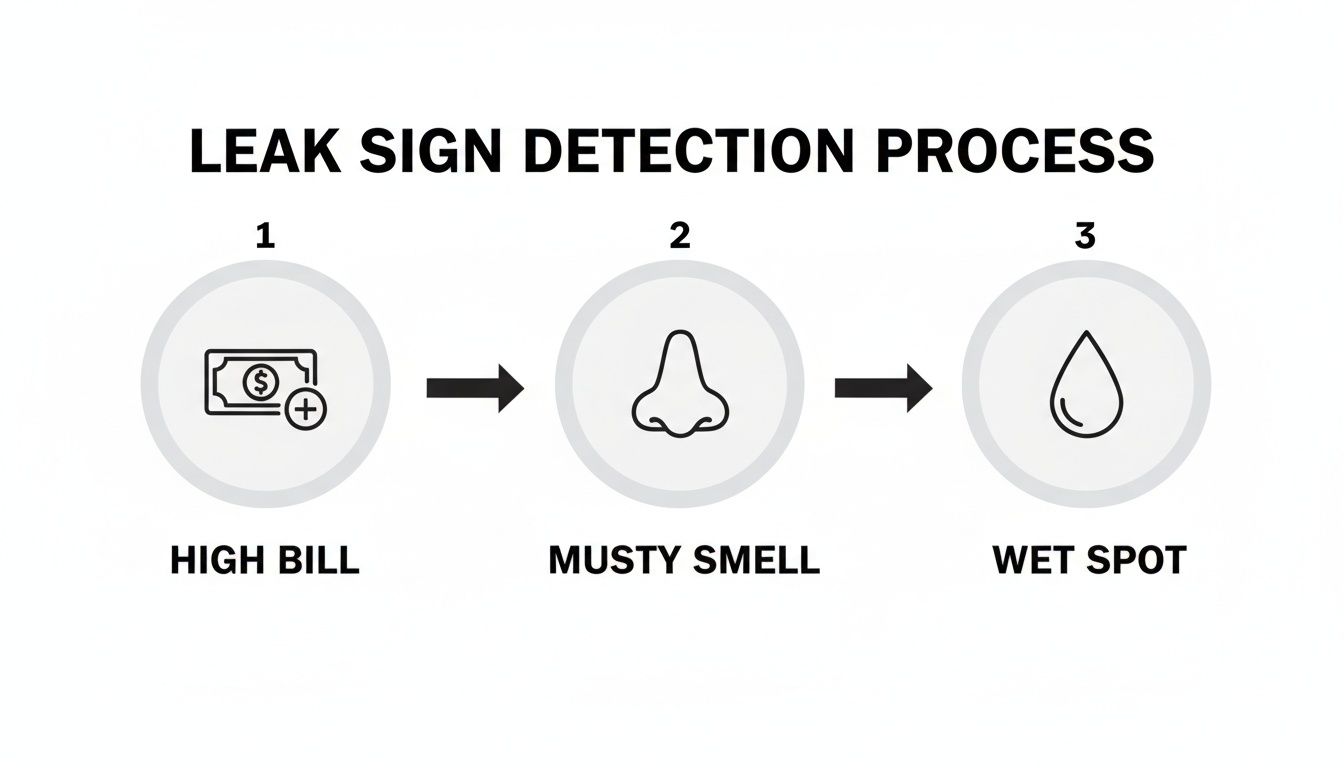
A shockingly high water bill, a persistent musty smell you can't place, or a mysterious wet spot are all red flags. If you're experiencing any of these, it’s time to try one of the tests below.
Perform the Water Meter Test
Your water meter is your best friend for finding hidden leaks. This test is the most reliable way to figure out if you have a leak anywhere on your property, and it’s especially good for flagging potential main water line repair issues.
Here’s the game plan:
- First, make sure every single drop of water is turned off inside and outside your house. That means no faucets running, no dishwasher, no washing machine, and definitely no sprinklers.
- Next, head out to your water meter, which is usually in a covered box in your front yard near the street. Pop the lid off.
- Look closely at the meter's face for a small triangle or a little dial, often called a low-flow indicator. If it's spinning, even just a tiny bit, you've got a leak.
If that little dial is moving, you've confirmed it. Now, let's figure out if the leak is inside your house or in the line outside. Find your home's main water shut-off valve and close it. Head back to the meter. If the dial has stopped moving, the leak is somewhere inside your house. If it's still spinning, the problem is in the underground pipe between the meter and your house, which might mean you're looking at a water line replacement in Cumming.
Check Toilets with the Dye Test
A running toilet is one of the sneakiest money-wasters in a home. We get calls all the time from folks in Alpharetta and Johns Creek who are shocked by their water bills, only to find out a silent toilet leak is the culprit.
A single leaky toilet flapper can waste up to 200 gallons of water a day. That’s like flushing the toilet 50 extra times and can easily add $100 or more to your quarterly bill.
This is an easy one to check. Just put a few drops of food coloring into the toilet tank (the back part). Now, walk away for about 15-20 minutes and don't flush. When you come back, look in the toilet bowl. See any color? If you do, your flapper isn't sealing properly, and water is trickling from the tank into the bowl 24/7. It’s a classic problem that’s often mistaken for a clogged toilet won’t flush when it’s really a silent leak.
A Room-by-Room Inspection Checklist
For those hard-to-find leaks, sometimes you just have to do a walkthrough. I tell homeowners in Canton and Cumming to grab a good flashlight and play detective, especially in basements and utility rooms where small issues can turn into big disasters.
Here’s what to look for:
- Under Sinks: Check the cabinet floor for drips, small puddles, or ugly water stains.
- Around Water Heaters: Look for any moisture, rust, or corrosion on the floor around the base of the tank. A puddle here could mean you need a water heater replacement in Roswell soon.
- Behind Appliances: Don’t be afraid to gently pull out your washing machine and dishwasher to inspect the hoses for cracks or drips at the connections.
- In Basements/Crawl Spaces: Your nose is a great tool here. A damp, musty smell often points to a problem. Scan the floors and walls for damp spots, mold, or any standing water, which could be a sign of a sewer backup or a broken pipe.
Taking Your Leak Hunt to the Next Level with Advanced Tools
The basic DIY tests are great for a first pass, but what happens when you know there's a leak but can't see it? When it’s hiding behind a wall or lurking under your floorboards, you need to bring in some more advanced, yet surprisingly homeowner-friendly, tools.
Using these tools helps you gather solid evidence. Think of it as building a case file to hand over to a professional emergency plumber, which can save a lot of time and guesswork down the road.
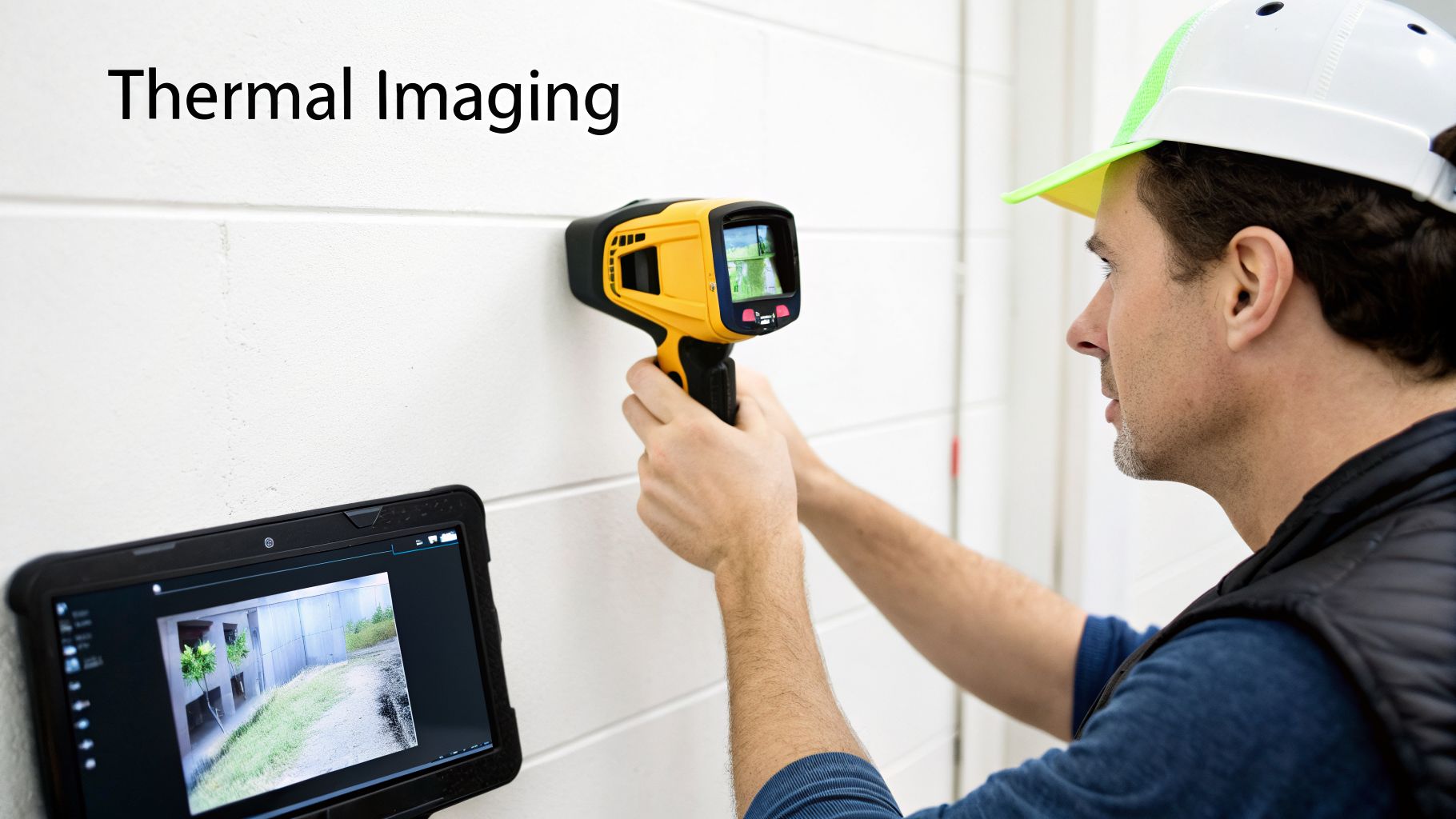
Let's be clear: these gadgets don't replace the high-tech gear a pro uses. But for homeowners in North Fulton and Forsyth County, they can help you zero in on the problem area, making the final leak repair much quicker and more direct.
Confirming Dampness with a Moisture Meter
A moisture meter is a fantastic little handheld device that does one thing really well: it measures moisture. You just press the prongs into a surface like drywall or wood, and it gives you a moisture percentage reading. It’s the perfect tool for turning a hunch into a fact.
Let's say you've noticed a faint, brownish stain on the ceiling in your Roswell home. Is it an old, dried-up stain, or is it a sign of an active leak from the upstairs bathroom? A moisture meter gives you the answer instantly. I’ve used them to trace the exact perimeter of water damage hiding behind a wall, which is incredibly useful.
Seeing the Unseen with Thermal Imaging
This is where things get really interesting. An infrared (IR) or thermal imaging camera is one of the most powerful tools you can get your hands on. Many models even attach directly to your smartphone. These cameras don't actually see water—they see temperature differences, which is just as good.
A hidden leak from a hot water pipe will glow like a bright yellow or orange snake behind your drywall on the thermal camera's screen. A cold water leak, on the other hand, will show up as a distinct cool, dark blue or purple blotch.
This technology is a real game-changer for some of the trickiest leaks:
- Slab Leaks: It can light up warm or cool spots on your concrete floor, pointing directly to a pipe leaking under the slab that you might otherwise never find.
- Hot Water Line Problems: If you suspect a hot water leak but have no hot water, a quick thermal scan can trace the path of hot water, helping you decide if you need a water heater replacement.
- Ceiling Leaks: It can precisely map out how far the moisture from a second-story leak has spread, so you only open up what's necessary for the repair.
For our JMJ Plumbing customers in Cumming and across North Metro Atlanta, early detection is everything. Often, the first clue is a sudden pressure drop—even a 5-10% fall can signal a new leak—or just noticing low water pressure in the shower. Our 24 hour plumber team in Acworth is no stranger to these calls and uses advanced diagnostics to pinpoint issues, always providing clear quotes for jobs like sewer repair. This is why proactive annual inspections are so important; they prevent these headaches and ensure fixes are up to code. You can discover more on the evolving water leak detector market and how it’s changing home maintenance.
While these tools are fantastic for your investigation, remember their limits. A definitive diagnosis for something complex like a potential sewer replacement requires professional-grade acoustic sensors and tiny video cameras. If your detective work points to a serious issue, that's your cue to call in the experts.
When to Call a 24 Hour Plumber for Emergency Leak Repair
Sometimes, you hit a point where your DIY efforts just aren't enough. It's one thing to tighten a leaky faucet, but it's another thing entirely to tackle a problem that’s hidden behind a wall or buried under your foundation. Knowing when to put down the tools and call in a professional emergency plumber is crucial. Making that call can be the difference between a straightforward repair and a full-blown disaster costing thousands.
Let's say you've done the water meter test. You shut off the main valve to your house, but the little dial on the meter is still spinning. Stop right there. That's a huge red flag pointing to a leak in the main water line—the pipe running from the street to your house. This isn't a weekend project; you'll need an expert for a main water line repair in Woodstock or Marietta before your front yard starts looking like a marsh.
The same goes for anything that even hints at a slab leak. Are you noticing a strange warm spot on your floor? Is a section of carpet damp for no apparent reason? Can you hear the faint sound of running water when everything is off? These are all classic signs of a leak beneath your home's foundation. Trying to find it yourself often means destructive guesswork. A professional uses specialized equipment to pinpoint the problem without having to jackhammer your entire living room.
Red Flags That Mean It's Time for a Pro
Certain signs are more than just clues—they're blaring alarms that you need an expert, and fast. Attempting to fix these issues on your own can quickly turn a bad situation into a catastrophe. For homeowners in Acworth and throughout Cherokee County, learning to spot these warnings is key to protecting your home.
Don't hesitate to call a plumber if you see any of these non-negotiable signs:
- A Sewage Smell: A persistent sewer gas odor inside or outside your home is a serious problem. It almost always points to a broken or clogged sewer line, which is a major health hazard that requires immediate sewer repair in Alpharetta.
- No Hot Water: If your hot water suddenly vanishes, especially if you see puddles or rust-colored water near the tank, your water heater could be on its last legs. Don't wait for it to rupture. It’s likely time for a water heater replacement.
- Widespread Water Damage: Water stains blooming on ceilings or creeping down walls with no obvious source scream "hidden leak." A pipe has probably burst somewhere, and you need a pro to find it and complete a burst pipe repair before mold takes hold.
- Persistent Low Water Pressure: If the water pressure across your entire house suddenly drops off, you could have a major breach in your main supply line or somewhere else in your plumbing system.
The Professional Advantage in Leak Detection
When you call JMJ Plumbing, you're not just getting a person with a wrench. You're getting over 25 years of hands-on, master-level expertise backed by serious technology. The global market for leak detection is heavily driven by technology, with North America accounting for 53.2% of the $832.3 million in 2022 repair service revenue, where acoustic technology is a dominant force. Our Master Plumbers (MP210218) are at the forefront of this, using sophisticated gear like electronic acoustic sensors and video cameras to find the exact source of a leak. You can read more about these global trends in water leak detection systems.
For tricky issues like a suspected sewer line break in your Johns Creek home, we don’t guess. We send a specialized video camera right into the pipes. This lets us see the inside, pinpointing the exact location of cracks or blockages to determine if a sewer repair is sufficient or if a full sewer replacement is the right call.
This high-tech approach saves you a ton of time and money. Instead of tearing up floors and walls on a hunch, we get an accurate diagnosis right away. For our commercial clients in Roswell, that kind of rapid, precise response can slash costly downtime. Whether you’re searching for a 24 hour plumber near me for a sudden emergency or need a careful diagnosis for a nagging slow leak, we have the tools and experience to get it solved right the first time.
What to Expect from Our Leak Detection and Repair Process
Dealing with a water leak is stressful enough without the added anxiety of not knowing what happens next. When you call JMJ Plumbing, we want to make the whole process as clear and straightforward as possible. You should feel in control from the moment you get in touch.
Whether you're dealing with a sudden plumbing emergency or a nagging slow leak, our goal is to get things back to normal and give you back your peace of mind.

It all starts with your call to our team. We’re available 24/7 because we know that disasters don’t stick to a 9-to-5 schedule. Just tell us what’s going on—maybe it’s a strange sewage smell in your Canton basement or a soggy patch of grass in your Alpharetta yard—and we’ll get a certified plumber on their way to you.
Arrival and Diagnosis
When our technician gets to your home, their first priority is to figure out exactly what’s happening. They'll listen to what you've noticed and then get to work with their experience and specialized tools to find the precise location of the leak. This isn't about guesswork; it's about precision.
We believe in total transparency from the very start. Before we touch a single tool, our plumber will explain the problem in plain English, walk you through the best solution, and give you a detailed, on-site quote. You’ll know the full cost upfront—no surprises, guaranteed.
For instance, if you think there's a leak hiding behind a wall, our first move isn't to start knocking holes in your drywall. We use advanced tools like acoustic listeners and thermal imaging cameras to find the source with minimal disruption. This tech-first approach is key, especially for tricky jobs across the North Metro Atlanta area.
Common Repair Scenarios
Once you give us the green light on the quote, we get straight to work. Our service vans are like workshops on wheels, fully stocked to handle most repairs right then and there. The fix, of course, depends entirely on what we find.
Here are a few situations our customers in Roswell and Marietta often run into:
- Burst Pipe Repair: If a pipe bursts behind a wall, we’ll make a careful, precise opening, fix the damaged section using high-quality materials, and make sure the new connection is rock-solid.
- Water Heater Replacement: Is your old water heater finally giving out and leaking? We can often complete a full water heater replacement the very same day to get your hot water back on fast.
- Main Water Line Repair: For an underground leak on the line running from the meter to your house, we perform a main water line repair with techniques designed to save your lawn and landscaping from unnecessary damage.
From a simple drain cleaning to a major sewer replacement in Johns Creek, every single repair is done right, meeting or exceeding all local codes. We’re not interested in a quick patch; we’re focused on providing a durable solution that will protect your home for years.
Whether you found us after searching for a “24 hour plumber near me” or a neighbor recommended us, our promise is always the same: professional service and results that last.
Your Top Questions About Water Leaks Answered
It's completely normal to have a few questions, even after you’ve run through all the checks. In fact, it's a good thing—it means you're being thorough. Here are some of the most common questions our plumbers hear from homeowners across North Metro Atlanta, with straight-to-the-point answers to help you figure out what to do next.
What Should I Expect to Pay for Professional Leak Detection in the Atlanta Area?
Honestly, it really depends on what we find. The cost for professional leak detection is all about the complexity of the leak itself. Finding an obvious drip under a sink in Marietta is a quick and affordable job. But hunting down a hidden slab leak in Alpharetta requires specialized gear like thermal cameras or acoustic sensors, which naturally takes more time and expertise.
We're big believers in transparency. That’s why our plumber will always give you a clear, detailed quote right there on-site for any leak repair before we start any work. You'll know the exact cost upfront—no surprises, no hidden fees. Getting an accurate diagnosis today is the best way to avoid much bigger, more expensive structural repairs down the road.
Can a Tiny Drip Really Cause That Much Damage?
Absolutely, and this is probably the biggest misconception we run into. It’s hard to imagine, but a pipe fitting that drips just once a second will waste over 3,000 gallons of water in a single year. That's a huge waste of money, but frankly, the water bill is usually the least of your problems.
A constant source of moisture, even from the smallest drip, is incredibly destructive. It will saturate drywall, rot the wooden studs that form the skeleton of your home, and create the perfect breeding ground for toxic mold. We’ve seen far too many cases where a "small" leak that was ignored ended up costing thousands of dollars to fix.
If you live anywhere in Cherokee County or Forsyth County, tackling a small leak immediately is always the smartest and most cost-effective move you can make. It doesn't matter if it's a worn-out toilet flapper or a tiny crack in a pipe—acting fast is everything.
How Can I Stop Leaks From Happening in the First Place?
A little proactive maintenance goes a long way in preventing plumbing headaches. Building a few simple habits into your routine can save you a ton of stress and money.
-
Look Around Regularly: Every few months, just take a quick peek at the hoses connected to your washing machine and dishwasher. While you're at it, glance under the kitchen and bathroom sinks for any damp spots or slow drips.
-
Find Your Main Shut-Off Valve: This is non-negotiable for every homeowner. You need to know exactly where your main water shut-off valve is and how to turn it off. If you ever have a major emergency like a burst pipe repair, shutting off the water in seconds can prevent a full-blown catastrophe.
-
Think About Your Water Quality: In certain areas, hard water can cause pipes to corrode much faster from the inside out. A whole-home water filtration system is a great investment that protects your entire plumbing system, helping your pipes and appliances last longer.
-
Get an Annual Professional Check-Up: The single best thing you can do is have a professional plumbing inspection once a year. A trained eye can spot problems you'd never notice, like a water heater that’s about to fail and needs a water heater replacement, or the early signs of corrosion that could lead to a main water line repair. This is especially crucial if you’re buying or selling a home in competitive markets like Johns Creek or Roswell.
Whether you're dealing with an active leak or just want the peace of mind that a professional inspection brings, JMJ Plumbing is ready to help 24/7. Schedule your service online or call us for immediate assistance!