You might have heard the term before, but what exactly is a slab leak? It’s not just any old pipe leak. Imagine the water lines that feed your kitchen, bathrooms, and laundry—they're like a hidden river system running directly through or underneath your home's concrete foundation. A slab leak is when one of those crucial hot or cold water pipes springs a leak.
This isn't a simple drip you can fix with a wrench. It’s a serious threat hiding right under your feet, silently attacking the very structure of your home. For homeowners in Woodstock, Acworth, Alpharetta, and across North Metro Atlanta, recognizing the signs of a slab leak early is critical to avoiding a major disaster.
What Is a Slab Leak and Why Is It So Dangerous?
Think of your home's concrete slab as its bedrock. It’s supposed to be solid and stable. But when a pipe buried underneath it breaks, water starts to saturate and wash away the soil that supports that entire foundation.
This slow-motion erosion is the real danger. It can cause the concrete slab to shift, crack, or settle unevenly. For homeowners in Woodstock, Acworth, or anywhere in our Cherokee County service area, ignoring the early signs can turn a plumbing problem into a full-blown foundation nightmare requiring costly main water line repair or replacement.
The Hidden Threats Below Your Feet
Slab leaks are so destructive because the damage happens out of sight, creating a domino effect of problems long before you might notice anything is wrong.
- Structural Damage: The constant flow of water eroding the soil can lead to foundation cracks, floors that feel uneven, and doors or windows that suddenly start sticking.
- Sky-High Water Bills: A hidden leak can waste thousands of gallons of water every month. If your water bill suddenly shoots up for no reason, this could be why. This is a clear signal you need leak repair in Marietta or your local city.
- Mold and Mildew Growth: All that moisture seeping up through the concrete creates the perfect damp, dark environment for mold to thrive. This can cause musty odors and trigger serious allergies or respiratory problems. A sewage smell could also indicate a break in a sewer line under the slab, a serious issue requiring immediate sewer repair.
- Property Damage: The water doesn't just stay in the foundation. It can travel upwards, warping your beautiful hardwood floors, ruining carpets, and causing damage to baseboards and drywall.
Water leaks are more common than you might think. In fact, some studies show that up to 77 percent of Americans have spotted signs of a water leak in their homes. While not every one of those is a slab leak, it shows just how important it is to be vigilant, especially for our neighbors in Marietta and Roswell. A main water line repair is one thing, but when it’s under your foundation, the stakes are much higher. You can discover more about these widespread plumbing issues from industry research.
A slab leak is one of the most destructive plumbing problems a homeowner can face. Unlike a visible leak from a faucet or a clogged toilet that won't flush, it happens out of sight, silently undermining your home’s foundation and setting the stage for major repairs.
7 Signs of a Slab Leak You Can See, Hear, and Feel
A slab leak is sneaky. It doesn't announce itself with a burst pipe in the living room. Instead, it starts with subtle clues that are all too easy to ignore. The key is knowing what to look for—and listen for—before that small issue turns into a major disaster.
1. The Sound of Running Water (When Nothing Is On)
This is often the very first sign people notice. Late at night or early in the morning, when the house is completely quiet, do you hear the faint sound of water running? It might sound like a toilet that’s constantly refilling or a quiet hissing noise coming from behind a wall or under the floor. If all your faucets and water-using appliances are off, that sound is a huge red flag that you may need an emergency plumber near me.
2. A Mysterious Warm Spot on the Floor
Have you ever walked barefoot through your home in Roswell or Alpharetta and noticed a specific spot on the floor that's unusually warm? Don't dismiss it. This is a classic sign of a leak in your hot water line. The escaping hot water is heating the concrete slab and the flooring right above it. This could even be related to your water heater, so if you have no hot water, it could signal a leak in the hot water line under the slab.
3. Damp Spots and Water Damage
Keep an eye out for any unexplained moisture. This can show up as:
- A damp or squishy feeling in your carpet
- Visible water stains or dark spots on your flooring
- Discoloration or warping, which is a common form of hardwood floor water damage
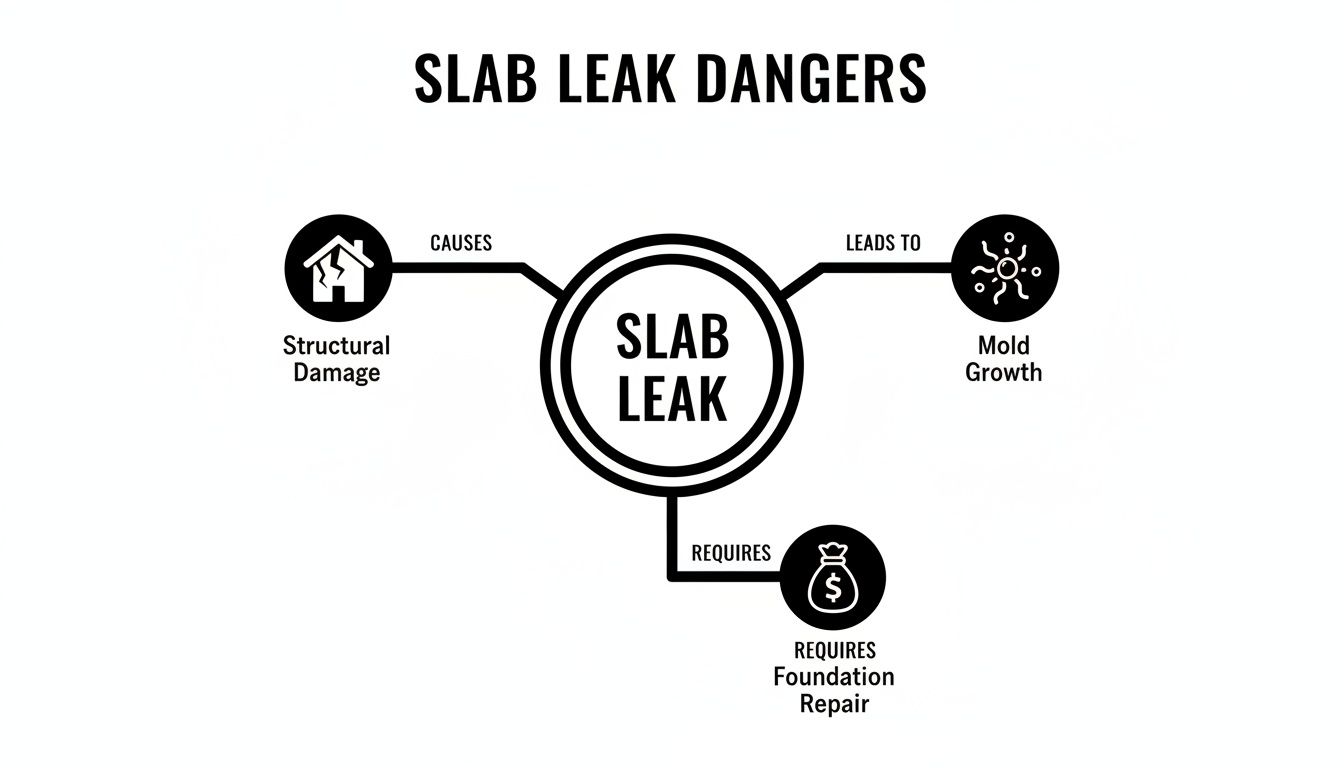
As you can see, the problem goes way beyond a wet floor. A slab leak can lead to serious structural damage and dangerous mold growth, ultimately threatening the integrity of your home's foundation.
4. Mold, Mildew, and Musty Smells
If you're suddenly smelling a persistent, musty odor or a sewage smell, it could be coming from water or waste trapped under your foundation. You might also see mold or mildew appearing along your baseboards or on the lower parts of your walls. This happens when the moisture from the leak wicks up into your drywall, a sign you might need sewer repair in Woodstock or your city.
5. Cracks in Your Walls or Foundation
Perhaps the most alarming signs are the ones that show your home's structure is already under stress. When water constantly erodes the soil beneath your slab, it can cause the foundation to shift and settle.
This movement can result in new cracks appearing in your drywall, especially around door frames, or even cracks in your tile flooring or the concrete slab itself.
6. A Sudden Drop in Water Pressure
Does it feel like your shower isn't as strong as it used to be? If you notice a general drop in water pressure throughout your house, it could mean water is escaping from a pipe under the slab before it even has a chance to reach your faucets. This low water pressure is a key symptom of a hidden leak.
7. Puddles Forming Outside Your Home
Sometimes, the water finds its way out from under the house. Take a walk around your home's perimeter. If you see standing water in your yard, unexplained puddles, or mushy spots near your foundation—and it hasn't been raining—it’s a strong indicator that you have a leak needing a main water line repair.
Your Water Bill and Meter Can Tell You a Lot
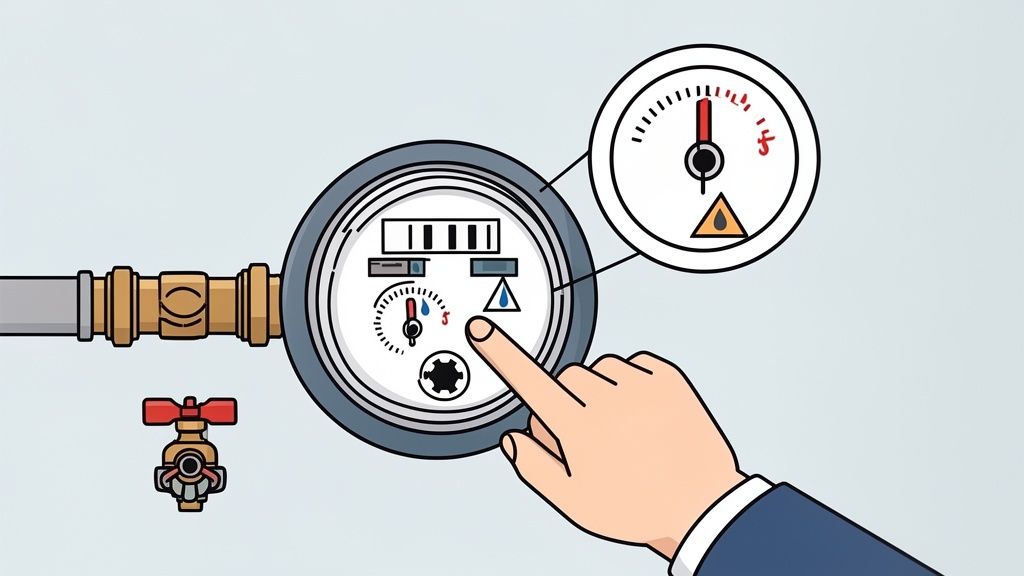
Sometimes the signs of a slab leak are subtle—a faint musty smell or a single warm spot on your floor. But there's one clue that’s impossible to ignore: a water bill that suddenly makes your jaw drop. If your family hasn't changed its water habits, but your bill shoots up by 20%, 50%, or even more, you're likely paying for thousands of gallons of water vanishing right under your home.
That unexpected spike in cost isn't just an annoyance; it's a massive red flag. Even a tiny pinhole leak in a pipe beneath your foundation can waste a shocking amount of water around the clock. Instead of just guessing, you can use your own water meter to find out for sure.
How to Check Your Water Meter for a Leak
This is a simple test that any homeowner in Cumming, Johns Creek, or the surrounding Forsyth County area can do. It costs nothing and gives you solid answers before you even pick up the phone.
- Turn Off All Water: This is the most critical step. Make sure no one is showering, running laundry, or washing dishes. Give every faucet a final twist to ensure they're off, and listen to make sure no toilets are running.
- Find and Read Your Meter: Head outside and find your water meter, which is usually in a covered box near the street or sidewalk. Lift the lid and look at the meter's face. You’re looking for a small triangle or dial, often red, called the leak indicator.
- Watch That Indicator: If all the water is off inside your house, that little indicator should be perfectly still. If you see it spinning or even just slowly twitching, it confirms that water is flowing somewhere. You've got a leak.
If your meter's leak indicator is moving when you know everything inside is turned off, you have proof of a continuous leak. This is one of the most reliable signs of a slab leak and a clear signal that it's time to call an emergency plumber in Alpharetta.
This quick meter test takes all the guesswork out of the equation without costing you a cent. If you see that dial moving, you know the problem is real. The next logical step is to call a professional for leak detection. A specialist has the equipment to pinpoint the exact location of the break in your main water line or another pipe, helping you avoid a much bigger burst pipe repair down the road.
The Escalating Costs of Ignoring a Slab Leak
Putting off a potential slab leak repair is like seeing a tiny crack in a dam and hoping for the best. At first, it might just be a slightly higher water bill or a faint, musty smell you can't quite place. But under the surface, the pressure is building, and what starts as a manageable issue can quickly spiral into a full-blown catastrophe. For homeowners in Woodstock and Marietta, waiting on a main water line repair under your slab isn't just a risk—it's a surefire way to watch your repair bill multiply.
What seems like a simple plumbing problem is just the first domino to fall. That extra water usage is only the beginning. As water quietly soaks the soil under your house, it creates a serious instability problem for the very foundation your home is built on.
From Water Bills to Foundation Bills
This is where the costs really start to climb. A small leak that might have been a straightforward spot repair grows into a major crisis that demands extensive, and incredibly expensive, solutions.
It’s a domino effect, and the expenses stack up fast:
- Foundation Repair: This is the big one—every homeowner’s worst nightmare. As the soil under your home turns to mud, your foundation can start to shift, crack, or sink. In the North Metro Atlanta area, fixing a damaged foundation can easily cost thousands, sometimes even tens of thousands, of dollars.
- Water Damage Restoration: That water won't stay neatly under the slab. It will wick its way up, seeping into your drywall, buckling your hardwood floors, and saturating your carpet. Tearing out and replacing flooring and walls adds another hefty bill to the pile.
- Mold Remediation: Constant moisture is an open invitation for mold. Getting rid of it isn't a DIY job; professional remediation is critical for your family's health and can be surprisingly expensive, especially if the mold has had time to spread. A sewer backup under the slab requires even more intensive cleanup.
Think of it this way: postponing a slab leak repair is a decision that moves the decimal point on your final bill. A problem that could have been fixed with a targeted leak repair can escalate into a full water line replacement or even sewer replacement, plus structural repairs that make the original plumbing cost look tiny.
This isn’t just something we see locally. It's a massive issue across the country. An estimated 2 trillion gallons of treated drinking water are lost every year in the U.S., often from small, hidden leaks just like this. There's a reason the professional leak detection industry is growing—people are realizing that catching these things early is a smart financial move. You can read more about the national impact of water leaks and see just how common this is.
An Investment in Your Home’s Future
It's easy to see a call to an emergency plumber as just another expense. But when you’re dealing with a potential slab leak, you have to change your perspective. Calling for immediate leak detection is actually one of the smartest investments you can make in your home.
For anyone living in Acworth, Canton, or anywhere in Cobb and Cherokee County, acting fast saves you from the huge costs and headaches of major structural repairs. The money you spend today getting a 24 hour plumber in Canton to diagnose the problem is just a tiny fraction of what you’ll be forced to pay down the road if you let it go.
How Professionals Find and Fix Slab Leaks
If you’re seeing the signs of a slab leak, this is definitely not the time for a DIY fix. When the problem is buried deep under your home’s concrete foundation, you need professional expertise. Our Master Plumbers in Acworth, Canton, and across North Metro Atlanta have the right tools to find the exact source of the leak without destructive guesswork.
Forget about swinging a sledgehammer and hoping to get lucky. We use sophisticated equipment for services like leak repair in Cumming to get a precise diagnosis, saving your floors and your sanity.
Advanced Leak Detection Technology
Think of it like this: a doctor wouldn't perform exploratory surgery when an MRI can pinpoint the problem. We take the same non-invasive approach, using modern tech to see and hear what’s going on underground.
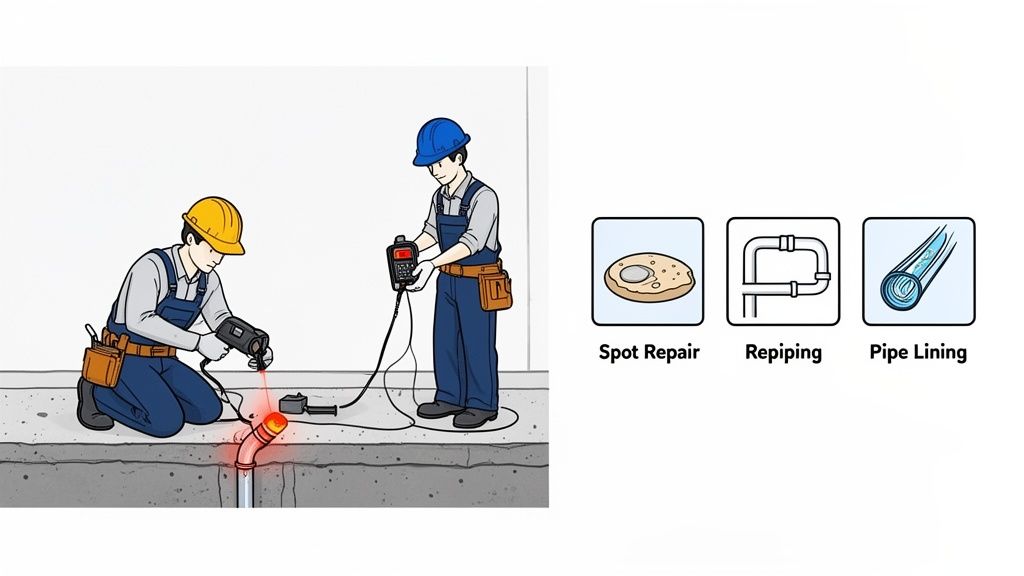
- Electronic Listening Devices: These are basically super-powered stethoscopes for your floor. The highly sensitive acoustic sensors can pick up the distinct sound of water hissing or dripping from a pipe, even through inches of concrete. Our technicians move the device across the floor, listening for where the sound is loudest to zero in on the leak.
- Thermal Imaging Cameras: When we suspect a leak is in a hot water line, these cameras are a game-changer. They detect the heat signature of the warm water as it seeps into the ground, creating a clear thermal map that shows us exactly where the pipe has failed. This is crucial if you're considering a water heater replacement and want to ensure the lines are sound.
This initial diagnostic step is everything. Pinpointing the leak accurately is the key to figuring out the best and most cost-effective repair for your home in Roswell or Alpharetta, a process similar to other professional leak detection methods.
Choosing the Right Repair Method
Once we’ve located the leak, we’ll sit down with you and explain the best options. The right choice really depends on the age of your home, what kind of pipes you have, and how bad the damage is. We'll give you a clear, honest recommendation—not a one-size-fits-all sales pitch.
The goal is to choose a repair that not only stops the current leak but also minimizes future risk. A cheap, quick fix might solve today's problem, but a strategic repair protects your home for years to come.
There are three main ways we tackle slab leak repairs:
- Spot Repair: This is the most direct method. We open a small, targeted section of the slab right above the leak and repair that single piece of broken pipe. It's a great solution for newer homes where it's likely just one isolated issue.
- Repiping or Rerouting: Sometimes, the leaking pipe is old, corroded, or just too hard to get to. In those cases, a better long-term fix is to bypass it completely. We’ll cap off the old, leaky line and run a brand-new, durable water line through your walls or ceiling. This avoids jackhammering your floors and is often the smartest move for older plumbing systems prone to more leaks.
- Pipe Lining (Trenchless Repair): This high-tech method involves sliding a flexible, epoxy-coated liner into the damaged pipe. The liner is then inflated, and the epoxy cures to form a brand-new pipe inside the old one. It's a fantastic, less-invasive option that avoids breaking the slab, but it’s best suited for specific situations, most commonly in sewer repair and sewer replacement.
Whether you’re dealing with an urgent burst pipe repair or need a full water line replacement, our team will lay out the costs and benefits of each option. As the trusted emergency plumber for homeowners throughout Cobb County and North Fulton, we're on call 24/7 to deliver the right fix.
Get a Fast Diagnosis in North Metro Atlanta
Hearing water when no taps are on? Noticing a warm spot on the floor or a sudden, shocking water bill? If you’ve spotted any of these warning signs, your gut is probably telling you something’s wrong. It’s an instinct you shouldn’t ignore.
Here in Woodstock, Acworth, and Canton, we see what happens when a potential slab leak is put on the back burner. What starts as a small, hidden drip can quickly escalate, causing serious structural headaches. The single best thing you can do is get a professional diagnosis right away to figure out exactly what you're dealing with.
At JMJ Plumbing, we are the 24 hour plumber North Metro Atlanta trusts for a rapid response. We're here to give you answers and peace of mind.
Your Local Emergency Plumbing Experts
When you suspect a problem with a main water line repair under your foundation, waiting is not an option. Our team is local and ready to respond quickly throughout Cobb County, Cherokee County, and North Fulton County.
Think of it this way: calling a professional for an immediate diagnosis is the most cost-effective move you can make. It's your best defense against the thousands of dollars in damage that come from warped floors, foundation cracks, and pervasive mold growth.
When you call us, you can expect:
- 24/7 Emergency Service: We're on call around the clock because we know pipes don't wait for business hours to burst. Whether it’s a slab leak, drain cleaning in Johns Creek, or a burst pipe repair, we're ready.
- Expert Diagnostics: We use modern, non-invasive equipment to find the precise location of the leak. No destructive guesswork, just accurate results.
- Transparent Pricing: We believe in honest work. You’ll get a clear, straightforward quote before we start any repairs, so there are no surprises.
Whether you need leak repair in Marietta or have an emergency on your hands in Roswell, don't let the problem get worse. Call JMJ Plumbing now or book online, and let’s get your home protected with a fast, accurate assessment.
Your Top Slab Leak Questions Answered
We get a lot of calls from homeowners in Canton, Roswell, and Marietta who suspect they have a slab leak. Once you know the signs, the next step is understanding what you're up against. Here are answers to the most common questions we hear.
What Causes a Slab Leak in the First Place?
It’s easy to assume pipes should last forever, but the ground under your home has other ideas. Here in North Georgia, our active clay soil is a big factor. It swells when it's wet and shrinks when it's dry, constantly shifting and putting a tremendous amount of stress on the pipes buried beneath your foundation. Eventually, that pressure can cause a pipe to bend, crimp, or even break.
Other common culprits include:
- Pipe Corrosion: Many older homes have copper pipes. Over time, especially with the hard water we often see in this region, those pipes can corrode from the inside out, leading to tiny pinhole leaks.
- Friction and Abrasion: Your pipes aren't just sitting peacefully in the dirt. They can vibrate and rub against the concrete slab, rebar, or even sharp pieces of gravel. It's like sandpaper, slowly wearing down the pipe wall until a leak springs.
- Poor Installation: Sometimes, the problem was there from day one. A pipe might have been bent, damaged, or improperly secured during construction, creating a weak spot that was just waiting to fail.
Does Homeowners Insurance Cover Slab Leak Repair?
This is a big one, and the answer is almost always, "It's complicated." Most standard policies make a distinction between the leak and the damage it causes.
Typically, your insurance will help pay for accessing the leak (like the cost of jackhammering the concrete) and repairing the resulting water damage—things like replacing warped floors, soaked drywall, or ruined cabinets.
However, the policy often won't cover the cost of actually fixing the pipe itself. It's crucial to read your policy documents carefully or call your insurance agent to know exactly what’s covered. We always provide a detailed, itemized invoice that breaks down the costs to help make your insurance claim as smooth as possible.
What Is the Cost for Slab Leak Repair in the Atlanta Area?
Because every situation is different, there's no single price tag for a slab leak repair. Just finding the leak with professional equipment usually costs a few hundred dollars. From there, the total expense depends entirely on what we find.
A simple, accessible spot repair might end up costing under a thousand dollars. On the other hand, if the damage is extensive or the pipe is hard to reach, a more involved fix like a full water line replacement or rerouting the line overhead could run into several thousand. The cost factors for sewer replacement can be even higher.
The final price really comes down to the leak's location, its severity, and the best repair method for your home. We believe in total transparency, which is why we always give you a firm, on-site quote before we start any work. You'll know the exact cost upfront, with no surprises.
How Can I Prevent Future Slab Leaks?
You can't control the shifting soil, but you can definitely take steps to protect your plumbing and reduce your risk. One of the smartest moves is to have a pressure-reducing valve installed. Many municipal water systems deliver water at very high pressure, which puts constant strain on your pipes.
If your home has hard water, a whole-home water softener can be a game-changer. It works to reduce the mineral buildup that causes internal corrosion and weakens pipes over time.
And if you live in an older home, especially in areas like Acworth or Alpharetta, don't wait for an emergency. A routine plumbing inspection can spot vulnerable pipes and potential issues long before they turn into a catastrophic failure. Whether it's checking for slow drains or inspecting your water heater, preventative maintenance is key.
If you're dealing with the signs of a slab leak, don't wait for the damage to spread. The team at JMJ Plumbing offers fast diagnostics and honest, expert solutions for homeowners across North Metro Atlanta. Visit our website at https://www.jmjplumbing.com to book your appointment online or call for immediate 24/7 service.