Emergency Sewer Drain Cleaning Woodstock GA: Clogs & Backups
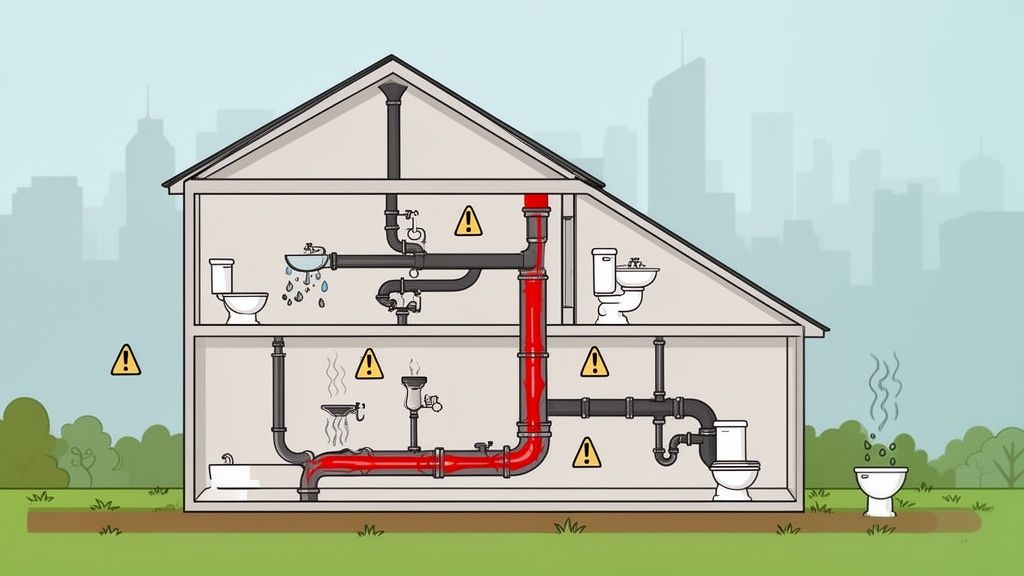
If you've noticed several drains in your house slowing down at the same time, it’s not just bad luck. It’s a major red flag. This is your plumbing system’s way of telling you the main sewer line is getting clogged, and you need sewer drain cleaning before you have a real mess on your hands. For anyone living in Woodstock, Acworth, or anywhere in North Metro Atlanta, this is a signal to act fast.
Why Sewer Drain Cleaning Is So Important for Atlanta Homes
It helps to think of your home's plumbing like a tree. The small drains from your sinks and showers are the little branches, and they all feed into one large, central trunk—the main sewer line. This is the single pipe responsible for carrying all wastewater away from your house.
When that main line gets blocked, there's nowhere for the water to go. A slow drain in one bathroom might be a simple clog, but when every drain in the house starts to gurgle and slow, it means the problem is deep in that main artery. If you're searching for "drain cleaning Alpharetta" or "drain cleaning Canton," you might actually be facing a main line issue.
This goes beyond simple inconvenience. A full-blown sewer backup can flood your basement or ground floor with raw sewage. We're talking about a serious biohazard that causes thousands of dollars in damage. That’s why professional sewer drain cleaning is a non-negotiable part of home maintenance, not just a last-ditch emergency fix.
Early Warning Signs You Can’t Ignore
Many homeowners in Woodstock, Marietta, and Cumming don't realize these symptoms point to a main line issue until it's too late. If you find yourself searching online for "drain cleaning near me" because of these problems, the real culprit might be your sewer line.
Keep an eye out for these classic red flags:
- Multiple Slow Drains: The kitchen sink, the shower, and a toilet all start draining poorly at once. This is a system-wide problem.
- Gurgling Sounds: You hear odd bubbling noises from drains or toilets, especially when you run the washing machine or flush another toilet.
- Foul Odors: A distinct sewage smell starts wafting up from your drains or lingers around your yard. This is an urgent sign.
- Water Backups: This is the big one. Flushing a toilet causes water to appear in your bathtub or shower. This signals an imminent sewer backup.
A clogged main sewer line is one of the most serious plumbing problems you can have. It’s not like a simple hair clog in a single drain—this affects your entire home. It demands immediate professional attention to prevent a messy and hazardous sewer backup.
To help you quickly identify what might be going on, here’s a simple table breaking down the common issues.
Quick Guide to Sewer Line Problems and Solutions
| Symptom | Potential Cause | Recommended Action |
|---|---|---|
| Multiple slow drains | Early-stage main line clog (grease, debris) | Schedule a professional sewer drain cleaning in Roswell or your local area soon. |
| Gurgling noises from drains | Air is trapped in the line due to a blockage. | Call a plumber for a camera inspection and cleaning. |
| Sewage smell in or around the home | Waste is not draining; possible crack requiring sewer repair. | This is urgent. Call for an emergency inspection. |
| Water backing up into other fixtures | A significant blockage is present in the main line. | Stop using water immediately and call a 24-hour plumber. |
This chart is a great starting point, but nothing beats having an expert take a look.
Your Local 24-Hour Plumber for Sewer Issues
From Roswell to Canton, every homeowner in North Fulton and Cherokee County needs a plumber they can trust when a real emergency strikes. A main sewer clog definitely doesn’t stick to a 9-to-5 schedule. Whether you need an immediate sewer drain cleaning or you’re worried about a broken pipe that requires sewer repair, getting a fast response is everything. An "emergency plumber near me" search should lead you to a team ready to act now.
At JMJ Plumbing, we are on call 24/7 for exactly these kinds of high-stakes situations. Our licensed Master Plumbers have the tools and experience to find the problem fast and give you an honest, straightforward solution on the spot. We know how stressful a potential sewage disaster is, and we’re always ready to get your home’s plumbing back in working order, day or night.
What a Clogged Sewer Line Looks and Smells Like
Knowing the early warning signs of a sewer line clog is the best way to avoid a messy, expensive disaster. While a single slow drain is usually just an isolated problem, a blockage in your main line will make its presence known all over the house. The signs can start small, but they quickly become impossible to ignore. For homeowners in Alpharetta, Roswell, and Canton, these are the clues that tell you a plunger just isn't going to cut it.
Think of your home's plumbing like a tree. Each drain—your sinks, showers, and toilets—is a small branch. They all connect to one large trunk, which is your main sewer line that runs out to the street. When that main trunk gets blocked, the wastewater has nowhere to go but back up the branches.
Sounds Your Drains Shouldn't Make
Often, the first sign that something’s wrong is what you hear. A main line clog traps air, and that trapped air has to go somewhere. So, when you have a clogged toilet that won't flush but also hear odd noises coming from other drains, it’s time to listen closely.
- Gurgling Sounds: Does flushing a toilet make your shower drain gurgle and bubble? That's the sound of air being forced past the blockage.
- A "Talking" Toilet: If running the washing machine makes your toilet bubble, or the water level in the bowl rises, that's a classic sign. The wastewater from the washer is trying to escape and is pushing back up through the lowest point in your plumbing—the toilet.
These aren't just strange noises; they’re your plumbing system telling you it’s under pressure. Ignoring them is like driving with your check engine light on. The problem is only going to get worse, potentially leading to a burst pipe repair scenario if pressure builds too much in older pipes.
What You'll See When Drains Misbehave
The visual signs are usually what cause people to panic, and for good reason. They’re undeniable proof that wastewater isn't leaving your property. If you see any of these things happening, especially more than one at a time, you almost certainly need professional sewer drain cleaning.
One of the biggest red flags is seeing water back up in a place it shouldn’t be. For example, if you run the bathroom sink and water starts pooling in the shower, it means their shared drain line is completely overwhelmed by a clog further down the line. A symptom like low water pressure can also be related if the main line issues are affecting overall system integrity.
A main sewer line clog is a system-wide failure. When you flush a toilet and see water bubbling up in your basement floor drain, it's a direct signal that sewage is being forced back into your home. At this point, you're on the verge of a full-blown sewer backup.
The Unmistakable Smells and Outdoor Clues
Sometimes, your nose will know there’s a problem before you see or hear anything. That persistent, foul sewer odor is one of the most common complaints we get from homeowners in Marietta and Johns Creek.
The sewage smell comes from waste and sewer gas getting trapped and pushed back up through your drains. You might notice it most in the basement or a first-floor bathroom, but eventually, it can fill the whole house. It’s not just gross—sewer gas can contain harmful bacteria and is a sign you need a leak repair specialist.
The problem can even show up outside. Take a walk around your yard and look for:
- Unusually Green Patches: Is there a spot in your lawn that’s suddenly much more lush and green than the rest? It might be getting a direct dose of "fertilizer" from a leaking sewer line right underneath it.
- Soggy Spots or Water in Yard: If it hasn't rained but you have a mushy patch of ground in your yard, that could be wastewater seeping up to the surface. This is a clear sign you may need a sewer repair or even a full sewer replacement.
Catching these sights, sounds, and smells early is your best defense. When you do, it's time to call a professional to get a camera in that line and see exactly what you're dealing with before a small problem turns into a huge mess.
When you’ve got a serious sewer line clog, a simple plunger isn't going to cut it. When we get a call for a sewer drain cleaning in Acworth or anywhere across North Metro Atlanta, we bring out the heavy-duty equipment. The two workhorses of the plumbing world for this job are the mechanical snake and the hydro jetter.
Knowing the difference between these two methods is key, because while both can clear a blockage, one provides a much more thorough and lasting solution.
Snaking: The Classic Clog-Busting Method
Most people have a general idea of what a plumbing snake is. It's also called an auger, and you can think of it as a powerful, flexible corkscrew. We feed a long steel cable with a sharp, interchangeable head into the sewer line. A motor spins that cable, allowing the head to drill right through whatever is causing the backup.
Snaking is a reliable go-to for specific problems. It's great for:
- Punching a hole through a dense clog, like one caused by flushed wipes or too much toilet paper.
- Breaking apart or snagging small tree roots that are just starting to creep into the pipe.
- Grabbing and pulling back an object that was accidentally flushed down the drain.
But there's a catch. Snaking generally just bores a path through the middle of the clog. It often leaves behind all the grease, sludge, and scale that’s stuck to the pipe walls. That leftover gunk is the perfect foundation for a new clog to form, sometimes just a few months later.
Hydro Jetting: The Ultimate Deep Clean for Your Pipes
If snaking is like drilling a hole through a blockage, hydro jetting is like pressure washing the entire inside of your pipe from end to end. It doesn’t just poke a hole in the problem; it completely scours the pipe walls, leaving them almost as clean as the day they were installed. This is truly the gold standard for sewer drain cleaning.
A hydro jetter uses a special hose and nozzle that blasts water at incredibly high pressures—up to 4,000 PSI. The nozzle has jets pointing forward to obliterate the clog and jets pointing backward to propel the hose deep into the pipe while blasting away every last bit of buildup.
Simply put, hydro jetting is the only way to remove years of caked-on grease, soap scum, mineral deposits, and even aggressive tree root invasions. It's a real, long-term solution, not just a temporary patch.
So how do you know if you need this level of cleaning? Often, your senses will tell you something is wrong long before the drain stops completely. Maybe you have no hot water because a related plumbing failure has occurred, or your water heater is struggling due to sediment issues that point to broader pipe problems.
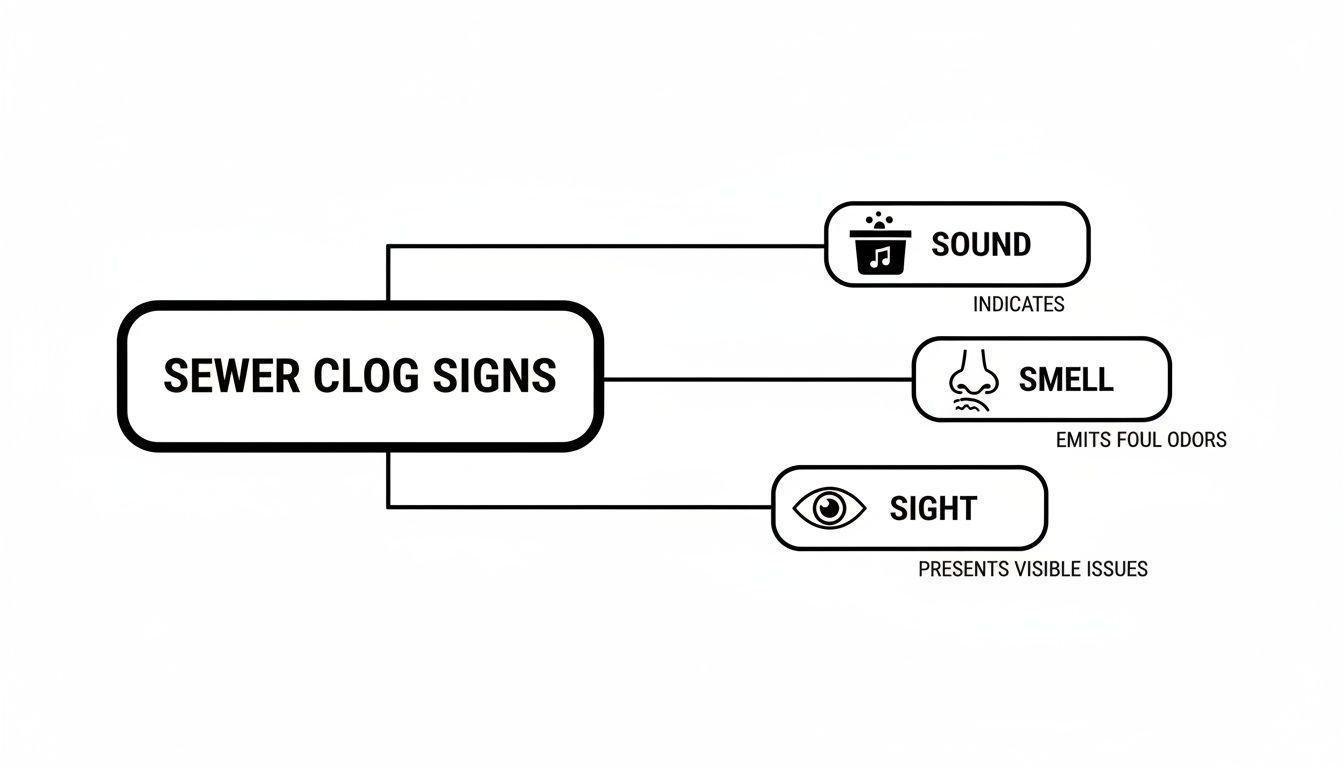
As the graphic shows, things like gurgling toilets, foul smells from drains, or water backing up in your shower when the washing machine runs are all classic signs of a developing sewer line issue that needs professional attention.
Comparing Sewer Drain Cleaning Methods
To make it even clearer, here’s a quick breakdown of when and why we'd choose one method over the other. This table compares the two main professional techniques for clearing and cleaning your sewer lines.
| Method | Best For | How It Works | Considerations |
|---|---|---|---|
| Mechanical Snaking | Simple clogs, retrieving objects, minor root intrusion. | A spinning cable with a cutting head drills through the blockage. | Primarily clears a path, leaving buildup on pipe walls. Clogs may reoccur sooner. |
| Hydro Jetting | Heavy grease, sludge, scale, and extensive tree root removal. | High-pressure water jets scour the entire inner surface of the pipe. | The most thorough cleaning method available. Restores pipe flow capacity. |
While snaking can definitely solve an immediate problem, hydro jetting is the best way to ensure your pipes stay clear for the long haul.
A Quick Warning About Chemical Drain Cleaners
We get it—it’s tempting to grab a bottle of chemical drain cleaner from the store for a quick fix. Please, never use these products for a main sewer line clog. They are simply not designed for that kind of job.
Those harsh chemicals rarely have enough power to dissolve a major blockage deep in your sewer line. Instead, the chemicals get stuck right behind the clog. Now you have a pipe filled with raw sewage and highly corrosive acid, which is a dangerous situation for both your pipes and the plumber who has to fix it. Stick to professional sewer repair methods.
There’s a reason professional-grade equipment is a must. The global market for drain cleaning tools was valued at $2.33 billion in 2025 and is expected to hit $3.7 billion by 2030. This isn't just a random statistic; it shows that homeowners and municipalities everywhere are realizing that you need the right tools for the job. We see this firsthand every day in busy areas like Cobb and Forsyth County. You can dive into the market research on drain cleaning equipment to see the full analysis of this growing trend.
DIY Fixes Versus Calling a Professional Plumber
When a drain starts to slow down, the first impulse for many of us is to try and fix it ourselves. And honestly, for a minor clog in a single sink, that’s not always a bad idea. A bit of hair or soap scum is often no match for a simple plunger or a small hand snake.
But knowing when to stop is just as important as knowing how to start. If your first few attempts don’t clear things up, or if you notice the problem is bigger than just one drain, it's time to put the tools down.
When to Stop and Call an Emergency Plumber
The difference between a small clog you can handle and a major plumbing emergency is usually pretty obvious if you know what to look for. If you spot any of these signs, stop whatever you're doing and call a professional. These aren't DIY issues; they're red flags for a main sewer line clog.
- Multiple Drains are Slow: Is your kitchen sink, shower, and toilet all draining like molasses? That’s a clear sign the blockage is deep in your system, not at the individual fixture.
- You Smell Sewage: That distinct, foul odor is a serious warning. It means wastewater isn't exiting your property correctly, and nasty sewer gas is backing up into your home.
- Water Backs Up in Unexpected Places: Flushing a toilet only to see water gurgle up into the bathtub is the classic telltale sign of a main line blockage. The water has nowhere to go, so it's coming up through the lowest point.
- Your DIY Attempts Fail: If a plunger or a basic snake isn't getting the job done quickly, forcing the issue can make things much, much worse.
Trying to clear a main sewer line on your own is a huge gamble. Renting a heavy-duty power auger without the right experience can lead to disaster, especially in older homes with fragile cast iron or clay pipes. You could easily crack the line, get the snake stuck, or just ram the blockage down even tighter. Suddenly, a job that called for sewer drain cleaning has turned into a costly sewer repair or even a full sewer line replacement.
If you're dealing with more than one slow drain, it's not the time for guesswork. For homeowners in Woodstock, Acworth, and across the Atlanta area, getting an expert diagnosis is the smartest, safest, and most affordable move in the long run.
The Value of Professional Equipment and Expertise
When you call a professional plumber, you're not just paying for a bigger snake. You're paying for expertise and technology that you simply can't get at the hardware store. An experienced technician from JMJ Plumbing can run a specialized camera down the line to see exactly what's going on. Is it grease buildup? Tree roots? A collapsed pipe? That camera inspection takes the guesswork out of it and ensures we use the right tool for the job, whether it's snaking or high-pressure hydro jetting. Other issues, like a damaged water heater that needs a water heater replacement, can also be identified during a full system check.
The tools of the trade are getting more sophisticated every year. In fact, the market for professional drain cleaning equipment is expected to hit $3.48 billion by 2029, growing at 10.1% each year. This isn't about better wrenches; it's about advanced tools like high-pressure water jetters and robotic cameras. This trend shows just how wide the gap has become between DIY tools and what the pros use. You can see more on the expanding professional plumbing service market and why specialized equipment is so critical.
At the end of the day, while we admire a can-do attitude, a main sewer line problem is a job for a licensed Master Plumber. Whether you need an emergency plumber in Marietta for a sudden sewer backup or you're looking for routine "drain cleaning near me" in Roswell, investing in a professional protects your home and gives you priceless peace of mind.
How Sewer Drain Cleaning Costs Are Calculated in Atlanta
When your plumbing starts acting up, the first thing on your mind is usually, "What's this going to cost me?" For sewer drain cleaning here in the Atlanta area, there's no single answer. The price really depends on what's actually happening inside your pipes, which is why any good plumber will insist on diagnosing the problem first before throwing out a number. For example, the cost of a sewer replacement in Alpharetta will be very different from a simple drain snaking in Cumming.
Think of it like taking your car to the shop. The mechanic can’t give you a fair price until they pop the hood and see what’s wrong. It’s the same with plumbing—we have to figure out the cause of the clog before we can know the right way to fix it.
Key Factors That Determine Your Price
A few key things will influence the final cost to get your sewer line flowing again. A simple clog that’s easy to get to will naturally cost less than a serious blockage buried deep in your plumbing system. Knowing these factors helps you understand exactly what you’re paying for.
- How Bad is the Clog (and Where is It?): A small clog right by an access point is a quick fix. On the other hand, a massive tree root infestation 100 feet down the line and under your lawn is a much bigger job requiring extensive work.
- The Right Tool for the Job (Snaking vs. Hydro Jetting): A mechanical snake works great for some blockages, but it's less intense than hydro jetting. Hydro jetting costs more because it’s a more powerful and specialized service that delivers a much deeper, longer-lasting clean.
- Accessibility: Is your sewer cleanout easy to find and reach? If we have to dig it up, or it's tucked away in a cramped crawlspace, that extra time and labor will factor into the cost.
- Repair vs. Replacement: A simple cleaning is one price, but if the camera reveals a cracked or collapsed pipe, the conversation shifts to sewer repair or even water line replacement costs.
Any trustworthy plumber should start with a sewer camera inspection. This isn't an upsell; it's a crucial diagnostic step. It lets us see the exact problem on a screen—and show it to you—so we can give you a precise, on-site quote for the specific fix you need. No more guesswork.
Investing in Prevention vs. Paying for an Emergency
While it's an upfront cost, think of professional sewer drain cleaning as an investment in your home's health. The price of a scheduled cleaning is just a fraction of the cost of cleaning up after an emergency sewer backup floods your basement or fixing a sudden burst pipe.
A clog left untreated can eventually crack or collapse your pipe, leading to a far more expensive sewer line replacement. Understanding how costs are figured out for preventative maintenance, like how much duct cleaning costs, can help you budget for keeping your whole home in working order.
There’s a reason North America is a leader in the drain cleaning equipment market. We take maintaining our infrastructure seriously—a fact backed by the 68% of all trenchless (no-dig) repairs happening in North America and Europe. This focus on advanced solutions, detailed in the global evolution of drainage solutions, means professionals have the right tools for the job. That's the value you get with a pro—it's something a simple DIY tool just can't match.
Your 24/7 Emergency Plumber in North Metro Atlanta
Some plumbing problems can wait for business hours. A full-blown sewer backup is definitely not one of them.
When raw sewage is bubbling up into your shower or a clogged toilet won’t flush and starts flooding the bathroom, you don't have time to spare. A slow drain is one thing—an annoyance you can plan for. But a main line failure is a full-blown crisis, one that can cause thousands in property damage and pose a serious health risk to your family. In those nightmare scenarios, you need a 24 hour plumber who can get there fast.
True Plumbing Emergencies That Demand an Immediate Call
For homeowners in Woodstock, Acworth, and Marietta, it's critical to know the difference between an inconvenience and a genuine emergency. If you see any of the following, it’s time to pick up the phone right away:
- Sewer Backup: This is the big one. If sewage is coming up through any drain in your home, stop using all water and call for help. It’s the most urgent plumbing problem there is.
- A Burst Pipe: Water gushing from a pipe is an undeniable emergency requiring burst pipe repair. Your first step is to shut off your home's main water valve, and your second is to call us.
- No Running Water: If your water suddenly shuts off completely, it could mean a break in your main water line repair is needed, and that requires a quick diagnosis.
- Water in Your Yard: Are there strange puddles or soggy patches of grass in your yard? That’s a classic sign of a broken sewer or water line replacement being necessary.
Don’t hesitate. A plumbing emergency doesn't wait for a convenient time. Whether it's a holiday weekend in Roswell or the middle of the night in Canton, our team at JMJ Plumbing is on standby, ready to protect your home.
Your Trusted Emergency Partner in Cobb and Cherokee County
When disaster strikes, you need more than a quick fix—you need a plumber you can trust. JMJ Plumbing is a licensed and certified Master Plumber (MP210218) with over 25 years of hands-on experience right here in North Metro Atlanta. We don't just work in these communities; we live here, too. Our reputation is everything, and we've built it by being there when our neighbors need us most.
Our promise is simple: a fast response, an honest diagnosis of the problem, and expert workmanship to fix it right the first time. We show up with fully stocked trucks, ready to handle anything from an emergency sewer drain cleaning to a complete sewer replacement. We proudly serve all of North Metro Atlanta, including Alpharetta, Cumming, and Johns Creek, with a team dedicated to resolving your crisis efficiently.
If you have a plumbing emergency, don’t wait another minute. Call JMJ Plumbing now for immediate help.
Common Questions About Sewer Drain Cleaning
Working with homeowners across Woodstock, Cumming, and the North Metro Atlanta area, we tend to hear the same questions pop up. When it's your home’s main sewer line on the line, you deserve clear, honest answers. Let's tackle some of the most common ones we get about sewer drain cleaning.
How Often Should I Have My Sewer Line Cleaned?
This is a great question. For most modern homes around here, we've found that scheduling a professional sewer drain cleaning every 18 to 24 months is the perfect proactive step. It’s frequent enough to clear out any emerging buildup before it can turn into a full-blown blockage.
Of course, not every home is the same. A few things might mean you need more frequent service:
- Older Homes: If you're in a classic Marietta or Roswell home with its original cast iron or clay pipes, you'll want to lean towards annual cleanings. Those older pipes are more prone to issues.
- Large Trees: Got beautiful, mature trees in your yard? Their roots are naturally drawn to the moisture in your sewer line. An annual cleaning is your best defense against roots causing a serious backup.
- Frequent Slow Drains: If you feel like you're constantly fighting with a slow drain or a clogged toilet that won’t flush, that's your plumbing system telling you it needs attention sooner rather than later.
The best way to know for sure is with a quick sewer camera inspection. It takes all the guesswork out of the equation and lets us recommend a schedule that’s truly right for your property.
Can Hydro Jetting Damage My Pipes?
We hear this concern all the time, and it's a completely valid one. After all, hydro jetting uses highly pressurized water. The truth is, when a trained and licensed plumber performs the service, it's incredibly safe for your pipes. Think of it like pressure washing a dirty driveway—in the right hands, it’s powerful and effective, but you wouldn't point it at a delicate, cracked surface.
That’s why we never perform hydro jetting without first running a camera through the line. This is a non-negotiable first step for us. It lets us see the exact condition of your pipes. If we spot cracks, weak joints, or serious deterioration, we won't recommend jetting. Instead, we’ll walk you through other options like sewer repair or sewer replacement.
For pipes that are in solid shape, hydro jetting is the best way to scour them clean of grease, scale, and even tough root buildup, bringing them back to like-new flow capacity.
Is It a Clogged Drain or a Clogged Sewer Line?
Figuring this out is key to knowing whether you have a minor inconvenience or a plumbing emergency on your hands.
A single clogged drain—maybe a bathroom sink that's slow or a shower that puddles at your feet—is typically an isolated problem. The clog is right there near the fixture itself.
But you're likely dealing with a main sewer backup if you see system-wide problems, such as:
- Several drains in your house are slow all at once.
- You hear strange gurgling sounds from your toilets when the washing machine is draining.
- Water starts backing up into your bathtub or shower right after you flush a toilet.
These are tell-tale signs of a blockage in your main sewer line that's impacting your entire home. That's when you need to call a professional right away.
Don't let a small plumbing headache escalate into a costly disaster. For expert diagnostics, reliable repairs, and 24/7 emergency service, you can trust the team at JMJ Plumbing. We have the experience and equipment to handle any plumbing challenge, from routine cleanings to complete line replacements.
Protect your home and your peace of mind by scheduling your service today.