
JMJ Plumbing provides commercial water line repair services designed to restore operations quickly and minimize disruption. Commercial water issues can shut down a facility fast—low pressure, leaks, and burst lines aren’t “wait until tomorrow” problems. We diagnose the source of the failure, isolate affected sections to reduce downtime, and repair or replace damaged piping using the appropriate materials and installation methods. The result is restored water pressure, reduced risk of recurring failures, and clear documentation of the work performed so you can move forward with confidence.
Signs You Need Commercial Water Line Repair
A failing water line rarely announces itself with a burst. It shows up as pressure complaints, an odd meter reading, or a soft spot in the parking lot weeks before anyone connects the dots.
- Pressure has dropped across the whole building — when every fixture is weak, the problem is upstream — the service line, the meter, the backflow assembly, or a failing pressure reducing valve
- Water usage on your bill climbed with no change in operations — an underground leak runs constantly, and metered usage is often the first hard evidence of one
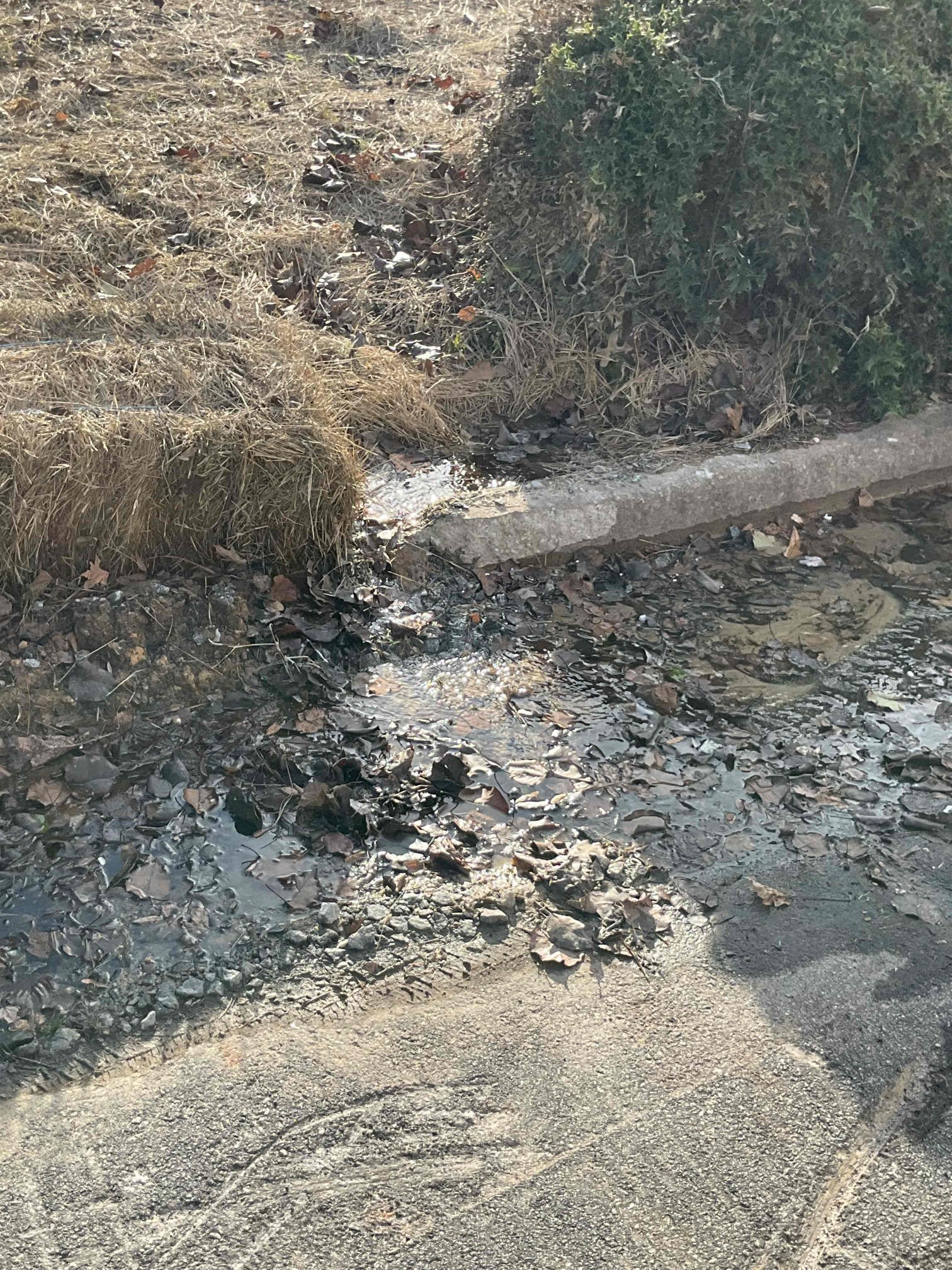
- Soft ground, settling pavement, or an unusually green patch in the landscaping — water is surfacing along the buried line, frequently at a joint, a fitting, or a point where the pipe crosses under paving
- Discolored or rusty water when fixtures are first opened — corroding galvanized or old copper piping is shedding scale, and interior lines are near the end of their service life
- You can hear water running when the building is closed — a continuous flow with no fixtures in use points to a leak on a pressurized line
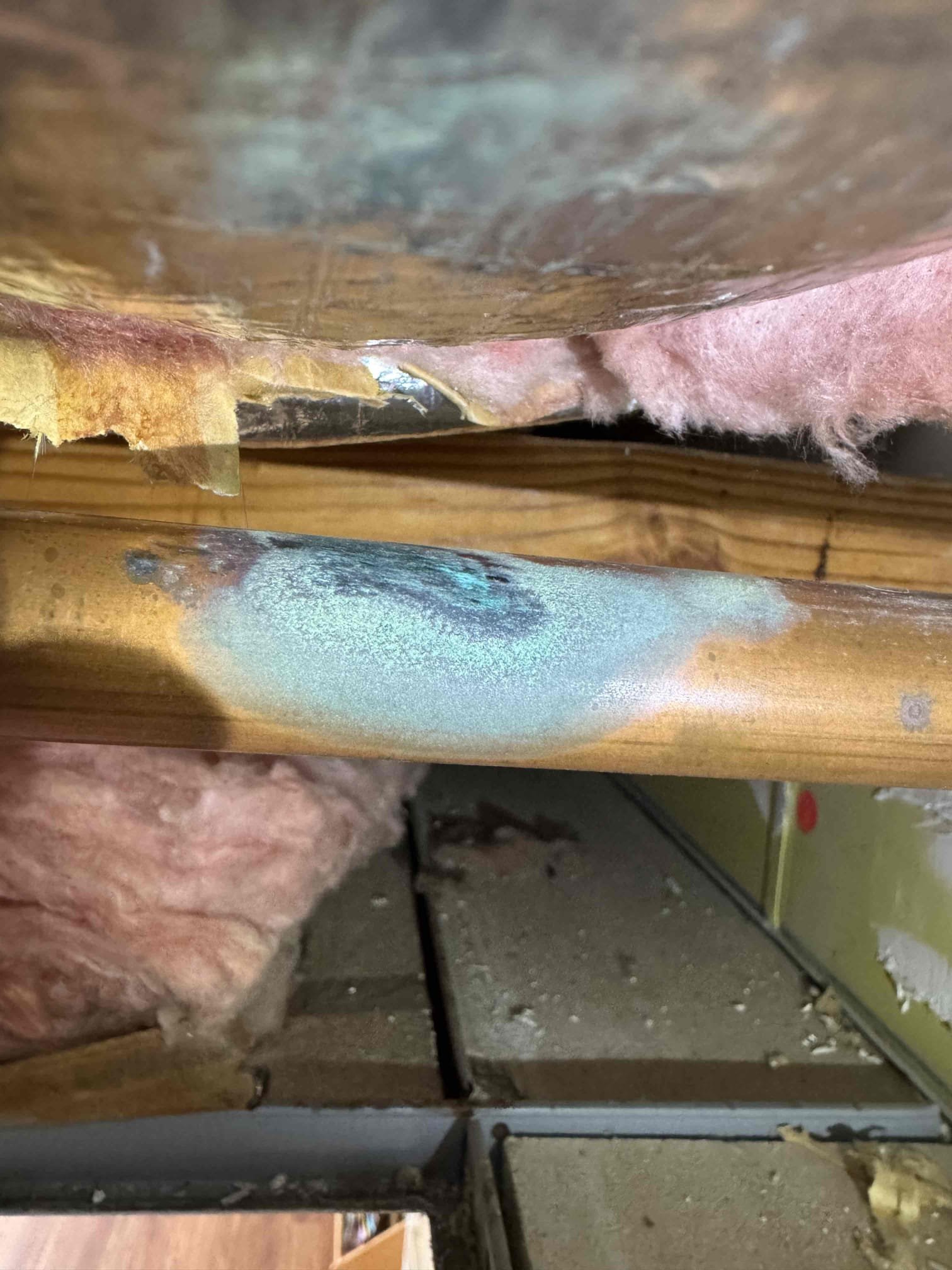
- Repeated pinhole leaks in the same area of copper — the pipe is failing chemically or from velocity erosion, and patching each hole only moves the next failure a few feet down the run
- Water standing in the meter box or vault — a leak between the meter and the building, which is usually the property owner’s responsibility rather than the water purveyor’s
Repair the Line or Replace It?
On a commercial property the decision is driven by the material, the age, the number of previous failures, and how much of the site has to be opened to reach the pipe. The table below is how we frame the conversation before any work starts.
| What we find | Usual recommendation | Why |
|---|---|---|
| A single failure at a fitting on an otherwise sound line | Repair | Isolated joint failures are common and the surrounding pipe still has service life |
| Second or third leak on the same run | Replace | Repeat failures mean the pipe itself is deteriorating, and each repair costs another excavation |
| Galvanized service line, decades old | Replace | Internal corrosion has already reduced the bore, so pressure and volume will not recover from a patch |
| Leak under a slab, drive lane, or loading area | Evaluate rerouting or trenchless options | Restoration of the surface is often the largest part of the disruption |
| Undersized line causing chronic low pressure | Replace and upsize | Repairing an undersized line fixes the leak and leaves the operational problem |
| Interior copper with multiple pinholes | Repipe the affected zone | Chemical or erosion failure affects the whole run, not just the hole you can see |
Whatever the scope, work on a water service usually involves the local water purveyor, a permit, pressure testing, and disinfection of new piping before the building is put back in service. If the property has a backflow assembly, it typically has to be retested after the line is disturbed.
Our Commercial Water Line Repair Process
- Confirm there is a leak and find it — we check static and flowing pressure, isolate sections, read the meter with the building idle, and use acoustic and line-tracing equipment to pinpoint the location before anything is opened up
- Define the shutdown window with you — for occupied buildings the schedule matters as much as the repair, so we plan the outage around tenants, service hours, and any process that cannot lose water
- Present the options and the scope — spot repair, partial replacement, reroute, or full service replacement, with the excavation and restoration each one requires spelled out
- Handle permitting and coordination — we pull the permits the jurisdiction requires and coordinate with the water purveyor on meter and service work
- Make the repair with correct materials — properly bedded and transitioned piping, rated fittings, tracer where applicable, and thrust or support details appropriate to the installation
- Pressure test, disinfect, and return to service — we test the line, disinfect and flush new piping as required, verify pressure at the far fixtures, and confirm backflow protection is intact before we call it done
Commercial Water Line Repair Across North Metro Atlanta
JMJ Plumbing has repaired and replaced water services and interior water lines for commercial buildings across North Metro Atlanta since 1996, from strip centers and restaurants to warehouses and medical offices. We serve Acworth, Alpharetta, Canton, Cumming, Dunwoody, Hickory Flat, Holly Springs, Johns Creek, Kennesaw, Marietta, Milton, Roswell, Sandy Springs, Smyrna, Woodstock, and the surrounding communities. Because service line work usually affects backflow protection, see our backflow testing, repair, and replacement page, and our commercial preventative maintenance program for buildings that want problems found early. For a break that is flooding a space right now, call our 24/7 commercial emergency service.
Commercial Water Line Repair FAQs
How do I know if our water main is leaking underground?
Shut every fixture off and watch the meter. If the low-flow indicator keeps turning with nothing running, water is escaping somewhere between the meter and the building. Other reliable signs are unexplained usage increases, building-wide pressure loss, soft or sunken ground along the line, and water standing in the meter box.
Will you have to shut water off to the entire building?
Usually for part of the work, but not always for all of it. Where the piping allows, we isolate a zone and keep the rest of the building in service. When a full shutdown is unavoidable, we schedule it around your operating hours and tell you the expected window in advance so tenants and staff can plan.
Who is responsible for the water line, us or the water authority?
In most jurisdictions the water purveyor owns the main and the meter, and the property owner owns everything from the meter to the building. That means a leak on the service line between the meter and your walls is generally yours to repair. Responsibility does vary locally, so we confirm it before the work is scoped.
Can a commercial water line be replaced without digging up the parking lot?
Often, yes. Depending on the pipe material, the depth, and the route, trenchless methods or a rerouted line can avoid tearing up drive lanes and parking. We evaluate the site first, because surface restoration is frequently the largest disruption and the biggest driver of how long the property is affected.
How long does a commercial water line repair take?
A located spot repair on an accessible line is often a single day. A full service replacement, a repair under pavement, or anything requiring permits, purveyor coordination, and surface restoration runs longer. Once we have located the leak and confirmed the scope, we give you a realistic schedule and the shutdown window.
Do new water lines have to be disinfected before use?
Yes. New or repaired potable water piping is normally disinfected and flushed before the building is returned to service, and many purveyors require it. It is a standard step, not an upsell, and it is the reason a repair sometimes takes longer than simply closing the pipe back up. Requirements vary by jurisdiction.
Is low water pressure always a leak?
No. A failing pressure reducing valve, a partly closed valve, a fouled backflow assembly, corroded galvanized piping, or an undersized service can all cause low pressure with no leak at all. That is why we test pressure at multiple points and check the components before assuming anything is broken underground.
Losing pressure or seeing water where it should not be? Book commercial water line service online, or call JMJ Plumbing at (770) 966-9654. We are a Georgia Master Plumber licensed and insured company (MP210296) serving North Metro Atlanta commercial properties since 1996, with 24/7 emergency service for breaks and major leaks. Financing is available through GreenSky.
Not sure where the leak is coming from? Start with leak detection and repair — we locate it before anything gets opened up.