
How much does faucet replacement cost in North Metro Atlanta? Faucet replacement from JMJ Plumbing typically runs $285 to $575. These are our own completed-job ranges across North Metro Atlanta, not national averages. Your final price depends on the specifics of the job, and we confirm it with you before any work begins.
JMJ Plumbing provides professional faucet repair and replacement services to keep your fixtures working properly and your water bills under control. Drips, loose handles, low water flow, and noisy faucets can waste water and often worsen over time if left unaddressed. We repair worn cartridges, seals, and supply-line issues, or replace the faucet with a clean, professional installation when replacement is the better option. We also inspect angle stops and water connections to help ensure you don’t end up with a new leak after the repair.
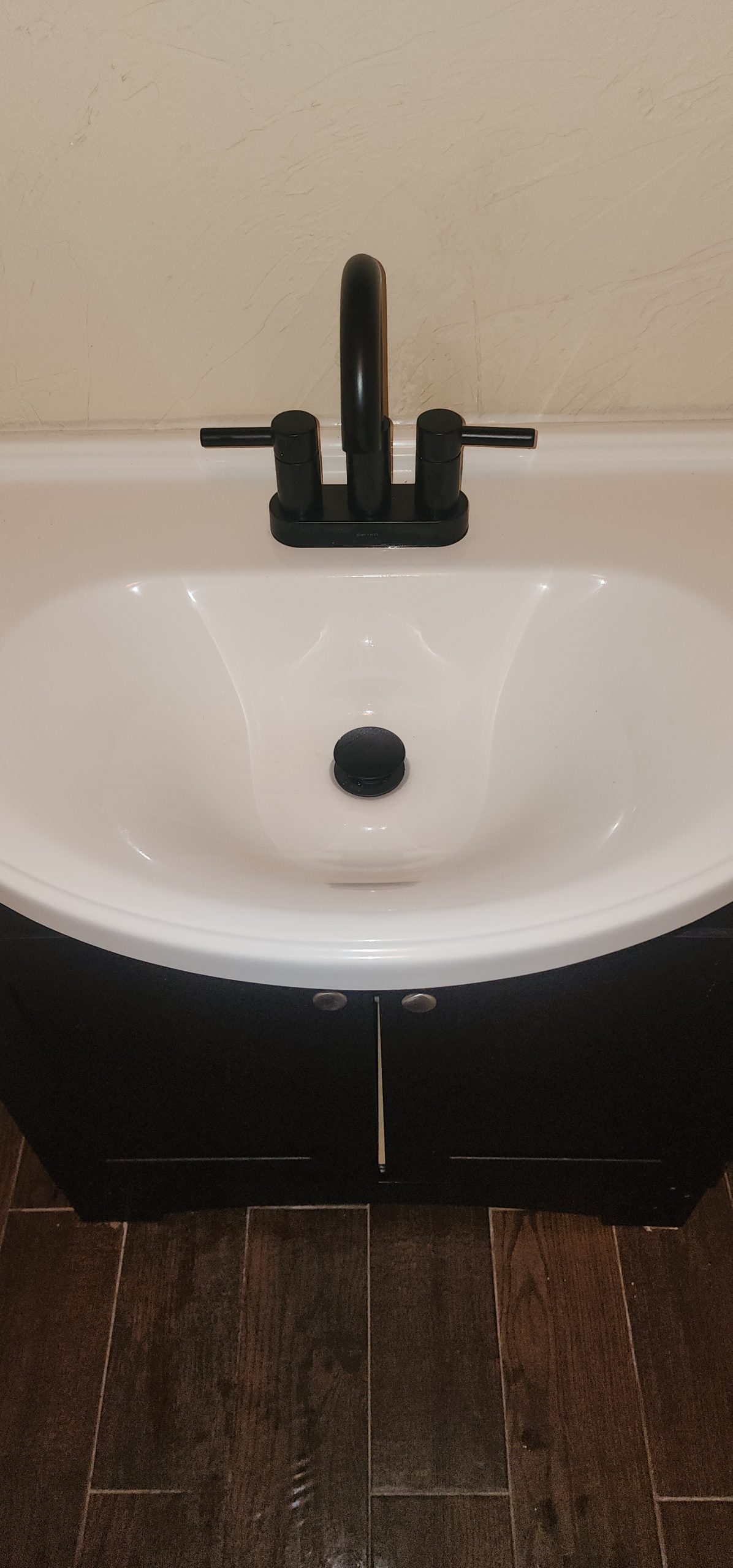
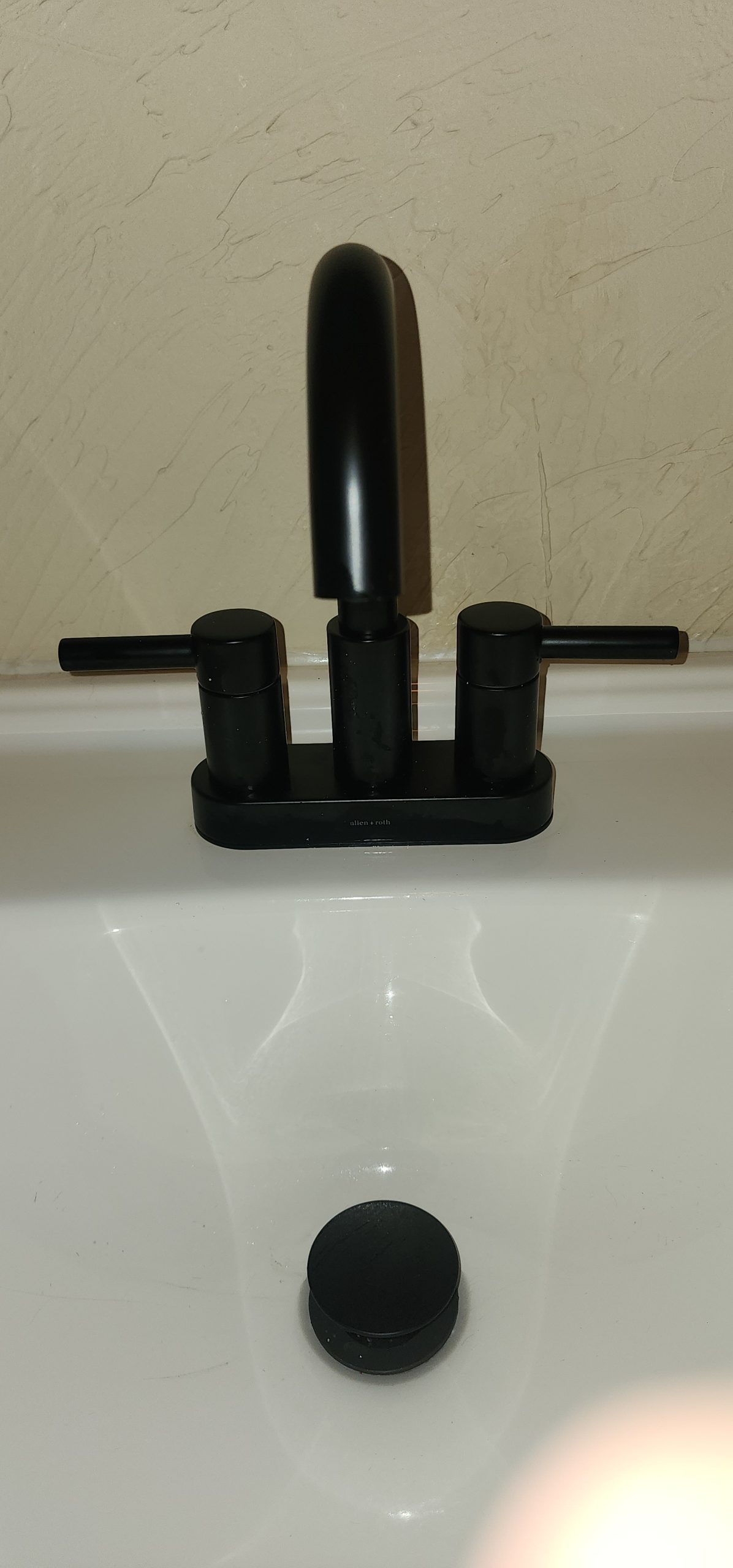
Signs You Need Faucet Repair or Replacement
Faucets rarely fail all at once. They give you warning first, and catching the problem early usually keeps it to a small repair instead of a damaged cabinet.
- A drip that will not stop — a worn cartridge, O-ring, or valve seat is no longer sealing, and the constant flow slowly wastes water and stains the sink.
- A stiff handle, or one that spins freely — the cartridge stem has corroded or the splines that grip the handle have stripped out.
- Water pooling in the cabinet under the sink — a supply line connection, angle stop, or the faucet’s own tailpiece is weeping, often long before you see it on the counter.
- Weak or sputtering flow at one fixture only — mineral scale and sediment have packed the aerator screen, which is common with the hard water found in parts of Cherokee and Cobb County.
- White or green crust around the base or spout — a slow seep is evaporating and leaving deposits behind, and green staining points to corrosion on brass or copper components.
- Hot and cold feel reversed or the temperature swings — the cartridge is failing or the temperature limit stop has shifted out of position.
- A wobbly faucet body — the mounting hardware under the deck has loosened, which puts stress on the supply connections every time you use it.
Repair or Replace?
There is no single right answer, but the decision usually comes down to the condition of the faucet body, whether parts are still available for that model, and how many times it has already been fixed. The table below reflects how we approach the call in the field.
| Situation | Typical recommendation | Why |
|---|---|---|
| Dripping spout, faucet otherwise solid | Repair | A cartridge, seat, or O-ring kit restores the seal without disturbing the sink deck. |
| Leak at the base of the faucet body | Replace | A leak through the body itself means internal corrosion or a cracked casting, which is not repairable. |
| Discontinued or off-brand faucet | Replace | When replacement cartridges are no longer made, a repair is temporary at best. |
| Second or third repair on the same faucet | Replace | Repeat failures usually mean the whole valve assembly is worn, not just one part. |
| Corroded angle stops or crumbling supply lines | Replace those parts regardless | Old shut-off valves that will not close are the reason a small leak becomes a flooded cabinet. |
| You want a different style, finish, or a pull-down sprayer | Replace | A working faucet can still be replaced for function or looks — nothing has to be broken. |
Our Faucet Repair and Replacement Process
- Confirm the symptom at the fixture — we run the faucet hot and cold, check the aerator and the sprayer, and look inside the cabinet with a light for evidence of a slow leak.
- Identify the faucet and its parts — brand and model determine which cartridge or repair kit fits, and whether parts are still available at all.
- Lay out your options — we explain what a repair involves versus a replacement, and what condition your angle stops and supply lines are in, so you can decide before any work begins.
- Isolate the water and protect the space — we shut off the supply at the stops or the main, drain the lines, and protect the cabinet and countertop before disassembly.
- Complete the repair or installation — new cartridge, new faucet, or new supply components, mounted securely and connected with the correct fittings for your plumbing.
- Test and clean up — we cycle hot and cold, check every connection under load, dry the cabinet floor, and show you what was done.
Faucet Repair and Replacement Across North Metro Atlanta
JMJ Plumbing has been working on kitchen, bath, and utility faucets across North Metro Atlanta since 1996, in everything from 1970s ranch homes to new construction. We serve Acworth, Alpharetta, Canton, Cumming, Dunwoody, Hickory Flat, Holly Springs, Johns Creek, Kennesaw, Marietta, Milton, Roswell, Sandy Springs, Smyrna, Woodstock, and the surrounding communities. Faucet trouble often travels with other fixture issues, so if you are also dealing with a temperature problem in the bath, see our shower valve repair page; if the kitchen sink is involved, garbage disposal service is frequently part of the same visit. When low pressure shows up at every faucet in the house rather than just one, the issue is usually upstream, and our water pressure and PRV page explains what to look for.
Faucet Repair and Replacement FAQs
Why does my faucet still drip after I replaced the washer?
Because most modern faucets do not seal with a washer at all — they use a cartridge or ceramic disc, and a worn seat or scored cartridge body will keep dripping no matter how many washers you swap. Mineral scale from hard water also chews up sealing surfaces. Replacing the correct internal part for that specific faucet model is what actually stops the drip.
Is it worth repairing a faucet or should I just replace it?
Repair is usually the better call when the faucet is a quality brand, the finish is intact, and parts are still available. Replacement makes more sense when the body is corroded, the model is discontinued, the base is leaking, or you have already repaired it more than once. We tell you which situation you are in before any work starts.
Can I supply my own faucet and have you install it?
Yes. Many homeowners pick out a faucet they like and have us install it. We do ask that you have the complete unit with all of its parts and that it fits your sink’s hole configuration — a three-hole sink will not accept a single-hole faucet without a deck plate. We will confirm the fit before we remove the old one.
What causes low water pressure at just one faucet?
A clogged aerator is the most common cause when only one fixture is affected. Sediment, mineral scale, and small bits of pipe debris collect in the aerator screen and choke the flow. Partially closed angle stops under the sink, a kinked supply line, or a failing cartridge can do the same thing. Low pressure at every fixture points to a house-wide problem instead.
Why is my faucet handle hard to turn?
A stiff handle almost always means the cartridge or stem has corroded or lost its lubrication. Hard water accelerates this, and forcing the handle can snap the stem off inside the faucet body, which turns a simple repair into a harder one. If a handle has gone from smooth to stiff, have the cartridge replaced before it breaks.
Do I need a plumber to fix a leaking faucet?
Not always — an aerator cleaning or a visible supply line connection is within reach for most homeowners. Call a plumber when the leak is coming from under the sink, from the faucet base, or from a shut-off valve, or when the handle or cartridge will not come apart. Those situations can flood a cabinet quickly if a fitting lets go.
What is the white crust building up around my faucet?
That is mineral scale, left behind as hard water evaporates. Parts of Cherokee and Cobb County have noticeably hard water, and the same deposits that show up on the outside of a faucet are also forming inside the cartridge and aerator. It is cosmetic on the surface but a good early warning that the internal parts are wearing.
Why does my faucet sputter or spit air?
Sputtering usually means air is trapped in the line, which is normal right after work on the plumbing and clears in a minute or two of running water. If it keeps happening, the cause is often a partially blocked aerator, a failing cartridge, or on a well system a pressure tank issue. Persistent air in the lines is worth having looked at.
Ready to stop the drip? Book faucet repair or replacement online, or call JMJ Plumbing at (770) 966-9654. We are a Georgia Master Plumber licensed and insured company serving North Metro Atlanta since 1996, with 24/7 emergency service when a faucet or supply line lets go outside of business hours. Financing is available through GreenSky.