
JMJ Plumbing provides pressure reducing valve (PRV) installation and repair services to help protect your home’s plumbing system from excessive water pressure. High water pressure can quietly damage fixtures, water heaters, ice makers, appliances, and valves over time, leading to costly repairs and premature equipment failure. We test your home’s water pressure, install or replace pressure reducing valves as needed, and verify consistent operating pressure throughout the system. The result is better protection for your plumbing, improved system reliability, and a reduced risk of leaks and water damage.
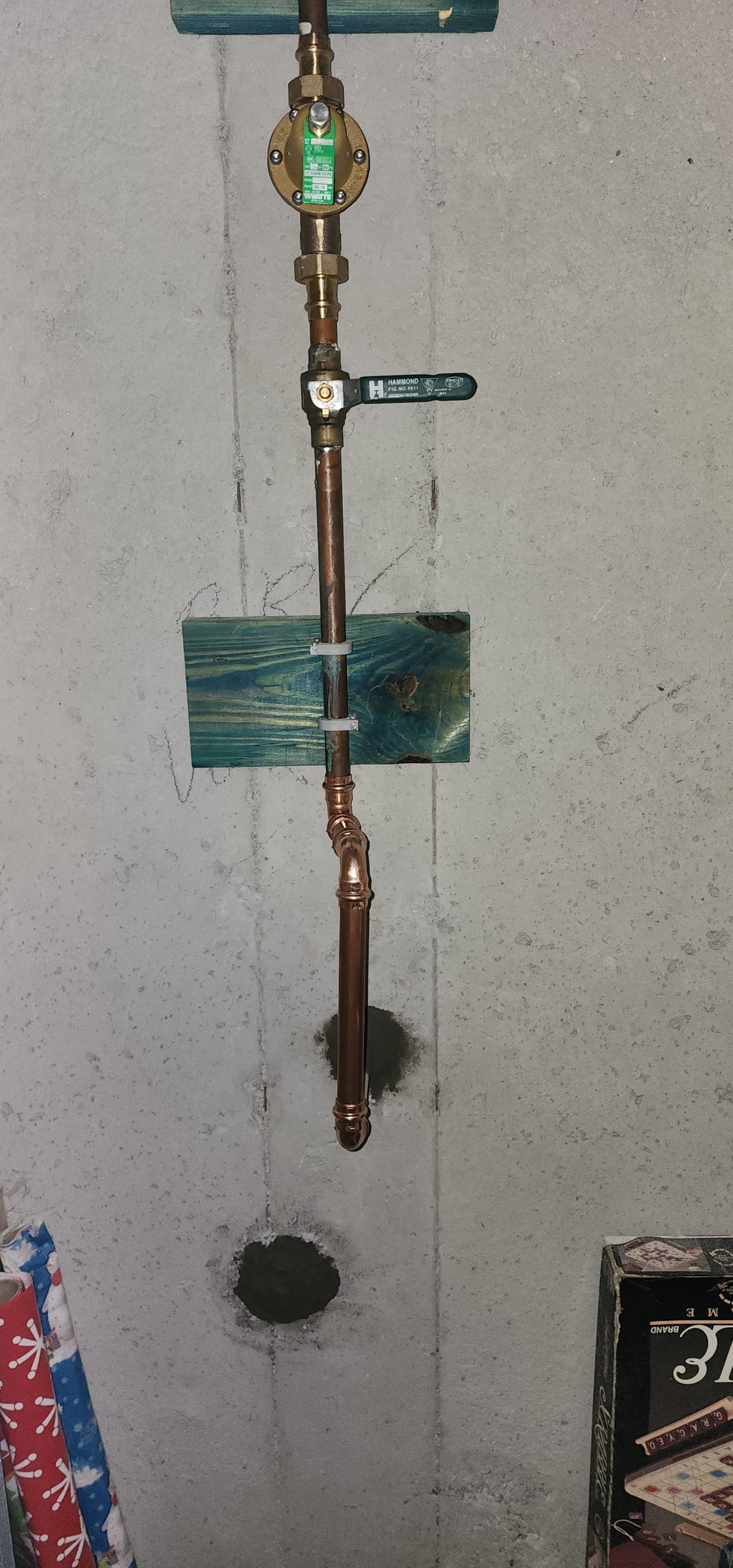
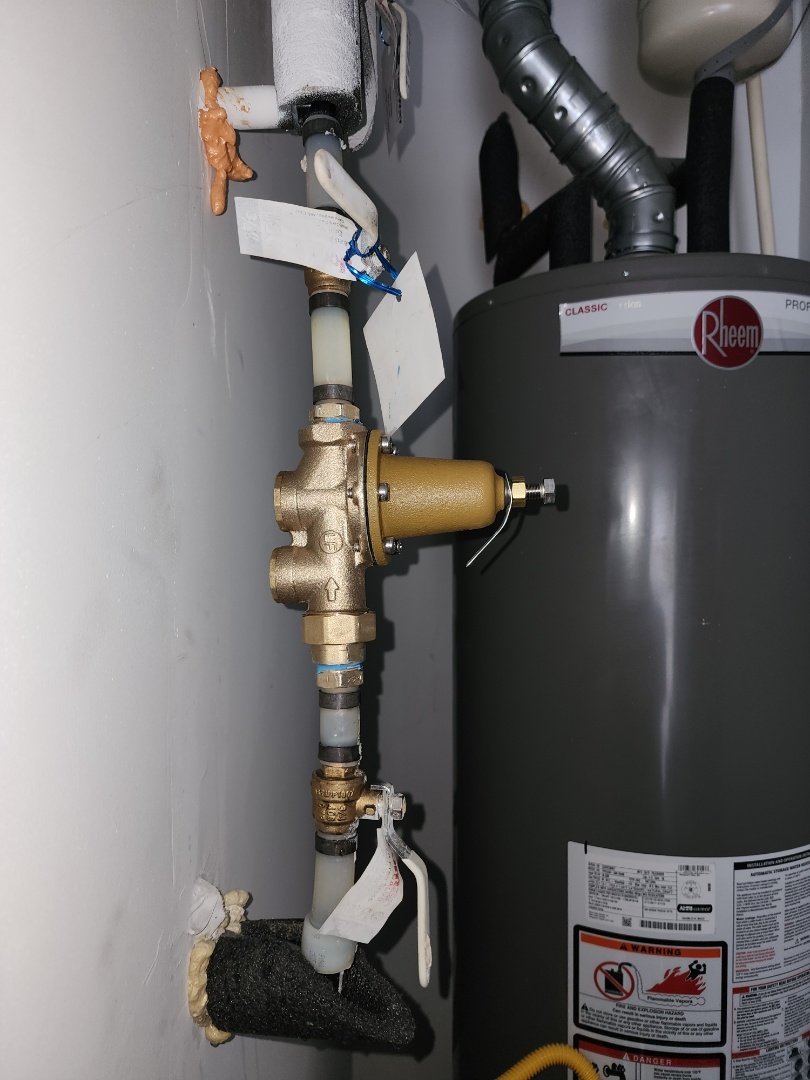
Signs You Need PRV or Water Pressure Service
Water pressure problems show up as damage to everything downstream long before anyone thinks to test the pressure itself. These are the warnings.
- Pipes bang or thump when a faucet or appliance shuts off — water hammer is far more violent on an over-pressurized system, and every bang is stress on joints and fixture connections.
- Faucets and toilet fill valves keep failing — supply pressure above the range fixtures are designed for chews through washers, seals, and fill valves at an accelerated rate.
- Water shoots out hard and splashes, or the toilet refills loudly and fast — the classic sign that pressure has drifted well above where it should be.
- The water heater relief valve drips or discharges — excess pressure, often from thermal expansion in a closed system, is being relieved through the T&P valve, which is a safety device and not a pressure regulator.
- Pressure is low everywhere in the house — a failed pressure reducing valve can stick closed or clog just as easily as it can drift high, and corroded supply piping produces the same symptom.
- Pressure swings from strong to weak with no pattern — the internal spring and diaphragm in the PRV are worn and no longer holding a stable setting.
- Unexplained leaks in more than one place — high pressure finds the weakest joints in the system first, then the next weakest.
What a Pressure Reducing Valve Does
Municipal water mains are pressurized for distribution across a whole system, including uphill runs and fire flow, and that pressure is frequently higher than residential plumbing should see. A pressure reducing valve, usually installed near where the water service enters the home or at the meter, uses a spring-loaded diaphragm to drop incoming pressure to a stable, lower working pressure for the house.
Most modern plumbing codes cap static water pressure at fixtures at 80 psi and require a pressure reducing valve where supply pressure exceeds that, though which code edition applies is set by your jurisdiction. In practice, most homes are comfortable in the 50 to 70 psi range: enough for good flow at upstairs fixtures, low enough that fixtures and appliances last. Above 80 psi, you are running the whole system harder than it was designed for, and appliance manufacturers commonly cite excessive pressure as grounds for excluding coverage.
A PRV is a mechanical part with a finite life. Springs weaken, diaphragms tear, and debris and mineral scale foul the seat, so a valve can drift high, drift low, or become erratic. Installing a PRV also creates a closed system, meaning water heated in the tank can no longer expand backward into the main. That is why a thermal expansion tank is normally required alongside a PRV; without it, expansion pressure has nowhere to go and shows up as a dripping relief valve and stressed fittings.
Our Water Pressure Service Process
- Test static and working pressure — we gauge the pressure at an outside hose bibb or laundry connection with the house at rest, then again with fixtures running, so we can see both the resting pressure and how it behaves under demand.
- Inspect the PRV and the whole system — we locate and evaluate the existing pressure reducing valve, check the main shutoff, look at the thermal expansion tank, and inspect the water heater relief valve for evidence of discharge.
- Identify the real cause — high, low, and fluctuating pressure have different causes. We rule out a partly closed valve, a clogged inlet screen, corroded supply piping, and utility-side issues before condemning the PRV.
- Adjust, rebuild, or replace — some valves can be adjusted back into range. Worn ones are replaced with a properly sized valve, and we add or replace a thermal expansion tank where the system needs one.
- Verify at the fixtures — we re-gauge after the work and check flow and pressure at fixtures on the upper floor as well as the lower, since a good reading at the hose bibb does not always mean a good result upstairs.
- Point out downstream damage — if high pressure has already taken a toll on supply lines, fill valves, or the water heater, we tell you what we saw so nothing surprises you later.
Water Pressure Service Across North Metro Atlanta
JMJ Plumbing has been diagnosing and correcting residential water pressure problems across North Metro Atlanta since 1996. Terrain here varies enough that pressure in one neighborhood can be very different from the next, so we test rather than assume. We serve Acworth, Alpharetta, Canton, Cumming, Dunwoody, Hickory Flat, Holly Springs, Johns Creek, Kennesaw, Marietta, Milton, Roswell, Sandy Springs, Smyrna, and Woodstock. Uncorrected high pressure is one of the fastest ways to ruin a plumbing system, which is why we check it before any repiping job and whenever we install water heaters. If your pressure loss is happening between the meter and the house rather than at the valve, that is a water line repair and replacement conversation.
Water Pressure FAQs
What should my home water pressure be?
Most homes run best between 50 and 70 psi. Modern plumbing codes generally cap static pressure at fixtures at 80 psi and require a pressure reducing valve above that, though the code edition in force depends on your jurisdiction. Below about 40 psi, upstairs fixtures and showers start feeling weak, especially when more than one is running.
How do I know if my PRV is bad?
The clearest evidence is a pressure gauge reading outside the normal range, or a reading that will not hold steady. Practical symptoms include banging pipes, fixtures that fail repeatedly, a water heater relief valve that drips, or pressure that has gradually dropped everywhere in the house. A gauge on a hose bibb answers the question in minutes.
Can high water pressure damage my plumbing?
Yes, and it is one of the most common causes of premature plumbing failure. Excess pressure accelerates pinhole leaks in copper, blows out washing machine hoses and supply connectors, wears fill valves and faucet cartridges quickly, and stresses water heater components. It also wastes water at every fixture. Correcting it is far cheaper than the damage it causes.
Why do my pipes bang when I shut off the water?
That is water hammer, the shock wave created when fast-moving water stops abruptly at a quick-closing valve. High supply pressure makes it much worse, so correcting the pressure is the first step. Loose or poorly supported pipe amplifies the noise, and arrestors at washing machines and dishwashers absorb the shock at the source.
How long does a pressure reducing valve last?
Most PRVs last somewhere in the range of ten to fifteen years, though hard water and sediment shorten that considerably by fouling the internal seat and diaphragm. They rarely fail suddenly. Instead the setting drifts, so pressure creeps up or down over months while you get used to it. Periodic gauge checks catch the drift early.
Why is my water pressure low in the whole house?
House-wide low pressure usually traces to one of four things: a failing or misadjusted pressure reducing valve, a main shutoff or meter valve that is not fully open, corroded galvanized supply piping that has closed down internally, or an issue on the utility side. Testing pressure at the hose bibb narrows it down quickly.
Do I need an expansion tank with a PRV?
In most cases yes. A pressure reducing valve creates a closed system, so when your water heater heats water and it expands, that pressure cannot push back into the main. A thermal expansion tank absorbs it. Without one you get relief valve discharge and stressed fittings, and most codes require the tank on closed systems.
Can I adjust the pressure reducing valve myself?
The adjusting screw is accessible, but turning it without a gauge on the system is guesswork and easy to overshoot. A worn valve also will not hold a new setting, so adjusting a failing PRV only masks the problem briefly. If you want it checked properly, we gauge it, adjust or replace it, and verify the result at the fixtures.
Banging pipes, weak showers, or fixtures that keep failing? Book a water pressure evaluation or call JMJ Plumbing at (770) 966-9654. We have served North Metro Atlanta since 1996 and offer 24/7 emergency service.
Not sure where the leak is coming from? Start with leak detection and repair — we locate it before anything gets opened up.