
How much does repiping a house cost in North Metro Atlanta? Repiping from JMJ Plumbing typically runs $750 to $1,250 per fixture, so the total depends on how many fixtures your home has. These are our own completed-job ranges across North Metro Atlanta, not national averages. Your final price depends on the specifics of the job, and we confirm it with you before any work begins.
JMJ Plumbing provides whole-home and partial repiping services to replace aging plumbing systems and eliminate recurring water line problems. Old galvanized, polybutylene, or deteriorating copper pipes can lead to chronic leaks, low water pressure, discolored water, and ongoing repair costs. We replace failing supply lines with modern, reliable materials and install proper shutoffs and isolation points to improve system performance and serviceability. When plumbing repairs become a regular occurrence, repiping is often the most cost-effective long-term solution for protecting your home and restoring dependable water service.
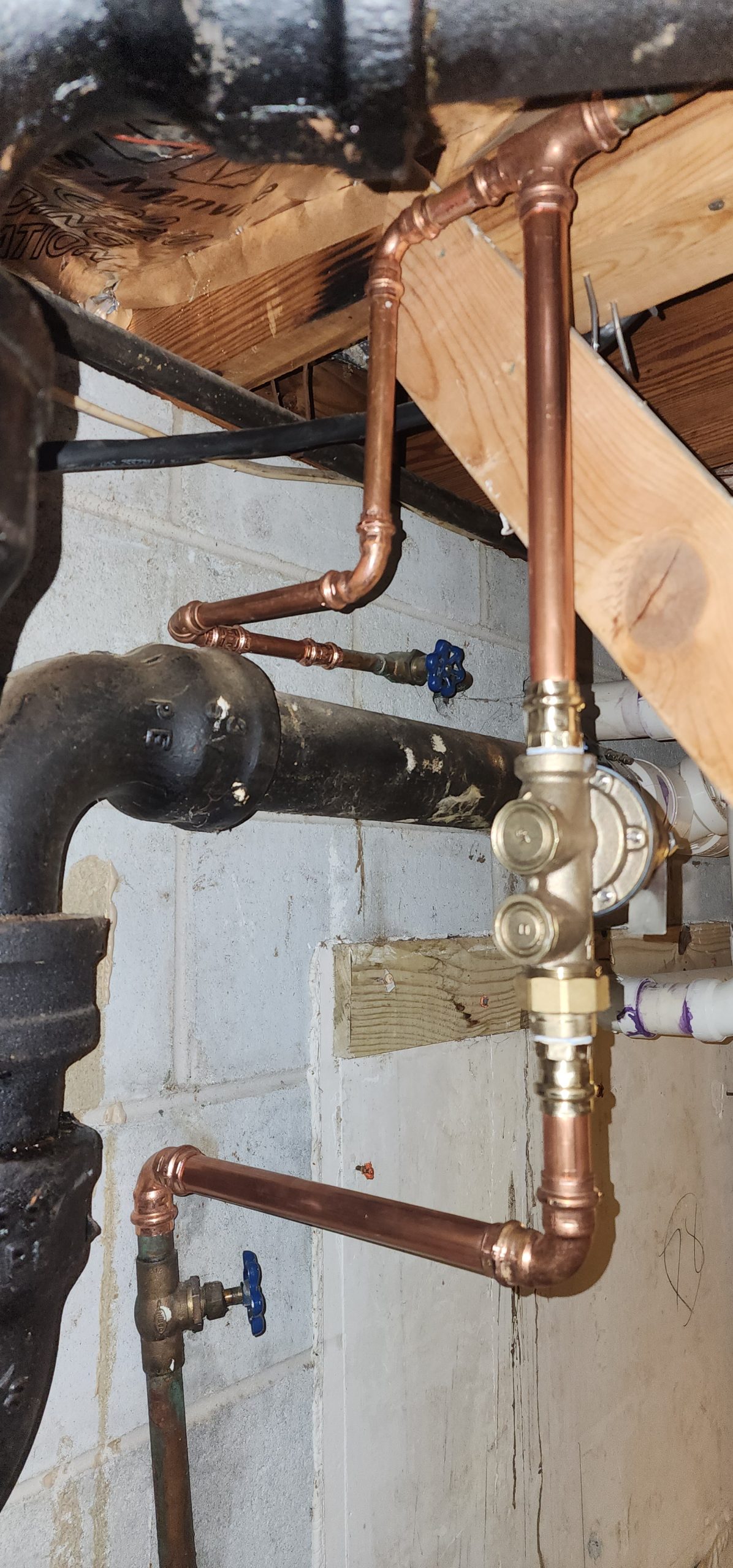
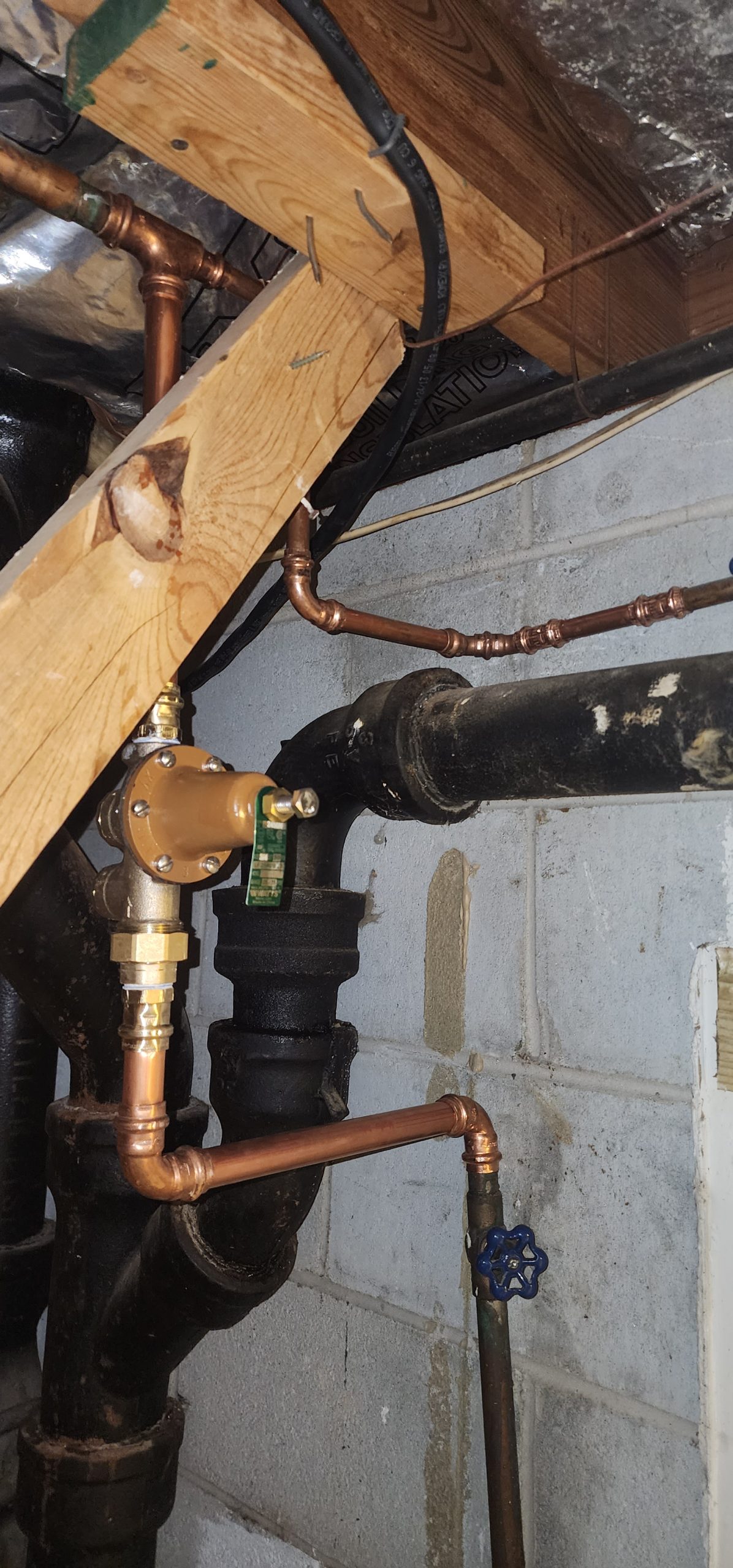
Signs You Need Repiping
Repiping is the right call when you are no longer fixing an isolated failure but chasing the same failure around the house. Watch for these.
- You have had multiple leaks in a short span — when pipe fails in more than one place, the material is at the end of its service life and the next leak is a matter of when, not if.
- Rusty, brown, or metallic-tasting water — galvanized steel corrodes from the inside, shedding rust into your water, and the discoloration is worst after the house has sat unused.
- Weak pressure at every fixture in the house — decades of scale and corrosion narrow the inside diameter of old supply pipe until very little water can get through.
- Your home has polybutylene supply lines — gray or blue plastic pipe with crimped fittings, used in homes built from the late 1970s into the mid 1990s, has a well-documented history of fitting and pipe failures.
- Green or white crust on copper joints — that is a slow leak drying in place, and it usually means the water chemistry or flow velocity is attacking the copper throughout the system.
- Pinhole leaks in copper lines — pinholes rarely happen once; when copper starts pitting, the same conditions exist in every other run of pipe in the house.
- Hot water takes far longer to arrive than it used to — scale buildup restricts flow and the volume of water sitting in oversized old lines has to clear first.
Pipe Materials and Why Homes Get Repiped
Repiping means replacing the pressurized water supply lines that carry hot and cold water to your fixtures. Which material is in your walls today is the single biggest predictor of whether you will need it.
| Material | Typical era | How it fails |
|---|---|---|
| Galvanized steel | Homes built before the 1960s | Corrodes internally, restricting flow and discoloring water; threaded joints rust and leak. |
| Polybutylene | Roughly late 1970s to mid 1990s | Fittings and pipe become brittle over time and fail, often without warning. |
| Copper | Mid-century to present | Pitting and pinhole leaks driven by water chemistry, high velocity, or high pressure; joints eventually weep. |
| CPVC | 1980s to present | Becomes brittle with age and UV exposure; cracks at fittings, particularly where stressed. |
| PEX | 2000s to present | The current standard for residential repiping; flexible, resists scale, and needs far fewer fittings inside walls. |
PEX and copper are both legitimate choices for a repipe today. PEX runs in long flexible lengths, which means fewer concealed joints, faster installation, and less demolition to get it in place; it also tolerates the mineral content in hard water areas well. Copper is rigid, long-proven, and preferred by some homeowners, but it costs more to install and, in homes where copper has already pitted, the underlying water conditions have not changed. Whichever material you choose, the approved materials and installation methods are set by the plumbing code your jurisdiction has adopted, so we confirm local requirements before starting.
One more thing worth checking before you repipe: your incoming water pressure. Excessive static pressure accelerates pinholes and stresses every fitting in the system, and installing new pipe without correcting it means repeating the same failures on a new schedule.
Our Repiping Process
- Whole-home evaluation — we identify your existing pipe material, test static pressure, inspect accessible runs, the water heater connections, and the main shutoff, and map how the system is laid out.
- Plan and material selection — you get a clear scope: which lines are being replaced, what material, where access openings will be needed, and how long the water will be off each day.
- Protect the house and open access — floors and furnishings are covered and we open only the access points the plan calls for, working through closets, cabinets, and attic or crawlspace runs wherever that is possible.
- Install the new supply system — new hot and cold lines are run and supported properly, fixtures are reconnected, new shutoff valves are installed at each fixture, and the system is tied back into the main.
- Pressure test and inspect — the new system is pressure tested for leaks before anything is closed up, and where your jurisdiction requires an inspection, we schedule it at the appropriate stage.
- Close up and clean up — access openings are patched and the work area is cleaned. We walk the house with you, run every fixture, and confirm pressure and hot water delivery at each one.
Repiping Across North Metro Atlanta
JMJ Plumbing has been repiping homes across North Metro Atlanta since 1996, including a lot of polybutylene from the building boom of the 1980s and early 1990s and galvanized steel in older in-town houses. We repipe homes in Acworth, Alpharetta, Canton, Cumming, Dunwoody, Hickory Flat, Holly Springs, Johns Creek, Kennesaw, Marietta, Milton, Roswell, Sandy Springs, Smyrna, and Woodstock. Before we quote a repipe we always check PRV and water pressure, because excessive pressure destroys new pipe as readily as old. If the failure is limited to the buried line between the meter and the house, water line repair and replacement may be all you need, and if you have water showing up in the foundation we will look for slab leaks first.
Repiping FAQs
How long does it take to repipe a house?
Most single-family repipes take two to five working days, depending on the size of the home, the number of bathrooms, and how accessible the existing runs are. Water is typically shut off only during parts of each day, not the whole time. Patching and paint after the plumbing is done can add to that timeline.
Do you have to tear out my walls to repipe?
Not the whole wall. Repiping requires access openings at specific points, and a good plan minimizes them by routing through attics, crawlspaces, closets, and cabinets wherever possible. PEX helps because its flexibility means fewer openings than rigid pipe. We show you where the openings will be before we start, so there are no surprises.
Can I stay in my home during a repipe?
Most homeowners do. Water is off for stretches during the work day and restored before we leave when the stage of work allows it. Expect noise, dust, and crews moving through the house. If you work from home or have small children, plan around the loudest days, which are usually the demolition and rough-in days.
Is PEX or copper better for repiping?
For most homes, PEX. It installs with fewer concealed joints, handles hard water and freeze stress better, and costs less to put in. Copper remains an excellent, long-proven material that some homeowners prefer and some situations call for. If copper in your home has already developed pinholes, switching materials also removes the conditions causing them.
How do I know if I have polybutylene pipes?
Look at the pipe entering your water heater, at the main shutoff, and under sinks. Polybutylene is usually gray, sometimes blue or black, flexible, and stamped with a code beginning PB. It was used widely from the late 1970s into the mid 1990s. If you see it, have it evaluated even if it has not leaked yet.
Will repiping fix my low water pressure?
It will if the cause is corroded or scaled-up supply pipe, which is common in galvanized steel systems where the inside diameter has closed down over decades. It will not help if the restriction is elsewhere, such as a failing pressure reducing valve, a partly closed main shutoff, or a problem on the utility side. We test before recommending.
Does repiping include drain and sewer lines?
No. Repiping replaces the pressurized water supply lines that feed your fixtures. Drain, waste, and vent piping is a separate system with its own materials and failure modes, and it is replaced separately. Some older homes need both, and if that is your situation we will tell you plainly and let you stage the work.
How long will new water lines last?
PEX and copper installed correctly are both expected to last decades, and manufacturers design them for long service lives. What shortens that is what shortened the last system: excessive water pressure, aggressive water chemistry, poor support, or freeze exposure. Correcting pressure and insulating vulnerable runs protects the investment you just made.
Tired of patching the same pipes? Book a repiping evaluation or call JMJ Plumbing at (770) 966-9654. Serving North Metro Atlanta since 1996, with 24/7 emergency service when a line lets go and financing available through GreenSky.
Not sure where the leak is coming from? Start with leak detection and repair — we locate it before anything gets opened up.