
JMJ Plumbing provides professional sewer camera inspection services that take the guesswork out of diagnosing drain and sewer line problems. A camera inspection is especially valuable when issues keep returning or before investing in a major repair. We use advanced sewer camera equipment to identify blockages, root intrusion, pipe breaks, offsets, and overall pipe condition, then clearly explain our findings and what they mean for your plumbing system. You get visual evidence, honest recommendations, and a repair plan you can trust.
Signs You Need a Sewer Camera Inspection
A camera inspection replaces guessing with seeing. These are the situations where it pays for itself immediately.
- The same drain clogs again and again — repeat blockages in the same line mean something structural is holding waste back, and cabling clears the symptom without ever showing you the cause.
- More than one fixture is slow or backing up — when a tub, a toilet, and a floor drain are all affected, the problem is in the main line and needs to be located before anyone digs.
- You are buying a home — a sewer scope is one of the few ways to find a failing lateral before closing, and standard home inspections do not include it.
- You smell sewer gas but cannot find the source — cracks, dry traps, and separated joints all smell the same from above ground; the camera tells them apart.
- There are large trees near the sewer route — root intrusion is the most common cause of lateral failure in older North Metro Atlanta neighborhoods, and it is invisible until it is severe.
- You are about to spend money on a repair — confirming the location, depth, and extent of a failure before excavation is what keeps a small repair from becoming an exploratory dig.
- Your home has cast iron, clay, or Orangeburg piping — these older materials deteriorate in predictable ways, and a camera shows you how far along yours is.
What a Sewer Camera Inspection Shows
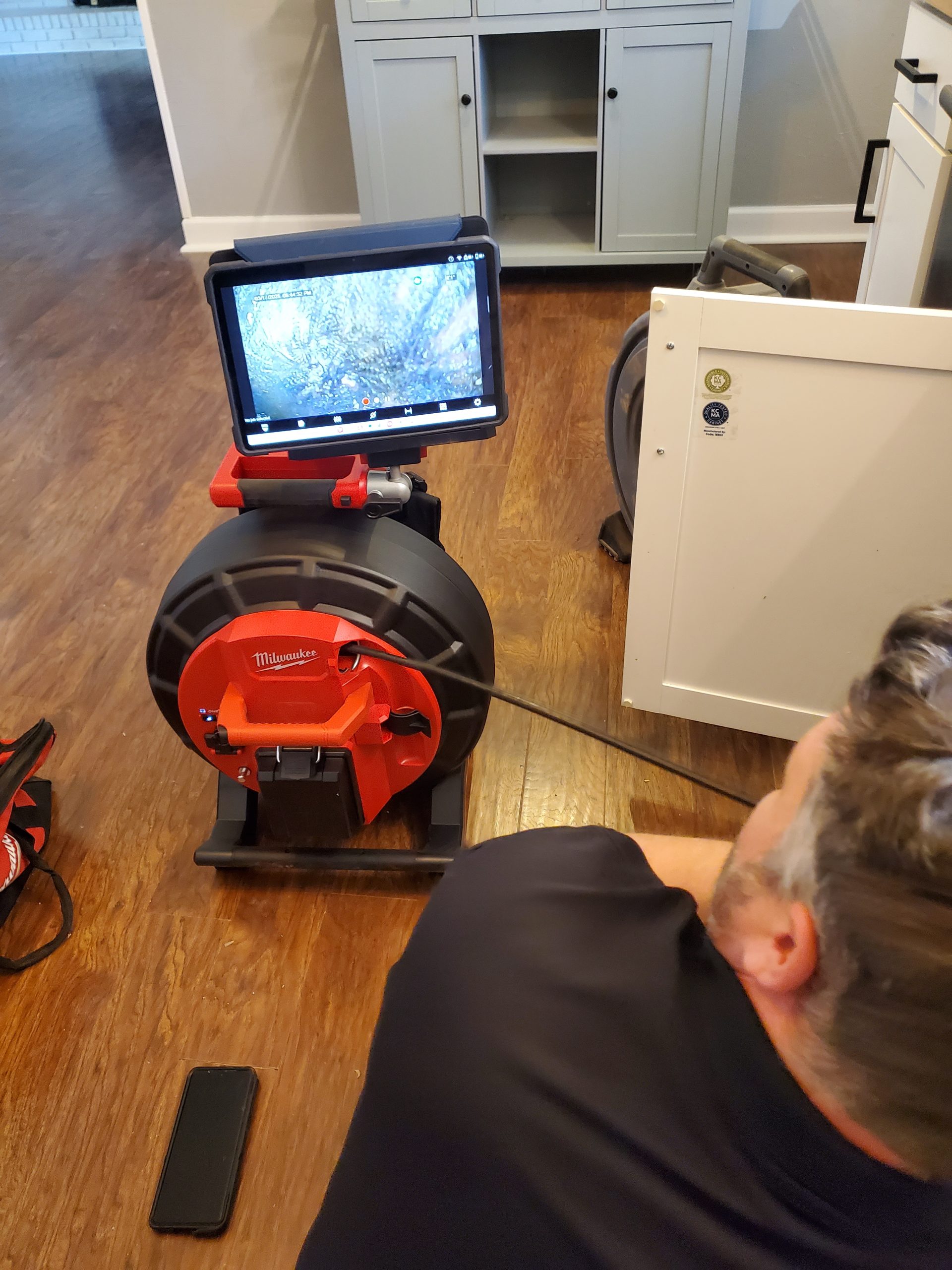
A sewer camera is a waterproof, self-lit camera head on a flexible push rod that we feed through your drain line. What you see on the monitor is the actual inside of your pipe in real time, which turns a set of vague symptoms into a specific diagnosis. Typical findings include root intrusion pushing through joints, cracks and longitudinal fractures, offset or separated joints where sections have shifted, bellies or sags where a length of pipe has lost its slope and holds standing water, heavy scale and corrosion on the inside of cast iron, grease buildup, collapsed sections, and foreign objects that never should have gone down a drain.
The camera also identifies your pipe material and diameter, which matters because cast iron, clay, Orangeburg, and PVC all fail differently and have different repair options. Just as important, the camera head carries a sonde, a small transmitter that a locator picks up from the surface. That lets us mark the exact position and depth of a problem on your lawn or driveway, so a repair can be excavated at one point instead of chasing the line.
There are limits worth knowing. A camera needs a reasonably clear path, so a line packed solid with grease or roots may need to be cleared before it can be fully inspected. The camera shows condition, not pressure integrity, so it will not prove whether a small crack is actively leaking. And it travels through drain lines, not pressurized water supply lines, which are diagnosed a different way.
Our Sewer Camera Inspection Process
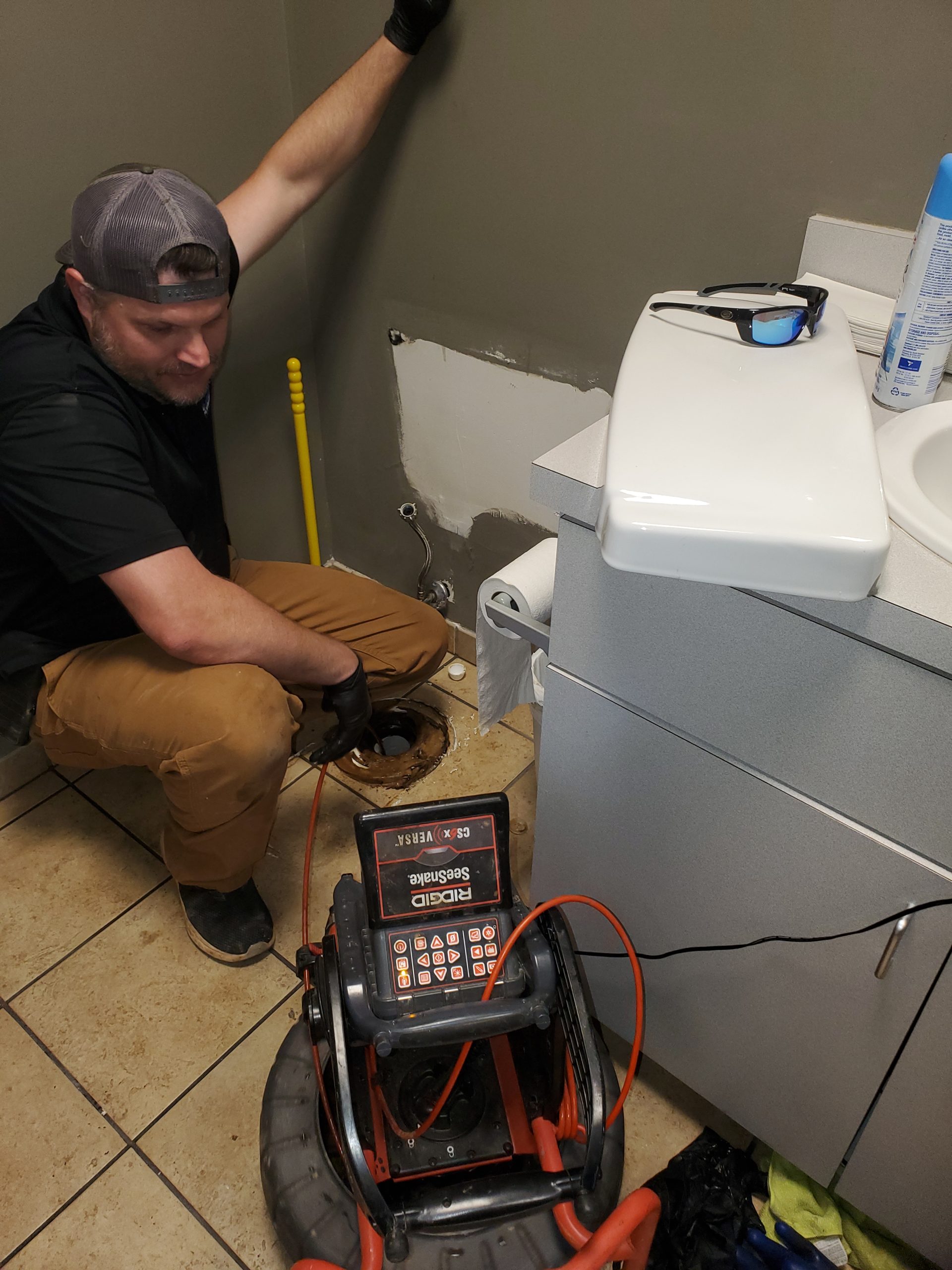
- Find the right access point — we start at an exterior cleanout when one exists. If your home does not have one, we can access the line through a pulled toilet or another suitable opening and discuss adding a cleanout for the future.
- Run the line and record — the camera is fed through the pipe toward the municipal connection or septic tank, recording the full run so nothing depends on memory.
- Locate and mark findings — when we see a defect, the sonde in the camera head is picked up with a locator so we can mark its position and depth on the surface above.
- Review the footage with you — we walk you through what is on the screen and explain what each finding means in practical terms, including what will fail soon and what is fine to leave alone.
- Give you clear options — if repair is needed, you get a specific recommendation tied to what the camera showed, not a generic quote, along with the alternatives your line qualifies for.
Sewer Camera Inspection Across North Metro Atlanta
JMJ Plumbing has been inspecting residential sewer lines across North Metro Atlanta since 1996, and the housing stock here makes it worth doing: older neighborhoods with clay and cast iron laterals, mature hardwoods over the sewer route, and heavy clay soil that shifts and holds water. We inspect lines in Acworth, Alpharetta, Canton, Cumming, Dunwoody, Hickory Flat, Holly Springs, Johns Creek, Kennesaw, Marietta, Milton, Roswell, Sandy Springs, Smyrna, and Woodstock. When the camera finds a real defect, our sewer line repair and replacement team takes it from there; when it finds nothing more than buildup, drain cleaning and clog removal is all you need. We also run camera work for property managers and business owners through our commercial sewer camera inspection service.
Sewer Camera Inspection FAQs
Should I get a sewer scope before buying a house?
Yes, especially for any home built before the 1980s or with mature trees near the sewer route. A standard home inspection does not include the buried lateral, so a failing sewer line is one of the largest repairs a buyer can inherit unknowingly. A scope before closing tells you the pipe material and its actual condition.
Will a camera inspection unclog my drain?
No. A camera is a diagnostic tool, not a cleaning tool, and it inspects the line rather than clearing it. In practice the two often go together: we clear the blockage first so the camera has a clear path, then inspect to find out why the line clogged in the first place and whether it will happen again.
Can you find where my sewer line runs underground?
Yes. The camera head contains a sonde transmitter that a handheld locator tracks from the surface, so we can trace the route of the line and mark its position and depth on your lawn or driveway. That is how a repair gets excavated at a single point instead of digging a long exploratory trench.
Do I need a cleanout for a camera inspection?
An exterior cleanout is the easiest access and the one we prefer. If your home does not have one, which is common in older houses, we can usually access the line by pulling a toilet or using another suitable opening. If you are likely to need service again, adding a cleanout makes every future visit faster and cheaper.
What does a belly in a sewer line mean?
A belly is a section of pipe that has settled and lost its downward slope, so waste and water sit in it instead of draining away. On camera it looks like standing water partway down the line. Bellies cause repeat clogs because solids settle in the low spot, and they are generally corrected by replacing that section.
How long does a sewer camera inspection take?
A straightforward residential inspection usually takes under an hour once we have access to the line. It runs longer when a blockage has to be cleared before the camera can pass, when the line is unusually long, or when we need to locate and mark several findings on the surface for a planned repair.
Can I get a copy of the video?
Inspections are recorded, and we review the footage with you on site so you can see the findings for yourself rather than taking our word for it. Ask your technician about getting a copy for your records, which is worth having if you are negotiating a home purchase or documenting a condition over time.
How often should a sewer line be inspected?
For most homes, when symptoms appear or before a purchase is enough. If your line has known root intrusion, older clay or cast iron pipe, or a history of repeat backups, a periodic inspection every few years catches deterioration while it is still a repair rather than a replacement. Commercial kitchens generally need it more often.
Stop guessing about what is happening underground. Book a sewer camera inspection or call JMJ Plumbing at (770) 966-9654. We have served North Metro Atlanta since 1996 and offer 24/7 emergency service when a backup cannot wait.