
JMJ Plumbing provides professional sewer line repair and replacement services to restore reliable drainage and prevent recurring plumbing problems. Frequent backups, unpleasant odors in the yard, or slow drains throughout the home can be signs of a damaged or failing sewer line. We diagnose the root cause—whether it’s tree root intrusion, a pipe collapse, a belly in the line, or separated pipe sections—and recommend the most effective repair solution. From targeted repairs to complete sewer line replacement, our goal is to restore dependable flow and eliminate the cycle of repeat backups and service calls.
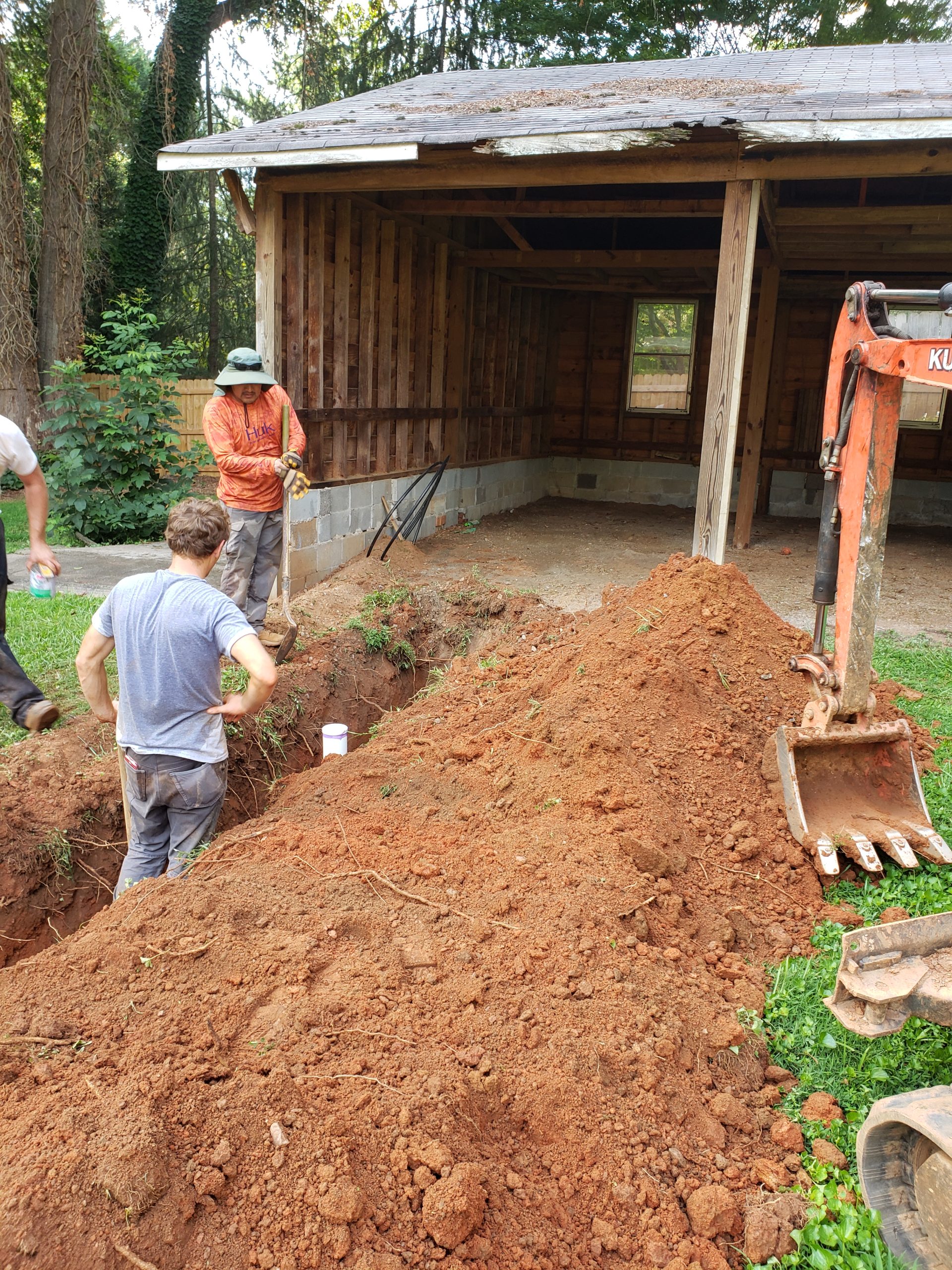
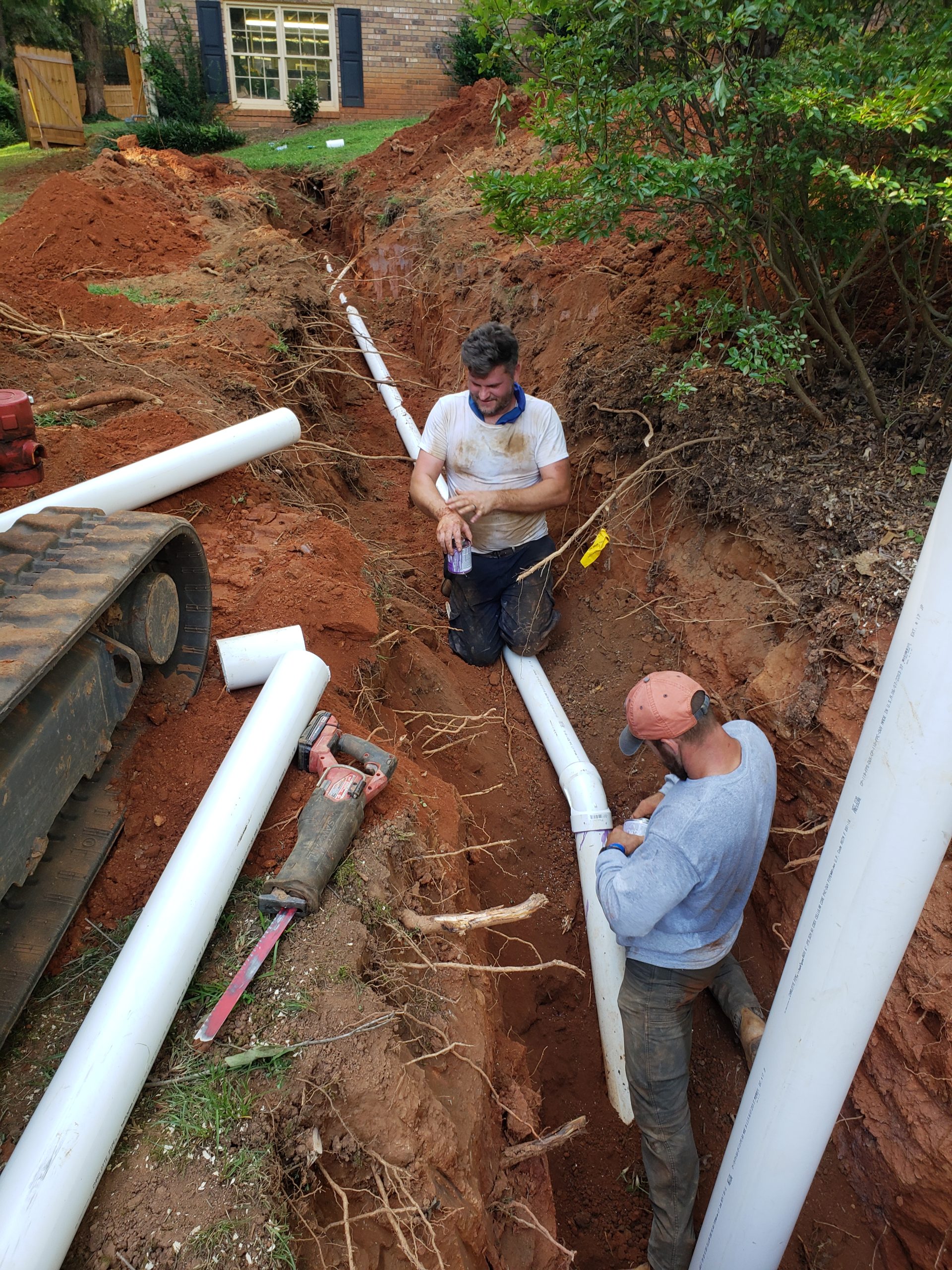
Signs You Need Sewer Line Repair
A failing sewer lateral rarely fails quietly. These are the symptoms homeowners call us about, roughly in the order they tend to appear.
- Several fixtures back up at once — when the tub, the lowest toilet, and a floor drain all run slow together, the restriction is in the main line leaving the house, not in an individual branch.
- Toilets gurgle or the water level rises when you run the washer — waste is struggling past a blockage and pushing air back through the nearest trap.
- Sewage odor in the yard, the crawlspace, or near a cleanout — a cracked or separated pipe is letting gas and effluent escape into the soil.
- One strip of lawn is greener, spongier, or sinking — the line below it is leaking and feeding that soil, or the soil is washing into a broken pipe and leaving a void.
- Clogs come back every few months no matter how often the line is cleared — cabling removes the obstruction but not the cause, which is usually root intrusion at a joint or a section of pipe that has sagged.
- Backups happen after heavy rain — groundwater is entering through cracks and offset joints and overwhelming the line.
- Cracks in a slab, a driveway, or a foundation wall near the sewer route — long-term leakage has been washing out the supporting soil underneath.
Repair or Replace?
Not every damaged sewer line needs full replacement. What matters is whether the failure is at one point or spread along the pipe, and whether the pipe still has enough structural integrity to work with. A camera inspection is what answers that, which is why we run one before quoting anything.
| Approach | Best for | Trade-offs |
|---|---|---|
| Spot repair (open cut) | A single break, an offset joint, or a crushed section in an otherwise sound line. | Least disruptive and quickest, but does nothing for the rest of the pipe if it is also deteriorating. |
| Trenchless lining (CIPP) | Lines with cracks, root intrusion at joints, and general deterioration where the host pipe still holds its shape and grade. | Avoids trenching along the run, but requires access pits and is not a fix for a collapsed pipe or a section that has lost its slope. |
| Pipe bursting | Collapsed, badly deteriorated, or undersized lines on a reasonably straight route. | Replaces the pipe end to end with far less digging, but still needs entry and exit pits and clear access along the path. |
| Full open-cut replacement | Lines with sags or bellies, multiple failures, wrong slope, or routes with too many bends for trenchless equipment. | Most disruptive to the yard and the most restoration work, but it corrects grade and gives you a completely new line. |
Older North Metro Atlanta neighborhoods make this decision more often than newer subdivisions do. Homes built through the middle of the last century commonly have cast iron inside and clay or Orangeburg fiber conduit outside, and all three materials have finite lives: cast iron scales and rusts from the inside out, clay joints separate and invite roots, and Orangeburg deforms out of round. Add the heavy red clay soil in this region, which holds water and shifts, plus mature hardwoods whose roots follow any moisture they can find, and joints that were watertight for decades start letting go.
Permitting also affects the plan. Whether a sewer replacement requires a permit, an inspection, or right-of-way approval depends on your jurisdiction and whether the work reaches into public property, so we confirm the local requirements before scheduling the dig.
Our Sewer Line Repair Process
- Camera inspection and locate — we run a camera through a cleanout to see the actual condition of the pipe, identify the material, and use a sonde to mark the depth and position of the problem on the surface.
- Diagnosis and options — we show you what the camera found and explain which approaches your line is a candidate for, including what each one means for your yard, your driveway, and your landscaping.
- Permits and utility locates — where the work requires a permit or an inspection, we handle the local process, and utility locates are called in before any excavation so gas, power, and communication lines are marked.
- Repair or replacement — spot repair, lining, bursting, or open-cut replacement, using pipe and fittings appropriate for a buried sanitary line and set at the proper slope.
- Backfill and restoration — the trench is backfilled and compacted in lifts so the ground does not settle later, and disturbed areas are graded back.
- Final camera verification — we camera the finished line end to end to confirm flow, slope, and that every joint is sound before we call the job complete.
Sewer Line Repair Across North Metro Atlanta
JMJ Plumbing has been repairing and replacing residential sewer lines across North Metro Atlanta since 1996, and we know how differently these jobs go in an older in-town neighborhood versus a subdivision built in the last twenty years. We serve Acworth, Alpharetta, Canton, Cumming, Dunwoody, Hickory Flat, Holly Springs, Johns Creek, Kennesaw, Marietta, Milton, Roswell, Sandy Springs, Smyrna, and Woodstock. Every sewer job starts with a sewer camera inspection so you are not paying for guesswork, and if your line turns out to be sound we may simply be looking at drain cleaning and clog removal instead. When a failing sewer sits alongside deteriorating supply piping, our water line repair and replacement crew can address both while the yard is already open.
Sewer Line Repair FAQs
How do I know if my sewer line is broken or just clogged?
The tell is whether the problem keeps coming back. A one-time clog clears and stays clear. A broken, root-filled, or sagging line backs up again within weeks or months no matter how well it was cabled. A camera inspection settles it in under an hour by showing the pipe wall, the joints, and any standing water.
Can tree roots really break a sewer pipe?
Yes. Roots do not drill through sound pipe, but they find the tiny gaps at clay joints, cracked cast iron, and failed seals, then swell as they grow and force the opening wider. Mature hardwoods around older North Metro Atlanta homes are a frequent cause. Once roots are established, cutting them buys time but the entry point remains.
What is trenchless sewer repair?
Trenchless repair rebuilds or replaces a sewer line without digging a trench along its full length. Cured-in-place lining pulls a resin-saturated liner through the old pipe and hardens it into a new pipe within the old one. Pipe bursting pulls a new pipe through while fracturing the old one outward. Both still need access pits at each end.
Will you have to dig up my yard or driveway?
Sometimes, but not always. Trenchless methods limit excavation to entry and exit pits, which spares most of the lawn and hardscape. Full replacement requires a trench along the pipe route. Which one your line qualifies for depends on its condition, its slope, and how many bends it has, all of which the camera inspection reveals.
How long does a sewer line replacement take?
Most residential sewer replacements are finished in one to three days of actual work, with trenchless jobs typically on the shorter end. Depth, length, soil conditions, driveway or sidewalk crossings, and permit inspections all extend the schedule. We give you a realistic window once the line is inspected and the approach is chosen.
Does homeowners insurance cover sewer line replacement?
Usually not. Standard homeowners policies generally exclude damage to the buried sewer lateral itself and wear-related failures, though some carriers sell a service line endorsement that does cover it. Resulting water damage inside the home is treated separately. Read your policy or call your agent before assuming either way, since terms vary widely.
Am I responsible for the sewer line, or is the city?
In most jurisdictions the homeowner owns and maintains the lateral from the house to the connection at the public main, and the utility maintains the main itself. Where exactly that responsibility line falls varies by city and county, so we confirm it with your local authority before work starts rather than assuming.
How long does a sewer line last?
It depends heavily on material. PVC installed today is expected to last many decades. Cast iron and vitrified clay commonly reach fifty years or more before joints and walls begin failing. Orangeburg fiber conduit, used in some mid-century homes, has the shortest life of the group and is generally at or past the end of it.
If your drains keep backing up, book a sewer line evaluation or call JMJ Plumbing at (770) 966-9654. We have served North Metro Atlanta since 1996, offer 24/7 emergency service for active sewage backups, and financing is available through GreenSky for larger replacements.
Not sure where the leak is coming from? Start with leak detection and repair — we locate it before anything gets opened up.