
JMJ Plumbing provides professional shower valve and cartridge repair services to restore consistent water temperature, pressure, and performance. Dripping showers, fluctuating temperatures, and low water flow are often caused by worn cartridges, faulty valves, or malfunctioning pressure-balancing components. We diagnose the issue, repair or replace the necessary parts, and ensure smooth, reliable operation. If access to the plumbing is limited, we’ll recommend the most efficient and least invasive approach to complete the repair correctly and protect the surrounding finishes.
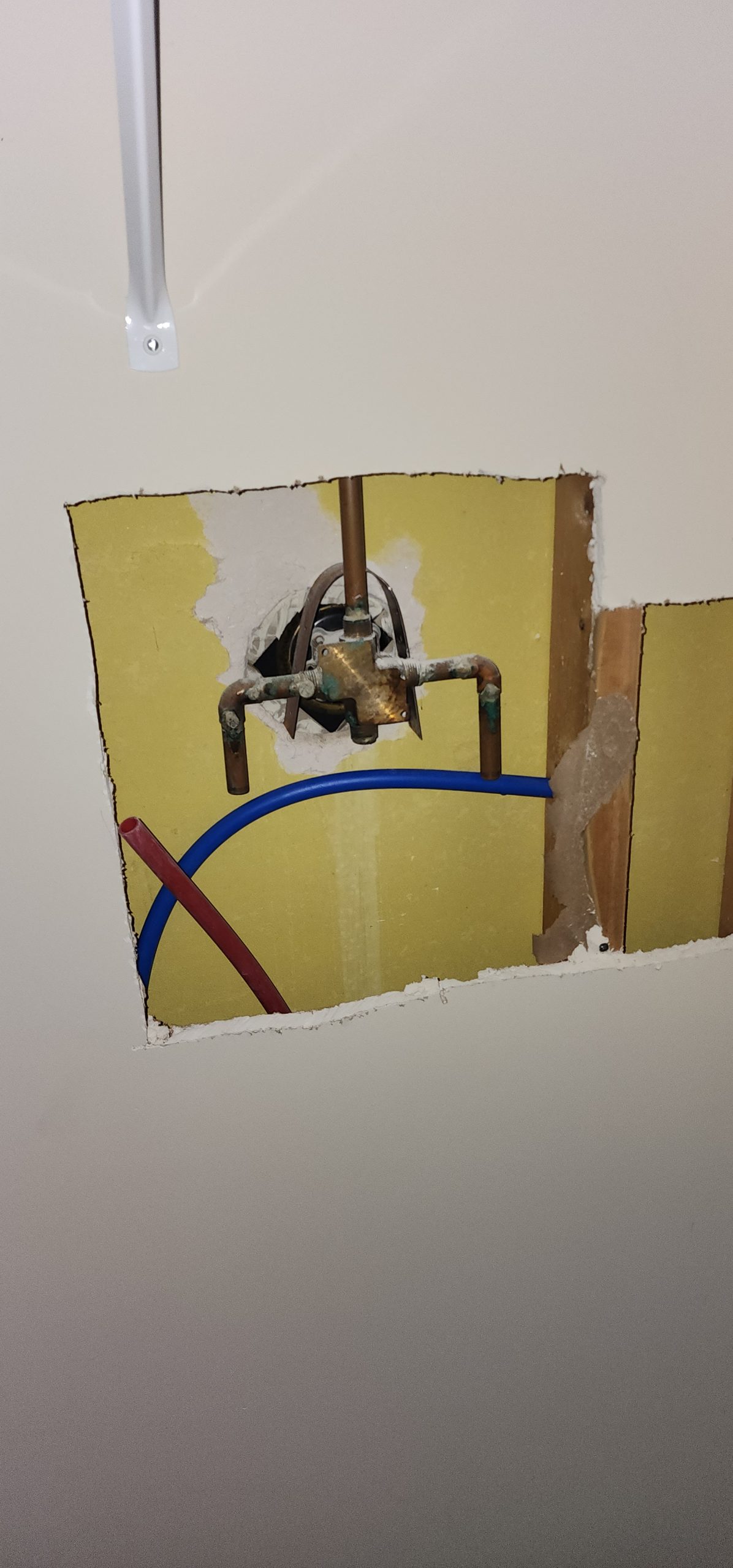
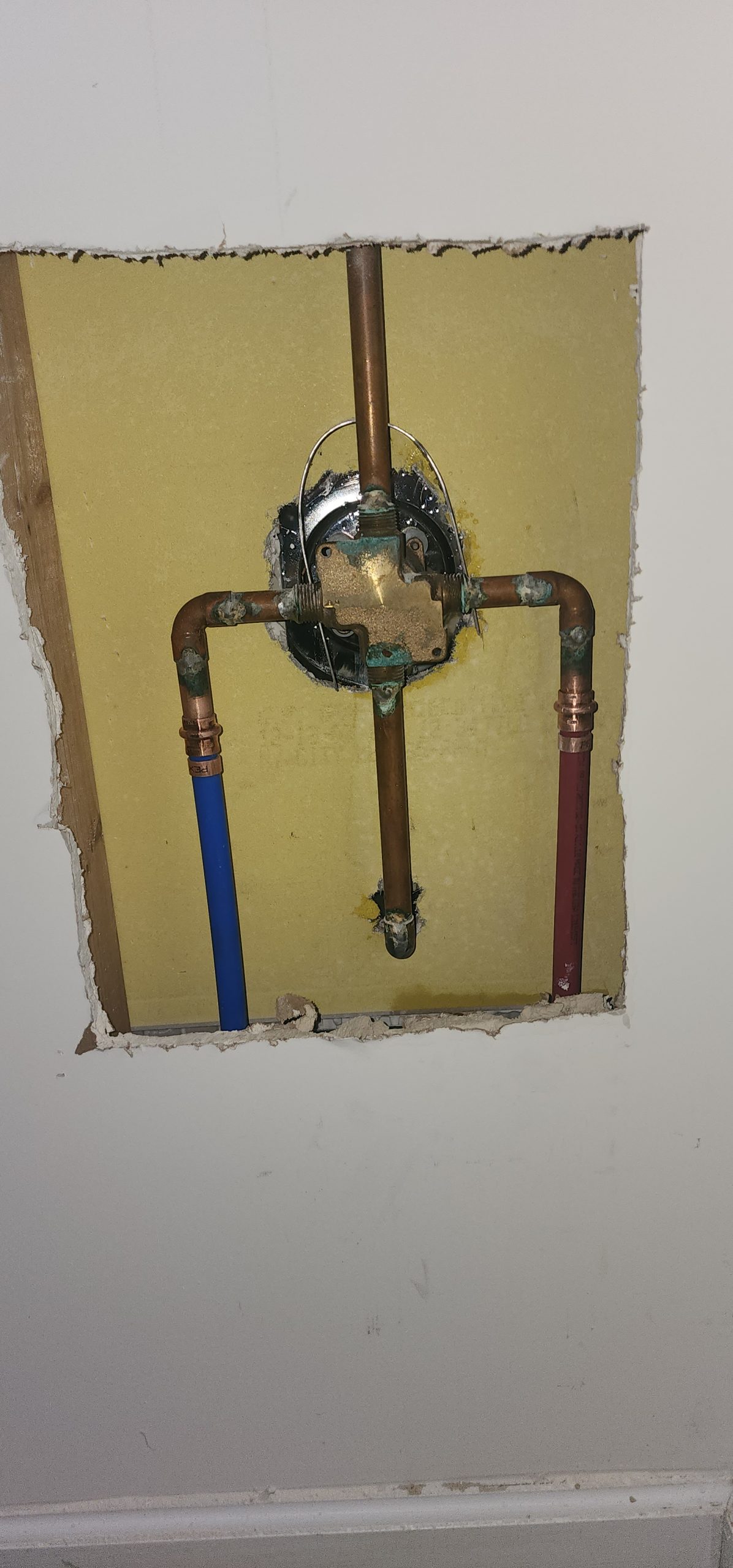
Signs You Need Shower Valve Repair
Shower valve trouble usually starts small: a drip you stop noticing, or a handle that needs an extra shove. These are the symptoms that point at the valve itself rather than the shower head or the drain.
- The shower head drips constantly — a worn cartridge seal or a scored valve seat is letting water past, and no amount of extra turn on the handle will stop it.
- Water temperature swings while you shower — the pressure-balancing spool inside the valve is sticking, usually from mineral scale, so it can no longer compensate when a toilet flushes or the washer fills.
- The handle spins loose, feels gritty, or has gone stiff — the cartridge stem and the handle broach are worn or corroded together, and the stem can snap off inside the valve body.
- You get no hot water at the shower even though the rest of the house has plenty — the mixing cartridge has failed or debris is blocking the hot side of the valve.
- Water shows up on the wall, the ceiling below, or around the trim plate — the valve body, its solder joints, or the escutcheon seal is leaking behind the tile where you cannot see the damage.
- The shower keeps running after you shut the handle off — internal seals have failed and the valve is no longer closing fully, which wastes water every hour of the day.
- Green or rust-colored staining around the trim — the valve connections are corroding, which is common on older brass and galvanized assemblies.
Types of Shower Valves and How They Work
Every shower has a valve buried in the wall that blends hot and cold water and sends it to the head. Which type you have determines whether a cartridge swap solves the problem or the whole valve body needs to come out.
| Valve type | How it works | What usually fails |
|---|---|---|
| Compression (two handles) | Separate hot and cold stems that you mix by hand, with no automatic temperature compensation. | Rubber washers and brass seats wear out and drip; stems seize. |
| Pressure-balancing (single handle) | A spool or piston reacts to a pressure drop on the hot or cold side and throttles the other side to hold your temperature steady. | The spool sticks with scale or debris, causing sudden hot and cold swings. |
| Thermostatic | A temperature-sensing element holds the water at a set point, usually paired with a separate volume control. | The thermostatic cartridge drifts off its setting or seizes entirely. |
| Diverter or transfer valve | Routes water between the tub spout, the shower head, and any body sprays. | Internal seals wear and water dribbles from the tub spout while the shower runs. |
Two things decide the repair path. First, cartridges and trim are brand-specific, so the replacement part has to match the valve body already in your wall; mixing brands is not an option. Second, most adopted plumbing codes now require shower valves to provide scald protection, though the exact requirement and the date it took effect vary by jurisdiction. If your valve is an older non-compensating model, replacement brings the shower up to current practice at the same time.
Hard water is a real factor in parts of Cherokee and Cobb County. Mineral deposits build up on the moving parts inside a cartridge and shorten its life, which is why the same shower can need a cartridge more often than one on softer water.
Our Shower Valve Repair Process
- Diagnose the actual fault — we check supply temperature and pressure at other fixtures first so we know whether the problem is the valve, the water heater, or a pressure issue affecting the whole house.
- Identify the valve brand and model — we read the trim markings or pull the cartridge to identify the manufacturer, because the correct cartridge or repair kit has to match that specific valve body.
- Recommend the least invasive fix that will last — if the valve body is sound, a cartridge and seal service solves it. If the body is corroded, leaking, or an obsolete design with no parts available, we quote a full valve replacement.
- Access the valve carefully — when there is a closet or adjacent room behind the shower, we work through an access opening there. When the only route is through tile, we make a controlled opening and protect the tub, floor, and surrounding surfaces.
- Install and set the valve — new cartridge or new valve body, connections made with the right method for your piping, and the temperature limit stop set so the handle cannot be turned to a scalding position.
- Test and close up — we run the shower through the full handle range, verify steady temperature while another fixture draws water, check for leaks at every joint, and reassemble the trim.
Shower Valve Service Across North Metro Atlanta
JMJ Plumbing has been repairing and replacing shower valves for North Metro Atlanta homeowners since 1996, from mid-century ranches with two-handle compression valves to newer builds with thermostatic trim. We work in Acworth, Alpharetta, Canton, Cumming, Dunwoody, Hickory Flat, Holly Springs, Johns Creek, Kennesaw, Marietta, Milton, Roswell, Sandy Springs, Smyrna, and Woodstock. Because the same water chemistry that shortens cartridge life also affects the rest of your fixtures, we often look at faucet repair and replacement and PRV and water pressure on the same visit, and in homes with failing supply lines we will talk through whole-home repiping before you spend money on valve after valve.
Shower Valve FAQs
Why does my shower drip after I turn it off?
A shower that keeps dripping almost always has a worn cartridge or a damaged valve seat that no longer seals. The handle feels closed, but water is still slipping past the internal seal. In most cases a matching replacement cartridge fixes it. If the seat inside the brass body is pitted or the valve is corroded, the body itself needs replacing.
Can you replace a shower valve without cutting the wall?
Often yes, if the repair is limited to the cartridge, seals, or trim, since those come out through the front of the valve. Replacing the entire valve body requires access to the plumbing behind it. When there is a closet or adjacent room on the other side, we go in from there instead of cutting tile.
How long does a shower valve last?
A quality shower valve body commonly lasts twenty years or more, but the cartridge inside it is a wear part and typically needs replacing every several years. Hard water shortens that interval considerably because mineral scale builds up on the moving parts. If your valve needs a cartridge every year, the water quality is worth investigating.
Why is my shower water suddenly too hot or too cold?
Sudden temperature swings usually mean the pressure-balancing spool in the valve is sticking and can no longer react when another fixture draws water. Scale and debris are the common causes. It can also point at a water heater problem or a house-wide pressure issue, so we test other fixtures before condemning the valve.
Do I have to replace the whole valve or just the cartridge?
Just the cartridge, in most cases. If the valve body is solid and parts are still available for your brand, a new cartridge and fresh seals restore normal operation. Full replacement makes sense when the body is corroded or leaking, when the model is obsolete with no parts, or when an old valve has no scald protection.
Do I need a new shower trim kit too?
Not usually. If we are replacing the cartridge inside an existing valve, your current handle and escutcheon go right back on. A new trim kit is needed when you replace the valve body with a different brand or series, or when the existing trim is corroded, pitted, or no longer matches an available cartridge.
Why does only my shower have low pressure?
When one shower is weak and the rest of the house is fine, the restriction is local: a clogged shower head, a fouled cartridge, or debris caught in the valve after recent work on the water main. If pressure is low at every fixture, the cause is upstream, usually a failing pressure reducing valve or corroded supply piping.
Is a leaking shower valve an emergency?
It can be. A valve leaking inside a wall soaks framing and drywall you cannot see, and that damage compounds every day it runs. If you see water on the ceiling below the bathroom, staining on the wall, or hear running water with everything shut off, shut the water off and call us right away.
Ready to stop the drip or the temperature swings? Book shower valve service online or call JMJ Plumbing at (770) 966-9654. We have served North Metro Atlanta since 1996 and offer 24/7 emergency service when a valve is leaking behind the wall and cannot wait until morning.