
JMJ Plumbing provides professional washing machine plumbing installation and repair services to help prevent leaks, water damage, and unexpected flooding. Washer hookups are one of the most common sources of household water damage when valves, supply hoses, or washer boxes fail. We install and replace washer boxes, shutoff valves, and supply lines, and can upgrade older valves to reliable quarter-turn models for improved performance and easier operation. If your drain standpipe is leaking, backing up, or not draining properly, we’ll diagnose and repair the drainage issue as well. The result is a safer, more dependable laundry setup that protects your home from costly water damage.
Signs You Need Washer Box Service
The laundry connection is one of the few places in a house where pressurized supply lines, a drain and an appliance all meet behind a machine nobody moves. Watch for these warning signs:
- Water stains or soft drywall around the box — a slow weep at a valve stem or hose connection is soaking the wall cavity behind the washer.
- The standpipe overflows during the drain cycle — lint and detergent buildup has narrowed the drain line, or the trap is not properly vented.
- Valves drip or will not shut off completely — the rubber washers and seats inside old laundry valves are worn or corroded.
- Supply hoses look bulged, blistered or rusted at the crimp — the hose is close to bursting under full house pressure.
- A musty or sewer odor near the laundry — the standpipe trap has dried out or is being siphoned empty by a bad vent.
- The box is rusted, cracked or pushing the washer off the wall — an older metal or surface-mounted box has reached the end of its life.
- A loud bang when the washer valve closes — water hammer, usually from missing arrestors or high incoming water pressure.
How a Washer Box Works
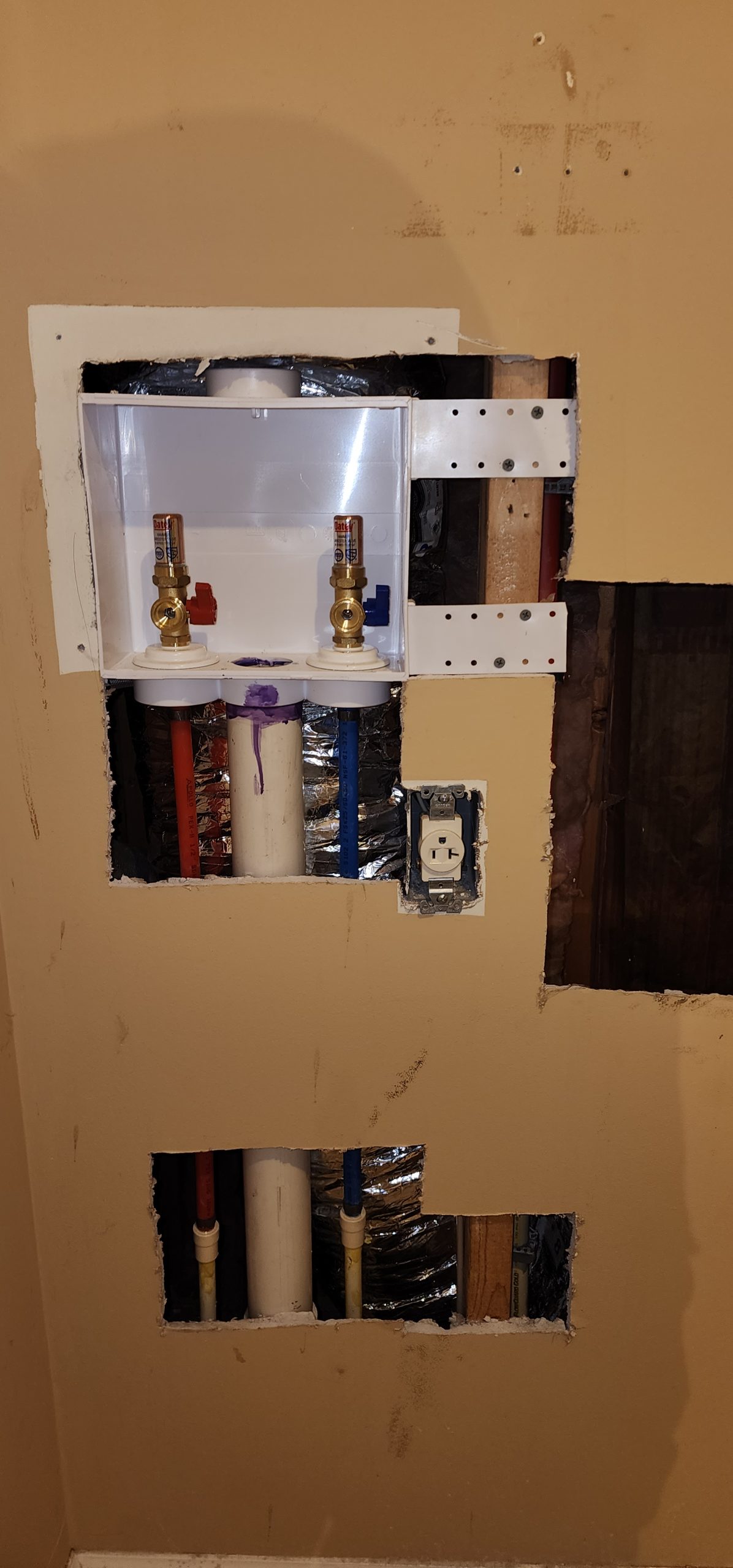
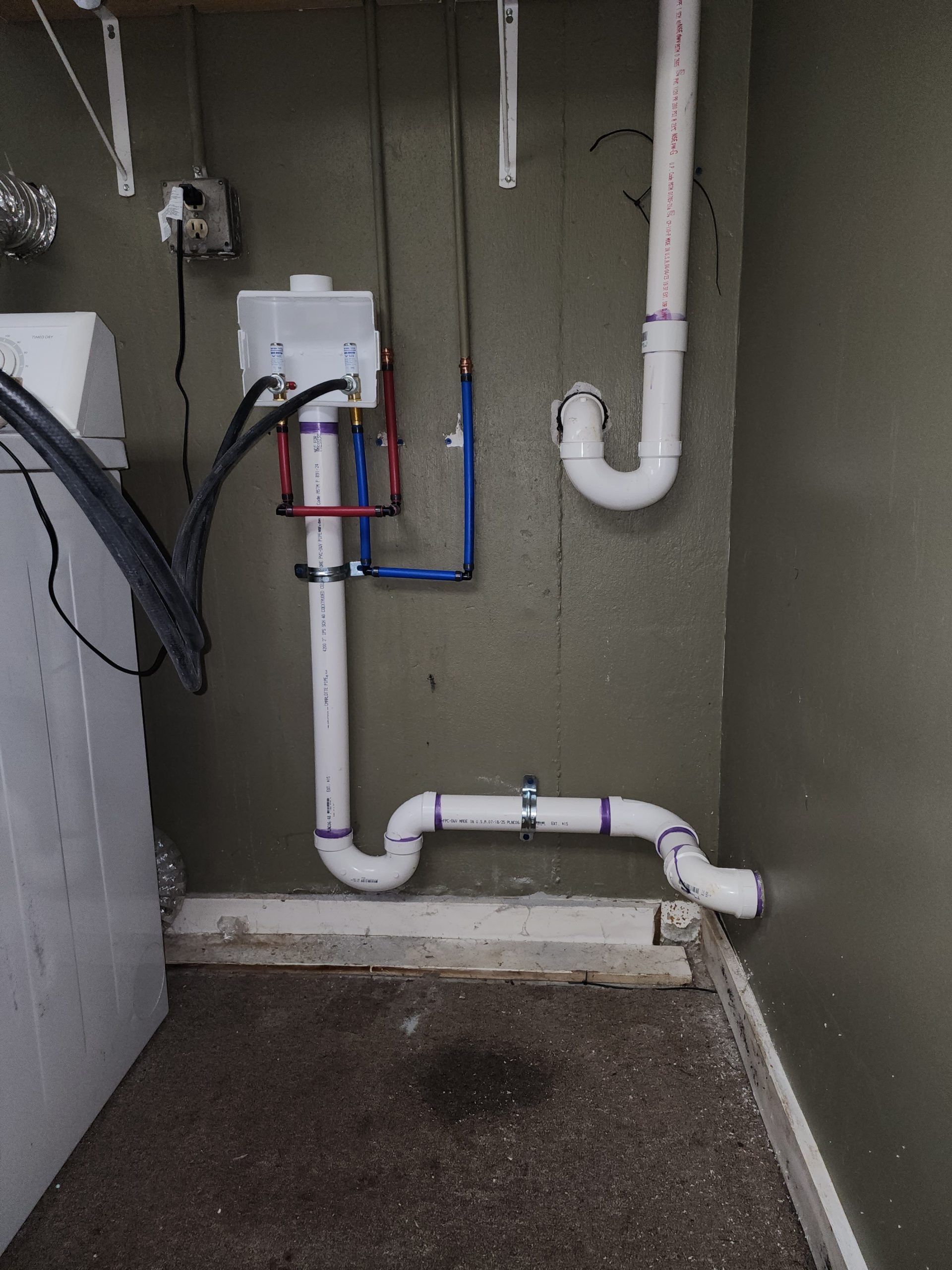
A washer outlet box is a recessed housing set into the wall framing that brings three things together in one place: a hot valve, a cold valve and a drain standpipe. The valves feed the machine through flexible hoses. The standpipe is a vertical pipe that accepts the washer’s discharge hose and drops into a P-trap, which holds water to block sewer gas. That trap has to be vented so the fast, high-volume discharge of a wash cycle does not siphon the seal out.
Most failures trace to one of three parts. Valves fail from age and mineral wear. Hoses fail from rubber fatigue. The drain fails from the lint and detergent film that coats the inside of the standpipe over years of use. Because the whole assembly sits behind a heavy appliance, a small leak here can run for a long time before anyone sees it — which is why we look at the box, the hoses and the drain together rather than fixing one part in isolation.
Our Washer Box Service Process
- Inspect and isolate — we pull the washer forward, shut off the valves and look at the box, the wall cavity behind it and the flooring for signs of past or active leaking.
- Test the drain and valves — we run water down the standpipe at volume to confirm whether the drain is restricted, and check each valve for drips under pressure and full shutoff.
- Open access if needed — when the box or the piping behind it has to be replaced, we make the smallest opening that lets us do the work correctly.
- Replace the box, valves or hoses — we install a new outlet box with new valves, secure the supply piping, and fit braided stainless steel hoses and hammer arrestors where appropriate.
- Correct the drain, trap and vent — we clear or replace the standpipe and trap and confirm the drain is vented to the code adopted in your jurisdiction.
- Test and clean up — we pressurize the lines, run a full wash and drain cycle, watch every joint, and leave the area dry.
Washer Box Service Across North Metro Atlanta
JMJ Plumbing has served North Metro Atlanta since 1996, and we handle laundry valve and washer box work in Acworth, Alpharetta, Canton, Cumming, Dunwoody, Hickory Flat, Holly Springs, Johns Creek, Kennesaw, Marietta, Milton, Roswell, Sandy Springs, Smyrna, and Woodstock. Laundry problems rarely stay in the laundry room: a restricted standpipe usually points to a larger issue our drain cleaning crew can clear, aging galvanized supply lines behind the box often mean the house is a candidate for repiping, and a burst hose at two in the morning is exactly what our 24/7 emergency plumbing service is for.
Washer Box FAQs
Why is my washing machine drain overflowing?
An overflowing washer standpipe almost always means the drain line is partially blocked. Lint, detergent residue and grease build a coating inside the pipe until it can no longer accept the fast discharge of a wash cycle. A blocked or missing vent can cause the same symptom by keeping water from draining freely. Cabling the line usually restores full flow.
How tall should a washing machine standpipe be?
A standpipe needs enough height above the trap that the washer’s pump cannot siphon or overflow it, and it must connect to a properly vented trap. Standpipe height, trap arm length and vent sizing are all set by the plumbing code your county or city has adopted, so the correct dimensions vary. A licensed plumber will build the box to the local requirement.
Should I replace my washing machine hoses?
Yes, and it is one of the cheapest ways to prevent major water damage. Rubber supply hoses harden and crack with age, and they fail while under constant pressure, so a burst hose can run until someone shuts the valve. Braided stainless steel hoses last longer. Replace any hose that is bulging, blistered, rusted at the crimp or visibly old.
Do I need a washer box or can the pipes just stick out of the wall?
A recessed washer outlet box is strongly preferred and is standard on modern installations. It keeps the valves, standpipe and hose connections inside the wall cavity so the washer sits flat against the wall, protects the connections from being crushed, and gives you a clean surface that shows a leak early instead of hiding it behind the appliance.
Why does my laundry room smell like sewer?
A sewer smell at the washer usually means the standpipe trap has lost its water seal or the drain is not properly vented. Traps dry out when a washer sits unused, and a missing or blocked vent lets each drain cycle siphon the trap empty. Pouring water down the standpipe is a quick test; if the smell returns, the vent needs attention.
Can washer valves be replaced without cutting drywall?
Sometimes. If the existing box is sound and the valves are a serviceable type, the stems and washers can often be rebuilt or swapped through the face of the box. If the box itself is cracked or rusted, or the valves are soldered directly to the supply lines, we usually need to open a small section of drywall to make a safe, code-correct connection.
What causes banging pipes when the washing machine fills?
That bang is water hammer. A washing machine’s solenoid valve closes almost instantly, and the moving column of water slams to a stop against it, sending a shock wave back through the piping. Installing hammer arrestors at the washer box absorbs that shock. High incoming water pressure makes it worse, so we check pressure at the same time.
How do I shut off water to my washing machine in an emergency?
Turn the hot and cold valves at the washer box clockwise until they stop, or push down the single lever if your box has one. If the valves will not close or are already leaking, shut off the main valve for the house, usually near the front hose bibb or at the meter. Then call a plumber before restoring water.
Leaking laundry valves and slow washer drains get worse, not better. Book washer box service online or call JMJ Plumbing at (770) 966-9654. We have served North Metro Atlanta since 1996 and offer 24/7 emergency service, with financing available through GreenSky.