Choosing a water filtration system really comes down to one big question: do you want to treat all the water coming into your house, or just the water at a specific faucet?
Whole-home systems act as a gatekeeper, treating every drop of water that enters your home. This approach is fantastic for protecting your entire plumbing system and every appliance that uses water. On the other hand, point-of-use filters are specialists, designed to deliver highly purified water right where you need it most—usually the kitchen sink. The right choice depends entirely on whether your goal is total home protection or targeted water purification.
Why Atlanta Homeowners Are Investing in Water Filtration
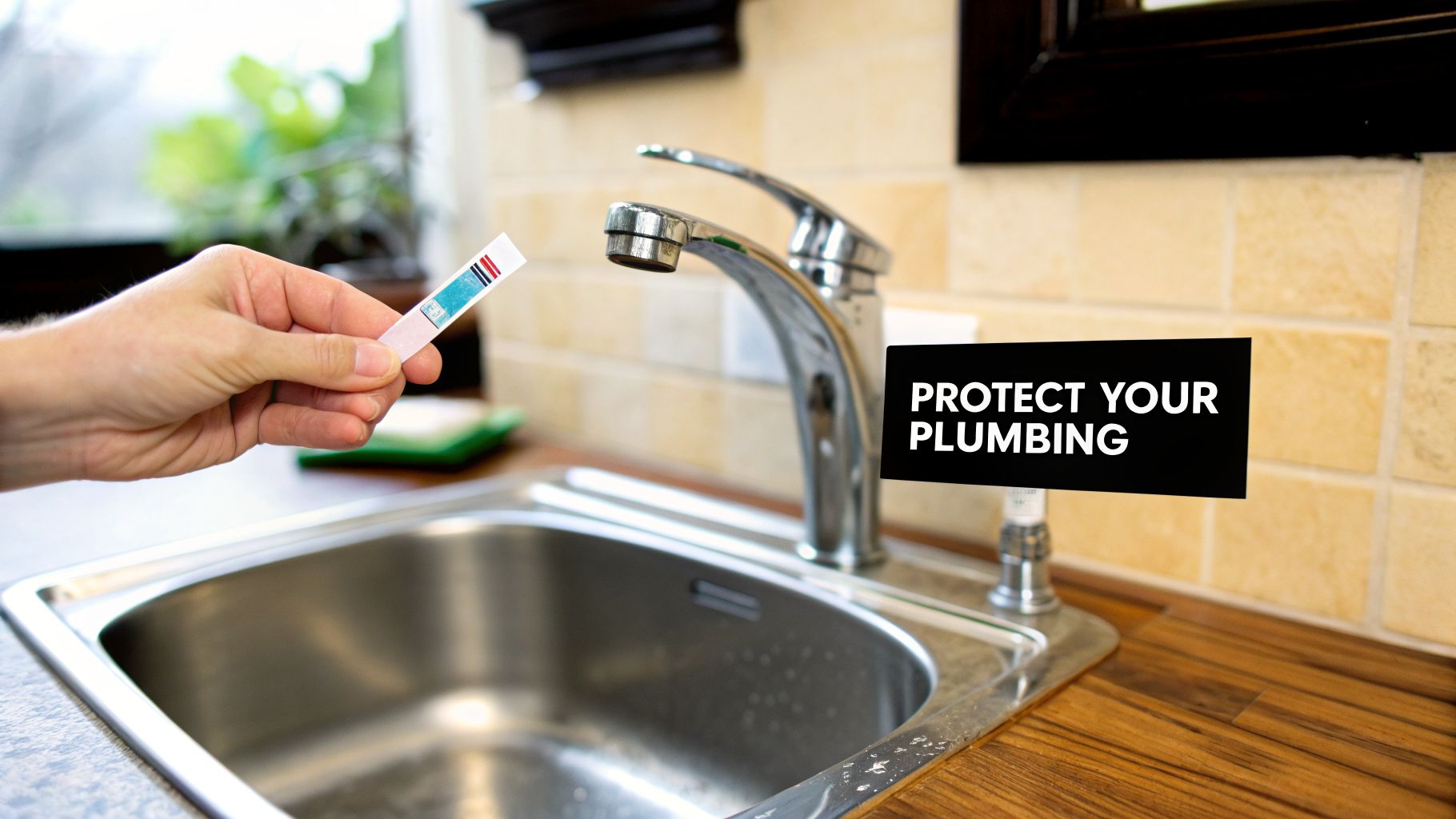
If you live in Woodstock, Canton, or anywhere in North Metro Atlanta, you're probably aware that our municipal water isn't always perfect. While it meets legal safety standards, it often carries things that can negatively impact your home. We see it all the time: hard water minerals leaving chalky residue on faucets, chlorine making tap water smell, and hidden contaminants that slowly damage plumbing, sometimes leading to the need for leak repair in Alpharetta.
These issues aren't just an annoyance; they hit your wallet directly. Scale buildup from hard water is notorious for causing premature water heater replacement and making dishwashers less efficient. Over time, that same mineral gunk can clog your pipes, cause low water pressure, and lead to an expensive call for water line replacement in Roswell. Protecting your plumbing has become one of the main reasons homeowners are now looking into water treatment.
The growing interest in better water quality isn't just a local phenomenon. Think about a homeowner in Marietta who’s tired of spotted dishes and dry, itchy skin. For them, understanding how different filtration systems compare is a game-changer. This concern is reflected globally, with the market growing from $9,843.43 million in 2021 and projected to reach $14,202.2 million by 2025. This surge is fueled by a greater awareness of contaminants. You can dive deeper into these trends by checking out the full water filtration systems market report.
An Overview of Filtration Technologies
Before we get into a side-by-side comparison, it’s helpful to know the major players in water filtration. Each technology targets specific problems, whether it's the hard water scale common in Cobb County or the taste of chlorine. This overview will give you a quick idea of which solutions might be a good fit for your home in Alpharetta, Roswell, or Johns Creek.
A well-chosen water filtration system is more than a convenience; it's a preventative measure that can save you from calling an emergency plumber in Canton for a burst pipe repair caused by long-term corrosion or scale buildup.
To get started, here’s a quick summary of the most common technologies we install and service. This table breaks down what each system does and where it works best.
Quick Guide to Water Filtration Technologies
| Filtration Type | Primary Target | Best For |
|---|---|---|
| Activated Carbon | Chlorine, pesticides, VOCs, sediment | Improving the overall taste and odor of water from every tap. |
| Reverse Osmosis (RO) | Heavy metals, fluoride, viruses, salts | Providing highly purified drinking and cooking water at the kitchen sink. |
| Water Softener (Salt-Based) | Calcium and magnesium (hard water minerals) | Preventing scale buildup to protect plumbing, appliances, and fixtures. |
| Water Conditioner (Salt-Free) | Preventing scale formation from hard water | Eco-friendly scale prevention without using salt or removing minerals. |
| UV Purifier | Bacteria, viruses, protozoa, and microorganisms | Disinfecting water to make it microbiologically safe, especially for well water. |
This table gives you a starting point. Now, let’s look at how these technologies stack up against each other in real-world scenarios.
Whole-Home Systems vs. Point-of-Use Filters
When you're trying to figure out the best water filtration for your home, the first big question is where to start. Do you treat all the water coming into your house, or just the water at a specific tap? This is the core difference between a whole-home system and a point-of-use (POU) filter. The right choice really comes down to what problems you're trying to solve, like preventing the need for sewer repair in Woodstock, and your budget.
A whole-home system is installed right where your main water line enters your property—think of the garage or basement. It’s like putting a gatekeeper on your water supply, cleaning every drop before it ever reaches your showers, washing machine, and toilets. This approach is all about protecting your entire home.
On the other hand, a point-of-use (POU) filter is a more targeted fix. These are the systems you see installed right where you need clean water the most, like an under-sink reverse osmosis unit. Their job is to deliver highly purified water for drinking and cooking.
Scenario 1: The Cumming Family Home
Let's imagine a family in a single-family home in Cumming or Johns Creek. They’re seeing all the classic signs of North Metro Atlanta’s hard water—chalky soap scum in the shower and stiff laundry. Their main goal is to protect their brand-new tankless water heater from scale buildup, which they know can lead to an early and costly water heater replacement in Cumming.
For this family, a whole-home system is the obvious choice. A comprehensive unit like the HALO 5 will not only handle the hard water scale but also remove chlorine from every single tap.
Here’s how a whole-home system helps them:
- Appliance Protection: The water conditioning component will dramatically extend the lifespan of their water heater, dishwasher, and washing machine, saving on repair costs.
- Plumbing Integrity: It stops mineral scale from clogging pipes, which is a common cause of low water pressure and can even contribute to a future burst pipe repair.
- Better Showers: Getting rid of chlorine and softening the water makes a huge difference for skin and hair.
- Easier Cleaning: They'll spend a lot less time scrubbing soap scum and limescale off their fixtures.
Sure, the upfront cost is higher, but a whole-home system is an investment in the health of the house itself. It's about preventing much more expensive problems down the road, like a major main water line repair or even a sewer replacement caused by years of corrosion.
Scenario 2: The Roswell Apartment Renter
Now, let’s think about a young professional renting an apartment in Roswell or Alpharetta. The building’s plumbing isn't their responsibility, but they hate the taste of the tap water. A whole-home system is off the table.
This is the perfect situation for a POU filter. An under-sink reverse osmosis (RO) system will give them fantastic-tasting, purified water right where they need it for drinking and cooking. It’s a focused, affordable solution for anyone searching for "water filtration near me" without altering the building's plumbing.
The need for better water isn't just a local issue; it's a global one. A huge part of the water treatment market is in areas with fast-growing cities, showing a worldwide push to make water safer at home. You can learn more about these global water treatment market trends and what’s driving them.
Figuring out whether you need to protect your entire home's plumbing or just want better drinking water is the first step in any water filtration system comparison. Once you make that decision, you can start narrowing down the specific technologies that will work best for you.
A Detailed Comparison of Filtration Technologies
Deciding between a whole-home system and a point-of-use filter is just the first step. Now, let’s get into the nitty-gritty. This breakdown of the specific technologies will help you understand the real-world trade-offs so you can choose the right solution for your home, whether you're in Woodstock, Canton, or anywhere else in Cobb County. Each method has its own strengths and requires different levels of upkeep.
This quick visual guide summarizes the key differences between the main filtration categories, making it clear whether a system treats water for your entire property or just a single tap.
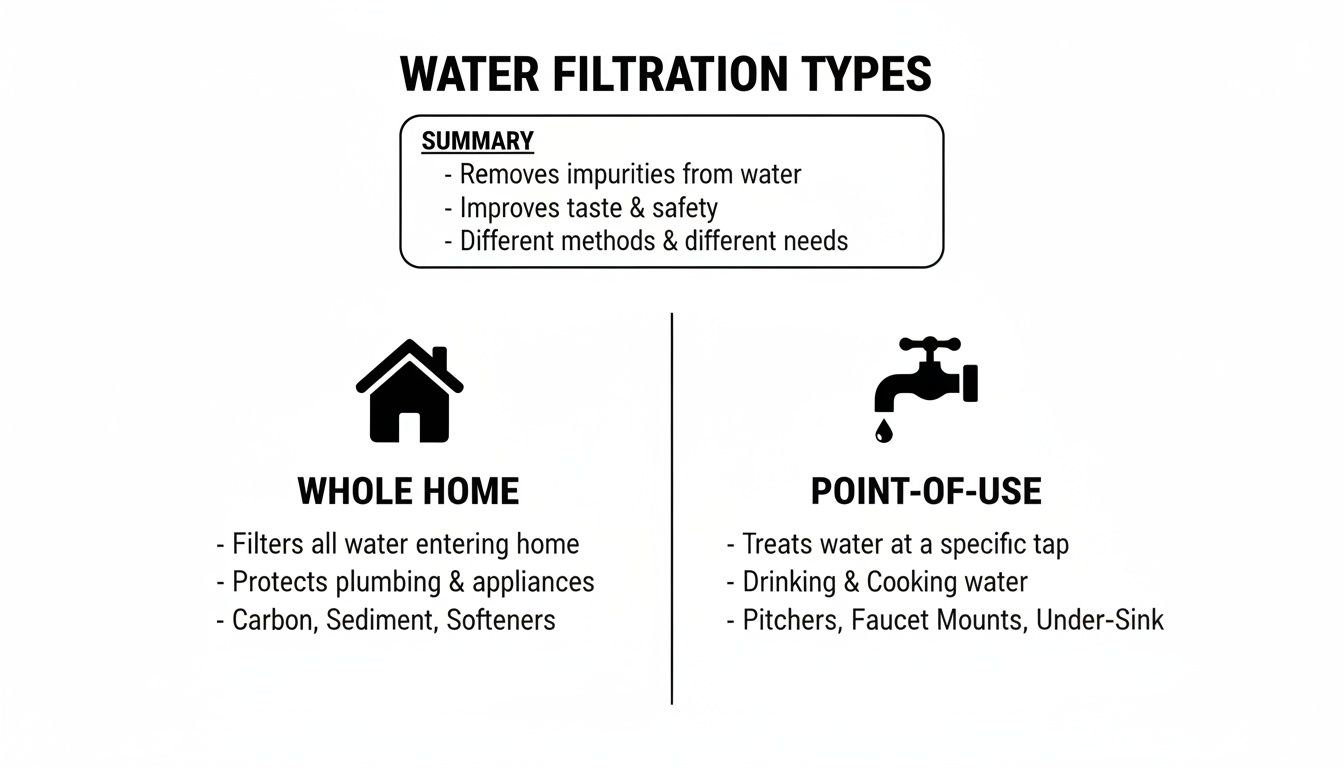
As the infographic shows, whole-home systems are all about property-wide protection, while point-of-use units deliver targeted purification right where you need it. Your choice really boils down to your main goal. Are you trying to stop plumbing headaches like needing a main water line repair in Marietta, or do you just want better-tasting water from your kitchen sink?
Activated Carbon Filters
Activated carbon filters are probably the most common and budget-friendly way to improve water quality. The magic happens through a process called adsorption, where unwanted contaminants essentially stick to the carbon's surface as water flows past.
Its main job is getting rid of chlorine—the culprit behind that "pool water" smell and taste common in city water. It also does a good job reducing things like volatile organic compounds (VOCs) and sediment, leading to water that’s noticeably fresher.
Keep in mind, though, a standard carbon filter isn't designed to remove heavy metals like lead, dissolved solids, or bacteria. Maintenance is pretty simple: you just replace the filter cartridges every 6 to 12 months to keep things flowing and working effectively.
Reverse Osmosis (RO) Purification
When it comes to purity, Reverse Osmosis is the undisputed champion. An RO system uses serious pressure to push water through a very fine, semipermeable membrane. The pores are so tiny that they strip out an incredibly long list of contaminants.
RO systems are masters at removing things other filters leave behind, including:
- Heavy Metals: Lead, arsenic, and mercury.
- Dissolved Solids: Salts and other minerals that make up "total dissolved solids" (TDS).
- Chemicals: Fluoride and chlorine.
- Microorganisms: Certain bacteria and viruses.
For an Alpharetta homeowner worried about specific pollutants or a renter in Roswell who wants the absolute purest drinking water possible, an under-sink RO system is tough to beat.
The biggest knock on traditional RO systems has always been water waste. For every gallon of purified water you get, several gallons go down the drain. While modern, high-efficiency systems have gotten much better, it's still something to be aware of.
Salt-Based Water Softeners
If you live in Cherokee or Forsyth County, you've seen the telltale signs of hard water: chalky scale on your showerhead and spotty glasses. A salt-based water softener is the only technology that physically removes the minerals—calcium and magnesium—that cause all that trouble.
These systems use a process called ion exchange. This doesn't just make cleaning a breeze; it also protects your plumbing. It prevents the scale buildup that can lead to an early water heater replacement or even a clogged toilet that won’t flush because of mineral deposits in the pipes. The only ongoing maintenance is topping off the brine tank with salt.
UV Purifiers
Think of an Ultraviolet (UV) purifier as your home's microbiological bodyguard. It doesn't filter water in the traditional sense. Instead, it zaps it with UV-C light, which scrambles the DNA of bacteria, viruses, and other nasty pathogens so they can't reproduce and make you sick.
A UV purifier is practically a necessity for homes on well water, but it’s also a fantastic final line of defense for city water, especially during a boil water advisory. It’s an extra layer of protection against things that could make you sick if you have water in your yard from a compromised line.
Getting to know the different media is crucial when picking a filter. Just like you'd compare a Sand Filter vs. Cartridge Filter for a swimming pool, understanding these differences for your home can save you thousands. For a homeowner in Woodstock dealing with sediment clogs, this knowledge is power. Globally, reverse osmosis is on track to capture 29% of the water treatment market by 2026, part of an industry projected to hit $157.2 billion by 2036.
A Closer Look at HALO Whole Home Water Filtration
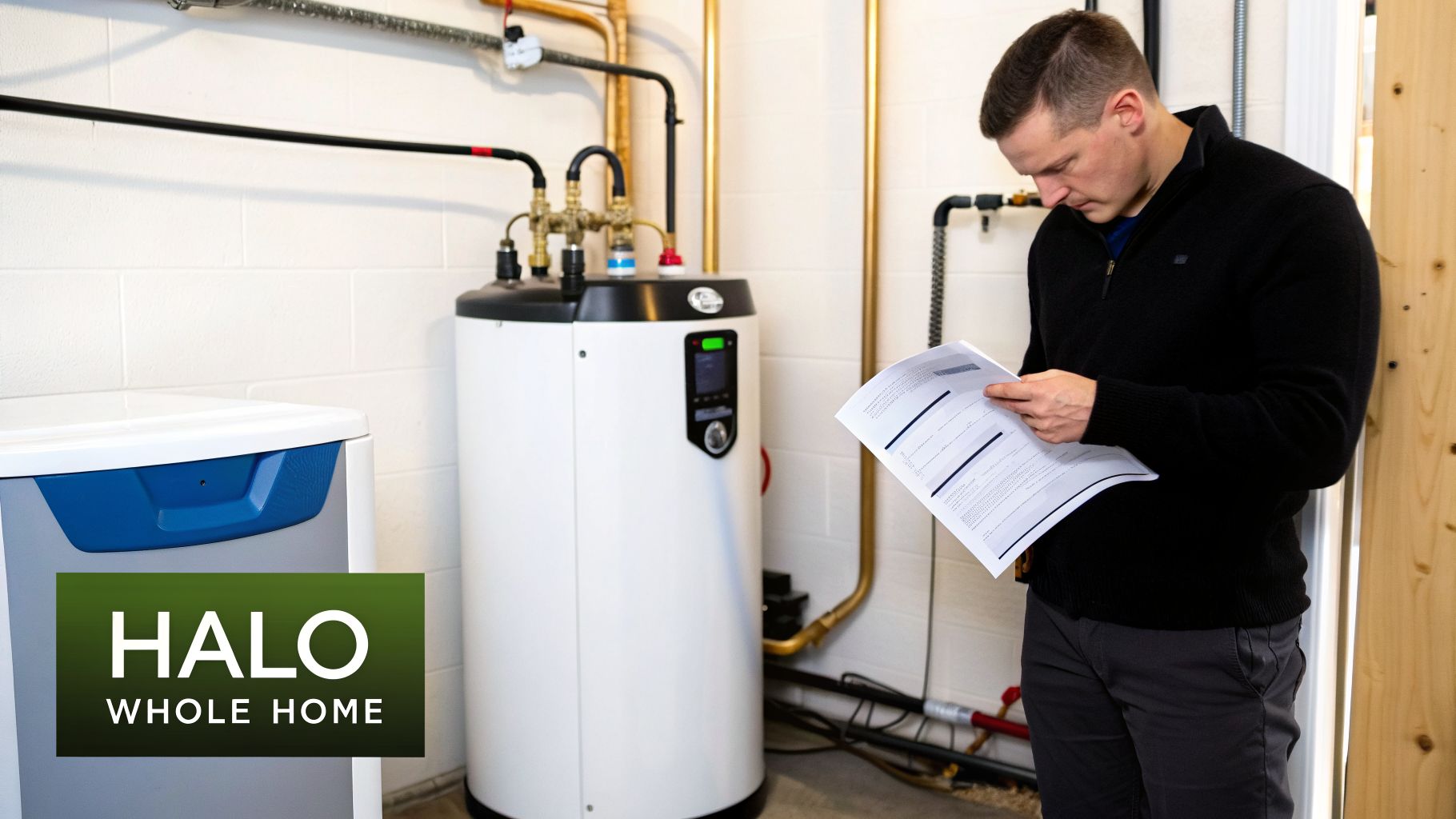
After weighing the pros and cons of different filtration methods, you can see that each one has its place. But for homeowners here in North Metro Atlanta who want a single, robust solution, we find ourselves consistently recommending and installing HALO Water Systems. It's a complete water treatment package designed specifically to handle the water quality challenges we see every day in towns from Woodstock to Johns Creek.
HALO systems pack multiple filtration and conditioning stages into one efficient, low-maintenance unit. The star of the show is the HALO 5 Whole Home Water Filtration & Conditioning System. It’s a perfect example of this philosophy, tackling a whole host of water issues without using any salt or chemicals. That makes it a smart and environmentally friendly option.
This layered approach means the water coming into your home is not only cleaner but also gentler on your entire plumbing system. Think of it as an investment to head off expensive future problems, like a premature water heater replacement or a nasty sewer repair caused by years of hidden mineral buildup.
How the HALO 5 System Gets the Job Done
The real magic of the HALO 5 is in its multi-stage process. Each layer of media is chosen to target a specific group of contaminants, creating a powerful synergy that a single-purpose filter just can't achieve.
Here’s a quick breakdown of the key stages:
- Granular Activated Carbon (GAC): This first layer is the workhorse for getting rid of bad tastes and odors. It’s incredibly effective at removing the chlorine and chloramines common in municipal water across Cobb and Forsyth Counties.
- High-Activity Carbon: A second carbon stage acts as a polisher, catching even trace amounts of organic contaminants that might have slipped through.
- Filter-AG Plus®: This layer focuses on suspended solids and cloudiness, filtering out particles as small as 5 microns. This is huge for preventing sediment that leads to issues like slow drains or even a clogged toilet that won’t flush.
- HALO ION Inline Water Conditioner: This is the heart of the system’s plumbing protection. The ION conditioner changes the physical structure of dissolved minerals. Instead of forming a hard scale, the minerals simply stay suspended in the water, unable to latch onto pipes or fixtures.
The HALO ION conditioner's ability to prevent scale is a game-changer for homeowners in Alpharetta and Canton. It directly protects the heating elements in water heaters and dishwashers, preventing the efficiency loss that hard water inevitably causes.
This salt-free process gives you a maintenance-free alternative to traditional water softeners. It leaves beneficial minerals in the water but without the slick, salty feel many people dislike.
Real-World Benefits for North Atlanta Homeowners
For a family in Roswell or Marietta, putting in a HALO 5 system brings immediate, noticeable benefits. It's not just about getting better-tasting water; it’s about making daily life easier and protecting your biggest investment—your home.
Just think about the long-term impact on your plumbing. By stopping limescale, the HALO system protects every component, from the main water line repair you hope to never need, to the small valves inside your faucets. This proactive approach drastically cuts down the chances of calling an emergency plumber in Acworth for problems like low water pressure or a burst pipe repair in Cherokee County that was sped up by internal corrosion.
The perks go beyond your pipes. With chlorine and other chemicals gone, you'll immediately feel the difference with softer skin and hair. For anyone living in Cumming or the nearby areas, a HALO system is simply a smart, long-term upgrade for better living.
How to Choose the Right System for Your Atlanta Home
Picking the right water filter can feel like a huge task, but it doesn't have to be. It really just comes down to answering three simple questions. This quick guide will walk you through it, helping you pinpoint the perfect match for your home, whether you're in Alpharetta, Marietta, or anywhere else in North Metro Atlanta.
By figuring out what you actually need first, you can confidently compare different water filtration systems. Your answers will lead you right to the best solution, whether you’re trying to fix a specific issue like a sewage smell in your water or you just want to protect your plumbing for the long haul.
Question 1: What Are My Primary Water Concerns?
First things first: what do you want to change about your water? Are you dealing with an obvious problem, or are you just aiming for a general upgrade?
- Hard Water Issues: Do you see that chalky white scale on your faucets? Are your dishes always spotty? Struggling with slow drains? These are classic signs of hard water, and it means you need a system that will protect your plumbing and appliances.
- Taste and Odor: Does your tap water have a distinct chlorine taste or a sewage smell? That’s a very common complaint, and a good filtration system is usually the fix.
- Contaminant Worries: Are you more concerned about the things you can't see, like lead or industrial chemicals? If that's the case, you’ll need a system designed for a higher level of purification.
Your biggest concern is the most important piece of the puzzle. If you're seeing scale buildup, then protecting your home from expensive problems like a premature water heater replacement should be your number one priority. If you have no hot water, the issue could be your heater or scale buildup.
Question 2: What Is My Budget for Installation and Upkeep?
Next up, let's talk money. The initial price tag is just one part of the story. You also have to think about the ongoing costs for things like replacement filters or salt.
A basic point-of-use filter is a low-cost starting point. On the other hand, a comprehensive whole-home system is a serious investment in your home’s infrastructure. But while the upfront cost is higher, it can save you thousands in future plumbing disasters—like calling a 24-hour plumber for a burst pipe repair caused by years of hidden corrosion and scale.
Scenario Recommendation: If your main goal is getting rid of hard water scale to protect that new tankless water heater in your Canton home, a whole-home conditioner like the HALO 5 is your best bet. But if you just want purified water for cooking in your Alpharetta condo, a simple under-sink RO system is far more practical.
Question 3: Do I Need a Whole-Home or Point-of-Use Solution?
Finally, how much of your home's water do you want to treat? Are we talking about every drop that comes into the house, or just the water at one or two sinks?
A whole-home system is the definite answer if you want to protect your entire plumbing network, from the main water line all the way to your faucets. This is the only real solution for stopping problems like scale buildup. In contrast, a point-of-use system is perfect for renters or anyone who just wants better drinking water without touching the home's main plumbing.
As homeowners look to improve their living spaces, it's common to think beyond just water. Many also search for effective indoor air quality solutions to create an all-around healthier home. By answering these three questions, you'll have a clear path forward, making it easy to choose a system that truly solves your water problems.
Your Local Water Filtration Experts in Acworth and Beyond
Choosing the right filtration system is a big decision, but the installation is what really makes or breaks its performance. As certified HALO Water Systems installers, we offer full-service, expert support for homeowners across North Metro Atlanta—from Acworth and Woodstock to Roswell and Alpharetta. Professional installation isn't just a convenience; it's the only way to guarantee your system works correctly.
A proper setup ensures your HALO system is tied into your home’s plumbing without a hitch, keeping your water pressure strong. We take care of everything, making sure the installation meets all local codes in Cobb County, Cherokee County, and North Fulton. This protects your warranty and prevents the kind of costly mistakes that can come from a DIY attempt.
Your Go-To Plumber for Water Quality and More
Here at JMJ Plumbing, our skills go far beyond just filtration. Think of us as your trusted, 24-hour plumber for any issue. Whether you're dealing with a nasty sewer backup in Marietta, need an urgent water heater replacement in Cumming, or have a sudden burst pipe repair in Johns Creek, our team is always ready. We’re here to solve today's problems and help you prevent tomorrow's.
Think of us as your complete home plumbing partner. A HALO system protects your pipes, while our emergency services give you peace of mind for those unexpected headaches, like a clogged toilet that won’t flush or a surprise leak repair near me.
Ready to find out what’s really in your water? Let's schedule a professional water quality consultation. We’ll test your water, listen to your concerns—whether it’s hard water spots or a strange sewage smell—and give you a clear, no-pressure quote. From a quick search for drain cleaning near me to a complete water solution, we’re here to help.
Common Water Filtration Questions Answered
When you start looking into water filtration, it's natural to have a few questions. We hear a lot of the same ones from homeowners across North Metro Atlanta, so we've put together some straightforward answers to help you out.
How Can I Tell If My Cherokee County Home Has Hard Water?
You can often see and feel the effects of hard water. Look for a white, chalky film (limescale) on your faucets and showerheads. You might also notice that soap doesn't lather well, leaving scum on tubs and spots on your dishes. Many people find their skin feels dry and itchy after a shower.
The only way to know for sure is with a professional water test. Our plumbers can measure your water’s exact hardness level right at your home, taking all the guesswork out of the equation.
Will a Whole-Home System Lower My Water Pressure?
This is a big concern for many, but a properly installed system shouldn't cause a noticeable drop in pressure. When we install a modern system like the HALO 5, we make sure it's sized correctly for your home's plumbing.
If you ever experience low water pressure with an existing system, it usually points to a clogged filter that needs changing or an installation that wasn't sized right from the start.
A sudden, severe drop in water pressure can sometimes signal a more serious issue, like a hidden leak or a problem with your main water line. If you notice a drastic change, it’s best to call a 24-hour plumber in Woodstock for a fast diagnosis of a potential main water line repair.
What Should I Expect to Pay for a Whole-Home Filter in Marietta or Alpharetta?
The investment in a whole-home system can vary quite a bit. It really depends on the type of filter technology you choose, the size of your house, and the specifics of the installation.
A basic carbon filter might start in the low thousands, while a more comprehensive, multi-stage system is a larger upfront investment. The best way to get a real cost is with an on-site evaluation. We provide clear, upfront pricing after we’ve assessed your water and plumbing, so you'll know exactly what to expect.
My Water Smells Like Sewage. Can a Filter Fix That?
A sewage smell coming from your water is a major red flag that needs immediate attention from a professional. While some advanced filters can help with odors, a sewage smell often points to bacteria in your pipes or water heater. Worse, it could signal a critical problem like a sewer backup or the need for sewer replacement.
Don't just try to filter it out. This is a situation that calls for an emergency plumber in Acworth to diagnose the root cause and ensure your home's plumbing is safe.
Ready to get crystal-clear, great-tasting water from every faucet in your home? For a professional water quality test and a personalized recommendation for a HALO Whole-Home System, trust the experts at JMJ Plumbing. Schedule your consultation online today!