When a pipe bursts, you’re in a race against water. Your first moves in the opening minutes are what separate a manageable problem from a full-blown catastrophe. Before you even think about patching the pipe, your immediate goals are simple: stop the water and eliminate any electrical danger.
Your Immediate Action Plan for a Burst Pipe
The moment you hear that unmistakable sound of spraying water, your adrenaline will spike. But staying calm and acting decisively is everything. Your focus for the first 15 minutes is purely on damage control. Getting this right will protect your family and your home from the worst of the damage.
For a quick reference, here's exactly what you need to do in the first few moments of a burst pipe emergency.
Immediate Burst Pipe Action Plan
| Priority | Action | Why It's Critical |
|---|---|---|
| 1. Stop the Flood | Shut off your home's main water supply. | This is the only way to stop more water from entering your home and feeding the leak. |
| 2. Eliminate Shock Hazard | Turn off electricity to the affected area at the breaker box. | Water and live electricity create a deadly risk of electrocution. |
| 3. Call for Backup | Contact a professional emergency plumber. | Once the scene is safe, you need an expert to assess and perform a lasting repair. |
Following this checklist ensures you're tackling the most urgent threats first, creating a safe environment to deal with the aftermath.
First, Shut Off the Water
The absolute first thing you must do is find and turn off your home's main water shut-off valve. This single action starves the burst pipe of its water source. If you’re not sure where your valve is, don't panic. Check these common spots:
- Basement or Crawl Space: Often found on the interior wall where the main water line comes into the house.
- Garage: A very common location in many Marietta and Woodstock homes, especially those built on a slab.
- Utility Closet: Sometimes it’s tucked away near the water heater. Signs of a leak here could also point to a need for water heater replacement.
- Outside: Look for a ground-level utility box near your street, which might be marked "water meter."
Once you locate it, turn a wheel-style handle clockwise all the way. If it’s a lever handle, give it a quarter-turn so it's perpendicular to the pipe.
Then, Shut Off the Power
Water and electricity are a lethal mix. As soon as the water is off, head straight for your circuit breaker panel. Find the breaker that powers the room with the burst pipe and flip it to the OFF position.
If you can't tell which breaker it is, or if water is anywhere near the electrical panel itself, don't take any chances. Shut off the main breaker to kill power to the entire house. This step is absolutely non-negotiable for your safety.
A burst pipe isn't just a random accident; it's often a sign of aging infrastructure. Across North America, we're seeing about 710 water main breaks per day. These failures add up, leading to an estimated $2.6 billion in annual repair costs. You can read the full study about water main break trends to see why taking immediate, decisive action is so critical.
This simple flowchart lays out your priorities in the clearest way possible.
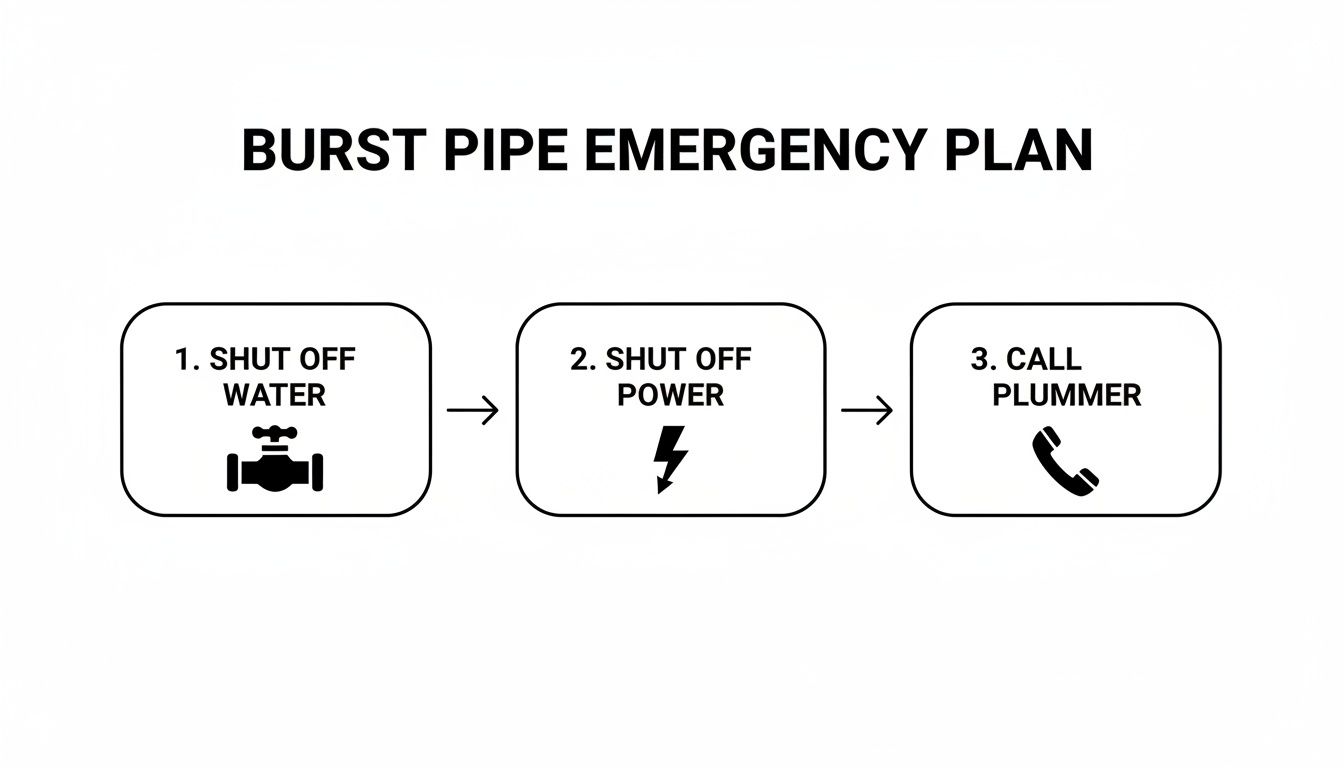
As you can see, securing the utilities is the foundation of a safe response. Once you’ve neutralized the immediate threats, you can take a breath and confidently call an emergency plumber in Acworth or your neighborhood to handle the professional fix.
Making Temporary Repairs While You Wait for a Plumber
Okay, you've shut off the main water valve, so the gushing has stopped. That's a huge first step. But even with the water off, there's still a lot of water left in the pipes, and it’s going to keep dripping out of that break, causing more damage to your floors and drywall. The next move is to apply a temporary patch. This is just plumbing first aid—it's not meant to be a permanent fix, but it's essential for stopping those last drips while you wait for a professional to arrive for a full burst pipe repair.
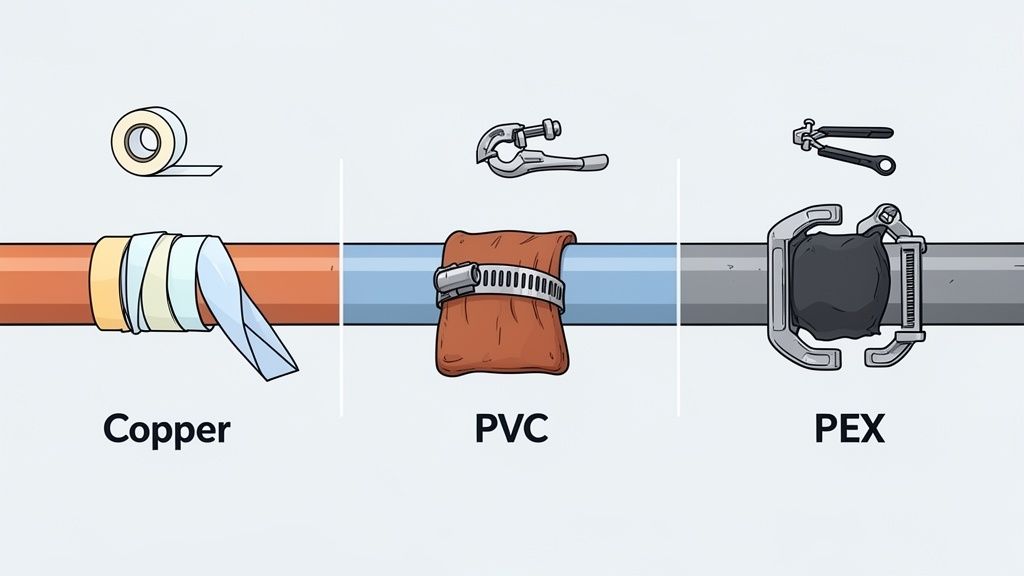
Before you start patching, grab some buckets and towels to place under the damaged pipe. Then, open a faucet at a lower point in your house, like a basement sink or first-floor bathroom, to help drain the remaining water out of the system.
Your Emergency Pipe Repair Toolkit
You don't need a professional-grade workshop to handle a temporary fix. Just a few key items, which you can find at any hardware store in Woodstock or Marietta, can make all the difference. I always tell homeowners to build a small emergency kit ahead of time—it’s a real lifesaver when you’re in a panic.
Here’s what I recommend having on hand:
- Pipe Clamp or Sleeve Clamp: This is your best friend for a temporary patch. It’s a metal sleeve with a rubber gasket inside that bolts together over the leak, creating a really strong seal.
- Self-Fusing Silicone Tape: This stuff is amazing. It’s a stretchy tape that only sticks to itself, forming a seamless, waterproof layer. It's perfect for smaller cracks or pinhole leaks.
- Rubber Sheeting and C-Clamps: If you're in a real bind, a piece of thick rubber from an old inner tube and a couple of C-clamps can work. You just press the rubber over the leak and tighten the clamps to hold it in place.
- Epoxy Putty: This is a two-part putty you knead together to activate. You can mold it right over the crack, and it hardens like a rock to seal the hole.
Having these supplies tucked away in your garage or basement is one of the smartest things a homeowner in North Fulton or Cherokee County can do.
Applying a Temporary Fix to Different Pipe Types
The right method really depends on what kind of pipes you have. In most homes around Alpharetta and Roswell, you’ll be dealing with either copper, PVC, or PEX.
For Copper Pipes
Copper is probably the most common pipe material you'll see. A pipe clamp is the undisputed champion for patching copper. Just make sure the rubber gasket is centered directly over the break, then tighten the screws on the clamp a little at a time, alternating sides. You want it snug enough to stop the drip, but don't go crazy—overtightening can actually crush the pipe.
For PVC or CPVC Pipes
These white or off-white plastic pipes are typically used for drain lines or cold water supply. For a small crack in PVC, that self-fusing silicone tape is fantastic.
- Dry the pipe off as best you can.
- Start wrapping the tape a couple of inches to one side of the leak.
- Stretch the tape tightly as you go, overlapping each pass by about half its width.
- Keep wrapping until you're a few inches past the other side of the damaged area.
The key is tension. Stretching the tape is what makes it fuse to itself and form a watertight seal. This quick fix is usually more than enough to hold things together until a plumber can come out to do a proper water line replacement or repair.
Important Reminder: Let me be clear—these patches are strictly temporary. They are not built to handle the pressure of your home's water system. Once you've applied a temporary fix, leave the main water valve off. The only goal here is to stop the residual dripping and prevent more water damage while you wait for a 24 hour plumber.
When Your Main Water Line Is the Problem
If the issue is outside your house—maybe you’ve noticed a soggy patch in the yard or a sewage smell—you're likely looking at a break in your plumbing. This is a whole different ballgame and is absolutely not a DIY situation. A water in yard problem in your Cumming or Johns Creek neighborhood points to a break in the main water line.
A main water line repair involves digging up your yard and requires specialized equipment. If you see signs of an underground leak, it's a clear signal to call a professional for leak repair near me immediately. Trying to patch an underground line yourself is not only impractical but can also make the problem much worse. Your only job is to shut the water off at the street meter and call for help. A pro needs to diagnose the issue, which could be anything from a simple spot repair to a full sewer repair in Canton GA if the main drain is compromised.
What to Expect: Estimating Burst Pipe Repair Costs in the Atlanta Area
Once you’ve shut off the water and the immediate panic starts to fade, the next big question on your mind is almost always the same: how much is this going to cost?
As an emergency plumber serving homeowners from Alpharetta to Roswell, I can tell you that the final bill for a burst pipe repair isn't a one-size-fits-all number. It really depends on what we find when we get there. A simple fix on an exposed pipe in your basement is one thing, but an after-hours emergency involving a main water line repair under your driveway in Cumming is a completely different ballgame.
What Goes Into the Final Cost?
When we arrive, we're not just looking at a leaking pipe; we're assessing the whole situation to give you a clear, upfront quote. Here’s a breakdown of what we're looking for.
- Location, Location, Location: Is the pipe right there in an open basement or crawlspace? Or is it hiding behind a beautiful tiled shower wall or buried under a concrete slab in your garage? The more we have to open up to get to the problem, the more labor is involved.
- The Clock is Ticking: A call for a 24 hour plumber on a Saturday night or a holiday will naturally cost more than a scheduled appointment during regular business hours. Those emergency fees are what ensure we have a skilled technician ready to roll, day or night, across Metro Atlanta.
- The Pipe and the Problem: The pipe’s material—whether it's copper, PEX, or old PVC—and the severity of the break guide our repair strategy. Replacing a small, cracked section is much faster and less expensive than a full water line replacement.
- The Aftermath: Don't forget, the plumbing repair is just the first step. The secondary costs for water extraction, drying out walls and floors, and dealing with any potential mold can often be more than the plumbing bill itself.
To help you get a better idea of the numbers, we've put together a table outlining some common scenarios we see across North Metro Atlanta.
Estimated Burst Pipe Repair Costs in North Metro Atlanta
| Repair Scenario | Estimated Cost Range (Repair Only) | Key Factors Influencing Cost |
|---|---|---|
| Simple, Accessible Pipe Repair | $200 – $1,000 | Pipe is in a basement, crawlspace, or under a sink. Minimal demolition needed. Standard business hours. |
| Complex, Hidden Pipe Repair | $1,000 – $2,500+ | Pipe is behind a wall, ceiling, or under flooring. Requires drywall or tile removal and repair. |
| Main Water Line Repair (Yard) | $1,300 – $5,000 | Requires excavation in the yard to access the main line. Cost depends on depth and landscape complexity. |
| Under-Slab Pipe Repair | $2,000 – $6,000+ | Requires jackhammering a concrete slab foundation. Most complex and labor-intensive scenario. |
| Emergency Call-Out Fee | $100 – $300+ | Additional fee for nights, weekends, and holidays on top of the repair cost. |
These are just estimates for the plumbing work itself, but they give you a realistic starting point. Every situation is unique, which is why an on-site diagnosis is so important for an accurate quote.
When considering the financial implications of a burst pipe, a thorough understanding of your insurance policy is key; a detailed home and content insurance review can help you determine your coverage for both the repair and the subsequent water damage.
Repair a Section or Replace the Whole Line?
When one of our technicians shows up at your home in Cherokee or Cobb County, their goal isn't just to slap a patch on the leak. It's to figure out why it happened and recommend a solution that will last, so you're not calling us again in six months for the same problem.
Here’s how that decision-making process usually goes:
- Spot Repair: This is the go-to for a single, clean break on a pipe that’s otherwise in great shape. Think of damage from an accidental nail or a one-off freeze.
- Section Replacement: If we see a larger area of the pipe showing its age with corrosion or heavy mineral buildup, we’ll recommend replacing that whole section. This stops a chain reaction of future leaks.
- Full Repipe: For older homes with widespread corrosion, multiple existing leaks, or outdated materials like galvanized steel, a full water line replacement is often the smartest long-term investment. It's a bigger job, but it solves the problem for good.
While a spot repair is always the cheapest option upfront, investing in a more thorough replacement often saves you a ton of money and stress in the long run.
When You Absolutely Must Call an Emergency Plumber
A temporary patch is a great first-aid measure, but let's be clear: a burst pipe is almost always a job for a licensed professional. Knowing when to switch from DIY mode to dialing a 24 hour plumber is one of the most important things a homeowner in Woodstock or Acworth can learn. Some situations are just too big or too dangerous to handle on your own.
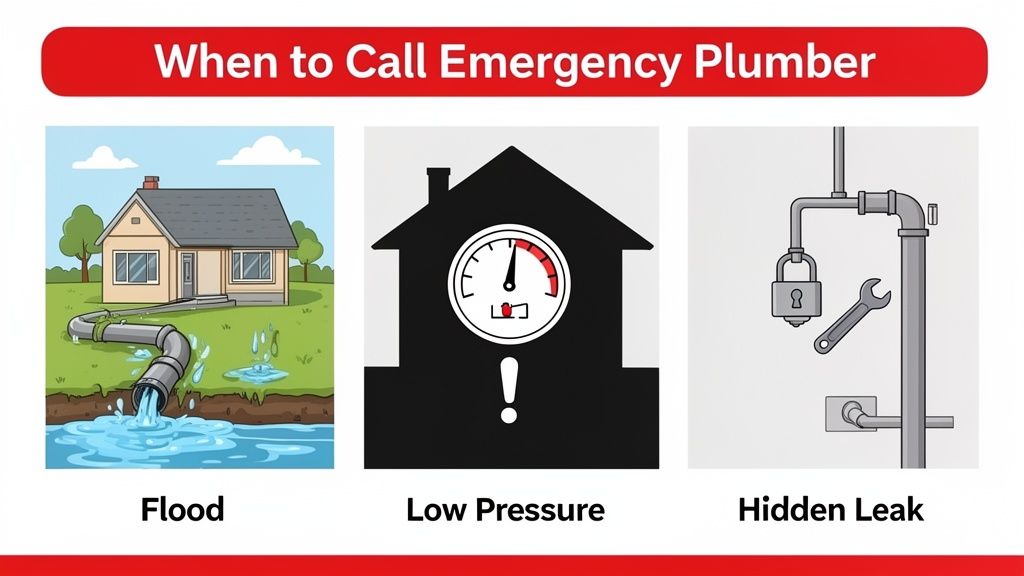
A pro does more than just stop the water. We get to the root of the problem—whether it’s widespread corrosion, dangerously high water pressure, or just old, failing pipes. This kind of expert diagnosis can save you a fortune in future headaches and water damage.
You Have an Underground Main Water Line Break
This is one of the most serious plumbing emergencies you can face. The main water line is the pipe that brings water into your home from the street. When it breaks, you won't get a flood in your basement; the disaster will be unfolding silently in your yard.
Here’s what to look for:
- Soggy Patches or Puddles: Seeing water in yard in Johns Creek or Marietta when it hasn't been raining? That's a huge red flag pointing to a need for main water line repair.
- A Sudden Drop in Water Pressure: If every faucet in your home suddenly has weak flow, this low water pressure might be caused by a supply line break before it even gets to your house.
- An Unusually Green Patch of Grass: If one spot on your lawn is suspiciously lush and green compared to everything around it, it's likely getting a steady supply of water from an underground leak.
Fixing a main water line involves digging up your yard and requires specialized equipment. This is never a DIY job and calls for an emergency plumber with experience in jobs like water line replacement near me.
You Are Experiencing a Sewer Backup
Not all burst pipes involve clean water. A blocked or broken sewer line can send raw sewage gushing back up through your drains, creating a disgusting and dangerous mess. This isn't just an inconvenience; it's a serious biohazard.
If you smell a sewage smell, see black or gray water backing up into tubs, or have a clogged toilet that won’t flush while other drains are also gurgling, you have a sewer backup. Shut your water off at the main immediately and call for sewer repair in Canton GA or your local professional without delay.
This emergency requires professional-grade drain cleaning tools like hydro-jetters and cameras to find the break. Trying to tackle a major sewer problem yourself can expose your family to harmful bacteria and often makes things worse, potentially leading to a full sewer replacement.
The Leak Is Inaccessible or Near Electrical Components
Sometimes, the location of a leak is what makes it an emergency. If you can hear water spraying inside a wall but can't see the source, it's time to put down the tools and pick up the phone. You don't want to start swinging a hammer and accidentally hit a live electrical wire or another pipe.
Any water leak near your breaker box, outlets, or major appliances creates a severe risk of electrocution or fire. Don't take that chance. A professional offering leak repair in Alpharetta has sophisticated leak detection tools to pinpoint the problem safely, getting it fixed without causing even more damage. Your safety always comes first.
Preventing Future Pipe Bursts in Your Home
Once you’ve dealt with the mess and stress of a burst pipe, the last thing you ever want is to go through it again. The good news is, you have a lot of control over preventing the next one. For homeowners here in Canton, Woodstock, and across North Metro Atlanta, it really boils down to tackling two main culprits: freezing temperatures and old, worn-out pipes.
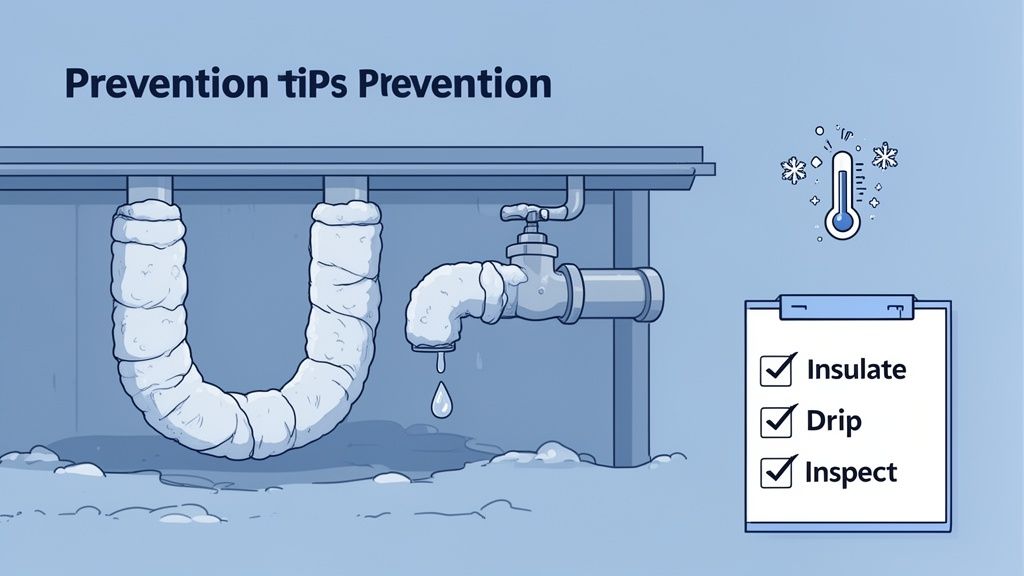
Putting in a little work now is your best bet for keeping your home dry and avoiding another frantic call for a burst pipe repair.
Guard Against the North Georgia Freeze
Our winters in Forsyth County and Cobb County might seem mild, but a sudden cold snap is all it takes to freeze and crack a pipe. When water freezes, it expands with incredible force, and something has to give. Thankfully, some of the most effective preventative habits are also the simplest.
Insulate Your Pipes
This is non-negotiable. Any pipes running through unheated spaces like your crawl space, basement, attic, or garage are sitting ducks.
- Wrap them with foam pipe sleeves or even heat tape. You can find these at any hardware store.
- Don't forget the pipes that run along the inside of exterior walls. They get colder than you think.
- It's an easy weekend project that offers a huge return on investment.
Let Faucets Drip
When you know a hard freeze is coming, open the faucets connected to those vulnerable pipes and let them run a tiny, steady stream. Keeping the water moving does two things: it makes it much harder for ice to form and it relieves the immense pressure that builds up in the line.
Seal Up Air Leaks
Take a walk around your foundation and caulk any gaps you find near your plumbing lines. Even a small, cold draft is enough to freeze an unprotected pipe right through the wall.
Don't Let Age and Corrosion Sneak Up on You
Freezing isn't the only enemy. Over many years, your plumbing system simply wears out. Corrosion, mineral deposits from hard water, and constant high water pressure can weaken pipes from the inside, creating a ticking time bomb. This isn't just a problem in your house, either.
The bigger picture for North America's water infrastructure is pretty sobering. A major study found that only 0.8% of installed pipe is replaced each year, putting us on a 125-year national replacement schedule. For older cast iron and asbestos cement pipes—which still make up nearly half of all water mains—failure rates have shot up by 46% and 43%, respectively, just since 2012. For us here in the Atlanta area, this just highlights how critical it is to manage our own home's plumbing, as the aging neighborhood infrastructure can put our individual properties at greater risk.
This is why you can't just install pipes and forget about them. Staying ahead of wear and tear is more important than ever.
Proactive Monitoring and Maintenance
You don’t have to guess about the health of your plumbing. A few smart tools and regular check-ups can give you real peace of mind.
For example, you can install smart water leak detectors in high-risk areas like behind the washing machine, under sinks, or next to the water heater. These little gadgets will send an alert straight to your phone the moment they sense moisture, giving you a chance to shut off the water before a tiny leak becomes a catastrophe. Other symptoms like no hot water could indicate a problem with your water heater itself.
Schedule Regular Plumbing Inspections
The best way to catch problems early is to have a professional plumber from a team like JMJ Plumbing come out and take a look every year or two. We have the experience to spot things you might miss, such as:
- Corrosion: We look for visible rust or green and white buildup on pipes and fittings, which are clear signs of decay.
- Mineral Buildup: We can check for signs of hard water deposits that slowly choke off your water flow and weaken the pipe walls, often seen in slow drains.
- High Water Pressure: We’ll test your home's water pressure. If it’s too high, we can install a pressure-reducing valve to take the constant strain off your entire system.
By catching and fixing these issues early, you can often sidestep an emergency call for a clogged toilet won’t flush or a major leak repair in Alpharetta. This proactive approach is your key to avoiding the cost and headache of another burst pipe.
Answering Your Top Questions About Burst Pipes
When a pipe lets go, the panic sets in, and the questions start flying. As a plumber, I've heard them all, usually over the sound of rushing water. Let's walk through the most common concerns we get from homeowners around Atlanta so you know what to expect.
Will My Homeowner's Insurance Cover This Mess?
This is usually the first thing people ask, and for good reason. The short answer is: most of the time, yes. A standard homeowner's policy typically covers the sudden and accidental water damage that a burst pipe causes.
What it won't cover is the actual burst pipe repair itself. Think of it this way: they'll pay for the damage the water did, but not for the plumbing fix that caused it. Also, be careful—if they can prove the pipe burst because of neglect (like you didn't insulate your pipes before a hard freeze you knew was coming), they might deny the claim. Your best move is to take photos of everything immediately and call your insurance agent to get the ball rolling.
What Are the Warning Signs of a Pipe About to Burst?
Pipes don't always fail without a little bit of a protest first. If you know what to look for, you can often catch a problem before it turns into a catastrophe. Keep an eye out for these tell-tale signs:
- Water pressure that suddenly drops for no apparent reason (low water pressure).
- Strange banging or clanking noises in the walls when you run water—we call this "water hammer."
- Water from the tap that looks brownish or rusty.
- Mysterious water stains on the ceiling or walls that seem to be getting bigger.
- Any visible green or white crusty buildup on your exposed pipes.
If you spot any of these red flags, especially if you have an older home, it’s time to call in a professional. A simple investment in a leak repair in Alpharetta now is a whole lot cheaper and less stressful than a major flood and an emergency water line replacement down the road.
How Long Does a Professional Burst Pipe Repair Take?
This really depends on where the pipe is and how hard it is to get to. A simple, exposed leak under a kitchen sink in Marietta might be a quick fix—a pro could have it done in just 1-2 hours.
But if the problem pipe is buried under a concrete slab, hidden behind a custom-tiled shower, or it's the main water line repair for your property in Canton, the job gets a lot bigger. These kinds of repairs can easily take a full day or even longer, as they often involve digging, breaking through concrete, and then putting everything back together again.
When you're dealing with any plumbing problem, from a disastrous burst pipe to a slow drain, you need an expert you can count on. The team at JMJ Plumbing provides reliable, 24-hour service across North Metro Atlanta. Whether you need an emergency plumber in Woodstock, sewer repair in Roswell, a water heater replacement in Cumming, or drain cleaning in Alpharetta, we're here to help. Schedule your service with us online or give us a call.