You turn on the hot tap to wash dishes or start a shower, and the water comes out brown. That gets your attention fast. Most homeowners in Roswell, Marietta, Alpharetta, and the rest of North Metro Atlanta want to know the same thing right away. Is this dangerous, and is the water heater failing?
Usually, brown hot water means the problem is somewhere on the hot side of the plumbing system, not in the cold supply feeding the whole house. In practice, the fix ranges from a basic tank flush to a full water heater replacement, depending on what's causing the discoloration and how long it's been developing. The key is not guessing. A few simple checks will tell you whether you're dealing with sediment, corrosion, a worn anode rod, older piping, or an upstream water issue.
Why Is My Hot Water Suddenly Brown
Brown water from a hot water heater usually shows up without much warning. The water may look rusty, tea-colored, or cloudy with a brown tint. It's unpleasant, but it's also a clue.
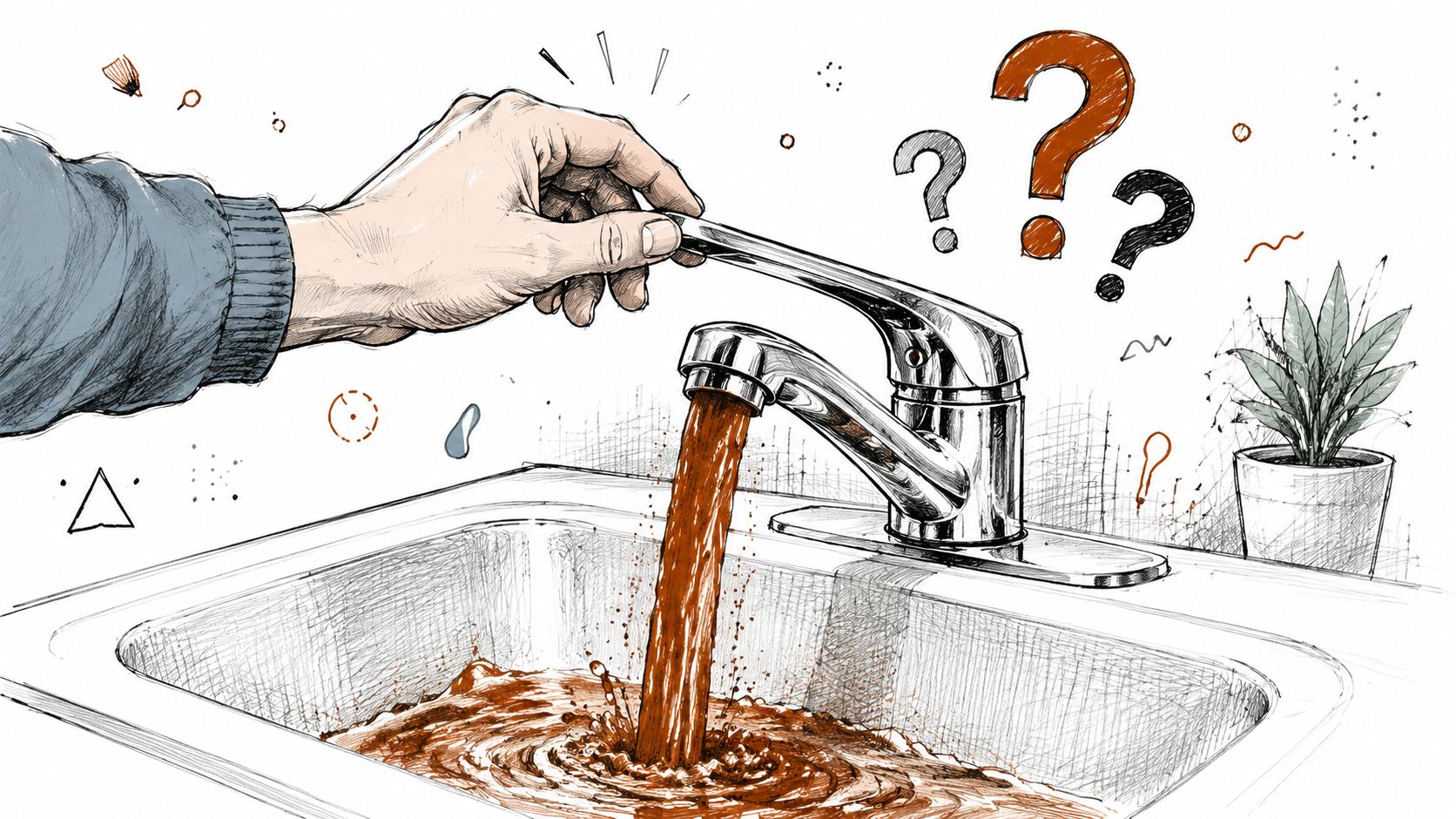
If the discoloration appears only when you run hot water, plumbers usually look first at the water heater and the hot-side piping. Industry guidance notes that when only hot water is discolored at several fixtures, the likely causes are sediment, rust, or internal corrosion on the heater side rather than a whole-house supply problem. A useful outside explanation of why hot water is dirty makes the same point in plain terms.
The three causes seen most often
The first is sediment buildup. As the heater runs through repeated heating cycles, minerals settle at the bottom of the tank. In parts of North Metro Atlanta where water tends to leave behind scale and mineral residue, that buildup can become a regular maintenance issue. Once the sediment gets stirred up, the water can turn brown.
The second is rust inside the system. That can come from the tank itself or from older galvanized piping connected to the hot-water side. Rust particles don't always show up all at once. Sometimes homeowners notice it after heavy hot-water use, after the tank has sat for a while, or after someone drains part of the heater.
The third is a failing anode rod. That rod is designed to corrode first so the tank doesn't. When it's badly consumed, the tank loses a major layer of corrosion protection.
Practical rule: Brown water from only the hot taps is a plumbing problem worth checking soon, but it isn't the same as a whole-house water emergency.
A. O. Smith's technical guidance adds an important layer here. It notes that glass-lined tanks today rarely fail enough to discolor water through simple bare-metal contact alone, and that many brown-water complaints are tied instead to iron-related corrosion or sediment in the system. It also notes that iron bacteria such as Crenothrix, Leptothrix, and Gallionella are common where soluble iron exceeds 0.2 ppm and that discoloration is favored by iron and manganese, low dissolved oxygen, and temperatures below 138°F, as summarized by Aqua Pump's discussion of brown hot water and clear cold water.
If your hot water has turned brown and you already suspect the heater, the next step is a simple diagnosis and, if needed, a closer look at your water heater service options.
First Diagnosis Pinpointing the Source
Before you flush anything or start shopping for a new unit, do one simple test. Compare the hot and cold water at several fixtures. This is the fastest way to narrow the problem.
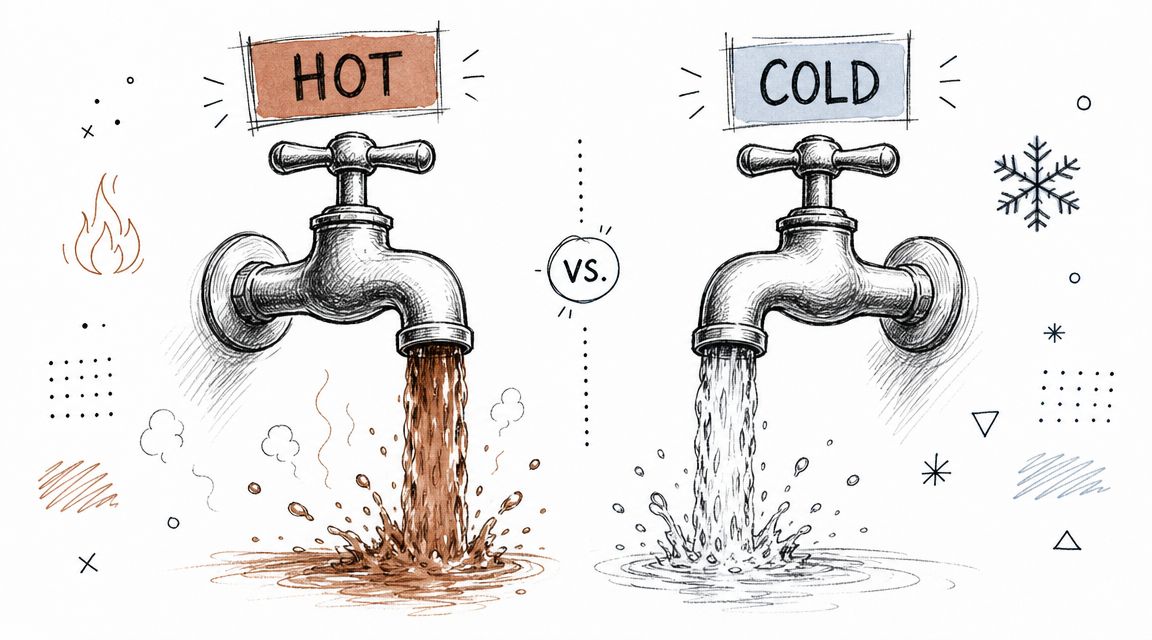
Run this check at more than one faucet
Go to the kitchen sink, a bathroom sink, and one tub or shower if possible.
- Run cold water only and look at the color.
- Run hot water only and compare.
- Repeat at a few different fixtures in the house.
- Make note of whether the discoloration is everywhere or just at one location.
This works because the cold side bypasses the heater. If cold water is clear and hot water is brown throughout the house, that strongly points back to the heater or to piping on the hot side.
What the results usually mean
A quick comparison table makes this easier:
| What you see | Most likely direction |
|---|---|
| Hot water brown at multiple fixtures, cold water clear | Water heater or hot-side plumbing |
| Both hot and cold are brown | Upstream supply issue, main line disturbance, or well-related water quality issue |
| Only one faucet shows discoloration | Local fixture issue or branch line problem |
When both hot and cold taps are discolored, neutral guidance says to suspect a utility disturbance, hydrant flushing, or main-line corrosion rather than the tank. Many homeowners search for a heater fix when the source may be upstream plumbing or the municipal supply, as explained in this homeowner guide on brown water from a hot water heater.
If the brown water shows up on both sides of the faucet, don't blame the heater first. Check whether neighbors are seeing the same thing or whether recent utility work has disturbed the line.
Don't overlook the one-fixture scenario
If only one sink shows brown water, the heater may not be the problem at all. In that case, think smaller. A corroded faucet body, debris in the aerator, or rust in a short branch line can create a local symptom that looks worse than it is.
That same symptom-based approach matters elsewhere in the house too. For example, homeowners sometimes mistake staining on a ceiling for a roof issue when it's plumbing-related. A practical example is this Phoenix homeowner's guide to ceiling spots, which shows how water symptoms can point in more than one direction until you isolate the source.
If your quick test points back to the heater, move on to the two safe weekend repairs that solve many brown hot water complaints.
DIY Fixes You Can Safely Try This Weekend
If your diagnosis says the issue is on the hot side, start with the least invasive fix. In many homes, tank flushing is the primary corrective action for sediment-driven brown water. If the water clears and stays clear, you may be done.
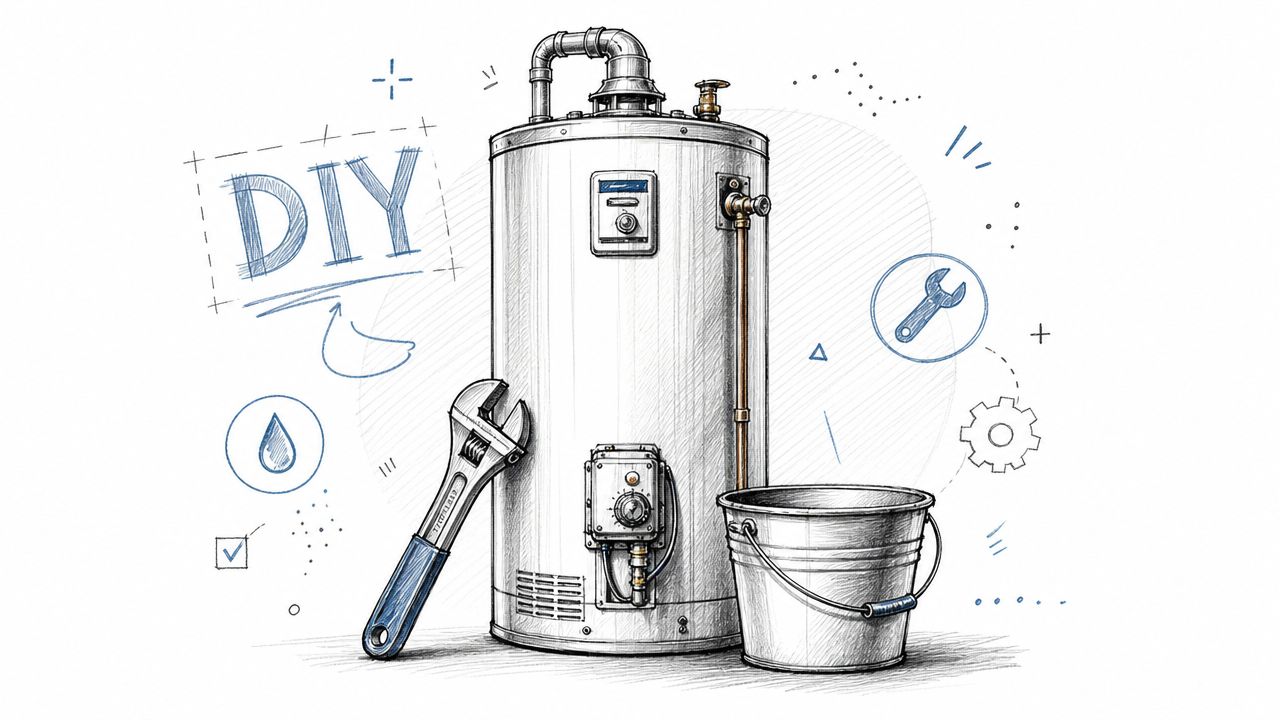
Start with a safe tank flush
You don't need a truck full of tools. For most standard tank heaters, you just need a garden hose, a bucket, and enough time to let the unit cool down before you work on it.
Use this order:
- Shut off power or gas: Turn off the breaker for an electric heater. If it's gas, turn the control to the appropriate off or pilot setting based on the manufacturer's instructions.
- Close the cold-water supply: This stops the tank from refilling while you drain it.
- Connect a hose to the drain valve: Route it to a safe drain location.
- Open a nearby hot-water faucet: That helps relieve pressure in the system.
- Drain water from the tank: Watch the discharge. If you see cloudy water, rust tint, or loose debris, that supports a sediment problem.
- Refill and flush again if needed: Continue until the water improves.
- Restore service only after the tank is full: This matters. Never energize an empty tank.
What flushing can and can't do
Flushing works well when the discoloration comes from loose mineral buildup sitting at the tank bottom. It does not repair a corroded tank. It also won't solve a badly deteriorated anode rod by itself.
Brown water that clears once after a flush is one kind of problem. Brown water that comes back quickly is a different one.
Check the anode rod if you're comfortable
This is more advanced than a basic flush, but still manageable for a handy homeowner who knows how to work carefully. The anode rod is usually installed at the top of the tank. Its job is to sacrifice itself so the steel tank doesn't.
Signs it may need attention include:
- Recurring discoloration after flushing
- Visible corrosion on the rod when removed
- An older heater with no history of anode replacement
If the rod is heavily consumed, replacing it may buy time and improve water quality. If it's gone and the tank has already started rusting internally, rod replacement may be too late.
A few practical safety limits
Skip the DIY route and stop immediately if any of these apply:
- The drain valve won't open cleanly: Forcing it can cause a leak.
- The shutoff valve doesn't fully close: You can't control the drain safely.
- You see active leaking around the tank body: That points to a bigger failure.
- The top fittings are badly corroded: Disturbing them can create a new repair.
For homeowners in Cumming, Woodstock, Canton, and nearby areas, this is often the fork in the road. A flush is worth trying when the unit is stable and accessible. If not, it's smarter to move straight to a service call than to turn a water-quality issue into a leak repair.
When to Call a Plumber in North Metro Atlanta
Some brown water problems are maintenance issues. Others are warning signs that the heater is near the end of the line. Knowing the difference saves time, money, and aggravation.
Repair makes sense when the symptom is isolated
A plumber should evaluate the unit if the water is brown only on the hot side and you've already ruled out a supply issue. In many cases, the next step is a professional flush, anode inspection, or a check of the hot-side piping.
That said, repeated DIY flushing isn't always the smart move. If the water improves for a day or two and then turns brown again, the heater may be deteriorating internally.
Replacement becomes the better call when the pattern changes
One plumbing source states that typical water heaters last about 8–10 years before replacement is often needed, and hard-water conditions can shorten that lifespan, as explained in this guidance on brown or rusty water. The same guidance notes that regular flushing is an important preventive step, but persistent discoloration after that may point to advanced corrosion and the need for professional evaluation.
Here's the practical version homeowners can use:
- If the heater is older and the water stays brown, replacement is often more sensible than piecemeal repairs.
- If you see leaking around the tank body, stop trying to nurse it along.
- If the unit makes loud popping or banging noises, have it checked before more sediment damage develops.
- If hot water volume has dropped along with discoloration, the tank may be loaded with buildup or failing internally.
A water heater can be repairable and still not be worth repairing. Age, condition, and repeat symptoms matter more than one isolated flush result.
When it's an emergency call
You don't have to wait for business hours if the problem comes with leaking, no hot water, pressure changes, or signs the heater may be failing quickly. Homeowners dealing with active leaks or a sudden heater issue can go straight to emergency plumbing service.
If you want a plain-language reference for the line between “watch it” and “call now,” this guide to plumbing emergencies is useful because it matches how plumbers think in the field. Color alone may not be an emergency. Color plus leaking, noise, or loss of function often is.
Preventing Brown Water and Protecting Your Plumbing
Once you get the water clear again, the smarter move is preventing the same problem from coming back. Brown water from a hot water heater usually starts long before you ever see it at the faucet.
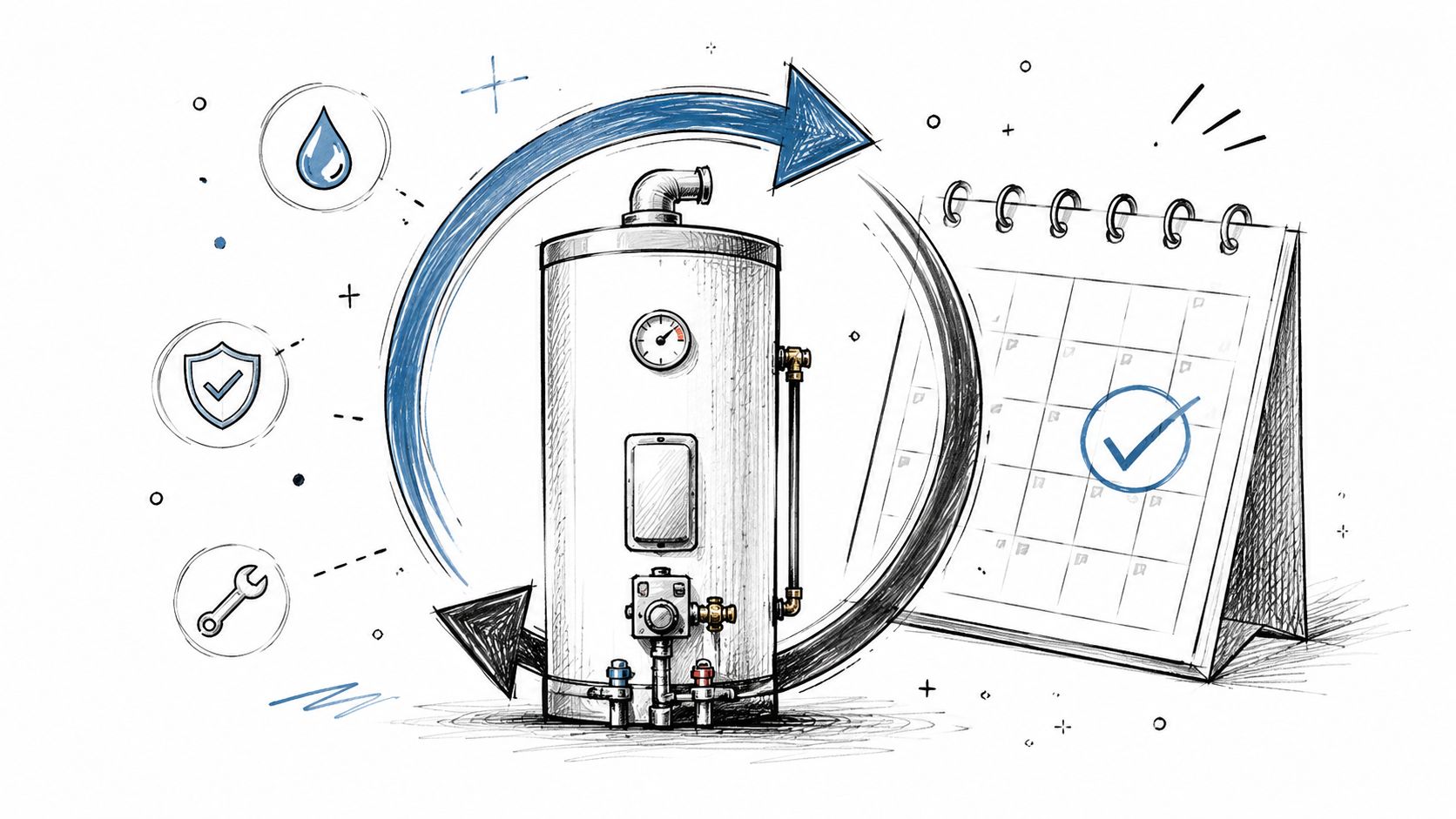
Maintenance that actually helps
The most useful habits are simple:
- Flush the tank on a routine basis: This helps remove sediment before it compacts and starts circulating.
- Have the anode rod checked periodically: That small part does a big job.
- Pay attention to water changes: Rust tint, staining, or reduced hot-water quality usually starts gradually.
- Don't ignore local water conditions: Homes with harder water or more mineral content put more stress on heaters, valves, and fixtures.
Many North Fulton, Forsyth County, and Cobb County homeowners can reduce future trouble in this manner. If your water tends to leave scale on fixtures or sediment in aerators, the heater isn't the only thing taking the hit. Faucets, shower valves, dishwasher components, washing machine valves, and supply lines all see that same water.
Whole-home filtration as a long-term fix
If sediment and minerals are a recurring issue, a whole-home approach often makes more sense than repeating heater cleanouts. A filtration and conditioning system treats the water before it reaches the heater, which helps protect the tank and the rest of the plumbing system.
One option homeowners look at is a HALO whole-home filtration system, which is designed to address sediment and water-quality issues before they move through the house. JMJ Plumbing installs these systems, and homeowners who want to explore that route can review HALO water filtration options.
That doesn't replace maintenance. It improves the conditions the heater has to work under.
The bigger plumbing benefit
When you reduce sediment and mineral loading, you're not just chasing clear hot water. You're also reducing wear on the parts homeowners usually don't think about until something stops working.
That includes:
- Water heaters and hot-side valves
- Shower cartridges and faucet aerators
- Ice maker and appliance supply valves
- Fixtures that stain easily when iron or rust shows up
A clean-looking faucet stream is nice. Protecting the plumbing behind the walls is better.
Your Next Steps for Clear Hot Water in Atlanta
If your hot water suddenly turns brown, start with the simplest test. Compare hot and cold water at several fixtures. That tells you whether the problem is likely in the heater or somewhere upstream.
If the issue points to the heater and the unit is otherwise stable, a careful tank flush is the first thing to try. If the discoloration keeps returning, the heater is older, or you see leaking, rust, or other warning signs, stop experimenting and get it checked by a licensed plumber.
Homeowners across Acworth, Roswell, Marietta, Johns Creek, Woodstock, Alpharetta, Canton, and Cumming deal with the same basic question. Is this a repair, or is it time for replacement? The answer depends on what the system shows you after that first diagnosis, not on guesswork.
Brown water from a hot water heater is common. Ignoring it is what turns it into a bigger plumbing problem.
If you need clear answers and fast help, JMJ Plumbing serves North Metro Atlanta with licensed water heater repair, water heater replacement, emergency plumbing, leak repair, drain cleaning, sewer repair, and whole-home filtration support. If your hot water is brown, the tank is leaking, or you're trying to decide between repair and replacement, reach out for a professional diagnosis and a practical next step.