When a shower starts draining slower every week, most homeowners try the same sequence. A bottle from the hardware store. A small plastic zip tool. Maybe a hand snake from the garage. For a day or two, it seems better. Then the bathroom sink gurgles, the toilet acts strange, and there's an odor you can't quite ignore.
That's usually the moment the question changes. It's no longer, “How do I unclog this drain?” It becomes, “Is this just a clog, or is something bigger going on in my sewer line?”
That concern is reasonable. Professional drain cleaning isn't only about getting water to go down again. It's about figuring out whether you're dealing with a simple blockage in one fixture or a symptom of pipe scale, root intrusion, or line damage deeper in the system. The service category itself has grown well beyond a basic maintenance call. The global plumbing drain cleaning service market was valued at USD 5,845.9 million in 2025 and is projected to reach USD 10,370.8 million by 2035, with a 5.9% CAGR, according to Future Market Insights' plumbing drain cleaning service market report.
If you want a simple way to stay ahead of recurring plumbing issues after the immediate problem is fixed, it also helps to download 2026 maintenance checklist and use it as a reminder for the parts of the home that get overlooked until there's a backup.
Your Guide to Professional Drain Cleaning
In North Atlanta homes, drain problems rarely arrive at a convenient time. It might start in Woodstock with a kitchen sink that won't empty after dinner. In Alpharetta, it might be a clogged toilet that won't flush properly first thing in the morning. In Roswell or Canton, the first sign might be a sewer smell near a basement drain after heavy water use.
The important point is this. Not every clog is the same problem, and not every blockage should be treated the same way.
What professional drain cleaning actually means
A true professional drain cleaning call should do more than poke a hole through a blockage. It should answer a few practical questions:
- Where is the problem located
- Is it isolated to one fixture or affecting the whole house
- What material is causing it
- Is the clog the main issue, or just the warning sign
That last question matters most. A sink stoppage caused by hair near the trap is one kind of repair. A whole-house drainage issue tied to a sewer backup is a different situation entirely.
A drain that clogs once may just need cleaning. A drain that clogs over and over usually needs diagnosis.
Why homeowners call instead of trying one more DIY step
DIY efforts can help with a very minor blockage near the opening of a drain. They usually don't solve a packed branch line, grease buildup farther down the pipe, or a main sewer issue. If your home has multiple symptoms at once, the problem often sits beyond the reach of small store-bought tools.
That's where a trained plumber brings real value. The job isn't only to clear the line. The job is to avoid damaging the pipe, avoid masking a sewer repair issue, and avoid leaving you with the same backup a week later.
Signs You Need a Pro and Not Another DIY Fix
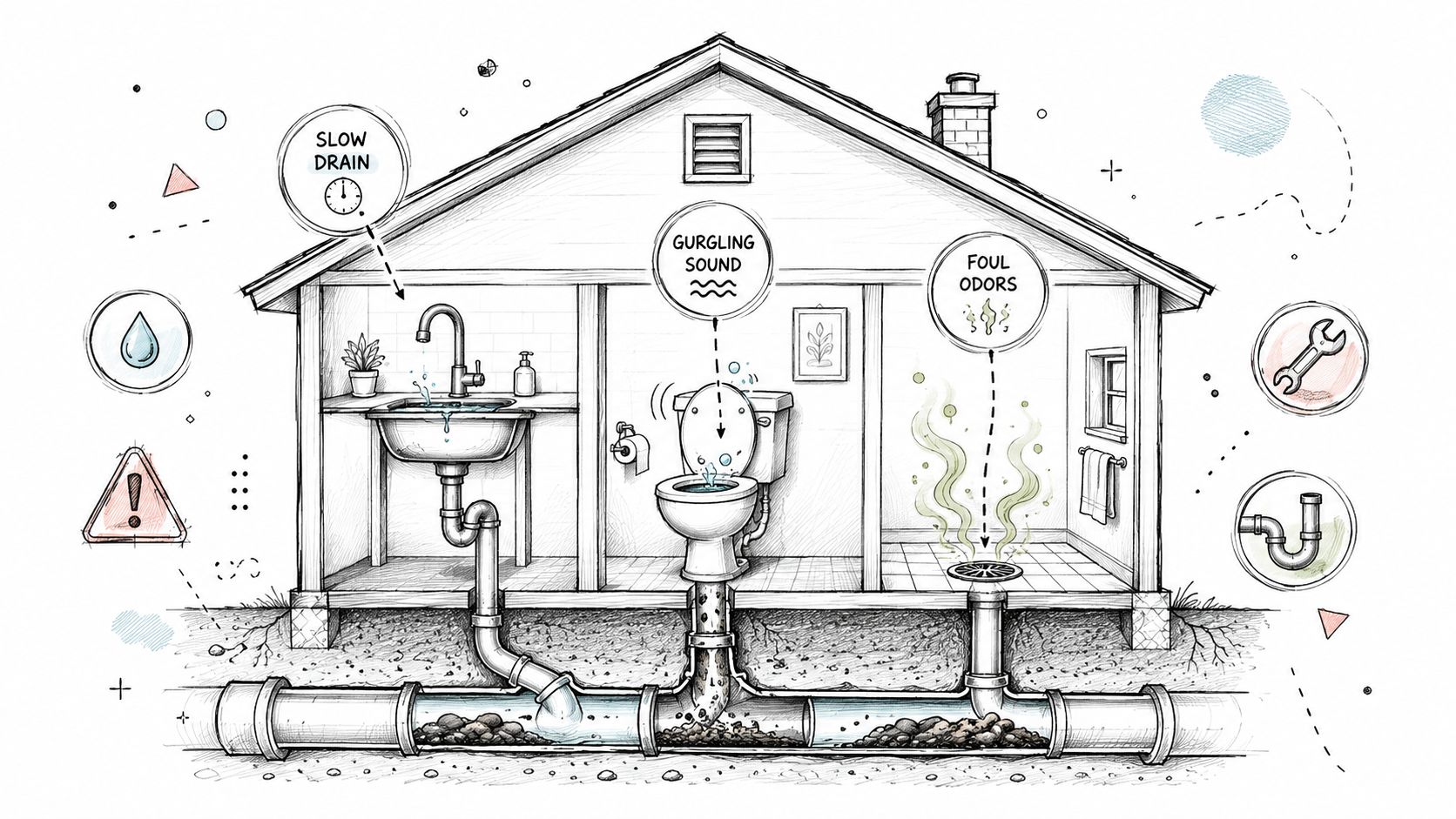
Some drain problems are straightforward. One bathroom sink is slow. Everything else works fine. That can still need service, but it doesn't always point to a bigger pipe issue.
Other symptoms deserve more attention right away.
Warning signs that suggest more than a simple clog
If you're seeing any of the following in Marietta, Johns Creek, Cumming, or nearby North Metro Atlanta areas, it's smart to stop guessing and get the system checked:
- Recurring clogs in the same drain. If the same tub, toilet, or kitchen sink keeps stopping up, the line may not be getting fully cleared.
- More than one fixture acting up. A shower, toilet, and sink all draining poorly at the same time often suggests a branch or mainline problem.
- Gurgling from toilets or nearby drains. Air movement in the system can be a clue that water isn't moving normally through the line.
- Sewage smell inside or outside. Odor near a bathroom, basement, crawl space, or yard can point to buildup, venting problems, or sewer line trouble.
- Water backing up in the wrong place. Running the washing machine and seeing water rise in a nearby floor drain is not a small clog.
Many clogs are recurring symptoms of deeper system problems such as pipe scale, root intrusion, or line damage. While basic snaking provides temporary relief, a professional diagnosis using tools like a sewer camera is necessary to identify and solve the root cause, preventing future backups, as explained by Doug's Rooter on sewer camera diagnosis and recurring clogs.
When DIY usually makes things worse
Chemical drain cleaners are a common example. Homeowners use them because they're fast and easy to buy. The trouble is that they often don't remove the full obstruction. They may sit in the pipe, create a messy hazard for whoever opens the line next, and still leave the core problem untouched.
Small hand tools have limits too. They can help close to the fixture. They usually can't tell you whether the line is packed with grease farther downstream, invaded by roots, or damaged.
If water is rising instead of draining, the first priority is stopping additional flow into the system. A simple household refresher like Ring Hot Water's shut off valve guide can help homeowners find the right valve quickly while waiting for service.
Practical rule: If multiple drains are affected, skip the store-bought fix and treat it like a system problem.
For active backups, overflow risk, or sewage smell, that's when it makes sense to call for emergency plumbing service instead of waiting to see if the line clears on its own.
Professional Methods and Equipment Pros Use
A backed-up drain can mean two very different things. Sometimes it is a simple stoppage in a nearby line. Sometimes it is the first visible sign of a bigger sewer problem, like root intrusion, a sag, or a damaged joint. The job is not just clearing water. The job is figuring out which problem you have.
That is why professional drain cleaning starts with diagnosis and then matches the tool to the line. Pipe size, material, age, access point, and the type of obstruction all affect the right choice.
Snaking, rootering, and jetting solve different problems
A plumber does not reach for the same machine on every call. Hand augers are useful for a clog close to a sink or toilet. Electric rooters are better for tougher branch-line stoppages. Hydro jetting is often the better choice when a main line is coated with grease, sludge, or root debris. Ferguson's guide to essential drain cleaner tools explains the differences well.
Here is the practical breakdown:
| Method | Best For | How It Works | Key Benefit |
|---|---|---|---|
| Hand auger | Localized sink or toilet clogs | A manual cable reaches and breaks through a blockage close to the fixture | Good control in tight, nearby lines |
| Electric rooter | Severe fixture or branch-line clogs | A powered cable cuts through or pulls back tougher obstructions | Stronger clearing power for deeper stoppages |
| Hydro jetting | Mainline grease, sludge, and root-related fouling | High-pressure water scours the interior of the pipe wall | Cleans the pipe more thoroughly, not just a narrow opening |
The wrong tool can create a short-term win and a long-term problem. A cable might punch a small channel through grease and get the sink draining again, but leave most of the buildup on the pipe wall. A high-pressure jetter can wash that line much cleaner, but it is not always the first choice if the pipe is fragile or if the blockage is a solid object lodged in the line.
Clearing a clog is different from solving the cause
This is the part many homeowners worry about, and for good reason. If the line backs up once after years of normal use, a routine clog is more likely. If it keeps happening, or if several fixtures act up together, the blockage may be a symptom rather than the whole problem.
For example, a bathroom branch line with wipes or paper packed into it often responds well to mechanical cleaning. A kitchen drain with heavy grease usually needs wall-to-wall cleaning, not just a hole opened through the center. A main sewer line that catches roots every few months may clear temporarily with a rooter, but the repeat stoppage often points to a joint opening or a cracked section farther out.
That trade-off matters. Fast relief is important, but it should not hide pipe damage that will keep causing backups.
Equipment size and line location matter
Professional machines are chosen for reach, cable size, cutter head, and the kind of line being cleaned. A small lavatory drain, a washing machine standpipe, and a main sewer all call for different equipment. Using a machine that is too small can leave material behind. Using one that is too aggressive can be hard on older pipes or fittings.
Access matters too. Cleaning through a fixture opening is different from cleaning through an exterior cleanout. The plumber needs to know where the stoppage likely sits before deciding how to approach it.
Why camera inspection often changes the plan
Some drain problems should be viewed before they are attacked. A camera can show whether the line has soft buildup, standing water, roots, a belly in the pipe, a separated joint, or a break that no cleaning method will fix. That is often the dividing line between a standard drain cleaning call and a sewer repair conversation.
If the symptoms suggest more than a basic clog, a sewer camera inspection for diagnosing hidden drain and sewer line problems gives a much clearer answer than guessing.
In practical terms, the best professional method is the one that fits both the blockage and the condition of the pipe. That is how you avoid paying for the same drain to be cleared again a few weeks later.
What to Expect During a JMJ Plumbing Service Visit
A lot of homeowners are less worried about the actual cleaning than they are about the unknowns. How long will it take? Will the plumber need to dig? Is this going to turn into a sewer replacement? Those are fair concerns.
Drain and sewer work is a large professional category with established service standards. In the United States, the Septic, Drain & Sewer Cleaning Services industry reached an estimated $8.1 billion in 2026, with over 7,700 businesses operating in the sector, according to IBISWorld's U.S. septic, drain, and sewer cleaning services industry profile. In practice, that means a proper service call should feel organized, clear, and professional from start to finish.
What usually happens on the visit
Most service calls follow a simple flow:
-
Initial phone call
You describe the symptoms. Slow drains, sewage smell, a clogged toilet that won't flush, or water backing up in a tub all help narrow the likely location of the problem. -
Arrival and assessment
The plumber checks which fixtures are affected, where the cleanout is, and whether the issue appears isolated or systemic. -
Diagnosis before clearing
If the symptoms suggest a deeper issue, the line may need inspection before the cleaning method is chosen. -
Clear explanation of options
You should know whether the problem looks like a routine blockage, heavy buildup, or something that may call for repair. -
Drain cleaning and verification
After the line is cleared, the system is tested so you can see that water is moving normally again.
What homeowners should expect from communication
Good service includes plain language. Not trade jargon. If the issue is limited to a sink branch line, you should be told that. If the line is showing signs of sewer damage, you should hear that clearly too, before anyone talks about next steps.
For routine stoppages, homeowners can also schedule help directly through JMJ Plumbing's drain cleaning and toilet clog service page.
A trustworthy drain cleaning visit should leave you with two answers. What caused the backup, and what will keep it from happening again.
Understanding Drain Cleaning Costs in North Metro Atlanta
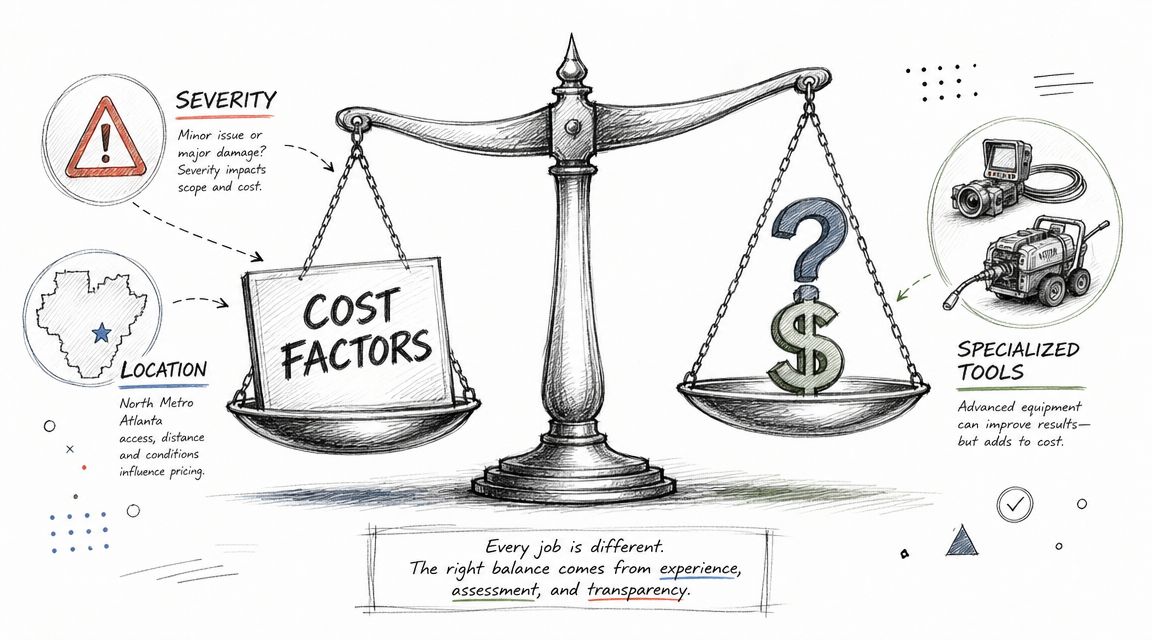
There isn't one fixed price for professional drain cleaning, and any honest plumber should tell you that upfront. The final cost depends on the work required, not just the fact that a drain is clogged.
What usually changes the price
A simple sink stoppage and a sewer backup are two different jobs. The location of the clog matters. So does how accessible the line is.
Here are the biggest cost factors homeowners in Acworth, Cumming, Marietta, and surrounding areas should expect:
- Type of blockage. Hair near a tub drain is different from grease in a kitchen branch or roots in a sewer line.
- Location of the line. A fixture drain is usually more straightforward than a main sewer line.
- Cleaning method needed. Mechanical snaking and hydro jetting are different services with different equipment and labor demands.
- Access to the pipe. An exterior cleanout is usually simpler than working through a difficult interior access point.
- Timing of service. Emergency plumber calls after hours or on weekends can be different from standard scheduled visits.
The real question to ask about cost
Instead of asking only, “What does drain cleaning cost,” ask, “What problem is this price solving?” If the line is fully cleaned and the cause is identified, that's a better value than a cheaper visit that only opens a narrow channel and leaves the blockage behind.
That's especially true if you're trying to decide between repair and replacement elsewhere in the system, such as a sewer line, water line, or even a related issue like leak repair after a backup.
Why Choose JMJ Plumbing for Your Drain Emergency
It is 10 p.m., the shower fills when the toilet flushes, and now you are wondering whether this is a simple clog or the start of a sewer line problem. That distinction matters. The wrong call can leave you with a temporary opening, another backup in a few weeks, and no clear answer about what is happening underground.
JMJ Plumbing is a strong choice for drain emergencies because the job is approached as diagnosis first, cleaning second. In North Metro Atlanta, that matters. Older homes in places like Marietta, Roswell, and parts of Woodstock often have root intrusion or aging sewer lines. Newer homes can still have heavy grease buildup, wipes, or a blockage caused by how the plumbing system is laid out. The first priority is getting flow restored safely. The next priority is figuring out whether the clog was the whole problem or just the symptom.
That is where experience shows up in a way homeowners can use. A technician should be able to tell you, in plain language, whether the line likely needs straightforward cleaning, a camera inspection, or a repair recommendation. If a drain opens but the symptoms point to pipe damage, belly in the line, repeated root entry, or a break outside the house, you need that said clearly before the emergency turns into repeat service calls.
JMJ Plumbing serves homeowners across Woodstock, Acworth, Alpharetta, Canton, Roswell, Marietta, Cumming, and Johns Creek with 24 hour plumber availability for urgent issues. The company is also a licensed Master Plumber and handles related work homeowners often need if the drain problem leads to a larger finding, including sewer repair, sewer replacement, leak repair, burst pipe repair, water heater replacement, and main water line repair.
Equipment still matters, but judgment matters more. A small bathroom branch line, a grease-heavy kitchen drain, and a main sewer line do not get handled the same way. The right technician chooses the method that fits the pipe size, the likely blockage, and the condition of the line. If there is any sign the pipe could be damaged, the goal is to clear it without creating a bigger problem.
For a homeowner, that usually comes down to one practical question: will this visit solve the immediate backup and tell me whether I have a larger sewer issue to deal with? That is the standard to use when choosing a plumber during a drain emergency.
Frequently Asked Questions About Drain Cleaning
How can I help prevent future clogs
A few habits make a real difference:
- Use strainers in kitchen and bathroom drains to catch hair and food debris.
- Keep grease out of the sink. Let it cool in a container and throw it away.
- Watch what gets flushed. Toilets are designed for toilet paper and human waste. Wipes and hygiene products cause a lot of stoppages.
- Pay attention to early symptoms. Slow drains, occasional gurgling, and bad odors are easier to handle before they become a backup.
Are chemical drain cleaners a good idea
Usually, no. They may seem convenient, but they often don't solve the actual cause of the clog. They can also leave a harsh chemical sitting in the line, which makes later service messier and less safe. Mechanical cleaning or inspection is usually the better path when a problem keeps returning.
What's the difference between drain cleaning and sewer repair
Drain cleaning removes an obstruction or buildup so water can flow again. Sewer repair addresses a damaged or failed pipe. If the line has root intrusion, separation, or structural damage, cleaning may restore flow temporarily but won't fix the underlying defect.
When should I call an emergency plumber
Call right away if sewage is backing up into tubs, showers, toilets, or floor drains. The same goes for a strong sewage smell inside the house, a clogged toilet that won't flush and is close to overflowing, or water showing up where it shouldn't, such as in the yard near a line path.
Is a recurring slow drain always a sewer line problem
No. Sometimes it's a local issue in one fixture branch. But if the same symptom returns after repeated clearing, or if more than one drain is involved, it's time to stop treating it as a minor nuisance and start treating it as a diagnostic problem.
If your sink, shower, toilet, or main line is giving you signs of a deeper issue, don't settle for a temporary opening in the pipe. JMJ Plumbing helps homeowners across North Metro Atlanta diagnose the underlying cause, clear the blockage safely, and determine whether you need drain cleaning, sewer repair, leak repair, or a larger plumbing fix. If the problem can't wait, reach out for 24/7 service.