
You hear it at night first. A faint drip behind a wall. Then the water bill lands and it's higher than it should be. Or maybe you step into the yard in Acworth, Woodstock, or Marietta and notice one patch of ground stays wet even though it hasn't rained.
That's usually the moment homeowners start asking the same question. Is this something I can safely check myself, or do I need a plumber right now?
A leak doesn't always mean a full-blown plumbing disaster. Some leaks are slow, accessible, and straightforward to isolate until a scheduled repair. Others are hidden in a slab, buried in a service line, or tied to a water heater, sewer issue, or pressure problem that can get expensive fast if you wait. The key is knowing the difference.
That Drip Drip Drip Is a Warning Sign
A lot of leaks start with something easy to dismiss. A soft tapping sound in the ceiling. A cabinet under the sink that smells musty. A toilet that seems to refill when nobody used it. Homeowners often hope it's nothing, because nobody wants to open a wall or deal with a pipe repair.
But small leaks rarely stay small.

At the household level, leaks add up fast. The average household's leaks can account for more than 10,000 gallons of water wasted each year, 10% of homes have leaks that waste 90 gallons or more per day, and nationwide that totals over 1 trillion gallons annually, according to household leak detection guidance from a public utility source.
What that usually means in a real house
In practice, worried homeowners usually fall into one of three situations:
- You can see the leak. A dripping shutoff valve, a supply line under a sink, or a wet spot near the water heater.
- You can't see the leak, but the signs are there. Higher bill, mildew smell, low pressure, soft drywall, or a hot spot on the floor.
- Something changed suddenly. Water stain spread overnight, pipe burst during a cold snap, yard turned soggy, or pressure dropped across the whole house.
Practical rule: If water is actively spreading, don't spend an hour diagnosing. Shut off the water first, then decide your next move.
Leaky water pipes make people nervous for good reason. Water doesn't just stain drywall. It can damage flooring, insulation, trim, cabinets, and the framing around the leak. If the source is hidden, the repair usually gets bigger because the water had more time to travel before anyone noticed.
The good news is that there is a logical way to handle it. First, figure out why pipes start leaking. Then check for the common signs you can safely inspect yourself. After that, decide whether you're dealing with a manageable repair or an emergency plumber situation.
Why Do Water Pipes Start Leaking
Leaks usually come from stress, age, or poor conditions around the pipe. They don't happen by magic, and they're not always random. Once you understand what pushes a line toward failure, a plumber's recommendation makes a lot more sense.
Material and age matter
Some piping materials age worse than others. Research shows that pipe age, diameter, soil corrosivity, and internal water pressure are strong predictors of breakage risk. Galvanized iron and polyethylene pipes are often identified as the most failure-prone materials in water distribution networks, based on published research on water distribution failure factors.
That lines up with what plumbers see in the field. Older galvanized lines often restrict internally as they age, then start failing at weak points. Plastic lines can have problems too, especially where the pipe was stressed, bent, poorly bedded, or exposed to conditions it didn't handle well.
Pressure turns weak spots into leaks
A lot of homeowners think pressure is only a comfort issue. They notice the shower feels strong and assume that's a good thing. The problem is that high pressure puts extra force on every joint, valve, connector, and appliance hose in the house.
If a pipe already has a thin spot, a bad fitting, corrosion, or a hairline split, pressure speeds up the failure. That's why one home can seem fine for years and then suddenly develop multiple leaks in a short stretch.
North Metro homes don't all fail the same way
Housing stock across Acworth, Canton, Roswell, Johns Creek, and Marietta is mixed. Some homes have older interior piping. Some have newer additions tied into older systems. Some have long exterior runs from the meter to the home. Some sit on slabs, which changes how hidden leaks show up and how they're found.
A few common patterns show up over and over:
- Older pipe systems tend to leak at threaded joints, corroded sections, or shutoff points.
- Long buried water lines are more vulnerable to soil movement, root pressure, and wear you can't see.
- Small-diameter lines can show pressure and flow problems sooner when scale or damage builds up.
- Poor prior repairs often fail where a quick fix was used in place of a proper replacement.
A leak is often the symptom. The real issue may be age, pressure, bad material, or a section of pipe that has reached the end of its service life.
Why one leak sometimes means more than one repair
When a single fitting fails under a sink, that may be an isolated job. When leaks show up in different places over time, or when the same area keeps causing trouble, that points to a system issue. In those cases, the right answer may be water line replacement, sectional replacement, or repiping instead of repeated patchwork.
That's the trade-off homeowners need explained clearly. A cheap repair can be the right move when the problem is limited. It's the wrong move when the rest of the line is already telling you it's next.
Spotting the Hidden Signs of a Water Leak
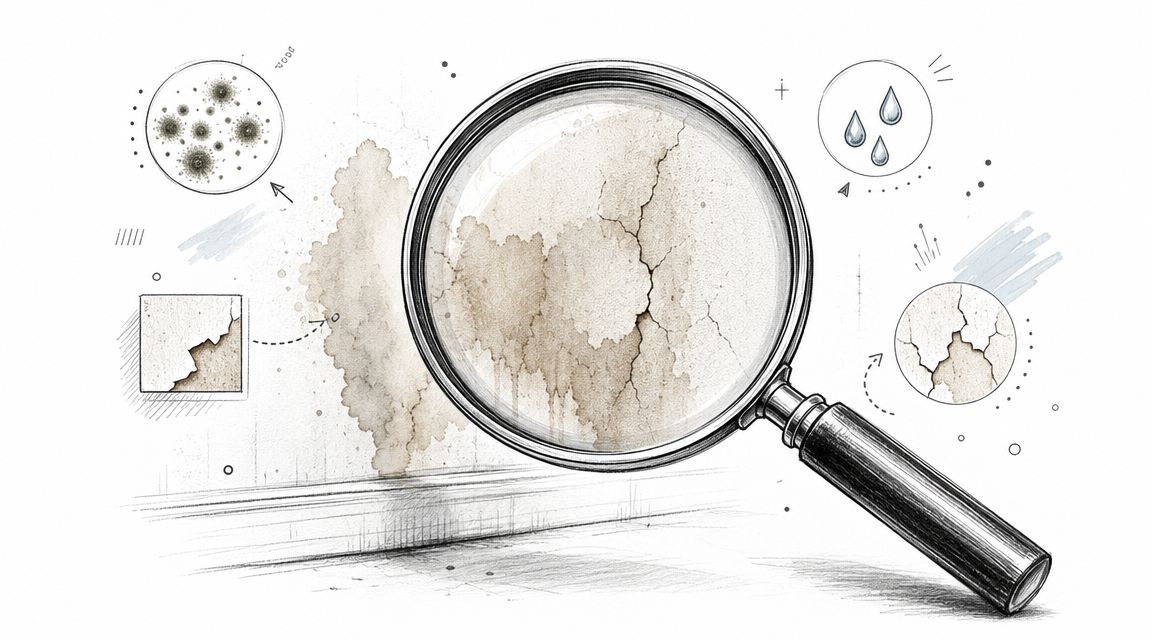
Some of the worst leaks don't leave a puddle in the middle of the floor. They stay inside a wall, under a slab, behind a shower, or out in the yard where they don't get noticed until the damage spreads.
Indoor clues homeowners often miss
Start with what your house is telling you. Hidden leaks usually leave a trail.
- Stains on drywall or ceilings often mean water is moving from the leak location to a lower point.
- A mildew or damp smell can show up before visible staining.
- Peeling paint or bubbling texture usually means moisture is trapped behind the finished surface.
- Warped baseboards or soft flooring point to slow water exposure.
- A toilet that keeps refilling can waste water even though no pipe is dripping in plain sight.
- A drop in water pressure can mean a leak, especially if the change is sudden or affects multiple fixtures.
Outdoor and slab-related signs
Leaks outside the house can be even harder to read because people assume it's drainage, irrigation, or weather. Look closer if you notice any of these:
- Wet spots in the yard that don't dry out
- Grass that grows differently in one area
- Water near the driveway, walk, or foundation
- Cracks near hardscapes or slab-adjacent areas
- Damp soil between the meter and the house
If you're trying to sort out whether the problem may be under the slab, this guide on residential slab leaks gives a useful overview of the warning signs and why they need a different approach than an exposed pipe under a sink.
Hidden water usually shows up indirectly first. Smell, stain, softness, and pressure changes often appear before you ever see the source.
What not to ignore
Homeowners sometimes wait because the symptom seems minor. That's where trouble starts. Call for help sooner if you notice:
| Sign | What it may suggest |
|---|---|
| Warm area on the floor | Possible hot water line leak under slab |
| Repeated drywall staining | Ongoing active leak, not old damage |
| Musty odor with no visible source | Moisture trapped behind walls or flooring |
| Low pressure plus wet yard | Possible main water line problem |
| Running water sound when fixtures are off | Hidden active leak |
If your home also has drain problems, sewage odor, or backup symptoms, don't assume every water issue is a supply leak. Sometimes homeowners searching for leak repair in Alpharetta or Marietta are dealing with a sewer repair or sewer backup issue at the same time, especially in older properties.
How to Find a Water Leak in Your Home
You can do a solid first check yourself if you stay within safe limits. The goal isn't to tear into walls. The goal is to narrow the problem and gather useful information before deciding on repair.
Start with the meter test
The water meter test is one of the best first steps.
- Turn off all fixtures and appliances that use water. That includes faucets, washing machine, dishwasher, irrigation, and ice maker if possible.
- Check the meter. Look for movement on the leak indicator or note the reading.
- Wait without using water.
- Check the meter again. If it changed, water is moving somewhere.
This won't tell you exactly where the leak is, but it confirms whether you likely have one on the property.
Check the common indoor trouble spots
Once the meter suggests a leak, inspect the places that fail most often and are safe to access.
- Under sinks for wet shutoffs, loose compression fittings, and swollen cabinet bottoms
- Toilets for silent leaks into the bowl or moisture around the base
- Water heater area for drips at the connections, relief valve discharge, or corrosion at the tank
- Faucets and supply lines for steady drips or staining around escutcheons
- Laundry box and washer hoses for slow seepage
- Visible basement or crawlspace lines for mineral buildup, corrosion, or active dripping
If the leak appears to be around a shower and the pipe itself isn't obviously damaged, this outside resource on DIY shower leak repair is a helpful example of how shower leaks can come from failed waterproofing or seals, not just plumbing fittings.
Know when the leak is probably hidden
Some leaks won't show themselves during a visual walk-through. At that point, symptoms matter more than access. For underground leaks, signs include unexplained bill spikes, wet patches in the yard, and low water pressure. Professionals increasingly use non-invasive tools like acoustic sensors, thermal imaging, and video pipe inspection to locate these buried leaks without excavation, as described in guidance on underground leak detection methods.
That's where DIY usually stops being useful.
What you can safely do and what you shouldn't
You can safely:
- Shut off fixture stops if one sink, toilet, or faucet is leaking
- Shut off the house main if water is spreading
- Dry the area and monitor it
- Take photos of stains, puddles, meter movement, and damaged materials
Don't:
- Cut into walls blindly
- Break slab or dig the yard based on guesswork
- Ignore low pressure combined with moisture signs
- Assume a dry wall means the leak stopped
If the meter moves and you still can't find the leak, that usually means hidden leak detection is the next step, not more guessing.
When to Call a 24 Hour Emergency Plumber
This is the point where homeowners lose time by trying to be too patient. Some leaks can wait until business hours. Some can't. The difference comes down to how fast water is moving, where it's going, and what else the symptom suggests.

A temporary DIY fix has a narrow role
A clamp, bucket, towel, or shutoff valve can buy you time. That's all. Temporary measures are useful when they reduce damage while you wait for a proper repair. They are not a reason to delay a real diagnosis.
A minor drip on an exposed supply line might be manageable for a short period after isolation. A leak inside a wall, at the water heater, under a slab, or in the main line is a different category.
The signs that move this into emergency territory
Call a 24 hour plumber immediately if you have any of the following:
- A burst pipe or fast active leak that can't be isolated at a fixture
- Water coming through ceilings, walls, or light-adjacent areas
- No water or sharply reduced pressure across the house
- A suspected main water line repair issue between the meter and the home
- A leaking water heater tank
- Water near electrical equipment
- Any sign of sewer backup, sewage smell with backup behavior, or a clogged toilet that won't flush and is rising toward overflow
- Water pooling in the yard with interior pressure loss
If you're deciding between “watch it tonight” and “call now,” active water intrusion usually answers that question for you.
The reason to move quickly isn't just convenience. The true cost of a small leak is often underestimated, and delays in addressing hidden leaks can lead to immense damage. Professional leak detection is also shifting toward sensor-assisted diagnosis, which highlights the gap between what a homeowner can see and what instruments can find, according to reporting on modern underground leak detection research.
DIY Fix vs Calling a Pro
| Symptom | DIY Action Temporary | When to Call JMJ Plumbing Immediately |
|---|---|---|
| Slow drip under sink | Shut off local valve, place towel, avoid using fixture | If valve won't shut off, drip increases, or cabinet/drywall is wet |
| Toilet supply leak | Shut off toilet stop and dry area | If stop valve fails, flooring is affected, or leak is at wall connection |
| Water heater connection drip | Shut off water if you know how and stop using hot water heavily | If tank body is leaking, pressure relief is discharging continuously, or there's no hot water tied to leak symptoms |
| Wet drywall or ceiling stain | Stop water use in affected area if possible | Immediately if staining is spreading, bulging, or water is actively dripping |
| Wet yard and low pressure | Limit water use | Immediately for possible buried line or main water line repair need |
| Sewer smell with backup signs | Stop using drains and fixtures | Immediately for possible sewer backup or sewer repair emergency |
For homeowners who need round-the-clock help, emergency plumbing service is the right path when the leak is active, hidden, or tied to loss of service. JMJ Plumbing is one local option in North Metro Atlanta for that type of response.
Don't let the symptom fool you
The leak you can see is not always the leak that matters most. A drip under a sink is obvious. A slab leak, buried water line break, or hidden hot water line leak can do more damage while looking less dramatic at first.
That's why emergency calls in Canton, Roswell, Woodstock, and Johns Creek often start with simple descriptions like “my bill jumped,” “the floor feels warm,” or “the pressure dropped this morning.” Those are not small details. They're the clues that separate a routine service call from urgent leak repair.
Permanent Repair Options and Cost Factors
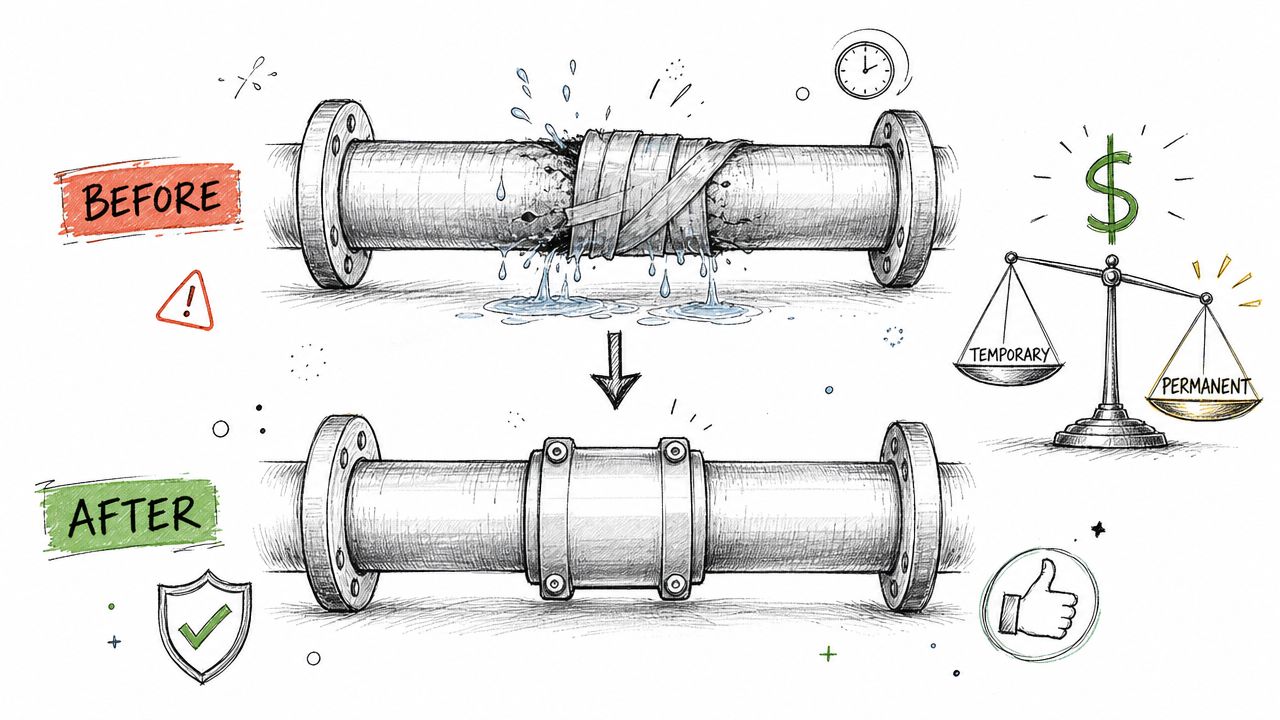
Once the immediate situation is controlled, the next decision is whether the right fix is a patch, a partial replacement, or a larger repipe. Homeowners usually want the least invasive option, which makes sense. But the least invasive option isn't always the most durable one.
When a targeted repair makes sense
A local repair is appropriate when the failure is isolated and the surrounding pipe is still in solid condition. That might mean replacing a short damaged section, a bad valve, a failed connector, or a single accessible joint.
This works best when:
- the leak is exposed or easy to reach
- the pipe material around it is still sound
- there's no pattern of repeated leaks elsewhere
When replacement is the smarter call
Sectional water line replacement makes more sense when one part of the system has clearly deteriorated, especially on exterior runs or buried lines. If a plumber finds corrosion, wall thinning, or multiple weak points near the leak, replacing a larger section avoids paying for repeated visits to chase the same line.
Whole-home repiping enters the conversation when the leaks aren't isolated anymore. If the house has aging materials, recurring failures, pressure-related wear, or multiple vulnerable areas, repiping can stop the cycle of patch-and-pray repairs. Homeowners comparing options can review repiping services to understand what a system-level replacement involves.
A good quote should explain why the recommendation fits the condition of the pipe, not just the location of the leak.
What affects the cost of repair or replacement
There's no honest flat number that fits every leak repair, water line replacement, or burst pipe repair. The cost depends on the job in front of you.
Key factors include:
- Access difficulty. Open crawlspace repairs are different from slab, wall, or underground work.
- Pipe material. Some materials are easier to transition, repair, or replace than others.
- Length of damaged line. A short exposed repair is very different from a long buried run.
- Restoration work. Drywall, flooring, concrete, or landscaping may need separate repair after plumbing work.
- Whether it's repair or replacement. Repeated failures can make replacement the better long-term value.
If the leak already affected wood flooring, this guide on Richmond VA Water Damage Hardwood Floor Repair is a useful reference for understanding what flooring specialists look for after water exposure.
The right permanent fix should lower the chance of doing the same job again in six months. That's the standard homeowners should use when they compare quotes.
How to Prevent Future Water Pipe Leaks
You can't prevent every plumbing failure, but you can reduce the chances of a bad surprise. Most prevention comes down to pressure control, early detection, and paying attention to small changes before they turn into major repairs.
Focus on pressure and routine checks
Technical guidance shows that active pressure control is a key strategy for reducing water losses and extending pipe life, because lower pressure reduces the force pushing water through existing cracks and defects, according to water leakage management guidance from the Centre for Technology Alternatives to Water.
That matters in a house just as much as it does in a larger system. If pressure is too high, every weak fitting and aging section of pipe feels it.
A practical prevention routine looks like this:
- Know your main shutoff location so you don't waste time during a leak.
- Watch your monthly bill for unexplained changes.
- Check under sinks and around toilets for moisture, staining, and corrosion.
- Look at the water heater area every so often instead of waiting for a failure.
- Pay attention to low pressure if it starts suddenly.
Think beyond the obvious leak points
A lot of homes need better system protection, not just faster repair. Pressure-reducing valves can help if pressure is running high. Water quality treatment can also matter over time because mineral buildup and corrosive conditions make fittings, valves, and appliances work harder.
If you're already tightening up the house, it's worth thinking the same way about air leakage. This article on how to seal air ducts save energy is a good example of the same principle. Small leaks in home systems waste money even when they don't look dramatic.
Don't wait for a second leak to confirm the first one mattered
The biggest prevention mistake is assuming one repair solved a broader problem. If the first leak was tied to age, pressure, or failing material, the house may have given you an early warning rather than a one-time exception.
That's when a calm inspection is worth it. Not panic. Just a practical check of the pipe system, shutoffs, water heater, visible supply lines, and exterior clues before the next leak decides the schedule for you.
If you're dealing with leaky water pipes in Acworth, Woodstock, Marietta, Alpharetta, Canton, Roswell, Cumming, or Johns Creek, JMJ Plumbing can help you sort out what's safe to check yourself, what needs immediate attention, and whether the right next step is leak repair, water line replacement, repiping, drain cleaning, or emergency service.