The call usually comes after the second or third clog.
A homeowner in Roswell has already tried the plunger. Someone in Canton had a sink that drained fine for a month, then started gurgling again. In Woodstock, it's often the kitchen line. In Marietta, it might be an older main line that backs up when the washing machine drains. The problem isn't just the clog. It's the fact that it came back.
That's where the decision starts. Do you snake the drain and get things moving again for less money up front, or do you hydro jet the line and clean it more aggressively so you're not dealing with the same mess again?
Most homeowners don't need a sales pitch. They need an honest answer. Sometimes the cheaper option is absolutely the right call. Sometimes it turns into a string of repeat service visits that cost more than handling it properly the first time.
That Annoying Clog Is Back Again Now What
A lot of recurring drain calls around North Metro Atlanta start the same way. The kitchen sink in Alpharetta drains slowly for a few days. Then the disposal side backs up. Then the dishwasher starts leaving standing water. In Johns Creek or Cumming, the shower may be the first warning. In older parts of Roswell or Marietta, a toilet that needs a second flush can be the first sign that the main line is starting to choke down.
When a clog comes back, the question changes. It's no longer, “How do I open this line today?” It becomes, “Why does this line keep closing up?”
What recurring clogs usually mean
A one-time blockage is often simple. Too much paper. Hair. A foreign object. A wad of grease that finally caught enough debris to stop flow.
A repeat clog usually points to buildup still left inside the pipe. Grease sticks to the wall. Soap and sludge collect around it. Scale narrows the opening. Roots find a weak spot and keep trapping waste. The drain may not be fully blocked, but the inside diameter has already gotten smaller.
Field rule: If the same drain keeps slowing down, the line usually needs more than a quick opening. It needs a better diagnosis.
That's also why homeowners sometimes confuse plumbing issues with exterior drainage issues. If water is showing up where it shouldn't, especially after storms, it helps to understand common causes of basement flooding so you can separate a drain-line problem from a grading, gutter, or runoff problem.
The two professional paths
For most residential drain cleaning calls, the choice comes down to two methods:
- Snaking for a targeted blockage that needs to be broken through or pulled out
- Hydro jetting for a line that needs to be cleaned along the full pipe wall
Both methods belong in a good plumber's truck. The mistake is pretending they do the same job. They don't.
Snaking a Drain vs Hydro Jetting a Pipe
A homeowner should understand this difference in plain language.
Snaking is mechanical. A plumber feeds a metal cable, also called an auger, into the drain. The head works through the blockage, cuts into it, or grabs part of it so the line can start flowing again. This is the older approach, and it's still useful every day.
Hydro jetting uses pressurized water to clean the inside of the pipe. Independent plumbing sources describe it as operating in the 1,500 to 4,000 PSI range and scouring the full pipe wall rather than just opening a path through the obstruction, as explained in this overview of hydro jetting compared with a plumbing snake.
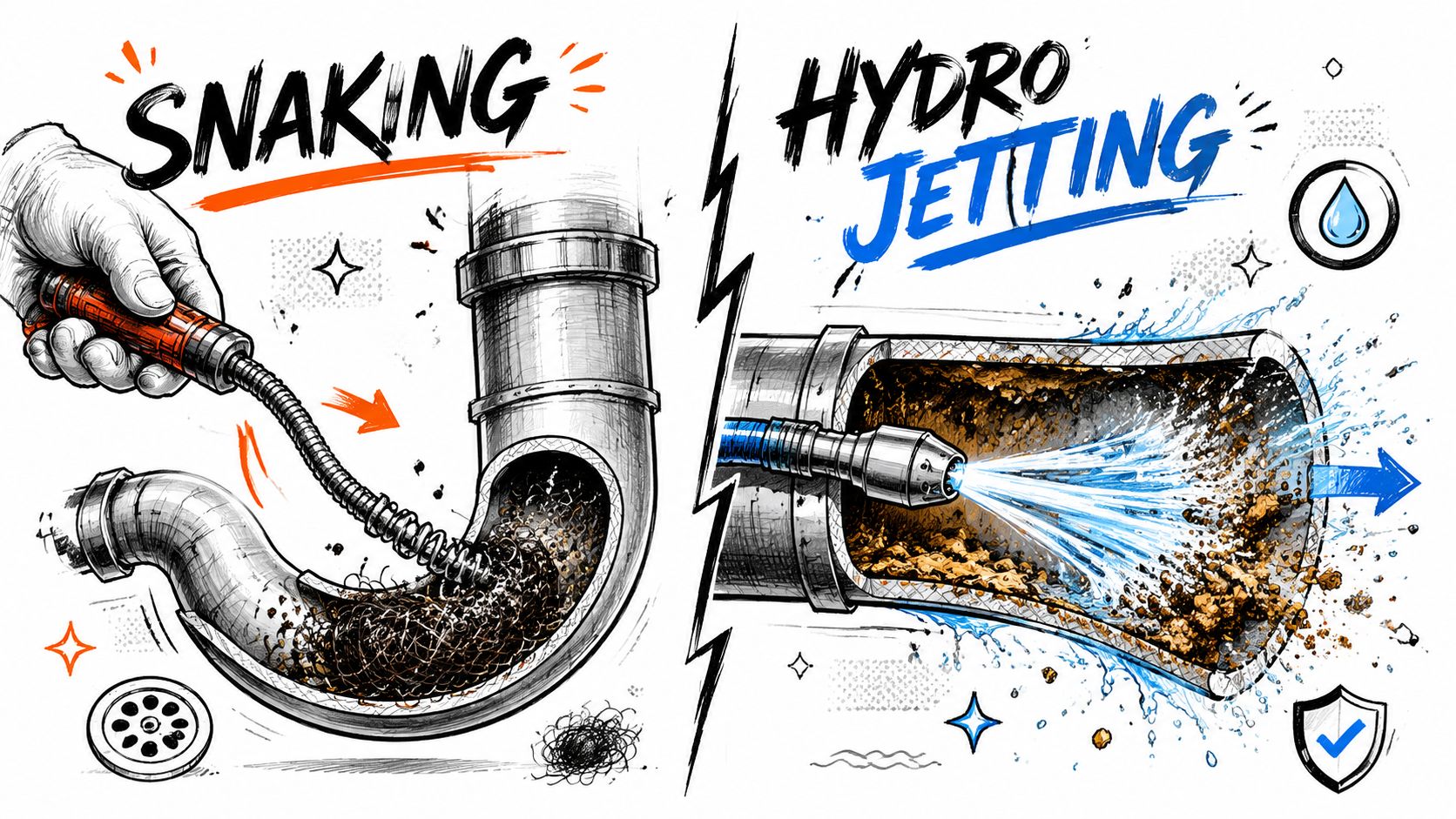
One opens a hole and one cleans a pipe
This is the simplest way to think about hydro jetting vs snaking.
A snake is like drilling a tunnel through the blockage so water can pass. That may be all you need. If the clog is local and solid, that's a practical fix.
Hydro jetting is more like pressure-washing the inside of the line. It removes the grease, sludge, and scale that have been clinging to the pipe wall and narrowing the opening over time.
Why that difference matters in real homes
In a newer home in Milton with a single bathroom sink blockage, snaking may solve the problem fast and completely. In an older kitchen line in Acworth that has years of grease lining the pipe, snaking may get temporary relief but leave most of the buildup behind.
That's why these methods aren't interchangeable.
- Snaking works best when the clog is isolated, near the fixture, or caused by a solid obstruction.
- Hydro jetting works best when the issue is recurring buildup and the goal is to restore more of the pipe's interior.
A drain can be open and still be dirty. That's the difference many homeowners don't see until the clog returns.
Head to Head A Practical Comparison
Here's the simplest side-by-side view.
| Feature | Drain Snaking (Auger) | Hydro Jetting |
|---|---|---|
| Main job | Opens a path through a clog | Cleans the pipe wall and removes buildup |
| Best for | First-time clogs, isolated fixture stoppages, some foreign objects | Recurring grease, sludge, scale, and smaller root intrusion |
| How it works | Metal cable breaks through or pulls blockage | High-pressure water scours the inside of the pipe |
| Typical residential cost | $100 to $400 | $350 to $900 |
| Upfront budget impact | Lower | Higher |
| Long-term value | Better for simple, one-off problems | Better when clogs keep returning |
| Pipe safety | Often the safer first move when pipe condition is uncertain | Needs more caution on older or compromised lines |
| Result style | Restores flow | Restores flow and cleans more thoroughly |
Residential pricing commonly cited for these services places snaking at $100 to $400 and hydro jetting at $350 to $900 for homes, with hydro jetting often using 3,500 to 4,000 PSI on many jobs to remove grease, scale, sludge, and similar buildup, as outlined in this review of hydro jetting and snaking costs and applications.
Cost matters, but repeat cost matters more
The service ticket is often the initial focus, which is understandable. If a drain can be opened for less money today, that can be the right decision.
But the break-even point is pretty easy to understand. If you keep paying for repeat snaking on the same recurring problem, you eventually spend hydro jetting money without getting hydro jetting results. The exact timing depends on how often the clog comes back, how accessible the line is, and whether the issue is grease, scale, or roots.
For a homeowner in Woodstock or Canton, that usually means asking one honest question. Is this a one-time blockage, or am I treating the same line over and over?
Which method matches which clog
Some blockages tell you a lot by location alone.
Snaking usually makes more sense when
- One fixture is affected: A single tub, sink, or toilet backs up while the rest of the house drains normally.
- The clog is sudden: A child flushed something. Too much paper went down. A bathroom sink stopped after hair buildup finally caught.
- You need fast relief: When the immediate priority is restoring use, a cable machine is often the quickest practical tool.
Hydro jetting usually makes more sense when
- The line keeps slowing down: Grease and sludge are classic repeat offenders in kitchen drains.
- Multiple fixtures show symptoms: That often points to a larger line problem, especially if lower fixtures react first.
- The pipe needs real cleaning: If the goal is more than just getting a little water through, hydro jetting has the advantage.
Speed isn't the same as completeness
Snaking often wins on speed and lower initial cost. Hydro jetting often wins on completeness.
That's the practical trade-off. You're choosing between quick opening and deep cleaning. Neither is automatically better. The right answer depends on the line in front of you.
When to Snake Your Drains and Save Your Money
A good plumber shouldn't recommend hydro jetting every time. Plenty of clogs don't need it.
If a bathroom sink in Alpharetta is blocked with hair near the trap, snaking is usually the sensible move. If a toilet in Johns Creek won't flush because too much paper went down at once, snaking can clear it without turning a simple job into an expensive one. The same goes for many emergency calls where the immediate goal is just getting the fixture usable again.
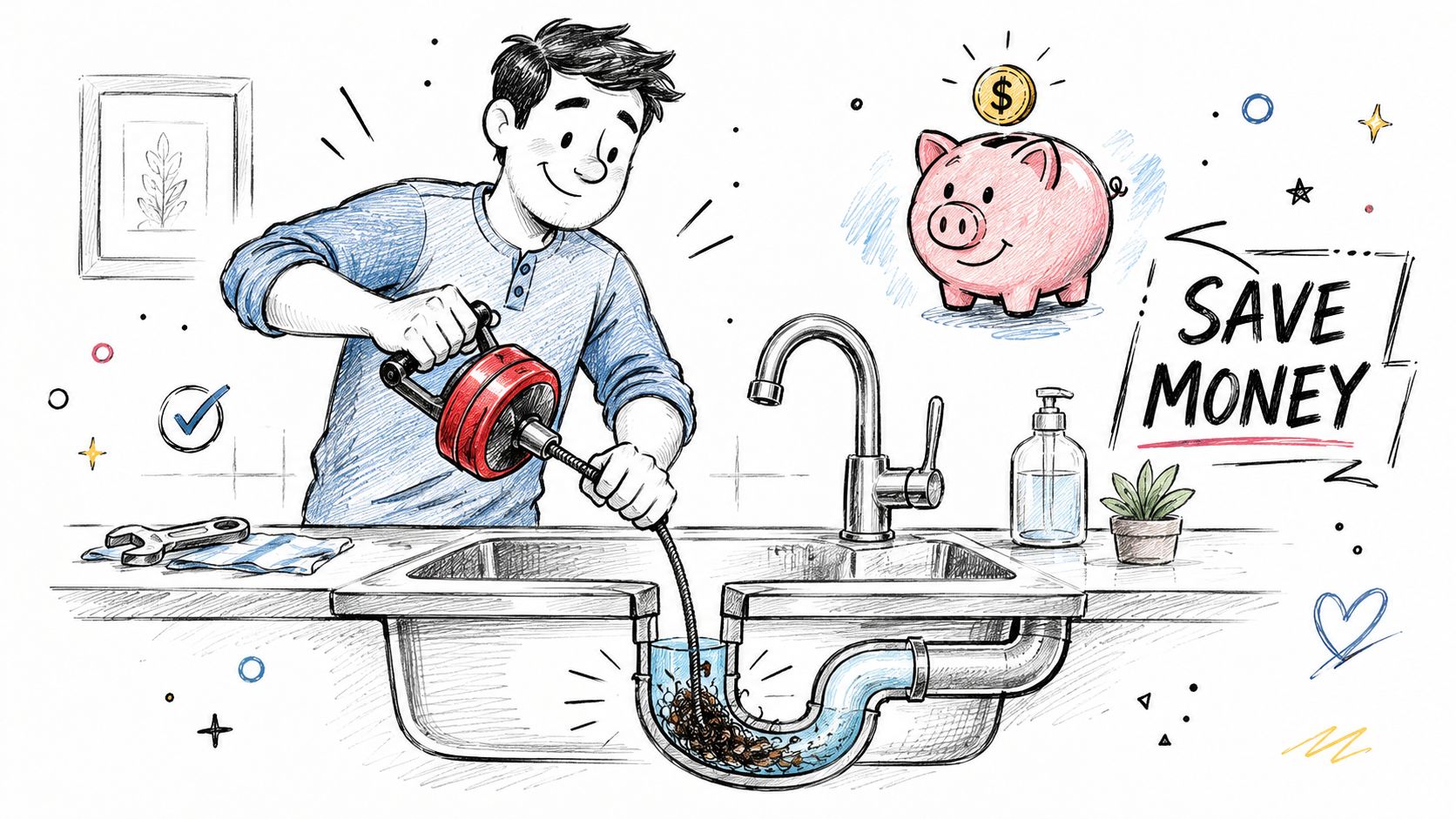
The situations where snaking earns its keep
Snaking is often the right first step when the blockage is straightforward and localized.
- First-time clog: If the line has no history of repeat problems, it makes sense to start with the lower-cost option.
- Single fixture problem: One sink, one tub, or one toilet is acting up while everything else in the home works normally.
- Known obstruction: A toy, paper jam, hygiene product, or other solid item may be better handled mechanically than with water pressure.
- Uncertain budget: If a homeowner needs the least expensive professional route to restore use, snaking is often the practical answer.
Why plumbers still rely on the cable machine
The auger is still one of the most useful tools in drain work because it answers two questions at once. It can open the line, and it can tell you something about what caused the stoppage.
What comes back on the cable matters. Hair tells a different story than grease. Paper behaves differently than roots. That's why many homeowners dealing with a sink, tub, or toilet stoppage start with professional drain cleaning for clogs and toilet clogs instead of jumping straight to a more aggressive service.
Best budget move: If it's one fixture, the clog is new, and there's no sign of a larger sewer issue, start with snaking.
Snaking isn't a downgrade. It's the right tool when the problem is limited and the pipe doesn't need full-wall cleaning.
Why Hydro Jetting Can Be a Smarter Investment
The homeowner who benefits most from hydro jetting is the one who's tired of seeing the same problem return.
A kitchen line in Cumming that slows down every few months is a classic example. So is a main sewer line in Woodstock that has repeated backups after rain, heavy use, or a big load of laundry. If the line has already been opened before and keeps acting up, the issue usually isn't a single blockage anymore. It's the material left coating the pipe.
The break-even point most homeowners care about
Here's the plain-English version. If one snaking visit solves the problem for a long time, you made the right call. If you're scheduling repeat drain cleaning on the same line, the lower upfront price starts losing its advantage.
Professional hydro jetting commonly keeps residential pipes clear for 2 to 3 years, while a snaked drain may clog again in weeks to months if residue remains in the pipe, according to this comparison of how long hydro jetting and snaking results tend to last.
That's the financial break-even point. Not a formula on paper. A pattern in your own house.
Where hydro jetting pays off
Hydro jetting usually makes more financial sense in these situations:
- Recurring kitchen drain issues: Grease, soap, and food sludge cling to the wall and keep narrowing the pipe.
- Main line stoppages: When more than one fixture is affected, temporary relief can become expensive fast.
- Root-related trouble: Smaller root intrusion and the debris it catches are better handled by cleaning the line more completely.
- Before repair work: If a plumber needs to evaluate or repair a sewer line, a cleaner pipe gives a clearer picture of what's really there.
Think of it as restoration, not just unclogging
That shift matters. Snaking is usually about getting through the blockage. Hydro jetting is about cleaning the pipe so the line functions more like it should.
For homeowners and property managers, that can mean fewer repeat service calls and less disruption. In commercial settings, it can also reduce downtime in grease-heavy lines. For that reason, many people dealing with chronic buildup look into professional commercial hydro jetting services when snaking has become a routine expense instead of a real solution.
If the same drain has already cost you multiple service calls, hydro jetting often stops being the expensive option and starts being the cheaper one over time.
The Critical Role of a Sewer Camera Inspection
Hydro jetting is powerful. That's exactly why it can't be treated casually.
In Metro Atlanta, plenty of homes in established neighborhoods have older drain and sewer materials, previous repairs, corrosion, scale, weak joints, or unknown trouble spots. In parts of Marietta, Roswell, and older areas of Cobb and Cherokee counties, the pipe may already be compromised before anyone shows up with a jetter hose.
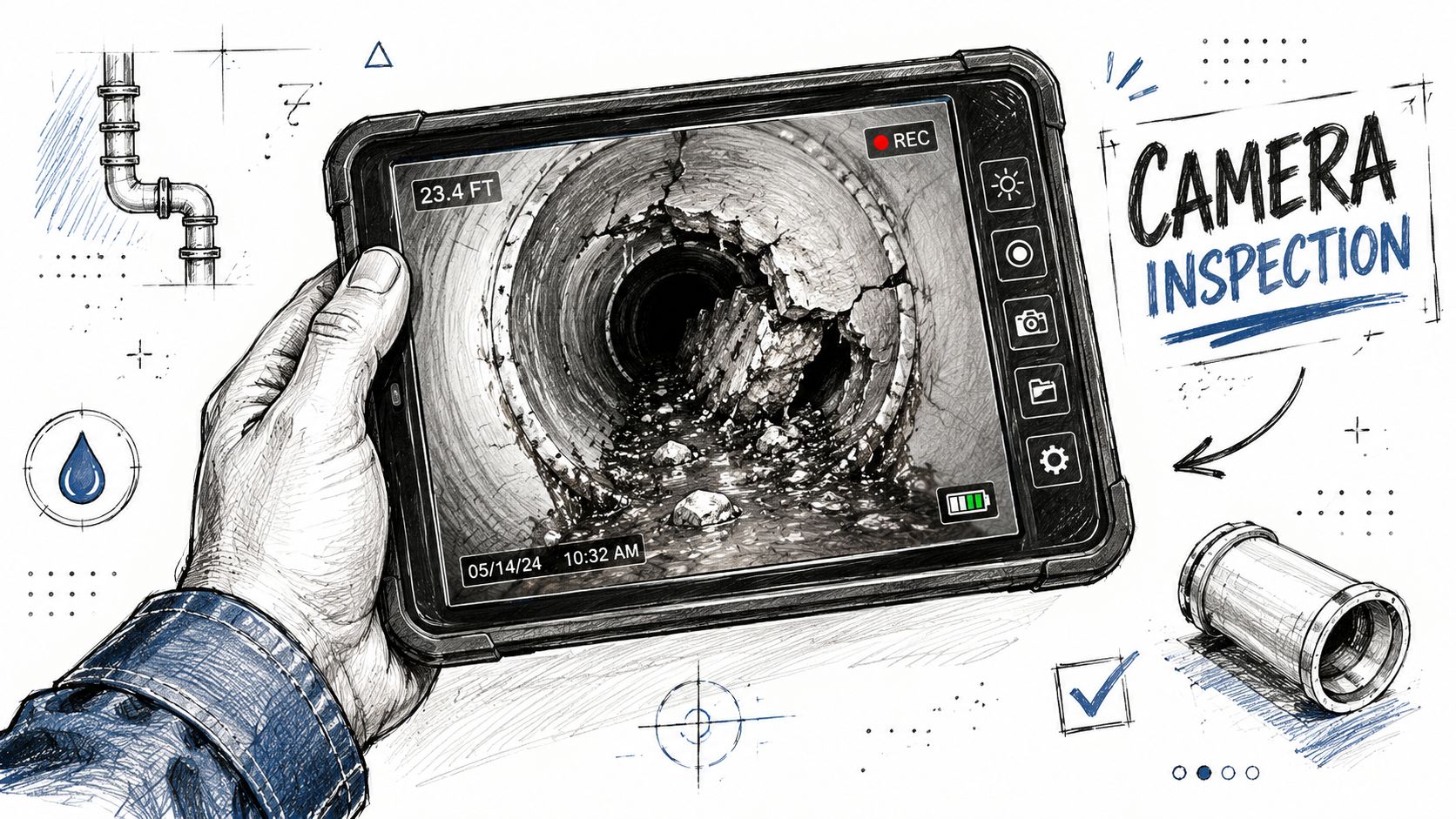
Why inspection comes first
Industry sources warn that hydro jetting can damage older or compromised pipes, and a pre-service camera inspection is the standard recommendation before jetting so the plumber can assess pipe condition first, as noted in this explanation of why hydro jetting and snaking require different safety decisions.
That camera work is not busywork. It answers the questions that matter:
- Is the line just dirty, or is it cracked?
- Are roots entering through a joint?
- Is there a belly, offset, or bad repair in the run?
- Is the pipe material strong enough for aggressive cleaning?
Older homes need a different level of caution
This is especially important in older housing stock.
A cast iron line may look solid from the outside and still be rough, scaled, or weakened inside. A clay section may have joint issues. A line that has already had patchwork repairs can surprise you. If the pipe can't handle hydro jetting, then hydro jetting is the wrong answer, no matter how badly the clog needs cleaning.
That's why a responsible plumber often starts with a sewer camera inspection before recommending anything more aggressive on a main line.
Don't approve high-pressure drain cleaning on an older sewer line until someone has seen the inside of that pipe.
What the camera changes in the decision
The inspection often changes the plan in one of three ways:
- Green light for jetting if the pipe is structurally sound enough.
- Snaking first if the condition is uncertain or the line appears fragile.
- Repair or replacement discussion if the underlying problem is damage, not buildup.
That's how you avoid turning a clog into a sewer repair, water line replacement, or burst pipe repair situation. The camera keeps the decision honest.
Your Local North Metro Atlanta Drain Experts
The right drain cleaning method depends on three things. What is clogging the line, how often it happens, and what condition the pipe is in.
If it's a simple one-off stoppage in a sink, tub, or toilet, snaking is often the smartest call. If the same kitchen line or sewer line keeps backing up, hydro jetting may be the better long-term investment. If the issue involves a main line in an older home, a camera inspection should be part of the decision before anyone uses high pressure.
That practical approach matters in North Metro Atlanta, where the plumbing problems change from city to city. A newer home in Johns Creek may have a very different drain issue than an older property in Marietta. Homes in Woodstock, Acworth, Canton, Alpharetta, Roswell, and Cumming all come with their own mix of grease buildup, aging lines, root intrusion, and emergency service needs.
When a homeowner is dealing with a sewer backup, a clogged toilet that won't flush, water in the yard, or a sewage smell near the cleanout, speed matters. So does choosing the method that fits the problem instead of defaulting to the same tool every time.
Common Questions About Drain and Sewer Clogs
Can I rent a machine and clear the clog myself
Sometimes, yes. That doesn't mean it's a good idea.
Rental machines are heavy, awkward, and easy to misuse. Homeowners can scratch fixtures, damage drains, get a cable stuck, or miss the actual problem entirely. On older pipes, forcing a machine into a bad line can make things worse. DIY work also doesn't tell you much about pipe condition unless you have inspection equipment and know how to read what you're seeing.
How do I know if I have a main sewer line clog
Look for a pattern, not just one bad drain.
A main line issue often shows up as multiple slow drains, toilets that gurgle, sewage smell inside or outside, or water backing up at the lowest fixture when another fixture drains. In some homes, you'll also notice soggy ground or a foul smell in the yard near the sewer path. Those symptoms usually deserve a professional diagnosis quickly, especially if sewage backup is starting.
How often should drains be professionally cleaned
There isn't one schedule that fits every house.
Some homes only need service when a specific blockage happens. Others benefit from proactive cleaning because of grease-heavy kitchen use, older sewer lines, or recurring root problems. If you've had the same line cleaned more than once, that's usually the sign to stop guessing and choose a more deliberate maintenance plan.
If you need an honest answer on whether your line should be snaked, hydro jetted, camera inspected, repaired, or replaced, contact JMJ Plumbing. Their licensed Master Plumbers serve Acworth, Woodstock, Alpharetta, Canton, Roswell, Marietta, Cumming, Johns Creek, and surrounding North Metro Atlanta communities with 24/7 help for drain clogs, sewer backups, leak repair, burst pipes, water line problems, and other urgent plumbing issues.