A cold shower at 6 a.m. usually sends homeowners straight to the same question. What should a water heater installation cost in North Metro Atlanta, and is the quote in front of you fair for your house in Woodstock, Roswell, Marietta, Acworth, or Canton?
For a standard tank water heater replacement in this area, many homeowners land in the $1,200 to $2,200 range. That local range matters more than a generic national number because North Atlanta homes vary a lot. A garage install in Marietta, a basement setup in Roswell, and a tight utility closet in Woodstock do not price out the same way.
The heater itself is only part of the job.
Labor cost often shifts based on venting, gas or electrical connections, shutoff valves, drain pan requirements, expansion control, access to the unit, and whether the existing installation still meets current code. Those details decide whether a replacement stays straightforward or turns into a larger correction job. I see this often in older North Fulton and Cobb homes where the old unit worked for years, but the new one cannot legally go back in without safety upgrades.
If you are still sorting out whether the leak or failure points to repair or full replacement, this quick guide on Mesa homeowner heater solutions gives useful context before you compare quotes.
That Cold Shower Feeling What's Next
You wake up, turn on the shower, and get hit with cold water. Then you notice the utility room floor is wet, or the garage smells damp, or the old heater is making a popping sound it didn't make last week. In North Metro Atlanta, that usually means one of three things: the unit failed, the connection failed, or the heater was already on borrowed time and finally quit.

Most homeowners start with the same question. What will this cost me today, not in some generic national article that doesn't match a Roswell basement, a Marietta garage, or a tight hallway closet in Alpharetta?
Here's the practical answer. If you're replacing a standard residential tank heater with a similar unit in the same location, the price usually stays in the lower range. If you're changing fuel type, moving the unit, upgrading venting, or switching to tankless, the price climbs fast because the system around the heater has to change too.
Practical rule: A water heater quote is never just about the box being installed. It's about whether the existing setup still passes today's safety and code requirements.
Some homeowners also want to compare symptoms before deciding whether they need a replacement at all. If you're dealing with active leaking around the unit, it's worth looking at examples of Mesa homeowner heater solutions from Comfort Experts because the same basic failure patterns show up everywhere. The exact repair path still depends on what a licensed plumber finds on site.
What usually matters first
- Active leaking: Water around the base often points to tank failure, not a small repair.
- No hot water: This can come from elements, thermostats, pilot issues, gas control problems, or a dead unit.
- Rusty water or odd noises: Sediment, corrosion, or internal wear may push the decision toward replacement.
- Emergency timing: If the heater is flooding the area, fast shutoff and same-day response matter more than perfect product comparison.
North Atlanta Water Heater Price Ranges in 2026
A homeowner in Woodstock may pay far less for a water heater than a homeowner in Roswell, even if both choose the same brand and tank size. The difference usually comes from the house, the venting, the fuel setup, and what current code requires at the time of installation.
For North Metro Atlanta homes, real installed pricing often comes in above stripped-down national averages because local quotes usually include permit handling, haul-away, safety items, and correction work that older installations often need. That is why a low online price for the heater itself rarely matches the final installed number.
Estimated Water Heater Installation Costs in North Metro Atlanta 2026
| Service Type | Standard Tank (40-50 Gallon Gas/Electric) | Tankless (On-Demand Gas/Electric) |
|---|---|---|
| Like-for-like replacement in same location | $1,200 to $2,200 | $2,500 to $5,800 |
| Replacement with moderate code or hookup updates | $1,500 to $2,600 | $3,200 to $6,200 |
| New installation or major conversion | $2,000 to $3,500 | $4,500 to $7,500 |
These ranges are meant for local budgeting across Woodstock, Acworth, Alpharetta, Canton, Roswell, Marietta, Cumming, and Johns Creek. They are not flat-rate promises, and they are more useful than a broad national average because they reflect the kind of homes and retrofit conditions we find in North Atlanta.
Why one North Atlanta quote is higher than another
A straightforward electric tank swap in Acworth is usually near the lower end. A tankless conversion in an older Marietta or Roswell home can move to the upper end quickly if the job needs venting changes, electrical work, gas capacity review, or permit corrections before startup.
Fuel changes are where many budgets get stretched. If the home was not set up for gas at the heater location, installing natural gas infrastructure can become part of the project scope.
The heater matters. The house matters more.
In North Atlanta, water heater installation price is often decided by the existing setup around the unit, not just by the appliance being set in place.
How to use these numbers
Use this table to set a realistic budget before you call for quotes. Then narrow the job down by city, fuel type, and installation style. A homeowner in Johns Creek replacing a tank in the garage should not expect the same price structure as a homeowner in Alpharetta converting a hallway closet unit to tankless.
If you want to confirm whether your home falls within an active local coverage area, check the North Metro Atlanta plumbing service map.
Before the plumber arrives, have these answers ready:
- Are you keeping the same fuel source
- Is the new unit going in the same location
- Are you replacing a tank or converting to tankless
- Does the current venting still match the new unit
- Is the heater easy to access or tucked into a tight attic, closet, or crawlspace
Those details tighten the price range fast and usually tell you whether your job belongs at the low, middle, or top end of the local numbers above.
What Drives Your Water Heater Installation Price Up or Down
In North Metro Atlanta, two homes can buy the same 50 gallon heater and get very different quotes. A straightforward swap in a Woodstock garage usually prices lower than a Roswell attic replacement or a Marietta tankless conversion that needs gas, venting, and electrical updates.
Homeowners often focus on the box being installed. The price usually moves because of the system around it. Labor, permit requirements, venting corrections, drainage, and access conditions are what push a job toward the low end or the high end.
For major U.S. markets, installation labor and code-compliance work often account for more than half of total water-heater project cost. NerdWallet reflects that in benchmark ranges such as $1,950 for average tank installation and $4,300 for average tankless installation, with labor estimates of $150 to $450 for tank replacements versus $600 to $1,900 for tankless units in its water heater cost breakdown.

The six things that change the quote
1. Installation type
A same-location tank replacement is usually the least complicated job. Converting from tank to tankless costs more because the plumber may need to resize gas piping, add a condensate drain, change venting, upgrade isolation valves, and verify the unit can meet the house's peak demand.
If you are comparing options, look at the scope involved in tankless water heater installation and replacement, not just the appliance price.
2. Fuel source
Gas and electric heaters are priced differently because the work is different. Gas units require proper combustion air, venting, sediment trap details where applicable, and enough gas volume to fire safely. Electric units can trigger circuit review, breaker sizing checks, disconnect updates, and wiring corrections.
If the existing gas line is undersized or outdated, that can turn a simple install into a larger mechanical project. Homeowners trying to understand that side of the job can review installing natural gas infrastructure from Blue Gas Express for a clear primer on why gas capacity and routing matter.
3. Size and recovery needs
Bigger is not always better. A larger tank or a higher input unit can solve back-to-back shower complaints, but it can also create fit issues in a tight closet, require different venting, or call for added support and pan drainage.
I see this a lot in older North Atlanta homes. Homeowners ask for an upsized heater, but the proper fix is matching the unit to the family's usage pattern and the space available.
4. Venting and exhaust
Venting changes quotes fast. An older atmospheric gas heater may vent into a setup that does not meet the requirements of a newer model, especially if you are changing efficiency level or equipment type.
That is why an inspection matters. The expensive part of many water heater jobs is bringing the vent path, pipe material, clearances, and termination into safe, current compliance.
5. Access and location
A heater in an open garage is simpler than one set on an attic platform or tucked into a hallway closet. Tight access adds labor time for removal, delivery, draining, setup, and cleanup.
In cities like Roswell and East Cobb, access is often the difference between a routine replacement and a half-day installation that needs two technicians.
6. Code corrections and protective parts
A legitimate quote often includes items homeowners do not notice until the old unit is removed. That can include a drain pan and drain line, expansion control, shutoff valve replacement, flex connector updates, seismic or support corrections where required, and permit handling.
These items are not padding. They are the parts that help the installation pass inspection and protect the home if the heater leaks or builds pressure.
What raises cost, and what is worth paying for
The cheapest quote usually assumes the old setup can stay as-is. In the field, that is often wrong. Once the old heater is out, missing pans, failing valves, improper vent connectors, and worn water lines are easier to see.
A solid quote accounts for the actual conditions of the house. That matters more than chasing a low number on paper, especially in older homes in Marietta, Roswell, and Woodstock where the existing installation may be several code cycles behind.
Tank vs Tankless Water Heaters A Head-to-Head Comparison
The biggest decision most homeowners face isn't whether they need hot water. It's whether they should replace what they had or change the whole setup.
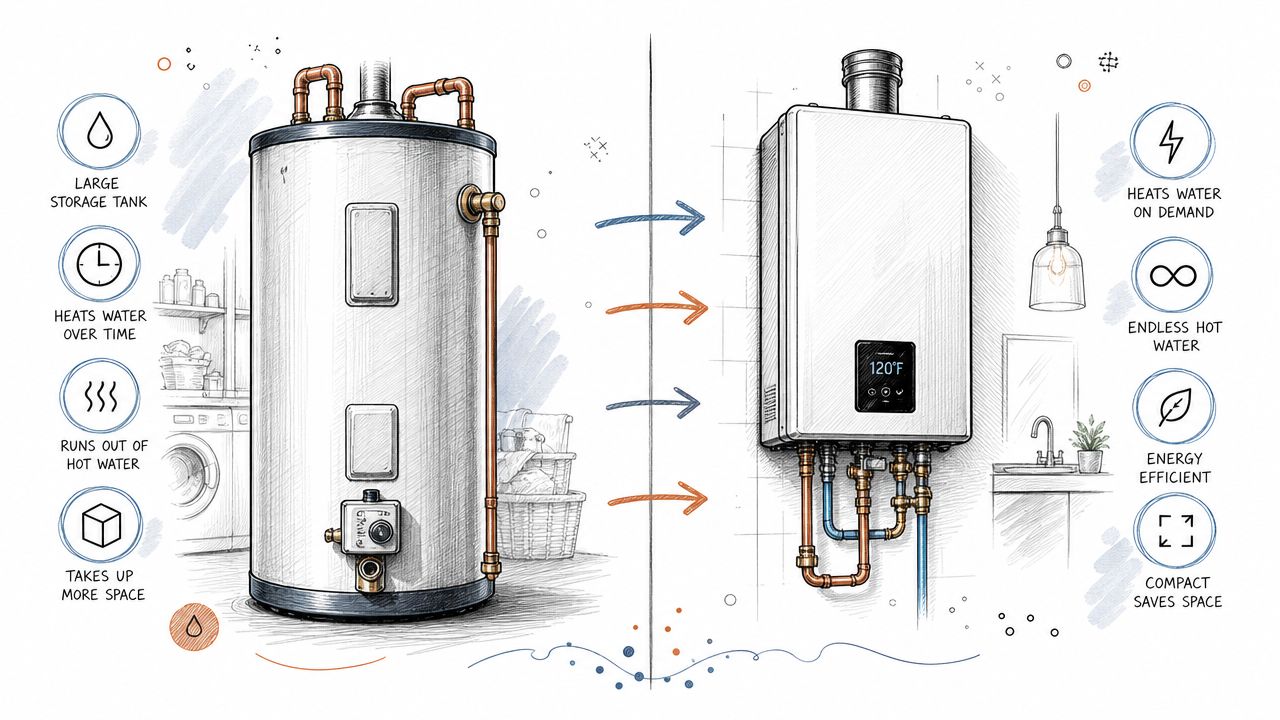
A good decision starts with trade-offs, not marketing.
Upfront price and installation complexity
Technical specifications drive cost more than commonly realized. Benchmarks show electric installations around $920 to $1,177, gas installations averaging about $2,607, and tankless condensing units typically running $960 to $3,910, while larger storage tanks such as 80-gallon models can reach $2,650 to $3,910 according to A. O. Smith installation cost benchmarks.
That tells you two things. First, gas work often costs more than homeowners expect. Second, tankless pricing isn't just about buying a compact unit. It depends on venting, capacity, and fuel setup.
Side-by-side practical comparison
| Factor | Tank Water Heater | Tankless Water Heater |
|---|---|---|
| Upfront installation price | Usually lower | Usually higher |
| Space use | Takes more floor space | Frees up wall and floor space |
| Hot water delivery | Stored volume available immediately | On-demand, but sized by flow demand |
| Best fit | Straight replacement, budget-conscious jobs | Long-term upgrade, space savings, specific usage goals |
| Common complication | Capacity limits during heavy use | Conversion work and venting changes |
What usually fits each home better
- Tank makes sense when: You want a simpler replacement, lower upfront cost, and the current setup already works well.
- Tankless makes sense when: You want to free up space, expect long-term ownership, and the home can support the venting and fuel demands.
- Either can be right: The better choice depends on usage pattern, available utility connections, and whether you're replacing or converting.
A tankless water heater isn't automatically the smarter buy. It's the smarter buy only when the house and the family's hot water habits support it.
For homeowners specifically comparing on-demand systems, the tankless water heater options page is useful because it frames the upgrade as an installation choice, not just a product purchase.
Replacement vs New Install What's the Cost Difference
The price gap between a replacement and a new install is often bigger than homeowners expect.
In Woodstock, Marietta, and Roswell, a standard replacement usually means the new heater goes back into the same spot with the same basic utility setup. That keeps labor, materials, and inspection issues more controlled. A new install means building out what is missing, or relocating the unit to a different part of the house. That changes the job fast.
A like-for-like replacement is usually the lower-cost path because the home already has the core pieces in place. Water lines are there. The gas or electric connection is there. The venting path, drain pan setup, and discharge routing may only need updates to meet current code.
A new install adds scope in several directions at once:
- New water piping: Hot and cold lines have to be run to the new location.
- Gas or electrical work: The house may need a new gas branch, circuit, disconnect, or service upgrade.
- Venting work: Gas units often need a new approved vent route based on the appliance type and location.
- Drain and safety provisions: Drain pan piping and T&P discharge routing must be installed correctly for the new location.
- Framing and access changes: Closets, platforms, wall openings, and finish work can add labor even before the heater is set.
That is why a garage replacement in Acworth often prices very differently from adding a water heater for a basement finish in Johns Creek or an in-law suite in Canton. One job swaps equipment. The other job creates infrastructure.
The practical question to ask any plumber is simple: Is this quote priced as a replacement or as a new installation? If the answer is vague, the final invoice can move once walls are opened or the old unit is removed.
For a clearer view of what falls under direct replacement work versus broader install scope, review the residential water heater installation and replacement page.
Water Heater Installation FAQs
Can I install a water heater myself in Georgia
You can find plenty of DIY advice online. That doesn't make it a good idea.
A water heater ties into pressurized water, fuel or electricity, venting in many cases, temperature and pressure safety components, and local code requirements. Gas work raises the stakes because improper installation can create fire or carbon monoxide risks. Even electric units can be dangerous when wiring, grounding, and overcurrent protection aren't handled correctly.
Are permits required for water heater replacement in Cobb County or Cherokee County
Permit requirements can vary by jurisdiction and by the exact scope of work. In practice, homeowners should expect that many water heater replacements, especially gas replacements or jobs involving code updates, may require permit and inspection handling.
The smart move is to ask the plumber whether the quote includes permit-related work and whether the installation will be set up to pass inspection.
Ask this before approving the quote: "What code items are included, and what conditions could change the price once the old unit is removed?"
How long does a typical installation take
A standard replacement is usually much faster than a conversion or relocation. If the unit is accessible and the connections are in good shape, the work can often be completed in a single visit. If the job requires gas-line changes, venting upgrades, or new piping, it takes longer.
The right expectation is not a fixed number of hours. It's whether the job is a straightforward swap or a system change.
How do I know if I need repair or replacement
Look at the symptom and where it's coming from.
- Replace sooner if: The tank itself is leaking, the unit is heavily corroded, or the heater is failing in multiple ways at once.
- Repair may still make sense if: The issue is isolated to a valve, element, thermostat, igniter, or other serviceable component.
- Call quickly if: You see water on the floor, smell gas, hear unusual burner or boiling sounds, or have no hot water at all.
What should be included in a solid quote
A useful estimate should identify the heater type, fuel type, location, code-related accessories, haul-away of the old unit, and any known venting or connection work. If a quote looks too short and too cheap, it may be leaving out the work that matters.
Should I replace my old tank with the same size
Not automatically. The right size depends on household demand, recovery expectations, and whether your complaints are really about heater capacity or about fixture timing and simultaneous usage. A larger tank can help in some homes, but upsizing without checking the full system can create new problems.
Get a Firm Water Heater Quote for Your Atlanta Home
A price range gets you started. It does not tell you whether the replacement in your Woodstock garage is a basic swap, or whether a Roswell closet install will need venting, drain-pan, or shutoff updates before a new heater can go in safely.
That is why firm pricing starts at the house. The plumber needs to see the unit location, connection points, venting path, clearances, and any code corrections that affect the install. In North Metro Atlanta, those details change the final number more than any online average ever will.
What a firm quote should answer
A proper on-site quote should answer five things clearly:
- Is this a straight replacement or a larger system change
- Can the existing venting stay, or does it need to be rebuilt
- Do the gas, water, or electrical connections need correction
- What safety and code items are required with the new heater
- What the full installed price includes, including removal of the old unit

Why local experience matters
North Metro Atlanta homes vary a lot from one city to the next. A garage unit in Woodstock, an older utility-room setup in Marietta, and a finished-space installation in Roswell can each carry different labor requirements and different code concerns.
Local experience helps a plumber spot those issues before the work starts, not after the old heater is already disconnected.
The publisher for this guide, JMJ Plumbing, states that it serves North Metro Atlanta and operates as a licensed Master Plumber with 24/7 availability, as noted earlier. Those details are important when you have a leaking tank, no hot water, or a replacement that needs to pass code the first time.
When to call now instead of waiting
Some situations should move to the top of your list:
- Water around the heater: Active leaking can damage flooring, drywall, and anything stored nearby.
- No hot water: Same-day diagnosis may be needed to determine whether repair is still reasonable.
- Gas odor or venting concerns: Shut the unit down and call a licensed plumber.
- Rust, rumbling, or inconsistent hot water: These symptoms often point to a heater that is near the end of its service life.
A firm quote gives you a real decision. Repair the unit if that still makes financial sense. Replace it if the heater, venting, or connections make repair a poor bet.
If you need a clear, on-site price for your North Atlanta home, contact JMJ Plumbing for a water heater quote based on the actual unit, location, venting, and code conditions in your house.