A homeowner in North Metro Atlanta often calls after spotting a ceiling stain, hearing water move in a wall, or finding a soft patch of ground near the main line. The first question is usually about the leak detection fee. The better question is what that fee helps you avoid.
In North Metro Atlanta, leak detection is often a few hundred dollars before repair work is priced. That can feel like a lot in the moment. In the field, it is usually the smaller part of the bill once water reaches drywall, flooring, cabinets, insulation, or framing.
I tell homeowners the same thing all the time. Fast diagnosis protects the house, not just the plumbing.
If you found a damp spot in Roswell, heard water running behind a wall in Woodstock, or noticed soggy ground near the service line in Marietta, quick action usually gives you more options. Early detection can mean a targeted repair and limited patchwork. Waiting can turn the same leak into flooring replacement, ceiling repair, mold cleanup, or a larger excavation.
That matters for single-family homes and for communities trying to stay ahead of building repairs through HOA maintenance planning and budgeting.
A lot of articles stop at the price of the diagnostic visit. Homeowners need the full picture. The full cost of a leak includes wasted water, damage to finishes, repair access, drying time, and the chance that a small hidden leak keeps spreading while you decide what to do.
Fast action keeps the problem manageable.
Understanding the True Cost of a Water Leak
A small leak usually looks harmless at first. In Canton or Johns Creek, a homeowner might notice a faint musty smell under a sink, one warm spot on the floor, or a ceiling stain the size of a coaster and decide to keep an eye on it for a few days.
That waiting period is often what drives the final bill up.
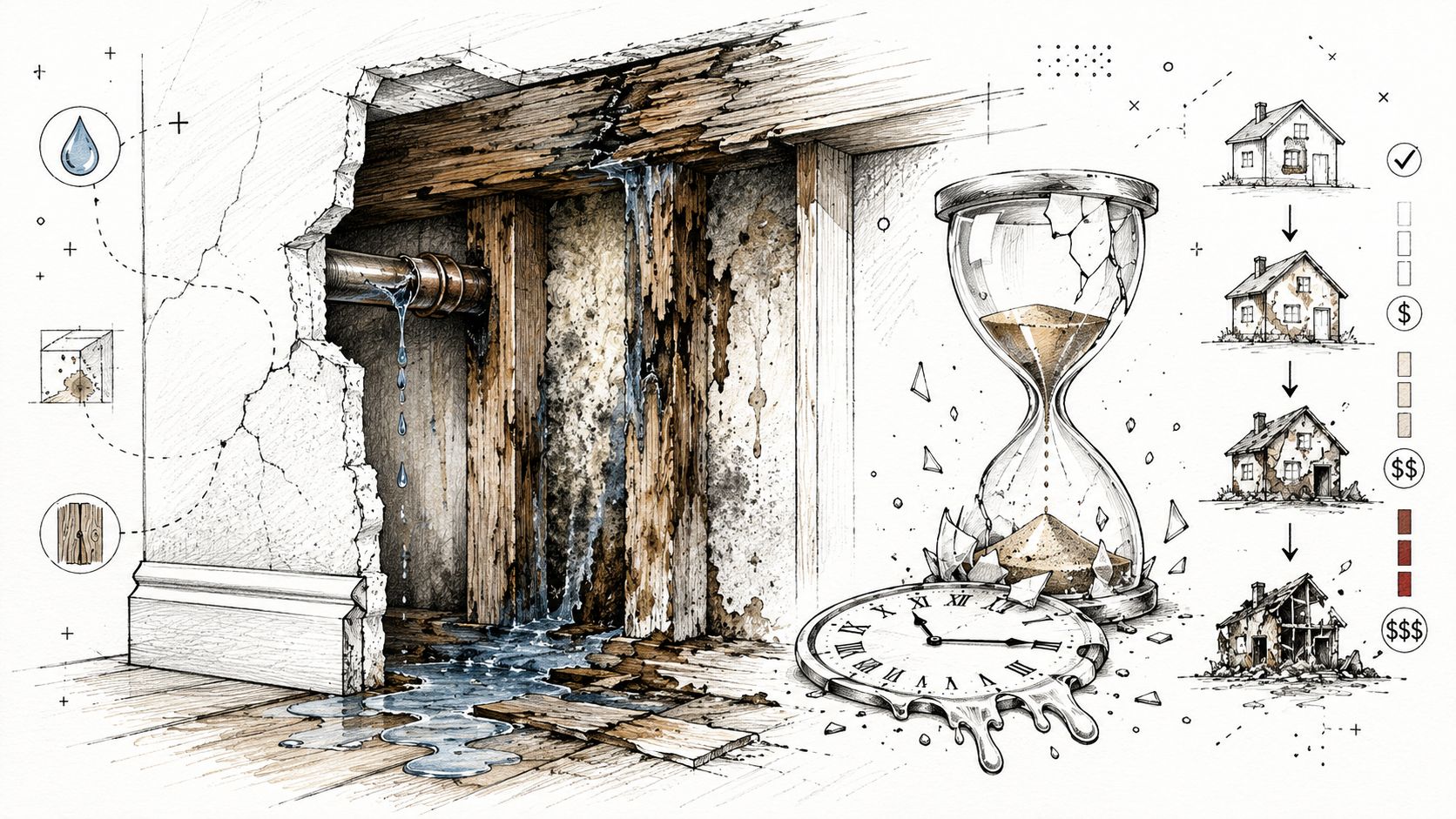
The leak detection fee is only one part of the decision. The larger cost is what happens while water keeps moving into drywall, cabinets, subfloor, insulation, or soil around the line. By the time the leak is obvious, the plumbing repair may be only one piece of the job. Drying, material removal, patching, and cleanup can easily become the bigger expense.
I see this pattern all the time in North Metro Atlanta. A homeowner spots minor cupping in hardwood near the kitchen and assumes it came from a spill. A week later, the boards are lifting, the cabinet toe-kick is swollen, and we still have to locate the source before any repair starts. At that point, the cost is no longer just about finding a leak. It includes access, damaged finish materials, and the time needed to dry the area properly.
Hidden leaks also waste money before any visible damage shows up. Some waste a little water at a time. Others run long enough to push utility bills up sharply, especially when the problem is under a slab, behind a wall, or out near the service line. Homeowners usually focus on the detection charge first because it is the first number they hear. In practice, that fee is often the smaller and more controllable part of the total loss.
In HOA communities and managed properties, one leak can spread beyond a single unit or room. Shared walls, downstairs ceilings, and common-area damage change the stakes quickly. That is why boards and managers benefit from good HOA maintenance planning and budgeting. Leak response affects repair budgets, reserve planning, and liability exposure, not just one plumbing invoice.
A proper diagnosis also reduces unnecessary destruction. When the leak location is confirmed first, the repair can usually be more targeted. That means fewer exploratory wall cuts, less tile removal, and a better chance of limiting restoration work after the pipe is fixed.
The practical way to look at leak detection cost is simple. It is a controlled expense that helps limit uncontrolled ones.
Quick action gives you more repair options, less damage to put back together, and a better chance of keeping a plumbing problem from turning into a restoration project.
Typical Leak Detection Price Ranges in North Metro Atlanta
A homeowner in Alpharetta might hear water running behind a wall and pay one diagnostic fee. A homeowner in Cumming with a suspected slab leak may get a much higher quote for the same reason. The difference is usually not the zip code. It is how hard the leak is to confirm without tearing into the house.
In North Metro Atlanta, leak detection and leak repair are usually billed separately. Detection is the diagnostic work to locate the source with as little disruption as possible. Repair is the labor and material to open access if needed, fix the failed pipe or fixture, test the system, and get everything working again.
For a simple, accessible problem, the detection charge is often modest. Costs rise when the leak is hidden under concrete, inside finished walls, below tile, or out on a long service line. That is why one quote can cover a quick fixture diagnosis, while another reflects a longer tracing process with specialized equipment.
What that diagnostic fee usually includes
A proper leak detection visit commonly covers:
- Travel and dispatch to the property
- Time on site to isolate the plumbing system and narrow down the source
- Use of diagnostic tools when the leak is not visible
- A clear recommendation on next repair steps based on location and access
That fee is not just a line item. It often saves money by reducing guesswork. A careful diagnosis can prevent unnecessary drywall cuts, tile removal, or repeated visits because the first repair was aimed at the wrong spot.
If the issue may involve a drain line rather than a pressurized water line, a sewer camera inspection for drain and sewer problems may be the right next step. That is a different diagnostic service, and it is one reason leak-related pricing can vary from house to house.
Why the price range matters less than the total cost you avoid
Homeowners naturally focus on the detection fee first. I get that. It is the first number you are asked to approve. But in practice, the bigger financial risk is the leak you let run while you wait.
A roof leak follows the same pattern. The stain you can see is often not the place water is getting in. This guide for homeowner roof leaks is a good comparison because the same rule applies inside your plumbing system. The symptom and the source are often in different places.
If water is showing up in one room, the problem may have started somewhere else entirely.
That is why early detection usually gives homeowners more control over the final bill. You are not just paying to find a leak. You are paying to limit water damage, avoid mold conditions, reduce wasted water, and keep a repair from turning into a much larger restoration job.
How Leak Detection Methods Affect Your Cost
The method matters because hidden leaks aren't found with guesswork. They are found with time, training, and equipment that most homeowners will never need to buy.
Professional leak detection is a capital-intensive service. A high-quality acoustic leak detector can cost over $5,400, and a complete leak correlation system can exceed $25,000. The same industry discussion notes that renting key equipment can run about $1,600 per month or $19,200 per year, and owning a full commonly used set can start around $35,400, before training and maintenance (professional leak detection equipment costs).
That explains why hiring a trained plumber is usually cheaper than trying to solve a hidden leak yourself.
What you're actually paying for
When a plumber quotes leak detection, you're paying for the right method matched to the right problem. A slab leak needs a different approach than a dripping tub waste line. A main water line issue in the yard is different from a shower valve leaking inside a wall.
Here's a practical comparison.
Leak Detection Methods and Their Uses
| Method | Best For | How It Works | Cost Impact |
|---|---|---|---|
| Acoustic listening equipment | Pressurized water lines, slab leaks, hidden supply leaks | Amplifies the sound of water escaping from a pipe so the plumber can narrow the location | Usually adds value when it avoids unnecessary demolition |
| Leak correlator | Longer underground water lines and harder-to-pinpoint exterior leaks | Uses sensors and signal timing to compare leak noise across pipe runs | More specialized work, often used when standard listening isn't enough |
| Thermal imaging | Moisture patterns behind walls, ceilings, and some floor areas | Reads temperature differences that can suggest moisture spread or active water movement | Helpful for narrowing search areas without opening large sections |
| Pressure testing and isolation | Determining whether a leak is on a supply side, fixture branch, or section of piping | Separates parts of the system and monitors pressure behavior | Often essential before choosing a repair path |
| Sewer camera inspection | Drain and sewer problems that mimic leaks or moisture intrusion | Sends a camera through drain lines to identify breaks, blockages, or failures | Useful when symptoms point to drains rather than supply piping |
For drain line and sewer-related moisture problems, a sewer camera inspection may be the right next step instead of standard water-line leak detection. That's common when homeowners report sewage smell, recurring backups, or water showing up where a drain failure is more likely than a pressurized leak.
What works and what doesn't
Some methods save money because they reduce destruction. Some don't.
What works:
- Targeted acoustic testing on pressurized lines
- Thermal scanning to narrow wet areas before opening walls
- System isolation to confirm where the problem is located
- Camera work when symptoms suggest sewer or drain failure
What usually doesn't work:
- Cutting first and diagnosing later
- Assuming every wet spot is directly under the leak
- Replacing fixtures before confirming the supply line is sound
- DIY guessing on slab, underground, or wall leaks
Non-destructive detection often costs less than opening the wrong area and repairing that mistake afterward.
That is the core value in professional diagnostics. You're not just buying time on site. You're buying precision.
Key Factors That Influence Your Final Price
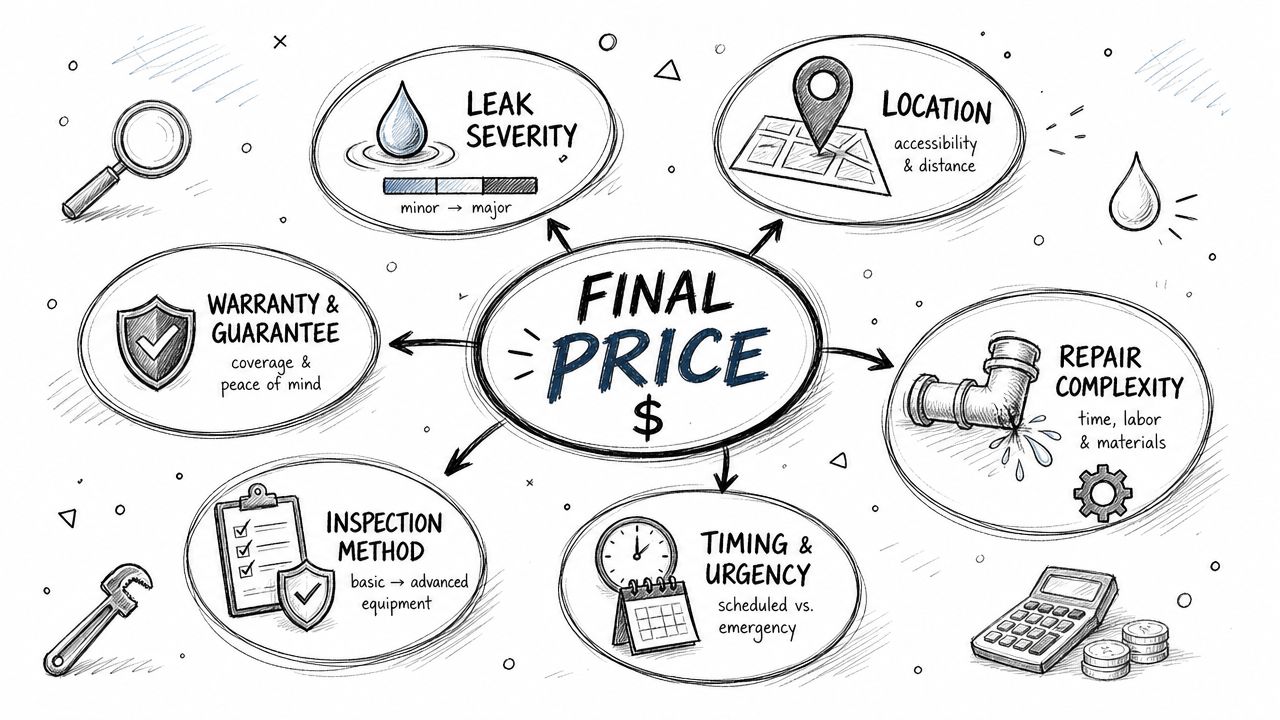
No two leak calls are priced the same because no two leak conditions are the same. The final cost depends on where the leak is, how hard it is to access, whether the problem is active or intermittent, and whether you need a scheduled visit or an emergency response.
Household leaks across the United States can waste more than 1 trillion gallons of water annually, which is part of why finding even small hidden leaks matters to individual homeowners and not just utilities (national household leak waste context).
Location changes the job
A leak under a concrete slab in Roswell usually takes more diagnostic work than a visible angle-stop leak under a bathroom sink in Woodstock. The plumber has to confirm the leak type, map the likely route, and avoid opening the wrong area.
A front-yard service line issue in Marietta also differs from a ceiling leak in Cumming. Exterior work may involve tracing a long pipe run. Interior work may involve separating roof, plumbing, and condensation causes before any repair estimate is accurate.
Access matters as much as the leak itself
A leak behind removable drywall is one thing. A leak under tile, inside a stacked wall, or below cabinetry is another.
Three common examples show why:
- Water in the yard in Marietta often points to a buried line issue. The diagnostic work may involve sound-based location methods across a larger area before excavation is recommended.
- A ceiling stain in Alpharetta may require ruling out upstairs fixture leaks, drain leaks, and supply leaks. The stain is the symptom, not the location.
- Low pressure in a Johns Creek home can be caused by several plumbing conditions, so the time goes into isolating the system before the leak is physically located.
Timing affects what you pay
Emergency calls are different from scheduled diagnostics. If a pipe has burst, water is actively entering the house, or a main line is visibly failing, speed becomes more important than convenience.
If you can safely shut off water and schedule the call, you usually keep more control over cost. If you can't, the emergency itself is the cost driver.
That doesn't mean you should delay urgent leaks. It means homeowners should understand why a same-night response, active water mitigation, and immediate troubleshooting are priced differently than a routine weekday appointment.
What else can move the number
A few other factors often shape the bill:
- Pipe type and system layout because some homes are easier to trace than others
- Fixture versus line leak because a toilet issue isn't diagnosed the same way as a main water line problem
- Residential versus commercial setting because larger buildings often require more isolation work
- Need for combined diagnostics when a leak symptom overlaps with sewer backup, drain failure, or foundation moisture concerns
The fairest leak detection quote is always tied to the actual conditions on site, not a one-size-fits-all number.
Sample Leak Scenarios and Estimated Costs
The easiest way to understand leak detection cost is to look at how the variables change the job. The examples below use the broad consumer diagnostic ranges already discussed, with repair quoted separately after the source is confirmed.
Johns Creek slab leak symptoms
If a homeowner notices warm flooring, unexplained water use, or the sound of running water with fixtures off, the likely next step is targeted acoustic testing and system isolation. This tends to fall toward the more involved end of residential detection because the leak is hidden and the access decision matters.
If the diagnosis confirms a slab leak, the repair options can change depending on exact location. In that situation, it helps to review common slab leak signs and repair options before approving the next phase.
Acworth yard leak near the main line
If you have soggy ground between the meter and the house, detection may involve tracing an exterior pressurized line rather than opening anything indoors. This kind of call is often more straightforward than a mystery wall leak, but it can still take time if the service line is long or the sound path is poor.
The important cost distinction is this: paying to locate the failure precisely is usually cheaper than trenching the wrong section of yard.
Roswell wall leak in an upstairs bath
A stain on the dining room ceiling below an upstairs bathroom can come from a supply line, drain line, shower enclosure failure, or toilet seal issue. Here, the diagnostic work is about narrowing causes in the right order.
If the plumber can isolate the issue without broad tear-out, the homeowner avoids paying a drywall contractor to close up multiple test holes later. That is where a moderate detection charge often saves money.
When the estimate tends to climb
A leak call usually becomes more expensive when several things are true at once:
- The source is hidden
- Access is limited
- The symptoms are far from the actual leak
- The call is urgent and after hours
When only one of those is true, the job is usually simpler. When three or four are present, the diagnostic portion naturally takes more time and more specialized equipment.
How to Book Your Leak Detection Service with JMJ Plumbing
Before you call, do two quick checks if it's safe to do so. First, look for obvious fixture leaks under sinks, behind toilets, and around the water heater. Second, if the issue seems isolated to a toilet, a basic food-color test in the tank can help show whether water is slipping into the bowl.
After that, don't push DIY too far.
A hidden leak in a wall, under a slab, at the main water line, or near a sewer line needs professional diagnosis. The same is true if you're dealing with a burst pipe, active ceiling damage, sewage smell, water in the yard, or low water pressure that started suddenly.

What to have ready before you book
A faster call starts with clear details. Have these ready when you schedule service:
- Your main symptom such as water in yard, ceiling stain, no hot water, sewer backup, or low pressure
- When you first noticed it so the plumber can judge urgency
- Whether water is still actively running or has been shut off
- What part of the home is affected such as kitchen, upstairs bath, basement, crawl space, or exterior line
When to call right away
Some situations shouldn't wait for normal business hours:
- Burst pipe repair needs
- Main water line repair concerns
- Sewer backup or sewage smell
- A clogged toilet that won't flush and is threatening overflow
- Leaks near electrical fixtures or panel areas
For homeowners across Acworth, Woodstock, Alpharetta, Canton, Roswell, Marietta, Cumming, Johns Creek, and the wider North Metro Atlanta area, the next step is simple. Use JMJ Plumbing's online booking page for a scheduled visit, or call for immediate help if the leak is active and time-sensitive.
The cheapest leak is the one you stop before the repair spreads beyond the plumbing system.
Frequently Asked Questions About Leaks
Will homeowner's insurance cover leak detection and repair
That depends on your policy and the cause of the leak. In many cases, insurance decisions turn on whether the damage was sudden or the result of a long-term maintenance issue. The plumbing diagnosis helps because it documents where the leak is, what failed, and whether there is visible resulting damage.
A good first step is to photograph affected areas, save any water bill changes, and ask your carrier what documentation they want before repairs begin.
How do I know if my water leak is an emergency
Treat it as urgent if water is actively damaging ceilings, walls, cabinets, or floors, if you can't keep the leak contained, or if the problem involves the main shutoff, water heater, or a burst line. It is also urgent if you notice sewage smell, sewer backup, or water near electrical components.
If you can shut off water to the affected fixture or to the home and the leak stops, you may have enough control to schedule service instead of requesting immediate dispatch. If you can't stop the water, call right away.
What happens after the plumber finds the leak
Once the source is confirmed, you should get a repair recommendation based on location and access. That may involve a direct pipe repair, a fixture replacement, a partial line replacement, or a larger recommendation such as water line replacement or sewer repair if the problem is more extensive than it first appeared.
The key advantage is clarity. Instead of paying for guesswork, you're approving a repair based on a known location.
Can I find a hidden leak myself
You can catch obvious warning signs. Check for damp cabinets, listen for running water, watch for unexplained meter movement, and look for water in the yard or stains on ceilings. Those checks are useful.
But homeowners usually hit a wall when the leak is inside a slab, buried underground, behind finished walls, or mixed up with drain and sewer symptoms. That is where professional tools make the difference.
Is leak detection worth it if the repair might be small
Yes, because the point of detection is not only to find the leak. It is to avoid the wrong repair, the wrong access opening, and ongoing hidden damage while the problem stays active.
That matters whether the final fix is small or large. A modest repair still becomes expensive if the house has been getting wet for days or weeks.
Do plumbers handle more than leak detection once they're on site
Usually, yes. Once the issue is identified, many homeowners also need related plumbing work such as drain cleaning, sewer line diagnostics, main water line repair, water heater troubleshooting, or fixture replacement. Hidden leaks often overlap with the same problems that cause slow drains, no hot water, low water pressure, or sewer backup concerns.
If you need fast, licensed help in Acworth, Woodstock, Alpharetta, Canton, Roswell, Marietta, Cumming, Johns Creek, or anywhere in North Metro Atlanta, contact JMJ Plumbing. A prompt leak diagnosis can keep a manageable plumbing problem from turning into drywall, flooring, mold, and restoration work.