
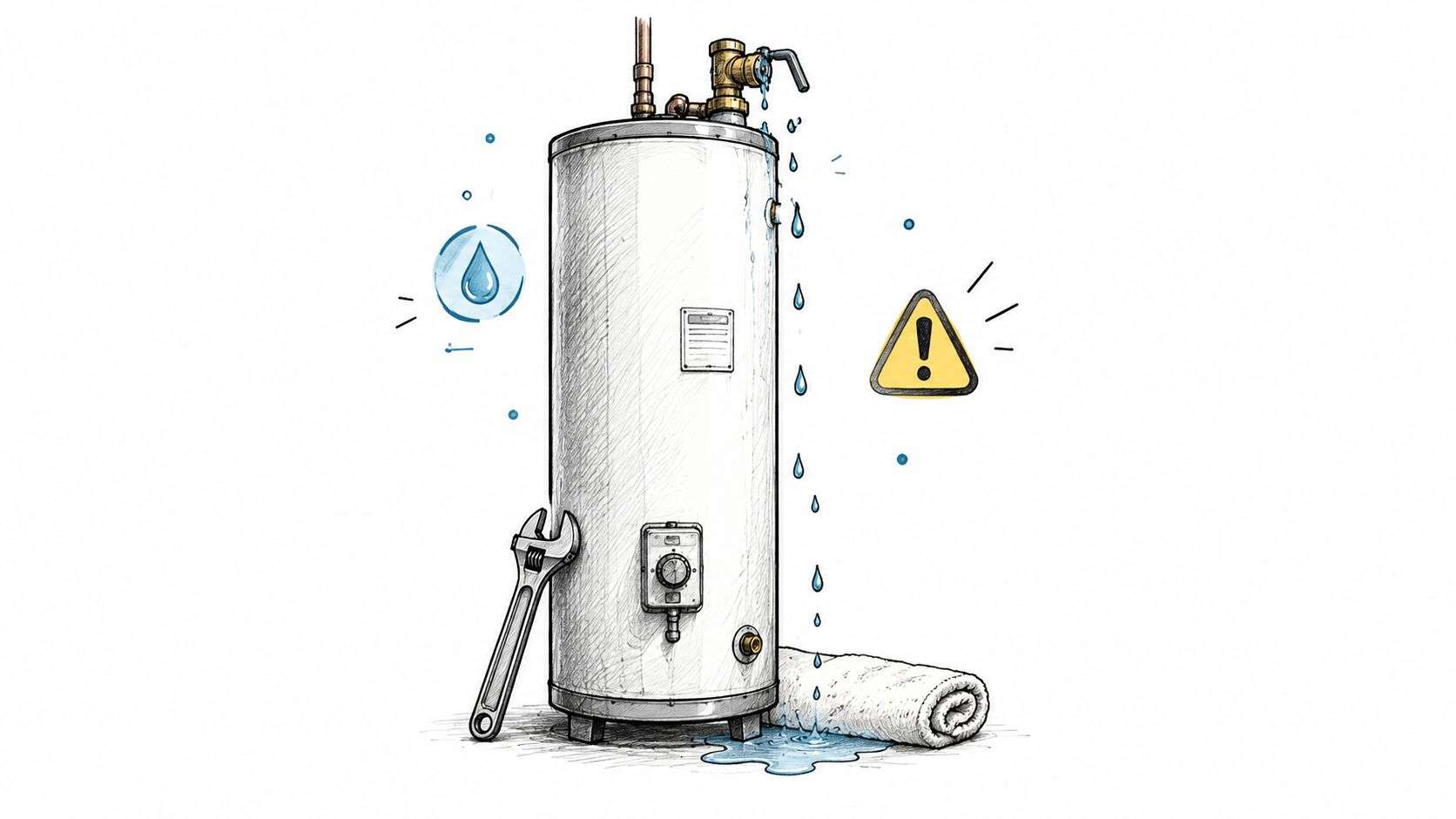
You find it by accident most of the time. You go into the garage, basement, utility closet, or attic for something else, then notice a wet top on the heater, a drip off the vent, or a dark water mark spreading on the floor. In that moment, most homeowners jump straight to the worst-case thought. Is the tank shot, is hot water about to spray everywhere, is this going to soak drywall or ruin flooring?
Those are fair concerns. If the water is hot, there’s a scalding risk. If it’s an electric unit and water is getting near wiring or the upper access panels, that changes the danger level fast. If it’s a gas heater and the vent or draft hood is involved, you also have to think about combustion safety, not just plumbing.
The next few minutes matter more than the repair itself. Stay calm, keep your hands off anything wet that carries power or gas, and make the area safe before you try to solve the mystery.
Discovering Water on Top of Your Hot Water Tank
A top leak doesn’t always mean the tank itself has failed. That’s the first thing I’d want a homeowner to hear on the phone. Water can show up on top of the heater and still be coming from a pipe connection, a shutoff above the unit, an expansion tank, vent condensation, or a relief valve doing exactly what it was designed to do.
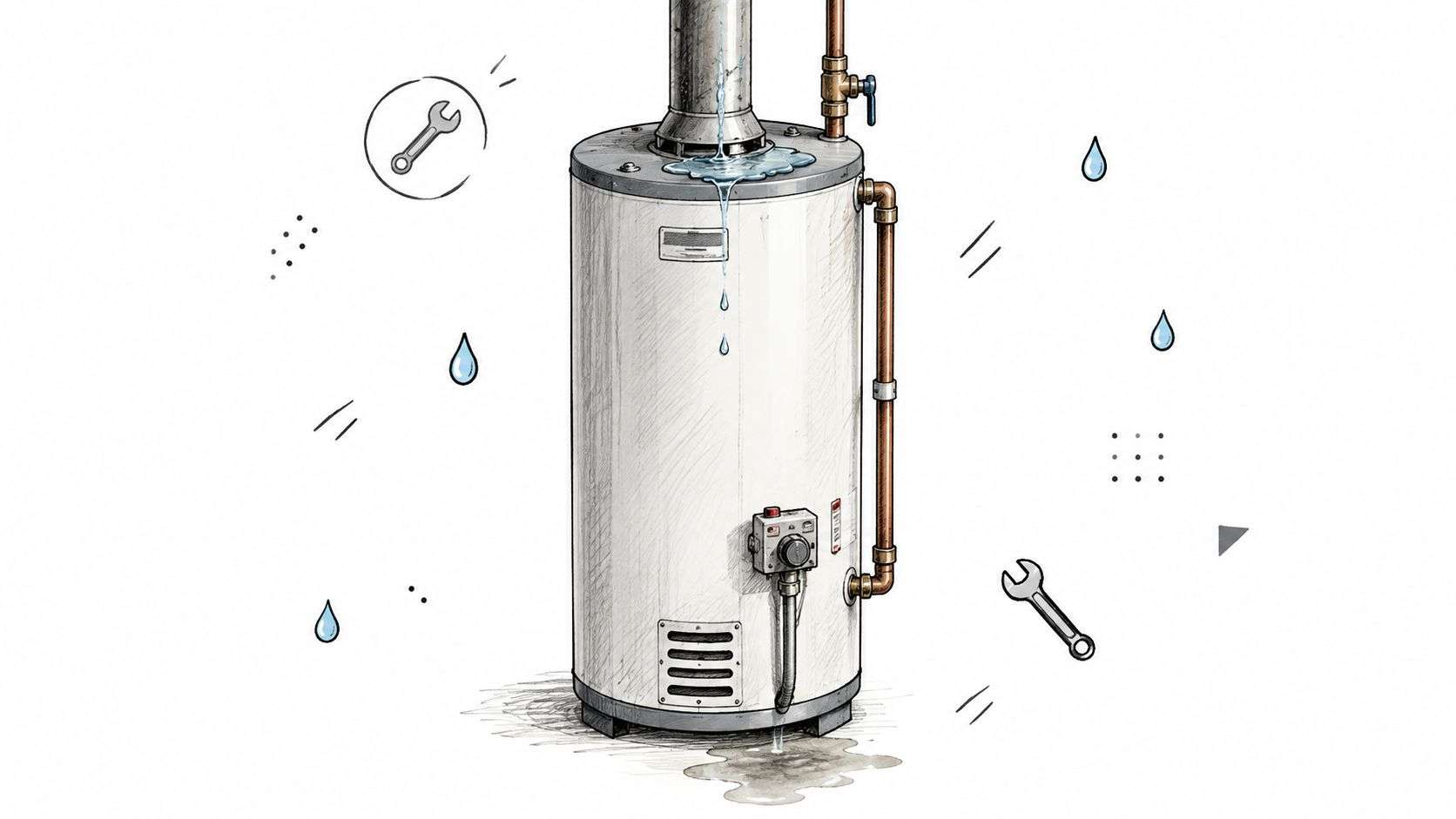
What makes this moment serious
When homeowners in Woodstock, Acworth, Alpharetta, Canton, Roswell, Marietta, Cumming, or Johns Creek search for water leaking from top of hot water tank near me, they’re usually dealing with more than a nuisance. The danger is rarely the drip by itself. The danger is what that drip is touching, how long it’s been happening, and whether pressure or heat is behind it.
A leak at the top can also be an early warning sign of a bigger water-heater failure pattern. In a review of 700 water-heater water-loss claims, 69% were caused by a leak in the water heater or by tank bursting, with an average loss of $4,444 per incident and an average failure age of 10.7 years according to the California Energy Commission document. That same source notes that deterioration of the sacrificial anode rod can lead to internal corrosion and eventual leakage.
Practical rule: If the heater is wet on top, treat it like a live problem until you prove it’s minor.
What not to do first
Don’t start tightening random fittings while the heater is powered up and under pressure. Don’t ignore a gas smell. Don’t assume the puddle under the tank means the tank body is leaking. Water travels, and top leaks fool people all the time.
First Ten Minutes of Safe Response
The first move is to shut the heater down safely. On an electric water heater, turn off the dedicated breaker. On a gas unit, turn the gas control dial to Off. Don’t touch a wet electrical compartment, and don’t handle a wet gas control if water is running over it.
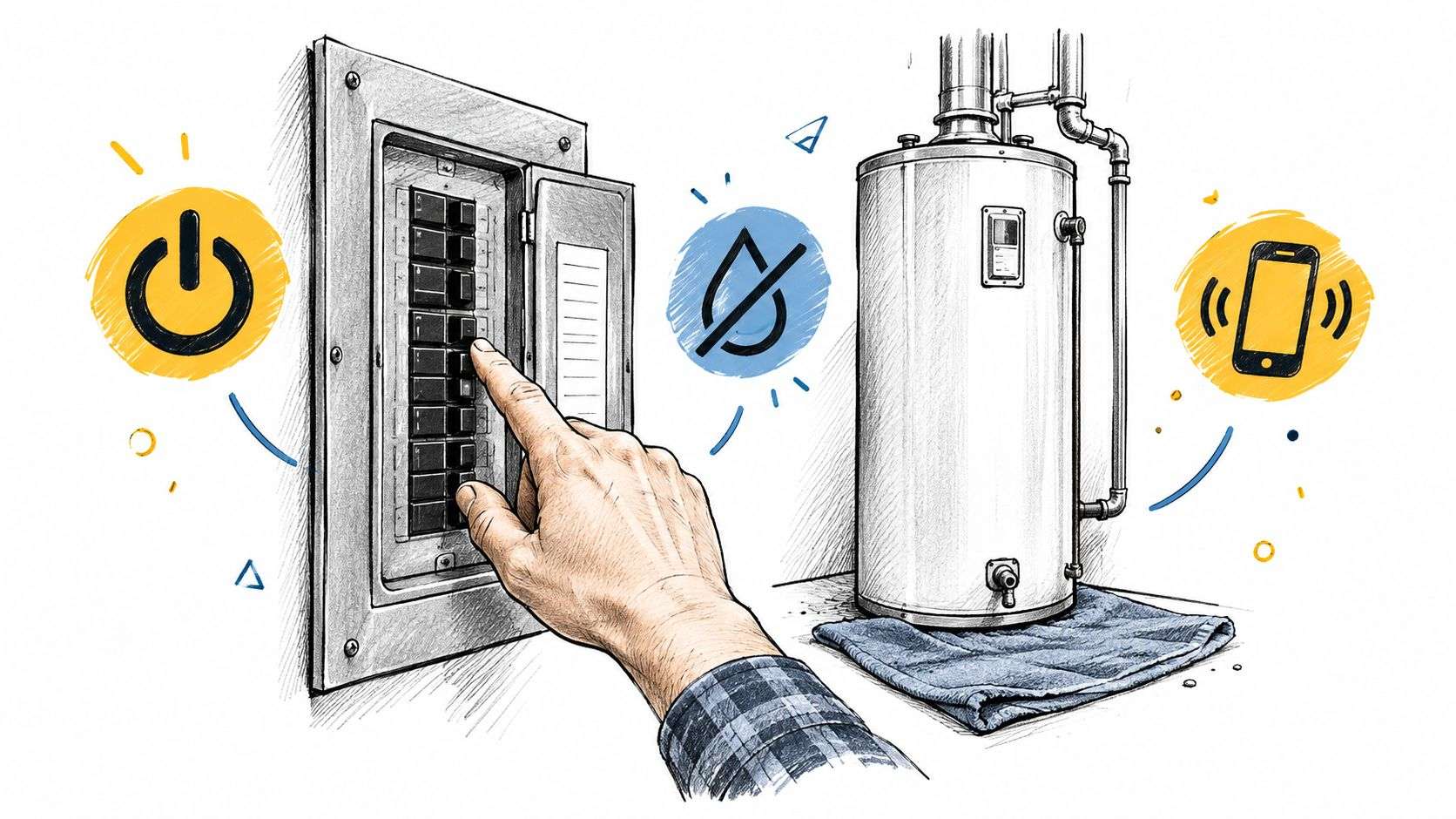
Then close the cold-water supply valve above the heater. That stops new water from feeding the tank. After that, open a hot water faucet somewhere in the house for a short time to relieve pressure in the system and calm active dripping.
Keep the scene controlled
Set a bucket under any steady drip. Use towels to keep water from spreading across the floor. Keep kids and pets out of the area, especially if you have a sewer backup, clogged toilet won’t flush, or other active plumbing issue in the same utility space, because wet floors and utility equipment don’t mix well.
If you smell gas, open a door if you can do it without crossing a dangerous area. Don’t flip switches or test anything. If the gas smell is strong, leave the home and call the gas utility first.
Here’s the sequence that works in real houses:
- Power off first: This matters most on electric heaters and any unit sitting near standing water.
- Water supply off next: That limits damage and makes diagnosis cleaner.
- Pressure relief through a hot faucet: It reduces drip behavior that can confuse what you’re seeing.
- Contain the leak: Bucket, towels, and clear floor space buy time.
- Call for help if the situation is active: For after-hours leaks, an emergency plumber in North Metro Atlanta is the right call.
Shutoff first, diagnosis second. Homeowners who reverse that order usually lose time and soak more material.
How to Pinpoint Where the Leak Starts
Most guides jump straight to the T&P valve. In the field, that misses a lot of false alarms. Many apparent top leaks are really water traveling down from something above or beside the heater. That includes the cold shutoff, flex lines, an expansion tank, or vent-related moisture. A current plumbing guide from Green Air Care on top water-heater leaks makes that point clearly, and it’s one homeowners often miss.
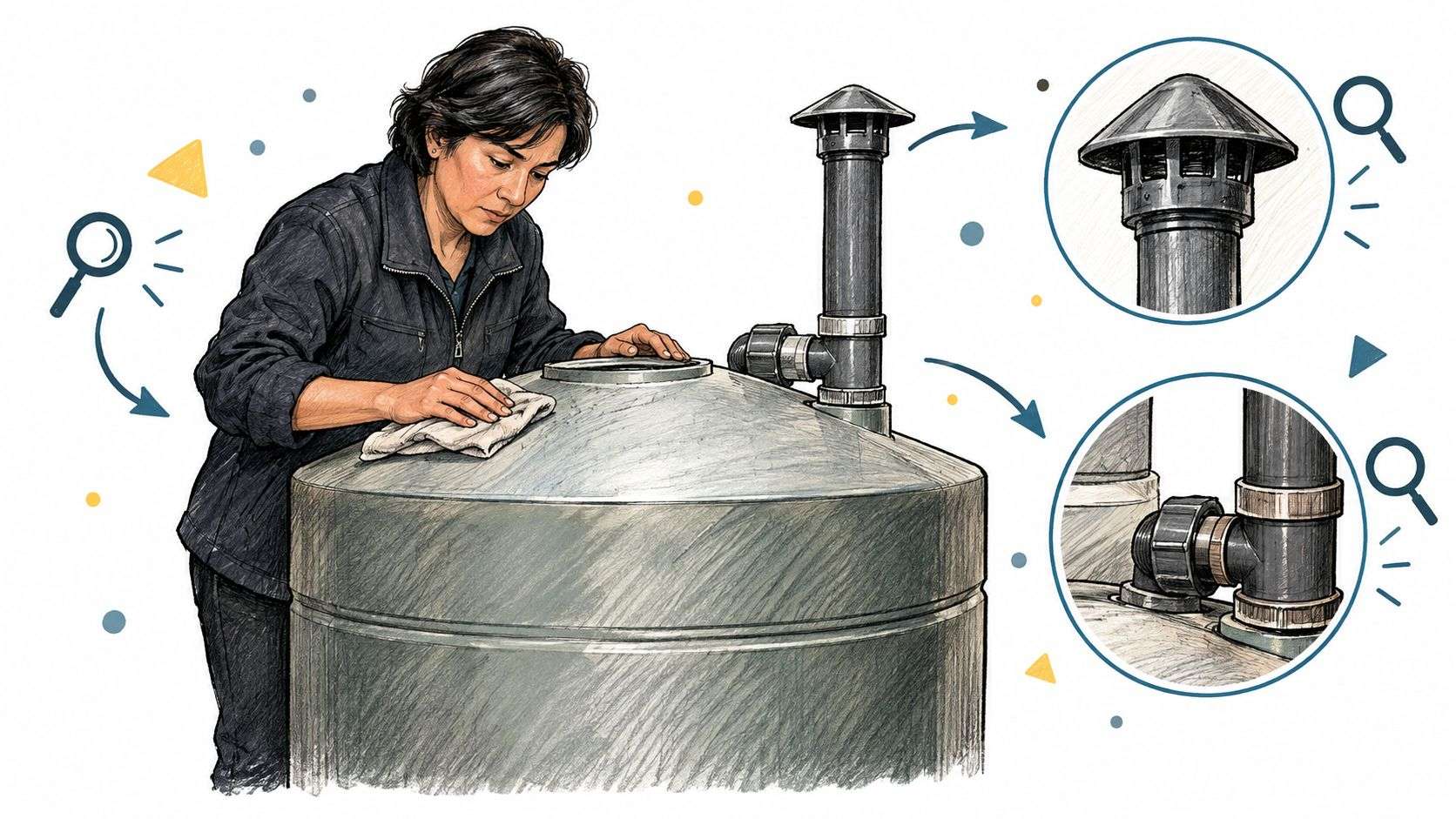
Use the wipe-and-observe test
Dry the entire top of the heater with paper towels or shop rags. Wipe around the cold inlet, hot outlet, flex connectors, dielectric nipples, vent opening on gas units, and the temperature-and-pressure relief valve connection if it’s mounted at the top. Then wait and watch for the first droplet or the first dark spot on a fresh paper towel.
That simple method is solid field guidance because it shows the highest wet point first, which helps separate an actual top-fitting leak from runoff. A practical summary of that process appears in the Heath Handbook guide on water heaters leaking from the top, along with the warning to never cap or plug a leaking T&P valve.
What to watch for
Lay dry towels or rags so each suspected point has its own marker. Then check what changes first over the next several minutes.
- Cold inlet sweating: In humid weather, a cold pipe can form moisture and mimic a leak.
- Drip appears only during a heat cycle: That leans toward pressure expansion or relief-valve discharge behavior.
- Drip continues with the power off: That usually points to a fitting, connector, or plumbing part still holding residual water.
- Wetness starts above the heater: Look up before you blame the tank.
If you’re also seeing wall staining, baseboard swelling, or mystery moisture nearby, the same logic applies elsewhere in the house. This guide on signs of a hidden leak in walls from Western Bathroom Renovations is useful because it helps separate a local appliance leak from water migration through framing or finishes.
Common Causes Behind a Top-of-Tank Leak
A true top leak usually comes from one of a handful of places. The trick is matching the wet pattern to the right part instead of replacing a heater that only needed a fitting repair.
Fittings and connectors
The cold-water inlet and hot-water outlet are frequent offenders. These connections expand and contract every day. Over time, dielectric nipples, threaded joints, and flex connectors start to seep. When that happens, you’ll usually see mineral crust, a damp ring at the fitting, or a drip forming on the underside of the connector before it reaches the top jacket.
A loose plumbing connection above the heater can fool you the same way. Water runs along pipe insulation, the jacket seam, or the outer shell and lands on top of the tank even though the tank body is fine.
Relief valve and pressure-related discharge
If the T&P relief valve is involved, treat it differently. The top-mounted temperature-and-pressure relief system is designed to open at about 150 psi and around 210°F, which are the standard safety thresholds documented in A. O. Smith Technical Bulletin 52. Normal residential systems often operate around 40 to 70 psi, and heating water raises internal pressure.
That means a leaking relief valve may be doing its job. It can also mean the system is running too close to unsafe conditions. Repeated discharge is not something to cap, plug, or ignore.
If a relief valve is dripping, the question isn’t only “Is the valve bad?” The better question is “Why is pressure or temperature climbing enough to make it open?”
Anode rod, expansion tank, vent, and condensation
Some heaters have a top-access anode rod port that can weep if the seal at that opening is compromised. If you want a good homeowner-level explanation of why anode condition matters, Upchurch Inspection on anode rods is worth reading. The short version is that once the sacrificial protection is spent, the tank becomes more vulnerable to corrosion.
An expansion tank mounted above the heater can also leak and drip downward. On gas units, vent condensation can show up near the draft hood and look like a plumbing leak. A sweating cold line can do the same thing.
Top-of-Tank Leak Causes at a Glance
| Cause | Typical Sign | Urgency |
|---|---|---|
| Cold inlet fitting | Moisture starts at the cold-side connection, often with mineral buildup | Moderate |
| Hot outlet fitting | Wetness at threaded outlet or flex line | Moderate |
| Dielectric nipple | Slow seep with corrosion or staining at the tank connection | Moderate |
| Flex connector | Drip forming on braid or nut | Moderate |
| T&P valve or connection | Water at relief valve body or discharge point, often during heating | High |
| Expansion tank above unit | Water starts above heater and runs down | High |
| Vent condensation on gas unit | Drip near vent area without a clear plumbing leak | Moderate |
| Anode rod port | Moisture around top access point or hex opening | Moderate |
| Top seam or tank shell | Rusting seam, weeping metal, repeated wetness at the tank body | Urgent replacement |
Repair or Replace How to Decide
This decision comes down to age, failure point, and the overall health of the heater. A small top leak at a fitting is a different conversation than a rusting seam at the tank body.
Repair vs replace by condition
A commonly used service-life benchmark is 8 to 12 years for storage tank water heaters and 15 to 20 years for tankless units, according to the National Water Heater Authority lifespan guidance. That same source says a failed T&P valve is a discrete repair item, and the valve itself typically costs $15 to $40 as a part.
If the heater is fairly young and the leak is clearly at a valve, flex connector, or nipple, repair usually makes sense. If the leak is coming from a rusted top seam, distorted shell, or the tank metal itself, replacement is the safer call.
For homeowners looking up water heater replacement Woodstock, water heater repair Alpharetta, or 24 hour plumber near me, this is usually the line that matters most: repair the parts around the tank, replace the tank when the shell is the problem.
Repair vs Replace Decision Criteria
| Factor | Repair Usually Wins | Replacement Usually Wins |
|---|---|---|
| Age | Newer unit with otherwise normal operation | Tank in or beyond the typical service-life window |
| Leak point | T&P valve, nipple, flex connector, shutoff, or top fitting | Tank seam, tank shell, or persistent corrosion at the body |
| Performance | Water still heats normally and consistently | History of no hot water, inconsistent output, rust, or poor burner performance |
| Overall condition | Clean top, dry insulation, solid venting, limited corrosion | Rusted flue area, stained jacket, repeated leaks, visible deterioration |
If you’re comparing options, water heater service and replacement should include both a repairable-parts check and an honest look at age and tank condition. That matters just as much in Marietta, Roswell, Cumming, and Johns Creek as it does anywhere else in Metro Atlanta.
Temporary Fixes and When to Stop and Call a Pro
Some temporary measures are reasonable. Others waste time or create a safety problem.
What you can do for a short-term hold
If you can clearly see a loose compression nut on an accessible connector, you can snug it by hand and then give it a careful quarter turn with a wrench. No more than that. If the T&P valve is weeping lightly, put a bucket and towel under it and keep the heater shut down until it’s checked. If discharge seems tied to overheating, lowering the temperature setting can reduce stress until service happens.
These are stopgaps. They buy hours, not days.
When to stop
Call a licensed plumber right away if any of these are happening:
- Active spraying: A mist or stream from the top is beyond homeowner-safe troubleshooting.
- Water at the burner or electrical compartment: Shut the unit down and leave it off.
- Gas odor: Leave the home if the smell is strong and contact the gas utility.
- Soaked ceiling or floor below: The leak may be traveling farther than you think.
- Rusting top seam or tank body: Don’t try to patch a failed tank.
- Repeated pressure discharge: Never cap or plug a leaking relief valve.
If your house also has slow drains, sewage smell, water in yard, or signs of a main water line repair or sewer repair problem at the same time, say that when you call. Plumbing failures sometimes stack up in older systems, especially across Cobb County, Cherokee County, North Fulton, and Forsyth County homes with aging equipment.
Getting Fast Help in North Metro Atlanta
Once power, gas, and water are shut off, speed matters. A small top leak can become flooring damage, drywall damage, or a no-hot-water day if it sits. If the wipe-and-observe check shows it’s a real leak and not simple condensation, the next move is getting a plumber there with the right parts.
For homeowners searching emergency plumber Woodstock, 24 hour plumber Acworth, water heater replacement Canton, drain cleaning Roswell, leak repair Marietta, sewer backup Cumming, burst pipe repair Johns Creek, or water line replacement near me, response time matters as much as the repair itself. The same companies that handle heater leaks often also handle sewer replacement, main water line repair, and even trenchless options. In many underground replacement jobs, plumbers use a method the EPA describes as pipe bursting for line replacement, where the old pipe is broken outward while a new line is installed in the same general path.
JMJ Plumbing serves homeowners across North Metro Atlanta service areas, including Woodstock, Acworth, Alpharetta, Canton, Roswell, Marietta, Cumming, and Johns Creek. If you call, have three things ready: whether the unit is electric or gas, where the tank sits in the home, and what you’ve already shut off. That helps the plumber arrive ready for leak repair, water heater replacement, or the next step if the problem turns out to be broader than the heater itself.
If water is leaking from the top of your hot water tank, JMJ Plumbing can help you sort out whether you’re dealing with a simple fitting repair, a relief-valve problem, or a tank that needs replacement. They also handle the related issues homeowners often discover at the same time, including leak repair, drain cleaning, sewer repair, and water line replacement. Visit JMJ Plumbing to schedule service or get help fast if the leak is active.