
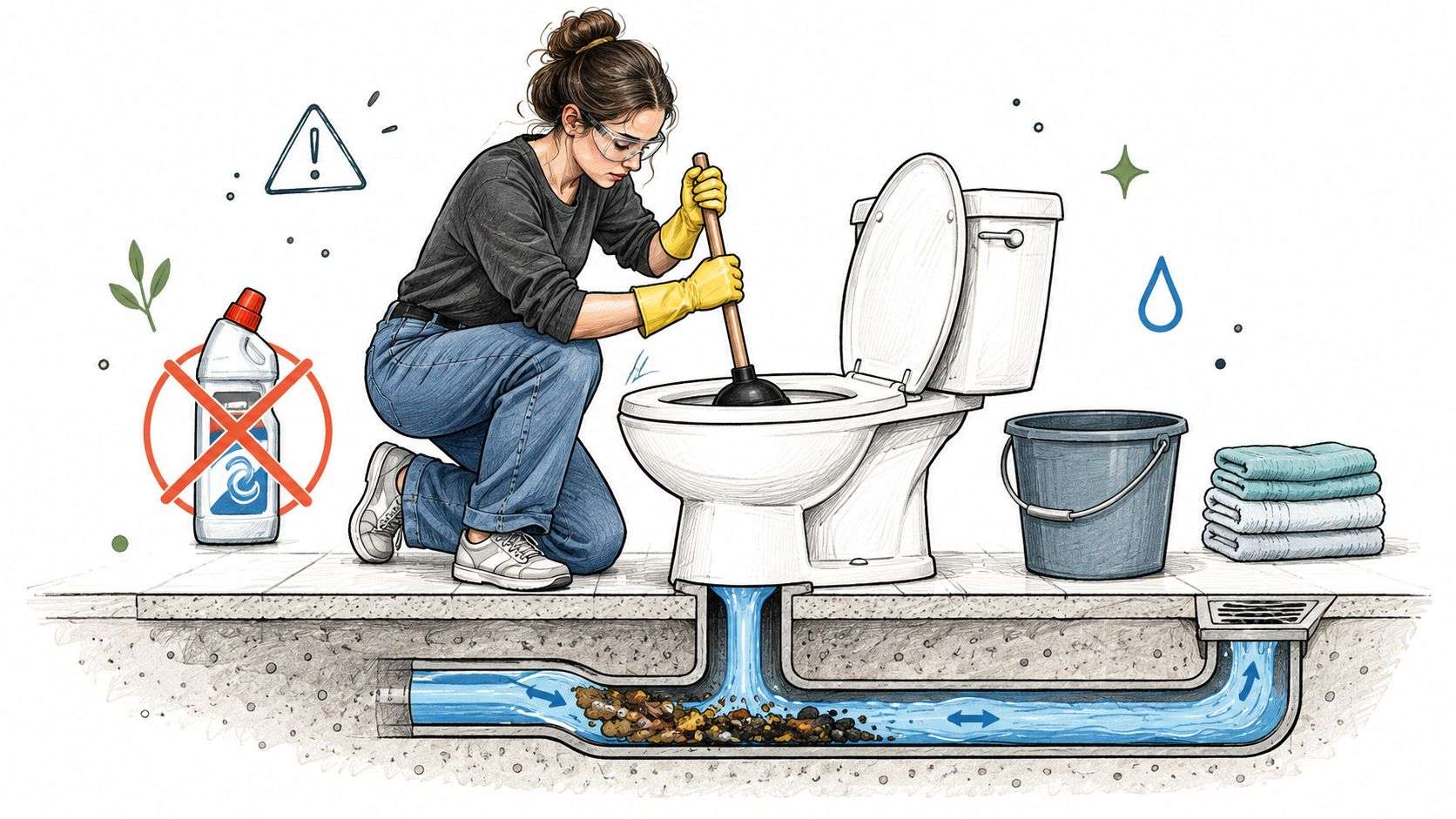
A kitchen sink that drains slowly is annoying. A kitchen sink that slows while the tub gurgles and the lowest toilet rises after a shower is a different problem. If you’re in Woodstock, Marietta, or Acworth and several fixtures are acting up together, treat it as a possible clogged drain line, not a little wad of hair you can fix at one sink.
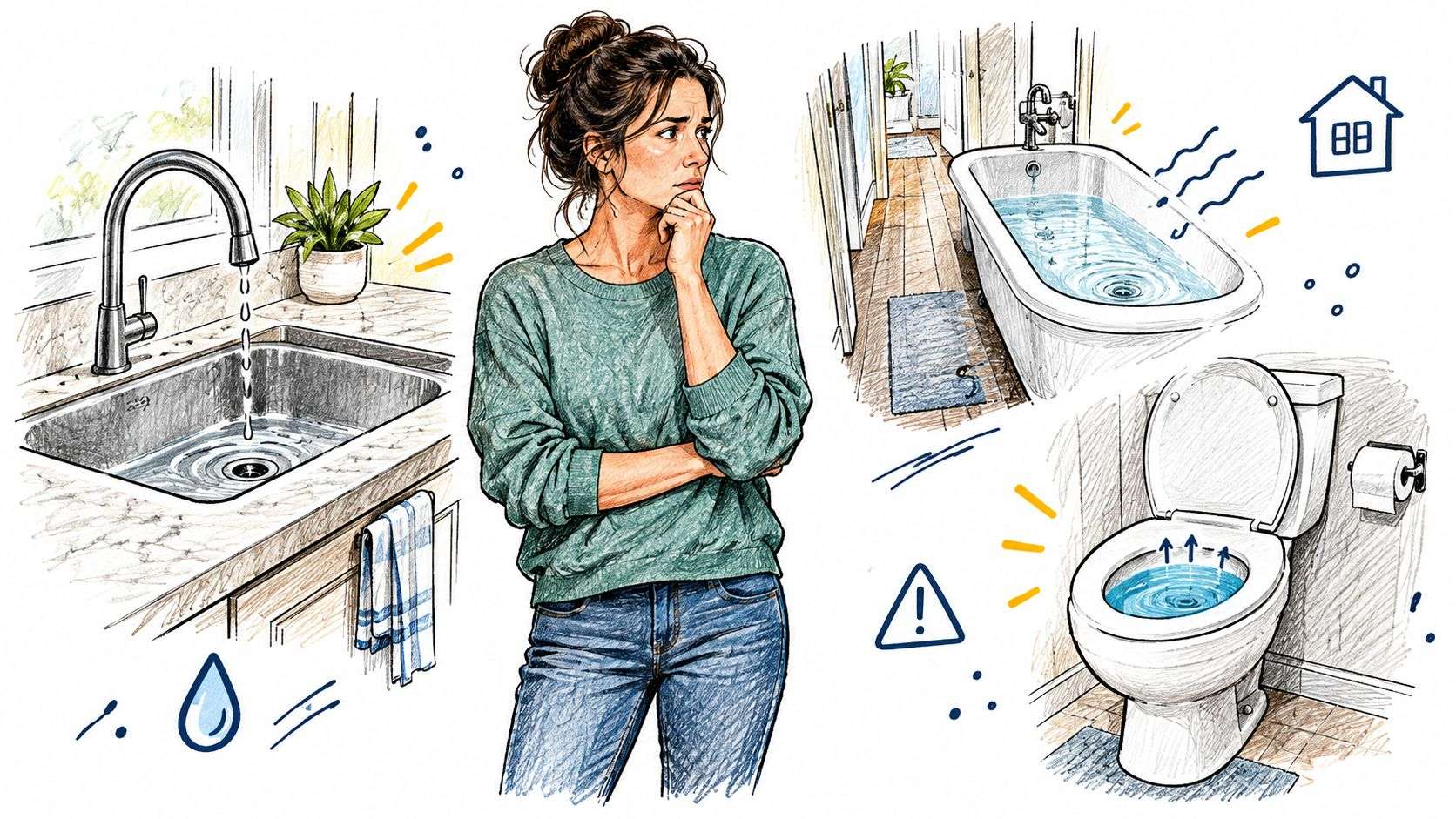
What a Clogged Drain Line Is Telling You
A drain line carries wastewater away from one fixture or several connected fixtures. The hair around a sink stopper sits at the fixture. A restriction farther down a branch or main line can affect the tub, toilet, kitchen, or floor drain too. That difference matters because clearing one fixture won’t solve an obstruction shared by several.
Watch for the pattern, not just the worst individual symptom. Several slow drains, gurgling after another fixture runs, sewage odor, or water rising in a tub or floor drain can point to a restriction downstream. Wet ground along the sewer path or an overflowing cleanout raises the stakes further. A single slow bathroom sink, on the other hand, may still have a local trap or short branch problem.
Stop using water if wastewater is rising in another fixture. More showers, laundry, or flushing can push the backup into a tub, floor drain, or living space.
This isn’t a rare infrastructure nuisance. The EPA estimated that the United States experienced about 23,000 to 75,000 sanitary sewer overflows each year, releasing roughly 3 billion to 10 billion gallons of wastewater annually. In that analysis, blockages caused 74% of reported overflow events. Grease was the most common reported blockage cause, at 47%, followed by grit, rock, and other debris at 27%, roots at 22%, and combined roots-and-grease blockages at 4% (EPA information on preventing sanitary sewage contamination).
Those figures don’t tell you exactly what’s happening inside your pipe, but they explain why a cluster of symptoms deserves attention. A blockage can reduce the line’s carrying capacity until wastewater surcharges, meaning it backs up toward the house or escapes through an overflow. A slow drain that keeps returning may be an early warning, not a coincidence.
If wastewater is already coming up through a fixture, stop using the affected drains and avoid contact with sewage. If only one sink is slow and other fixtures behave normally, you may have room for a cautious local fix. The next step is to figure out where the restriction likely sits.
Finding Where the Clogged Drain Line Starts
Start with a map, not a tool. Note which fixtures are affected, whether they’re on the same floor or share a bathroom wall, and which drain is lowest. Record whether the trouble followed heavy rain, a holiday cooking weekend, or years of recurring slow drains near mature trees. Those details help separate a local trap problem from a branch-line or sewer-lateral restriction.
One slow fixture usually points toward that fixture’s trap or short branch. Two fixtures close together, such as a tub and toilet on the same wall, may share a branch. If several drains in different parts of the house are affected, or the kitchen backs up into a tub when the washer runs, suspect the building drain or sewer lateral. That’s the point to stop guessing and get the line inspected.
Look only at accessible clues. You may see standing water in a cleanout, smell sewage at a floor drain, or notice a soggy strip of yard that follows the route toward the street. Don’t open walls or dig to chase a suspected pipe. If neighbors have similar backups, mention that when you call. A problem affecting nearby homes could involve the municipal system, though a plumber or utility will need to confirm where the obstruction is.
| What you notice | Likely location | How urgent | Next move |
|---|---|---|---|
| One sink drains slowly; other fixtures are normal | Sink trap or short branch | Lower, if there’s no sewage | Note whether the trap is accessible and check for a local blockage |
| Two nearby fixtures slow or gurgle together | Shared branch line | Prompt attention | Record which fixtures are involved and when symptoms appear |
| Several fixtures back up, or water shifts from one drain to another | Building drain or sewer lateral | Urgent | Stop using affected drains and arrange professional diagnosis |
| Sewage odor, an overflowing cleanout, or wet ground along the sewer route | Main drain or lateral, possibly beyond it | Urgent | Keep clear of wastewater and report the location and symptoms |
| Nearby homes have similar backups | Possible municipal-side issue | Urgent if sewage is rising | Contact the local utility and a plumber to clarify responsibility |
A sewer camera inspection through an accessible cleanout can help locate roots, scale, grease, foreign objects, offset joints, cracks, or a collapsed section. If the issue recurs, ask whether sewer camera inspection makes sense before approving another clearing attempt. Give the plumber your symptom map, not just “the drain is clogged.”
Clearing a Clogged Drain Line Without Making It Worse
Keep this to a local, manageable clog. Put on gloves and eye protection, protect the floor, and stop water use in the affected part of the house. If sewage is present, more than one bathroom is involved, or water is rising elsewhere, skip DIY clearing and call for help.
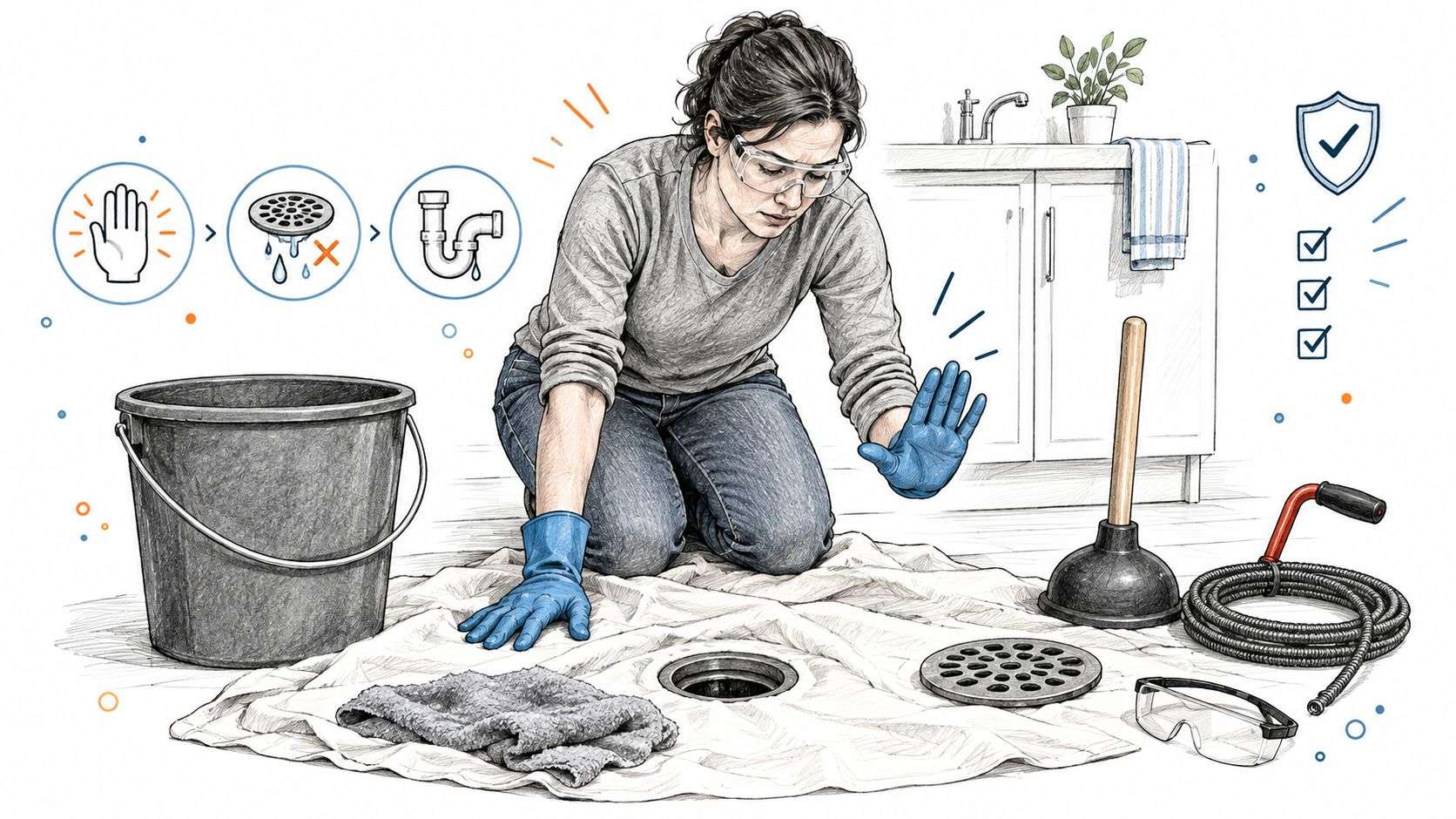
For one slow sink or tub, a plunger is a reasonable first try. Cover the overflow opening so pressure acts on the drain, seat a flange plunger over the opening, and work with slow, steady strokes. Keep the seal in place and avoid splashing. If the fixture has an accessible trap and the symptoms still look local, put a bucket beneath it, remove the trap carefully, and clear visible hair or debris by hand.
A hand auger can help with a nearby branch restriction, but don’t force it. Feed it only as far as it moves easily, then withdraw it and clean off any debris. A tool that stops hard or repeatedly catches isn’t an invitation to push harder. You can damage a pipe or drive debris farther into the line.
Test cautiously. Run a small amount of water first, then a longer flow if it drains normally. Watch nearby fixtures while testing. If another drain begins to gurgle or rise, stop immediately.
Never pour chemical drain cleaner into a line that’s already full of standing water. It can damage some pipe materials, burn skin, and leave corrosive liquid in a backed-up line for the next person to handle.
A powered machine is not automatically a safe next step. If you’re comparing equipment, read the operating limits and safety guidance for a 120-volt drain cleaning machine before deciding whether the job is appropriate for a homeowner. A machine can clear a passage without repairing the defect that caused the blockage.
Restored flow doesn’t prove the pipe is sound. A cable may punch a temporary channel through grease, roots, or debris. Stop and arrange camera inspection if the snake won’t advance, the clog returns the same day, sewage is present, or multiple bathrooms are involved. Don’t pour another bottle into the line and hope for a different result.
Choosing Repair Help When DIY Stops Working
The right service depends on what’s inside the pipe and whether the pipe itself is intact. A dramatic backup doesn’t automatically mean you need a replacement, and a line that drains after cabling isn’t automatically healthy. Ask the plumber to connect the recommended work to what they found.
| Option | Fits when | Caution |
|---|---|---|
| Mechanical cabling or augering | A localized obstruction can be reached and the pipe appears serviceable | It may reopen a path without removing the cause |
| Hydro-jetting | Grease, sludge, or encrustation coats an otherwise sound line | High-pressure cleaning can worsen a cracked, badly offset, or collapsed pipe |
| Camera inspection | The clog recurs or the cause and pipe condition aren’t clear | Ask for the defect location and video findings, not just “it needs work” |
| Spot repair | A limited section has a clear defect, such as a damaged joint | Access, depth, material, and nearby obstructions affect the scope |
| Sewer or drain replacement | Damage is extensive or a section can’t provide reliable service | Confirm what length must be replaced and why a smaller repair won’t hold |
Cabling suits many soft, localized obstructions. Hydro-jetting scours grease and sludge from around the pipe’s interior, but it’s a poor bet on a deteriorated, cracked, badly offset, or collapsed line. Camera verification before and after aggressive cleaning helps manage that risk. A sound pipe blocked by grease or wipes may need cleaning and a follow-up plan. Roots entering at a joint, a belly, an offset, or a collapse may call for repair or replacement of the affected section.
Get a clear explanation of cost factors rather than relying on a vague quote over the phone. The work can depend on cleanout access, pipe depth and material, the length of the defect, whether a yard or slab must be opened, camera time, after-hours response, and whether the blockage sits on the private lateral. Ask what the inspection showed, what the proposed work addresses, and whether a repair or replacement is justified by the pipe condition.
JMJ Plumbing is a licensed North Metro Atlanta company with more than 25 years of local work, 24/7 response, and Master Plumber credential MP210218. Its services include drain cleaning, sewer repair and replacement, and on-site quotes. Based in Acworth, the company serves communities including Marietta, Roswell, Alpharetta, Canton, Woodstock, and Cumming. To compare the available options, ask about sewer line repair and replacement and what the camera shows before approving work.
For property managers coordinating an urgent call, a plumbing call answering service can be one part of keeping tenant reports and service requests organized. But the repair decision still needs to come from evidence in the pipe. A cheap repeat cable can cost more in the long run if it keeps clearing the symptom while leaving a damaged line untreated.
Stopping the Next Clogged Drain Line
A line can clog again because clearing it doesn’t change what enters the pipe or repair a defect inside it. Grease cools and hardens. Wipes can snag on that residue. Roots can return through the same opening if the pipe defect remains. Prevention helps, but it can’t compensate for a damaged lateral or a serious flow problem.
Make kitchen habits simple enough to keep. Scrape pans into the trash, let grease cool, then throw it away. Hot water may help carry away residue after scraping, but it isn’t a cure for pouring grease down the drain. Keep coffee grounds, eggshells, and fibrous scraps out of the disposal. A disposal can grind food; it can’t make every material harmless to the plumbing.
Keep the toilet rules separate from the sink rules. Wipes, paper towels, and hygiene products can leave the bowl and still collect farther along, especially in an older home, on a septic system, or in a shared lateral. A wastewater utility reports that 98% of materials clogging treatment-plant equipment are non-flushable items, including baby wipes, cleaning wipes, makeup wipes, and paper towels (wastewater utility guidance on what not to flush). A clear toilet today doesn’t prove a product is safe for the entire connected drainage system.
Put wipes and paper towels in the trash, even if the package calls a wipe flushable. The toilet bowl is only the first stretch of the system.
In Roswell, Johns Creek, Canton, and other neighborhoods with mature trees, keep track if backups repeat on the same side of the house. Tell the plumber the location and ask whether a camera shows root entry. That answer is more useful than buying monthly chemical treatments that can’t repair the opening roots are using.
Property managers should give tenants clear disposal rules and keep a simple log of backups. Note the affected fixtures, dates, odors, and any work already done. If a line keeps clogging after cleaning, the next maintenance decision should be based on inspection findings, not another round of guesswork.
What to Do Before the Backup Spreads
Choose your next move by the symptoms. If one fixture is slow, the trap is clear, and a careful plunger or short auger restores flow, watch it closely and change the grease and wipe habits that feed recurring clogs. If water rises in another fixture, the sewage smell is strong, the yard is wet, or the clog returns, stop using those drains. Don’t add chemical cleaner.
Before calling, gather details that help the plumber respond with the right diagnostic plan:
- Fixtures affected: Note what is slow, gurgling, or backing up, and whether the problem moves when another fixture runs.
- Timing: Record when it started and whether it followed rain, heavy cooking, or laundry use.
- Visible clues: Take photos of an accessible cleanout or wet area in the yard, without opening or entering anything.
- Property details: Mention mature trees or recent paving over the likely line route.
- Prior attempts: Say whether you plunged, used an auger, or poured anything into the drain.
For North Metro Atlanta homeowners and property managers, JMJ Plumbing handles drain cleaning and sewer-backup response, with 24-hour availability and online booking through the company site. Ask for an honest repair-versus-replacement recommendation based on the pipe condition, and confirm on-site quote details and any current sewer or new-customer offer when booking rather than assuming it applies. If sewage is coming into the home or you need urgent help, use the emergency plumbing service page.
Tonight, contain the water, keep people and pets away from sewage, record the pattern, and stop using drains that are backing up. If more than one fixture is affected, get eyes in the pipe before the next backup reaches the floor.
If a drain keeps clogging or sewage is already backing up, contact JMJ Plumbing for drain cleaning, sewer-backup response, and an evidence-based repair or replacement recommendation. Book online or call to arrange help across North Metro Atlanta.