You notice a sewage smell when you step into the yard, then the toilet starts gurgling, and suddenly the question is not just whether the sewer line is damaged. It is how expensive the fix is going to get once the digging starts.
In North Metro Atlanta, that is the part many homeowners do not see coming. The pipe repair itself is only one part of the bill. Access, locating the break, excavation, permits, driveway or sidewalk cuts, and putting the yard back together can push the total far beyond what a simple national average suggests.
I have seen jobs where the plumbing repair was manageable, but the ground conditions and cleanup drove the final price much higher. That happens a lot on older properties in places like Marietta, Roswell, and Woodstock, where sewer lines may run under mature landscaping, hardscaping, or deep sections of yard.
A good sewer repair estimate should answer one question clearly. What will this cost all in, not just for the pipe, but for everything required to reach it and restore the property afterward?
Why Are You Suddenly Smelling Sewage
You flush a toilet or run the washing machine, and a sewage smell shows up a few minutes later. Then it fades. That pattern usually means wastewater is moving through the system and sewer gas is escaping somewhere it should not.
Sometimes the cause is small and local. A dry trap in a little-used bathroom, a loose toilet seal, or a venting issue can all create odor without a broken main line. But if the smell shows up in the yard, around the crawl space, or in more than one part of the house, I start looking harder at the sewer line itself.
That matters because homeowners often wait on smells longer than they would wait on a backup. Odor feels easy to put off. In older North Metro Atlanta neighborhoods, that delay can get expensive fast, especially when the line runs under landscaping, a walkway, or a driveway. The pipe repair may be straightforward. Getting to it and putting the property back together is often the bigger bill.
What the smell often points to
The location and timing of the odor tell you a lot.
- Smell near one fixture only: The problem may be a wax ring, trap, or local drain issue.
- Smell after heavy water use: A cracked or separated section may be leaking when the line is under load.
- Smell in the yard or near the sewer path: Wastewater or sewer gas may be escaping underground before it reaches the street.
- Smell with gurgling drains: Restricted flow can force air back through the system.
- Smell with soggy soil or unusually green patches: The buried line may be leaking into the surrounding ground.
A single bad odor does not confirm a sewer line break. A pattern does.
If the smell is paired with backups, multiple slow drains, or sewage coming up at the lowest fixture, call for emergency plumbing service instead of treating it like a routine clog.
I have seen plenty of cases where the first complaint was just "it smells off outside." A camera inspection later, the line had a separation or root intrusion that had likely been developing for months. Catching it at the smell stage does not always make the pipe repair cheap, but it can keep the job from turning into a larger excavation with more yard, hardscape, and cleanup costs attached.
Telltale Signs Your Sewer Line Needs Urgent Repair
A sewer line usually gives warnings before it fails completely. The problem is that homeowners often see each warning as a separate issue. One slow drain feels like a kitchen problem. A gurgling toilet feels like a toilet problem. A wet yard feels like a drainage problem. Together, they often point to the main line.
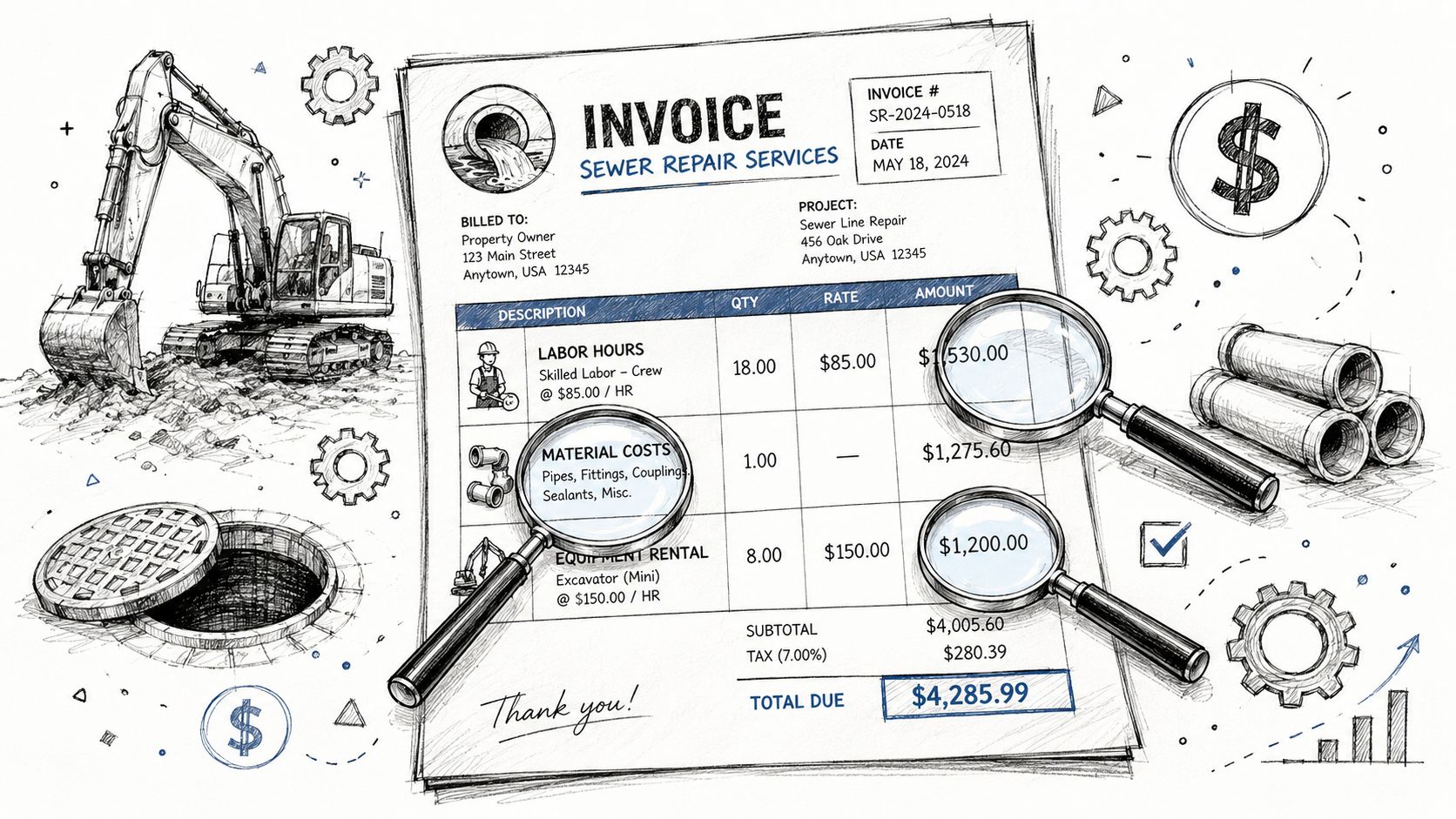
If sewage is backing up now, or multiple fixtures are acting up at once, that's the point to call for emergency plumbing service rather than trying one more bottle of drain cleaner.
Signs inside the house
A single clogged sink isn't usually a main sewer failure. Multiple fixtures draining slowly at the same time is different.
Watch for these combinations:
- More than one slow drain: The blockage or break is likely farther down the system.
- Toilet gurgling when another fixture runs: Air is being displaced because wastewater can't move normally.
- Recurring backups at the lowest drain: Basements and lower-level showers often show the first major warning.
- Sewage smell around tubs, toilets, or laundry drains: Wastewater gases may be escaping from a compromised line.
Signs outside the house
Yard symptoms often tell the story before the pipe is exposed. In Acworth, Canton, and Cumming, a soft patch over the sewer path after dry weather is a warning I never ignore.
Look for:
- A soggy strip in the yard: The soil over the line may be absorbing wastewater.
- One unusually green patch: The leak is feeding the grass.
- Sinkage or a shallow depression: Soil may be washing into a broken section of pipe.
- Persistent odor near the cleanout or toward the street: The line may be leaking under pressure when fixtures discharge.
If the yard is wet and the drains are slow, don't keep testing fixtures all day. Every flush and shower can add to the mess.
What doesn't usually work
Homeowners often try a toilet auger, a small hand snake, or chemical opener. Those tools can help with a local clog. They won't fix a cracked sewer lateral, a separated joint, or a collapse under the yard.
The most expensive mistake is treating a structural sewer problem like routine drain cleaning. If the problem keeps returning, the line needs to be inspected, not guessed at.
How a Sewer Repair Estimate Is Actually Calculated
Most homeowners expect a sewer estimate to be the price of pipe plus labor. That's not how these jobs work. A sewer quote is closer to a car repair invoice. You pay for diagnosis, access, the actual repair, and everything needed to leave the property safe and usable again.
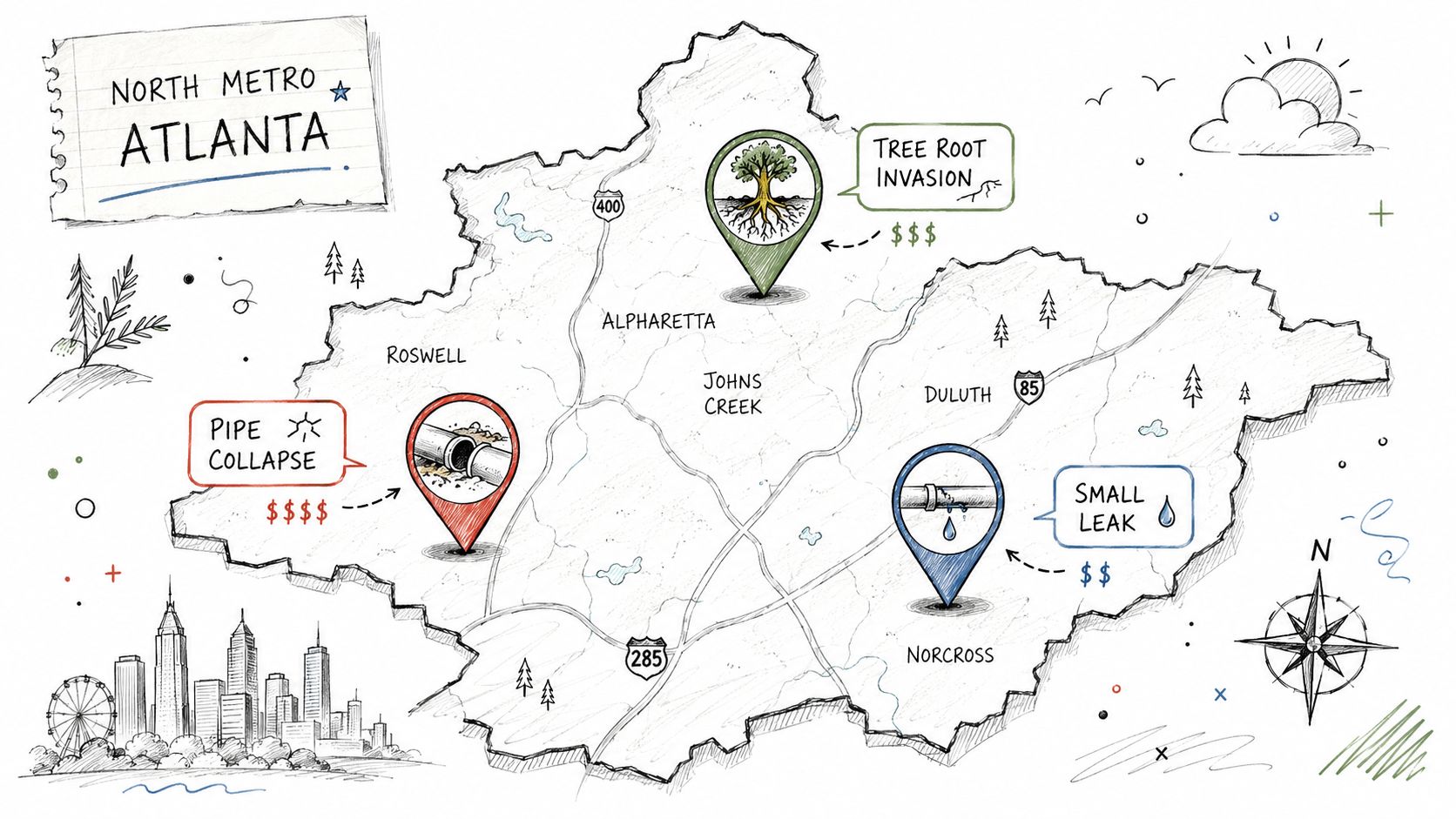
The line items that shape the bill
A proper estimate usually includes several moving parts:
- Diagnosis: The plumber needs to confirm where the leak is, what material is in the ground, and whether the issue is a crack, belly, root intrusion, offset joint, or collapse.
- Access: Sometimes the cleanout gives enough entry. Sometimes a section has to be exposed before any repair can start.
- Repair method: Spot repair, full replacement, lining, or bursting all price differently.
- Surface restoration: Grass is one thing. Concrete, pavers, retaining walls, and planted beds are another.
- Permits and inspections: Depending on local requirements, permit handling may be part of the job.
For homeowners comparing bids, a camera inspection is the difference between a reasoned estimate and a guess. If you want to see the condition of the line before approving major work, a sewer camera inspection gives that visual confirmation.
The hidden costs that surprise people
The sewer line leak repair cost often jumps as neutral industry pricing notes that labor can run $45 to $200 per hour, and trenching can add $4 to $12 per foot, while restoration can turn a modest per-foot repair into a much larger total bill (Angi sewer repair cost breakdown).
That's why two homes with the same length of damaged pipe can get very different quotes. A repair under open lawn is one kind of job. A repair under a driveway apron, mature landscaping, or a walkway is a different one.
A useful way to compare local proposals is to read a second opinion style resource like MG Drain Services' sewer cost guide, then match that general framework against the actual line items on your estimate.
Ask for the estimate to be broken into diagnosis, access, pipe work, and restoration. When a quote is too vague, change orders usually follow.
What an honest estimate should answer
Before you approve the work, you should know:
| Estimate question | Why it matters |
|---|---|
| What exactly failed | A clog, crack, separation, or collapse changes the repair path |
| How much pipe is affected | Isolated damage and full-line failure are very different jobs |
| How will the line be accessed | Existing cleanout, small pit, or open trench |
| What surfaces will be disturbed | Yard, shrubs, patio, driveway, sidewalk |
| What restoration is included | Backfill only, rough grade, or full surface repair |
If those answers aren't clear, the number at the bottom of the proposal doesn't mean much.
Repair Methods Explained Cost Disruption and Benefits
The repair method is often the biggest cost decision on the project. Homeowners tend to ask which method is cheaper. The better question is which method creates the lowest all-in cost once yard damage, hardscape repair, and disruption are included.
Traditional excavation
This is the dig-and-replace approach. Crews expose the damaged line, remove bad pipe, install new pipe, and backfill the trench.
It still makes sense in many situations, especially when the pipe is shallow, easy to reach, and not running under expensive surfaces. It's also the fallback when the pipe has failed so badly that trenchless methods aren't suitable.
What homeowners don't like is the disturbance. A straight repair through open grass is manageable. A trench through a finished front yard, driveway, or side access path is much harder to live with.
Trenchless options
Trenchless repair shifts the project from long excavation to controlled pipe rehabilitation. The commonly reported cost for trenchless sewer repair is $4,000 to $15,000 total or about $80 to $250 per linear foot. Traditional excavation can add $4 to $12 per foot just for trenching, before you even deal with yard or hardscape restoration, which is why trenchless can become competitive once surface repair is included (trenchless sewer line cost breakdown).
The two methods homeowners hear about most are pipe lining and pipe bursting.
- Pipe lining: Best when the existing pipe still holds shape well enough to receive a liner. This is often attractive when the line runs under a patio, driveway, or established landscaping.
- Pipe bursting: Used when the old pipe needs replacement rather than just internal rehabilitation. It can work well when the existing line is too damaged for lining.
A lower pipe-work number doesn't always mean a lower project total. Surface damage can erase any apparent savings.
If the damaged line runs under a slab or very close to the structure, the conversation can overlap with foundation access. In those situations, homeowners sometimes read about options like addressing foundation repair beneath slabs to understand how tunneling fits into the bigger access strategy.
For local service options involving excavation or trenchless approaches, homeowners often compare recommendations with sewer line repair and replacement service details.
Sewer Repair Method Comparison
| Method | Average Cost (Per Foot) | Yard Disruption | Best For | Lifespan |
|---|---|---|---|---|
| Traditional excavation | Qualitatively varies, with traditional replacement often cited at $50 to $250 per linear foot in one consumer guide | High | Shallow, accessible pipe or collapsed sections that need full exposure | Varies by pipe material and installation quality |
| Trenchless lining | $80 to $250 per linear foot in commonly reported trenchless pricing | Low | Pipes that are damaged but still suitable for internal rehabilitation | Long-term solution when properly matched to pipe condition |
| Pipe bursting | Commonly included within trenchless totals of $4,000 to $15,000 total depending on scope | Moderate | Full replacement where minimal surface disturbance is preferred | New pipe installation with long service life expectations |
What works and what doesn't
What works is matching the method to the failure. A localized crack in an otherwise decent line may not need a full replacement. A collapsed clay line with repeated backups usually isn't a candidate for a cheap shortcut.
What doesn't work is choosing by headline price alone. Sewer jobs punish that mindset because the expensive part is often everything around the pipe.
Sample Sewer Repair Estimates in North Metro Atlanta
National averages are useful for context, but they don't tell a homeowner in Cherokee County what a real job might look like. The better way to think about pricing is by scenario.
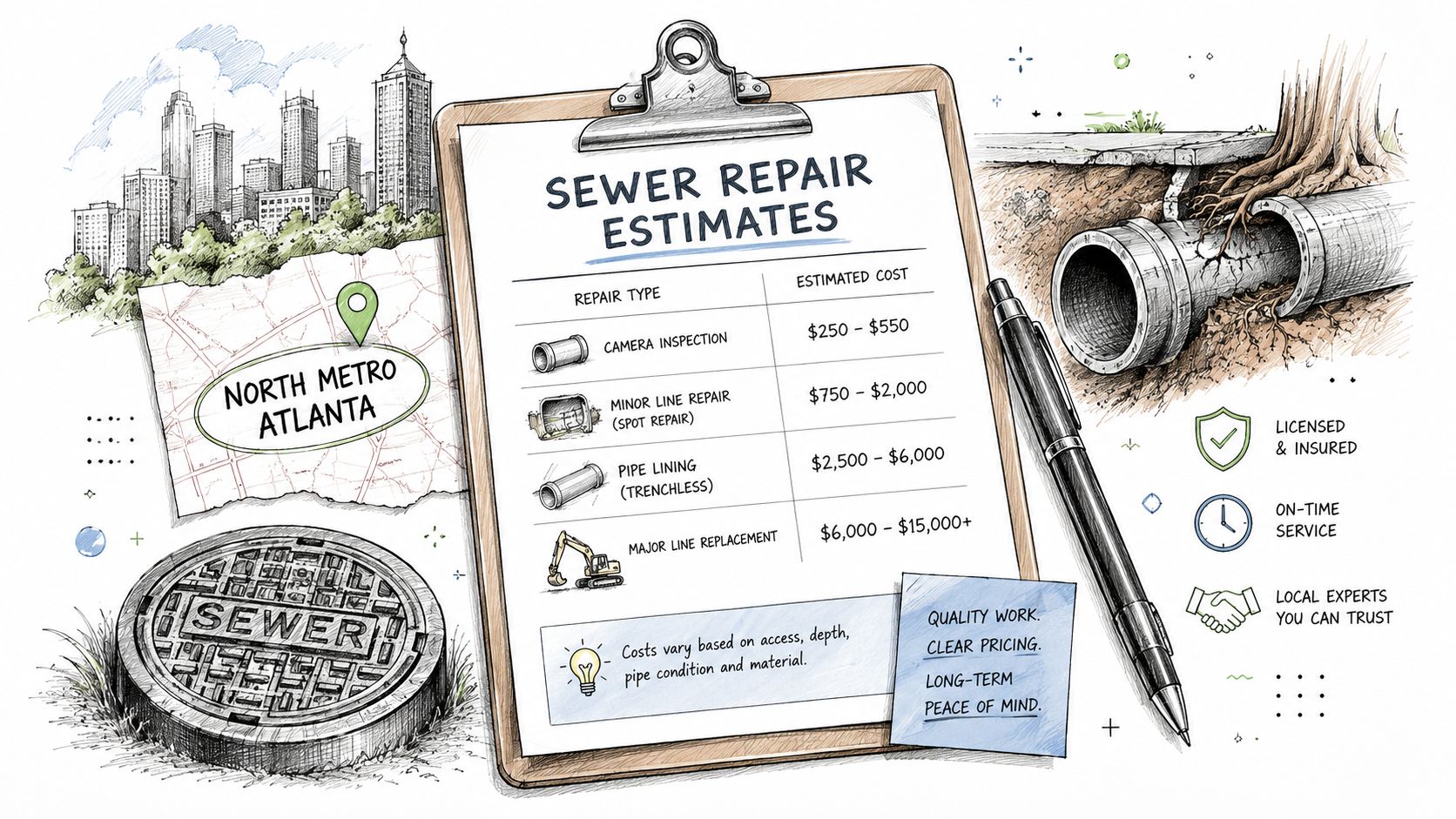
Historical contractor data found routine sewer maintenance averaging about $400 and repair jobs averaging about $3,700 nationwide, with reported repair costs ranging from $1,948 in Massachusetts to $7,496 in Nevada. That spread matters because it shows how geography and project conditions change the final number (aggregated contractor sewer repair data).
Scenario one, the manageable yard repair
A homeowner in Canton notices a sewage smell near the front flower bed and one downstairs toilet bubbling when the washer drains. The camera finds a short damaged section in the yard with good access and no concrete above it.
This kind of project often lands at the lower end of the range because the repair is localized and restoration is simple. The reason it stays manageable isn't just the short repair. It's that the crew can reach it without breaking hardscape or dealing with deep excavation.
Likely cost drivers:
- Short affected section
- Open yard access
- Simple backfill and surface cleanup
- No major restoration trades afterward
Scenario two, the expensive-looking quote that may still make sense
A Johns Creek homeowner has recurring backups, and the line runs beneath a patio and mature landscaping. The pipe is damaged, but not completely collapsed. A trenchless option comes up, and the estimate feels high at first glance.
Often, homeowners hesitate here. But a trenchless recommendation can be rational because the alternative may involve cutting through finished surfaces, then rebuilding them. The pipe repair line item may not look cheap, yet the all-in job may still be the cleaner financial choice.
The right comparison isn't trenchless versus digging. It's trenchless versus digging plus rebuilding everything above the pipe.
Scenario three, the full replacement nobody wanted
An older Marietta home has a sewer backup, soft ground near the driveway, and a line that has deteriorated in multiple sections. At that point, patching one spot doesn't solve much. The estimate climbs because the work now includes deeper access, more footage, and meaningful restoration after the new line goes in.
This is the kind of job that can move beyond the middle of the pricing range. It's also the job where the homeowner needs the clearest scope, because the project includes more than plumbing. It includes excavation planning, safe access, and property restoration.
A realistic way to read these scenarios is this:
| Scenario type | What usually keeps cost lower or pushes it higher |
|---|---|
| Spot repair in open yard | Lower disruption and limited restoration |
| Repair under patio or driveway | Surface protection drives method choice |
| Full replacement on older line | More footage, more access work, more restoration |
The common thread is that the sewer line leak repair cost in North Metro Atlanta is rarely just about pipe length. Access and restoration usually decide whether the number feels reasonable or shocking.
How to Manage Your Sewer Repair Costs
Once you know the line really needs repair, the next question is how to keep the project from getting more expensive than it has to be. The good news is that homeowners usually have more control here than they think.
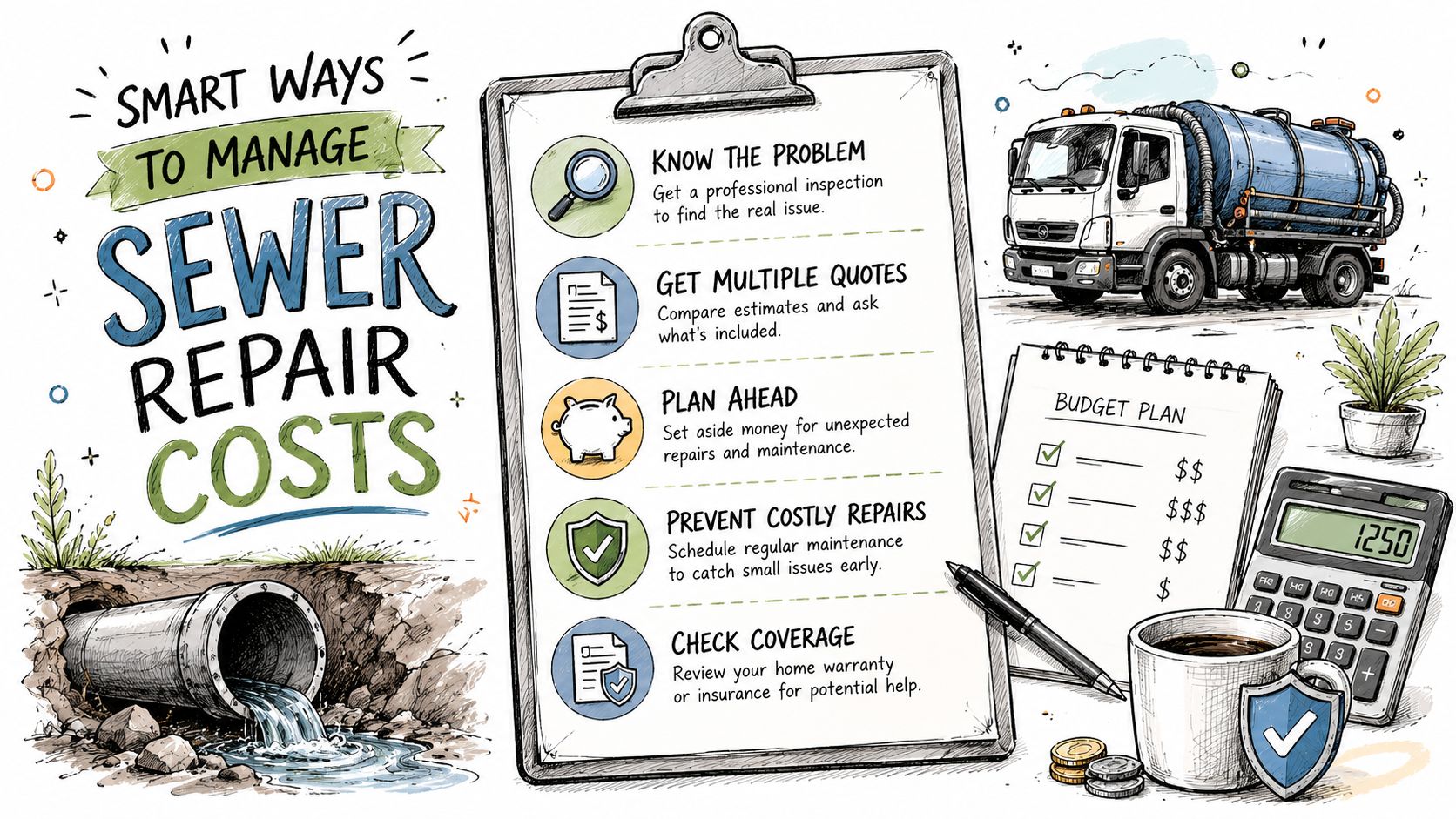
Ways to keep the bill under control
- Act early: If the line is leaking but not yet collapsed, you may have more repair options and less property damage to deal with.
- Ask for line-item pricing: A quote that separates diagnosis, excavation, repair, and restoration is easier to evaluate.
- Compare methods, not just totals: A higher estimate may include much less property disruption and less rebuilding afterward.
- Check current specials: Some companies offer rotating discounts on sewer work or new-customer pricing through their website coupon pages.
- Ask about payment options: If the repair is urgent, financing availability can matter as much as the base quote.
Insurance and realistic expectations
Homeowners often assume sewer line failure is automatically covered. Sometimes it isn't. Coverage depends on the cause of loss and the details of the policy. Wear, age, corrosion, and root intrusion are often treated differently than a sudden covered event.
Call your insurance carrier before work starts if you think there may be a claim. Ask specifically whether exterior sewer line damage, excavation, and restoration are covered, and whether the policy includes service line protection.
One practical note. JMJ Plumbing lists coupons and service information on its website, so that's a reasonable place for local homeowners to check current offers before approving work.
Frequently Asked Questions About Sewer Line Repair
Is the sewer line my responsibility or the city's
Usually, the homeowner is responsible for the sewer lateral running from the house to the point where it connects to the public system. The city is generally responsible for the public main. The exact handoff point can vary by municipality, so if there's any doubt, ask both your plumber and the local utility department before work begins.
Will drain cleaning fix a sewer line leak
No, not if the problem is structural. Drain cleaning can remove a blockage. It can't seal a crack, reconnect a separated joint, or rebuild a collapsed section. If backups keep returning after cleaning, the line needs inspection and likely repair.
Should I repair or replace the sewer line
That depends on the condition of the rest of the pipe. An isolated defect in an otherwise solid line is often a repair job. Multiple failures, advanced corrosion, recurring backups, or a collapse in aging pipe can make replacement the more sensible choice.
How do I compare two sewer estimates fairly
Don't compare only the total at the bottom. Compare scope. One contractor may include inspection, access work, permits, and restoration. Another may give a lower number but leave those costs out. Ask each company to identify what is included, what is excluded, and what could trigger change orders.
Is trenchless always better
No. Trenchless is often valuable when the line runs under concrete, landscaping, or other finished surfaces. Traditional excavation can still be the better choice for shallow, accessible pipe or when the condition of the old line makes trenchless impractical.
What should I do first if I smell sewage and the drains are acting up
Limit water use. Don't keep flushing toilets or running loads of laundry to "test" the system. If multiple fixtures are involved, schedule a professional inspection as soon as possible so the problem can be located before the yard, slab, or interior damage gets worse.
Will fixing the sewer line solve recurring backups for good
If the main cause of the backups is a damaged sewer line and the repair is correctly matched to the problem, yes, it should address the root issue. But that answer only holds if the diagnosis is right in the first place. That's why a camera inspection matters before anyone recommends a major repair.
If you're dealing with a sewage smell, a wet yard, or repeated backups in Acworth, Woodstock, Marietta, Roswell, Alpharetta, Canton, Cumming, or Johns Creek, the next step is to get the line inspected and the quote broken down clearly. JMJ Plumbing handles sewer diagnostics, repair, and replacement in North Metro Atlanta, so you can find out whether you're looking at a spot repair, a trenchless option, or a full replacement before the problem gets more expensive.