
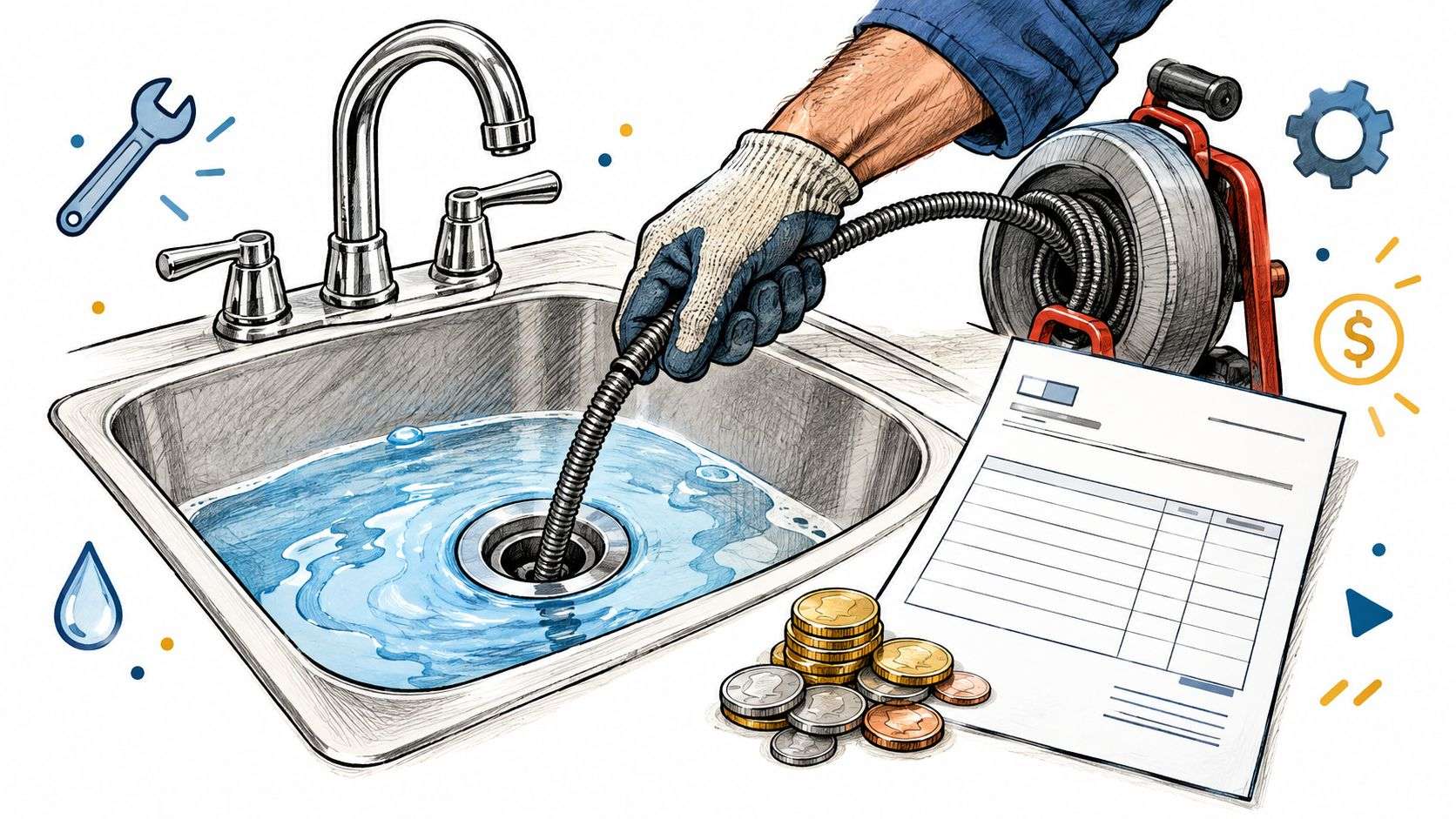
It’s Sunday evening. The kitchen sink is holding a pool of dirty water, and you’re trying to decide whether to grab a plunger or call a plumber. Whatever you choose, the bill that follows depends on which service tier your clog requires, from basic snaking to camera diagnosis or main-line cleaning.
A typical professional residential drain-cleaning visit in the United States costs about $246, with a reported normal range of $147–$352. That average is a starting point, not a forecast. What follows is a tier-by-tier framework for knowing what you are authorizing before the work begins, what the maximum likely bill looks like, and when the cheap clearing turns out to be the expensive choice.
What a Clogged Drain Costs in 2026: Clearing vs. Diagnosis
Two homeowners can call about a clogged drain on the same street and get bills hundreds of dollars apart, and both prices can be fair. The clogged drain cost depends on where the blockage sits and what it takes to reach it. A nearby sink trap may need straightforward clearing. A deep obstruction or recurring backup may require equipment and diagnosis before anyone touches the clog itself.
The final price shifts with the fixture involved, clog depth, access to the line, local labor rates, and clearing method. A plumber may clear an accessible blockage with a basic snake. If the obstruction is hidden, recurring, or beyond that tool’s reach, the visit can expand to camera inspection or more intensive cleaning. Know which one you are paying for: removing a blockage, or finding out why it keeps returning.
Separate the clearing charge from diagnosis
Routine clogged-drain service runs from about $95 to $500, according to the HomeAdvisor pricing data cited above. That spread explains why a simple sink or tub blockage costs far less than a difficult or recurring obstruction. Diagnostic work adds to the bill. A video inspection can run around $900 in some cases, the same data notes, particularly when a technician needs to locate a hidden obstruction, root intrusion, or damaged pipe.
For homeowners in Woodstock, Acworth, Alpharetta, Canton, Roswell, Marietta, Cumming, and Johns Creek, get an on-site quote before approving additional work. A good quote separates the initial clearing from any camera inspection, advanced cleaning, sewer repair, or sewer replacement recommended after diagnosis. My advice: never authorize the next step until you know its price and the maximum likely total.
At the kitchen table: Ask what the technician will do first, what that step costs, and what findings would justify moving to the next service. Don’t approve a vague “we’ll see” without a price for the next step.
That five-minute conversation is the difference between authorizing a job and inheriting one.
The Three Service Tiers That Make Up Your Bill
Drain service usually moves through three practical tiers. Each answers a different question: Can the technician clear the blockage with a basic tool? Where is the obstruction? Does the line need a more intensive cleaning? Match the service to the evidence, not to the most elaborate equipment a contractor can bring.
| Service Tier | What It Solves | Typical Price Range |
|---|---|---|
| Standard snaking | A localized blockage in a sink, tub, or toilet | $145–$350 |
| Video camera inspection | An unknown or recurring obstruction, or a need to check pipe condition | $265–$1,578 |
| Hydro-jetting | Heavy buildup or a stubborn blockage needing high-pressure cleaning | $350–$770 |
These ranges come from ConsumerAffairs’ clogged-drain cost estimates. They’re budgeting guides, not a quote for a particular home.
What each tier actually does
Snaking uses a flexible cable to reach and break through or retrieve a blockage. It’s often the sensible first move when one fixture is affected and the clog appears localized. It can restore flow, but it doesn’t necessarily reveal why the line keeps clogging or confirm the pipe is in good condition.
A camera inspection sends a small camera through the drain or sewer line. It helps the plumber locate an obstruction and assess what’s visible inside the pipe, which matters when symptoms recur or the location isn’t clear. Ask whether the inspection fee is separate, whether it can be done before or after clearing, and whether any diagnostic charge is credited toward repair.
Hydro-jetting uses high-pressure water to clean buildup from the pipe interior. It can be appropriate for heavy grease or other stubborn accumulation, but it isn’t automatically the right choice for every drain. The plumber should first consider pipe condition and explain why this method fits the problem.
If a single fixture is slow, start with the least invasive method that fits the symptoms. If several fixtures are backing up or the clog keeps returning, ask what diagnosis is needed before paying for another clearing.
Factors That Push Your Drain Bill Up or Down
Two jobs called “drain cleaning” can require very different amounts of labor and equipment. Before you authorize work, focus on what the plumber has found and how the technician plans to reach it. The answers help explain the quote more clearly than the word “clog” does.
Ask how the technician will reach the blockage
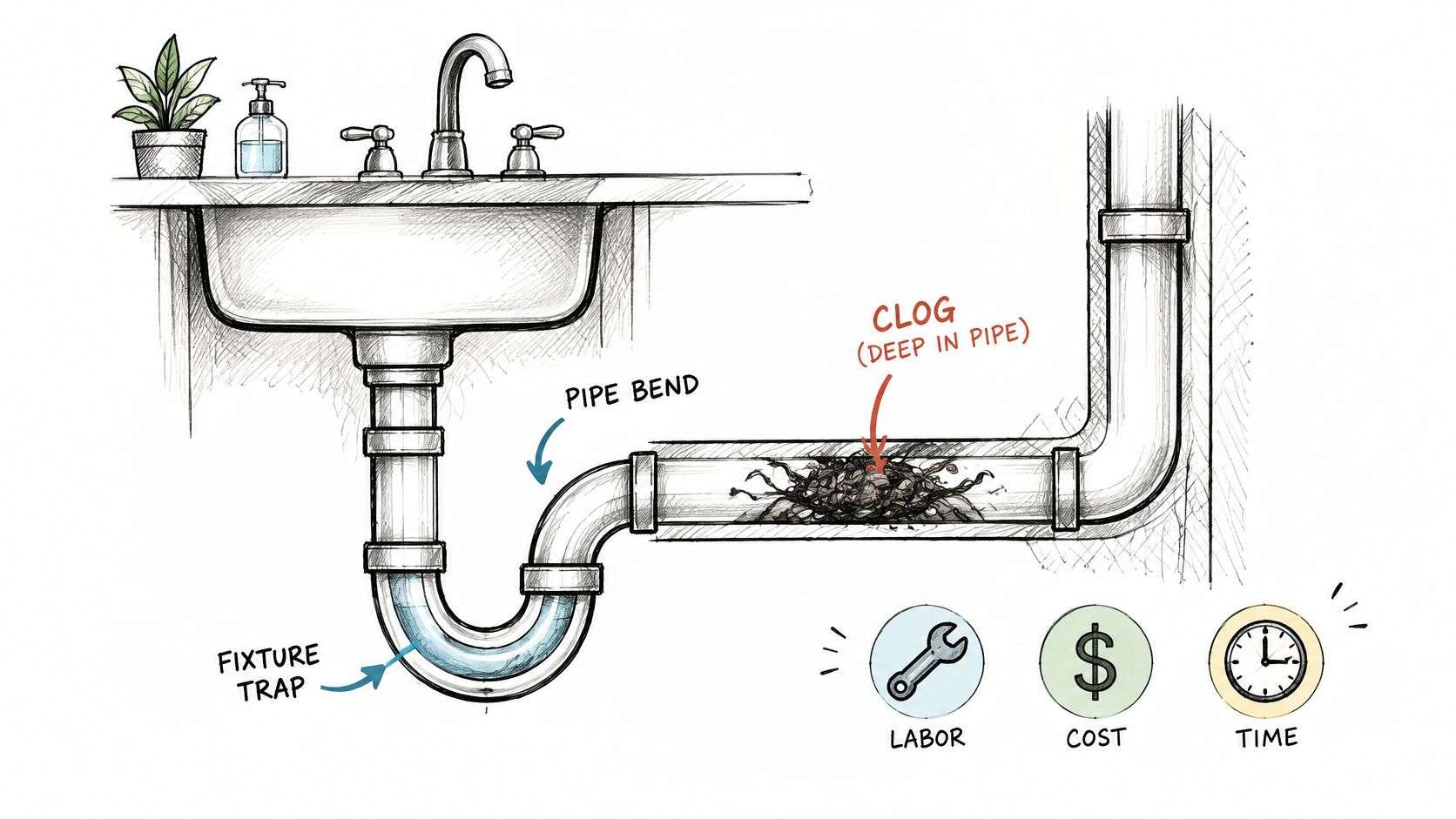
Location matters. A clog in a kitchen sink trap is a different job from an obstruction deep in a branch line. Ask whether the technician expects to work through the fixture or use an accessible cleanout, and whether the price changes if the blockage is farther along the pipe.
Access can affect labor. A clear exterior cleanout may make the line easier to reach than a cramped or obstructed access point. Ask which access point the plumber intends to use and whether opening or removing anything is included in the quote.
Pipe length and material matter, too. A longer run may take more time to inspect or clear. If the technician suspects an older or damaged pipe, ask how that affects the proposed method before approving high-pressure cleaning or other work.
Ask what the blockage is made of
Hair and soap residue in a bathroom drain aren’t the same problem as grease buildup in a kitchen line or roots inside a sewer pipe. The cause can determine whether snaking is enough or whether diagnosis and a different cleaning method make sense. If the problem is recurring, ask whether a sewer camera inspection would help identify the cause before you pay for another clearing.
Timing can affect the quote as well. If you’re calling at night, on a weekend, or during an urgent backup, ask directly whether after-hours or emergency service changes the price. Don’t assume a standard appointment rate applies to a fast-response visit.
Why Main Sewer Line Clogs Cost So Much More
A main sewer-line blockage can knock out every fixture in the house at once, and clearing it solves nothing if roots or a damaged pipe caused it. When more than one drain backs up, stop plunging individual fixtures and treat it as a main-line problem.
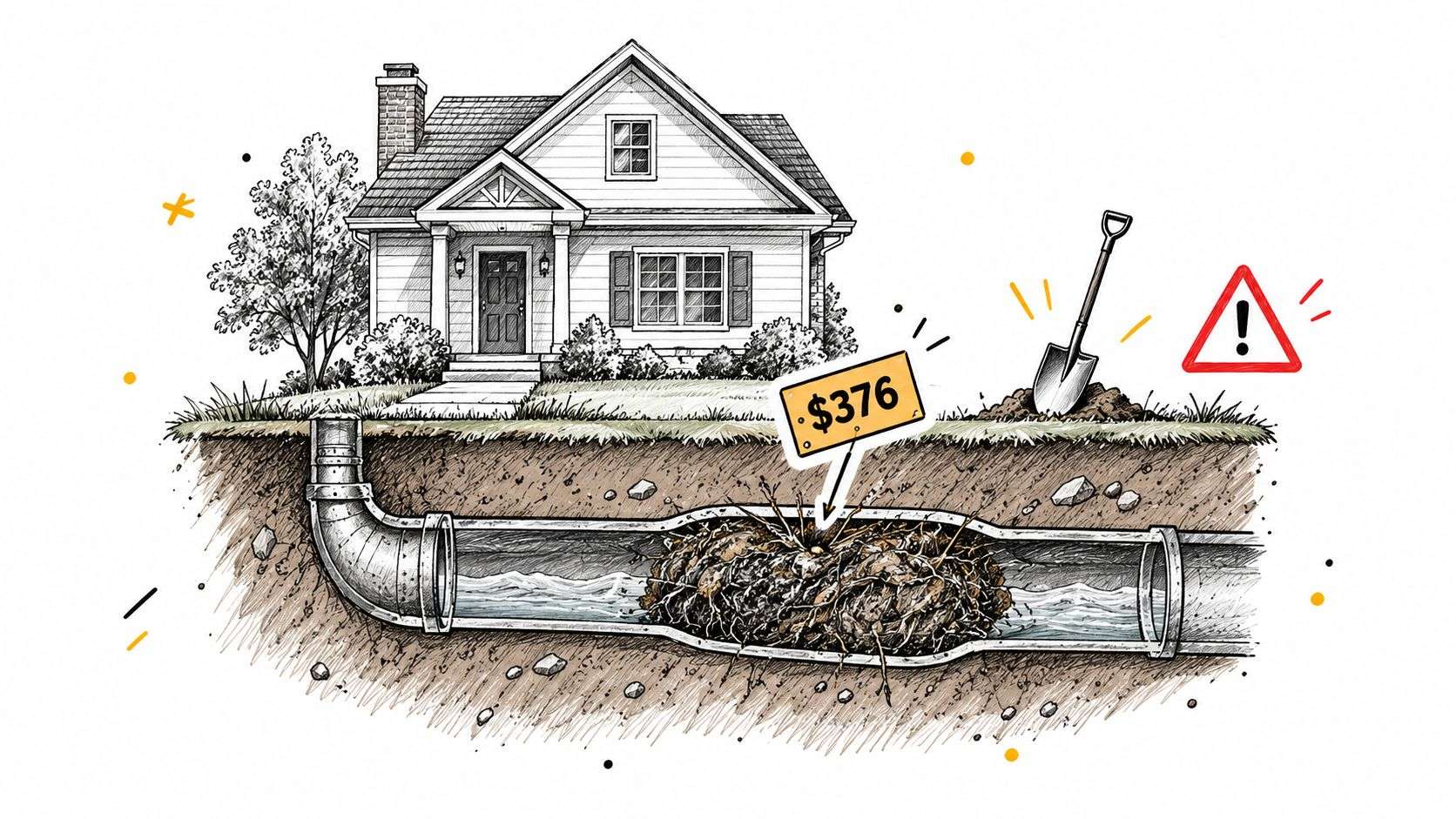
Expect a bigger authorization than a single-fixture job. Professional main sewer-line clog repair averages about $376, with a commonly reported range of $187–$569, according to HomeAdvisor’s sewer-line cleaning cost data. Hydro-jetting generally runs $350 to $600, and a sewer-line inspection can range from $275 to $1,800, depending on the technology used and how difficult the obstruction is to locate, per the same pricing reference. Before you approve anything, ask which of those line items you are authorizing and what the maximum likely bill looks like if the crew finds pipe damage mid-job.
Know the difference between a fixture clog and a sewer issue
A single slow sink points toward a localized blockage. Multiple fixtures backing up, toilets or drains gurgling when another fixture runs, or sewage surfacing at a floor drain point to the main line. Tree roots, grease and debris, non-flushable wipes, aging pipe, and overloaded municipal systems during heavy rain all contribute to sewer backups.
The stakes extend well past your invoice. The U.S. Environmental Protection Agency has estimated approximately 23,000–75,000 sanitary sewer overflows nationally each year, excluding some backups contained inside individual buildings. U.S. EPA and federal infrastructure needs surveys have identified $26.6 billion in needs tied to eliminating sanitary sewer overflows and $151.1 billion for broader conveyance-system repair and new lines, as reported in the same HomeAdvisor pricing reference.
Those figures won’t predict your household’s bill. They do explain why repeated gurgling and backups deserve real diagnosis: a private lateral with root intrusion or a sagging section will keep failing on the same pattern, no matter how many times it gets cleared. If the technician recommends sewer-line repair or replacement rather than another clearing, ask what the camera showed and get the reasoning in writing before you sign off.
The Cheapest Fix Is Not Always the Smartest
The cheapest first attempt makes sense when the problem is simple and isolated. It stops making sense when the same drain keeps failing and nobody is checking why. Judge the invoice by whether the service solves the problem, not just by the cost of getting water moving again today.
A DIY tool may cost $15–$30, while professional snaking is estimated at $150–$350. Hydro-jetting is estimated at $350–$600, and main-line repair at $1,500–$4,000, according to the cost comparisons in NearbyHunt’s plumbing-problem guide. These are not interchangeable services. A repair addresses pipe damage; cleaning removes a blockage or buildup.
Choose based on the pattern
A one-time hair clog in a bathroom drain is a reasonable case for a plunger or an appropriate drain tool, followed by professional help if it won’t clear. A kitchen line that backs up every few months needs more than another quick clearing. Ask whether the plumber recommends camera diagnosis or a cleaning method suited to the recurring buildup.
If a line has already been cleared more than once without lasting results, don’t keep paying for the same attempt without asking what the technician thinks is causing the repeat blockage. Tree-root intrusion, a collapsed section, poor slope, or damaged piping may continue to cause symptoms after the material blocking flow is removed. Cleaning is not a repair.
My rule: Pay for diagnosis when the symptoms keep coming back. It may cost more today, but it gives you a basis for deciding whether another cleaning is sensible or whether the pipe itself needs attention.
That’s especially important when a backup could damage flooring, drywall, furnishings, or multiple rooms. The right choice is the least expensive option that addresses the actual cause, not automatically the lowest number on the first estimate.
Smart Ways to Save on Drain Service in North Metro Atlanta
A lower bill comes from knowing what you’re buying and avoiding work you haven’t approved. Homeowners in Acworth, Kennesaw, Marietta, Alpharetta, Roswell, Canton, Cumming, and Johns Creek can use the same straightforward questions when comparing drain cleaning options.
Get the scope in writing
Ask for an on-site written quote before the plumber starts additional work. It should separate the service-call or diagnostic fee, basic clearing, optional camera inspection, advanced cleaning, and any repair discovered. A transparent quote makes it easier to compare recommendations without mistaking a cleaning price for the total cost of a possible repair.
If the technician proposes inspection, ask whether the diagnostic fee is credited toward repair. If the problem is urgent, ask whether after-hours service changes the price and what the charge covers. That’s particularly important when you’re searching for an emergency plumber or a 24 hour plumber because sewage is backing up or a clogged toilet won’t flush.
Check discounts and avoid unnecessary escalation
Ask whether the company has a current coupon or new-customer offer, and confirm which services it applies to before scheduling. Don’t approve hydro-jetting or sewer-line work just because the option is available. The plumber should explain what the method is intended to address and why it suits your line.
If the symptoms suggest a main-line problem, say so when you call. Multiple slow drains, gurgling, or a sewage smell can help the dispatcher send an appropriate technician and equipment. For property owners in Cobb County, Cherokee County, North Fulton, Forsyth County, or Metro Atlanta more broadly, clear symptom details are more useful than asking for a low drain-cleaning price.
Your Before-You-Call Action Plan
Before you call, do a quick check of what’s affected. That helps the plumber distinguish a routine fixture clog from a possible branch-line or sewer issue and gives you a better basis for discussing the estimate.
- Check the pattern. Is one sink slow, or are multiple fixtures draining poorly or backing up? Note gurgling, a sewage smell, or water appearing where it shouldn’t.
- Describe the history. Tell the plumber whether this is the first occurrence or a recurring problem, and whether a previous clearing lasted. Recurrence can change whether diagnosis is worth discussing.
- Request an itemized quote. Ask the company to separate the service-call fee, clearing charge, optional camera inspection, advanced cleaning, and any potential repair before work begins.
- Ask about code or permit triggers. If the recommendation changes from cleaning to sewer replacement or water-line work, ask what installation requirements apply and what must be approved before excavation or repair starts.
For urgent problems, including a sewer backup, burst pipe repair, low water pressure, water in the yard, or a leak that needs immediate attention, tell the dispatcher exactly what you’re seeing. JMJ Plumbing’s emergency plumbing service is one local option for homeowners who need fast-response plumbing help.
A good plumber will talk through the symptoms, explain the first proposed step, and tell you what could increase the bill before sending a truck. That phone conversation is your best chance to set clear limits and avoid authorizing work you don’t understand.
If a drain keeps backing up, JMJ Plumbing provides drain cleaning, sewer diagnosis and repair, leak detection, water-line services, and water-heater service for North Metro Atlanta homeowners. Tell the team what’s happening and ask for a clear quote before work expands, then visit JMJ Plumbing to arrange service.