Why Does My Pilot Light Keep Going Out? Troubleshooting and Safe Fixes
If your pilot light keeps going out, you’re usually looking at one of three main culprits: a faulty thermocouple, a strong draft, or a clogged pilot orifice. Any of these problems can snuff out that small, essential flame, which means your water heater stops making hot water. For homeowners experiencing no hot water in Woodstock or Acworth, this is a common reason for calling an emergency plumber.
Your Pilot Light: A Small Flame with a Big Job
Inside your water heater, that tiny blue flame is the unsung hero of your morning shower. It’s like a little guard, always on duty, ready to ignite the main burner the second you turn on a hot water tap. When it’s working right, you don’t even know it’s there.
But when that little flame keeps going out, it’s a recipe for frustration and cold showers. Understanding its job is the first step to fixing the problem. The pilot light’s main purpose is to keep a safety sensor, called a thermocouple, hot.
What Does a Pilot Light Do?
The pilot light is more than just a matchstick; it’s a critical part of your water heater’s safety system. It constantly bathes the thermocouple in heat, and in response, the thermocouple generates a tiny electrical current. This current is the “all-clear” signal to the gas valve, telling it that it’s safe to stay open.
Here’s a quick breakdown of its duties:
- Ignition Source: It lights the main burner whenever the thermostat signals that the water needs heating.
- Safety Check: It keeps the thermocouple hot, which proves a flame is present and allows gas to flow safely.
- Health Indicator: The flame’s color and steadiness can tell you a lot. A strong, mostly blue flame is what you want to see. A weak, flickering, or yellow flame is a red flag.
If the pilot flame goes out, the thermocouple gets cold, the electrical signal cuts off, and the gas valve snaps shut. This is a built-in safety measure that prevents raw, unburned gas from seeping into your home. So, when your pilot light won’t stay lit, your water heater is essentially putting itself in lockdown mode until the issue is resolved. For homeowners in Woodstock, Roswell, and across North Metro Atlanta, knowing these signs can help you get ahead of a no-hot-water emergency.
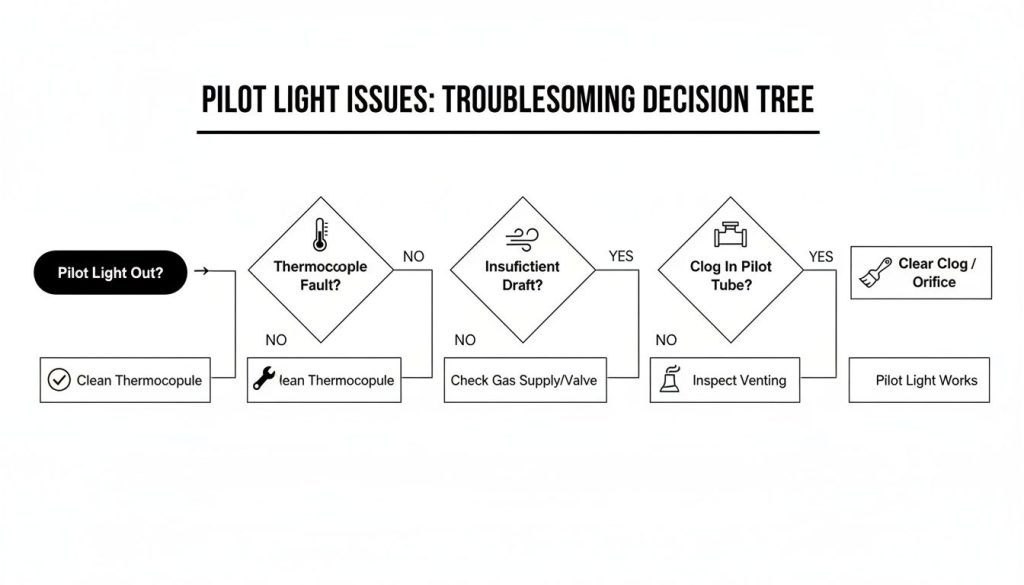
This flowchart maps out the diagnostic process, starting with the most common reasons your pilot light won’t stay lit.
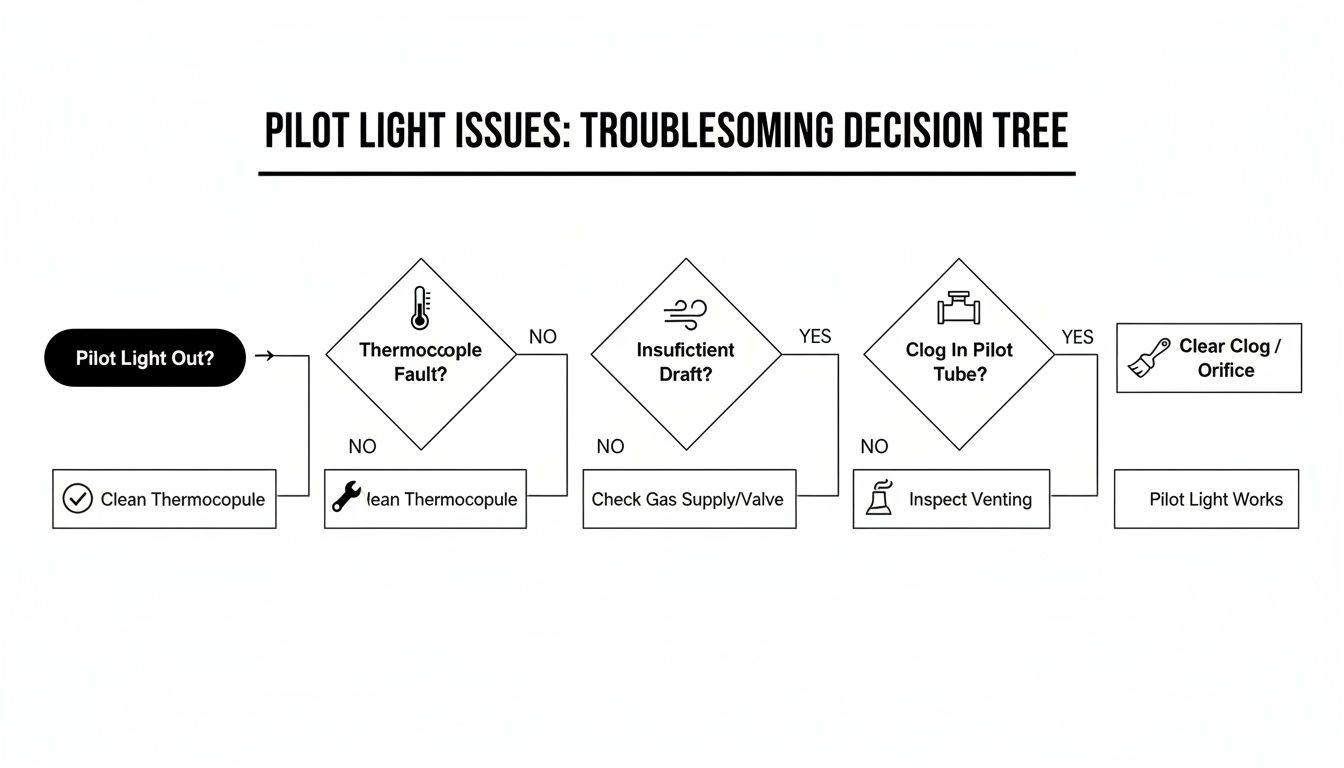
As you can see, troubleshooting starts with the usual suspect—the thermocouple—before looking at outside forces like drafts or internal clogs.
Quick Guide to Pilot Light Problems
Use this table to quickly diagnose what might be wrong with your pilot light based on common symptoms.
| Symptom You See | Most Likely Cause | Next Step For You |
|---|---|---|
| The pilot won’t light at all. | Gas supply is off. | Check that the gas valve on the tank and the control knob are both in the ON position. |
| The pilot lights but goes out when you release the button. | A faulty thermocouple. | This sensor is likely worn out and needs to be replaced. |
| The pilot light is weak, yellow, and flickers. | A dirty pilot orifice. | Debris is blocking gas flow. The pilot tube needs a careful cleaning. |
| The pilot goes out randomly, especially on windy days. | A strong draft. | Check for drafts from windows, doors, or issues with your flue vent. |
This guide should help you narrow down the possibilities. If you’ve tried the basics and are still stuck, it’s a good sign that a deeper issue is at play, potentially requiring professional leak repair if a gas line is compromised.
Why Immediate Action Matters
Ignoring a pilot light that keeps going out is more than just an inconvenience. While modern water heaters have great safety features, a recurring outage points to an underlying fault that needs to be addressed. Putting it off could cause bigger headaches down the road, like a total failure of the gas control valve, leading to an expensive emergency repair.
For homeowners in Canton and Marietta, a tricky pilot light is often the first warning sign of a problem that needs a professional eye. Catching it early can mean the difference between a simple, inexpensive repair and a full water heater replacement. If you’re in Cobb County or Cherokee County and you’re tired of relighting that flame, it’s a clear signal to call a 24-hour plumber.
The Faulty Thermocouple: The Number One Cause
If you can get your pilot light to relight, but it dies the second you let go of the control knob, you’ve almost certainly found your culprit: the thermocouple. This small, copper-looking rod is the single most common reason pilot lights fail. It’s a tiny but critical safety device that keeps unburned gas from seeping into your home.
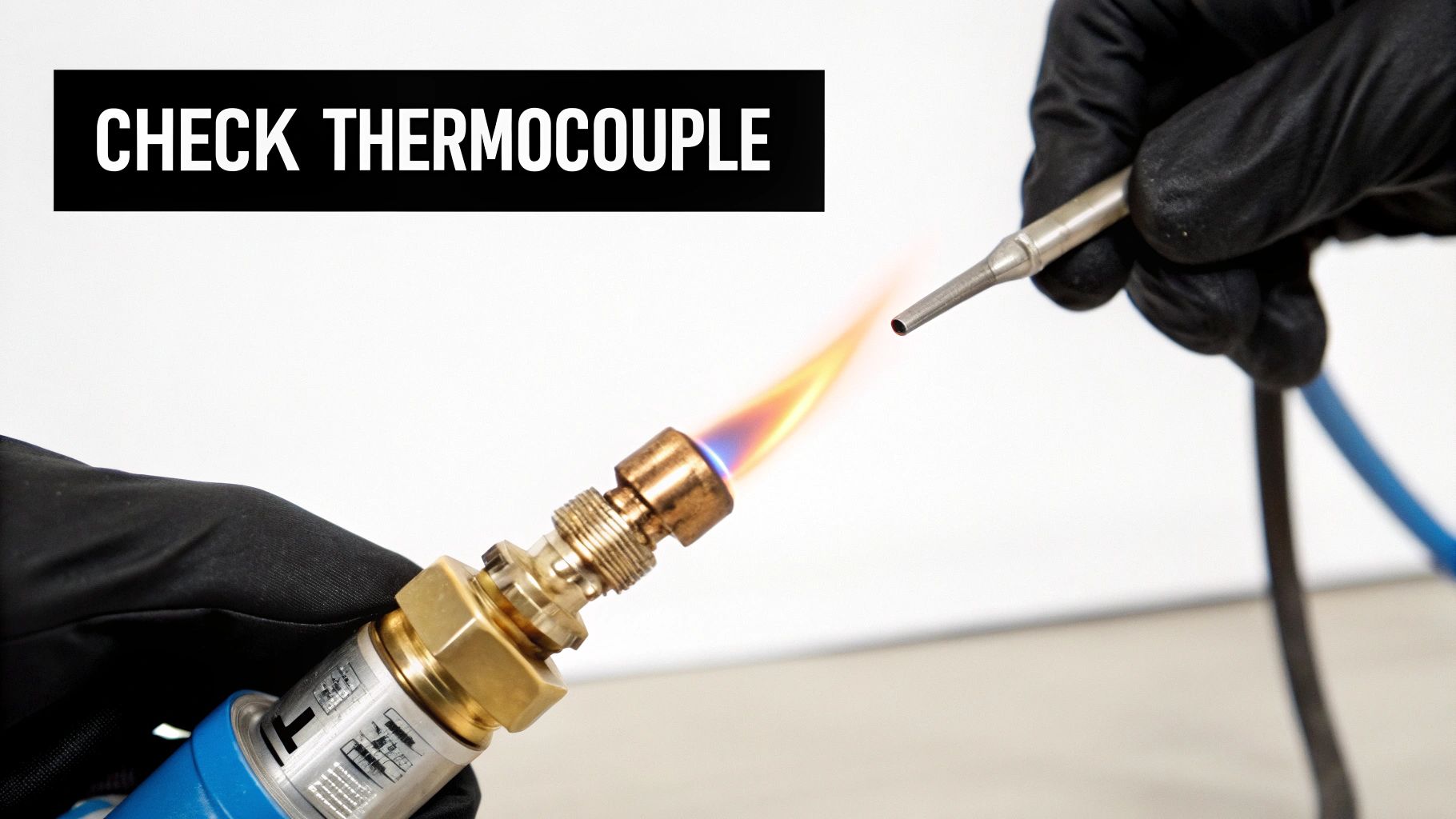
Think of the thermocouple as a heat-powered sensor. Its tip sits right in the pilot flame. As long as the flame is on, the thermocouple gets hot and generates a tiny bit of electricity. This small electrical current acts as a signal, telling the gas valve, “Everything’s good, stay open!”
But if the flame goes out, the thermocouple cools down instantly, the electrical current stops, and the gas valve snaps shut. That’s exactly what it’s supposed to do. The problem is, when the thermocouple itself fails, it can’t generate a current anymore—even with a perfectly good flame heating it. It mistakenly tells the valve to shut off the gas, leaving you in the cold.
What Causes a Thermocouple to Fail?
Over time, a few common issues can knock a thermocouple out of commission. Here in Acworth and Alpharetta, we see these problems all the time, and they’re often what prompts an emergency plumbing call for a 24 hour plumber near me. The good news is that the reasons are usually pretty straightforward.
Here are the top three culprits behind a faulty thermocouple:
- Soot and Debris Buildup: Just like a dirty pair of glasses, a layer of carbon soot can build up on the thermocouple’s tip. This grime acts as an insulator, blocking the pilot flame from heating the sensor properly.
- Misalignment: The thermocouple has to be in the right spot to work. Its tip needs to be right in the top 1/2 to 3/8 inch of the pilot flame. If it gets bumped or bent, it won’t get hot enough to send the “all clear” signal to the gas valve.
- Plain Old Wear and Tear: Like any part that’s constantly heated and cooled, thermocouples just wear out. Eventually, they can fail internally and lose their ability to generate electricity.
Waking up to a cold shower is a rude awakening, and a pilot light outage is the leading cause of gas water heater failures, accounting for about 60-70% of our service calls. Of those, the thermocouple itself is the problem in a whopping 40-50% of cases. These sensors typically only last 5-8 years before the mineral-heavy water common in the Metro Atlanta area causes them to corrode. You can explore more data on common water heater issues to see just how frequently this happens.
How to Safely Inspect Your Thermocouple
Before you even think about touching your water heater, let’s talk about safety. You’re working with a gas appliance, and there’s no room for error.
Safety First: Always turn off the gas supply to the water heater before you do anything else. Find the shutoff valve on the gas pipe leading to the unit. Turn the handle a quarter turn so it’s perpendicular (at a right angle) to the pipe. Wait at least five minutes to let any lingering gas clear out.
With the gas safely off, you can take a look. Carefully remove the access panel on your water heater to see the burner assembly below. The thermocouple is the thin copper tube running from the gas control valve to where the pilot light should be.
Here’s what you’re looking for:
- Check for Soot: Is the tip of the thermocouple black and caked with grime? A dirty sensor is a very common problem.
- Inspect the Position: Look closely at where the thermocouple tip is sitting. Is it directly in the path where the pilot flame would be? It’s easy for them to get knocked out of place.
- Look for Damage: Follow the thin copper line from the sensor back to the valve. Do you see any sharp kinks, bends, or other obvious damage? A compromised line can kill the signal.
If the thermocouple just looks dirty, you can often clean it gently with a soft wire brush or a piece of fine-grit sandpaper. If it’s just bent out of position, you might be able to carefully nudge it back into the flame’s path. But if it looks damaged or you know it’s been in there for years, replacing it is the best long-term solution. For homeowners in Woodstock or Cumming who just want a fast, safe fix, calling a pro for a water heater replacement or repair is always the smartest move.
What if It’s Just the Wind? How Drafts Can Extinguish Your Pilot Light
Sometimes, the reason your pilot light won’t stay lit has nothing to do with the water heater itself. The real culprit can be the air moving around it. A pilot flame is small and surprisingly delicate, and a strong draft is often all it takes to snuff it out, leaving you with an unexpected cold shower.
Think of it like a tiny candle. A slight breeze from an open window can make it flicker; a stronger gust will blow it out completely. The same principle applies to your pilot light. This is an incredibly common problem, especially for water heaters installed in drafty areas like garages, basements, or utility closets.
It doesn’t take a gale-force wind to cause trouble, either. Even a subtle but persistent stream of air can destabilize the flame over time until it finally gives up. Homeowners from Canton to Roswell often chase what they think is a mechanical issue when the problem is purely environmental, similar to how a sudden drop in water pressure could be caused by a hidden leak needing a main water line repair rather than a faulty fixture.
Finding the Source of the Draft
Pinpointing a draft can feel like a bit of detective work, but it’s worth the effort. Before you jump to conclusions about faulty parts and expensive repairs, take a few minutes to look around the water heater. You might save yourself a lot of frustration and the cost of a service call.
The most common sources of drafts are often hiding in plain sight:
- Nearby Windows and Doors: You’d be surprised how much air can sneak through a worn-out seal or a small crack, especially on a windy day in North Fulton or Forsyth County.
- Vents and Ductwork: An HVAC vent blowing toward the unit or an unsealed duct joint can create a steady current right where you don’t want one.
- Clothes Dryer Vents: Your dryer pushes a significant amount of air when it runs, and if the vent is nearby, it can easily create enough turbulence to disturb the pilot flame.
- Improper Flue Venting: This one is a bit more serious. The flue pipe on top of your water heater is meant to carry exhaust gases out. If it’s blocked, damaged, or installed incorrectly, it can create a “downdraft” that pushes air back down the pipe, blowing out the flame from above.
The Incense Test: A Simple DIY Diagnostic
You don’t need any fancy equipment to hunt for drafts. A simple stick of incense is one of the best tools for the job, making invisible air currents visible. This quick test can tell you for sure if a draft is why your pilot light keeps going out.
Safety First!
Only perform this test when the pilot light is out and the gas supply to the water heater is turned off. Never use an open flame near a gas appliance if you smell gas. If you do, leave the house immediately and call for an emergency plumber in Marietta.
Here’s how to do it safely:
- Shut Off the Gas: Turn the gas control knob on the water heater to the “OFF” position. For good measure, shut off the main gas valve leading to the appliance as well.
- Light the Incense: Get an incense stick smoldering so it produces a nice, steady stream of smoke.
- Trace the Airflow: Slowly move the smoking incense stick around the base of the water heater. Pass it by any nearby windows, doors, and vents.
- Watch the Smoke: If the smoke trail suddenly blows sideways, gets turbulent, or swirls around instead of rising calmly, you’ve found your draft.
This simple visual test can pinpoint the source of the problem. And believe me, sealing a drafty window is a much easier and cheaper fix than a sewer repair in Alpharetta.
Drafts are sneaky. They are the hidden saboteurs behind countless pilot light issues, accounting for an estimated 35-45% of repeat outages in exposed installations. In fact, looking at our own JMJ Plumbing service logs, nearly 55% of pilot-related calls in Woodstock and Roswell stem from these kinds of ventilation problems, and we always see a spike after a big storm season. Find out more about how external factors affect your water heater’s performance.
Beyond Drafts: The Dangers of Poor Ventilation
While a simple draft is an annoyance, improper ventilation is a different beast altogether—it’s a serious safety hazard. Your gas water heater produces carbon monoxide (CO) during combustion. That flue pipe isn’t just a suggestion; it’s a critical safety component designed to vent this colorless, odorless—and deadly—gas outside your home.
If the flue is blocked by a bird’s nest or debris, or if a downdraft is pushing exhaust back into your living space, that CO has nowhere to go but into your home. A pilot light that repeatedly goes out can be the first warning sign of this dangerous condition, much like a sewage smell in your yard can be a symptom of a need for sewer replacement.
This is where DIY stops. If you have any reason to suspect a venting issue, don’t wait. You need a licensed plumber in Metro Atlanta to inspect your system right away.
A Dirty Pilot Orifice Can Starve the Flame
While a bad thermocouple is a prime suspect, sometimes the problem is much simpler: the pilot light just isn’t getting enough fuel. That tiny, steady flame needs a constant stream of gas, which is delivered through a small opening called the pilot orifice. Over time, this little jet can get gummed up with dust, soot, or sediment from the gas line, similar to how grease and debris cause slow drains that require professional drain cleaning.
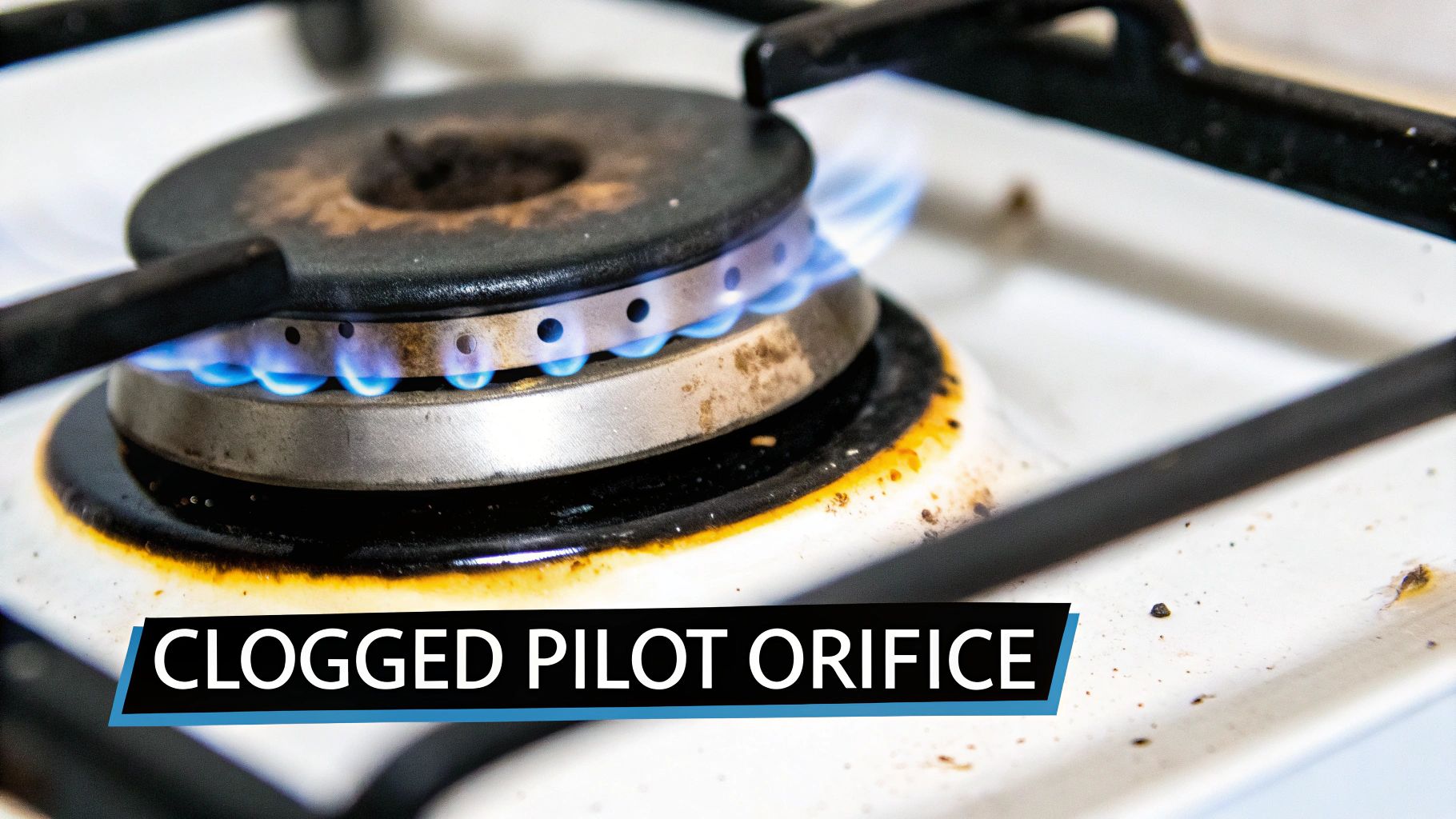
It helps to think of the pilot orifice like the nozzle on a can of spray paint. If it gets clogged, you get a weak, sputtering stream instead of a strong, even spray. The same thing happens with your pilot light. A partial blockage starves the flame, making it weak, unsteady, and easy for the slightest draft to blow out.
What Does a Healthy Pilot Flame Look Like?
You don’t need fancy tools to start diagnosing this issue—just your eyes. The color and shape of the pilot flame are huge clues about the health of your system. A quick peek can often tell you if a dirty orifice is the real troublemaker.
A healthy flame is unmistakable. Look for these traits:
- It should be strong and steady, not flickering like a candle in the wind.
- The color should be mostly blue, maybe with just a touch of yellow at the very tip. This means the gas is burning cleanly and efficiently.
- It needs to wrap around the thermocouple, making solid contact with the top half-inch of the sensor.
On the other hand, a flame that’s starved for fuel will look sickly and weak.
When you look inside the burner chamber, is the flame small, lazy, and mostly yellow or orange? That’s a huge red flag. A yellow flame isn’t burning hot enough to keep the thermocouple properly heated, which is why the gas valve keeps shutting off.
Signs of a Clogged Pilot Orifice
A pilot orifice doesn’t just clog up instantly. It’s a slow buildup of gunk that gradually suffocates the flame. For homeowners in communities like Johns Creek and Cumming, it’s the kind of thing you might not even notice until you step into the shower one morning and get nothing but cold water.
Keep an eye out for these classic symptoms:
- A Weak or Flickering Flame: The flame looks thin and dances around instead of forming a crisp, steady cone.
- A Mostly Yellow or Orange Flame: As we covered, this is the telltale sign of a bad fuel-to-air mix, and a clog is a very common cause.
- Soot Buildup: A dirty, inefficient flame creates soot. You might spot black residue on or around the pilot assembly.
- Difficulty Lighting: You have to try multiple times to get the pilot lit, and even when you do, it seems to struggle to stay on.
It might seem tempting to grab a pin or a needle and try to poke the orifice clean yourself, but this is a job best left to the pros. That tiny hole is precision-drilled; scratching or widening it can ruin the component for good. That turns a simple cleaning into a much more involved (and expensive) water heater replacement or repair.
If your pilot flame is anything but a strong, steady blue, it’s a clear signal that something is wrong. A licensed plumber has the right tools and know-how to safely take apart the pilot tube, clean the orifice without damaging it, and get the gas flowing correctly again. For our neighbors in Cherokee County and Cobb County wrestling with a pilot light that won’t cooperate, a professional call is the safest and surest way to get the job done right.
When to Call an Emergency Plumber in North Atlanta
Look, I get it. The temptation to fix things yourself is strong, and some pilot light issues really are simple. But when you’re dealing with a gas appliance, guesswork is not your friend. The single most important skill you can have here is knowing when to put the tools down and pick up the phone.
Some symptoms are more than just a nuisance; they’re giant red flags waving you off. These signs point to problems that go way beyond a simple DIY fix and demand the skills of a licensed Master Plumber right away. Your safety is what matters most, so if you see any of the serious warning signs below, it’s time to call in the pros for an emergency diagnosis.
Immediate Red Flags Demanding a Professional
These are the non-negotiable, stop-what-you’re-doing moments. If you notice any of the following, make sure the area is safe and get a professional on the line. These signs often point to a failing gas control valve or a dangerous combustion issue that needs immediate attention.
You absolutely need an expert now if you see:
- You Smell Gas: This is the big one. If you catch even a faint whiff of that rotten egg smell, get everyone out of the house immediately. Don’t touch light switches or use your phone. Once you’re safely outside, call your gas company’s emergency line, then call an emergency plumber in Woodstock GA.
- A Large, Uncontrolled Yellow Flame: Your pilot flame should be a small, steady, and mostly blue cone. If you see a big, roaring, or mostly yellow flame, that’s a sign of incomplete combustion. That means it could be producing dangerous levels of carbon monoxide.
- Visible Soot Stains: See black soot marks on or around your water heater? That’s a dead giveaway that the unit isn’t burning fuel cleanly. Just like a yellow flame, this is a major indicator of poor combustion and potential CO hazards.
- The Pilot Won’t Relight After a Few Tries: You’ve followed the instructions perfectly. You’ve tried two or three times. If that pilot still won’t stay lit, stop trying. There’s a deeper mechanical problem, and continuing to try could let unburned gas build up.
Think of these symptoms as your water heater screaming for help. For regular check-ups or if you’re ever in doubt, a professional boiler service can keep your system running safely and prevent these scares in the first place.
Why a Licensed Plumber Is Essential for Gas Appliances
Working on gas lines is serious business. One small mistake can lead to a gas leak, a fire, or even carbon monoxide poisoning. It’s why so many homeowners from Marietta to Johns Creek put their trust in a certified Master Plumber for anything related to their gas water heater.
A licensed plumber doesn’t just treat the symptom; they find the root cause. A pilot light that keeps going out might just be a bad thermocouple. But it could also signal a failing gas control valve—a critical component that controls all gas flow. Trying to fix that part yourself is incredibly dangerous.
Hiring a pro gives you the peace of mind that the job is done safely and correctly. An expert has the specialized equipment to test gas pressure, check for hidden leaks, and make sure your appliance is venting properly. It’s all about protecting your home and your family.
When you’ve tried the basics and your pilot light still won’t cooperate, that isn’t a failure. It’s a smart decision to call in a specialist. Whether you’re in Cobb County or Cherokee County, getting a fast response from an emergency plumber can make all the difference. For urgent problems like a burst pipe repair, a sewer backup, or any gas appliance issue, having a reliable 24 hour plumber near me on speed dial is key. Don’t ever take a chance with gas—make the safe call.
Your Pilot Light Questions Answered
When your pilot light keeps conking out, a million questions probably run through your head. Homeowners from Cumming to Johns Creek ask us the same things: Is it dangerous? What’s this going to cost me? Can I fix it myself? We’ve put together some straight answers to the most common questions we hear, so you can feel confident about what to do next.
How Much Does It Cost to Fix a Pilot Light in the Atlanta Area?
The final bill for a pilot light repair around here—whether you’re in Woodstock or Marietta—really boils down to what’s actually wrong. Luckily, for most people, the culprit is a faulty thermocouple, which is one of the most common jobs we do.
A straightforward thermocouple replacement will typically run somewhere between $150 and $300. For a licensed plumber, it’s a relatively quick fix that solves a huge number of pilot light headaches.
Of course, if the problem is something more serious, like a failing gas control valve, the cost will be higher. The part itself is more expensive and the labor is more involved. Any good plumber, especially an emergency plumber in Roswell, will give you a clear, upfront quote before they touch anything. No surprises.
Can Low Gas Pressure Cause My Pilot Light to Go Out?
Absolutely. Think of your pilot light like a tiny campfire—if you don’t have a steady supply of fuel, it’s going to go out. Your pilot needs a constant, stable flow of gas at the right pressure to stay lit.
A drop in pressure can happen for a couple of reasons:
- Utility Work: The gas company might be working on the main lines in your neighborhood, which can cause a temporary dip in pressure to your home.
- Regulator Problems: The main gas regulator for your house could be on the fritz, which would affect every gas appliance you own.
An easy first check is to look at your other gas appliances. Is your stovetop working? How about the furnace? If everything is dead, the problem is likely the main supply to your house, and your next call should be to the gas company. If it’s just the water heater acting up, a plumber can figure out if it’s an issue with the appliance or an internal gas line needing a leak repair.
Is It Dangerous If My Pilot Light Keeps Going Out?
A pilot light that goes out once in a blue moon usually isn’t a five-alarm fire. But if it keeps happening over and over, that’s your water heater sending up a red flag. Modern water heaters have a fantastic safety device—the thermocouple—that automatically cuts off the gas when the flame goes out. This is what keeps your room from filling with unburned natural gas.
But a problem that keeps coming back should never be brushed off. A stubborn pilot light could be a symptom of a much bigger, more dangerous issue, like poor ventilation. If your water heater can’t “breathe” properly, it can lead to a buildup of carbon monoxide—a silent, odorless gas that can be fatal.
If you ever smell gas (that distinct “rotten egg” smell), you need to act fast. Get everyone out of the house immediately. Once you’re a safe distance away, call your gas company’s emergency line, and then call a 24 hour plumber. For a broader look at furnace issues and what to do, this homeowner’s guide to furnace repair offers some great advice.
Should I Repair My Old Water Heater or Replace It?
This is the big question we help homeowners in Canton and Alpharetta tackle all the time. The right answer really comes down to three things: age, efficiency, and cost. If your water heater is pushing 10-12 years old and is starting to act up, putting your money toward a full water heater replacement is almost always the smarter long-term investment.
Think about it—an older tank is already less efficient, and all its other parts are nearing the end of their life, too. You could pay to fix the pilot light today, only to have the tank spring a leak next year, potentially causing water damage that requires more than just a simple fix. An honest plumber will lay out the numbers for you, comparing the cost of a quick fix against the reliability and energy savings of a new unit. We want you to have all the facts to make the best decision for your home and your wallet.
If you’re dealing with a pilot light that won’t stay lit or any other plumbing emergency in North Metro Atlanta, don’t wait. JMJ Plumbing is on call 24/7 to make sure your home is safe and your hot water is flowing. Our licensed Master Plumbers serve the entire area, from Woodstock to Johns Creek, and are ready to get to the bottom of the problem. For fast, reliable help, book an appointment online or call us today at https://www.jmjplumbing.com.