Water Leak Under Toilet: Causes, Checks, and Fast Repairs

Finding a puddle of water at the base of your toilet is never a welcome sight. It’s one of those household problems that can send your mind racing. But before you panic, take a breath. Most of the time, you can figure out what’s going on with a little detective work.
The first, most important move you can make is to stop the water flow immediately. Look for the small shut-off valve on the wall or floor behind your toilet and turn it clockwise until it stops. This single action buys you time and prevents a small leak from turning into a full-blown flood while you pinpoint the source.
What That Puddle at Your Toilet's Base Really Means
Once the water is off, your next step is to figure out what kind of leak you're dealing with. The water itself will tell you a lot about the problem. Is it clean and clear, or is it dirty and foul-smelling? This simple observation is your biggest clue and dramatically narrows down the list of suspects.
Clean Water vs. Foul-Smelling Water
- If the water is clean, you can breathe a little easier. This almost always means the leak is coming from the fresh water supply before it enters the toilet bowl. Think of things like a loose connection on the supply line, a worn-out gasket, or failing bolts that hold the tank to the bowl.
- If the water has a foul, sewage-like odor, that’s a red flag. This points directly to a failed wax ring. That ring is the crucial seal between the bottom of your toilet and the sewer pipe. When it fails, every flush lets contaminated water seep out from the base, creating a messy and unsanitary situation that may require professional sewer repair in Woodstock.
This quick diagnostic flowchart can help you visualize those first crucial steps.

As you can see, your own senses are the best tools you have at the start. What you see and smell will immediately point you toward either a supply-side issue or a more serious drain-side problem.
To help you get a quick read on the situation, here’s a simple table that breaks down the most common symptoms and their likely causes.
Quick Leak Source Diagnosis
This table can help you quickly match what you're seeing with a probable cause, so you know what your next move should be.
| Symptom | Most Likely Cause | Recommended Next Action |
|---|---|---|
| Clean water dripping from the supply line nut | Loose or faulty water supply line | Tighten the connection nuts; if leaking continues, consider a water line replacement. |
| Clean water pooling between the tank and bowl | Worn-out tank-to-bowl bolts/gaskets | Inspect and tighten the bolts; you may need to replace the gasket kit. |
| Dirty, foul-smelling water seeping from the base after flushing | Failed wax ring | This is a job for a pro. The toilet needs to be removed and reset. |
| Clean water on the floor with no obvious drip source | Condensation ("sweating") on the tank/bowl | Improve bathroom ventilation or consider a toilet tank insulation kit. |
| The toilet rocks or feels loose when you sit on it | Loose closet bolts or a failing flange | Tighten the bolts at the base. If it still moves, the flange may be broken. |
This isn't an exhaustive list, but it covers the vast majority of leaks we see in homes across Cherokee County and North Fulton. Identifying the symptom is half the battle.
Don't Ignore the Damage
A constantly damp area around your toilet is more than just an annoyance—it's a real threat to your home.
That persistent moisture can quietly rot your subfloor, turning a simple plumbing repair into a major, and expensive, structural fix.
If you've already noticed soft spots in the floor or discolored vinyl, the damage may have already begun. The sooner you act, the better.
When to Call for Emergency Help
Clean water leaks are sometimes a simple fix, like tightening a loose connection. But if you see rust or corrosion on the supply line, you could be looking at a bigger issue, like a potential main water line repair waiting to happen.
If you’re in Woodstock, Acworth, or anywhere in Cobb County and you smell that distinct sewer gas odor, it’s time to call the pros for an immediate leak repair. A failed wax ring isn’t a beginner-friendly DIY project, as it involves pulling the entire toilet off the floor.
For any urgent situation, a 24 hour plumber can handle the repair quickly and safely, protecting your home and giving you peace of mind.
Playing Detective: How to Find the Source of the Leak
Alright, with the water turned off, you’ve stopped the bleeding. Now it’s time to put on your detective hat and figure out exactly where that water is coming from. We’ll walk through the same steps a pro would, whether you're in Roswell, Cumming, or anywhere else in Forsyth County.
First things first, grab some old towels and get everything bone dry—the tank, the bowl, and the floor all around the base. You can't find a new leak if everything is already wet.
Is It a Cracked Tank?
Let's get the worst-case scenario out of the way. Carefully run your hand over every inch of the porcelain tank, especially around the bottom and corners. You’re searching for a hairline crack, which can be nearly invisible but is more than enough to cause a steady, slow leak.
If you find a crack—any crack—the repair is a replacement. Don't even think about patching it. That's a temporary fix that's practically guaranteed to fail and cause a flood. This is a job for an emergency plumber in Alpharetta, period.
Check the Tank-to-Bowl Gaskets
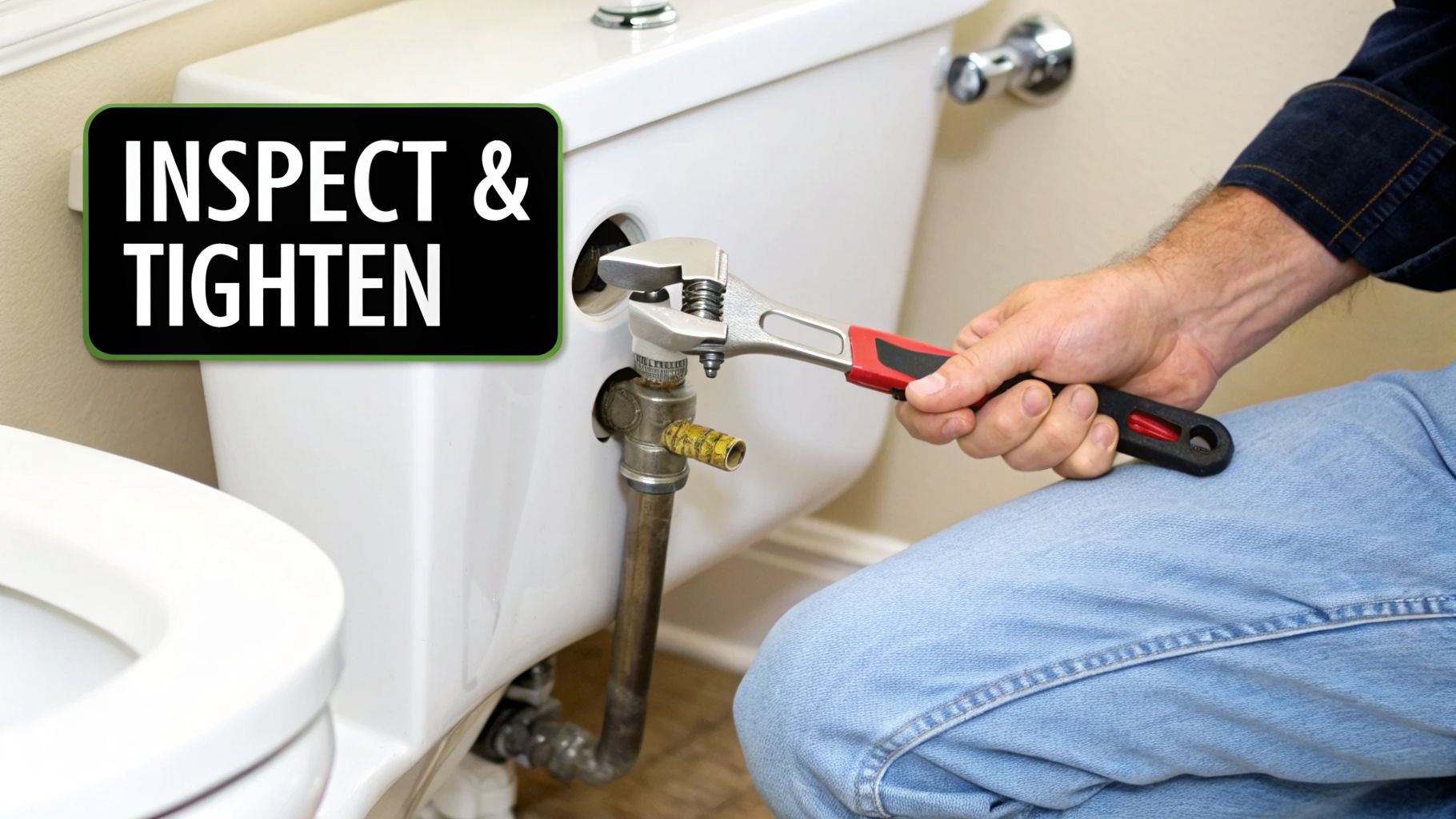
Look where the tank sits on top of the bowl. Two big bolts hold them together, and each has a rubber gasket that’s supposed to make a perfect seal. These bolts can work themselves loose over the years, or the rubber gaskets can dry out and fail.
- Do a touch test: Feel around the bottom of the bolts where they poke through the porcelain. Any dampness is a dead giveaway.
- Try a gentle tightening: If you feel moisture, grab a wrench and give the nuts a very gentle snug-up. But be careful! Overtightening will crack the porcelain in a heartbeat, turning a five-minute fix into a new toilet installation. Go a quarter-turn at a time, alternating between the two bolts.
If that doesn’t solve it, the gaskets are shot and need to be replaced.
Eyeball the Water Supply Line
That flexible hose connecting the shut-off valve to the tank is a classic weak point. Take a close look at the connection nuts on both ends. You're looking for drips, of course, but also for rust or white, crusty mineral deposits. Those are tell-tale signs of a slow leak.
A supply line that looks corroded, rusty, or even a little swollen is a disaster waiting to happen. Don't just tighten it—replace it. A new hose is cheap and can save you from a future burst pipe repair that will wreck your bathroom.
Don't Be Fooled by Condensation
Here in Georgia, humidity can play tricks on you. On a hot, sticky day, the cold water in your toilet tank can cause condensation—or "sweat"—to form all over the outside of the porcelain. This moisture drips down and forms a puddle, looking exactly like a leak.
Before you start taking things apart, just feel the outside of the tank. If it feels cool and damp all over, the problem might just be condensation. Running your bathroom’s exhaust fan more often can make a huge difference.
Do the "Rock Test" for the Wax Ring
Last but not least, we check the most important seal. Put your hands on opposite sides of the toilet bowl and gently try to rock it. A properly installed toilet should feel like it's part of the floor—absolutely no give.
If you feel any wiggle or rocking motion, that’s a major problem. It means the toilet is no longer sealed to the drainpipe. The culprit is a failed wax ring, which is what causes those nasty, foul-smelling leaks. Replacing it requires pulling the entire toilet off the floor, which is often a job for a professional sewer repair specialist. If you're in Marietta or Canton and your toilet moves, it's time to make a call.
The Hidden Dangers of a Leaky Toilet
It’s so easy to ignore that little bit of water around the base of your toilet. You see it, maybe throw a towel down, and promise yourself you’ll get to it later. But what looks like a tiny nuisance is actually a red flag for some serious trouble brewing just out of sight. A persistent water leak under toilet is a threat to your home’s structure and your family’s health.
The Threat Beneath Your Floor
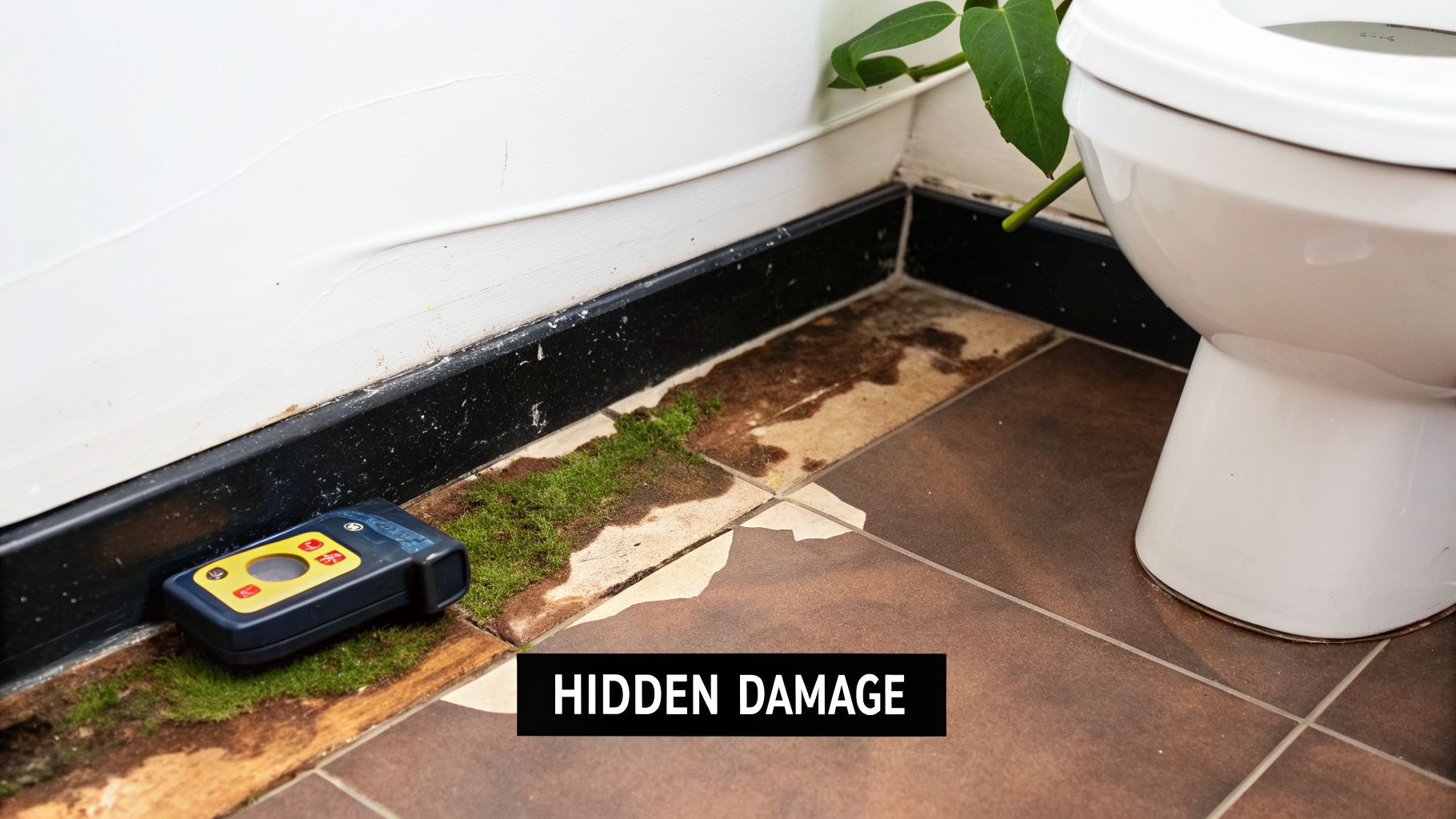
The first victim of that leak is your subfloor. The wood structure hiding beneath your tile or vinyl flooring is like a sponge, soaking up every drop. Before you know it, that constant dampness leads to wood rot, which silently eats away at the integrity of your bathroom floor.
What begins as a slightly spongy spot can turn into a major structural problem. We’ve seen it happen in homes all over Marietta and Roswell. Suddenly, you’re not just looking at a plumbing fix; you're facing expensive carpentry work and a total flooring replacement.
Then there's the mold. The dark, damp space under a leaking toilet is the perfect breeding ground for mold and mildew. This is a big deal, and it's worth checking out if does homeowners insurance cover mold because remediation can be costly.
Don’t underestimate that musty smell. Mold releases spores into the air that can trigger allergies, asthma, and other respiratory issues. Fixing the leak isn't just about protecting your house; it's about protecting your family's health.
The Financial Drain of a Small Drip
A leaky toilet is also a silent drain on your wallet. The cost goes way beyond the potential repair bill. According to research from the Pacific Institute, a single leaky toilet can waste a shocking 22,000 gallons of water annually.
Even more telling, a 2023 study of nearly 1,200 toilets found that an incredible 51% of all water used was lost to leaks, not flushes. That’s a massive amount of waste.
For homeowners here in Cherokee or Forsyth County, that translates directly to a higher water bill that you just can't explain. That slow, ignored drip could easily be costing you hundreds of dollars a year. Whether it's a simple leak repair or a bigger sewer repair problem, jumping on it quickly is the only way to stop the financial bleeding and protect your home.
Look, I'm all for rolling up your sleeves and tackling home repairs. Many small toilet leaks are well within the grasp of a handy homeowner. But I've also seen simple DIY jobs spiral into absolute disasters. Knowing when to step back and call in a professional is just as important as knowing how to use a wrench.
Here are a few tell-tale signs that your small leak is actually a symptom of a much bigger problem, and it's time to call a licensed plumber in the North Metro Atlanta area.
The Toilet Is Wobbly or Unstable
You've tried tightening the bolts at the base, but the toilet still rocks back and forth. This isn't just a loose connection; it's a serious red flag.
That wobble is almost always caused by a broken or rotted toilet flange. This is the plastic or metal ring that secures your toilet to the floor and connects it to the drainpipe. If that flange is compromised, the wax ring can't form a watertight seal. The result? Persistent leaks and, even worse, a sewage smell seeping into your home.
Replacing a flange isn't a quick Saturday morning project. It means pulling the entire toilet, often cutting away flooring, and working directly with the drainpipe. If your toilet is acting more like a rocking chair, it's time to find an emergency plumber in Acworth or the surrounding area.
You See Water Stains on the Ceiling Below
This is the big one. If you spot a discolored, damp patch on the ceiling of the room directly under your bathroom, the alarm bells should be ringing.
A ceiling stain means the leak has been going on for a while—long enough to soak through your subfloor, insulation, and drywall. You've graduated from a simple plumbing issue to a full-blown water damage crisis.
A professional plumber needs to be called immediately to find and stop the source of the leak. They can also help you figure out just how bad the damage is, which often means bringing in water damage restoration experts to prevent serious structural problems and mold.
The Smell of Sewer Gas Is Present
You can’t miss this smell. A persistent, foul odor of sewage in your bathroom is a sign you should never, ever ignore.
That smell is a dead giveaway that the wax seal at the base of your toilet has completely failed. Without that barrier, sewer gas—which contains nasty stuff like methane and bacteria—is venting directly into your living space.
This is a major health hazard that requires an immediate sewer repair in Johns Creek. A pro has the right tools and know-how to pull the toilet, replace the faulty ring (and the flange, if needed), and guarantee the new seal is perfectly airtight and up to code. This is less about fixing a leak and more about protecting your family's health.
When a problem goes beyond your comfort zone, knowing how to find a qualified plumber is the smartest move you can make. A licensed expert can spot things you might miss, like a hairline crack in the toilet bowl or a hidden issue deep in the drain line. For these big jobs, calling a pro saves you from a world of headaches and ensures the fix is done right the first time.
Keeping Future Toilet Leaks at Bay
They say the best repair is the one you never have to make. After you’ve cleaned up a puddle from under your toilet, the last thing you want is a sequel. Thankfully, a few simple habits can save you the headache and expense of another emergency plumbing call. It’s like a quick wellness check for one of the hardest-working fixtures in your home.
This isn't about being a professional plumber; it's about being a savvy homeowner, whether you're in Canton or Alpharetta. You’re not just reacting to a mess—you’re getting ahead of the problem.
The 60-Second Visual Check
Every couple of months, just take a minute to look things over. No tools needed, just your eyes.
- Spot the drips: Take a quick peek where the water supply line connects to the wall and to the toilet tank itself.
- Look for rust: Corrosion on the metal fittings or the bolts at the toilet base is a dead giveaway of a slow, long-term leak.
- Check for dampness: Do a quick scan of the floor. Any moisture that isn’t just condensation could mean your wax ring is on its way out.
Catching these little clues early is the difference between a five-minute fix and a frantic search for main water line repair near me because a rusty part finally burst.
The Food Coloring Trick for "Silent" Leaks
One of the sneakiest leaks happens inside the tank when water slowly seeps from the tank into the bowl. The usual culprit is a worn-out flapper.
Here’s an easy way to check. Put a few drops of dark food coloring into the tank. Don't flush it! Just walk away for 15-20 minutes. When you come back, look in the bowl. If any of that color made its way into the bowl, you've got a silent leak that's quietly adding to your water bill.
Most people have no idea how common toilet leaks are. The U.S. Environmental Protection Agency found that the average family can waste 180 gallons per week from simple household leaks. That’s more than 9,300 gallons of water a year—enough to do 300 loads of laundry. You can learn more about this on the EPA's WaterSense site.
Know When to Replace Parts Before They Fail
Nothing in a toilet lasts forever, especially the rubber and plastic bits living underwater 24/7. Knowing how long they typically last helps you swap them out on your schedule, not during a late-night flood.
| Part | Typical Lifespan | What to Look For |
|---|---|---|
| Flapper | 3-5 years | If it feels stiff, brittle, or looks warped, just replace it. A new one is only a few bucks. |
| Fill Valve | 5-7 years | If your toilet runs forever or makes weird hissing noises after a flush, the fill valve is probably tired. |
| Water Supply Line | 5-8 years | Any sign of rust, bulging, or kinking means it's time for a new one. Don't ever gamble on this part. |
| Wax Ring | 10-20+ years | They're tough, but if your toilet has even the slightest wobble, the seal is likely compromised. Time for an inspection. |
Keeping an eye on these components is your best defense against bigger problems, like when a clogged toilet won't flush and the backed-up water has nowhere to go but out onto your floor. A little maintenance goes a long, long way.
Got Questions About That Toilet Leak? We’ve Got Answers.
When you find a puddle around the base of your toilet, it’s natural for your mind to start racing with questions. Here are the straightforward answers to the most common things we hear from homeowners in Atlanta and Cobb County when they call us about a leaky toilet.
What’s the Price Tag on Fixing a Toilet Leak in Atlanta?
Honestly, it really depends on what’s causing the leak. A simple fix, like snugging up a loose water supply line, might just cost you the price of a standard service call.
But if the problem is a failed wax ring, that's a different story. Fixing that means we have to pull the entire toilet off the floor to replace the seal and reset it. The cost can go up from there if we find more issues, like water damage to the subfloor or a cracked toilet flange that requires a full sewer replacement. We always give you a clear, upfront quote before we touch anything, so there are no surprises.
Key Takeaway: Always get a firm price before work begins. A simple leak repair is affordable, but hidden damage like a rotten subfloor will add to the total cost.
Is It Okay to Use My Toilet If It's Just a Small Leak?
I’m going to give you a hard "no" on this one. If that little puddle is coming from a bad wax seal, every time you flush, you’re sending unsanitary water from your sewer line straight onto your bathroom floor. That water soaks into the subfloor, creating a serious health hazard and a recipe for structural damage.
Even if it’s just clean water from the supply line, using the toilet will only make the water damage worse. The absolute best thing you can do is shut off the water supply valve behind the toilet, stop using it, and call a professional for a leak repair near me.
Does a Wobbly Toilet Automatically Mean It's Leaking?
A wobbly toilet is a major red flag and pretty much a plumbing emergency in the making. All that rocking back and forth will eventually destroy the wax seal. That seal is the only thing stopping water and nasty sewer gas from getting into your home.
You might not see water yet, but a rocking toilet means that seal is already compromised. It’s crucial to get it looked at by a pro plumber in Woodstock or Roswell. They can secure the toilet properly and replace the seal, heading off major water damage and a potential sewer backup down the road.
Don't let a toilet leak turn into a major headache. If you're dealing with a wobbly toilet, a persistent puddle, or a foul odor, the expert team at JMJ Plumbing is ready to help 24/7. We offer fast, reliable emergency plumbing services across North Metro Atlanta. Visit us online at https://www.jmjplumbing.com to schedule your repair today.