
You turn on the hot water in the kitchen, and it comes out brown. Not a little cloudy. Brown enough that you stop and stare at it.
If you're in Woodstock, Marietta, Roswell, or anywhere around North Metro Atlanta, that reaction is the right one. Brown hot water usually means something inside the hot water system is breaking down, and a corroded water heater is high on the suspect list. Homeowners often hope it's a temporary issue, but rusty hot water is one of those plumbing symptoms that deserves a closer look before it turns into a leak repair call, a water heater replacement, or a full-blown emergency plumber situation.
Most tanks don't fail all at once without warning. They leave clues first. The trouble is that those clues are easy to shrug off until the day there's water on the floor, no hot water in the house, and damage spreading into drywall, flooring, or storage.
That Brown Water Is a Warning Sign
A homeowner in Acworth recently described the problem the same way many people do. The cold water looked normal, but the hot water at the kitchen faucet turned rusty after a few seconds. That's a classic pattern. It usually points away from the city supply and toward the water heater or nearby hot-water piping.
If that sounds familiar, you're not overreacting. Brown or orange-tinted hot water often means metal inside the system is deteriorating. Sometimes the issue is still in an early stage, like a failing anode rod or rust at fittings. Sometimes the inside of the tank has already started breaking down.
What the color change usually means
When only the hot side looks dirty, the heater deserves immediate attention. A tank water heater stores heated water in a steel vessel. Once corrosion gets a foothold, every draw of hot water can carry discoloration with it.
If you're trying to sort out whether the problem is in the water heater or somewhere else, this short guide on why hot water is dirty lays out the hot-versus-cold clue in a simple way.
Practical rule: If cold water runs clear and hot water looks rusty, don't keep using the heater as if nothing's wrong.
The stakes are real. Water heater failures represent a significant financial burden for homeowners, with 69% of these failures directly caused by slow leaks or sudden tank bursts. When a corroded water heater fails, homeowners face an average repair and water damage cost of $4,444 per incident, according to Mr. Plumber Atlanta's guide on water heater corrosion.
Why homeowners wait too long
People delay because the heater still makes hot water. That's the trap. A corroded tank can keep working right up until it doesn't. You may get a few more weeks, or you may get a flooded garage tomorrow morning.
Brown hot water also pushes many homeowners toward the wrong fix. They replace a faucet cartridge, clean an aerator, or assume they need drain cleaning. Those repairs have their place, but they won't solve corrosion inside a failing tank.
A better first move is to look at the home's water quality picture as a whole. If you've never had the house water checked, a home water quality test guide can help you understand what minerals and conditions may be working against your heater.
What to do right now
If you're seeing rusty hot water today, keep it simple:
- Check hot versus cold: Run both from the same faucet and compare the color.
- Look around the tank: Notice any dampness, rust streaks, or staining near the base.
- Pay attention to timing: Water that starts clear and then turns brown can still point to tank trouble.
- Don't ignore small leaks: A little puddle can be the first sign of a bigger failure.
Brown water isn't always a disaster in progress. But it is a warning sign, and it shouldn't sit on the to-do list for long.
Why Water Heaters Rust From the Inside Out
A water heater tank is a steel container that spends its whole life doing two things that metal doesn't love. It holds water, and it holds heat. That's why corrosion is so common.
Imagine a metal can left outside in the rain. At first it looks fine. Over time, the surface protection wears down, moisture keeps finding weak spots, and rust starts eating into the metal. A water heater goes through that same process, only from the inside where you can't easily see it.
The tank has a built-in bodyguard
Inside a standard tank water heater is an anode rod. Its job is to sacrifice itself so the tank doesn't have to. The rod attracts corrosive activity first, which helps protect the steel shell.
That protection doesn't last forever. Once the anode rod is used up, the tank loses its bodyguard. From there, corrosion can move onto the tank itself.
Heat and metal differences make rust move faster
A typical water heater can last a long time with proper care, but there's an important catch. The typical lifespan of a water heater ranges from 10 to 15 years, but corrosion can reduce this by more than half. Higher temperatures accelerate the electrochemical reactions that cause rust, and galvanic corrosion is the most common failure mechanism in residential tanks, according to Trident Plumbing's explanation of water heater corrosion and lifespan.
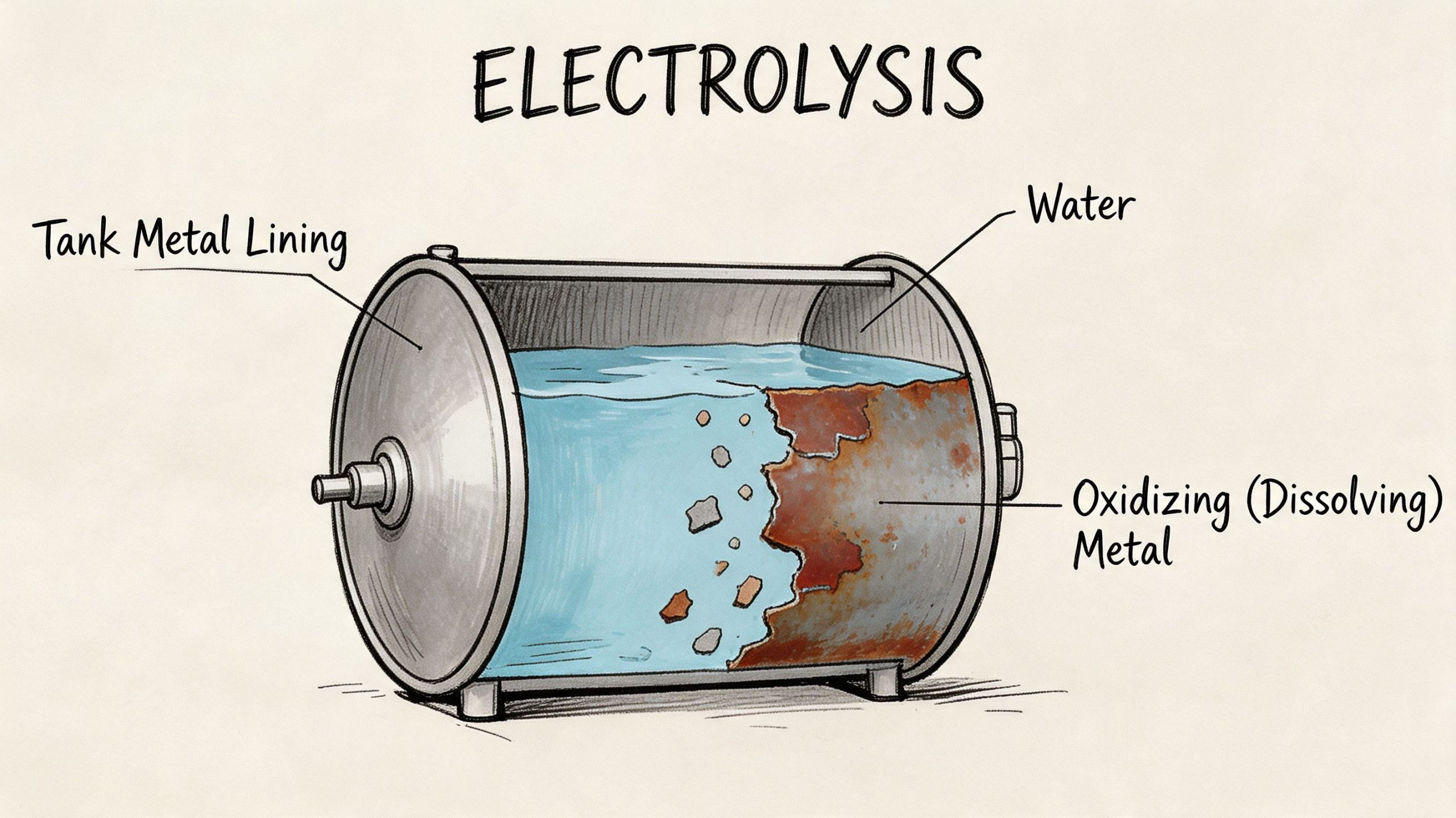
Galvanic corrosion sounds technical, but the idea is simple. When different metals are connected in a wet environment, one metal starts giving itself up faster. In plumbing, that can happen where steel, copper, and fittings meet around a tank.
Here’s the basic idea visually.
If you've ever seen orange stains on a driveway or patio, the same rust chemistry is at work in a different setting. This overview of professional concrete rust removal advice is useful because it shows how persistent rust staining can be once metal and water keep interacting.
Sediment is the second big enemy
The other major cause is sediment buildup. Hard water carries minerals. When water gets heated, some of those minerals settle to the bottom of the tank. Over time, that layer gets thicker.
Once sediment builds up, several problems start at once:
- The burner or element works harder: Heat has to push through the mineral layer.
- The tank bottom gets hotter than it should: Extra heat stresses the protective lining.
- Efficiency drops: The heater uses more energy to do the same job.
- Corrosion speeds up: Exposed steel has a much easier time rusting.
Sediment doesn't just sit there harmlessly. It acts like a blanket over the tank bottom and keeps heat where it can do damage.
Why North Metro Atlanta homes deal with this sooner
In Cherokee County, Cobb County, and nearby areas, local water conditions matter. Hard water, mineral content, and shifts in water chemistry can all shorten the safe life of a tank. Two homes with the same heater can age very differently depending on their water.
That's why a corroded water heater in Canton or Alpharetta isn't always just an age issue. Water quality, heat setting, maintenance history, and the condition of the anode rod all work together.
The homeowner-friendly version
If you want the plain-English summary, it comes down to this:
- Water sits against steel every day
- Heat speeds up chemical wear
- Different metals can react against each other
- Sediment traps heat where it shouldn't be
- Once the internal protection is gone, rust starts winning
That helps explain why a heater can look fine from across the room but still be failing from the inside out.
Spotting the Red Flags of Water Heater Corrosion
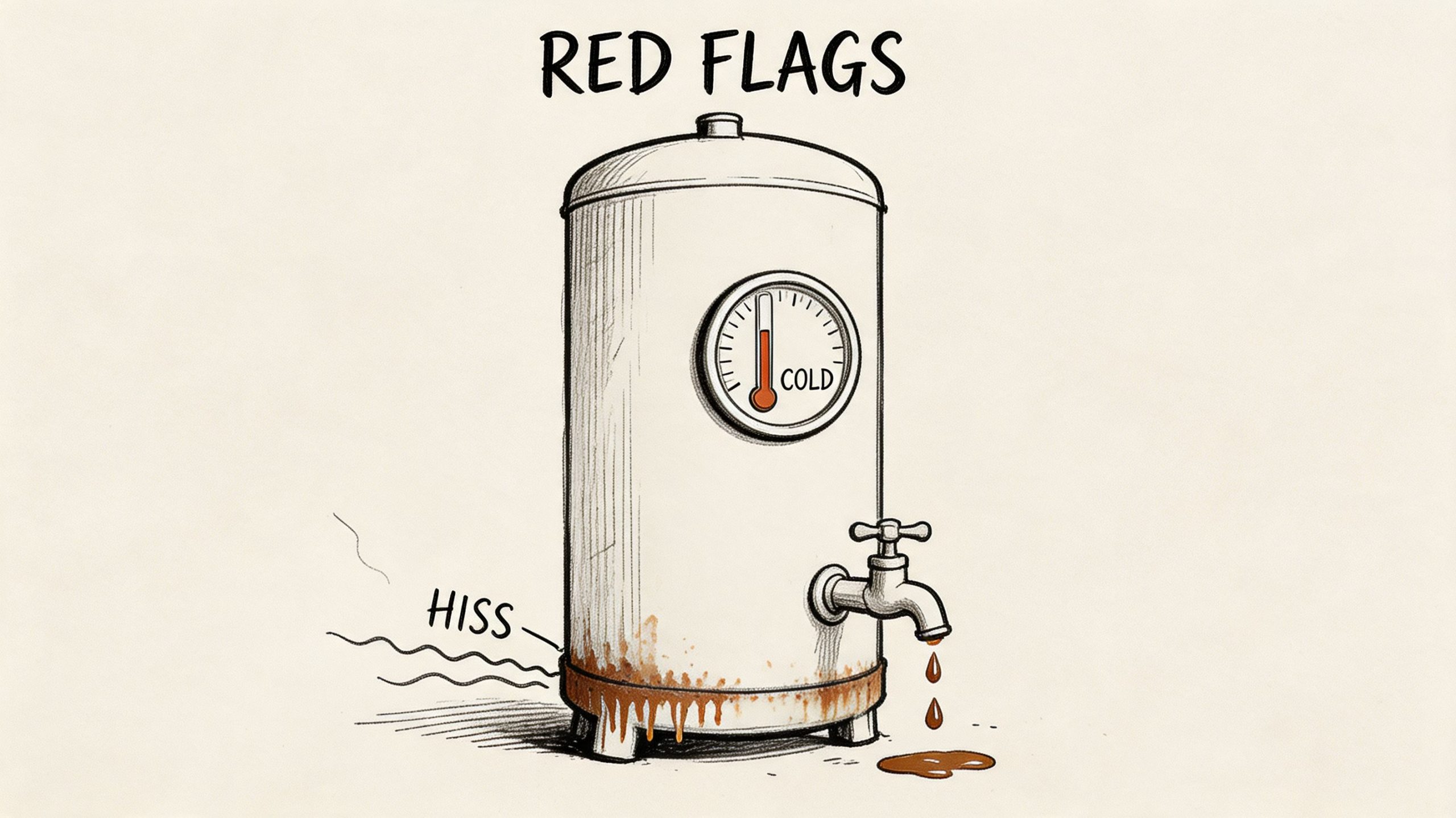
Most homeowners don't discover a corroded water heater by reading the label on the tank. They notice something odd first. The water smells metallic. The shower pressure feels weaker on hot than cold. There's a faint hissing sound in the utility room. Or there's a small puddle that keeps coming back.
Those clues matter because corrosion rarely announces itself with one dramatic symptom. It usually shows up through small changes in sight, sound, smell, and performance.
What you can see and hear
Start with the obvious. Look for rust streaks on the tank, corrosion around pipe connections, or moisture near the base. Any of those can point to a leak repair issue tied to the heater.
Listen, too. Popping, crackling, or rumbling sounds often mean sediment is sitting at the bottom of the tank while water heats underneath it. Homeowners sometimes describe it as sounding like a coffee pot or a kettle in the garage.
Common visible and audible warnings include:
- Rust-colored hot water: Especially when the cold water stays clear
- Staining on the tank jacket: Marks on the outside can mean trouble inside
- Drips or damp concrete: Even slow seepage deserves attention
- Popping or rumbling: Often linked to mineral buildup and overheating
- Rust at valves or fittings: Corrosion around connections can spread
Changes in water quality
Water doesn't have to look brown to signal trouble. A metallic smell, strange taste, or cloudy hot water can all point to corrosion inside the tank or at components attached to it.
Many people get confused, assuming odd-tasting water means a filtration problem only. Sometimes that's true. But when the change appears mainly on the hot side, the heater needs to be part of the diagnosis.
There's also a health angle many homeowners don't hear enough about. Rusty water can leach iron, manganese, and bacteria, with a 15% higher Legionella risk in corroded systems according to a 2025 CDC report. "Silent corrosion" can occur where the anode rod fails without external signs, trapping 30% more pathogens in sediment, as summarized in Nick's Plumbing's review of water heater corrosion risks.
A tank can have serious internal corrosion and still look fairly normal from the outside. That's what makes silent corrosion tricky.
Performance clues homeowners miss
Not every sign looks like rust. Sometimes the clue is performance.
You may notice:
- Low hot water pressure: Mineral buildup and corrosion can narrow flow paths
- Hot water running out faster: A sediment-filled tank has less room for usable hot water
- Longer recovery times: The heater takes longer to bring water back up to temperature
- Inconsistent temperature: Hot, then lukewarm, then hot again
Those symptoms overlap with other plumbing problems, which is why homeowners searching for "low water pressure," "no hot water," or even "leak repair near me" sometimes end up learning the water heater is the underlying issue.
When the warning signs mean stop and call
Some symptoms deserve same-day attention:
- Water around the base of the heater
- Visible rust plus active dripping
- Burning smell or electrical concerns on an electric unit
- Gas odor near a gas heater
- Brown hot water that gets worse quickly
If you see one of those, don't keep testing the heater all day. Shut it down safely and get a licensed plumber involved. Corrosion tends to get more expensive, not less, once a tank starts leaking.
Repair or Replace A Cost and Lifespan Breakdown
This is the question every homeowner asks once corrosion shows up. Can this be repaired, or am I looking at water heater replacement?
The honest answer is that both outcomes are possible. A plumber isn't deciding between "cheap" and "expensive." They're deciding whether the tank itself is still trustworthy. If the corrosion is limited to replaceable parts, repair may make sense. If the actual tank wall is rusting through, replacement is usually the safer call.
The fast way to think about it
Repairs make the most sense when the unit is relatively newer and the corrosion hasn't moved into the tank body. Replacement makes more sense when the problem is structural, recurring, or tied to a heater that's already near the end of its useful life.
A lot of money gets wasted when homeowners pay for one more repair on a tank that has already started failing from within. On the other hand, people also replace heaters that only needed a targeted repair and maintenance reset.
Here’s a practical comparison.
Water Heater Corrosion Repair vs Replace Decision Guide
| Factor | Consider Repairing If… | Consider Replacing If… |
|---|---|---|
| Age of the unit | The heater is still on the younger side for a tank unit and has otherwise been dependable | The heater is older and already showing several signs of wear |
| Location of corrosion | Rust is limited to fittings, valves, or a replaceable anode rod | Corrosion appears to involve the tank body, lower seams, or widespread internal damage |
| Leak type | Moisture is coming from a connection, valve, or another serviceable part | Water is seeping from the tank itself or pooling at the base without a simple external source |
| Water quality symptoms | Discoloration is mild and linked to a part that can be replaced | Brown water keeps returning, suggesting deeper internal deterioration |
| Performance | The heater still recovers well and the issue seems isolated | You have recurring no hot water problems, inconsistent temperatures, or clear decline in function |
| Previous repair history | This is the first significant issue | The unit has needed repeated service and keeps showing new symptoms |
| Safety and peace of mind | A repair gives a reasonable path forward with low risk | You don't want to gamble on a tank failure, especially in a finished area or busy household |
Repairs that can still be worth doing
When a plumber inspects a corroded water heater, they often start by separating component corrosion from tank corrosion. That distinction changes everything.
Repair may still be reasonable when the issue involves:
- Anode rod failure: The rod can often be replaced if the tank is still sound
- Corroded fittings or connectors: Localized rust at connections may not mean the tank has failed
- Drain valve or relief valve issues: Some leaks come from serviceable parts
- Sediment-related performance trouble: Flushing and maintenance may restore function if damage isn't advanced
If the tank itself is intact, a focused repair can buy useful time. If the tank wall is compromised, repairs usually buy inconvenience.
Replacement is often the smarter long-term move when
Some signs push the decision hard toward replacement:
- The tank is leaking from the shell or bottom seam
- Rust keeps returning in the hot water after lesser fixes
- The unit is old and multiple parts are wearing out together
- Corrosion has spread beyond a single repair point
- You want to avoid a surprise failure in a garage, attic, closet, or finished basement area
This is also where household needs matter. A family dealing with repeated no hot water mornings may prefer replacement because reliability has value.
Don't decide from the driveway
A water heater replacement decision shouldn't be made from one blurry photo or a guess over the phone. The right call depends on age, leak location, tank condition, water quality, and whether the unit has enough life left to justify repair.
If you're weighing options, this guide on how to choose a water heater is helpful because it explains what to compare before replacing a failing unit.
The kitchen-table version
If I were explaining it at your house, I'd put it this way. Don't spend good money trying to rescue a rusted-out tank. But don't throw away a serviceable heater just because one replaceable part looks ugly.
A solid inspection answers the question. Is the metal vessel still dependable, or has corrosion already crossed the line where replacement is the safer investment?
How to Prevent Corrosion in North Metro Atlanta
Prevention starts with one idea. Don't wait for rusty water.
Most corrosion problems become expensive because nobody looks inside the process until the tank is already failing. In North Metro Atlanta, that matters even more because local water conditions can be tough on equipment.
Start with the anode rod
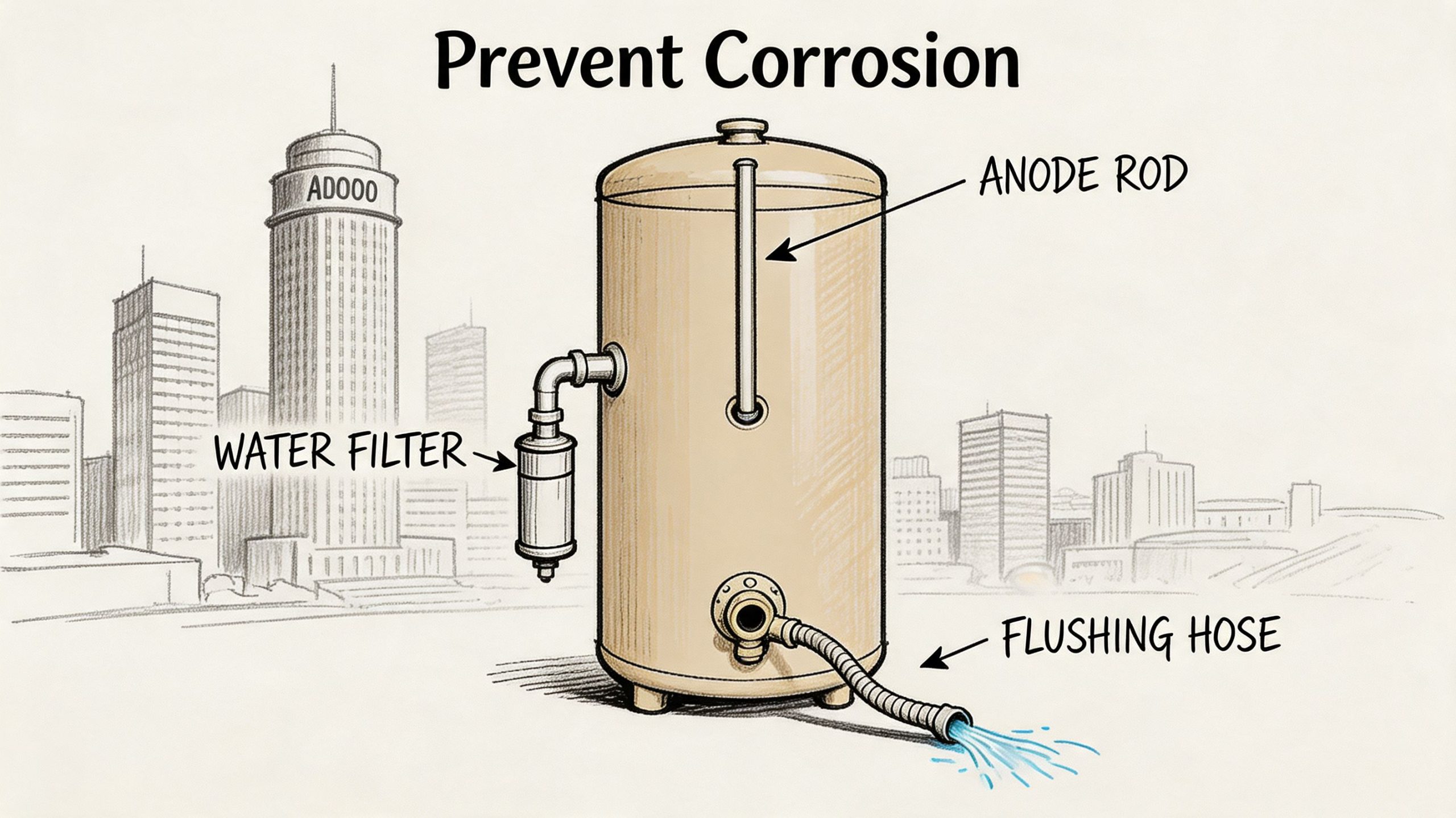
If the water heater were a pickup truck, the anode rod would be the sacrificial part you replace so the frame doesn't rot out. It exists to wear out first.
That means prevention isn't fancy. It's disciplined. A plumber checks the rod, inspects the fittings, looks at the tank condition, and decides whether the protective parts are still doing their job.
North Metro Atlanta water changes the timeline
Generic advice often misses the local piece. Georgia's water often has high mineral content and acidity, promoting faster anode rod depletion, sometimes in under 5 years versus the typical 8-10. A 2024 AWWA study showed 52% higher corrosion rates in Southeastern U.S. homes with hard water. A HALO filtration system can extend tank life by 40% per manufacturer tests, according to this review of corrosion at water heater connections and regional water effects.
That explains why a heater in Woodstock or Canton may age differently than the same model elsewhere. Hardness and acidity don't just affect taste. They affect how fast protection inside the tank gets used up.
What prevention looks like in a real home
A good prevention plan usually includes a mix of inspection, maintenance, and water treatment.
- Check the anode rod on schedule: Don't assume it's fine just because the heater still runs
- Flush sediment from the tank: Mineral buildup gives corrosion a head start
- Inspect connections and valves: Early rust at fittings can point to bigger issues
- Watch the heat setting: Higher temperatures increase wear inside the system
- Address the incoming water quality: If the water is aggressive, the heater will pay for it
Why filtration matters more here
A localized solution can outperform generic maintenance advice. If the water entering the home is contributing to mineral scale and accelerated corrosion, treating the water upstream helps protect more than just the heater. It can also help faucets, shower valves, appliances, and the rest of the plumbing system.
For homeowners in Acworth, Alpharetta, Johns Creek, and nearby areas, one option is JMJ Plumbing installing and servicing HALO whole-home filtration alongside water heater maintenance. That's useful because it addresses both sides of the issue. The heater gets routine professional attention, and the water feeding it becomes less aggressive to the plumbing system.
The goal isn't to baby one tank. The goal is to change the conditions that wear out tanks, fixtures, and water lines in the first place.
A simple routine that prevents a lot of trouble
If you want the plain-language version, do these things consistently:
- Have the heater inspected before it shows symptoms
- Replace the anode rod when it's depleted
- Flush out sediment before it hardens into a problem
- Treat hard or aggressive water at the house level
- Take small signs seriously, especially rust, odor, or pressure changes
If you need a maintenance baseline, these water heater maintenance tips are a solid place to start.
When prevention also protects other plumbing searches people make
A lot of homeowners don't start by searching for "corroded water heater." They search for "low water pressure," "leak repair," "water heater replacement near me," or "emergency plumber in Roswell." Corrosion prevention helps reduce the odds of ending up in those searches at the worst possible moment.
The same household water conditions that stress a tank can also contribute to wear on valves, fixtures, supply lines, and other parts of the system. That's why prevention tends to save frustration across the whole house, not just in the utility room.
What to Do in a Water Heater Emergency
If the tank is actively leaking, making alarming noises, or you've suddenly got water spreading across the floor, don't troubleshoot for an hour. Take control of the situation first.
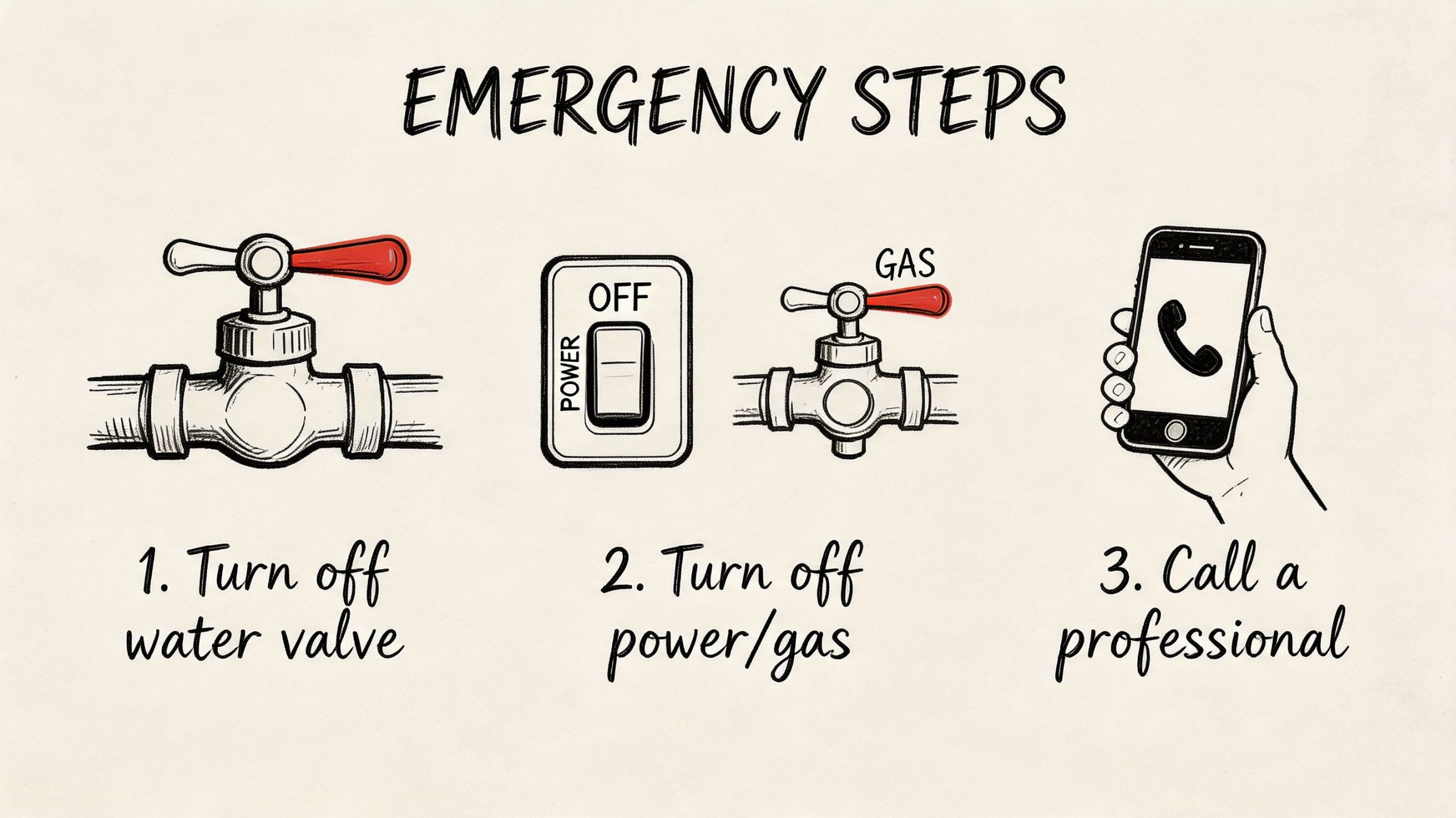
Follow this order
-
Shut off the water supply
Turn off the cold-water valve feeding the heater. If that valve won't close or the leak is more widespread, shut off the home's main water supply.
-
Shut off the power source
For an electric heater, turn off the breaker. For a gas heater, turn off the gas supply to the unit if you can do so safely and you know where the shutoff is.
-
Stay clear of hot water and wet electrical areas
Water around an electric heater can create a serious hazard. Don't step into pooled water near energized equipment.
-
Limit damage if it's safe
Move boxes, rugs, or stored items away from the leak path. Use towels or a wet vacuum only after the power hazard is addressed.
Why these emergencies happen fast
A lot of emergency calls start with sediment and heat stress that went unnoticed. Sediment buildup can reduce heat transfer efficiency by up to 20%, spiking energy bills and causing the tank to overheat, melting the protective lining and exposing bare steel. Annual flushing can remove 4-5 gallons of sediment from a 50-gallon tank, restoring efficiency and averting costly failures, according to One Call Plumbing's discussion of corrosion causes, prevention, and solutions.
That matters in practical terms. A heater may seem to be working, but the tank can already be under stress long before the leak shows up.
When to call for immediate help
Call right away if any of these are happening:
- Water is actively leaking from the tank
- You have no hot water and visible rust or pooling
- The heater is hissing, rumbling loudly, or shutting down
- There's a gas odor
- You're dealing with flooding in a garage, closet, or finished area
If you're in Acworth, Kennesaw, Marietta, Woodstock, Alpharetta, Canton, Cumming, Johns Creek, or nearby North Metro Atlanta communities, this is the kind of problem that fits an emergency plumber or 24 hour plumber call. Quick action matters because once a tank ruptures, damage spreads fast.
If your hot water looks rusty, your tank is leaking, or you're trying to decide between repair and replacement, JMJ Plumbing can inspect the system, identify whether the problem is a failing component or a compromised tank, and help you move forward safely with water heater service, replacement options, and whole-home water quality solutions for North Metro Atlanta homes.