A Guide: tips for clogged toilet – 7 Proven Fixes
A clogged toilet that won't flush can quickly escalate from an inconvenience to a major water damage emergency, especially in busy North Metro Atlanta households. Before you reach for any tools, the first critical step is to prevent an overflow. Immediately locate the toilet's water supply valve, typically on the wall behind the toilet, and turn it clockwise to shut off the water. If you can't find or turn the valve, take the lid off the tank and lift the float ball or flap to stop water from entering the bowl.
This single action prevents messy overflows, giving you the time to properly diagnose the problem. Whether you're in Woodstock, Acworth, or Alpharetta, knowing these initial steps is your first line of defense. This guide provides seven practical tips for clogged toilet issues, ranging from simple DIY fixes for minor blockages to clear signs that you need an emergency plumber for a more serious sewer backup. We'll cover safe, effective methods and help you understand when a stubborn clog points to a larger problem, like a main sewer line issue requiring professional drain cleaning in Canton. Beyond immediate fixes, understanding how to maintain clear plumbing is crucial. Learn about simple habits that can help you prevent clogged drains and avoid future emergencies.
1. Plunger Method – The First Line of Defense
When you’re faced with a stubborn clogged toilet that won’t flush, the plunger is your first and most effective tool. This simple device works by creating a powerful combination of pressure and suction directly within the toilet’s drainpipe. The goal isn't just to push the clog further down, but to forcefully agitate and break it apart. This method is highly effective for common, soft blockages like excess toilet paper or organic waste.
For homeowners in areas like Acworth and Cherokee County, where standard municipal plumbing is common, a good plunger can resolve most minor clogs without needing professional intervention. It's the go-to solution for the everyday "oops" moments that happen in any busy household, helping you avoid a call for emergency drain cleaning.
How to Use a Plunger Correctly
Using a plunger seems simple, but technique matters. Following the right steps is crucial for success and is one of the most important tips for a clogged toilet.
- Choose the Right Plunger: Don’t use a standard cup plunger. You need a flange plunger, which has a smaller, bell-shaped cup that extends from the bottom. This design creates a much tighter seal specifically for a toilet bowl's drain opening.
- Ensure Proper Water Level: The plunger's bell must be completely submerged in water to work. If the bowl is low on water, add more until the plunger head is covered. This prevents you from just splashing air around.
- Create a Tight Seal: Place the flange directly into the drain opening, ensuring the larger cup forms a complete seal around it. The first push should be gentle to expel any air trapped in the bell.
- Plunge with Vigor: After expelling the air, begin a series of 15 to 20 forceful, rapid up-and-down strokes. Focus on pulling up with as much force as you push down, as the suction is often what dislodges the clog.
After a vigorous session, break the seal and see if the water begins to drain. If the clog remains after 3 to 5 attempts, it's time to stop. Further plunging could damage the wax ring at the base of the toilet. If the plunger fails, your clog may be more severe, and it could be time to consider calling a 24 hour plumber in Roswell for emergency drain cleaning.
2. Toilet Auger (Plumbing Snake) – Breaking Through Stubborn Blockages
When a plunger fails to clear a clog, the toilet auger, also known as a plumbing snake, is your next powerful tool. This specialized device is engineered specifically for toilets, featuring a flexible cable with a corkscrew tip designed to navigate the S-shaped trap without scratching the porcelain. It works by physically breaking apart or latching onto a stubborn obstruction, allowing you to pull it out or push it through.
A toilet auger is highly effective for dense, solid clogs that pressure and suction can't move. For homeowners in Marietta or Alpharetta dealing with clogs from flushed toys, excessive paper buildup, or even feminine hygiene products, an auger can quickly resolve the blockage. It provides a direct, mechanical solution when simpler methods fall short, potentially saving you the cost of a sewer repair.
How to Use a Toilet Auger Safely
Using a toilet auger requires more finesse than a plunger, but it's a straightforward process when done correctly. Following these steps is one of the most important tips for a clogged toilet to avoid damaging your plumbing.
- Protect Your Toilet and Yourself: Always use an auger with a vinyl or rubber guard that rests against the bottom of the bowl to prevent scratching the porcelain. Wear gloves and eye protection to stay safe from splashes.
- Insert the Auger Carefully: Pull the auger handle up so the cable tip is snug against the protective guard. Place the end of the guard into the drain opening at the bottom of the toilet bowl.
- Extend and Rotate: Slowly push the handle down to extend the flexible cable into the trap. Once you feel resistance, you have likely reached the clog. Begin turning the handle clockwise to rotate the cable, which will help it drill into or hook onto the blockage.
- Break Up and Retrieve: Continue rotating gently. You may feel the clog break apart or the auger hook into it. Once the resistance lessens or you've secured the object, slowly retract the cable while continuing to rotate.
After removing the auger, flush the toilet several times to ensure the drain is completely clear. If you’ve tried the auger multiple times without success, the clog might be located further down the main drain line. This is a sign that you need professional drain cleaning services, as a more severe sewer backup could be developing in your Cobb County home.
3. Enzyme or Bacterial Drain Cleaners – Natural Biological Action
When harsh chemicals are off the table and the plunger isn’t cutting it, enzyme-based cleaners offer a safer, more natural solution. These products use a potent cocktail of beneficial bacteria and enzymes to digest the organic waste causing the blockage. Instead of burning through a clog with caustic chemicals, this method works by methodically breaking down materials like toilet paper, human waste, and even grease, turning them into harmless liquids that can be flushed away.
This eco-friendly approach is particularly effective for homeowners with sensitive plumbing or septic systems, such as those in areas like Cumming and Johns Creek. Unlike chemical drain openers that can damage pipes and disrupt septic tank ecosystems, enzyme cleaners work harmoniously with your plumbing, making them a smart choice for both clog removal and preventative maintenance, avoiding the need for a costly sewer replacement in Forsyth County.
How to Use Enzyme Cleaners Effectively
Using an enzyme cleaner is less about immediate force and more about patience and proper application. Following these steps is one of the most important tips for a clogged toilet when using a biological solution.
- Choose a Quality Product: Look for well-regarded brands like Bio-Clean or Green Gobbler. These products contain a high concentration of active cultures designed specifically to target and digest organic blockages found in drain lines.
- Time Your Application: The key to success is giving the enzymes enough time to work. The best time to apply the treatment is at night or just before leaving the house for several hours, ensuring no one will be flushing the toilet.
- Follow the Instructions: Mix the product (if it’s a powder) with warm water as directed to activate the enzymes. Pour the solution directly into the toilet bowl. The goal is to let it sit undisturbed in the pipes for at least 6-12 hours.
- Use as a Preventative Measure: Enzyme cleaners excel at preventing future clogs. A monthly treatment can keep your drains flowing freely, making it a great maintenance strategy for busy households in Alpharetta or commercial properties seeking to avoid emergency plumbing calls for issues like slow drains.
While highly effective for organic clogs, enzyme cleaners will not dissolve foreign objects like toys or sanitary products. If the clog persists after one or two applications, the blockage is likely something the enzymes cannot digest. In this case, the problem requires a more direct approach, and it may be time to call a professional for emergency drain cleaning near you.
4. Chemical Drain Cleaners – A Cautious Last Resort
When simpler methods fail, chemical drain cleaners can seem like a fast and easy solution. These products work by using powerful caustic or acidic compounds to generate an exothermic (heat-producing) chemical reaction that dissolves organic blockages. They are designed to break down materials like grease, soap scum, and excess toilet paper, often working in under an hour. This chemical approach can be effective for stubborn organic clogs that a plunger can't dislodge.
For homeowners in older Metro Atlanta homes, these cleaners can sometimes break through mineral and soap buildup common with hard water. However, they should always be considered a last resort before calling a professional. The harsh chemicals pose significant safety risks and can potentially damage your pipes, especially if you have an older plumbing system or a septic tank, leading to the need for a water line replacement.
How to Use Chemical Cleaners Safely
Using these products requires extreme caution. Adhering to safety protocols is one of the most critical tips for a clogged toilet if you choose this method.
- Read All Instructions: Never skip the manufacturer's directions. Different formulas have specific contact times, application methods, and safety warnings.
- Ensure Maximum Ventilation: Before you begin, open all windows and doors in the bathroom and turn on the exhaust fan. The fumes from these products can be toxic and harmful if inhaled.
- Use Protective Gear: Always wear chemical-resistant gloves and safety goggles. A single splash can cause severe burns to your skin or eyes.
- Pour Carefully and Slowly: Pour the cleaner directly into the toilet bowl, avoiding any splashing. Never stand directly over the bowl while pouring. After application, leave the area immediately for at least 15-20 minutes.
- Flush Thoroughly: Once the recommended time has passed, flush the toilet with a large volume of cold water to clear the chemicals and dissolved blockage from your pipes.
Never mix different chemical drain cleaners, as this can create a dangerous chemical reaction. If the cleaner fails to resolve the clog, do not repeat the application or try a different method. At this point, the standing water in your toilet is a hazardous chemical mixture, and it's time to call an emergency plumber in Marietta or Acworth for professional drain cleaning.
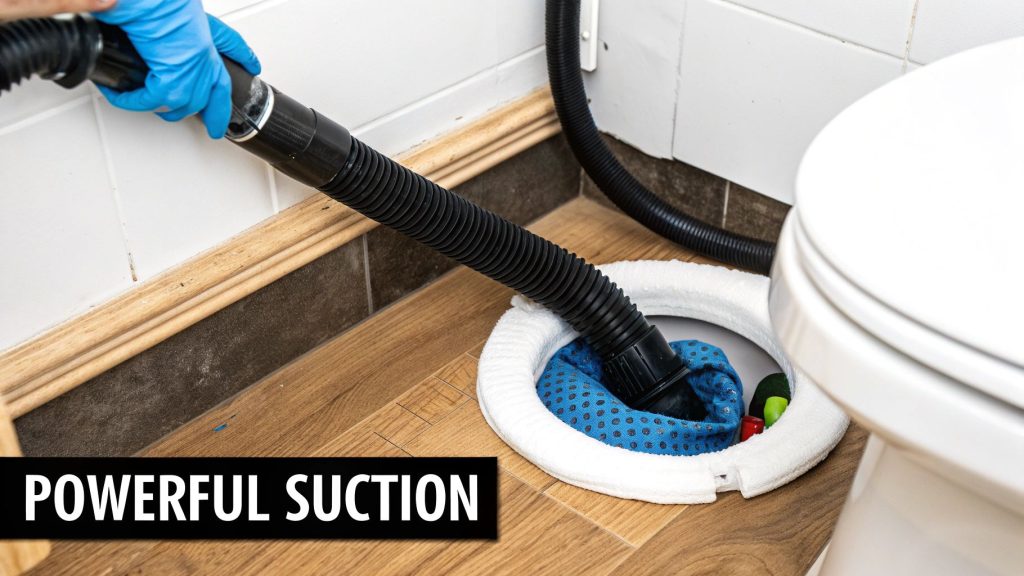
5. Wet/Dry Vacuum Method – Powerful Suction Extraction
When a plunger fails and you suspect a more solid obstruction, a wet/dry vacuum can be a surprisingly effective tool. Instead of pushing or agitating the blockage, this method uses powerful suction to pull the clog and the standing water out of the toilet bowl and drainpipe. It’s particularly useful for retrieving foreign objects like a child’s toy, a comb, or an excessive amount of non-flushable material that has been accidentally flushed.
For families in Woodstock or Marietta, where such household accidents are common, a wet/dry vac can be a clean and efficient solution. It extracts the problem directly, preventing the object from being pushed further down the sewer line, which could lead to a more serious sewer backup issue requiring professional drain cleaning. It's a smart step before searching for "sewer repair near me."
How to Use a Wet/Dry Vacuum Correctly
Proper setup and technique are essential to avoid a mess and effectively clear the drain. Following these steps is one of the more advanced tips for a clogged toilet, but it can be highly successful.
- Confirm It's a "Wet" Vac: First and foremost, ensure your vacuum is specifically rated for wet use. Using a standard dry vacuum will destroy the motor and create a serious electrical hazard.
- Remove Water from the Bowl: Use the vacuum to suck all the standing water out of the toilet bowl first. This gives you clear access to the drain and prevents messy splashing. Empty the vacuum tank before proceeding.
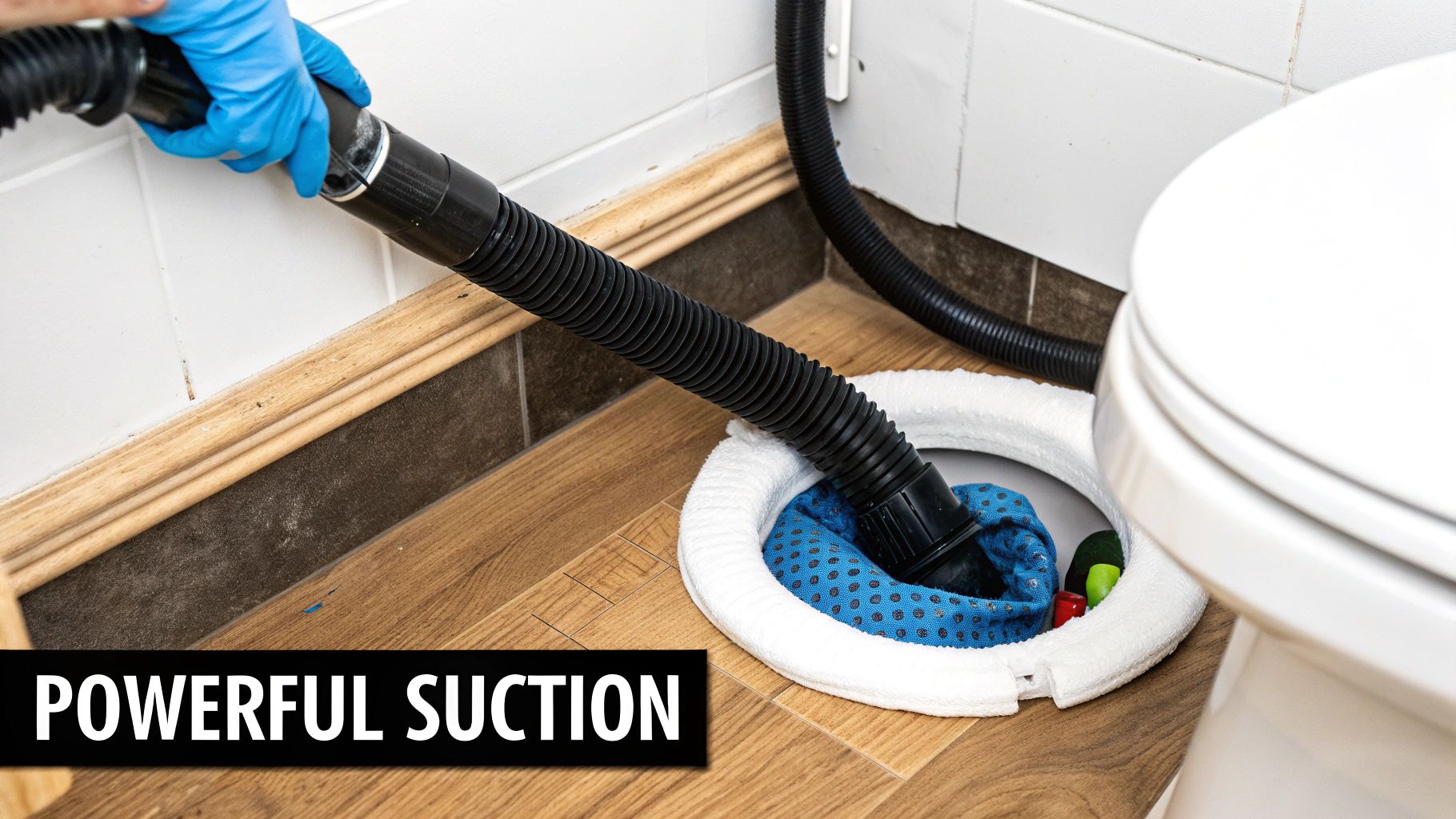
- Create a Strong Seal: To maximize suction, you need an airtight seal. Wrap an old towel or rag around the end of the vacuum hose and then press it firmly into the toilet's drain opening.
- Engage the Suction: Turn the vacuum on. The seal you created with the towel should cause the suction to focus directly on the clog. Hold it in place for 15 to 20 seconds. You may hear the object dislodge and travel up the hose.
After attempting this, check the vacuum’s tank to see if you have successfully retrieved the obstruction. If this method doesn't work, the blockage may be too deep or stubborn for suction alone. At this point, trying again could risk damaging your vacuum or the toilet. If your clogged toilet won’t flush after this step, it’s a clear sign you need an emergency plumber in areas like Alpharetta or Roswell to handle a more significant main water line repair or sewer issue.
6. Hot Water and Dish Soap Method – Simple Heat-Based Approach
Before resorting to more aggressive tools, sometimes the simplest solution is the most effective. The hot water and dish soap method is a gentle, non-toxic approach that uses basic household items to tackle minor clogs. This technique works by using heat to soften and dissolve organic waste, grease, and soap buildup, while the dish soap acts as a lubricant, helping the blockage slide more easily through the drainpipe.
For homeowners in Marietta and Roswell dealing with a sluggish toilet, this method is a fantastic first step. It is completely safe for all types of plumbing, including homes with septic systems or advanced HALO water filtration systems, and costs virtually nothing to try. It’s particularly effective against clogs caused by an accumulation of toilet paper, soap scum, or other soft materials. It's a great fix for a slow drain before the problem worsens and requires a leak repair.
How to Use Hot Water and Dish Soap Effectively
Proper technique is key to making this simple remedy work. Following these steps ensures you apply the heat and lubrication correctly without risking damage to your toilet, making it one of the most important initial tips for a clogged toilet.
- Prepare the Mixture: Start by adding about a quarter-cup of liquid dish soap (like Dawn) directly into the toilet bowl. The soap will sink and begin coating the clog.
- Heat the Water (Do Not Boil): Heat a gallon of water on the stove or use the hottest water from your tap. The ideal temperature is between 120-140°F. Never use boiling water, as the extreme heat can crack the porcelain of the toilet bowl, leading to a much more serious problem.
- Pour with Purpose: Carefully pour the hot water into the bowl from about waist height. The force of the falling water helps to push the soap and heat down toward the blockage, dislodging it.
- Let It Sit: Allow the hot, soapy water to sit undisturbed for at least 20-30 minutes. This gives the heat time to break down the clog and the soap time to lubricate the pipe walls.
After waiting, try flushing the toilet. If the water drains, you’ve successfully cleared the clog. If it’s still sluggish, you can repeat the process once or twice. If the clog persists after a few attempts, the blockage may be too dense for this method, indicating it's time to try a plunger or contact a professional for emergency drain cleaning in Johns Creek.
7. Professional Drain Cleaning with Video Inspection – Expert Diagnosis and Resolution
When DIY methods like plunging or snaking fail, it’s a clear sign that the blockage is severe, deep within your pipes, or a symptom of a larger issue. Professional drain cleaning services utilize advanced equipment and trained technicians to diagnose and resolve these stubborn clogs safely and effectively. This approach goes beyond simply clearing the immediate blockage; it addresses the root cause to prevent future plumbing emergencies like a sewage smell or water in your yard.
For property owners in North Metro Atlanta, especially those with older homes or commercial buildings in areas like Canton and Roswell, professional intervention is crucial for complex problems. Services like high-pressure water jetting and motorized augers can clear everything from dense grease buildup to invasive tree roots in a main sewer line, something no household tool can manage. This can be the difference between a simple sewer repair and a full sewer replacement.
Why Professional Service is a Superior Solution
Relying on an expert is one of the most important tips for a clogged toilet when you're facing a recurring or immovable blockage. A licensed plumber doesn't just treat the symptom; they diagnose the entire system to ensure a long-term fix.
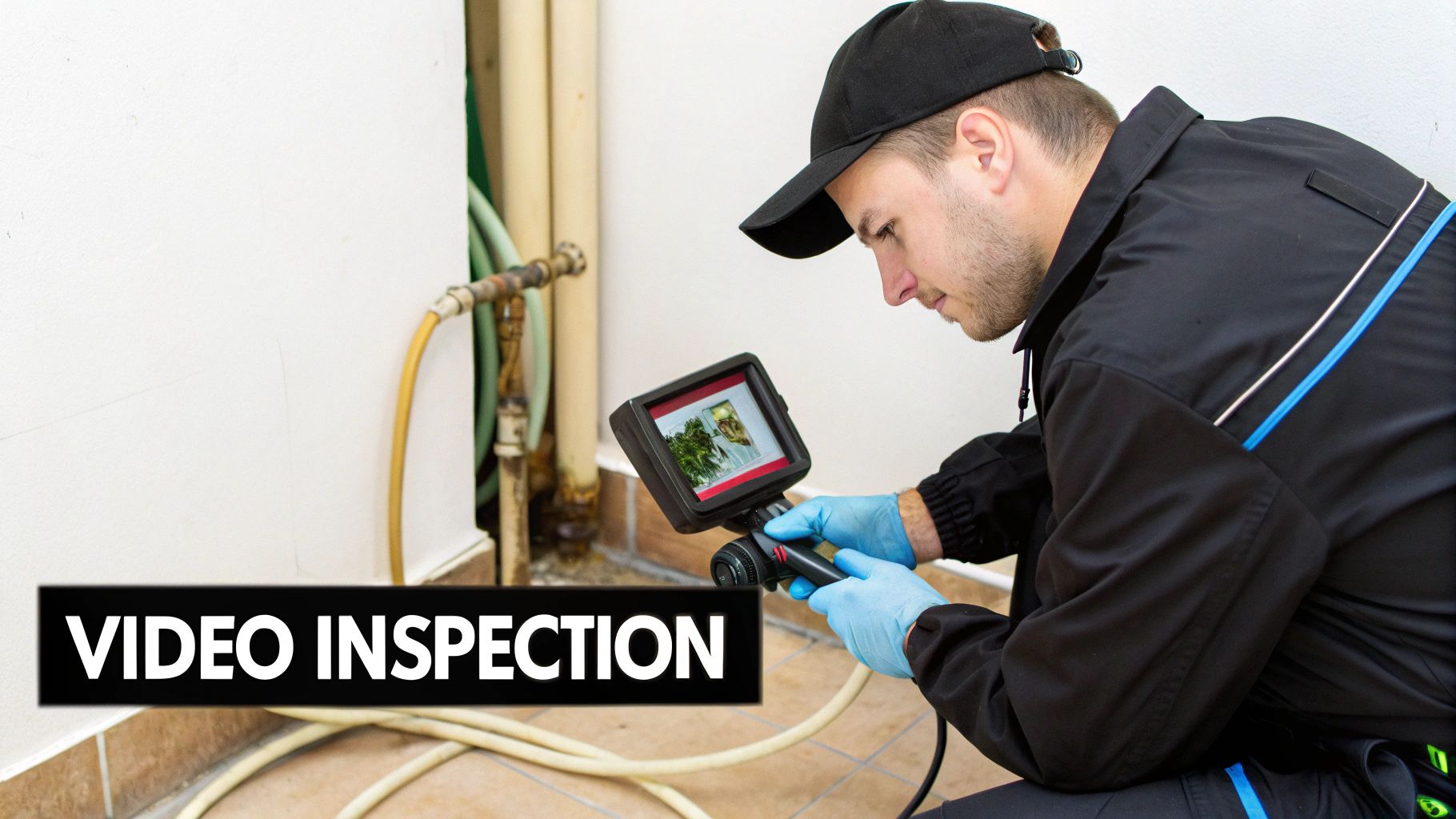
- Advanced Diagnostic Tools: The key advantage is video pipe inspection. A technician feeds a high-resolution waterproof camera into your drain lines to see the exact location and cause of the problem, whether it’s a collapsed pipe, severe buildup, or foreign object.
- Powerful Clog Removal: Professionals use tools like hydro jetting, which blasts high-pressure water through pipes to scour them clean of grease, scale, and sludge. For solid obstructions, powerful motorized augers can cut through tree roots and dense clogs.
- Preventative Insights: A video inspection can uncover hidden issues like cracks, corrosion, or bellied pipes before they lead to a catastrophic failure, such as a main sewer backup or a burst pipe repair emergency in Cumming.
- Guaranteed Work: Reputable plumbing companies stand by their work. This gives you peace of mind that the problem is truly solved, unlike the uncertainty of a DIY fix.
If your toilet won't flush after multiple DIY attempts, or if multiple drains in your home are backing up, stop what you’re doing. These are signs of a main sewer line clog, which requires immediate professional attention. For a 24-hour plumber in Woodstock, Alpharetta, or the surrounding areas, calling for an expert diagnosis can save you from extensive property damage and costly future repairs.
7 Clogged Toilet Fixes Compared
| Method | 🔄 Implementation Complexity | ⚡ Resource Requirements | ⭐ Expected Effectiveness | 📊 Ideal Use Cases | 💡 Key Advantages / Tips |
|---|---|---|---|---|---|
| Plunger Method – The First Line of Defense | Low — simple technique, short physical effort | Plunger (flange preferred); water in bowl; none chemical | ⭐⭐⭐ — effective for soft, near-bowl clogs | Minor toilet-paper or organic clogs; quick household fixes | Use a flange plunger, ensure tight seal, 15–30s vigorous strokes; stop after 3–5 attempts |
| Toilet Auger (Plumbing Snake) | Medium — requires practiced technique to avoid damage | Hand or electric auger (3–25 ft), gloves, vinyl-coated cable | ⭐⭐⭐⭐ — good for solid or deeper obstructions | Pulled toys, deep paper/solid blockages, recurring toilet clogs | Use vinyl coating, insert slowly, rotate gently; can reach deeper clogs but risks porcelain if misused |
| Enzyme / Bacterial Drain Cleaners | Low — easy to apply but slow-acting | Enzymatic product (liquid/powder/tablet); time (4–24 hrs) | ⭐⭐–⭐⭐⭐ — effective for organic buildup and prevention | Preventative maintenance; recurring organic clogs; septic systems | Best as routine maintenance; pour at night, avoid flushing 6–12 hrs, warm water helps; not for solid obstructions |
| Chemical Drain Cleaners | Low (application easy) but high safety risk | Caustic/acid cleaners, PPE, ventilation | ⭐⭐⭐ — fast on organic/grease clogs but limited on solids; risk of pipe damage | Urgent grease/soap build-up in drains (last-resort) | Use only as last resort; never mix cleaners; can lead to costly water line replacement; follow strict PPE and ventilation |
| Wet/Dry Vacuum Method | Medium — needs proper sealing technique | Wet/dry vacuum rated for water, hose attachments, cloth gasket, gloves | ⭐⭐⭐⭐ — strong suction for foreign objects and standing water | Removing toys/hair/debris, extracting standing water, emergency extraction | Ensure vacuum is wet-rated, create tight seal, avoids need for sewer repair; limited for deep main-line clogs |
| Hot Water + Dish Soap Method | Very low — simplest, first-response tactic | Very hot (120–140°F) tap water, dish soap, bucket | ⭐⭐ — good for mild grease/soap lubrication and small buildups | First-response for slow drains or mild clogs; safe for septic systems | Use hot (not boiling) water, 1/4 cup soap, let sit 15–30 min, pour from waist height; repeat 1–2× before escalating |
| Professional Drain Cleaning with Video Inspection | High (for providers) — minimal homeowner effort | Licensed plumber, video inspection camera, hydro-jetting, motorized augers | ⭐⭐⭐⭐⭐ — identifies root causes and clears severe/complex blockages | Main sewer line clogs, recurring issues, burst pipe repair, 24/7 emergencies | Request video inspection, ask about warranties; essential for long-term solutions and issues like a sewage smell or water in yard |
Your 24/7 North Metro Atlanta Emergency Plumbing Partner
You've now explored a full arsenal of techniques for handling one of the most common and frustrating household issues. From the simple yet powerful plunger method to the more advanced toilet auger and even the clever use of a wet/dry vacuum, these tips for a clogged toilet equip you to tackle many blockages on your own. Understanding these methods not only saves you from potential panic but also empowers you to protect your home from minor water damage and inconvenience.
The key takeaway is to approach the problem methodically. Start with the simplest, least invasive tools first, like the plunger or the hot water and dish soap trick. If those fail, you can confidently escalate to a toilet auger before considering any chemical solutions. This step-by-step process ensures you apply the right amount of force and the correct tool for the job, preventing accidental damage to your toilet's porcelain or your home’s plumbing pipes.
When DIY Isn't Enough: Recognizing the Signs of a Bigger Problem
While mastering these DIY skills is invaluable, knowing when to stop is just as crucial. A stubborn clog can be more than just an isolated incident; it can be the first warning sign of a much larger, more critical issue lurking deeper in your plumbing system.
You should immediately stop and search for an "emergency plumber near me" if you encounter any of the following:
- Multiple Fixtures Are Clogged: If your shower, sinks, and toilet are all draining slowly or backing up, the blockage is likely in your main sewer line, not the individual fixture. This is a red flag for a serious sewer backup.
- Water Backs Up Elsewhere: Flushing the toilet and seeing water gurgle up in the bathtub or shower drain is a classic symptom of a main sewer line backup that requires immediate sewer repair in Woodstock.
- You Smell Sewage: A persistent sewage smell in your home, basement, or yard indicates a potential break or blockage in the sewer line that requires immediate sewer repair. You might also notice unexplained water in your yard.
- Your Efforts Fail: If you've tried a plunger and an auger without any success, the clog may be too deep or too severe for DIY tools to reach. This is often the case with main water line repair issues.
Ignoring these signs can lead to catastrophic and costly damage, including widespread water damage and hazardous sewer backups inside your home. In these situations, you need more than a tip; you need a licensed, 24-hour plumber with the right equipment for drain cleaning and diagnostics.
Your Local Emergency Plumbing Experts
For homeowners and businesses in Woodstock, Acworth, Alpharetta, and across North Metro Atlanta, these emergency scenarios demand a rapid, reliable response. As your dedicated 24/7 North Metro Atlanta Emergency Plumbing Partner, we understand the specific challenges and communication needs faced by professional plumbing companies when a crisis hits. Our Master Plumbers are on call day and night, ready to handle everything from a simple clogged toilet that won’t flush to a major main water line repair or burst pipe repair. We also specialize in services like water heater replacement and leak repair. We serve communities across Cobb County, Cherokee County, North Fulton, and Forsyth County, providing expert solutions that address the root cause, not just the symptom.
Don't let a clogged toilet escalate into a plumbing disaster. If you're facing a stubborn clog or a potential sewer backup in the North Metro Atlanta area, contact the experts at JMJ Plumbing for immediate 24/7 emergency service. Visit us online at JMJ Plumbing to schedule your appointment and get the fast, professional help you need.