A Homeowner’s Guide to Residential Sewer Line Repair

When your sewer line starts to fail, it rarely happens all at once. It usually sends out subtle hints—warnings that something is wrong with the main wastewater artery of your home. If you catch these early signs, you can often avoid a destructive, messy, and expensive backup.
Think of it this way: all the smaller pipes in your house are like local roads, and they all merge onto one main highway—your sewer line. A problem on that highway doesn’t just stop traffic in one spot; it backs everything up onto the smaller roads. Recognizing these patterns is the first step, whether you’re dealing with a sewer backup in Woodstock, a slow drain in Roswell, or any plumbing frustration across North Metro Atlanta.

Inside Your Home: The Telltale Noises and Smells
Often, the most obvious clues that something is wrong will pop up right inside your house. These aren’t just little quirks; they’re direct messages from your plumbing system that a problem is brewing downstream.
- Multiple Slow Drains: A single clogged sink is one thing. But when the toilet, shower, and bathroom sink all drain like molasses, the real issue is almost certainly in your main sewer line. This is a common call for drain cleaning in Alpharetta that often points to a bigger problem.
- Gurgling Sounds: Ever hear a weird gurgling from your drains or toilet when the washing machine is running? That sound is trapped air fighting its way back up through the water because of a blockage down the line.
- Sewage Smell: This one is hard to miss. A distinct, foul sewage smell inside or around your home is a dead giveaway that wastewater isn’t flowing away like it should be. Sewer gas is escaping and finding its way into your living space.
- Weird Water Backups: Does water back up into your bathtub or shower drain every time you flush the toilet? That’s a classic sign of a main line clog. The wastewater has nowhere to go, so it takes the path of least resistance—right back into your home. A clogged toilet won’t flush and causes backups elsewhere is a sign you need an emergency plumber.
This isn’t just a local problem. Aging infrastructure is a huge issue nationwide. In fact, many experts estimate that 20-30% of residential sewer lines in the U.S. are over 50 years old and are at a high risk of failure. We see this all the time in the beautiful, established neighborhoods across Cobb County and Cherokee County. You can discover more insights about the growing need for sewer repair services and why it’s a booming industry.
Outside Your Home: Signs in the Yard
The trouble isn’t always confined to your four walls. Since the sewer line runs from your house out to the municipal connection (usually under your front yard), the signs can literally surface on your lawn.
Keep an eye out for these exterior warning signs:
- A Surprisingly Lush Patch of Grass: If one spot on your lawn is suddenly greener and lusher than anywhere else, it might be getting some extra “fertilizer” from a leaking sewer pipe just below the surface. This can indicate the need for a sewer line repair in Canton.
- Soggy Spots or Water in Yard: Finding unexplained puddles or constantly damp ground in your yard, especially when it hasn’t rained, is a strong indicator of a break in the sewer line. This could be a main water line repair issue or a sewer leak.
- Foundation Problems: In more severe cases, a persistent sewer line leak can saturate the soil around your home’s foundation. Over time, this can cause erosion, leading to cracks, settling, or even water seeping into your basement.
To make it easier, here’s a quick reference table to help you connect the dots between what you’re seeing and what it could mean.
Common Sewer Line Problem Warning Signs
| Warning Sign | What It Could Mean | Your Next Step |
|---|---|---|
| Multiple slow drains at once | The main sewer line is partially blocked or has a belly (sag). | Stop using water and call a plumber for a camera inspection. |
| Gurgling or bubbling noises | Air is trapped in the pipes due to a blockage. | Note when you hear it (e.g., during laundry) and contact a pro for drain cleaning near me. |
| Foul sewage odor | A crack or break in the line is leaking sewer gas. | This is a health hazard; call for an emergency inspection right away. |
| Lush, green patches on the lawn | A slow leak underground is fertilizing the grass above it. | Mark the area and have a plumber perform a leak detection test. |
| Water backing up in tubs/showers | A significant clog is forcing wastewater back into the home. | Immediately stop all water use and call for 24 hour plumber emergency service. |
Remember, these symptoms are your home’s early alert system. Paying attention now can save you a world of trouble later.
A sewer line problem left unaddressed will not fix itself. Early detection and professional diagnosis are the keys to preventing a small repair from turning into a full-blown sewer backup emergency that can flood your home with contaminated water.
How We Find the Real Problem in Your Sewer Line
Before a single shovel hits the dirt, we have to know exactly what we’re dealing with. Guessing is not an option in modern plumbing—it’s a surefire way to waste your time and money on a fix that doesn’t work. We use advanced tools to get a direct look inside your pipes, kind of like how a doctor uses an X-ray to see a broken bone. This is the only way to be certain about the problem before we talk about solutions for a sewer repair in Acworth or anywhere in North Fulton County.
For a homeowner in Woodstock or Marietta facing a messy sewer backup, this first step is everything. It tells us exactly what’s causing the clog, precisely where it is, and just how bad the damage is.
Sending in the Sewer Camera
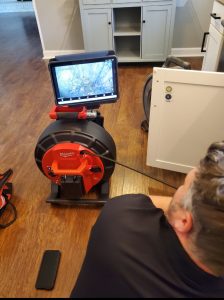
Our number one diagnostic tool is a high-resolution, waterproof camera attached to a long, flexible cable. We feed this camera right into your sewer line, usually through an access point called a cleanout. As it snakes through the pipe, it sends a live video feed back to a monitor, giving us a real-time tour of your entire sewer line, from your house all the way to the city connection.
People often search for “plumbing video inspection near me” when they suspect a major issue, and for good reason. This camera immediately shows us what’s really going on down there. We can see things like:
- Tree Root Intrusion: You’d be surprised how easily tiny roots can sneak into pipe joints, growing into a thick web that snags everything that goes down the drain. This is a common cause for sewer replacement in Johns Creek.
- Pipe Bellies: Sometimes, the ground shifts and a section of your pipe sags, creating a low spot. Waste and water pool there, leading to a clog that just won’t go away.
- Cracks and Breaks: Older pipes can get brittle, and ground movement can cause them to crack or even collapse, leaking raw sewage into your yard. This often requires an urgent leak repair.
- Nasty Blockages: We often find a stubborn clog made of grease, so-called “flushable” wipes, and other gunk that has built up over time.
This technology takes all the guesswork out of the equation. We see it, we know it.
Turning Pictures into a Plan
Once the camera inspection is done, the footage tells us everything we need to know. We note the exact location, depth, and type of damage. This information is crucial for deciding if a simple drain cleaning in Cumming is enough or if a full sewer line replacement is on the table.
A professional sewer camera inspection is the smartest move you can make when you have a main line issue. It ensures you only pay for the repair you actually need, avoiding expensive work that doesn’t solve the real problem.
By seeing the problem with our own eyes, we can give you an honest, upfront quote for the right repair. Whether you’re in Marietta or anywhere in Forsyth County, this tech-first approach means you’ll understand exactly what’s wrong and how we’re going to fix it. It’s how we move from simply suspecting a problem to knowing the solution.
Choosing the Right Sewer Repair for Your Home
Once our sewer camera has given us a clear picture of what’s happening underground, it’s time to decide on the best fix. In the old days, “sewer repair” meant one thing: digging a long, messy trench right through your yard. Thankfully, times have changed. Today, homeowners in Woodstock and Marietta have several options, and understanding them is the key to making a smart choice for your property.
The right decision really comes down to balancing the cost, the level of disruption you’re willing to deal with, and how long you want the repair to last. Let’s walk through the main approaches, from the classic “dig it up” method to the modern techniques that leave your lawn intact.
The Old-School Way: Traditional Excavation
Traditional excavation is exactly what it sounds like. We bring in an excavator to dig a trench that follows the path of your sewer line, giving us direct, hands-on access to the damaged pipe. Once it’s exposed, our plumbers can cut out the bad section and replace it with a new, high-quality PVC pipe.
This method is still the go-to for certain problems, especially if a pipe has completely collapsed or has a severe dip (a “belly”) that collects waste. Sometimes, you just have to dig. The big downside, of course, is the mess. It means tearing up your lawn, flower beds, and potentially your driveway or patio to get the job done. This is the difference between a simple sewer repair and a full sewer replacement.
The Modern Fix: Trenchless Sewer Repair
For most issues we see, trenchless repair is a far less invasive way to go. These game-changing techniques let us fix or completely replace your sewer line with very little digging, saving your beautiful landscaping from destruction. For homeowners in Roswell and Johns Creek with mature trees and established yards, this is often a huge relief.
We specialize in two main types of trenchless repair:
- Cured-In-Place Pipe (CIPP) Lining: Think of this as building a brand-new pipe right inside the old one. We insert a flexible liner coated in a special resin into the damaged pipe and inflate it. The resin then hardens, creating a tough, seamless pipe that’s often stronger than the original. CIPP lining is perfect for fixing cracks, small holes, and problems caused by tree roots.
- Pipe Bursting: When a pipe is too damaged to be relined, pipe bursting is our solution for a full replacement. We pull a brand-new, super-durable pipe through the old one. Attached to the front is a “bursting head” that breaks the old pipe apart, pushing the pieces harmlessly into the surrounding soil. This technique gives you a completely new sewer line with just two small access holes.
Trenchless sewer repair is about more than just saving your lawn. It’s faster, more efficient, and creates a seamless pipe with no joints—the very places where tree roots love to break in. It’s a smarter, more durable long-term solution.
The flowchart below shows how a professional diagnosis helps us zero in on the perfect repair for your specific situation.

This step-by-step process guarantees our recommendation is based on solid evidence, not guesswork.
Making the Smartest Choice
The move toward less disruptive repairs is happening everywhere as our country’s infrastructure gets older. The use of methods like CIPP is growing fast because they can cut down the need for excavation by up to 90% compared to traditional digging. For a family in Cobb County or Alpharetta in the middle of a home renovation, avoiding a plumbing disaster that tears up the yard is a huge win—especially since 44% of U.S. homeowners are spending more on home improvement projects these days. You can read more about the growth of the sewer rehabilitation market here.
To make things easier, here’s a simple chart to help you see the differences between your options at a glance.
Comparing Sewer Line Repair Methods
| Repair Method | Best For | Yard Disruption | Typical Timeline | Durability |
|---|---|---|---|---|
| Traditional Excavation | Completely collapsed pipes, severe sags (“bellies”), or when direct access is required. | High – A long trench is dug across the yard, impacting landscaping and hardscapes. | 2-5 days | Very high; new pipe sections are installed to modern standards. |
| CIPP Pipe Lining | Cracks, leaks, holes, and moderate root intrusion in structurally sound pipes. | Low – Requires one or two small access points, preserving most of the yard. | 1 day | Excellent; creates a seamless, joint-free pipe that resists roots. |
| Pipe Bursting | Severely damaged or collapsed pipes that need full replacement without major digging. | Low – Requires a small entry and exit pit, leaving the rest of the property untouched. | 1-2 days | Excellent; installs a brand new, seamless, and highly durable pipe. |
In the end, the right method always depends on what our sewer camera finds. As your trusted emergency plumber in North Metro Atlanta, we promise to give you a clear, honest assessment and walk you through every option. We want to make sure you have all the facts to protect your home and your wallet.
Let’s face it, when you realize your sewer line needs fixing, the first question that pops into your head is probably, “What’s this going to cost me?” That’s a completely fair question. For a project this significant, though, there’s no simple, one-size-fits-all answer. The final price tag for a sewer repair cost really depends on a few key things specific to your home and your property.
Getting a clear picture of these factors is exactly why a professional, on-site quote is so important. Forget those vague online estimators. A thorough inspection lets us give you an honest, accurate price for the specific water line replacement or sewer replacement you need in Cumming or Johns Creek, with no last-minute surprises.
The Key Factors Influencing Your Quote
Think of the final cost as being built from a few different pieces. A pipe that’s buried deep, runs a long way, and is tough to get to will naturally cost more to fix than one that’s shallow and easy to access. It just makes sense.
Here’s a quick rundown of what our technicians look at when they assess the situation:
- The Extent of the Damage: Are we dealing with a single crack that can be patched up, or has the whole line given way? A small spot repair is a world away from a full sewer replacement.
- Pipe Depth and Length: The deeper we have to dig and the longer the stretch of pipe we need to fix, the more time and materials it’s going to take. A 50-foot replacement is a very different job than a 10-foot one.
- Accessibility: Is your sewer line conveniently located under an open patch of grass? Or is it buried under your concrete driveway, a beautiful old oak tree, or your prized landscaping in Roswell? Any obstacles like these add to the complexity and time needed to get the job done right.
- Chosen Repair Method: As we’ve covered, traditional digging has a different cost structure than trenchless methods like pipe bursting or CIPP lining. Trenchless might seem more expensive upfront, but it can save you thousands by not having to rebuild your driveway or patio.
The Cost of Waiting vs Proactive Repair
Honestly, one of the most expensive mistakes you can make is ignoring those early warning signs. What seems like just a slow drain today can quickly turn into a full-blown sewer backup, flooding your home with contaminated water. At that point, you’re not just paying for the pipe repair; a huge part of the bill will be for professional sewage cleanup services.
Homeowners who delay addressing symptoms like slow drains can face emergency replacements costing anywhere from $5,000 to $20,000. In contrast, a proactive camera inspection and timely repair can save thousands.
Putting it off doesn’t just risk major property damage—it turns a manageable fix into a stressful and expensive emergency. Did you know that unaddressed residential clogs are responsible for about half of all sewer backups? As your 24 hour plumber in Marietta and Canton, we’re ready to handle over 95% of these emergencies the very same day to stop the damage in its tracks. To see more about how local experts provide fast, honest service, you can read the full research on the sewer services industry.
At JMJ Plumbing, we believe in giving you an honest, on-site assessment so you have a clear path forward. It’s all about protecting your property—and your wallet—from the high cost of waiting.
How to Choose the Right Plumber for the Job
Hiring someone for a major residential sewer line repair is a huge decision. It’s not just about fixing a clogged pipe; you’re trusting someone with the safety and integrity of your home. If you’re a homeowner anywhere from Acworth to Alpharetta, taking the time to vet a plumber properly is the single best way to ensure the job gets done right the first time.
When you’re dealing with something as serious as a sewer backup, you need a true professional, not just a handyman. That means they must be licensed and insured. A license, like our own Master Plumber certification (MP210218), proves they’ve met strict state requirements for skill and knowledge. Full insurance coverage is just as important—it protects you and your property from any potential accidents during the repair.
Look for Local Roots and a Rapid Response
In a plumbing emergency, the last thing you want is to wait around for a contractor who is hours away. A local company with a real office and deep roots in the community means they’ll get to you faster and be more accountable for their work. When you need an emergency plumber in Marietta or a 24 hour plumber in Roswell, being local makes all the difference.
Here’s a simple checklist to help you make the right choice:
- Verified Licensing and Insurance: Don’t be afraid to ask for their license number and proof of insurance. This is an absolute must.
- Strong Local Reviews: See what your neighbors are saying. Check Google, Yelp, and other review sites for a pattern of positive feedback in your area.
- 24/7 Emergency Availability: Sewer lines don’t wait for business hours to fail. Make sure the company you call offers around-the-clock service for urgent problems like a burst pipe repair.
- Upfront, On-Site Pricing: A trustworthy plumber won’t give you a vague quote over the phone. They’ll come out, run a camera inspection, and give you a detailed written estimate.
Choosing a plumber isn’t just about the fix; it’s about peace of mind. A well-established local company stands behind its work and is invested in maintaining a positive reputation within the communities it serves, from Cherokee County to North Fulton.
The JMJ Plumbing Commitment
At JMJ Plumbing, we’ve dedicated over 25 years to earning our reputation as the go-to experts for tough jobs like sewer replacement in Canton and main water line repair in Johns Creek. We bring certified expertise and a deep commitment to our neighbors across North Metro Atlanta. Whether you need a water heater replacement in Woodstock or an emergency sewer repair in Acworth, our team is ready.
Our team is fully licensed, insured, and on call 24/7 to tackle your most urgent plumbing problems. We believe in providing honest, on-site assessments and solutions that last, making sure your home’s most critical systems are restored with professional skill and care.
Your Sewer Line Repair Questions, Answered
Even with all the information, it’s natural to have a few more questions. A sewer line repair is a big deal for any homeowner, and the more you know, the more confident you’ll feel making a decision. Here are the straight-up answers to the questions we get asked all the time here in North Metro Atlanta.
How Long Does a Typical Sewer Line Repair Take?
This really comes down to the repair method we use. Modern trenchless repairs are surprisingly quick. For example, CIPP lining—where we essentially build a brand-new pipe right inside your old one—can often be done in just one day.
On the other hand, a traditional dig-and-replace job is a much bigger production. Just the process of excavating the trench, laying the new pipe, and then backfilling everything can take several days. The final timeline depends on how deep the pipe is, how long of a section we’re replacing, and what’s in the way, like your driveway or that big oak tree in the front yard.
Key Takeaway: Trenchless methods are the fastest way to get your plumbing back online with minimal fuss. A traditional repair is a multi-day project that requires a bit more patience.
Will Homeowners Insurance Cover My Sewer Line Replacement?
That’s the million-dollar question, isn’t it? The honest answer is: maybe. Most standard homeowner’s policies cover damage from sudden and accidental events. So, if a burst pipe repair is needed out of the blue, you might be in luck. But issues that creep up slowly over time, like corrosion or tree roots sneaking in, are usually seen as maintenance problems, which insurance won’t cover.
The only way to know for sure is to call your insurance agent and review your specific policy. It’s the best way to get a clear yes or no.
What Causes Most Sewer Line Damage in North Georgia?
Our local environment definitely has a say in how our pipes hold up. Living in areas from Canton to Cumming and across Cherokee County, we see the same few troublemakers over and over again:
- Aggressive Tree Roots: We all love North Georgia’s beautiful trees, but their roots are on a constant search for water. They can work their way into the tiniest crack in your sewer line, growing into a thick web that clogs and eventually breaks the pipe.
- Shifting Clay Soil: Our region is famous for its heavy clay soil. It swells up when it’s wet and shrinks when it’s dry. This constant movement puts a ton of stress on underground pipes, causing them to crack, shift out of alignment, or develop sunken spots called “bellies.”
- Old Pipes: Many homes across Cobb and North Fulton counties were built with cast iron or clay pipes. After decades in the ground, these materials are simply at the end of their lifespan and are much more likely to crack, corrode, or fall apart.
How Can I Prevent Future Sewer Line Problems?
You can’t stop a pipe from getting older, but you can absolutely take steps to keep it flowing freely. The best thing you can do is be careful about what you send down the drain. Never flush so-called “flushable” wipes, paper towels, or any feminine hygiene products. And please, don’t pour grease, oil, or coffee grounds down the kitchen sink—they solidify into nasty clogs. Regular drain cleaning can help prevent major issues.
If your home is getting up there in years, one of the smartest investments you can make is a preventative sewer camera inspection every few years. It lets a pro get eyes on the inside of your pipe and catch a small crack or minor root problem before it becomes a full-blown, messy sewer backup emergency.
Your home’s plumbing is the last thing you want to gamble on. For an honest, on-site assessment and expert residential sewer line repair from a team with over 25 years of local experience, trust JMJ Plumbing. Call us 24/7 or schedule your service online today.