That moment you spot a puddle growing around the base of your water heater is a real gut-punch. But before you panic, take a deep breath. What you do in the next 15 minutes is critical to stop a small mess from turning into a major flood.
Here's your emergency action plan. As plumbers serving the Woodstock and Roswell areas for years, we've seen it all, and these are the exact first steps we'd take to get the situation under control fast.
Your Immediate 2-Step Emergency Plan
Your first priority is always safety, followed by stopping the water. This means cutting the power or gas first, then turning off the water supply.
First, Kill the Power or Gas
Getting near a water heater that's actively leaking without cutting the energy source is a huge risk. Don't skip this. It's the most important safety step you can take.
- If you have an electric water heater: Head straight to your breaker box. Find the circuit labeled "Water Heater" and flip it to the OFF position. This is usually a larger, double-pole breaker. No fumbling in the dark with wet hands—just shut it down at the source.
- If you have a gas water heater: Look for the small gas line running into the control box at the bottom of the tank. You'll see a dial or a small valve handle. Turn it to the "OFF" position. Don't just turn it to "Pilot"; turn it all the way off. If you smell gas at any point, leave immediately and call your gas company and an emergency plumber in North Metro Atlanta.
Second, Shut Off the Water
Now that the electrical or gas hazard is gone, you can safely approach the unit to stop the flow of water.
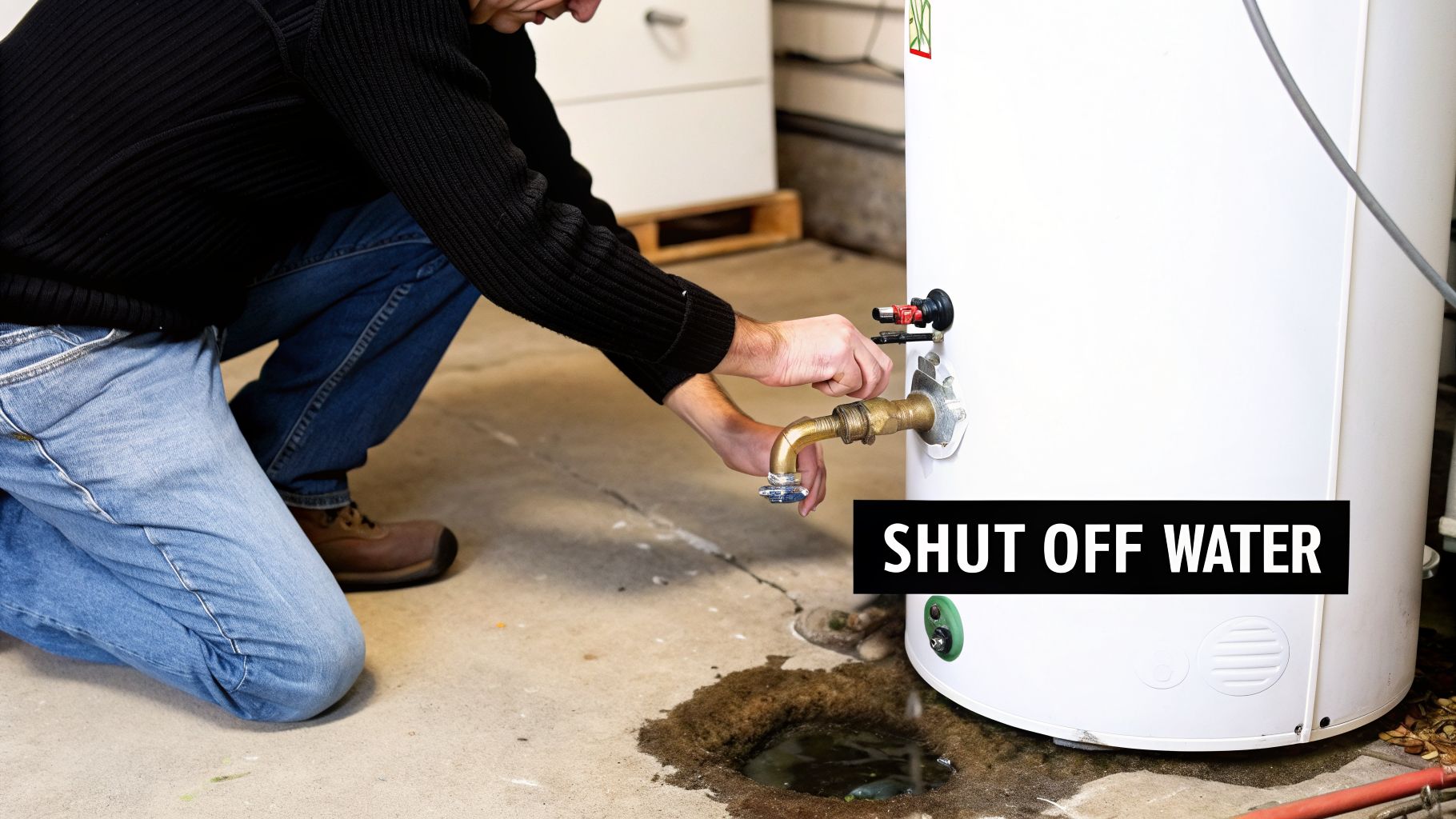
Look for the cold water pipe going into your heater, which is almost always on the top right side.
Pro Tip: The cold water inlet is usually marked with a blue ring or has a blue plastic insert on the handle. The hot water outlet on the left is often marked with red.
On that cold water line, you'll find a shut-off valve. It might be a lever you turn a quarter-turn or a round, wheel-like handle you have to turn clockwise several times. Turn it until it stops. This cuts off the fresh water supply, so the tank can't keep refilling and leaking.
To make this even simpler, here's a quick checklist to follow.
Emergency Action Checklist
Follow these steps immediately to secure your home and prevent further water damage.
| Action | Why It's Critical | How to Do It |
|---|---|---|
| Cut the Energy | Prevents electrocution (electric) or gas leaks (gas). This is the #1 safety priority. | Electric: Flip the "Water Heater" breaker in your main panel. Gas: Turn the gas valve dial on the unit to "OFF". |
| Shut Off Water | Stops new water from entering the tank, which stops the leak from getting worse. | Find the cold water inlet valve (often marked blue) on top of the tank and turn the handle or lever clockwise until it stops. |
| Drain the Tank (Optional) | If the tank itself has failed, draining it stops the active leak completely. | Attach a garden hose to the drain valve at the bottom and run it to a floor drain or outside. Open the drain valve. |
| Call a Pro | A professional can diagnose the real issue, ensure safety, and perform a lasting repair or replacement. | Contact a 24/7 plumber. Don't wait, as a small leak can cause significant damage, similar to a sewer backup or burst pipe. |
By following these initial steps, you've successfully contained the emergency.
You’ve stopped a minor headache from escalating into a full-blown disaster like a burst pipe repair situation. Whether you're in Canton, Marietta, or Alpharetta, taking these quick actions gives you the breathing room to figure out what’s wrong. Now, it's time to play detective and find the source of the leak.
Pinpointing the Source of the Leak
Alright, you've got the water and power shut off. Good job. The immediate crisis is over, and your home is safe. Now, let's put on a detective hat and figure out exactly where that water is coming from. Knowing the source is everything—it's the difference between a quick fix and needing a full water heater replacement in Woodstock.
Grab a good flashlight and a few dry paper towels. We're going to start at the top of the heater and work our way down, checking every connection and valve. This top-down approach is the best way to catch those slow, sneaky drips that can be easy to miss.
Checking the Top Connections
The first place to look is right on top of the tank where the two water lines connect. You'll see one for cold water coming in and one for hot water going out.
- Cold Water Inlet: This is the pipe attached to the valve you just closed. Get in there and feel around the base of the connection where it screws into the tank.
- Hot Water Outlet: Do the same thing for the other connection.
Sometimes you won't see an active drip, but you'll notice other clues. Look for any crusty white or greenish buildup—that's corrosion or mineral deposits left behind by a slow leak. This is where those paper towels really shine.
Pro Tip: Take a dry paper towel and wipe it firmly around the base of each fitting. Even a tiny leak that’s invisible to the naked eye will leave a damp spot on the paper. It's a simple trick we use all the time on service calls in Acworth and Alpharetta to confirm a leak.
If you find moisture, the fix might just be a matter of tightening a loose connection. But be careful—if the fitting is corroded or the gasket inside has failed, it’s a job for a professional leak repair in Acworth.
Inspecting Valves and Drains
Next, move your inspection down the side and to the bottom of the tank. There are a couple of common troublemakers here.
The first is the Temperature and Pressure (T&P) Relief Valve. It’s a critical safety feature, usually on the upper side of the tank, with a pipe running down toward the floor. Its job is to open up if the pressure or temperature inside gets dangerously high. A tiny, infrequent drip can sometimes be normal, but if you have a steady stream of water, you’ve got a serious pressure problem. That’s when you need an emergency plumber in Canton, no question.
The second spot to check is the drain valve at the very bottom. It looks just like an outdoor spigot for a garden hose. If water is seeping out of the nozzle or from around its base where it enters the tank, the valve might not be fully shut, or the washer inside has given up. This is a common issue that could lead to low water pressure.
Identifying a Failed Tank
This is the one we hope it isn't: a leak from the tank itself. If you see water dripping from the bottom edge of the outer metal jacket, or notice long rust streaks running down the side of the heater, it’s a sure sign of internal failure. The inner tank has rusted through, and unfortunately, there's no way to patch that. The entire unit has to be replaced.
A failed tank is a very common end-of-life scenario for a water heater. It’s a tough job being under constant pressure and heat. Consider that across the U.S., there are over 240,000 water main breaks every year, a testament to how water can wear down even the toughest infrastructure. While your home's pipes are your own, your water heater is just as vulnerable to a cracked inner tank or corroded fittings. You can read more about just how common plumbing issues are in these U.S. plumbing statistics.
Figuring out the exact source of the leak is the most important step. While a water heater is a closed system, understanding various leak detection methods shows how professionals are trained to find the single point of failure. Once you have a good idea of what you're dealing with, you can make a clear-headed decision about what to do next.
Deciding Between a Repair and a Full Replacement
So you've found the leak. Now comes the big question every homeowner dreads: Can this be fixed, or is it time for a water heater replacement in your Marietta home? Honestly, the answer almost always comes down to where the leak is and how old your heater is.
This decision tree gives you a quick visual guide to follow, helping you figure out whether you’re looking at a simple repair or a full replacement.
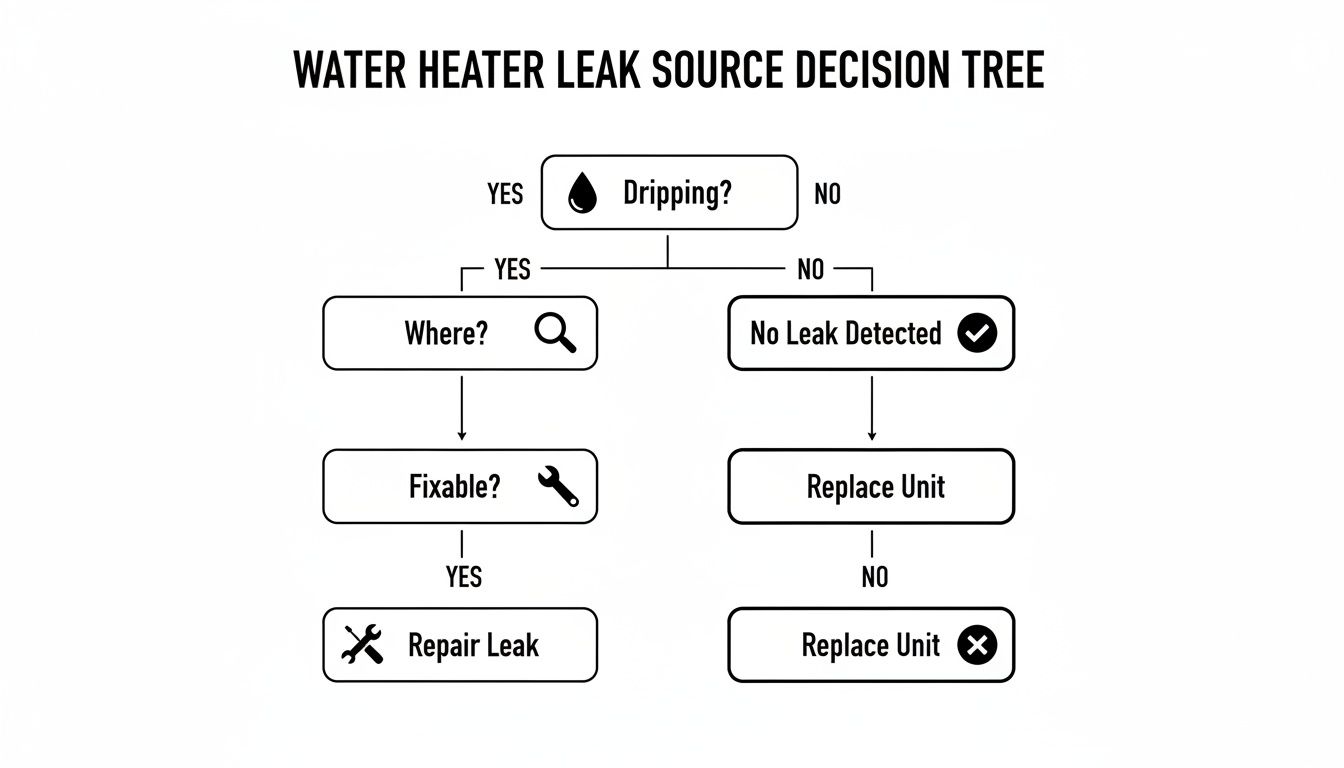
The main thing to remember is this: leaks from pipes and valves connected to the tank are usually fixable. Leaks from the tank itself mean it's game over. Knowing that difference is half the battle for anyone in Cobb County or Cherokee County dealing with this mess.
Scenarios That Usually Mean Repair
Some leaks look pretty dramatic but are often surprisingly simple to fix. If you've tracked the drip back to one of these common culprits, you can probably breathe a sigh of relief. You're likely looking at a professional leak repair, not a brand-new unit.
- Loose Pipe Fittings: The hot and cold water lines connected to the top of the heater can work themselves loose over the years. A plumber can typically tighten or reseal these connections in no time.
- Faulty T&P Valve: Is the temperature and pressure relief valve dripping constantly? That's a red flag, but it's not a catastrophe. We replace these valves all the time for homeowners in Johns Creek and Cumming—it's a standard fix.
- Worn-Out Drain Valve: That little plastic spigot at the bottom of the tank is notorious for failing. Replacing a leaky drain valve is a minor and inexpensive repair, often much simpler than a full sewer replacement.
These types of fixes are usually fast and won't break the bank. They'll get your hot water running again without the major expense of a new heater. The only catch? If your heater is already over 10 years old, you need to think hard about whether even a small repair is worth it.
Non-Negotiable Signs You Need a Replacement
Then there are the other kinds of leaks. The ones that are a clear signal your water heater's time is up. Throwing money at repairs for these problems is like putting a new roof on a house with a crumbling foundation—it just doesn't make sense. If you see any of these signs, it's time to start looking for a new water heater.
The most undeniable sign of a failed water heater is water leaking from the tank body itself. This means the inner tank has rusted through, and there is absolutely no safe or effective way to patch it. A replacement is your only option.
Here are the definitive signs that you need a water heater replacement in Alpharetta or anywhere in the North Metro Atlanta area:
- Water Leaking from the Tank: Like we just said, if water is weeping from the sides or bottom of the metal jacket, the internal tank is shot.
- Age of the Unit: A typical tank-style water heater has a lifespan of about 8-12 years. If yours is in that range or older, replacing it is a much smarter financial move than paying for one repair after another.
- Rusty Water (No Hot Water): If your hot water is coming out brown or rusty, or you suddenly have no hot water at all, it's a huge warning sign. The inside of your tank is corroding and will almost certainly spring a major leak soon.
- Loud Noises: All that rumbling, banging, and popping isn't normal. It's caused by a thick layer of sediment that's been cooked onto the bottom of the tank. This makes the heater work way too hard, stressing the metal and eventually causing it to crack.
For homeowners in Roswell or Canton, putting that repair money toward a new, energy-efficient model is almost always the better long-term decision. Modern heaters can make a real dent in your monthly utility bills, helping to offset the initial cost of the water heater replacement over time.
The True Cost of Ignoring a Water Heater Leak
That tiny puddle under your water heater? I've seen it a thousand times. It's easy to dismiss—just toss a towel on it and promise yourself you'll deal with it "later." But as a plumber who's been in countless basements and garages across North Metro Atlanta, I can tell you that "later" almost always turns into a costly disaster.
The true cost of that little leak isn't just the water you see.
It's a quiet thief, constantly working against you. Think about it: your water heater is now running overtime, burning through gas or electricity to heat water that’s just dripping away onto the floor. I've seen utility bills in places like Cumming and Acworth spike for this very reason. It's literally money down the drain.
From Wasted Water to Wrecked Homes
The wasted energy is just the tip of the iceberg. The water itself is the real enemy here.
The EPA notes that around 10% of U.S. homes have leaks wasting 90 gallons or more every single day. And a tiny 1/8-inch crack? That can unleash a shocking 250 gallons in 24 hours. While a slow drip from your heater might not seem that dramatic, it adds up to thousands of gallons over months. The Department of Energy has some great info on how these small leaks add up to big waste.
This constant dampness is a perfect recipe for serious trouble.
- Property Damage: Water is relentless. It will find its way into everything, buckling your floors, rotting out the subfloor, and turning drywall to mush. What should have been a simple leak repair can quickly spiral into a major renovation.
- Hazardous Mold Growth: Here in the humid Georgia climate, a sewage smell or dampness is a sign of trouble. A damp, dark space behind a water heater is prime real estate. Before you know it, you’ve got a serious air quality problem that can affect your family's health.
- Sudden Failure: A slow leak is often a symptom of advanced rust and corrosion inside the tank. If you ignore that warning sign, you're risking a catastrophic failure. I’m talking about a full-blown rupture that dumps dozens of gallons of hot water into your home in minutes. That's a burst pipe scenario that causes damage far beyond the cost of a planned water line replacement.
Insurance Headaches and Financial Nightmares
The bill for cleaning up after a major water heater flood can easily climb into the thousands. It’s also crucial to understand whether your homeowners insurance covers water damage—especially when the leak was left unchecked. Many policies have clauses that deny claims resulting from poor maintenance.
Don't gamble with your home and your wallet. A small leak is a clear warning sign. Procrastinating only guarantees that the damage—and the final bill—will be much, much worse.
For anyone living in Roswell or Forsyth County, making a proactive call to a 24 hour plumber is the smartest move you can make. It’s the difference between a small inconvenience and a devastating emergency.
When to Call an Emergency Plumber in North Metro Atlanta
Some home repairs are perfect for a weekend warrior. A leaking water heater isn't one of them. While you might be tempted to just tighten a fitting and call it a day, the stakes are incredibly high. You're dealing with a potent mix of water pressure, high temperatures, and the main water line to your house—a small mistake can quickly turn into a full-blown catastrophe.
There are a few red flags that mean you need to stop what you're doing and call a pro immediately. If you see water in your yard, water pooling around the tank's base, or hear a hissing from the T&P valve, that’s your sign. These aren't minor drips; they're clear indicators of system failure or dangerously high pressure. If you're in Cobb County or Cherokee County, don't think twice—search for an "emergency plumber near me" right away.
Why Professional Help Is Non-Negotiable
Calling a licensed, 24 hour plumber is about so much more than just plugging a leak. It’s about protecting your property and your family. When our JMJ Plumbing team gets a call in Woodstock or Alpharetta, we’re not just bringing tools. We’re bringing peace of mind.
A professional response looks like this:
- Rapid Response: A true 24/7 plumber knows every minute counts. We get there fast to limit the water damage, which can head off more severe problems like needing sewer repair or even a main water line repair down the road.
- Expert Diagnosis: We have the experience and equipment to find the real problem. Is it just a bad valve, or is the tank itself about to give out? A correct diagnosis saves you from paying for a fix that doesn't actually solve anything.
- On-the-Spot Solutions: Our service trucks are basically warehouses on wheels. We carry the parts for most common repairs, including valves, fittings, and even complete water heater replacement units. The goal is to get your life back to normal in one visit.
When a water heater fails, it’s not just an inconvenience—it's a significant plumbing event. A professional ensures the job is done safely, correctly, and up to local codes in communities like Marietta and Roswell, preventing future hazards.
The Value of Trustworthy Service
A sudden leak is stressful enough without having to worry if you're being taken for a ride. You need an expert who gives you a straight answer and a fair price. That's why we always provide a clear, upfront quote on-site before we touch anything. No hidden fees, no surprises. That kind of transparency is crucial in an emergency, whether it’s a failed water heater, a clogged toilet that won't flush, or a messy sewer backup.
The amount of water lost to leaks is shocking. The Environmental Protection Agency estimates that household leaks waste over 1 trillion gallons of water across the country every year. For you, that means a higher water bill and a bigger mess to clean up. You can read more about how common these issues are by checking out these home water leak statistics. When you need a fast, reliable solution anywhere in North Fulton or Forsyth County, calling a pro is the best investment you can make for your home.
Your Top Questions About Leaking Water Heaters, Answered
When you find a puddle around your water heater, your mind probably jumps to a dozen different questions at once. How bad is it? What will this cost? We get it. As the go-to plumbers for folks all over North Metro Atlanta, we've heard every question in the book. Let's clear up some of the most common ones we hear from homeowners in your shoes.
What's the Bill Going to Look Like for a Leaky Water Heater in Atlanta?
This is usually the first question, and the honest answer is: it really depends. The cost to fix a leaking water heater in places like Roswell or Canton can vary wildly based on what’s actually wrong.
If it's something simple, like a loose connection we can tighten during a service call, you're looking at a minor leak repair expense. Even replacing a faulty part, like the T&P valve, is a pretty straightforward and affordable fix.
The whole situation changes if the tank itself is the source of the leak. A rusted-out tank can't be patched or repaired; it’s an automatic sign that you need a full water heater replacement. For a new installation in Cobb County or North Fulton, the price will depend on a few things:
- Tank Size: Naturally, a 50-gallon tank costs more than a 40-gallon one.
- Model Type: Are you sticking with a standard tank or upgrading to a high-efficiency tankless model? The initial investment is different.
- Installation Complexity: Sometimes the job requires updating pipes or vents to meet current codes, which can add to the total.
We never want you to be in the dark. That's why we always give you a clear, upfront quote right there on-site before we pick up a single tool. No surprises, just straight answers.
Can I Keep Using Water if the Heater Is Leaking?
Our professional advice is a hard no. It's just not worth the risk.
Sure, if you have a tiny, slow drip coming from a fitting, you could in theory shut off the cold water supply valve leading into the heater and still have cold water service to the rest of your house. But you're playing with fire.
The only truly safe move for any noticeable leak—and especially if you have an electric water heater—is to cut the power or gas supply and shut off the water to the unit immediately. Pushing your luck could lead to a flooded basement and serious electrical dangers.
What starts as a small problem that could have been a simple drain cleaning or minor repair can quickly spiral into a full-blown, expensive replacement if you ignore it. Don't chance it.
How Do I Keep This from Happening Again?
The best way to deal with a leak is to stop it before it starts. A little proactive maintenance goes a long way in preventing a middle-of-the-night plumbing emergency. Here in North Georgia, our notoriously hard water means sediment buildup is the number one enemy of your water heater's tank.
We can't stress this enough: get a professional inspection and flush done once a year. This one service call cleans out all the gunk that causes corrosion and tank failure. While they're at it, have your plumber check the anode rod. This is a "sacrificial" rod that's designed to rust away so your tank doesn't. Swapping it out every few years is a cheap trick that can add years to your water heater's lifespan and keep you from needing a 24 hour plumber for a catastrophe later on.
Whether you're dealing with a leaking water heater, a nasty sewer backup, or you just need a reliable emergency plumber in Woodstock, you need help you can trust—fast. For over 25 years, JMJ Plumbing has been the 24/7 lifeline for homeowners across North Metro Atlanta. For an honest diagnosis and a solution that lasts, find us online at https://www.jmjplumbing.com.