That gurgling toilet or stubborn slow drain isn't just a minor annoyance; it could be a critical early warning from your home's main sewer line. For homeowners across North Metro Atlanta, from Woodstock and Acworth to Alpharetta and Cumming, recognizing these signals is the key to preventing a catastrophic sewage backup. Ignoring the initial signs of sewer line problems can lead to thousands in property damage, serious health hazards, and the stress of a plumbing emergency that disrupts your entire life.
This guide is designed to give you clear, actionable information. We will break down the eight most common signs that your sewer system is in trouble, helping you connect the dots between a strange smell and a potential main line clog or a burst pipe underground. You'll learn what these symptoms mean, what you can safely check yourself, and when you absolutely need to call for professional sewer repair in Woodstock or the surrounding areas.
Whether you're dealing with slow drains in Roswell, a sewage smell in Marietta, or suspect you need a full sewer replacement in Canton, understanding these warnings is your first line of defense. Knowing what to look for can be the difference between a manageable, scheduled repair and a frantic call to a 24 hour plumber for an emergency sewer backup. At JMJ Plumbing, we are available 24/7 to provide a fast response and expert diagnosis for all your sewer and drain cleaning needs, ensuring your home remains safe and functional.
1. Multiple Slow Drains Throughout the Home
If you notice your kitchen sink, shower, and a toilet all draining slower than usual, it’s a strong indicator that you’re dealing with more than just a simple, isolated clog. A single slow drain is an annoyance; multiple slow drains happening at the same time are a major red flag. This widespread slowdown is one of the classic signs of sewer line problems, suggesting the blockage exists in your home's main sewer line, which collects wastewater from all your individual fixtures before sending it to the municipal sewer system.
Unlike a localized clog in a single P-trap under a sink, a main line issue affects the entire plumbing system downstream from the blockage. Every drain in your house relies on this single pipe to function correctly. When it’s obstructed, there’s nowhere for the water to go, causing it to back up into the fixtures located at the lowest points of your home first, like a basement shower or a ground-floor toilet where you have a clogged toilet won't flush.
Common Causes in the Atlanta Area
In North Metro Atlanta, we often see this issue arise from specific local conditions. Homes in established neighborhoods like Marietta and Roswell with large, mature oak or pecan trees are particularly at risk. These trees have aggressive root systems that are naturally drawn to the moisture and nutrients inside your sewer line, often penetrating older clay or cast-iron pipes and creating a dense, web-like blockage that requires professional drain cleaning.
Expert Insight: Don't dismiss widespread slow drains as a coincidence. It is one of the earliest and most reliable warnings your plumbing system can give you about a developing main line blockage. Ignoring it can quickly lead to a full-blown sewage backup inside your home—a costly and unsanitary emergency.
What You Should Do
If you suspect a main sewer line issue, you can perform a quick diagnostic test. First, check multiple drains in different parts of your house. Run the water in an upstairs bathroom sink while a downstairs toilet is flushed. If you hear gurgling sounds from a nearby shower drain or see the water level in the toilet bowl rise, it confirms the problem is in the shared main line.
At this point, DIY solutions like chemical drain cleaners are not only ineffective but can also damage your pipes. The most effective next step is to call for professional help. JMJ Plumbing offers 24 hour plumber services across Woodstock, Canton, and Alpharetta for exactly these situations. We use advanced video camera inspection technology to see inside your sewer line, pinpointing the exact location and cause of the clog-whether it’s root intrusion, a collapsed pipe, or a severe grease buildup. This allows for a targeted sewer repair in Canton without guesswork, saving you time and money.
2. Sewage Backups or Gurgling Sounds
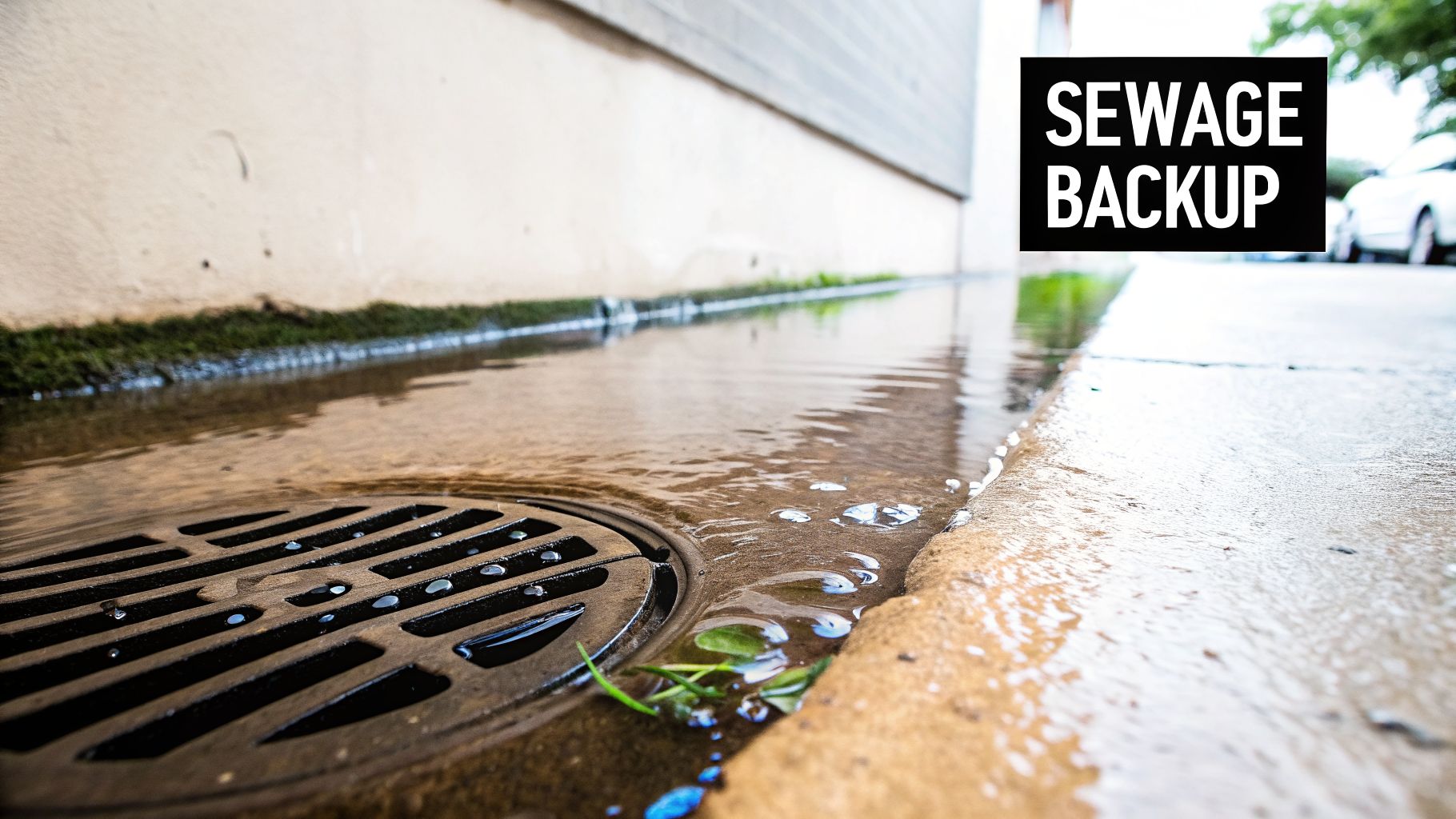
A sewage backup is one of the most serious and unmistakable signs of sewer line problems. If you see raw sewage and foul water flowing back into your home through toilets, shower drains, or floor drains, you are facing a plumbing emergency that requires immediate attention. This alarming event occurs when your main sewer line is so severely blocked or has completely collapsed, forcing wastewater to reverse its flow back into your house instead of away from it. Gurgling noises from your drains or toilets are an early warning sign that often precedes a backup, indicating trapped air in the pipes struggling to get past an obstruction.
Unlike slow drains, which signal a developing issue, a sewage backup is a critical failure of your plumbing system. The gurgling sound is caused by air being displaced by water trying to push through a partial clog in the main line. When you flush a toilet or run a washing machine, the large volume of water pushes air forward, but if the blockage is significant, that air is forced back up through the nearest fixture, creating that telltale gurgle. This is a clear sign that pressure is building and a complete blockage is imminent.
Common Causes in the Atlanta Area
In communities like Roswell and Marietta, homes with older plumbing infrastructure are particularly vulnerable. Many properties still rely on original clay or cast-iron pipes installed decades ago. These materials are prone to corrosion, cracking, and collapsing over time. Heavy rains can also overwhelm aging municipal sewer systems, increasing pressure and causing backups in homes, especially in low-lying areas. We often perform sewer repair in Roswell where the combination of aging private lines and municipal strain creates a perfect storm for backups.
Expert Insight: A sewage backup is not just a messy inconvenience; it's a severe health hazard. Raw sewage contains dangerous bacteria, viruses, and pathogens that can cause serious illness. Never attempt to clean a significant backup yourself without proper protective gear. The risk of contamination is extremely high.
What You Should Do
If you experience a sewage backup, the first and most critical step is to stop using all water in your home immediately. Do not flush toilets, run sinks, or use the washing machine, as this will only add more water to the system and worsen the flooding. The situation demands a professional response to minimize property damage and health risks.
This is a true plumbing emergency. Call JMJ Plumbing right away for a 24 hour plumber in Acworth, Johns Creek, and throughout North Metro Atlanta. We can dispatch a technician to quickly contain the situation and perform a video camera inspection to diagnose the root cause of the sewer backup. Whether it's a severe clog requiring high-pressure hydro-jetting or a collapsed pipe needing a sewer replacement, our team has the technology and expertise to provide a fast, effective, and safe solution.
3. Lush or Soggy Patches in the Yard
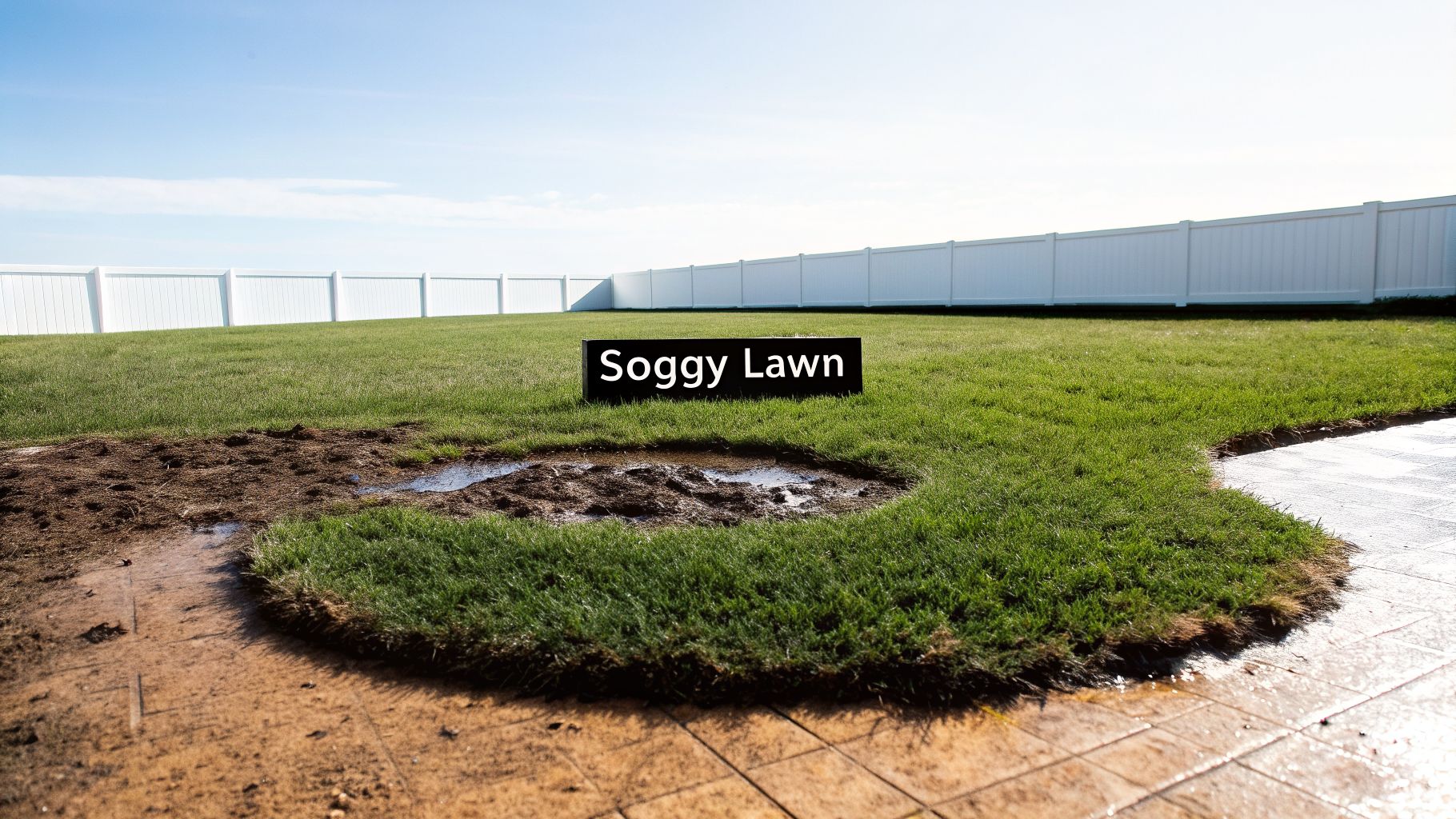
An isolated patch of unusually green grass or a persistently soggy area in your yard, especially during dry weather, can be a telltale sign of an underground sewer line leak. While a healthy lawn is desirable, this sudden, localized growth is often an indicator of a problem. When a sewer line cracks or breaks, the wastewater seeping into the surrounding soil acts as a powerful fertilizer, causing the grass directly above the leak to become greener and more lush than the rest of the yard. This is one of the more subtle but critical signs of sewer line problems.
This constant moisture saturation from a leaking pipe can also create soft, marshy spots in your lawn. You might notice these areas when mowing the grass or walking across the yard. The issue becomes even more apparent in the summer when the surrounding lawn is dry and dormant, making the contrast with the vibrant, wet patch unmistakable. A leaking sewer line can eventually lead to soil erosion, creating sinkholes or even damaging your home's foundation.
Common Causes in the Atlanta Area
The unique soil composition across North Metro Atlanta often contributes to this specific problem. In areas like Roswell and Johns Creek, the heavy clay soil expands and contracts with moisture and temperature changes, putting immense stress on older sewer pipes and causing them to crack. Similarly, the rocky, granite-based soil found in parts of Cumming can create drainage issues, causing leaked sewage to pool and become more visible. In established neighborhoods in Cherokee County and North Fulton, mature trees with extensive root systems are a primary culprit, breaking through pipes in their search for a constant water source.
Expert Insight: That perpetually wet spot in your yard is more than just a landscaping nuisance; it's a biohazard. Leaked raw sewage contains harmful bacteria and pathogens that can pose a health risk to your family and pets. Avoid the area and treat it as an urgent call for a professional sewer repair inspection.
What You Should Do
If you notice a suspicious patch in your yard, you can start by mapping its location relative to your house. Your main sewer line typically runs in a straight line from your home to the street or septic tank. If the soggy area falls along this path, it strongly suggests a leak. Note if the problem worsens after heavy water usage, such as doing multiple loads of laundry.
Do not attempt to dig in the area yourself. The most reliable action is to contact a professional for a definitive diagnosis. JMJ Plumbing provides emergency plumber services throughout Cherokee and Forsyth County. We use specialized video camera inspection equipment to look inside the pipe, confirming the exact location and severity of the break without destructive guesswork. This technology allows us to recommend the most effective water line replacement or repair solution, protecting your property and restoring your plumbing system's integrity.
4. Persistent Foul Odors Inside or Outside Your Home
If you're noticing a persistent foul odor that smells like sulfur or raw sewage either inside your home or around your property, it's a very clear sign that something is wrong with your plumbing. While a temporary smell can come from a dried-out P-trap, a constant and unpleasant odor indicates that sewer gas is escaping your pipes. This is one of the most unmistakable signs of sewer line problems, pointing to a crack, break, or ventilation issue in your main sewer line.
Your plumbing system is designed to be airtight, preventing harmful and foul-smelling sewer gases from entering your living space. When a pipe cracks or a joint separates, these gases have a direct path to escape. You may notice the smell near drains, along the foundation of your house, or in specific areas of your yard. The odor often becomes more noticeable in warmer weather as the gases expand and rise.
Common Causes in the Atlanta Area
In the North Metro Atlanta region, persistent sewer odors can often be traced back to aging infrastructure. For example, many homes in Acworth and Kennesaw built in the 1990s or earlier have original clay or cast-iron sewer lines that have begun to corrode and fail. Similarly, properties in Marietta and Cobb County with old cast-iron pipes can experience joint separation due to oxidation. Even newer homes in areas like Cumming aren't immune if improper grading or ground settling has caused cracks in modern PVC lines.
Expert Insight: Don't get used to a bad smell. Homeowners often experience "olfactory adaptation," where they stop noticing a persistent odor. This is a dangerous habit, as that smell is a constant warning of a potential sewer repair need. If a guest ever comments on an odor you don't notice, take it seriously.
What You Should Do
Before assuming a major line break, you can check a few things. First, identify if the odor is coming from a single drain or multiple locations. An isolated smell might just be a dried-out P-trap in a rarely used bathroom; running water for a minute can refill it and block the gas. You can also check your roof for a blocked plumbing vent stack, which can cause similar symptoms but is a simpler fix.
However, if the smell is widespread, outside, or doesn't go away, it's time to call a professional. DIY methods are not effective for locating underground leaks. At JMJ Plumbing, we provide 24 hour plumber services for this exact reason. Our technicians use specialized smoke testing and video camera inspection equipment to pinpoint the exact source of the leak without destructive digging. This allows us to offer targeted sewer repair or replacement solutions in Woodstock, Alpharetta, and across North Fulton, resolving the issue efficiently and permanently.
5. Foundation Cracks or Structural Settlement
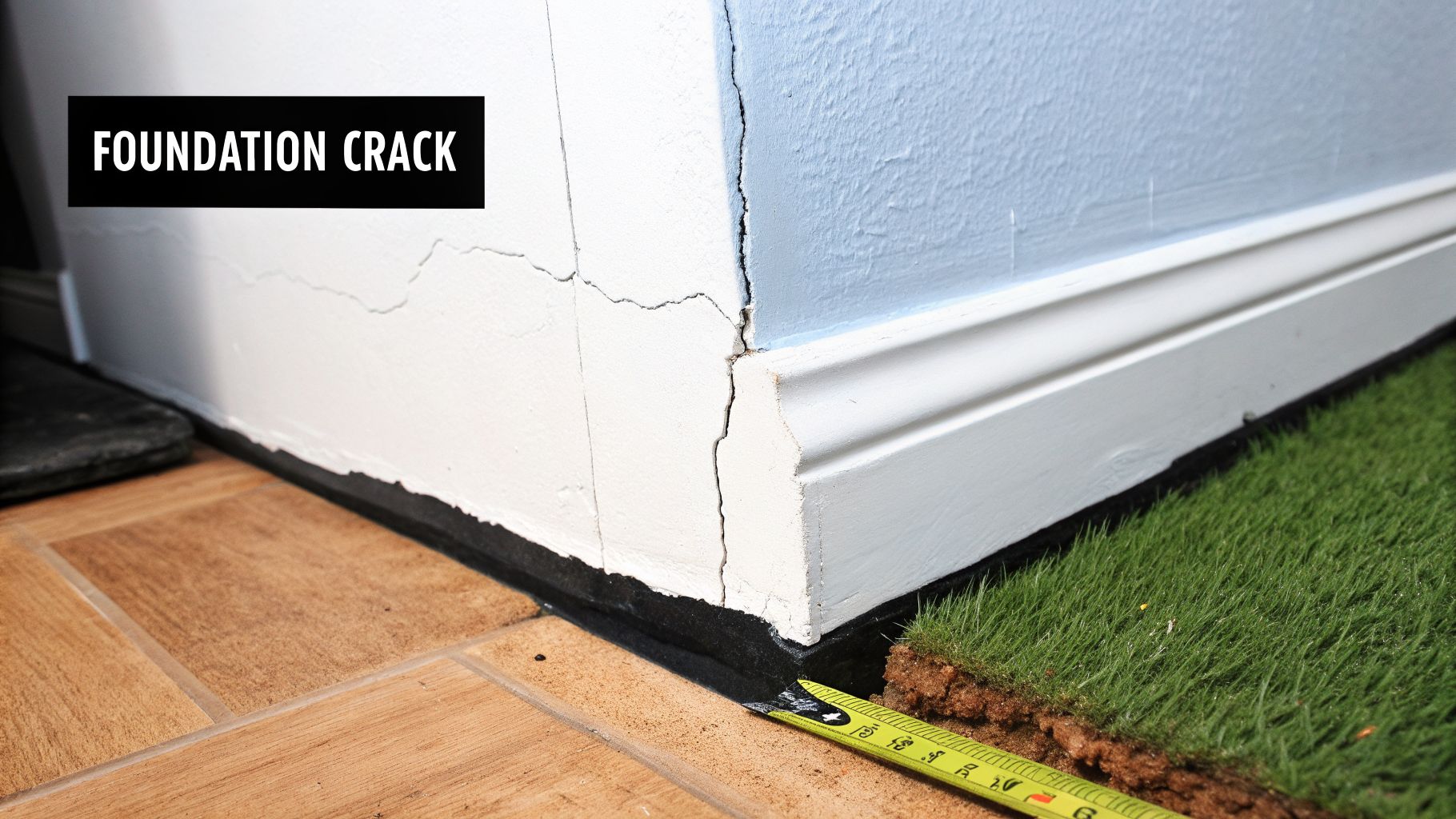
While many homeowners associate foundation cracks with age or poor construction, one of the most insidious causes is hidden underground: a failing sewer line. When a sewer pipe leaks or collapses, it saturates the surrounding soil with water. This excess moisture erodes the soil, creating voids and destabilizing the very ground your home’s foundation rests upon. This gradual settlement can lead to new cracks in your foundation, walls, or even cause your floors to become uneven.
Unlike settlement from other causes, damage from a sewer leak is progressive. The continuous flow of wastewater worsens the soil erosion, accelerating structural damage. Recognizing this as one of the critical signs of sewer line problems is essential for protecting your home’s integrity. The cost of foundation repair is significant, making early detection and sewer repair a far more manageable expense.
Common Causes in the Atlanta Area
In North Metro Atlanta, our unique soil composition makes homes particularly vulnerable to this issue. The dense clay soil common throughout Cobb and Cherokee County is highly reactive to moisture changes. A sewer line leak can turn stable clay into a soft, unstable slurry. We see this frequently in Cumming and Johns Creek, where homes built in the 1980s and 1990s are now experiencing foundation issues linked to their original sewer lines failing. Similarly, properties in Marietta with older cast-iron pipes are at risk of collapses that create underground voids and lead to noticeable settling.
Expert Insight: Foundation damage is one of the most severe consequences of a neglected sewer line leak. If you see new cracks in your brick, drywall, or concrete slab, don't just call a foundation company. The root cause might be a plumbing issue that, if left unaddressed, will continue to undermine any structural repairs you make.
What You Should Do
If you notice new or worsening cracks, it's time to investigate. Start by documenting the cracks with dated photos and measurements. You can place a pencil mark at the end of a crack to easily track its growth over time. Rapid changes are a signal for immediate action. For a deeper understanding of what the cracks might mean, a detailed homeowner's guide to foundation cracks and settling can provide valuable context on the types and causes of foundation damage.
However, a visual inspection alone can't confirm the source. The definitive next step is to call a professional plumber to perform a sewer camera inspection. JMJ Plumbing serves Woodstock, Acworth, and all of Cobb County, providing expert diagnostics to determine if a leak in your system is the culprit. A proper diagnosis may reveal the need for a main water line repair or a full sewer replacement. By identifying and fixing the underground pipe problem first, we can stop the soil erosion at its source, preventing further damage and ensuring any foundation repairs will last.
6. Pest Infestations Around Drains and Foundation
If you’re battling a persistent pest problem despite repeated treatments from an exterminator, the source may not be where you think. An unusual or sudden increase in pests like cockroaches, rodents, and other insects around your drains, foundation, or yard is one of the more unsettling signs of sewer line problems. A broken or cracked sewer pipe creates a perfect superhighway for pests, giving them a protected and direct route into your home while providing the moisture and food source they need to thrive.
Unlike a typical infestation that might be isolated to a kitchen pantry or attic, a sewer-related pest issue can seem to pop up in multiple, disconnected areas of your house. This is because pests are using your underground plumbing network to travel. Rats, in particular, are notorious for navigating sewer systems and can squeeze through surprisingly small cracks in a damaged pipe, gaining access to the voids inside your walls and floors.
Common Causes in the Atlanta Area
This problem is especially prevalent in North Metro Atlanta communities with aging infrastructure. In parts of Alpharetta and Roswell, older homes with original clay or cast-iron sewer lines can develop cracks from ground shifting or age, providing an open invitation for rodents. We’ve also seen cases in Canton where aggressive tree root intrusion has fractured pipes, creating gaps large enough for pests to come and go as they please. The damp, dark environment of a leaking sewer line is also a magnet for other pests; for example, the constant moisture can lead to significant carpenter ant infestations.
Expert Insight: A pest control company can treat the symptoms, but they can't fix the source if it's a broken sewer line. If you've had multiple unsuccessful pest treatments, especially for cockroaches in a basement or ground-floor bathroom in an Acworth home, it's time to consider that the pests are coming from a compromised drain pipe. Ignoring this can lead to a constant, unsanitary battle you can’t win.
What You Should Do
If you suspect your pest problem is linked to your plumbing, observe where the activity is concentrated. Are you noticing pests near floor drains, under sinks, or around the base of your toilets? If professional pest control efforts fail to resolve the issue, your next step should be a plumbing investigation, not another round of spraying. Sealing visible cracks in your foundation is a good temporary measure, but it won’t stop pests from using a broken sewer line as their entry point.
Don't let a broken pipe turn your home into a haven for pests. The definitive way to confirm the issue is with a professional camera inspection. JMJ Plumbing provides sewer repair near me services across Woodstock, Canton, and Marietta. We can deploy a specialized camera into your sewer line to find any breaks, cracks, or gaps that pests are using. Once we identify the point of entry, we can perform a targeted sewer replacement or repair to permanently seal off access and solve your pest problem at its source.
7. Unusually High Water Bills
A sudden, unexplained spike in your monthly water bill is an often-overlooked warning sign that could be pointing to a hidden sewer line leak or even a main water line repair issue. While it’s easy to blame seasonal changes or having extra guests, a sustained increase of 25% or more without a change in your household's habits warrants a closer look. This is one of the more subtle signs of sewer line problems, indicating that water is leaking from a pipe underground, passing through your meter, and seeping directly into the soil before it ever reaches your home.
Unlike a dripping faucet you can see and hear, a sewer line leak happens out of sight. The water escaping from the broken pipe is still registered by your municipal water meter, meaning you are paying for every gallon that gets wasted. Ignoring this can lead to hundreds, or even thousands, of dollars in wasted water charges over time, all while the damage to your property's main line worsens, potentially leading to a burst pipe repair emergency.
Common Causes in the Atlanta Area
This issue is particularly relevant for homes in the North Metro Atlanta area with older plumbing infrastructure. We have seen cases in Johns Creek where slow leaks in aging clay sewer pipes went completely undetected for over six months, only revealing themselves after the homeowner received several shockingly high water bills. Similarly, families in Marietta have reported their water bills jumping by over 40% during winter months when outdoor irrigation is off, a clear indicator of a significant underground leak that required professional leak repair.
Expert Insight: Your water bill is a diagnostic tool. A consistent and unexplained increase is not normal. By tracking your monthly usage, you can establish a baseline and spot a potential sewer leak long before it causes more severe symptoms like foundation damage or a full sewage backup.
What You Should Do
If you suspect your high bills are from a hidden leak, start by reviewing your past 3-6 months of statements to document the trend. Many utility companies in cities like Cumming and Johns Creek offer online portals with detailed usage data that can help pinpoint when the increase began. You can also request a meter test from your water provider, a service they often provide for free or a minimal charge to rule out a faulty meter.
If the meter test confirms a leak is present on your property, it's time to call in the professionals. Do not wait for the problem to escalate. JMJ Plumbing serves the entire Woodstock and Alpharetta region with 24/7 emergency plumber services. We use non-invasive leak detection equipment and video camera inspections to accurately locate the source of the water loss within your sewer line. Identifying the exact problem allows us to perform a targeted sewer line replacement or repair, fixing the leak efficiently and helping you get your water bills back under control.
8. Age of Sewer Line and Material Composition
Sometimes, the most significant sign of a future sewer line problem isn’t a symptom you can see or smell, but a fact hidden in your home's history. The age and material of your main sewer line are critical predictive indicators of failure. Homes built before the 1980s with their original sewer pipes face a significantly higher risk, as materials like clay and cast iron have a finite lifespan and begin to degrade after 40-50 years of service.
Understanding your sewer line's composition is like knowing the expiration date on a crucial piece of infrastructure. Clay pipes, common in older homes, become brittle over time, making them highly susceptible to cracks and root intrusion. Cast-iron pipes corrode from the inside out, leading to scaling that snags waste and causes blockages, and eventually the joints separate or the pipe walls collapse. Even newer homes with PVC pipes aren't immune if they were installed improperly or are located in areas with unstable soil that causes shifting and breakage.
Common Causes in the Atlanta Area
North Metro Atlanta's diverse housing stock provides clear examples of this issue. Many historic homes in Marietta, built from 1960-1970 with cast-iron lines, are now experiencing widespread failures. Similarly, neighborhoods in Acworth and Canton developed in the mid-70s are filled with 40+ year-old clay pipes that are at the end of their functional life. We've even seen unexpected failures in newer Johns Creek developments from the 2000s, where PVC lines have cracked due to the area's settling clay soil.
Expert Insight: Your sewer line's age is the most valuable predictive tool you have. Proactively addressing a 50-year-old cast-iron line is far less disruptive and expensive than dealing with the catastrophic failure and sewage backup that is almost certain to happen. Planning a sewer replacement in Marietta on your terms saves thousands over an emergency call.
What You Should Do
If you live in an older home and are unsure of your sewer line's material or condition, it's time to be proactive. When purchasing a home, always request municipal sewer records, which may show the installation date and material used. If records are unavailable, the best course of action is to schedule a professional video camera inspection.
A camera inspection provides a definitive look at the inside of your pipe, identifying the material, its condition, and any existing problems like cracks, root intrusion, or belly sags. For homeowners in Woodstock, Roswell, and Cumming with pipes over 40 years old, this inspection is essential for peace of mind. JMJ Plumbing can perform this service to determine if you need immediate sewer repair or if you should budget for a future replacement, potentially using less invasive trenchless methods to save your landscaping.
8-Point Comparison of Sewer Line Problem Signs
| Sign / Symptom | 🔄 Implementation complexity | ⚡ Resource requirements | 📊 Expected outcomes | 💡 Ideal use cases | ⭐ Key advantages |
|---|---|---|---|---|---|
| Multiple Slow Drains Throughout the Home | Moderate — diagnostic video often needed to confirm main-line issue | Professional camera inspection, basic clearing tools; possible targeted repair or lining | Locates main-line blockage; can prevent escalation to backups | When several fixtures drain slowly, especially after rain or in older homes | ⭐ Early detection reduces emergency repairs and scheduling flexibility |
| Sewage Backups or Gurgling Sounds | High — urgent, full-line assessment and immediate action required | Emergency crew, sanitation/cleanup, possible excavation or full replacement | Removes contamination, addresses health hazard, typically requires major repair | Immediate response when raw sewage appears or persistent gurgling occurs | ⭐ Clear emergency indicator prompting fast, necessary remediation |
| Lush or Soggy Patches in the Yard | Low–Moderate — visual assessment then confirm with camera inspection | Initial visual check; camera inspection and targeted excavation or trenchless repair if confirmed | Pinpoints leak location; enables less invasive, targeted repairs | Unusually green/wet patches during dry periods or localized soggy soil | ⭐ Above-ground clue that narrows search area and reduces diagnostic time |
| Persistent Foul Odors Inside or Outside Your Home | Low — detect then inspect vents and sewer line; rule out simple trap/vent issues first | Camera inspection, vent-stack check, odor testing; possible localized repairs | Identifies source (vent, crack, or leak); ventilation and repair reduce odors | When sulfurous/rotten-egg smells persist or worsen with weather | ⭐ Easily detected without tools; prompts timely professional inspection |
| Foundation Cracks or Structural Settlement | High — requires coordinated sewer and structural inspections and repairs | Sewer camera, structural engineer, potential foundation stabilization and sewer replacement | Stops ongoing soil erosion; often requires costly foundation remediation | New or worsening cracks, sloping floors, doors/windows sticking near sewer path | ⭐ Strong evidence of advanced damage—supports insurance/repair prioritization |
| Pest Infestations Around Drains and Foundation | Moderate — pest assessment plus sewer inspection to confirm entry points | Pest control services, camera inspection, sealing/pipe repair | Eliminates pest access routes once sewer damage repaired; reduces reinfestation | Repeated infestations in multiple areas despite pest treatments | ⭐ Visible, actionable sign linking pests to underlying sewer breaches |
| Unusually High Water Bills | Low — meter/usage review and utility test followed by inspection if needed | Utility meter test, usage data review, camera inspection if external leak suspected | Confirms external leak; repair reduces ongoing water waste and bills | Sudden ≥25% unexplained bill increase or meter runs with water off | ⭐ Quantifiable evidence useful for diagnosis, documentation, and reimbursement |
| Age of Sewer Line and Material Composition | Low–Moderate — document review or camera inspection to identify material/age | Municipal records lookup or camera inspection; budget planning for replacement or lining | Predicts failure modes and timing; enables proactive replacement or trenchless repair | Homes built pre-1980, unknown pipe material, or lines nearing typical lifespan | ⭐ Most predictive indicator—allows proactive planning and cost avoidance |
Your Next Step: From Diagnosis to a Durable Solution
Recognizing the subtle and not-so-subtle signs of sewer line problems is a critical first step in protecting your property’s value and your family’s health. We’ve explored the telltale warnings, from multiple slow drains and unsettling gurgling sounds to unexpected soggy patches in your yard and the persistent, unpleasant odor of sewage. Each symptom tells a story about what’s happening beneath the surface of your North Metro Atlanta home.
Ignoring these signals can lead to catastrophic failures, including costly sewage backups that damage your home’s interior, foundation issues that threaten structural integrity, and health hazards from contaminated water. A slow drain in your Alpharetta kitchen might seem like a minor annoyance today, but it could be the earliest indicator of a serious blockage or pipe damage in your main line. Similarly, that lush green spot in your Marietta lawn isn’t just good fertilizer; it’s a red flag for an active sewer leak that needs immediate attention.
Shifting from Awareness to Action
The knowledge you've gained from this guide is your most powerful tool. It allows you to shift from a reactive state of panic to a proactive position of control. You now understand that these issues are rarely isolated incidents.
- Connected Symptoms: A gurgling toilet in Roswell and a slow-draining shower in the same home are likely linked to a central problem, not two separate clogs.
- Urgency is Key: Foul odors, pest infestations, and visible water damage are not "wait-and-see" problems. They demand a swift response to prevent the situation from escalating.
- Professional Diagnosis is Non-Negotiable: While DIY checks can help confirm your suspicions, they cannot replace a professional video camera inspection. This technology is the only way to see the exact cause, location, and extent of the damage, whether it’s a tree root intrusion in Cumming or a collapsed pipe in Canton.
The JMJ Plumbing Commitment: Your Local Sewer Experts
For homeowners across Cobb County, Cherokee County, and North Fulton, the path to a lasting solution starts with a reliable diagnosis. You might be searching for "sewer repair near me" or an "emergency plumber in Woodstock" because you have a crisis on your hands. Or perhaps you're planning a preventative sewer line replacement for an older home in Acworth. In any scenario, an accurate assessment is everything.
At JMJ Plumbing, we specialize in solving complex sewer and main water line issues. Our licensed plumbers are equipped with advanced diagnostic tools to pinpoint the problem quickly. We provide clear, upfront explanations and transparent quotes for all recommended services, from high-pressure hydro-jetting for stubborn blockages to trenchless sewer replacement options that minimize disruption to your property. We understand the unique challenges of properties in this region and are on standby 24/7 to respond to your call. Don't let uncertainty turn a manageable repair into a major disaster. Take the definitive next step to secure your home’s plumbing health and your peace of mind.
Don't wait for a small sewer line issue to become a costly emergency. The experienced team at JMJ Plumbing offers 24/7 emergency services and expert diagnostics, from video inspections to complete sewer line replacements across the North Metro Atlanta area. Visit JMJ Plumbing or call us today to schedule your professional assessment and get a durable solution.