Preventing frozen pipes really comes down to a few key actions: insulating vulnerable pipes, keeping them warm with circulating air, and letting faucets drip during a hard freeze. Taking these simple, proactive steps is your absolute best defense against a sudden and costly plumbing emergency, like needing a burst pipe repair in Woodstock.
Why Georgia Homes Need Winter Pipe Protection
It's a classic mistake for homeowners here in North Metro Atlanta to underestimate just how big a risk frozen pipes are. Our relatively mild winters can give you a false sense of security, but it only takes one night of sub-freezing temperatures to trigger a full-blown plumbing catastrophe. When the water inside a pipe freezes, it expands with incredible force and creates immense pressure.
To really get why protecting your home is so critical, it helps to understand what causes water pipes to burst when it gets cold. It's actually that pressure buildup from the expanding ice that causes the pipe to rupture—not the ice itself. A burst pipe can flood your home in minutes, leading to thousands of dollars in water damage and forcing you to make an immediate call for a burst pipe repair in Marietta.
The Real Cost of a Frozen Pipe Emergency
The financial and structural damage from a burst pipe is no joke. What starts as a small frozen section can quickly escalate into a major crisis, potentially causing a collapsed ceiling, ruined floors, and dangerous mold growth. Being proactive is always, always cheaper than making a frantic, late-night call for an emergency plumber in Woodstock.
It might surprise you, but Georgia consistently ranks among the top 10 states for frozen pipe insurance claims. That statistic alone proves just how vulnerable our homes are, even with our climate. It’s a clear sign that communities from Acworth to Roswell need to be ready.
The Foundation of Winter Pipe Prevention
Protecting your home from a freeze really boils down to three simple ideas. If you can get these right, you'll dramatically reduce your chances of needing a main water line repair in Cumming.
- Insulation: The first line of defense. Wrapping pipes in unheated areas like crawl spaces, attics, and garages gives them a crucial thermal barrier against the cold.
- Heat: It's all about keeping the water temperature above freezing. Just allowing warm air from your house to circulate around plumbing, especially under sinks, can make all the difference.
- Water Flow: A slow, steady drip from a faucet acts as a pressure relief valve. This small trickle is enough to prevent the intense pressure buildup that ultimately leads to a burst.
Think of these as the foundation of your winterization strategy. By focusing on your home's most vulnerable spots and taking these simple precautions, you can protect your investment and sidestep the stress of a plumbing disaster.
Securing Your Home's Exterior Before a Freeze
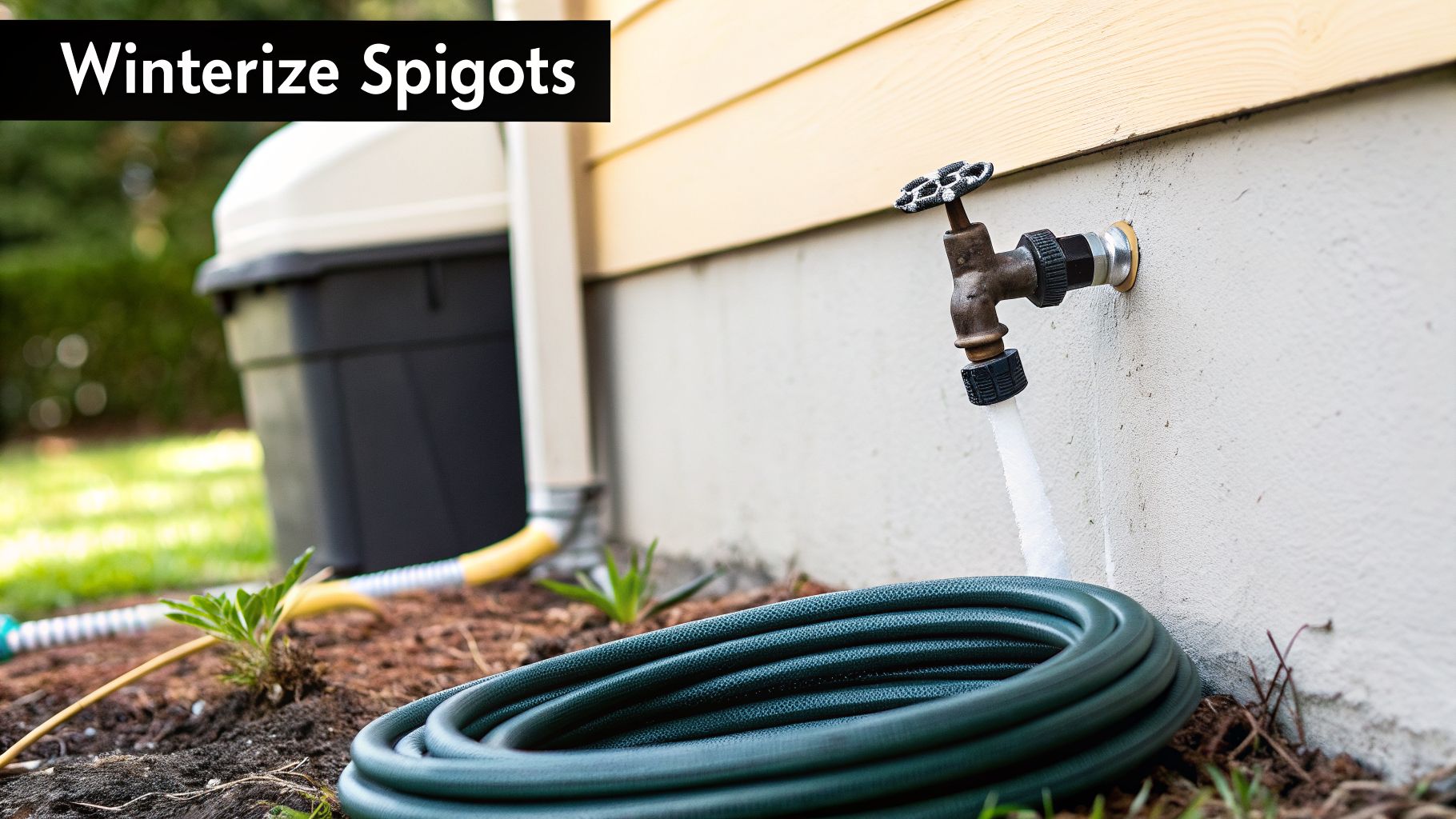
When a hard freeze is in the forecast for North Metro Atlanta, your first line of defense isn't inside your house—it's outside. The most exposed parts of your plumbing are the ones facing the elements head-on. Honestly, taking a few simple steps out there is the single most important thing you can do to prevent a costly emergency call for a burst pipe repair in Canton.
The most common mistake we see, year after year, is a garden hose left connected to an outdoor spigot. When water freezes inside that hose, it backs up into the spigot and the supply pipe running through your wall. Trust me, this is a recipe for disaster and one of the top reasons we get called out for burst pipes in the winter.
Your Outdoor Winterization Checklist
Before that first freeze hits, do yourself a favor and walk the perimeter of your home to knock out these essential tasks. This simple routine is your best protection against needing a frantic call for an emergency plumber in Alpharetta.
- Disconnect and Drain All Hoses: Take a few minutes to unscrew every single garden hose, sprayer, and splitter from your outdoor faucets. Drain them completely before you roll them up and store them in a shed or garage for the winter.
- Shut Off Exterior Water Supply: If your house has a separate shut-off valve for your outdoor spigots—look in the basement, crawl space, or a utility closet—turn it off. This completely stops water from flowing to those vulnerable outdoor pipes.
- Drain the Faucets: After you've turned off the supply valve, head back outside and open the spigots. Let any remaining water dribble out. This simple step empties the pipe between the shut-off and the spigot, leaving nothing behind to freeze and expand.
Getting these three things done eliminates the biggest risks. Forgetting this is how a small oversight can quickly turn into a major headache, leaving you searching for main water line repair near me because of a break that started right at the hose bib.
Must-Have Supplies for Exterior Protection
The good news is you don't need to spend a lot to protect your outdoor plumbing. A quick trip to a local hardware store is all it takes to get everything you need to avoid an expensive leak repair in Roswell.
Pro Tip: Don't just protect the spigots on your house. We’ve seen people forget about plumbing lines going to unheated sheds, detached garages, or pool equipment. These are often overlooked and can cause just as much damage when they freeze.
Here’s your simple shopping list:
- Insulated Faucet Covers: You’ve seen them—they’re inexpensive foam domes that fit right over your outdoor spigots. Think of them as a little winter coat, shielding the faucet from freezing air and biting wind.
- Pipe Insulation: For any pipes you can see running along exterior walls or into unheated areas, foam pipe sleeves are a must. They're cheap, easy to cut to size, and just slip right on, providing a crucial thermal barrier.
These low-cost items are hands-down your best investment against a devastating pipe burst. A few dollars spent on covers and insulation can easily save you from a multi-thousand-dollar repair and the massive headache that comes with it.
Winterizing Your Home's Interior Plumbing
You’ve handled the outside, but the real battle against frozen pipes often happens right inside your house. The most problematic pipes are almost always the ones you can’t see—the ones tucked away in unheated or poorly insulated spots common in many Johns Creek and Cumming homes. Pinpointing and protecting these high-risk areas is the key to avoiding a sudden need for leak repair in Alpharetta.
Think about the coldest parts of your home: crawl spaces, attics, basements, and garages. These areas are prime candidates for freezing because they don't get the same warmth from your central heating. Plumbing that runs along the inside of exterior walls, like for your kitchen or bathroom sinks, is another major weak point. A little bit of attention here can save you from the headache of water damage and a frantic call for a 24 hour plumber in Marietta.
Insulate High-Risk Interior Pipes
Just like with your outdoor spigots, insulation is your number one defense for interior plumbing. You can grab some affordable foam pipe sleeves or easy-to-use wrap-style insulation at any local hardware store.
Here's how to tackle it:
- Crawl Spaces and Basements: Get in there and insulate any exposed water lines you see. Pay extra attention to pipes running near foundation vents or right up against the exterior walls. This can also help prevent sewage smell issues from frozen vent stacks.
- Attics and Garages: These unheated spaces are notorious trouble spots. If your water heater is in the garage, don't forget to insulate the pipes running to and from it. A freeze-up there can leave you with a surprise no hot water situation, which may require a water heater replacement in Canton.
- Under Sinks: Yes, even pipes under your cabinets can freeze, especially if they're on an outside wall. Pipe sleeves are a good start, but letting warm air get to them is even better.
For the best all-around protection, you want to make sure your whole house holds heat well. Learning how to improve your home's insulation can make a huge difference, keeping those colder areas like basements and crawl spaces just warm enough to protect your pipes.
Use Heat and Airflow to Your Advantage
Insulation is a fantastic first step, but keeping your indoor temperature stable is just as important. Even if you're heading out of town for a few days, never turn your heat completely off in the winter.
Keeping your thermostat set to at least 55°F is one of the most reliable ways to prevent frozen pipes. This is especially true here in North Metro Atlanta, where we can get those unexpected deep freezes that lead to a flood of calls for burst pipe repair in Woodstock. It’s a simple rule that we’ve seen save countless homeowners from disaster.
When you know an extreme cold snap is on its way, there are a couple of simple, free things you can do.
First, open up the cabinet doors under your kitchen and bathroom sinks. This little trick allows the warmer air from your home to circulate around the plumbing, fighting off the chill.
Second, let a faucet drip. Find a faucet that's the furthest away from where your main water line enters the house. Let a slow, steady drip of both hot and cold water run from it. This constant movement relieves the incredible pressure that builds up from expanding ice—which is what actually causes a pipe to burst. It's a tiny action that could save you from a massive water line replacement in Acworth bill.
Your Action Plan During an Extreme Cold Snap
When the weather forecast calls for a deep freeze in Cobb or Forsyth County, it’s go-time. This isn’t about long-term planning anymore; it's about taking immediate steps to protect your plumbing. Running through a quick emergency checklist when the temperature plummets is your best shot at avoiding a plumbing disaster and the headache of a burst pipe repair in Woodstock.
So, what’s the game plan? Keep the water moving and add a little warmth to your home’s most vulnerable spots. A lot of people think it's the ice itself that splits a pipe, but that's not the whole story. The real danger is the intense pressure that builds up between the ice blockage and your closed faucet. A tiny, steady drip is all you need to relieve that pressure and act as a safety valve.
This simple diagram shows the three core things you need to do inside your house when it gets brutally cold.
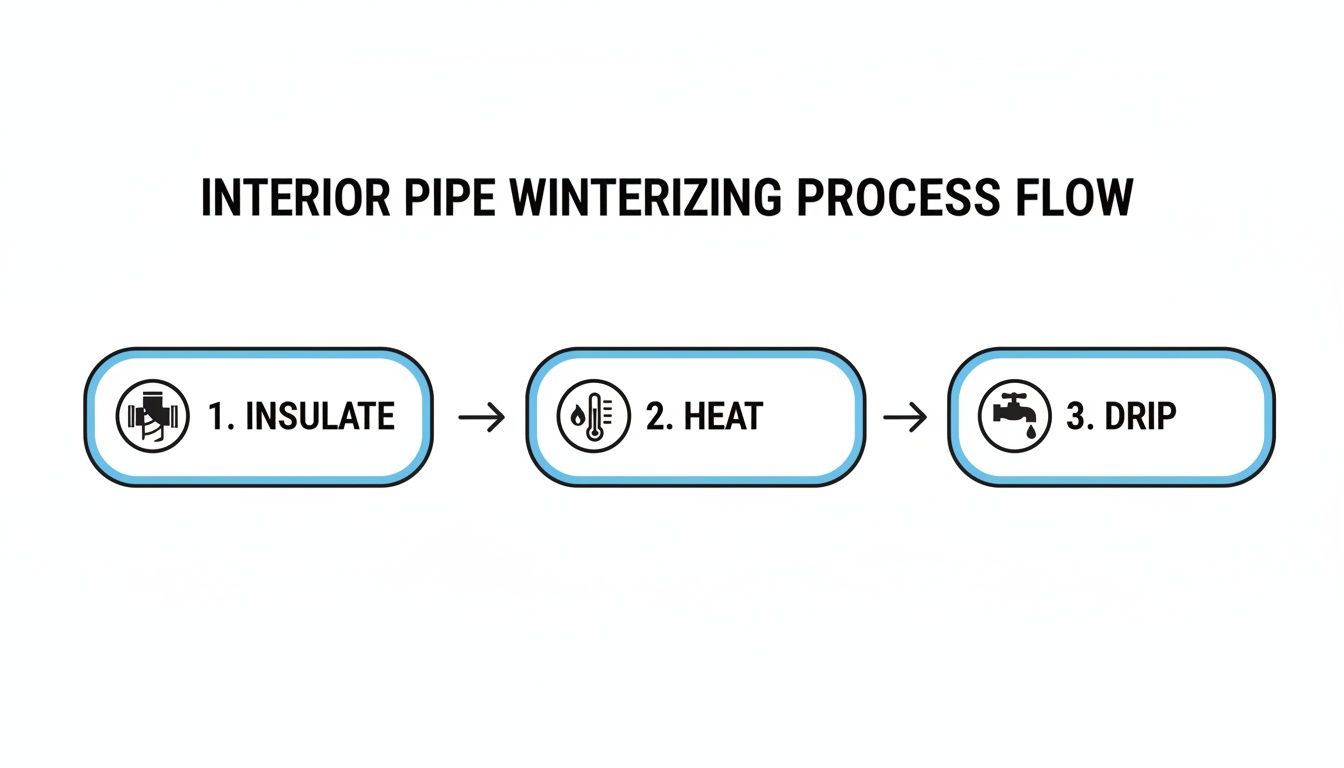
It really comes down to this: a smart mix of insulation, steady heat, and moving water gives your plumbing its best chance of making it through the freeze unscathed.
Your Cold Snap Emergency Checklist
Is the forecast showing temperatures dropping below 32°F for six hours or more? Time to act. This is especially important for homes in areas like Alpharetta, Canton, and Roswell, where even a quick, hard freeze can lead to big problems.
- Let the Faucets Drip. Pick a faucet that's on an outside wall or in a part of the house that gets chilly, like a basement or garage sink. Turn on both the hot and cold handles just enough to get a slow, constant drip. It’s a simple trick, but it keeps water moving and relieves that dangerous pressure buildup.
- Open Up Those Cabinet Doors. Walk through your kitchen and bathrooms and swing open any cabinet doors under the sinks. This lets the warm air from your house circulate around the pipes, giving them the extra bit of warmth they need to stay above freezing.
- Mind the Thermostat. Make sure your heat is on and set no lower than 55°F. Yes, even if you’re heading out for the day or away for the weekend. A consistent, warm ambient temperature is one of your strongest defenses.
Key Takeaway: If you turn on a faucet and only get a trickle—or nothing at all—you might already have a frozen pipe. This is a critical moment. Stay calm and act fast to prevent a burst.
What to Do for a Suspected Frozen Pipe
If you think a pipe is frozen but it hasn't burst yet, don't panic. The very first thing you should do is find your home's main water shut-off valve and turn it off completely. This single action can prevent a catastrophic flood if the pipe thaws and reveals a crack. Once the water is off, open the faucet connected to the frozen pipe to let water escape as the ice plug melts.
Now, you can gently try to warm the frozen section. A hairdryer on a low heat setting works well. Start near the faucet and slowly work your way back toward the frozen area. Under no circumstances should you ever use a blowtorch or any open flame. This is an enormous fire hazard and can make the pipe burst from the sudden temperature change.
If you can't find the frozen spot, if the pipe is hidden behind a wall, or if you notice any bulging or cracks, stop what you are doing. It's time to bring in a professional. Give us a call immediately for a 24-hour plumber in Acworth. An expert can safely thaw the line, check for damage, and handle any necessary leak repair before a small problem becomes a major disaster.
DIY Prevention vs. Professional Help
Knowing what you can handle yourself versus when you need to call in a pro is key to managing your home's plumbing effectively and safely. Here's a quick guide to help you decide.
| Task | DIY Action | When to Call a Pro | Associated JMJ Service |
|---|---|---|---|
| Insulating Exposed Pipes | Wrap accessible pipes in your basement, crawlspace, or under sinks with foam insulation sleeves. | If pipes are behind walls, in tight crawlspaces, or you're unsure which pipes are most at-risk. | Home Winterization Services |
| Thawing a Frozen Pipe | Use a hairdryer on a low setting on an exposed, accessible pipe that has not burst. | If the pipe is inside a wall, you can't locate the freeze, the pipe has burst, or you see a bulge. | 24-Hour Emergency Plumbing |
| Winterizing Outdoor Faucets | Disconnect hoses and install an insulated faucet cover. Turn off the water supply to the spigot if you have a shut-off. | If your shut-off valve is stuck, leaking, or you don't have one and want a frost-proof sillcock installed. | Outdoor Faucet Repair & Installation |
| Addressing Low Water Pressure | Clean aerators on faucets to check for simple clogs. | If low water pressure is house-wide, it could signal a hidden leak, a main line issue, or a frozen supply line. | Leak Detection and Repair |
While DIY efforts are fantastic for day-to-day prevention, some jobs just aren't worth the risk. If you encounter a situation that feels over your head, don't hesitate. A quick call to JMJ Plumbing for sewer repair in Alpharetta or a clogged toilet won't flush emergency can save you from a much bigger, more expensive problem down the road.
What to Do When You Suspect a Frozen Pipe
The first clue you have a frozen pipe usually isn't a dramatic flood—it's silence. You head to the sink, turn the handle, and all you get is a weak trickle of water, or maybe nothing at all. If this happens in your Roswell home on a cold day, it’s a major red flag for a homeowner. An ice blockage has likely formed somewhere in your plumbing.
You might also spot other early warnings. Look for frost forming on an exposed pipe in your basement or crawl space. Sometimes you'll even hear strange gurgling sounds from your drains as pressure starts to build. Don't ignore these signs; the risk of a burst pipe goes up with every passing minute, potentially leading to an expensive main water line repair and serious water damage from water in your yard.
How to Safely Thaw a Pipe (If You Catch It Early)
If you've spotted the problem quickly and there are no obvious signs of a break, you might be able to handle it yourself. The absolute first thing you must do is shut off your home's main water supply. This is your safety net, preventing a massive flood if the pipe is already cracked. Next, open the faucet connected to the frozen line. This gives the melting ice and any built-up pressure a place to go.
Now, you can try gently warming the frozen section. A regular hairdryer is your best tool for this job.
- Set it to low or medium heat—never high.
- Keep the hairdryer moving back and forth across the pipe. Don't let it sit in one spot.
- Start the process near the faucet and slowly work your way back toward the blockage.
Applying slow, gradual heat is the key. It allows the ice to melt without a sudden change in pressure that could crack the pipe.
A Critical Safety Warning: Never, ever use an open flame to thaw a pipe. This includes a blowtorch, propane heater, or even a candle. It's a serious fire hazard, and the intense, direct heat can make the water inside boil. The resulting steam pressure is almost guaranteed to cause a burst pipe repair emergency.
Knowing When It's Time to Call in the Pros
Your safety and your home come first. A DIY thaw is a great first step, but it's time to stop immediately and call a professional if you hit any of these roadblocks.
You need to pick up the phone and call for a 24 hour plumber in Marietta or your local North Fulton city if:
- You can't find the frozen section of the pipe.
- The pipe is stuck behind a wall or somewhere you can't reach.
- You see any bulging, cracking, or splitting on the pipe itself.
- After a few minutes of gentle heating, the water still isn't flowing.
If you run into any of these issues, keep the main water shut off and get an expert on the line right away. Getting a plumber out for a quick leak repair in Alpharetta can be the difference between a minor inconvenience and a full-blown disaster that costs thousands to fix.
When It’s Time to Call an Emergency Plumber
Let’s be honest—even if you do everything right, some plumbing problems are just too big for a DIY fix. Knowing when to stop what you're doing and call a professional is key to protecting your home from a true disaster. It’s one thing to prevent frozen pipes, but it’s another to know the warning signs that scream “you need an expert, now!”
Sometimes, it’s best to bring in a pro from the very beginning. If you have pipes tucked away in a hard-to-reach crawlspace or hidden behind a wall, insulating them yourself can be a real headache. A pre-winter inspection from a plumber you trust can also catch weak spots you might never see, giving you confidence when the temperatures start to plummet.
Red Flags That Mean You Need a 24-Hour Plumber
A plumbing emergency doesn't always start with a geyser in your living room. The first signs are often quiet, but they demand immediate attention. If you see or hear any of the following, it's time to call an emergency plumber in Roswell or your local North Metro Atlanta city right away.
These aren't just minor issues; they're your home’s way of telling you a much bigger problem is brewing.
- No Water Anywhere: You turn on the faucet and… nothing. Not even a drip. This is a huge red flag that your main water line might be frozen solid. A total blockage like this puts tremendous strain on your entire system, and a main water line repair in Johns Creek could be just around the corner.
- Strange Gurgling Sounds: Hearing weird bubbling or gurgling from your drains when no water is running? That’s often air getting trapped by an ice blockage, but it can also be a symptom of a deeper issue needing sewer replacement or drain cleaning. It’s a tell-tale sign that pressure is building and you could be on your way to a nasty sewer backup.
- Visible Cracks or Bulges in a Pipe: This is the big one. If you can actually see a bulge, a split, or even a tiny hairline crack on a pipe, it's about to burst. This is a code-red situation. Shut off your water and call a 24 hour plumber near me immediately.
Ignoring these signs is a massive gamble. Think of them as the last warnings your plumbing gives you before it fails completely. Acting fast is the only way to avoid a costly burst pipe repair in Marietta.
Why These Signs Are So Serious
These aren't just small quirks; they are signs that your plumbing is under incredible stress. When you have no water, it means a solid ice dam has formed, and the water pressure building up behind it is immense. That pressure has to go somewhere, and it will find the weakest spot in the pipe—leading to a rupture.
That gurgling sound is no different. It points to pressure changes that could mean a frozen sewer line. Trust me, a sewer backup from a frozen or broken line is a messy, unsanitary problem you want to avoid at all costs. As homeowners in Alpharetta and Cumming know all too well, a frozen pipe can turn into a catastrophe in just a few hours.
If you spot one of these critical signs, the first thing you should do is shut off your home’s main water supply. The second thing you should do is call JMJ Plumbing. A quick response can turn a potential disaster into a manageable leak repair.
Trying to fix a bulging or severely frozen pipe on your own is incredibly risky. You could easily make it worse and cause the pipe to burst, turning a contained problem into a full-blown flood. For our neighbors in Woodstock, Canton, and across Cobb County and Cherokee County, our team is on standby 24/7. We have the right tools to safely thaw frozen lines, check for damage, and handle any necessary repairs, from a small leak to a complete water line replacement.
Answering Your Top Questions About Frozen Pipes
Over the years, we've heard just about every question you can imagine from homeowners across North Metro Atlanta about frozen pipes. To help you feel more prepared, we've put together some straight-to-the-point answers to the most common questions we get.
Which Pipes in My Home Are Most Likely to Freeze?
The trouble spots are almost always the pipes running through unheated or poorly insulated areas of your house. We're talking about plumbing in crawl spaces, attics, basements, and garages. Water lines that run along an exterior wall—like the ones for your kitchen sink or washing machine—are also prime candidates for freezing.
Honestly, though, the number one cause of winter plumbing emergencies we see are outdoor hose bibs. From Woodstock to Johns Creek, forgetting to disconnect the hose is a recurring nightmare for homeowners. That's why paying extra attention to these vulnerable areas is so important.
How Much Does Burst Pipe Repair Cost in Georgia?
The cost for a burst pipe repair can be all over the map here in cities like Cumming or Alpharetta. It really boils down to where the pipe is, how tough it is to get to, and the extent of the water damage. A simple, exposed leak might only set you back a few hundred dollars. But if a pipe breaks inside a wall? The cost can easily jump into the thousands when you factor in drywall repair and water mitigation.
This is exactly why we provide clear, on-site quotes before starting any work. We believe you should know the full cost upfront. Just remember, an ounce of prevention is always cheaper than a pound of cure.
Can I Turn My Heat Off When I Go on Vacation?
We get this question a lot, and our answer is always a firm "no." Especially during a North Georgia winter, where a sudden cold snap can roll in without much warning. Please, do not turn your heat completely off.
For peace of mind, just set your thermostat to a minimum of 55°F. The tiny bit you spend on your utility bill is nothing compared to the massive expense of a main water line repair and the headache of water damage restoration. It's the simplest insurance policy you can have while you're away.
Can I Thaw a Frozen Pipe with a Hairdryer?
Yes, you can, but with a few big "ifs." If the pipe is visible, easy to reach, and hasn't already burst, a hairdryer on a low setting can work. The trick is to start thawing near the faucet and slowly work your way back toward the blockage. What you must NEVER do is use an open flame, like a blowtorch. This is an incredible fire hazard and can make the pipe explode from the rapid temperature change.
If you have any doubt, if the pipe is hidden behind a wall, or if you notice any bulging, play it safe. Shut off your main water valve and call an emergency plumber in Woodstock right away.
Sometimes, even with the best preparation, a pipe bursts. Or maybe you're dealing with a different plumbing emergency, like a sewer backup, a clogged toilet won't flush, or you have no hot water. Don't wait for the problem to get worse. The professional team at JMJ Plumbing is on call 24/7 across North Metro Atlanta. For fast, reliable help, contact us online or give us a call today.