Ever notice that "pool smell" coming from your kitchen sink? That's almost always chlorine, a disinfectant your municipal water supplier uses to keep water safe on its journey to you. While it serves a crucial purpose in public health, it can definitely affect the taste, smell, and even the feel of the water in your home.
Figuring out why it's there is the first step. Once you know that, you can take action to get purer, better-tasting water from every faucet.
Why Chlorine Is In Your Tap Water
If you live anywhere from Woodstock to Johns Creek, you’ve likely caught a whiff of that swimming pool scent from your tap. This isn’t a mistake—it’s a sign that a vital public health measure is working exactly as intended. Water treatment plants add chlorine to eliminate dangerous bacteria and viruses while the water travels through miles of pipes to your home.
This process is incredibly effective. Before widespread chlorination started in the early 1900s, diseases like cholera and typhoid were a constant, deadly threat. When cities like Jersey City began adding chlorine in 1908, the death rates from these illnesses plummeted.
The small amount left over—what experts call residual chlorine—is there to make sure the water stays protected right up until the moment it comes out of your tap.
So, What's the Problem for Homeowners?
While chlorine is essential for getting water safely to your property, it’s no longer needed once it arrives. For many homeowners in Cherokee County and North Fulton, it's just a nuisance. That distinct 'pool-like' smell is often accompanied by chlorine in residential water that adds a harsh, bitter taste.
This can impact your daily routine in a few noticeable ways:
- Bad Taste and Smell: It can ruin the flavor of your morning coffee, tea, and any food you cook with tap water.
- Dry Skin and Hair: Showering in chlorinated water can strip your skin and hair of their natural oils, leaving them feeling dry and brittle.
- Appliance Wear and Tear: Chlorine is corrosive. Over time, it can degrade the rubber seals and gaskets in appliances like your dishwasher or water heater. This can lead to a sudden need for leak repair in Alpharetta or even an emergency water heater replacement in Canton.
Here’s the bottom line: The chlorine did its job protecting the water on its way to your home. Now that it’s here, you have every right to remove it for a better experience.
The good news is that you're in control. You can easily turn that treated utility water into fresh, clean, and great-tasting water for your family to enjoy.
So, Is Chlorinated Water Actually Harming Your Home and Family?
If you've ever poured a glass of tap water and caught that distinct swimming pool smell, you're not alone. Many homeowners in North Metro Atlanta ask our 24 hour plumber team if the chlorine in their water is a real problem. The answer isn't a simple yes or no—it's a bit more complicated, with effects that touch everything from your family's health to the pipes hidden behind your walls.
This isn't just a minor annoyance anymore; it's a growing concern. In fact, a recent survey found that 24% of Americans now see chlorine and chloramines as their number one worry about tap water. That’s a staggering 71% increase from just 2020. People are becoming more aware that these disinfectants can react with other things in the water to create unwanted byproducts. You can read the full survey about American water concerns to get the bigger picture.
How Chlorine Can Affect Your Family's Health
The EPA keeps chlorine levels within what's considered a safe range, but even "safe" amounts can cause real, everyday problems, especially for sensitive individuals. We hear about it all the time from our customers in Woodstock and Roswell.
Some of the most common complaints include:
- Dry, Itchy Skin: Chlorine is fantastic at killing bacteria, but it doesn't know when to stop. It strips the natural, protective oils from your skin, which can trigger flare-ups for people with eczema or just cause general irritation after a shower.
- Brittle Hair: It has the same effect on your hair, leaving it feeling dry, frizzy, and much more likely to break.
- Irritated Eyes and Lungs: When you take a hot shower, that chlorinated water turns to steam. Breathing it in can irritate your respiratory tract, and it’s often the reason behind red, stinging eyes.
For families in Roswell or Cumming, these little irritations can really add up, turning what should be a relaxing shower or bath into a daily discomfort.
The very thing that makes chlorine a great disinfectant—its ability to kill living organisms like bacteria—is what makes it so harsh on living tissues like our skin, hair, and eyes.
The Hidden Damage to Your Home's Plumbing
The trouble with chlorine doesn’t stop with your family. Its corrosive nature is constantly at work on your home’s plumbing system, causing slow-burn damage that can lead to big problems down the road. This is an issue we see firsthand on service calls all across Cobb and Forsyth County.
Over time, chlorine’s corrosive properties can:
- Break down the rubber gaskets and seals in your faucets and toilets. This is a classic cause of those annoying, persistent drips that often require a professional leak repair near me.
- Speed up the wear and tear on the internal parts of your water heater, a common cause of no hot water. We've seen this lead to premature failures and the need for an emergency water heater replacement in Marietta.
- Weaken the flexible water lines that connect to appliances like your dishwasher and washing machine, raising the risk of a sudden and messy burst pipe repair in Acworth.
When you get right down to it, removing chlorine from your water is about more than just improving the taste. It's a smart, proactive move to protect your family’s comfort and safeguard your home from costly plumbing emergencies.
Quick Fixes for Better-Tasting Water
Tired of that swimming pool taste in your tap water but not quite ready to commit to a full filtration system? We get it. The good news is you can get some immediate relief with a few simple tricks you can do right in your kitchen.
These are great starting points for improving your drinking water with basically zero cost or effort. Think of them as a quick fix while you explore longer-term options for your home in Metro Atlanta.
One of the easiest things you can do is let your water breathe. This is called aeration. Just fill a pitcher with tap water, pop it in the fridge, and leave it uncovered for a few hours. Chlorine is a volatile compound, which is just a fancy way of saying it wants to escape into the air. As the water sits and chills, the chlorine does exactly that, leaving you with much cleaner-tasting water. Simple.
Heat and a Surprise Ingredient: Vitamin C
Another classic method is boiling. If you bring a pot of water to a rolling boil for about 15 minutes, the chlorine gas will be forced out. This is a solid option if you’re in a pinch, but it does eat up some energy and you have to wait for the water to cool back down.
Now for a surprisingly effective trick, especially for your bath: Vitamin C.
It might sound strange, but a tiny bit of Vitamin C—either in powder form (ascorbic acid) or a crushed tablet—works wonders. A small pinch, about 1,000 mg, is all it takes to neutralize the chlorine in an entire bathtub. This makes the water so much gentler on your skin and hair. It’s a favorite tip I share with families in Roswell and Alpharetta who are dealing with skin irritation but aren't ready for a big plumbing project.
These temporary solutions are fantastic for a glass of water here or a single bath there. But they also shine a spotlight on the biggest drawback: you're constantly treating your water batch by batch. For any busy household, that can turn into a real chore pretty fast.
When a Quick Fix Just Isn't Cutting It
While these methods absolutely work, they have their limits. They only handle the water you treat directly, doing nothing for the water you shower in, wash clothes with, or run through the dishwasher.
That constant need to plan ahead and prepare your water is usually what pushes homeowners in Cherokee and Forsyth Counties to start looking for a more permanent, whole-home solution.
This is especially true when other plumbing issues start to show up. If you're noticing consistently low water pressure or your appliances seem to be wearing out too quickly, you might have more going on than just chlorine. That's when it’s time for a professional opinion. An emergency plumber in Johns Creek can help figure out if there's a bigger issue, like a failing water heater or a problem requiring water line replacement, that a pitcher in the fridge can’t solve.
Picking the Right Water Filtration System for Your Home
When letting your water sit out or boiling it starts to feel like a chore, it's probably time to think about a more permanent fix for chlorine. Honestly, diving into the world of water filters can feel like a lot at first, but it gets simpler when you know the secret ingredient: activated carbon. Think of it like a magnet for chlorine—as water flows through, the carbon grabs onto the chlorine and holds it tight.
The real question you need to ask yourself is, "How much of my water do I want to filter?" Are you just worried about the water you drink, or do you want every tap in the house to run clean? Let's walk through the most popular choices we see in homes across North Metro Atlanta.
Point-of-Use Filters: A Quick Fix for a Single Tap
If you just want to improve the water at one specific spot, like your kitchen sink, a point-of-use (POU) filter is your best bet. They’re affordable, easy to get started with, and don't require a big installation project.
- Faucet-Mounted Filters: These little gadgets clip right onto your kitchen faucet. Super handy because you can flip a switch between filtered water for drinking and cooking, and regular tap water for washing dishes.
- Water Filter Pitchers: This is filtration at its simplest. Just fill the pitcher, and gravity does the work. They're great for portability, but they are slow and only handle a little water at a time, which can be frustrating if you have a thirsty family.
- Countertop Filters: A step up from a pitcher, these units sit on your counter and hook up to your faucet with a small tube. They filter water much faster and can handle more volume, giving you clean water on demand.
These are fantastic starting points if your main goal is better-tasting water for your coffee or pasta. The downside? They won't do a thing about the chlorinated water in your shower or washing machine, which can contribute to problems like slow drains.
Under-Sink Systems: Out of Sight, High-Performance
For a cleaner look and more powerful filtration right at the kitchen sink, an under-sink system is a game-changer. These systems are hidden away in the cabinet below, connecting directly to your cold water line. You get a separate, elegant-looking faucet right on your sink for all your filtered water needs.
An under-sink system gives you that on-demand filtered water without cluttering your countertop. We find it's a favorite choice for homeowners in Woodstock and Acworth who want top-notch drinking water without messing with their main kitchen faucet.
These systems pack a bigger punch, too. They use larger, more sophisticated carbon block filters that are great at removing chlorine and can also tackle other nasty stuff like lead and certain chemicals. It’s a serious upgrade in performance and filter longevity compared to the smaller faucet filters.
Whole-Home Systems: The Ultimate Chlorine Defense
If you want to solve the chlorine problem once and for all, a whole-home filtration system is the way to go. Also called a point-of-entry (POE) system, it’s installed right where your main water line comes into the house. From that point on, every drop of water is treated.
That means no more chlorine in your drinking water, your shower, your washing machine, or your dishwasher. For families in Marietta or Roswell who are tired of dry skin and the damage chlorine does to their appliances, this is the definitive solution. It doesn't just improve your water quality; it protects your entire plumbing system—from pipes to your water heater—from chlorine's corrosive nature. This is a smart investment that can help you sidestep an early water heater replacement or other expensive leak repairs in the future.
Now that we've covered the main types, it can be helpful to see them all side-by-side to figure out what truly fits your home and budget.
Comparing Chlorine Removal Methods
| Filtration Type | Effectiveness on Chlorine | Coverage Area | Typical Cost | Maintenance Needs |
|---|---|---|---|---|
| Water Pitcher/Faucet Filter | Good | Single Tap | $20 – $70 | Frequent filter changes (2-4 months) |
| Under-Sink System | Excellent | Single Tap | $150 – $500 | Filter changes every 6-12 months |
| Whole-Home System | Excellent | Entire House | $800 – $3,000+ | Media replacement every 5-10 years |
Ultimately, choosing a system comes down to balancing cost, convenience, and how thoroughly you want to remove chlorine from your daily life. Whether it's a simple pitcher or a comprehensive whole-home unit, there's a solution that will work for you.
The Ultimate Solution: HALO Whole-Home Filtration
If you're living in areas like Alpharetta and Cumming and are tired of the temporary fixes, a whole-home filtration system is the real game-changer. Forget dealing with water one pitcher at a time. These systems purify every single drop of water the moment it enters your house, right at the main water line repair point. We're big fans of installing systems like the HALO 5, which is a complete, set-it-and-forget-it solution for truly clean water.
This isn't just about a single faucet—it’s about transforming your home’s entire water supply. Imagine your morning coffee tasting richer, your showers no longer leaving your skin feeling tight and dry, and your appliances being protected from chlorine's harsh, corrosive effects. It’s a proactive investment in your home and your health.
How a Whole-Home System Works
Unlike those small filters you attach to a single faucet, a whole-home system like the HALO 5 is a powerhouse. It uses a multi-stage process to tackle a whole spectrum of contaminants. As water enters your home, it first flows through granular activated carbon, which is fantastic at grabbing onto chlorine and chloramines, completely knocking out that "swimming pool" taste and smell.
The best part? After that initial stage, it continues to filter other impurities without needing salt or electricity, making it an incredibly low-maintenance and green-friendly option. By catching everything at the source, you're not just getting better drinking water; you're protecting your entire plumbing system, from the pipes in your walls to the sensitive parts in your dishwasher and washing machine.
This flowchart gives you a good idea of how a whole-home system compares to other filter types.
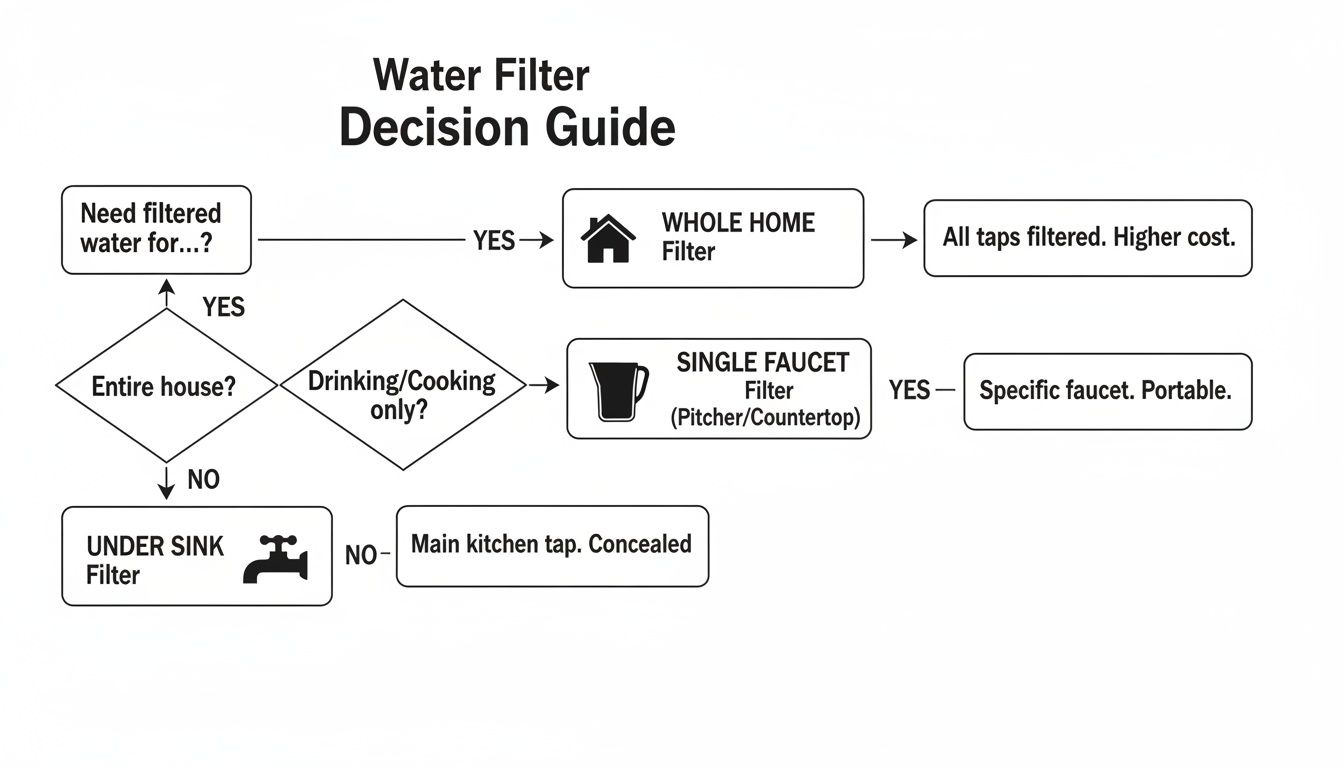
The takeaway is simple: smaller filters are great for specific spots, but only a whole-home system provides that blanket protection for both your family's health and your home's plumbing.
Beyond Taste: The Health and Plumbing Benefits
Putting in a whole-home filtration system is about so much more than just better-tasting water. It's a serious step toward protecting your family’s well-being and the major investments in your home. Let's be honest, even water that meets the city's standards can still carry some risks.
Contaminated tap water remains a significant health concern, even in developed countries. A global review uncovered that microbial leftovers in tap water contribute to a median of 2,720 gastrointestinal illness cases per 100,000 people annually. At the same time, chemical contaminants like chlorine byproducts were linked to a median of 1.2 excess cancer cases per 100,000 each year. You can discover more insights about these water quality findings on PMC—it really shows why removing chlorine is more than just a preference.
From our experience, installing a HALO system is one of the smartest preventative moves a homeowner in North Metro Atlanta can make. It doesn't just get rid of chlorine; it also stops the slow mineral buildup that causes low water pressure and can lead to an early water heater replacement in Woodstock.
When every faucet in your home—from the kitchen sink to the shower—delivers pure, clean water, you're making a long-term investment. You're shielding your family from unseen contaminants, making your appliances last longer, and avoiding costly emergencies like a sewer repair in Roswell or a sudden burst pipe repair. It's pure peace of mind, flowing from every tap.
Common Questions About Chlorine Removal in North Atlanta
As an emergency plumber working across Cherokee and Cobb counties, from Woodstock to Canton, I get a lot of the same questions from homeowners thinking about their water quality. You want to make the right call for your family and your home, so let's clear up a few things I hear all the time.
Is There a Difference Between Chlorine and Chloramine?
Yes, there is, and it’s a big deal when it comes to filtration. Most people are familiar with chlorine, but many water suppliers in Metro Atlanta now use chloramine. They do this by adding a little ammonia to the chlorine, which makes it a more stable disinfectant that lasts longer in the pipes.
The catch? A standard activated carbon filter that works great on chlorine won't do much against chloramine. For that, you need a special type of filter media called catalytic carbon. This is exactly why we often recommend systems like the HALO 5—it's engineered to remove both, so you're covered no matter what your local water authority is using today or tomorrow.
Does a Filtration System Make My Water Harder or Softer?
That’s a common mix-up. A whole-home carbon filter is strictly for contamination removal—it takes out chlorine, chemicals, and other things that make your water taste and smell bad. It doesn't touch the minerals that cause water hardness, like calcium and magnesium.
For that, you need a completely different piece of equipment: a water softener, which uses a process called ion exchange. The good news is these two systems are a perfect team. Many homeowners we work with in places like Roswell and Acworth will install a HALO 5 for pure, clean water and a separate water softener to protect their appliances and get rid of those annoying spots on their dishes.
What Kind of Maintenance Do Whole-Home Systems Need?
Here’s the best part about a high-quality whole-home system: it’s incredibly low maintenance. Forget about swapping out pitcher or faucet filters every couple of months. A professionally installed system like a HALO 5 is a true set-it-and-forget-it solution. The filter media inside is designed to keep working effectively for up to 10 years before needing any attention.
For a busy household, this is a massive advantage. You get all the benefits of purified water at every tap without adding another regular chore to your to-do list.
Can I Install a Whole-Home System Myself?
I'll be blunt: this isn't a weekend DIY project. Installing a whole-home system means cutting into your home's main water line. This takes real plumbing expertise to get right. Do it wrong, and you're not just risking a small drip—you could face major leaks, notice a strange sewage smell, or even cause a sewer backup that requires an emergency sewer replacement.
A licensed plumber knows how to assess your home's layout, find the right spot for the unit, and provide professional drain cleaning to ensure every connection is solid and up to code. This protects your home, ensures your system works perfectly, and keeps your warranty intact. Frankly, if you're already dealing with other issues like a clogged toilet won’t flush or you've noticed unexplained water in yard, it’s the perfect time to have a professional take a look at your entire plumbing setup.
Ready to enjoy pure, great-tasting water from every faucet in your home? The team at JMJ Plumbing specializes in installing and maintaining HALO whole-home filtration systems across North Metro Atlanta. We can help you choose the right solution and provide a professional, seamless installation. Contact us today for a consultation.