Let’s be honest, dealing with a clogged drain is a messy, frustrating headache nobody wants. The good news? Most of the time, you can stop clogs before they even start. It all comes down to a few simple, proactive habits.
By being smart about what goes down your drains and using some basic tools, you can avoid the stress and expense of an emergency plumbing call for a sewer backup in Woodstock or a burst pipe repair in Roswell.
Your Proactive Guide to Preventing Clogged Drains
Those gurgling noises from the sink? The water that takes forever to go down? These are more than just little annoyances. They’re warning signs that your plumbing is struggling.
For homeowners here in Woodstock, Alpharetta, and across North Metro Atlanta, these subtle clues often point to a clog that’s slowly building up. Left unchecked, a symptom like a slow drain can lead to a nasty sewer backup or even require a costly sewer replacement.
The best part is that most of these drain problems are completely preventable. Instead of waiting for a disaster, you can play defense. It just takes a little know-how about the specific threats in different parts of your house and a few small changes that make a huge difference.
This guide is your room-by-room action plan to keep those pipes clear and water flowing freely. This isn’t about adding a bunch of chores to your to-do list; it’s about building smart habits that protect your home’s plumbing for the long haul.
Understanding the Common Culprits
Before we get into the "how-to," let's talk about what we're up against. Would you believe that hair, soap scum, and food particles are behind over 70% of household drain clogs? It's true.
After serving communities like Acworth, Canton, and Marietta for over 25 years, we at JMJ Plumbing have seen it all. These everyday items build up silently, narrowing your pipes until water has nowhere to go. A simple first step? Install drain screens. These little mesh guards catch debris before it ever gets into your pipes, and studies show they can reduce clogs by up to 80%. You can learn more about the broader drain cleaner market and its insights to see just how common these issues are.
Here are the main offenders we see day in and day out:
- Fats, Oils, and Grease (FOG): These seem harmless as liquids, but once they cool down in your pipes, they solidify into a sticky, stubborn sludge that grabs onto everything else.
- Hair: This is the number one cause of clogs in showers, tubs, and bathroom sinks. It tangles into big knots and mixes with soap scum to create a perfect blockage.
- Soap Scum: Traditional bar soaps are often made with fats that leave a hard residue on the inside of pipes, slowly closing them off.
- Food Waste: Things like coffee grounds, eggshells, and stringy vegetables just don't break down well in your pipes. They clump together and create clogs.
- Foreign Objects: Small things you'd never think about—cotton swabs, dental floss, and even those so-called "flushable" wipes—are notorious for causing serious blockages, especially when you need sewer repair in Johns Creek.
A slow drain is your plumbing system’s way of asking for help. Addressing it early with simple maintenance can prevent the need for a 24-hour plumber for an emergency sewer repair in Alpharetta or Cumming.
To make this even easier, we've broken down the key actions you can take room by room. This checklist is designed to be a simple, practical guide to keeping your drains clear.
Your Home's Clog Prevention Checklist
Here’s a room-by-room breakdown of the most common clog sources and the simple things you can do today to stop them.
| Room | Primary Clog Culprit | Top Prevention Strategy | Frequency |
|---|---|---|---|
| Kitchen | Fats, Oils, & Grease (FOG) | Pour cooled grease into a disposable container and throw it in the trash. Scrape plates before washing. | Daily |
| Bathroom (Sink) | Hair & Soap Scum | Use a pop-up drain stopper or a small screen to catch hair. Flush with hot water weekly. | Weekly |
| Bathroom (Shower/Tub) | Hair & Soap Scum | Install a mesh drain screen or a "hair catcher." Clean it out after every few showers. | Weekly |
| Laundry Room | Lint, Mud & Debris | Install a lint trap on the washing machine's discharge hose to catch fibers and dirt. | Monthly |
| Outdoors | Leaves, Dirt & Debris | Keep yard drains and gutters clear of leaves and sticks, especially in the fall. | Seasonally |
This checklist isn't about perfection; it's about consistency. By making these small actions a part of your regular routine, you're investing in the health of your home's entire plumbing system.
The Power of a Preventive Mindset
Thinking ahead is truly the secret to avoiding the stress and cost of a plumbing emergency. A homeowner who scrapes food scraps into the compost bin instead of the sink is already practicing preventive maintenance. The same goes for someone who installs a simple mesh screen in their shower drain—that small step can prevent a future call for drain cleaning in Johns Creek.
This proactive approach does more than just save you from a clog. It actually extends the life of your plumbing. By keeping pipes clear of gunk and blockages, you reduce the strain on the whole system. This can help you avoid much bigger, more expensive problems down the road, like a main water line repair or even a full sewer replacement in Marietta.
Keeping Your Kitchen Sink Flowing Freely
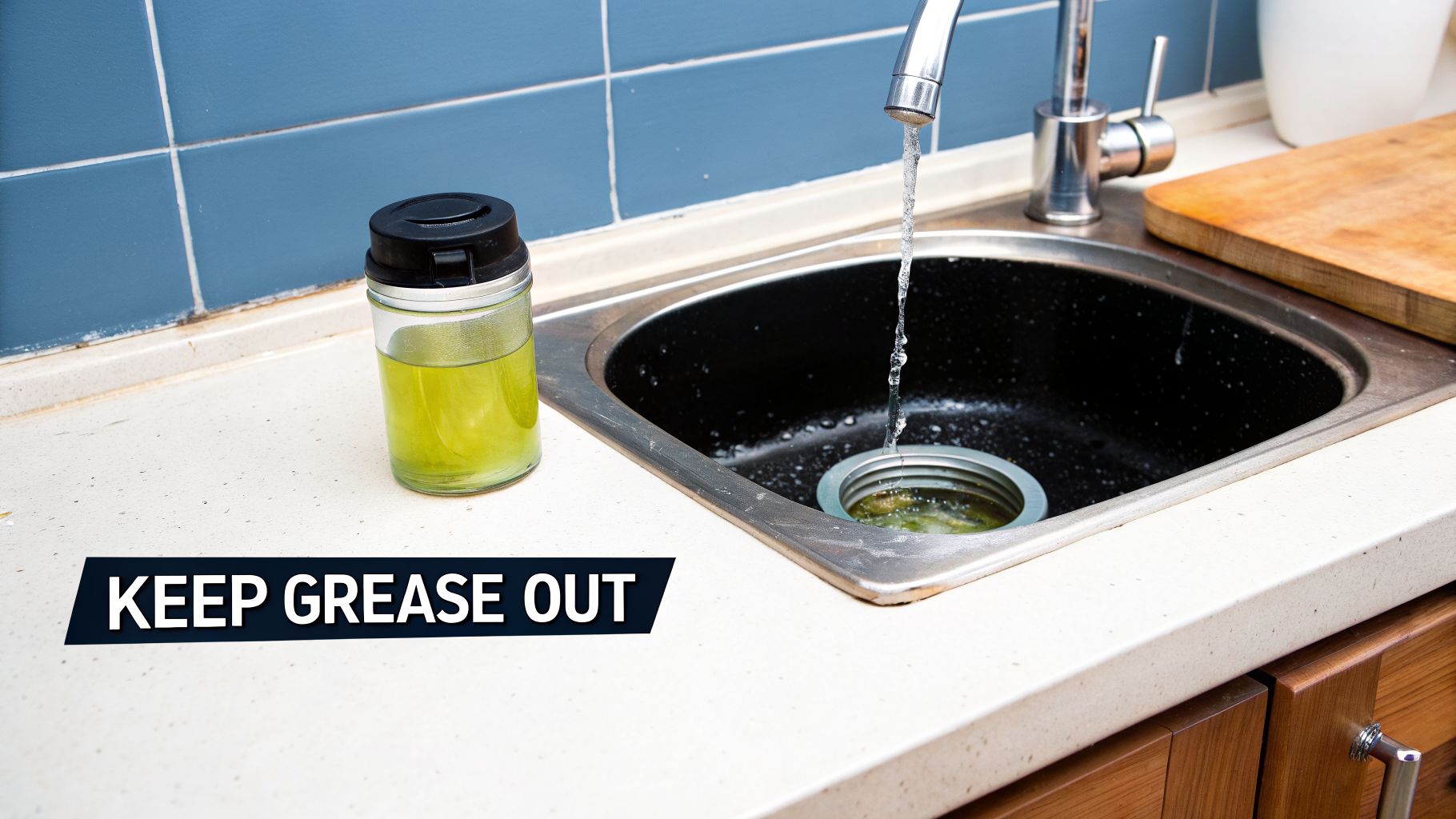
The kitchen sink is ground zero for some of the toughest clogs in any home. Every time you cook a meal or wash a dish, you're sending a stream of potential troublemakers down the drain. But one culprit is responsible for more headaches than all the others combined.
That’s right, we’re talking about Fats, Oils, and Grease (FOG).
When you pour hot bacon grease or cooking oil down the sink, it looks like a harmless liquid. The problem starts when that grease hits the cold pipes. It instantly cools, solidifies, and coats the inside of your plumbing with a sticky, waxy gunk. This buildup acts like flypaper, grabbing every little food particle that follows until you've got a slow-draining sink or a complete blockage that requires professional drain cleaning in Marietta.
The Proper Way to Handle Grease
The single most effective thing you can do for your kitchen drain is to stop feeding it grease. And the best way to do that is to make proper disposal a simple, everyday habit.
Keep a dedicated "grease jar" right by your sink. An old coffee can or a glass jar with a lid works perfectly.
After cooking, let the grease cool down just enough to handle safely, then pour it straight into your container. Once the jar is full, just seal it up and toss it in the trash. This one small change in your routine can save you from a massive plumbing bill and a potential call for emergency sewer repair in Woodstock.
Garbage Disposal Best Practices
Your garbage disposal is a workhorse, but it isn't a black hole. We see it all the time in homes across Cobb County and Cherokee County—people unknowingly treat their disposals like a trash can, leading to jammed motors and clogged pipes.
Here’s a quick list of things that should never go down the disposal:
- Starchy Foods: Potato peels, leftover pasta, and rice are notorious clog-causers. They absorb water and swell up, creating a thick, glue-like paste inside your pipes.
- Fibrous Veggies: Think celery, asparagus, and corn husks. Their stringy fibers can wrap around the disposal's blades like thread on a spindle, jamming the motor.
- Coffee Grounds: They seem so small, but coffee grounds clump together with grease to form a dense, heavy sludge that’s incredibly difficult to clear.
- Eggshells: It’s a bit of an old wives' tale that they "sharpen" the blades. In reality, the thin inner membrane can get tangled in the moving parts, and the ground-up shells just add to any existing gunk.
Pro Tip: Always use a strong flow of cold water when running your disposal, never hot. Cold water keeps any little bits of grease solid so the blades can chop them up and flush them away. Hot water just melts the grease, letting it slide further down the line before it congeals and sticks to your pipes.
A Simple Monthly Cleaning Routine
A little bit of preventative maintenance goes a long way. To keep that greasy residue and food buildup from becoming a full-blown blockage, try this simple cleaning trick once a month. It’s completely safe for your pipes and helps keep things smelling fresh, too.
Just follow these easy steps:
- Pour about half a cup of baking soda directly into the drain.
- Chase it with one cup of white vinegar. You’ll hear it start to fizz and bubble—that’s the reaction at work, breaking down all that grime.
- Let the mixture do its thing for about 15-20 minutes.
- Finish by carefully pouring a pot of boiling water down the drain to flush everything away.
This quick monthly task helps dissolve the gunk that causes slow drains and foul odors. It's a proactive measure that keeps your kitchen plumbing healthy and can prevent bigger issues, like needing a main water line repair in Canton, from ever happening.
Winning the Battle in Your Bathroom Drains
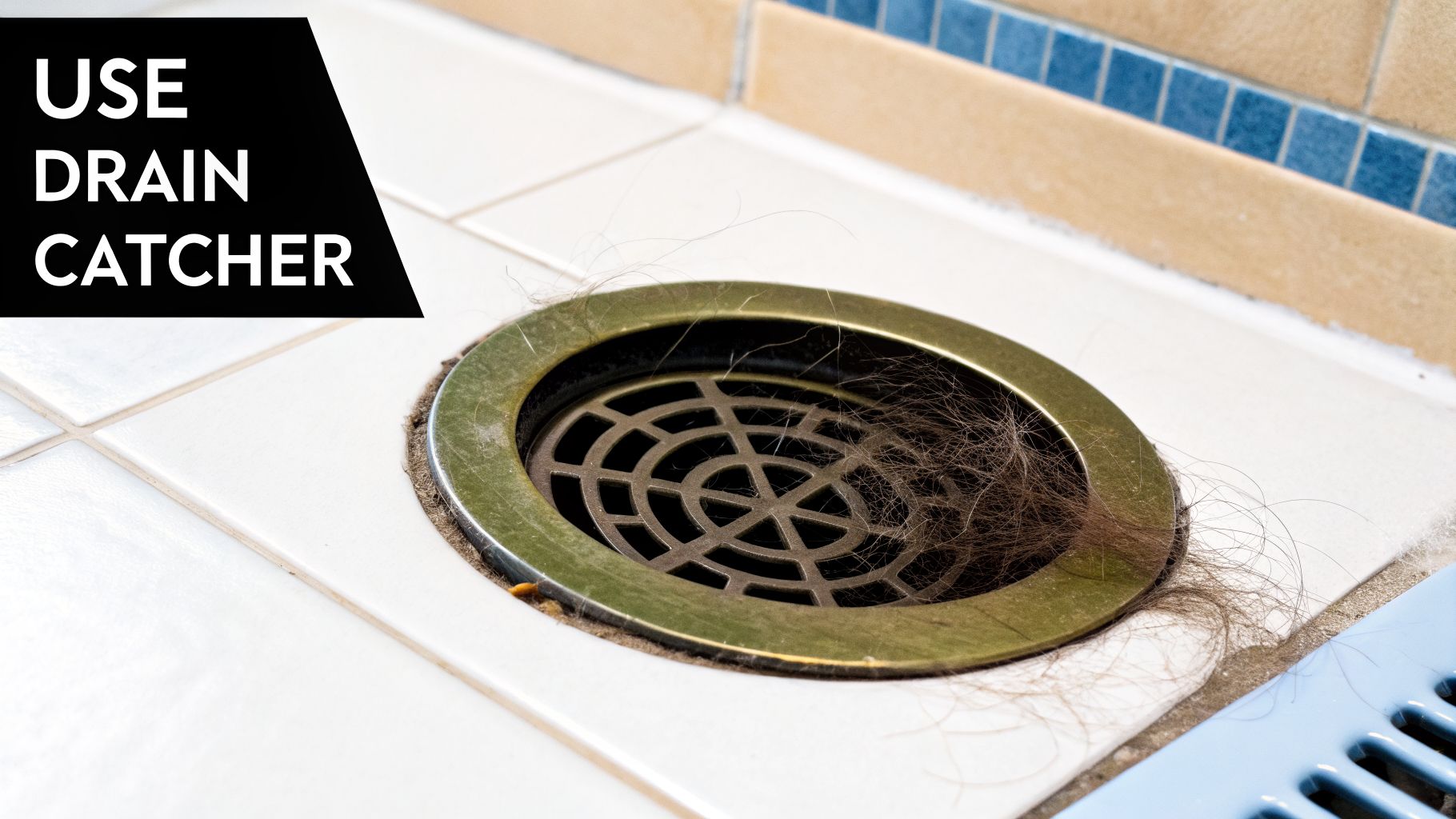
While the kitchen drain is busy fighting off grease, your bathroom pipes are facing a totally different enemy. It's a tag team of hair and soap scum, and they're notorious for creating stubborn clogs that can completely derail your morning routine.
It all starts with the soap. Many classic bar soaps contain fats or tallows that leave behind a sticky, waxy film inside your pipes. This residue acts like glue, grabbing every single strand of hair that tries to wash away. Before you know it, you're standing in an ankle-deep puddle just a few minutes into your shower.
Your Best Defense: A Quality Drain Catcher
The simplest and most effective tool in your arsenal is an inexpensive drain catcher. Think of it as your first line of defense, stopping the problem right where it starts. There are a few different types out there, so you can pick one that fits your drain and your lifestyle.
- Basket Strainers: These little baskets sit right inside the drain opening. They’re fantastic for catching a lot of hair and are super easy to pull out and clean after a shower.
- Pop-Up Drain Covers: You've probably seen these. They often look like a small mushroom or tower and are designed to fit right over your existing pop-up stopper, catching hair around the outside while water flows through.
- Screen Covers: This is just a simple mesh screen that lies flat over the drain. They get the job done, but a strong blast of water can sometimes knock them out of place.
No matter which one you go with, consistency is everything. Get into the habit of cleaning it out every couple of days. That small, two-minute task is a whole lot easier than dealing with a fully blocked pipe that needs a professional for drain cleaning in Cumming.
Dissolve Buildup with a Monthly Maintenance Routine
Even with the best drain catcher, some soap scum and smaller bits of hair will inevitably sneak past. That's why a quick monthly flush is such a smart move—it helps melt away the gunk before it can harden into a serious blockage.
And you don't need harsh chemicals. Once a month, just pour a kettle of very hot water (not quite boiling) straight down your shower and sink drains. This is usually enough to dissolve the waxy soap residue that traps all that hair.
If you're already dealing with a sluggish drain, a mix of baking soda and vinegar can sometimes give it the extra push it needs. But if the problem keeps coming back, that’s a red flag for a deeper clog. It's probably time to call a plumber in Johns Creek to see what's really going on.
The Hidden Problem of Hard Water in North Metro Atlanta
For many of us here in Forsyth County and Cherokee County, there's another invisible force working against our plumbing: hard water. The local water supply is often high in minerals like calcium and magnesium. While they aren't harmful to drink, these minerals can wreak havoc on your pipes over time.
As hard water flows through your home, it leaves behind mineral deposits known as limescale. This rock-hard buildup slowly but surely narrows the inside of your pipes. The result? Chronic slow drains, low water pressure, and even damage to your water heater.
This is a problem that drain screens and hot water flushes simply can't fix. The limescale buildup is relentless and can eventually get so bad that you’re looking at a full water line replacement.
For a permanent fix, many homeowners in Roswell and Alpharetta are choosing whole-home water filtration. A system like the HALO filtration unit we install at JMJ Plumbing gets to the root of the problem. It conditions the water as it enters your home, preventing limescale from ever forming in the first place. This not only keeps your drains clear but also extends the life of every appliance that uses water, from the dishwasher to the washing machine. It’s a truly smart investment in the long-term health of your entire plumbing system.
Protecting Your Home's Main Sewer Line
It’s easy to get caught up worrying about the drains you use every day—the kitchen sink, the shower, the washing machine. But every single one of those pipes feeds into the most important drain of all: your home’s main sewer line. When that line gets backed up, it’s not just one drain that’s out of commission. It’s your entire house.
For homeowners in communities like Woodstock and Canton, where beautiful, mature trees are part of the landscape, the biggest threat often comes from right outside the front door.
The Hidden Threat of Tree Roots
Your sewer line is basically an underground buffet for tree roots. They're naturally programmed to seek out water and nutrients, and even the smallest crack or a slightly loose pipe joint can release water vapor—a signal that dinner is served.
Once a tiny root finds its way inside, it won't stop growing. It will branch out, creating a dense, fibrous web that catches everything flowing down the pipe. Over time, these root masses can choke the line completely. In the worst-case scenario, they can exert enough force to crack or even crush the pipe. This is one of the top reasons we get calls for sewer repair in Roswell and across North Metro Atlanta.
Knowing what to look for can save you from a disaster.
- Gurgling Toilets: Hear a weird gurgling sound from the toilet when the sink is running or after a shower? That's a classic sign. It means air is being forced back up through the water because of a blockage down the line.
- Multiple Slow Drains: If the tub, a sink, and a toilet are all draining slowly at the same time, the problem isn't with an individual drain. The culprit is almost always a blockage deep in your main line.
- Soggy Patches in the Yard: If you notice a patch of lawn that's unusually green or constantly damp when it hasn't rained, you could have a broken sewer line leaking underground.
If you spot any of these red flags, it's time to call in a professional for an inspection. Ignoring them can lead to a full-blown sewer backup, which means raw sewage flooding your home. It’s an absolute nightmare.
That gurgling toilet isn't just a quirky house noise—it's your plumbing system sending up a flare. Acting on it right away by calling a 24-hour plumber for a camera inspection can be the difference between a straightforward fix and a costly sewer line replacement.
Aging Pipes and Urban Growth
It's not just nature we're up against. In fast-growing areas across North Metro Atlanta, like Alpharetta and Cumming, aging infrastructure is under a lot of strain. Older pipes are more susceptible to corrosion and root intrusion, especially when buried in Georgia’s heavy clay soils, which are responsible for about 30% of all sewer backups. Globally, the plumbing industry is adapting as advanced drain diagnostics are meeting modern challenges in crowded urban environments.
Don't Overlook Your Outdoor Drains
Your sewer line isn't the only major pipe you need to think about. The storm drains and gutters around your property are your first line of defense against rainwater, and a clog there can cause serious damage.
Every fall, leaves, twigs, and other debris get washed into these outdoor drains, creating stubborn blockages. When a heavy Georgia downpour hits, a blocked storm drain can cause water to pool right up against your foundation. This can lead to a flooded basement or crawlspace and, over time, even compromise the structural integrity of your home. Clogged gutters are just as bad, forcing water to overflow and seep into your roof and walls.
Keeping these exterior drains clear is a simple but critical part of home maintenance.
- Rake leaves and debris away from any storm drain grates on your property.
- Clean your gutters thoroughly at least twice a year, especially after the leaves fall in autumn and after pollen season in the spring.
- Look for standing water in your yard after a storm. If you see big puddles that just won't drain, you likely have a blockage.
Paying attention to these larger, often-forgotten parts of your plumbing system is just as crucial as watching what goes down the kitchen sink. A little preventative maintenance with tree roots and outdoor drains can protect your entire home from some of the messiest and most expensive plumbing emergencies you could ever face.
Knowing When to Call a Professional Plumber
While good habits are your best defense against everyday clogs, some plumbing problems are just symptoms of a much bigger issue brewing deep within your pipes. Knowing how to tell the difference between a simple blockage and a system-wide emergency can save you a world of headaches, costly damage, and potential health hazards. This is the point where you put the plunger down and pick up the phone.
Recognizing the warning signs is the key. If you notice any of the issues below—especially more than one at a time—it’s a strong signal that the problem goes far beyond a single drain. These aren’t minor inconveniences; they are your plumbing system's way of sending out an S.O.S.
Red Flags That Demand an Expert Eye
Certain symptoms should never be ignored. A slow shower drain is one thing, but a sewer backup is a category-five plumbing disaster. If you're in Marietta or Cumming and notice these signs, it's time to find a 24-hour plumber immediately.
Here’s what to watch for:
- Multiple Clogs at Once: If the toilet, shower, and sink in a bathroom all back up at the same time, the clog isn't in one of the fixtures. The real problem is much further down, likely in the main branch or sewer line that connects them all.
- Gurgling Sounds: Ever hear your toilet gurgle when you run the bathroom sink or your washing machine drains? That strange noise is caused by trapped air from a blockage being forced back up your pipes. It's a classic sign of a main sewer line issue.
- Water Backing Up in Strange Places: This one is a major red flag. If flushing a toilet causes murky water to bubble up in your shower drain, it means wastewater has nowhere to go and is being forced back into your home through the lowest point it can find.
- A Persistent Sewage Smell: A foul, sewer-gas odor that just won't go away is a serious warning. It could mean your plumbing's venting system is blocked or, even worse, that you have a crack in your sewer line leaking raw sewage.
This decision tree can help you visualize how a simple symptom, like a gurgling sound, might point to a much deeper problem.
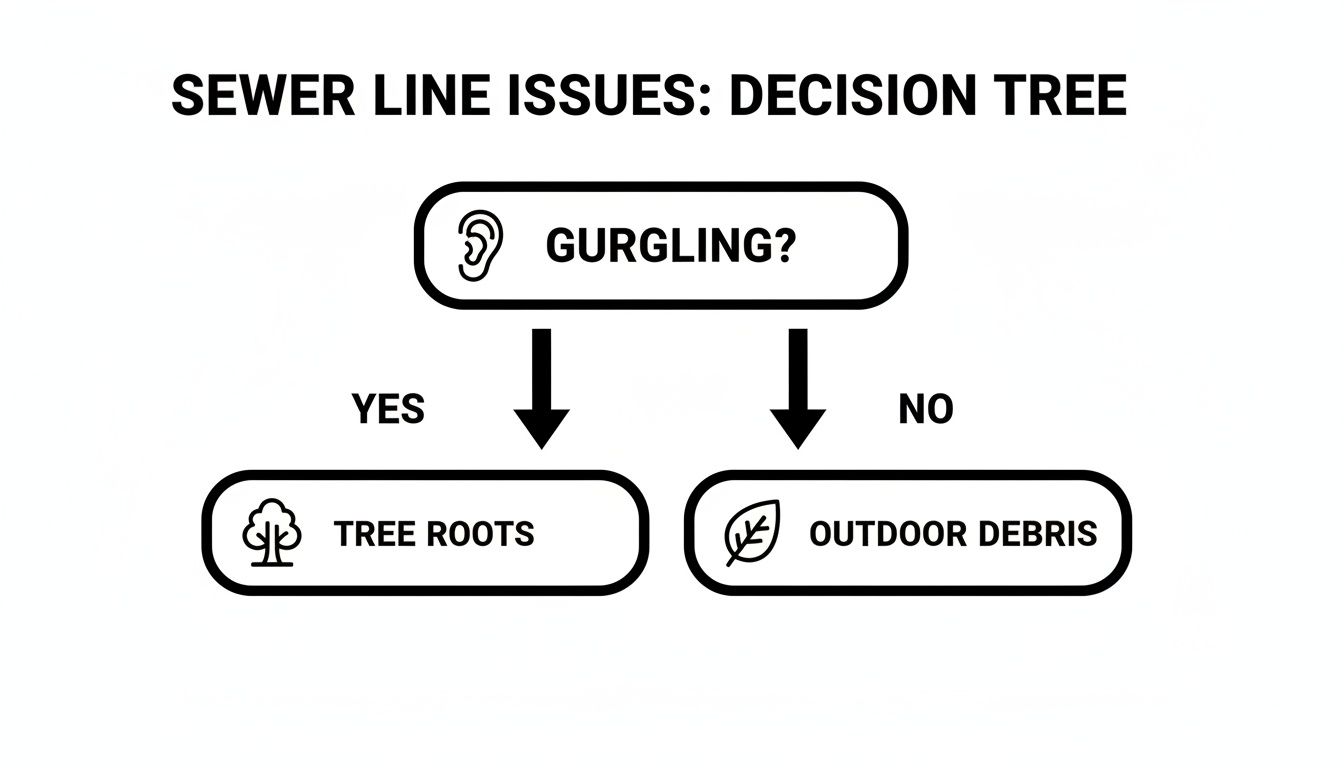
As you can see, something as common as gurgling can point directly to complex issues like tree root intrusion, which absolutely requires a professional to diagnose and repair.
DIY Fix vs Call a Pro: When to Contact JMJ Plumbing
Still not sure if your drain issue is a quick fix or a symptom of a larger problem? This quick-reference guide can help you decide.
| Symptom You Are Experiencing | Potential Cause | Recommended Action |
|---|---|---|
| A single, slow-draining sink or tub. | Localized hair, soap scum, or food debris buildup. | Try DIY first: Use a drain snake or a mix of hot water, vinegar, and baking soda. |
| Multiple fixtures are clogged or draining slowly at once. | Main sewer line blockage from roots, grease, or debris. | Call a professional immediately. A main line issue requires specialized equipment to diagnose and clear. |
| Strange gurgling sounds from toilets or drains. | Trapped air due to a partial main line blockage. | Call a professional. This is an early warning sign of a developing major clog. |
| Water backs up into a shower/tub when a toilet is flushed. | Severe main sewer line clog. | Stop using water and call for emergency service. This is a serious health hazard. |
| A persistent, foul sewer gas odor in or around your home. | A cracked sewer pipe or a blocked vent stack. | Call a professional right away. Sewer gas can be hazardous to your health. |
| A simple clogged toilet that a plunger can't fix. | An object flushed by mistake or a clog further down. | Call a plumber. Repeated plunging can damage the wax seal. A pro can retrieve the object or clear the line. |
Ultimately, if a simple DIY attempt doesn't solve the problem quickly, it’s always best to get an expert opinion before the situation gets worse.
Why DIY Fixes Can Make Things Worse
When you’re facing a major blockage, reaching for a bottle of chemical drain cleaner or trying to force it with a simple snake can do more harm than good. Those harsh chemicals are rarely effective on stubborn main line clogs and can seriously damage older pipes. Likewise, a small hand auger can easily get stuck or even break off inside a pipe if it snags a solid obstruction like a tree root.
Attempting a DIY fix on a main line clog can turn a repair job into a full-blown sewer replacement. A professional plumber in Acworth has the specialized equipment, like video camera inspection tools and hydro-jetters, to diagnose and clear the problem safely and effectively.
For situations that escalate beyond prevention, such as a burst pipe or a severely blocked line, it's vital to know how to find a reliable emergency plumber. These professionals are equipped to handle urgent issues around the clock.
The bottom line is simple: don’t risk it. If you suspect the problem is bigger than a simple hairball, your best and safest move is to call a licensed expert. From a clogged toilet that won’t flush in Alpharetta to a suspected main water line repair in Canton, a professional diagnosis is the fastest way to protect your home.
Your Go-To Plumbers in North Metro Atlanta
Let's be honest, all the prevention in the world can't stop every single clog. Sometimes, you just need a professional with the right tools and know-how. That's where we come in. Think of us as your local plumbing partner, here to handle the tough stuff so you don't have to.
Expert Help for Tough Jobs
When you’ve tried everything and that drain still won't budge, our drain cleaning services, including powerful hydro-jetting, can blast through the most stubborn blockages. For bigger problems lurking underground—like tree roots crushing your pipes or just old, worn-out lines—we have the expertise for full sewer repair and replacement.
We’re proud to be the trusted local team for homeowners all over North Metro Atlanta. You'll find us working in Marietta, Roswell, Canton, and across Cobb, Cherokee, and Forsyth counties.
If you’re searching for “sewer backup” help or need a “burst pipe repair near me” in the middle of the night, we’re the ones to call. Our team is on standby 24/7 because emergencies don’t wait for business hours. We're here to protect your home.
Common Questions About Drain Maintenance
Even with the best habits, you're bound to have questions about keeping your drains clear. We get calls all the time from homeowners across North Metro Atlanta with similar concerns. Here are some of the most common questions we hear, with straightforward answers from our experienced team.
How Often Should I Have My Drains Professionally Cleaned?
For most modern homes, say in a place like Acworth or Canton, we've found that a professional drain cleaning every 18 to 24 months is the sweet spot. It's the perfect interval to clear out all that gunk and sticky buildup that home remedies just can't touch. This simple step keeps water flowing like it should.
However, that's not a one-size-fits-all answer. If you have an older home with its original cast iron pipes, a big family putting a lot of strain on the system, or you're just constantly fighting with slow drains, you should probably bump that up to once a year. Think of it as a small investment to prevent a messy and expensive sewer backup down the road.
Are Chemical Drain Cleaners a Good Idea?
Honestly, we'd tell you to steer clear of them. It's tempting to grab a bottle for a quick fix, especially when you have a clogged toilet that won’t flush, but those harsh chemicals can cause serious headaches later. They are incredibly corrosive and can eat away at older pipes and rubber seals, turning a simple clog into a costly leak repair job.
If you want a safer DIY option for regular upkeep, look for enzyme-based cleaners. They use natural bacteria to break down organic waste without harming your pipes. But for a really tough clog, nothing beats having a professional physically remove it.
A professional plumber has the right tools to pull out the actual blockage without gambling with your pipes' integrity. It's a precise solution, not a chemical experiment.
What Exactly Is Hydro-Jetting?
Imagine power-washing the inside of your pipes—that's hydro-jetting in a nutshell. It's our go-to method for really severe or recurring clogs that just won't quit. We use a special, high-pressure hose that blasts water at up to 4,000 PSI.
This isn't just about breaking up a clog; it's about scouring the pipe walls clean. It obliterates years of built-up grease, scale, soap scum, and even tough tree roots. When a standard drain snake can't get the job done, hydro-jetting restores your pipes to an almost brand-new condition, which is especially critical when dealing with a main water line repair caused by heavy buildup.
Do "Flushable" Wipes Really Cause Clogs?
Yes. 100% yes. We can't stress this enough. Despite what it says on the package, these wipes do not break down like toilet paper. They stay intact, catch on any rough edge inside your pipes, and mix with grease to form massive clogs that are a nightmare to remove.
Seriously, these wipes are one of the biggest culprits behind major sewer repair jobs we see in areas like Roswell and Johns Creek. The golden rule of plumbing is simple: only human waste and toilet paper go down the toilet. Everything else goes in the trash.
When your best efforts aren't enough, you need a team you can count on. For everything from routine drain cleaning to middle-of-the-night emergencies, JMJ Plumbing is here for our North Metro Atlanta neighbors 24/7. Schedule your service online today.