Your Guide to Water Filtration Systems for Home in North Atlanta
If you live anywhere in North Metro Atlanta, from Woodstock to Alpharetta, you’ve probably never given your tap water a second thought. But have you ever noticed a faint chlorine smell when filling a glass, or seen that chalky white buildup on your faucets? Maybe you're dealing with symptoms like slow drains or low water pressure and wonder if your water is to blame. These are signs that you may need more than just what the city provides.
Getting a home water filtration system isn't about being fancy. It's one of the smartest moves you can make for your family’s health and the longevity of your home's entire plumbing system.
Why Your Home's Water Needs a Second Look
Think of a whole-home water filter as an invisible shield. It stands guard right where the main water line enters your house, protecting everything and everyone inside. While our municipal water treatment in Woodstock, Marietta, and Alpharetta is solid, it’s not the end of the story. Problems can arise in the miles of pipes between the treatment plant and your home.
And it’s not just us here in Metro Atlanta who are waking up to this. The demand for home water filtration is exploding, with the market expected to jump from $15,782 million in 2026 to a staggering $29,222 million by 2033. Homeowners everywhere are becoming more aware that things like heavy metals, bacteria, and chemicals can make it past city treatment plants.
Common Water Problems in North Metro Atlanta
Even professionally treated water can bring problems into your home that you’ll notice day-to-day. For homeowners across Cobb County, Cherokee County, and North Fulton, these issues might seem small at first, but they add up, leading to costly repairs.
Here’s what our plumbers see all the time:
- Hard Water: This is the big one in areas like Canton and Cumming. It’s caused by high mineral content (mostly calcium and magnesium) and is responsible for that crusty, white limescale on your faucets and showerheads. It can also cause slow drains, lower your water pressure, and drastically shorten the life of your appliances, leading to an expensive water heater replacement in Woodstock.
- Chlorine Taste and Odor: Chlorine is essential for disinfecting the water supply, but nobody wants their drinking water or morning coffee to taste and smell like a swimming pool.
- Hidden Contaminants: Beyond what you can taste and see, your tap water can carry sediment, pesticides, and industrial byproducts. A good filter is your last line of defense against these unwanted guests, which can sometimes be a contributing factor to issues requiring main water line repair in Marietta.
A dedicated filtration system gives you something invaluable: peace of mind. It’s the simplest way to get clean, refreshing water from every tap, protect your plumbing from wear and tear, and finally take control of your home’s water quality.
If you’re curious to learn more about water quality trends and what they mean for your health, you can explore their blog for water insights. Remember, investing in filtration isn't just about better-tasting water—it’s about protecting your home and family.
Navigating the world of water filtration systems for home can feel overwhelming at first. But when you get right down to it, there are two main ways to approach clean water in your house. I like to think of it in terms of home security: are you looking for a security guard for the entire property, or a personal bodyguard for a specific room?
That one question gets to the heart of the matter, separating filters into two main camps: Whole-Home systems and Point-of-Use systems. Figuring out which one fits your needs is the first step toward better water, whether you're in Canton, Roswell, or anywhere across North Metro Atlanta.
Whole-Home Systems: The Security Guard for Your Property
A Whole-Home Water Filtration System, often called a Point-of-Entry (POE) system, is your all-in-one solution. We install it right where your main water line comes into the house, so it cleans every drop of water before it ever reaches a faucet, showerhead, or appliance. This means you're getting treated water for everything—drinking, cooking, showering, and doing laundry.
For homeowners in places like Woodstock and Marietta, this is a game-changer. It’s like putting up a shield that protects your entire plumbing network and every appliance that uses water.
- Protect Your Appliances: A whole-home system is fantastic at catching the sediment and hard minerals that slowly destroy dishwashers, washing machines, and water heaters. Keeping that gunk out can help you avoid a premature water heater replacement in Alpharetta and even make your appliances run more efficiently, solving problems like no hot water.
- Extend Your Plumbing's Life: By filtering out corrosive stuff like chlorine and the minerals that create limescale, it helps keep your pipes clear. This can prevent low water pressure and clogs, meaning you'll call a plumber for drain cleaning in Roswell a lot less often.
- Enjoy Healthier Showers: It’s easy to forget that your skin is your body’s largest organ. A whole-home system removes chlorine and other chemicals from your shower water, so you aren't absorbing them through your skin or breathing them in as steam.
Think of a whole-home system as a proactive investment in your home's long-term health. It stops water quality issues at the source, which can help you avoid serious headaches down the road, like needing an emergency plumber for a burst pipe repair in Johns Creek caused by years of hidden corrosion.
Point-of-Use Filters: The Personal Bodyguard
On the other hand, a Point-of-Use (POU) Water Filter is designed to treat water at a single spot, like your kitchen sink or the water line to your refrigerator. These are the "personal bodyguards" focused on a specific job: making sure the water you drink and cook with is as pure as possible. For many families in Acworth and Alpharetta, this is an excellent and affordable way to start.
POU systems come in a few common styles:
- Under-Sink Filters: Tucked away under the kitchen sink, these systems connect to your cold water line and provide filtered water from a small, dedicated faucet. They're out of sight and incredibly effective. If you notice a leak under your sink, it's a good time to call for leak repair in Cumming.
- Faucet-Mounted Filters: These little units screw right onto your existing faucet. A simple switch lets you choose between filtered and unfiltered water on the fly.
- Countertop Filters: These filters sit on your countertop and connect to the faucet, purifying water into a built-in reservoir.
A POU filter won’t protect your pipes or appliances from hard water, but it does one thing exceptionally well: deliver fantastic-tasting, high-quality drinking water right where you use it most. It's the perfect choice if your main goal is to improve the taste and safety of your drinking water without the bigger investment of a whole-home system.
A Quick Look at Key Filtration Technologies
Now, let's get into the "how." Both whole-home and point-of-use systems use different technologies to get the job done. Here’s a quick-reference table to help you compare the most common types you'll run into.
This table gives you a quick, side-by-side look at the most common water filtration systems, highlighting their main job, what they remove, and their best use case for homes in the Metro Atlanta area.
Comparing Home Water Filtration System Types
| Filtration Type | Primary Function | Removes | Best For |
|---|---|---|---|
| Activated Carbon | Adsorption (like a magnet) to improve taste and odor. | Chlorine, pesticides, sediment, volatile organic compounds (VOCs). | General taste and smell improvement for city water in areas like Johns Creek or Cumming. |
| Reverse Osmosis (RO) | Pushes water through a semi-permeable membrane to purify it. | Up to 99% of dissolved solids, including lead, fluoride, nitrates, and arsenic. | Achieving the highest purity for drinking water, removing the widest range of contaminants. |
| Water Softener | Ion exchange to remove "hard" minerals. | Calcium and magnesium. | Homes in Cobb County and Cherokee County with hard water causing limescale, appliance damage, and slow drains needing frequent cleaning. |
It’s important to know that you don't always have to choose just one. Many of today’s best water filtration systems for home actually combine these technologies for complete coverage. For example, a whole-home system might use a large activated carbon filter to get rid of chlorine, while a dedicated under-sink RO system provides that extra level of purity for drinking. This layered approach can even help diagnose other issues. If you notice a sewage smell in your kitchen despite clean water, it could signal a deeper problem requiring sewer repair in Acworth.
How Reverse Osmosis Delivers the Purest Water
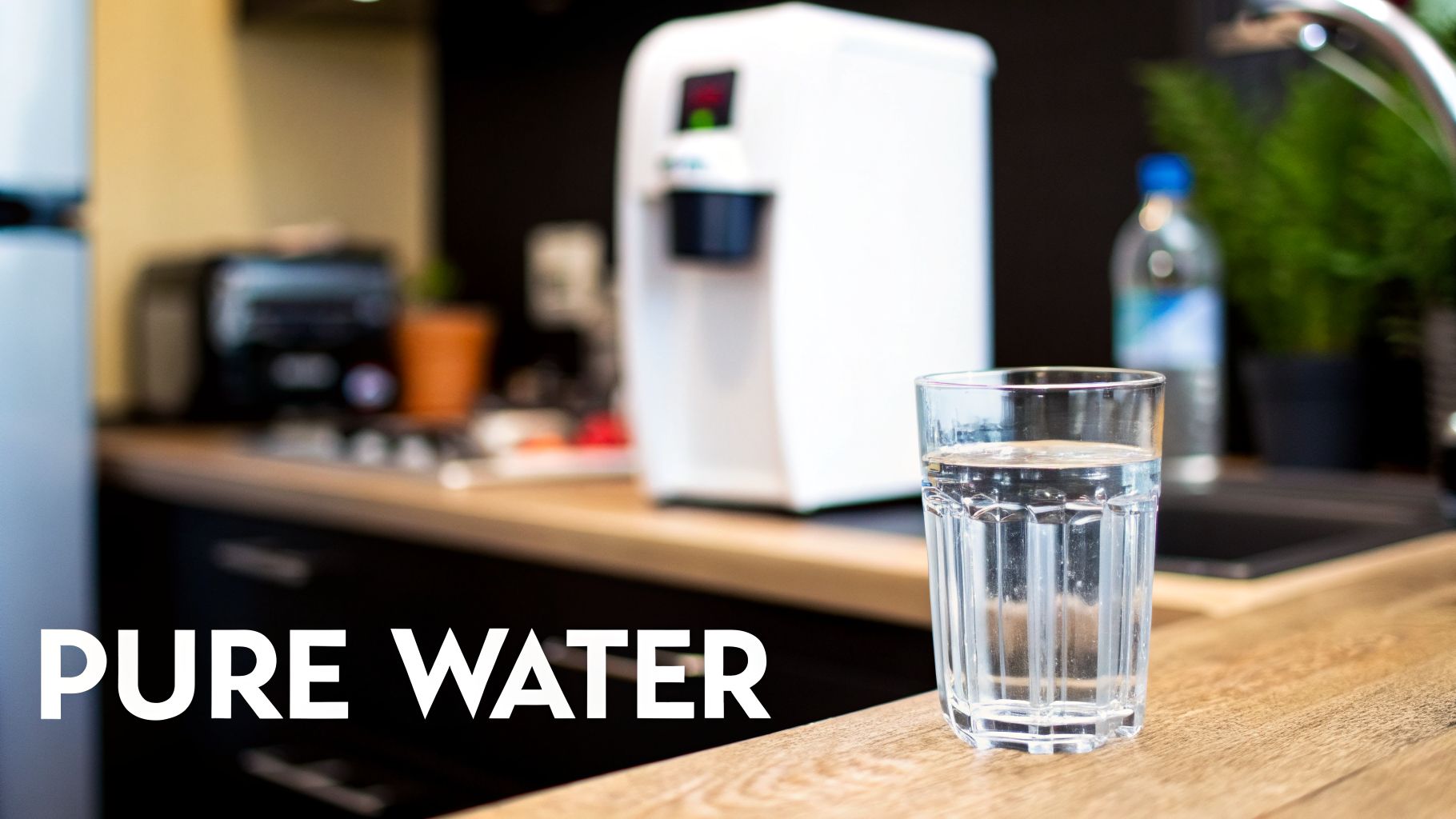
When you're looking for the absolute cleanest, purest drinking water possible, nothing really compares to Reverse Osmosis (RO). It's earned its reputation as the gold standard in water purification, and for a good reason.
Think of an RO system like having an incredibly strict gatekeeper for your water. This gatekeeper’s only job is to let pure water molecules through a special membrane while blocking nearly everything else. It’s a physical barrier that strips out a huge range of contaminants that other filters just can't catch.
For families in Johns Creek and Cumming, this means you can finally stop buying cases of bottled water and feel confident about every single glass you pour straight from the tap.
What Does Reverse Osmosis Actually Remove?
While a carbon filter is great for improving taste and smell, an RO system takes purification to a whole other level. It’s designed to target the microscopic dissolved solids that you can't see but can impact your health and how your water tastes.
A quality RO system is highly effective at removing:
- Heavy Metals: Lead, mercury, arsenic, and other metals that can find their way into the water supply from aging pipes or natural ground deposits.
- Dissolved Solids (TDS): This covers things like salts, nitrates, and even fluoride that are commonly found in both city and well water in Forsyth County.
- Chemical Contaminants: An RO system provides a powerful defense against various chemicals, working alongside carbon filters to ensure purity.
- Microorganisms: The membrane's pores are so tiny they can effectively block bacteria and other pathogens from passing through.
An RO membrane can filter out contaminants as small as 0.0001 microns. To put that in perspective, it’s a screen so fine that pretty much only water molecules can get through, which is why RO is one of the most thorough water filtration systems for home use.
There’s a reason RO systems are projected to make up a massive 62.23% of the market share by 2026. Their unmatched ability to remove up to 99% of total dissolved solids (TDS), heavy metals, and other tough contaminants is simply undeniable. You can explore the market trends and find more detailed information on why this technology has become so dominant.
The Multi-Stage Purification Process
A true RO system isn't just a single filter—it’s a team of filters working together in a multi-stage process. Most residential under-sink units follow a few key steps to deliver that exceptionally pure water.
- The Pre-Filters: Before your water ever meets the RO membrane, it first flows through sediment and carbon pre-filters. These initial stages catch the big stuff like rust, sand, and silt, and also reduce the chlorine. This is a critical step because it protects the delicate RO membrane from getting clogged or damaged, helping it last longer and work more effectively.
- The RO Membrane: This is the heart of the whole operation. Here, household water pressure forces the pre-filtered water through the tightly wound, semi-permeable membrane. Pure water molecules pass through, while the rejected contaminants are collected and flushed away down the drain.
- The Post-Filter (and Remineralization): After the RO membrane does its heavy lifting, the purified water often passes through a final carbon filter. This is like a "polishing" step that removes any lingering tastes or odors, ensuring the water is crisp and clean. Some advanced systems, like certain HALO models, also add a remineralization stage here, putting healthy minerals like calcium and magnesium back into the water to improve the taste and pH balance.
This complete, step-by-step process is what gives homeowners in Roswell and Alpharetta total peace of mind. While it’s not going to fix a plumbing issue like a clogged toilet that won't flush, it delivers unparalleled quality for the water your family drinks every day. If you do face that problem, you need an emergency plumber in Roswell for immediate service.
Getting Great-Tasting Water Right at the Tap: Point-of-Use Filters Explained
While a whole-home system is like having a bodyguard for all the water entering your house, sometimes you just need to improve the water you use the most. This is where Point-of-Use (POU) water filtration systems shine.
If your main goal is getting rid of that chlorine taste in your drinking water or making sure your cooking water is clean, a POU filter is a fantastic and straightforward solution. Think of it as a specialist that focuses its efforts on a single, high-traffic spot—usually the kitchen sink or the water line to your refrigerator's ice maker. For many families here in Acworth and Canton, it’s the perfect first step toward better water.
Why Are POU Filters So Popular?
It really comes down to a few simple things: they're affordable, easy to manage, and you notice the difference right away. You don't have to plan for a big installation or a major budget to start enjoying cleaner, fresher-tasting water. The moment it’s set up, that off-putting tap water taste and smell are gone.
This blend of convenience and immediate results is why POU systems—from under-sink models to simple countertop units—made up the biggest slice of the home water filtration market back in 2026. That global market, valued at $13.98 billion that year, is expected to balloon to $37.54 billion by 2034. It’s clear that homeowners everywhere are looking for effective, targeted solutions. You can read the full market analysis on home water filtration to see just how fast this trend is growing.
Common Types of Point-of-Use Systems
POU filters are designed to fit just about any kitchen setup. Here are the most common ones you'll see:
- Under-Sink Filters: These are the workhorses of POU filtration. Tucked away in the cabinet under your sink, they connect right to the cold water line. They deliver purified water through a separate, small faucet, giving you powerful filtration without taking up any counter space.
- Faucet-Mounted Filters: Probably the easiest to get started with. These little units just screw onto the end of your existing kitchen faucet. With the flip of a lever, you can switch between filtered water (for drinking or cooking) and unfiltered water (for washing dishes).
- Countertop Models: A great option for renters or anyone who can’t make changes to their plumbing. These systems sit on your counter and use a small tube to connect to the faucet. They filter water into a built-in reservoir, ready whenever you need it.
If your main concern is the quality of the water you drink and cook with, a POU filter is an excellent choice. For many folks in Marietta and Roswell, it’s an easy and immediate way to start making their homes healthier.
Now, it’s important to remember what these filters don't do. They won't solve hard water problems that cause buildup, and they won't protect your pipes from sediment that could lead to needing a water line replacement in Canton. But they are fantastic at what they are designed for: getting rid of the chlorine taste from city water and making sure every glass of water you pour is crisp, clean, and refreshing.
By the way, if you’re already dealing with slow drains or think you might have a small leak under the sink, having a POU system installed is the perfect time to get it all checked out. As your emergency plumber near Acworth, we are available as a 24 hour plumber and can easily handle the filter installation and take care of any other plumbing needs, like drain cleaning or leak repair, in the same visit.
Choosing the Right System for Your Atlanta Home
So, you’ve learned about the different kinds of filters out there. Now for the big question: which one is right for you? Finding the best among the many water filtration systems for home use isn't about grabbing the fanciest model off the shelf. It’s about matching the system to your family, your budget, and the unique water quality here in North Metro Atlanta.
Before you do anything else, get your water tested by a professional. It's the most critical first step. The annual reports from places like Cherokee County or Cobb County are a great starting point, but they don't tell you what's happening in the pipes between the treatment plant and your faucet. A specific test on your tap water eliminates all the guesswork by showing you exactly what contaminants and minerals you’re dealing with.
Factors That Influence Your Choice
A water test might show high chlorine levels in your Roswell water, which immediately tells us an activated carbon filter would make a huge difference. Or maybe it flags extremely hard water in Canton, making a water softener the top priority to prevent problems like low water pressure or even a premature water heater replacement. If the test reveals signs of pipe degradation, you may want to investigate the cost of a water line replacement in Marietta.
As you weigh your options, think through these key questions:
- Household Size: A family of five in Alpharetta obviously uses a lot more water than a couple in a Marietta condo. Your daily water use is a huge factor in determining the right system capacity to keep up with demand.
- Budget: A point-of-use filter is a fantastic, wallet-friendly way to get started. But sometimes, investing more upfront in a whole-home system actually saves you money down the road by protecting your plumbing from expensive headaches like a main water line repair or a burst pipe repair caused by corrosion.
- Specific Water Issues: Are you noticing a faint sewage smell from a drain? Is it just the strong taste of chlorine that bothers you? Your biggest frustrations—from bad tastes to symptoms like water in your yard—will point you straight to the right technology. For major issues like a sewer backup, you need an immediate sewer replacement in Canton or repair.
A professional water test from a trusted plumber is your roadmap. It identifies the precise problems in your water—whether it's hard water minerals causing slow drains or sediment that could damage appliances—and points directly to the most effective solution.
This simple chart can help you think through your choices if you're just looking to filter water at a single faucet.
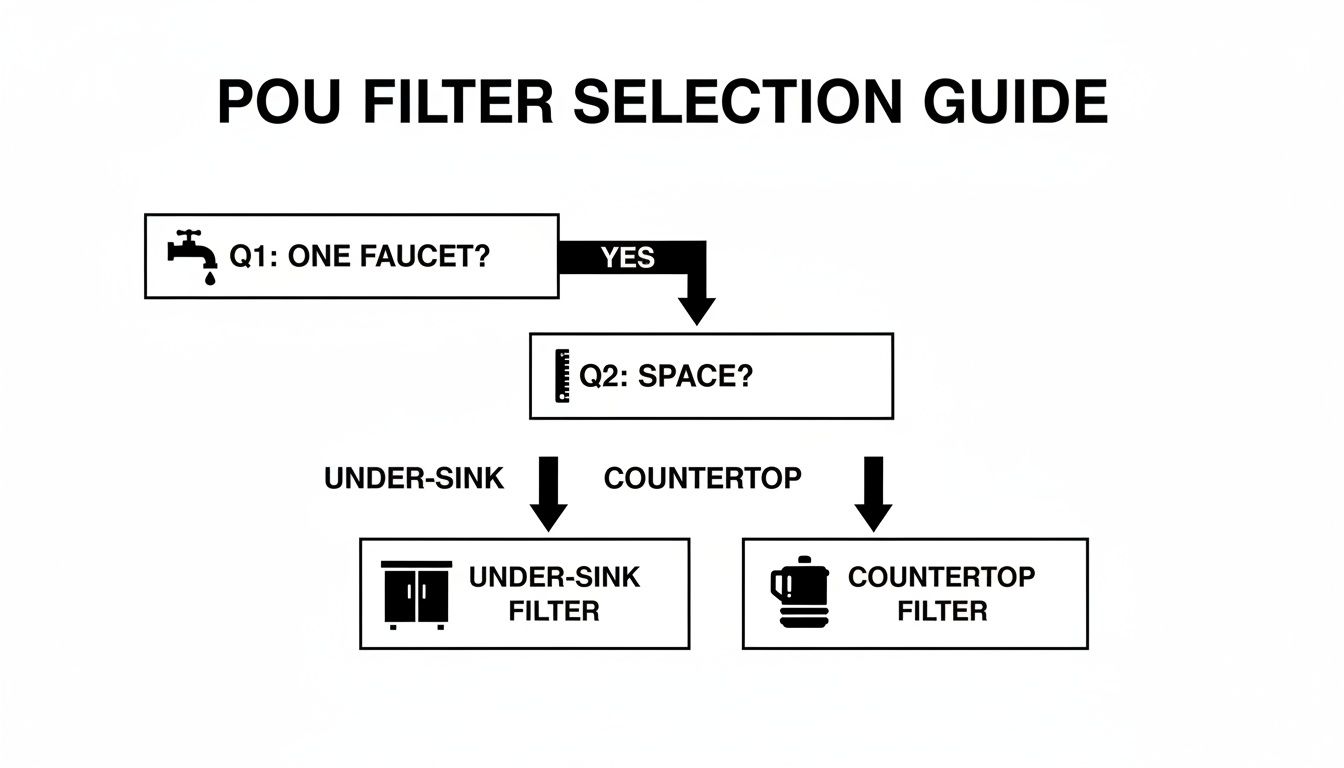
As you can see, even with smaller POU filters, your home's layout and available space are a big part of finding the perfect fit.
HALO Whole-Home Systems: A Solution for North Georgia Water
For homeowners in Woodstock, Cumming, and Johns Creek who want a complete, no-fuss solution, we proudly install HALO Whole-Home Water Systems. These aren't your typical big-box store filters. They are highly advanced systems specifically engineered to handle the water challenges we see every day here in North Georgia.
What makes HALO systems so effective is that they combine multiple filtration stages into one powerful unit, creating a multi-layered defense against our region’s most common water problems.
Here’s how they solve local issues:
- For Hard Water in Cobb and Forsyth County: HALO systems come with conditioners that tackle hard water minerals without using salt. This is huge because it protects your pipes and appliances from scale buildup, which prevents the need for constant drain cleaning services in Cumming and helps your water heater run more efficiently.
- For Chlorine in Cherokee and North Fulton: The built-in carbon filtration is fantastic at removing that chlorine taste and smell so common in city water. The result is clean, fresh-tasting water from every faucet in your house.
- For Overall Protection: By filtering all the water right where it enters your home, HALO systems act as a shield for your entire plumbing infrastructure. This dramatically reduces the risk of hidden leaks and helps your fixtures and appliances last much longer, helping you avoid the need for a 24 hour plumber.
When you choose a HALO system, you aren't just getting a filter—you're getting a solution designed for your home. If you’re fed up with water quality issues and want total peace of mind, a HALO system is the way to go. When you’re ready for a change, give JMJ Plumbing a call. As your local emergency plumber near me in Acworth, we can provide a professional water test and an honest, on-site quote for the right system—no pressure, just clear solutions.
What to Expect with Installation and Maintenance
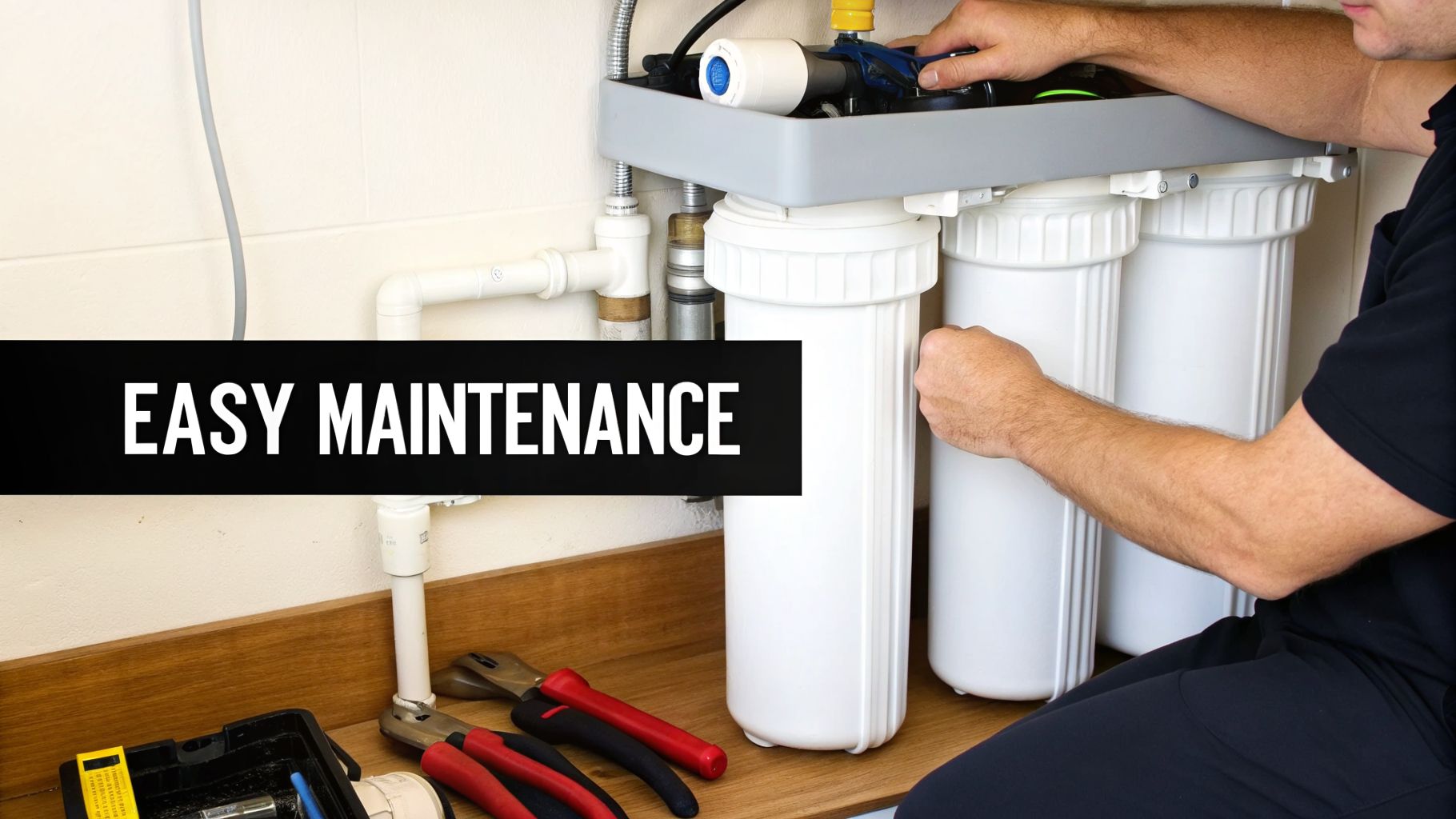
So you've decided to invest in one of the many water filtration systems for home use—that’s a fantastic move for your family’s health. But what about the practical side? Let's walk through what you can actually expect when it comes to getting it set up and keeping it running smoothly.
Some simple faucet filters are easy enough to screw on yourself in a few minutes. But when you get into more powerful systems like under-sink units or whole-home solutions, professional installation is the only way to go. A licensed plumber makes sure every connection is perfect, protecting your home from leaks and ensuring your system works as it should without causing new problems.
Professional Installation Protects Your Plumbing
Trying to tackle a complex plumbing job yourself can quickly turn into a disaster. A single poorly-fitted connection can lead to a slow leak that damages your cabinets and floors, or worse, a major flood. If a whole-home system isn't installed correctly, it can also choke your water flow, leading to the exact low water pressure you were hoping to avoid.
Hiring a professional plumber in Marietta or Roswell just gives you that crucial peace of mind. We’ll integrate the system with your existing plumbing flawlessly, which not only protects your manufacturer's warranty but also keeps you from having to call an emergency plumber for a burst pipe repair down the road.
For a whole-home system, professional installation is non-negotiable. It's the only way to ensure your investment works as intended and doesn't create new plumbing problems down the road.
Understanding Long-Term Maintenance and Costs
Once your system is in, you might be wondering about upkeep. The good news is that most modern water filtration systems are designed to be surprisingly low-maintenance. Your main job is simply swapping out the filter cartridges on schedule.
Here’s a general timeline of what that looks like:
- Filter Lifespan: Most standard sediment and carbon filters need to be changed every 6 to 12 months. The RO membrane in a reverse osmosis system has a much longer life, typically lasting 2 to 5 years.
- Replacement Schedule: The easiest way to stay on top of it is to set a recurring reminder on your calendar. This simple habit keeps your system working at peak performance, so you’re always getting the clean water you paid for.
- Ongoing Costs: Your only real recurring expense will be the replacement filters. While it's a cost to budget for, many homeowners find it's more than offset by no longer buying bottled water. Plus, cleaner water is gentler on your appliances, helping you put off a costly water heater replacement in Cherokee County and other repairs.
For homes in Acworth or Alpharetta with more complex needs, like those on well water, a water storage tank might be part of the solution. If you're curious about what that entails, this tank installation guide is a helpful resource. At JMJ Plumbing, we manage all these details to make the entire process completely hassle-free.
Common Questions About Home Water Filtration
Deciding to install one of the many water filtration systems for home use is a big step, and it’s natural to have a few questions. We get it. Homeowners want to be sure they're making a smart, long-term investment. Here are some straightforward answers to the questions we hear most often from families in Woodstock, Marietta, and across North Metro Atlanta.
How Do I Know Which Water Filter Is Right for My Home?
You can’t really know for sure without a professional water test. It’s the only way to see exactly what’s in your water. Think of it like a diagnostic check for your home's plumbing.
Once we have those results, we can pinpoint the perfect solution. If hard water minerals are causing slow drains and crusty fixtures, a softener is the answer. If you're just bothered by a chlorine taste, a simple carbon filter might do the trick. If tests reveal contaminants suggesting pipe decay, we can discuss the cost of sewer replacement in Johns Creek.
Will a Water Filter Lower My Water Pressure?
When a licensed professional installs your system correctly, it will not lower your home's water pressure. That's a common myth.
Low water pressure issues are almost always a red flag for an improperly sized system or a DIY installation gone wrong. An experienced plumber in Canton or Roswell will make sure your system matches your home’s flow rate, giving you pure, clean water without sacrificing performance. If you have low water pressure already, it could be a sign of a hidden water line leak.
What Is the Difference Between a Water Softener and a Filter?
It helps to think of it this way: a water softener is a specialist, while a water filter is more of a generalist.
- Water Softeners have one specific job: removing the hard water minerals (calcium and magnesium) that create limescale buildup. That same buildup can cause no hot water and force you to need a water heater replacement much sooner than you should.
- Water Filters go after a much broader range of contaminants. They work to remove things like chlorine, sediment, lead, and various chemicals to improve your water's taste, smell, and overall safety.
For many homes here in Cobb County and North Fulton, combining both types of systems offers the most complete protection.
Choosing the right system often comes down to identifying your home's biggest pain points. A professional consultation eliminates guesswork and prevents you from spending money on a solution that doesn't fix your specific problem.
How Much Does a Whole-Home System Cost in Atlanta?
A whole-home system is a bigger upfront investment than a small faucet filter, there’s no doubt about it. But in the long run, it often pays for itself.
These systems protect your expensive appliances from damage, help you avoid costly plumbing jobs like a main water line repair in Alpharetta, and put an end to buying bottled water. We provide clear, on-site quotes with no hidden fees, so you’ll understand the full cost before we even think about starting the work.
Ready to take control of your home’s water quality? The expert team at JMJ Plumbing is here to help you find the perfect HALO whole-home water filtration system. Schedule your professional water test and get a free, no-obligation quote today!