You step into your shower, ready to start your day, and—ugh. Instead of a fresh, clean scent, you're hit with a nasty smell coming right from the drain. If your shower drain smells bad, you're not just imagining it. It’s a super common problem, and the cause is usually one of a few usual suspects, from everyday gunk to a problem with your plumbing's P-trap.
Finding the root of the problem is the first step to getting rid of that smell for good.
What's Causing That Awful Shower Drain Smell?
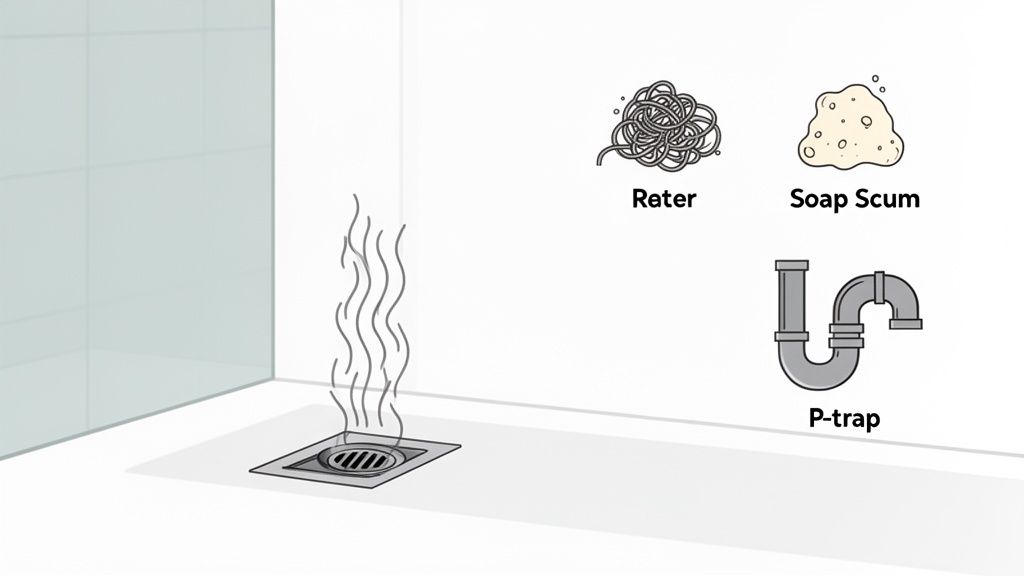
Trust me, you're not alone in this battle. We get calls every day at JMJ Plumbing from homeowners in Woodstock, Canton, and all over North Metro Atlanta who are tired of that foul, sewer-like stench. It’s a real nightmare. In fact, some plumbing industry findings from recent reports show that over 40% of service calls are for drain-related issues, with shower drains making up a huge chunk of those.
This guide is here to walk you through exactly why your drain stinks, what you can do about it yourself, and when it’s smarter to call a professional for drain cleaning in Woodstock. We'll start by helping you play detective to figure out what that smell is telling you.
Decoding Your Drain Odor
Not all drain smells are created equal. Believe it or not, the type of odor can give you major clues about what’s going on down there. A musty, swampy smell is very different from a rotten egg or raw sewage odor. A sewage smell, for instance, might point to the need for a sewer repair in Acworth, while other odors have simpler fixes.
To make it easier, here’s a quick guide to help you match the smell to the problem.
| Smell Type | Most Likely Cause | DIY Difficulty |
|---|---|---|
| Musty or Moldy | Biofilm, soap scum, and hair buildup | Easy |
| Rotten Eggs | Sewer gas seeping through a dry P-trap | Easy to Moderate |
| Raw Sewage | Sewer line clog or a plumbing vent issue | Hard (Plumber Needed) |
Once you've identified the likely culprit, you'll know whether it's something you can tackle this weekend or if you need to call in the experts.
A quick word of advice: If you have a persistent sewer gas smell that just won't go away, even after a good cleaning, take it seriously. That’s a huge red flag for a problem that goes beyond a simple clog, like an issue with your main water line repair or vent stack that requires a professional.
Over the years, our plumbers have seen it all. Here are a few classic scenarios we run into all the time in Cherokee County and Cobb County:
- The guest bathroom shower starts to stink after a few weeks of not being used. This almost always points to a dry P-trap.
- A shower that’s used every day has a recurring sour smell. That's a textbook sign of biofilm building up in the drain.
- You hear gurgling sounds coming from the drain along with the bad smell. This often hints at a vent problem or even a partial sewer backup.
Learning to spot these patterns can save you a lot of time and trouble, helping you know whether it's a quick DIY fix or if you need an emergency plumber in Roswell on the line.
What's Really Causing That Funky Shower Smell?
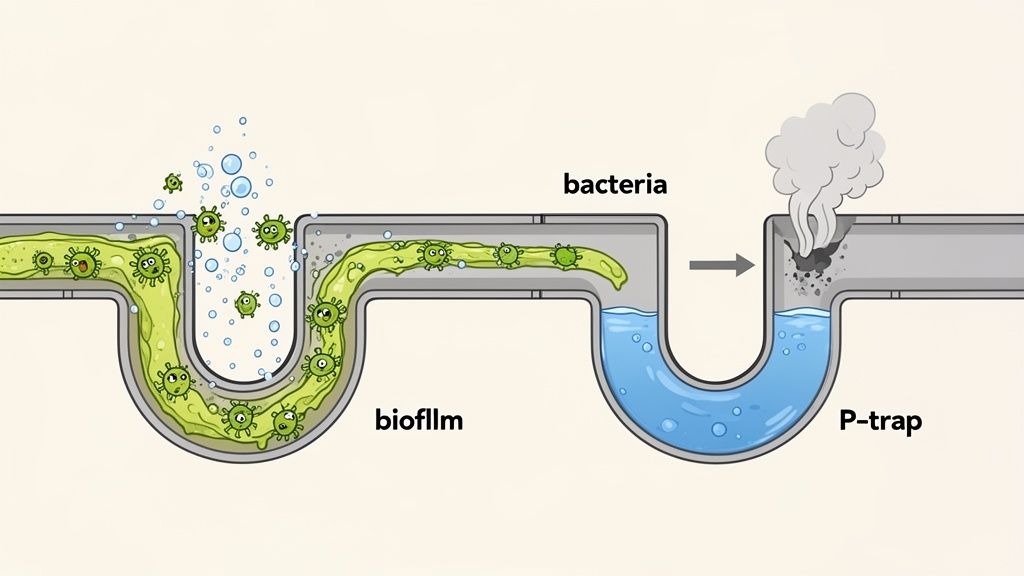
To get rid of that awful smell for good, it helps to know what’s actually going on inside those pipes. From our experience working in homes all over Canton and Johns Creek, it’s usually a mix of a few common culprits.
The Slimy Culprit: Biofilm
Nine times out of ten, the source of that stinky drain is a lovely substance we plumbers call biofilm. It's a slimy, living layer of gunk that lines the inside of your drain and P-trap.
This gross film is a cocktail of everything that washes down your shower drain—soap scum, body oils, skin cells, and hair. This sludge becomes an all-you-can-eat buffet for bacteria, and as they feast and multiply, they release nasty-smelling gases. That's the odor wafting up into your bathroom.
It's no wonder this is such a frequent problem. Slimy biofilm can start forming in over 90% of drains in just 30 days, constantly fed by daily showers. Here in the humid Forsyth County climate, the combination of moisture and soap scum makes our drains a perfect breeding ground for it. You can explore more data on residential drain issues to see just how widespread this really is.
Your Drain's First Line of Defense: The P-Trap
Next, let's look at a critical piece of plumbing right under your shower: the P-trap. That U-shaped bend in the pipe isn't just for looks; it has one simple but vital job. It’s designed to hold a small amount of water at all times.
This little pool of water creates a seal, acting as a physical barrier that stops sewer gases from the main city line from backing up into your house. If you're smelling something like rotten eggs or raw sewage, it’s a good sign that water barrier is gone.
A functioning P-trap is your first line of defense against sewer gas. If that water barrier disappears, your bathroom will quickly start to smell like a sewer, which could indicate a deeper problem than just a dirty drain, potentially needing sewer repair in Alpharetta.
This is a classic issue in guest bathrooms or showers that aren't used very often. After a few weeks of disuse, the water in the trap simply evaporates. This leaves a wide-open path for sewer odors to travel right up the pipe. We get calls for an emergency plumber near me for this exact reason—a homeowner in North Fulton suddenly gets hit with a powerful smell from a bathroom they rarely enter.
When the Smell Signals a Bigger Problem
While biofilm and dry P-traps are easy enough to deal with, sometimes a smelly drain is your home’s way of warning you about a more serious issue. A clogged plumbing vent on your roof, for example, can create a vacuum in the drain lines that actually siphons the water right out of the P-trap every time you use a fixture. Other symptoms like no hot water or low water pressure can point to interconnected issues needing a professional diagnosis.
If you clean the drain thoroughly but the smell comes right back, pay attention. Or if you hear gurgling sounds from the toilet when you're taking a shower, that's another red flag. These aren't signs of a simple clog needing drain cleaning; they point toward a blocked vent stack or even the beginnings of a sewer backup.
Ignoring these symptoms is a big mistake that could lead to much bigger headaches, like needing a major sewer repair in Canton or a full sewer replacement. This is where you stop the DIY projects and call in a professional for a proper diagnosis.
Alright, let's tackle that funky smell coming from your shower drain. The good news is, you can often fix the problem yourself with a few household items and a little bit of effort. Before you start worrying about the cost of a major sewer repair in Acworth, let's walk through some simple, safe methods that usually do the trick.
Start with a Physical Clean-Out
More often than not, the simplest fix is the right one. Your first move should always be to physically clear out the drain opening.
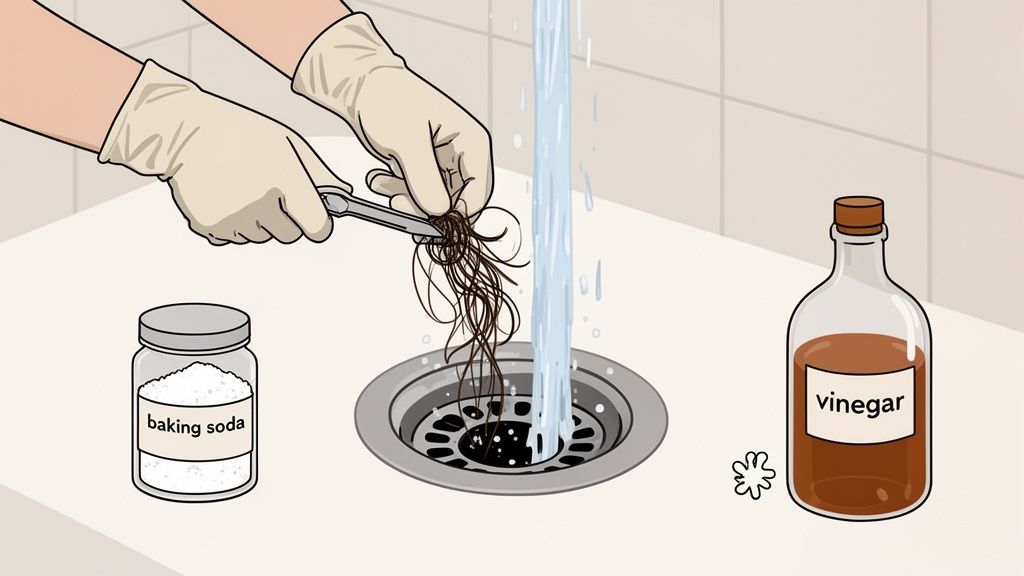
First, put on some gloves—trust me, you’ll be happy you did. Pry off or unscrew the drain cover and take a look. That mess of hair and soap scum you see is prime real estate for odor-causing bacteria.
Grab a pair of needle-nose pliers or just bend a wire coat hanger into a small hook. Use it to fish out all the hair and gunk you can reach. You might be shocked at how much is hiding just out of sight. That tangled clump is the main source of food for the bacteria creating that smell.
Don’t forget to scrub the drain cover itself, top and bottom, with an old toothbrush and some dish soap. Biofilm loves to grow on the underside. Just doing this initial clean-out can solve more than 50% of minor drain odor issues.
The Classic Baking Soda and Vinegar Flush
If you've cleared the gunk and still catch a whiff of something unpleasant, it's time to deal with the biofilm lining the pipe. I'd advise against using harsh chemical drain cleaners; they can be tough on your pipes and dangerous if mixed. Instead, this classic, non-toxic combo works wonders.
Here’s our go-to method for a DIY pipe cleaning:
- First, dump about a half cup of dry baking soda directly down the drain.
- Next, slowly pour in a half cup of white vinegar. You’ll hear it start to fizz and bubble immediately—that’s the reaction you want. It’s actively scrubbing the inside of your pipes.
- Let that fizzy mixture sit for about 15-20 minutes. This gives it time to break down all that greasy, smelly buildup.
- Finally, flush everything out with a kettle full of very hot water (not quite boiling). This washes away all the loosened grime, leaving your drain fresh.
This baking soda and vinegar method doesn't just mask the odor—it actively cleans the pipe. The foaming action scrubs the pipe walls, while the acidity of the vinegar helps dissolve the buildup that bacteria feed on.
This is a trick we regularly suggest to our clients in Cumming and Marietta for simple maintenance. It’s completely safe for plumbing and works like a charm.
What if the P-Trap is Dry?
So, you’ve cleaned the drain and flushed it, but now you’re noticing a smell that’s less musty and more like raw sewage. In this case, a dry P-trap is almost certainly your problem. This happens all the time in guest bathrooms or showers that don’t see daily use. The P-trap is the U-shaped pipe under the drain, and its job is to hold a small amount of water to block sewer gases from coming up. If that water evaporates, the barrier is gone.
Luckily, the fix couldn't be easier. Just run the shower for a minute or two to refill the trap. That’s it.
For a guest bathroom that sits unused for long periods, try this pro tip: After refilling the trap with water, pour in a tablespoon of mineral oil. The oil creates a film on top of the water and dramatically slows down evaporation.
If running the water gets rid of the smell, you've nailed it. But if that sewer smell comes back quickly or you hear gurgling sounds from the drain, that's a different story. These can be signs of a blocked plumbing vent or a more serious clog forming deep in the line. At that point, you're beyond a simple DIY fix. It might be time to call a 24 hour plumber in Alpharetta for a professional look, as these could be early warnings of a sewer backup that needs immediate attention.
Keeping Your Drains Fresh and Odor-Free
Now that you've won the battle against that nasty smell, let's talk about how to win the war. When it comes to plumbing, a little bit of prevention goes a long, long way. A few simple habits can stop that gross biofilm and those funky odors before they even get a chance to start.
Your best friend in this fight is a quality hair catcher or drain strainer. Seriously. It's a cheap and simple little gadget that sits over your drain, catching all the hair and soap chunks that would otherwise head down into your pipes to decompose. You're essentially cutting off the food supply for those odor-causing bacteria.
A Simple Maintenance Routine That Works
The real key, though, is consistency. You don’t need to go crazy with a deep clean every weekend, but a basic monthly routine can make a world of difference. Think of it as easy, routine maintenance for your home’s plumbing system.
Here’s a straightforward schedule that many homeowners we work with in Cumming and Johns Creek have found incredibly effective:
- Weekly: Just clean out that hair catcher. It takes all of 30 seconds and is easily the most important thing you can do.
- Monthly: Do a quick maintenance flush. Pour a kettle of very hot (not boiling) water right down the drain. This helps melt away any new soap scum and body oils that have started to build up.
- Quarterly: This is a good time to use that baking soda and vinegar trick we talked about earlier. It gives a slightly deeper clean to knock out any stubborn gunk the hot water might have missed.
Of course, a truly fresh bathroom goes beyond what's happening inside the pipes. Creating a clean space is about the whole picture, from the tiles on the wall to maintaining a clean shower environment, including accessories like a premium plastic shower chair.
Don't Let the P-Trap Run Dry
What about that guest bathroom shower you only use when your in-laws visit? For showers that don't see much action, the water sitting in the P-trap can actually evaporate over time. This breaks the water seal that blocks sewer gas, giving it a direct path into your home. It's a surprisingly common reason for a sudden, powerful drain odor, especially in homes across Metro Atlanta.
The fix for this is incredibly easy. Just run the shower for a minute or so every couple of weeks. That's all it takes to refill the P-trap and restore that crucial water barrier.
If you’ve tried all these preventative steps and your shower drain still smells bad, or if the odor comes right back after cleaning, it’s probably time to call in the pros. A professional drain cleaning in Marietta or Woodstock is far more thorough than any DIY method. Our technicians use specialized equipment that scours the entire length of the pipe, removing years of caked-on buildup and giving you a truly fresh start.
Signs You Need to Call a Professional Plumber
You’ve done everything right. You've cleaned the drain, tried the baking soda and vinegar trick, and you’re even staying on top of maintenance. So why does that awful shower drain smell still keep coming back?
Sometimes, a stubborn odor is your plumbing system’s way of waving a red flag. It’s a sign that there’s a bigger problem brewing, one that DIY methods simply can’t touch. Knowing when to put down the drain brush and pick up the phone for a leak repair in Alpharetta or sewer replacement in Marietta is the key to stopping a small issue from turning into a full-blown, costly disaster.
When DIY Fixes Aren't Enough
So, you've scrubbed the drain and flushed the pipes, but the bad smell returns within a day or two. If that’s the case, you’re likely dealing with more than just some surface-level gunk. A persistent odor almost always signals a problem much deeper in the plumbing line, far out of reach of your household tools.
Think about it: a smell that never truly goes away could point to a crack in the drain line itself, or even in the P-trap, letting sewer gas leak out 24/7. It might also be a serious blockage deep within the pipes that’s constantly trapping waste and creating a breeding ground for bacteria. No amount of flushing from the top is going to solve that. Even a hidden burst pipe repair could be contributing to the problem.
This flowchart can help you trace the source of the problem and decide on your next move.
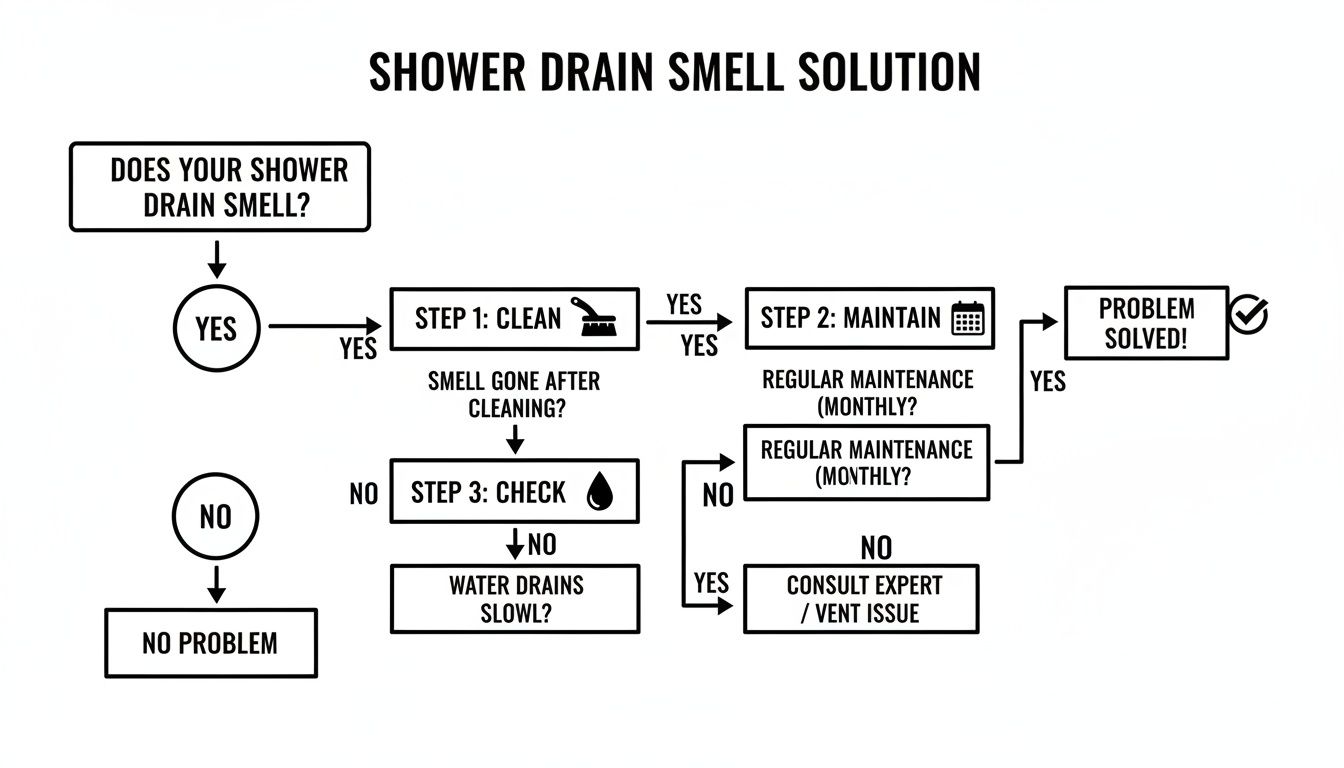
The bottom line is, once you've exhausted the basic cleaning steps and the smell persists, the problem is almost certainly buried deeper in your plumbing system. That's when you need an expert.
Alarming Sounds and Slow Drains
Your pipes can "talk," and it's a good idea to listen. Pay close attention to any gurgling or bubbling sounds coming from your shower drain, toilets, or sinks. These noises are often the first sign that something is seriously wrong.
Here’s a classic example: you flush the toilet, and a moment later you hear a gurgle from your shower drain. That sound is a telltale symptom of a blocked plumbing vent. The vent stack on your roof is designed to equalize pressure, and when it gets clogged with leaves or debris, your plumbing system tries to pull air from elsewhere—siphoning the water right out of your P-traps and letting raw sewer gas into your home.
If you're noticing slow drainage across multiple fixtures—like your shower, sink, and toilet all taking forever to drain—it’s a huge red flag for a blockage in your main sewer line. This is a plumbing emergency that needs immediate attention to prevent a messy and unsanitary sewer backup into your home.
An even more urgent warning sign is water backing up into your shower. If you see wastewater coming up your drain after flushing a toilet or running the washing machine, stop using all water immediately. This indicates a severe clog in your main line, and you need to search for sewer repair near me and call a professional right away.
When you see these signs, it's time to call in the pros. If you live in North Metro Atlanta—anywhere from Canton to Johns Creek—our team is ready to help. An emergency plumber in Alpharetta or a 24 hour plumber in Marietta from JMJ Plumbing can run a camera inspection to find the exact source of the problem. Whether it's a clogged vent or a failing main line needing water line replacement, we'll diagnose it correctly and provide the right solution, from drain cleaning to a full sewer line replacement.
A Few More Questions We Hear All the Time
Even after you’ve tackled the gunk, you might still have a few lingering questions. As plumbers here in North Metro Atlanta, we get these all the time, so let's clear them up.
How Often Should I Really Be Cleaning My Shower Drain?
To stay ahead of the game, a quick cleaning once a month is a great routine. Just a flush of hot water or that baking soda and vinegar trick we talked about is usually enough to keep the biofilm from building up.
But if you’ve got anyone with long hair in the house, cleaning the hair catcher weekly is a non-negotiable. It’s the single best thing you can do to stop those smelly, slow-draining clogs before they even start.
Are Those Chemical Drain Cleaners a Good Idea?
Honestly, we really recommend steering clear of the harsh liquid drain cleaners. I know they seem like a quick fix, but those chemicals can be incredibly corrosive, especially on the pipes in older homes you see around Marietta and Roswell.
They're also pretty nasty for the environment and can be a real safety hazard if they splash on you or get mixed with other cleaning products. The simple DIY methods in this guide are much safer and work wonders on the most common drain odor problems.
If you're looking for more general tips on dealing with stubborn smells around the house, check out these strategies to get rid of home odors for good.
The Smell Is Gone, but My Drain Is Still Slow. What Gives?
So, you got rid of the funky odor, but now you’re showering in a small pond. This almost always means you have a deeper clog that the surface-level cleaning just couldn't reach. The blockage is probably stuck further down the line, and it’s going to take more than hot water to break it loose. Maybe your clogged toilet won't flush either. These symptoms often appear together.
A slow drain after you've already cleaned it is a dead giveaway that a more serious obstruction is hiding down there. This is the perfect time to call a professional for drain cleaning in Alpharetta. A plumber’s motorized auger can power through that blockage without hurting your pipes.
Could a Smelly Drain Mean I Have a Sewer Line Problem?
Yes, absolutely. If you’re dealing with a persistent, nasty sewage smell—not just a musty one—pay close attention. When that smell is joined by gurgling sounds from your drains or slow drainage in multiple fixtures (like your toilet and a sink), it's a huge red flag. A sewage smell or water in your yard are major indicators.
This combo is a classic sign of a main sewer line issue, which is a plumbing emergency. You need to act fast to prevent a messy and unsanitary sewer backup in your home. If you're in Canton, Woodstock, or any of our neighboring communities and you suspect this is happening, you should search for a 24 hour plumber near me immediately. This could be a sewer replacement vs sewer repair situation, which a pro needs to diagnose.
If the DIY approach didn't work or you're facing a potential plumbing emergency, don't wait for it to get worse. The expert team at JMJ Plumbing provides fast, reliable service across the North Metro Atlanta area. For anything from a stubborn clog to emergency sewer repair, visit us online to schedule your service at https://www.jmjplumbing.com.