How to Stop a Pipe Leak Fast in Your Atlanta Home
That sinking feeling hits you the moment you see it: a dark stain spreading on the ceiling, or maybe you hear the faint, steady drip-drip-drip from inside a wall. A pipe leak can go from a minor annoyance to a major disaster in a hurry, but what you do in the first 15 minutes is absolutely critical.
Don't panic. Right now, it's not about fixing the leak—it's about stopping the damage in its tracks. Think of this as your emergency playbook. Taking control of the situation immediately will save you a world of headache and expense down the road, especially if you're facing a sudden need for a burst pipe repair in Roswell or a similar crisis.
Your First Steps After Discovering a Leaking Pipe
I’ve seen it all in my years as a plumber. A slow drip can seem harmless, but over time it can rot drywall, warp floorboards, and lead to mold. A sudden burst pipe? That’s a full-blown flood. For homeowners from Woodstock to Marietta, knowing exactly what to do can be the difference between a simple cleanup and a massive renovation project. If you suspect a serious problem, finding an emergency plumber near me should be your next step after you control the water.
Find the Main Water Shut-Off and Turn It Off
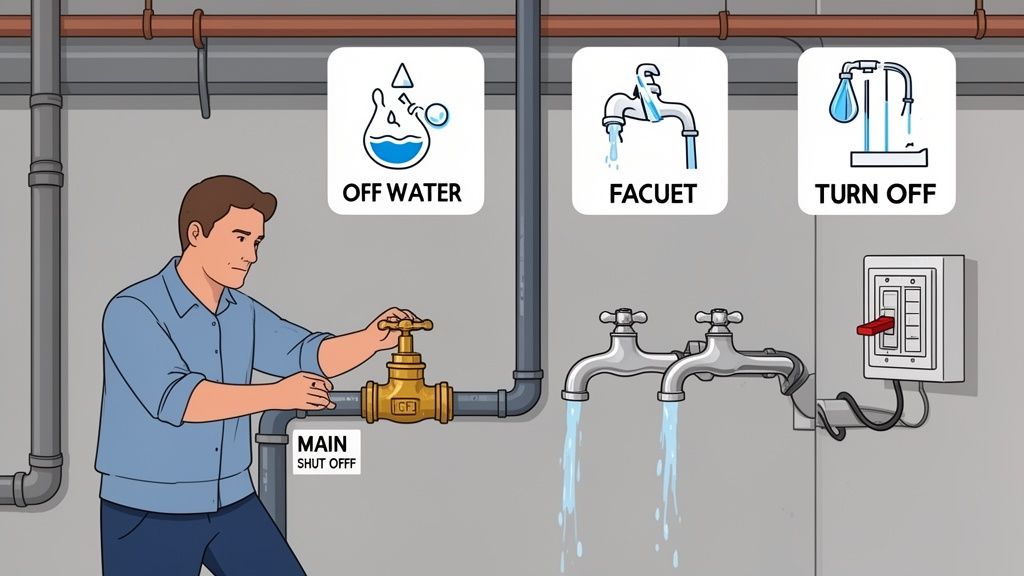
First things first: you have to shut off the water to your entire house. This is your number one priority. The main water shut-off valve is the command center of your plumbing, and you need to know where to find it before you have an emergency.
Where should you look?
- Basements or Crawl Spaces: It's usually on an interior wall near the front of your house, right where the main water line comes in from outside.
- Garages and Utility Closets: If you don't have a basement, check near your water heater. It’s a common spot, especially if you have no hot water.
- Outside: In some newer neighborhoods in Alpharetta or Johns Creek, the valve might be underground in a utility box with a removable lid, typically near the curb.
Once you find it, turn the valve clockwise until it's fully closed. If it’s a lever-style valve, a simple quarter-turn will do the trick—the handle should end up perpendicular to the pipe. A round, wheel-like handle might take a few full rotations. If you’re ever dealing with a burst pipe repair, this one move is the most important thing you can do.
Drain the Pipes to Relieve Pressure
Okay, the main valve is off. But you're not quite done yet. There’s still a surprising amount of water left in your pipes, and the pressure will keep forcing it out of the leak. You need to get that water out.
Go and open the faucets at the highest point in your house (like an upstairs shower) and the lowest point (maybe a basement sink or an outdoor hose spigot). This lets air into the plumbing system and helps gravity do its work, draining the remaining water quickly. It’s a simple step that a lot of people forget, but it’s essential to truly stop the flow.
Expert Tip: Don't just open the cold taps. Make sure you open the hot water taps, too. This helps drain the water heater, which is crucial if the leak is on a hot water line. We see this all the time on water heater replacement Woodstock calls across Cherokee County.
Make Sure the Area Is Electrically Safe
This is non-negotiable. Water and electricity are a deadly combination. If the leak is anywhere near electrical outlets, appliances, or your circuit breaker panel, you must turn off the power to that part of the house right away.
Head to your breaker box and flip the correct circuit breaker to the "OFF" position. If you have any doubt about which breaker it is, or if water is dripping near the panel itself, play it safe and shut off the main breaker for the entire house. This completely eliminates the risk of electric shock, a very real danger when you have an emergency plumber in Canton on the way for a major leak.
To help you act fast in a stressful moment, we've put together a quick-reference checklist. Keep this handy so you know exactly what to do.
15-Minute Emergency Leak Checklist
This table is your go-to guide for the first critical actions to take the moment you discover a pipe leak.
| Action Step | Why It Matters | Expert Tip |
|---|---|---|
| Shut Off the Main Water Supply | This immediately stops new water from entering your home's plumbing, preventing further flooding and damage. | Locate your main valve before an emergency happens. Test it once a year to make sure it isn't seized up. |
| Drain All Faucets | Relieves pressure and drains remaining water from the pipes, stopping the flow at the source of the leak. | Open faucets on the highest and lowest floors to use gravity to your advantage and drain the system faster. |
| Turn Off Electricity | Prevents the risk of a dangerous electrical shock if water comes into contact with outlets, wiring, or appliances. | If water is near your breaker box, don't risk it. Shut off the main breaker for the entire house. |
| Place Buckets & Towels | Contains the remaining drips and protects your floors, walls, and belongings from water damage while you wait. | Use a large bucket, and lay down old towels or blankets to absorb any splashing. |
Following these steps stabilizes the situation and buys you valuable time. You've contained the immediate threat, which means you can now take a deep breath and figure out your next move without the pressure of gushing water.
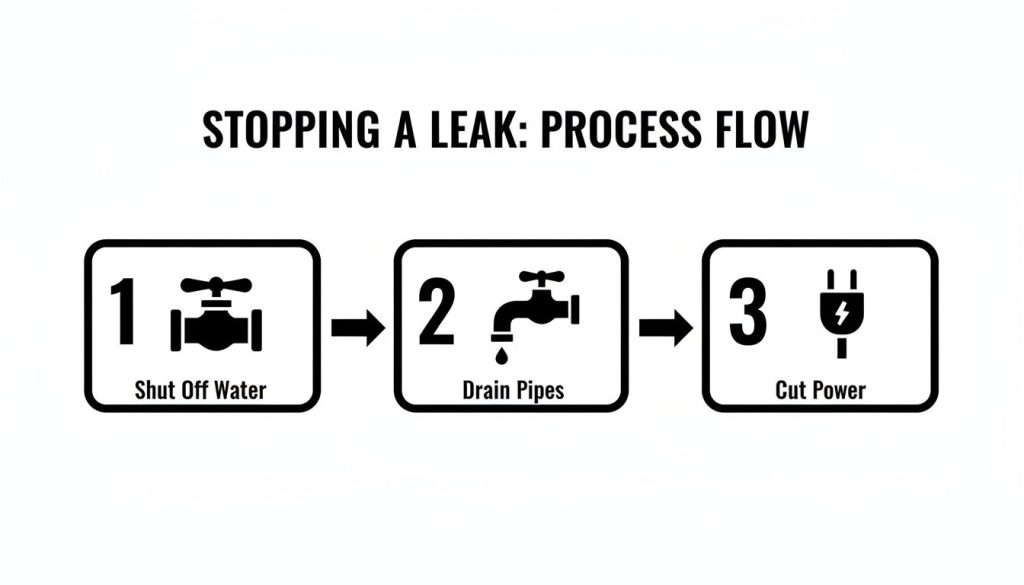
The simple process below summarizes these crucial first actions.
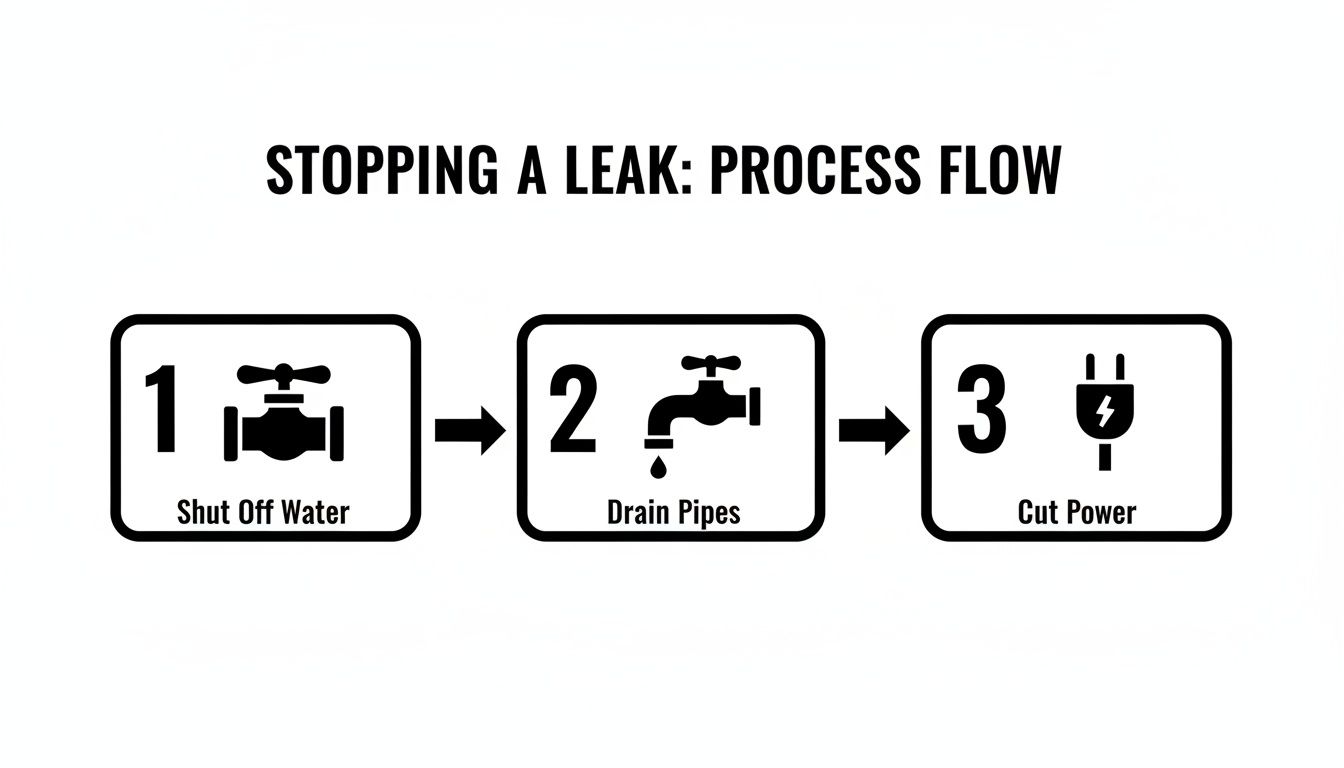
By shutting off the water, draining the lines, and securing the power, you’ve successfully handled the emergency phase. Now you have the breathing room to properly assess the damage and decide what comes next.
Applying a Temporary Fix to a Leaking Pipe
Okay, you've got the water shut off. The immediate panic is over. Your next job is to slap a temporary patch on that leak to stop the drips and keep things from getting worse. Think of this as plumbing first aid—it’s not a permanent cure, but it will buy you valuable time until a professional can get there.
First things first, get a good look at the problem. Are you dealing with a tiny pinhole spray on a straight run of copper pipe? Or is it a slow, annoying drip from a PVC joint under the kitchen sink? The type of leak you have will point you toward the right temporary fix. A minor leak may only require a simple leak repair, but even small issues warrant a pro's attention.
Before you even think about patching it, the pipe has to be completely clean and dry. This is the step everyone wants to skip, and it's the one that makes or breaks your patch. Grab a rag or some paper towels and get every last drop of water off the pipe. If you see any gunk or mineral buildup, a little sandpaper or a wire brush will clean it right up and give the patch something to grab onto.
Choosing Your Temporary Repair Method
With a clean, dry pipe, you're ready to pick your patch. You can find these materials at any hardware store, and they work surprisingly well when you're in a jam.
You've basically got three solid options for a quick DIY fix. Each one has its place.
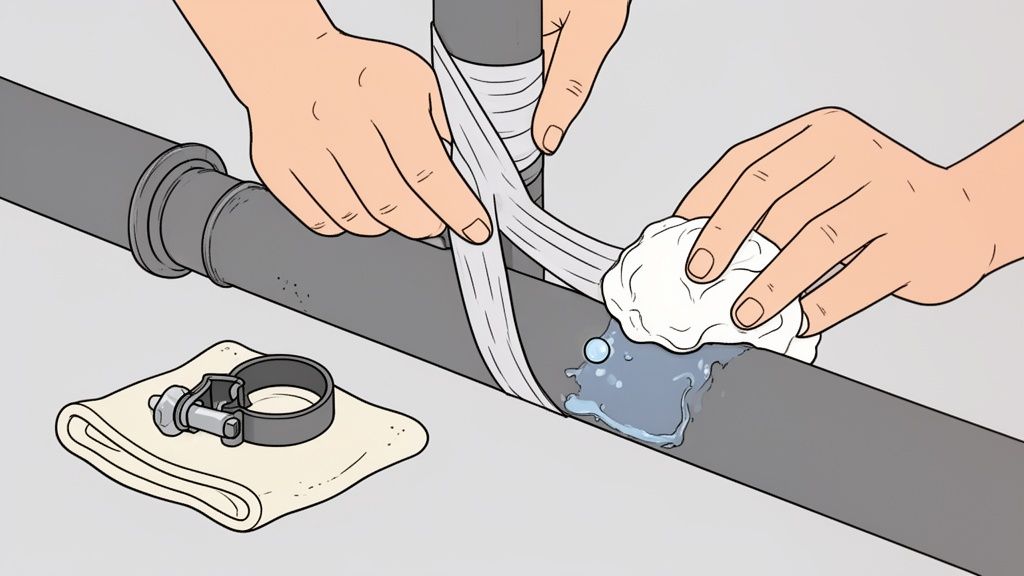
- Pipe Clamp: Honestly, this is your best bet for most leaks on a straight pipe. It’s a simple metal sleeve with a rubber pad inside. You just wrap it around the leak and tighten the screws. It applies direct, mechanical pressure to stop the flow.
- Silicone Repair Tape: This stuff is fantastic. It’s a stretchy, self-fusing tape that bonds to itself as you wrap it. It's perfect for those awkward leaks on joints, elbows, or any spot where a clamp just won't fit.
- Epoxy Putty: Think of this as a plumber's Play-Doh. You knead two different substances together, and it activates. You then mold the putty over the hole, and it hardens like a rock. It’s great for filling small cracks or odd-shaped holes.
So which one should you use? If you have a simple pinhole leak on an easy-to-reach pipe, go for the clamp. If the leak is on a weird curve or joint, the silicone tape is your hero.
Applying the Patch Correctly
For a pipe clamp, center the rubber pad right over the hole. Fit the metal pieces around the pipe and start tightening the screws. Alternate between the screws to apply even pressure—you want it snug enough to stop the leak without crushing the pipe.
If you're using silicone tape, start wrapping an inch or two to one side of the leak. The key is to stretch the tape as you wrap it, pulling it to about twice its normal length. Overlap each layer by about half. The tension is what makes it fuse to itself. Keep wrapping until you're a few inches past the other side of the leak.
With epoxy putty, just tear off a piece and knead it until it’s all one uniform color. Then, press it firmly over the leak, mushing it down so it extends at least an inch around the hole. Smooth out the edges. This stuff needs time to cure—check the package, but it usually takes 5 to 30 minutes to get rock-hard.
Important Reminder: Let's be clear—these are all temporary fixes. A clamp might get you through a few weeks, and epoxy might last a couple of months, but they are not a permanent leak repair. The original problem, whether it's corrosion or pressure, is still there. That patch will eventually fail.
These quick fixes are designed to give you some breathing room and stop the immediate water damage. Once you have the leak under control, it's time to call in the pros. For anyone facing a sudden burst pipe repair in Roswell or fighting a drip in Acworth, getting an expert to your door is the only way to solve the problem for good. A plumber will find the root cause and make a lasting repair, so you don't have to worry about it happening again.
Understanding Why Your Pipes Are Leaking
Once the initial panic of a leak is over and the water is shut off, the big question hits: "Why did this even happen?" Figuring out the root cause isn't just for curiosity's sake—it’s your best defense against a repeat disaster. Here in North Metro Atlanta, we've seen it all, and a few common culprits are usually behind every pipe failure.
Knowing what you're up against makes all the difference. When you call us for a leak repair in Alpharetta, you can have a smarter conversation, helping you weigh a quick patch against a more permanent solution like a full water line replacement.
The Slow Creep of Corrosion and Age
So many homes in our area, especially in older neighborhoods in Marietta and Roswell, were built with galvanized steel pipes. They were the standard for a long time, but they have a fatal flaw: they rust from the inside out. Over the years, that protective zinc coating wears thin, letting water eat away at the steel.
This hidden corrosion causes a couple of major headaches for homeowners:
- It kills your water pressure. As rust and mineral scale build up, the pipe slowly closes in on itself. That's why you might be seeing frustratingly low water pressure at your sinks and showers.
- It weakens the pipe walls. The steel gets brittle and thin over time. Eventually, it just can't handle the pressure anymore, and you end up with a tiny pinhole leak or, worse, a full-blown emergency requiring a burst pipe repair.
When we see this, we know a simple patch is just a band-aid. It’s often a clear signal that the whole plumbing system is on borrowed time, and a water line replacement in Marietta may be the most cost-effective solution.
Pressure Problems and Sudden Shocks
Your home’s plumbing is built to operate within a certain pressure range, usually between 40 and 60 PSI. But the pressure coming from the city's water main can sometimes be much higher. This puts constant, excessive stress on every single pipe, joint, and appliance in your house.
Think of it like constantly over-inflating a car tire. It might seem fine, but you're just asking for a blowout. High water pressure does the exact same thing to your plumbing, dramatically shortening the life of your pipes and water heater. If you've had repeat leaks, you may need a water heater replacement in Cumming sooner than you think.
Here in Cherokee and Forsyth County, we also battle the classic freeze-thaw cycle. When water freezes in a pipe, it expands with incredible force. Even if the pipe doesn't burst right away, that expansion weakens the metal. We often see leaks appear weeks after a cold snap, which is why searches for an emergency plumber in Woodstock always spike during the winter.
Hidden Stressors on Your Plumbing System
Sometimes, the problem isn't what's in the pipes, but what's happening around them. The clay soil we have all across North Fulton and Cobb County is notorious for shifting, especially during heavy rains or a drought. That ground movement can put a tremendous amount of stress on underground water and sewer lines, leading to a need for sewer replacement.
A main water line repair is frequently the result of this shifting soil cracking or separating a pipe. If you see a perpetually soggy spot or water in your yard or your water bill suddenly skyrockets for no reason, this is a likely suspect.
Likewise, a nagging sewer backup or drains that always seem to be clogging aren't just an annoyance—they're a warning. A blockage creates a pressure buildup that can strain joints and create weak spots, leading to a nasty leak and the smell of sewage in the house. This is a serious problem that usually requires a professional sewer repair Johns Creek or even a full sewer replacement.
These infrastructure challenges are a big deal everywhere. In fact, pipe renewal and leak reduction are driving factors in the global pipe market, which is expected to hit USD 262.9 billion by 2036. You can read more about these global infrastructure trends and their market impact.
Once you can spot these potential causes, you can move from reacting to problems to preventing them. It’s about working with a pro to fix the underlying issue, not just patching the symptom, to keep your home safe and dry for the long haul.
When You Need an Emergency Plumber in North Metro Atlanta
A temporary patch can be a real lifesaver, but let's be honest—some plumbing disasters are just too big for a DIY fix. Knowing when to drop the wrench and call a pro is just as critical as knowing how to slap on a pipe clamp. Some situations are simply too risky and can cause catastrophic damage if you get it wrong.
Waiting too long can turn a simple problem into a homeowner's worst nightmare. I’ve seen it happen: what started as a small leak becomes a major issue involving structural rot, dangerous mold, and repair bills that make your head spin. That’s why, for the really big stuff, homeowners from Woodstock to Marietta know the smartest move is to find a reliable 24 hour plumber. When the stakes are high, you need a professional with the right tools and training, and you need them now.
Signs of a Main Water Line Leak
A leak in your main water line—the big pipe running from the street into your house—is one of those serious problems. Since it’s buried underground, this isn't something you can patch yourself. Your only safe bet is to call for a main water line repair immediately.
Keep an eye out for these tell-tale signs:
- Puddles or soggy patches in your yard when it hasn’t been raining (water in yard).
- A sudden and significant drop in water pressure all over the house.
- The distinct sound of running water, even when every single faucet is off.
- A water bill that’s shot up for no obvious reason.
If you notice any of this at your home in Cobb or Cherokee County, don't put it off. A broken main line can wash away the soil supporting your foundation, creating a massive structural problem. This is a job that absolutely requires a pro with the proper equipment for leak repair in Acworth or even a full water line replacement.
Sewer Line Problems Demand Expert Help
A water leak is bad. A sewer leak? That’s a whole other level of trouble and a genuine health hazard. Problems with your sewer line can expose your family to nasty bacteria and cause disgusting, widespread property damage. Trust me, you don't want to try and tackle this one yourself.
It's time to call for a sewer repair or sewer replacement the moment you notice:
- That unmistakable sewage smell lingering inside or outside your home.
- Gurgling sounds coming from your toilets and drains.
- Several drains backing up at once, or a clogged toilet that won't flush while other drains are slow.
- Weirdly lush, green spots in your lawn, which is a classic sign of a sewer leak "fertilizing" the grass.
A sewer backup is a clear signal that you're in over your head. We use special cameras to inspect the line to see if it’s a simple clog needing drain cleaning Canton GA or something more serious. Whether you're in Canton or Cumming, this is a job for a licensed plumber, period.
At JMJ Plumbing, we know these things don't happen on a 9-to-5 schedule. That’s why we offer 24 hour plumber services across North Fulton and Forsyth County. A burst pipe in the middle of the night or a backed-up sewer on a holiday—we’re ready to go.
When the Leak Is Hidden
Sometimes, the most destructive leaks are the ones you can't even see. Water dripping inside a wall, seeping into a ceiling, or pooling beneath your foundation can cause incredible damage long before you spot the first sign. Watch out for red flags like discolored drywall, peeling paint, warped floors, or a persistent musty smell.
Trying to find a hidden leak without the right gear usually just leads to a lot of holes in your walls and a ton of frustration. This is why the industry has invested so heavily in advanced leak detection technology. In fact, preventing water waste has become so crucial that the global market for these systems saw an 8.7% growth rate between 2021 and 2026. You can read more about these leak detection market trends if you're interested in the tech.
This equipment allows a skilled plumber in Johns Creek or Alpharetta to find the exact source of a leak without tearing your house apart. If you even suspect a hidden leak, calling an expert for leak detection Alpharetta is always the fastest and most cost-effective path to getting it fixed.
Permanent Fixes and How to Prevent Leaks in the First Place
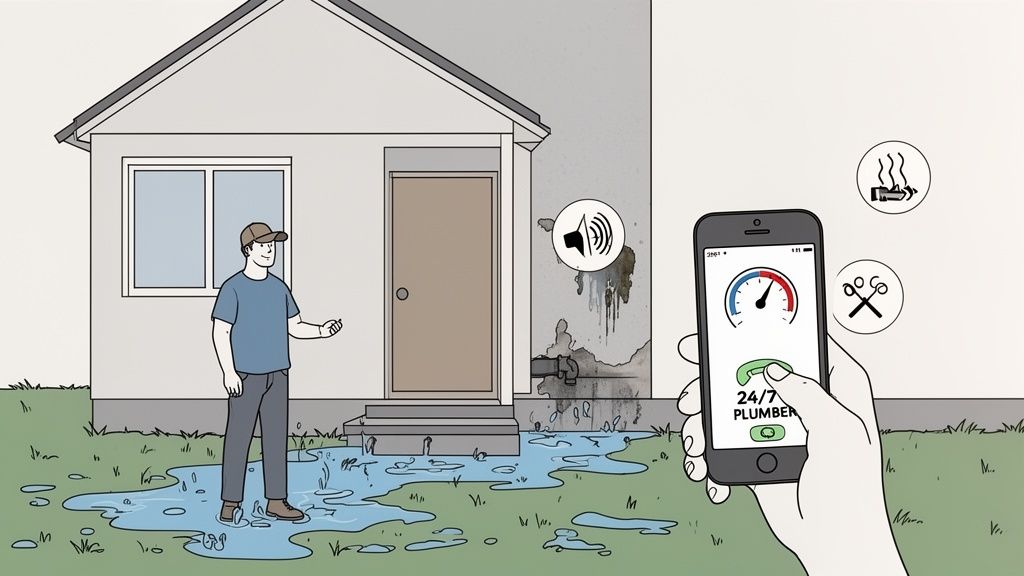
Okay, you've managed to get a temporary patch on the leak. The immediate panic is over, and the water has stopped spraying. That’s a huge relief, but it’s important to remember that a DIY fix is just buying you time.
A permanent, professional repair is the only way to get real peace of mind. When you call JMJ Plumbing for a leak repair in Woodstock or anywhere across North Metro Atlanta, our first job isn't just to fix the hole. It's to figure out why it happened. This approach ensures we’re not just putting a bandage on the problem, only for you to call us back for the same leak six months later.
Repair a Section or Replace the Whole Line?
Once we get a good look at the pipe and the surrounding system, we’ll usually recommend one of two paths forward. The right call depends entirely on the overall health of your plumbing.
-
Targeted Pipe Repair: This is our go-to for an isolated problem in an otherwise healthy pipe. Let's say you accidentally hit a PEX line with a nail during a DIY project. In that case, a simple, targeted leak repair Canton GA is perfect. We just cut out the small damaged piece and install new, secure fittings. It's efficient and cost-effective.
-
Full Line Replacement: Now, if we find a leak in an old, corroded galvanized pipe—something we see all the time in older Marietta and Roswell homes—a spot repair is frankly a waste of money. It’s like patching one tiny rust spot on an old car; you know another one is just around the corner. For widespread issues like corrosion or aging, a full water line replacement is the only reliable, long-term solution.
This same logic applies to underground pipes. A serious break in your yard might call for a main water line repair where we replace a significant section to head off future problems.
What About Your Yard? Trenchless Repairs Can Save It
The very idea of replacing an underground water or sewer line makes most homeowners cringe, picturing a destroyed lawn and a massive trench. Luckily, things have changed.
We specialize in trenchless sewer replacement and water line repairs that fix huge problems with very little disturbance to your property. Instead of digging up your entire yard, these modern techniques usually only require two small access points. It’s a cleaner, faster, and far less disruptive way to handle a full sewer replacement or fix a deep water line break at your Canton or Cumming home.
So, how do you decide between a quick fix and a lasting solution? This table breaks it down.
DIY Patch vs. Professional Repair
This quick comparison shows why a temporary patch is just that—temporary. For true reliability, you need a professional.
| Consideration | Temporary DIY Fix | Professional JMJ Plumbing Repair |
|---|---|---|
| Lifespan | Days to months, at best. | Years, often decades. |
| Reliability | Low. Prone to failing under pressure. | High. Meets or exceeds code standards. |
| Cost | Low initial cost for materials. | Higher initial investment for a permanent fix. |
| Peace of Mind | Minimal. It's a "ticking clock." | Complete. The problem is truly solved. |
Ultimately, a professional repair isn't just a fix; it's an investment in your home's integrity and your own peace of mind.
A permanent fix isn't just about repairs; it's about financial protection. When developing long-term strategies, it's also important to consider how your homeowners insurance policies cover different types of water damage. Understanding your coverage can save you from major out-of-pocket costs down the line.
Smart Moves to Prevent Future Leaks
The best way to deal with a leak is to stop it before it even starts. Here are three game-changing strategies we recommend to homeowners all over Forsyth and Cobb County.
Install a Pressure-Reducing Valve (PRV)
High water pressure is a silent killer for pipes. A PRV, installed where your main water line enters the house, acts like a bodyguard for your entire plumbing system. It keeps the pressure at a safe and steady level (we aim for 40-60 PSI), preventing unnecessary strain on your pipes, fixtures, and appliances.
Schedule Routine Drain Cleaning
That slow drain is more than just an annoyance—it's a warning. Clogs and blockages create major pressure buildup in your pipes, stressing joints and eventually causing them to fail. Our professional drain cleaning services in Johns Creek and Alpharetta do more than just punch through a clog; we scrub the pipes clean, removing the buildup that causes these pressure problems in the first place.
Consider Whole-Home Water Filtration
The hard minerals in our local water can build up inside pipes, causing scale, corrosion, and blockages over time. A whole-home filtration system, like the HALO systems we often install, treats the water as it enters your home. By reducing hard minerals and contaminants, you protect every pipe and fixture from the inside out and get better-quality water as a bonus.
Frequently Asked Questions About Atlanta Pipe Leaks
When you're staring at a puddle spreading across your floor, your mind starts racing. We get it. Homeowners all over the Metro Atlanta area ask us the same urgent questions when a pipe springs a leak. Here are some straight answers from our years of experience to help you figure out what's happening and what to do next.
What Is the Typical Cost to Fix a Pipe Leak in Acworth or Roswell?
Honestly, the cost to fix a pipe leak is all over the map. If you've got a simple, easy-to-reach leak—say, right under your bathroom sink—you're probably looking at a few hundred dollars. That kind of straightforward leak repair is usually a quick job.
But the price can definitely climb. A leak hiding in a wall means we have to open up the drywall, fix the pipe, and then patch everything back up. And if you need a main water line repair that involves digging in your yard in Roswell or Acworth, that's a whole different ballgame. Those can run from several hundred to a few thousand dollars, depending on the work involved.
The final bill really comes down to three things: where the pipe is, what it's made of, and how bad the damage is. We always give a clear, upfront quote before we touch a single tool, so you know exactly what to expect. No surprises.
Can a Really Small Drip Actually Cause Serious Damage?
Yes, one hundred percent. A slow, steady drip is one of the most deceptive problems we see. It seems harmless, but that constant moisture can quietly soak your drywall, rot the wooden framing of your house, and create the perfect dark, damp spot for mold to grow—which is a serious health risk for your family.
Think of that tiny drip as a warning light. It often means a pipe is corroding from the inside out, which is a disaster waiting to happen. Before you know it, you could be dealing with a full-blown, catastrophic burst pipe repair. The smartest—and safest—thing you can do is treat every single leak like an emergency.
Does My Homeowners Insurance Cover a Burst Pipe?
Most of the time, yes. A standard homeowner's policy will usually cover the water damage from what they call a "sudden and accidental" event, like a burst pipe. This means they’ll help pay to dry out your home and repair damaged floors, walls, and furniture.
But here’s the catch: they almost never cover the cost of repairing the actual pipe. And if they find out the leak was caused by poor maintenance or an issue you ignored for a long time, they could deny the claim altogether. Our best advice? Take photos of the damage right away and call your insurance agent. The JMJ Plumbing team can provide all the detailed documentation you’ll need to support your claim.
How Can I Tell if a Leak Is from My Main Water Line?
Figuring out if your main water line is leaking is crucial, as these leaks cause major problems fast. Since the pipe is buried underground, the clues are usually outside your house or affect your entire water system.
It's time to suspect you need a main water line repair if you notice:
- Soggy spots or puddles in your yard that won't go away.
- Patches of grass that are suddenly much greener and lusher than the rest.
- A significant, sudden drop in water pressure all through the house.
- The sound of running water even when all faucets and appliances are off.
- A water bill that’s shot through the roof for no obvious reason.
If you see any of these signs at your home in Cherokee County or Cobb County, you need to call a pro for leak detection immediately. This isn't a DIY fix. A broken main line can wash away the soil right under your home’s foundation.
Dealing with a plumbing emergency is stressful, but you don’t have to go it alone. Whether it's a tiny drip or a major flood, the expert team at JMJ Plumbing is on call 24/7 to help. For fast, reliable service from a certified Master Plumber, book your appointment with JMJ Plumbing online today.