How Long Do Sewer Lines Last in North Metro Atlanta?
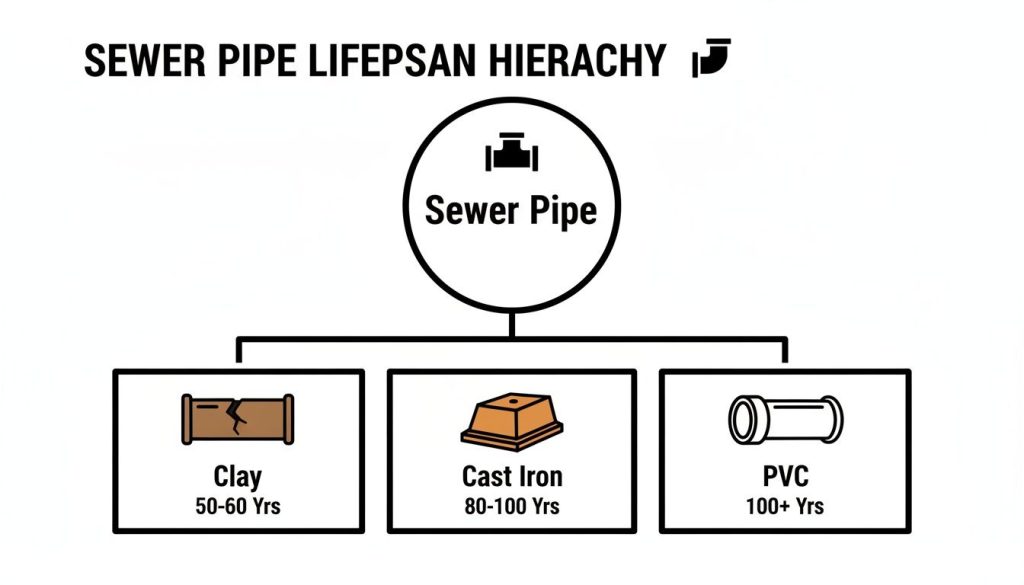
So, how long should a sewer line actually last? The straightforward answer is that most sewer lines have a lifespan of somewhere between 50 and 100 years.
The biggest clue is usually the age of your home. If you're in an established part of North Metro Atlanta like Marietta or Roswell, chances are your home has its original pipes. Those pipes are getting old. On the other hand, newer homes in places like Woodstock or Cumming are built with modern materials designed for a much longer service life. A major issue like a sewer backup often comes down to the age and material of the pipe buried in your yard.
What Is the Lifespan of a Sewer Line?
The material your sewer line is made of is everything—it basically sets the clock on its lifespan from the day it’s installed. Knowing what’s buried in your yard is the first step to avoiding a nasty sewer backup and an expensive call for an emergency plumber. A home built in the 1960s is dealing with a completely different set of problems underground than one built after 2000. For instance, a persistent sewage smell or slow drains are common symptoms in older systems.
This isn't just a local issue for homeowners in Cobb County or Cherokee County. The American Society of Civil Engineers has flagged much of the country's aging wastewater infrastructure as being in poor condition. For homeowners, this means that what seems like a national problem can show up right in your front yard, requiring an urgent sewer repair.
Lifespan by Pipe Material
Let's get specific. The single biggest factor determining how long your sewer pipe will hold up is the material it's made from. Each type has its own ticking clock and a unique set of things that can go wrong.
This chart gives you a quick breakdown of what to expect from the most common pipe materials we see here in Georgia.
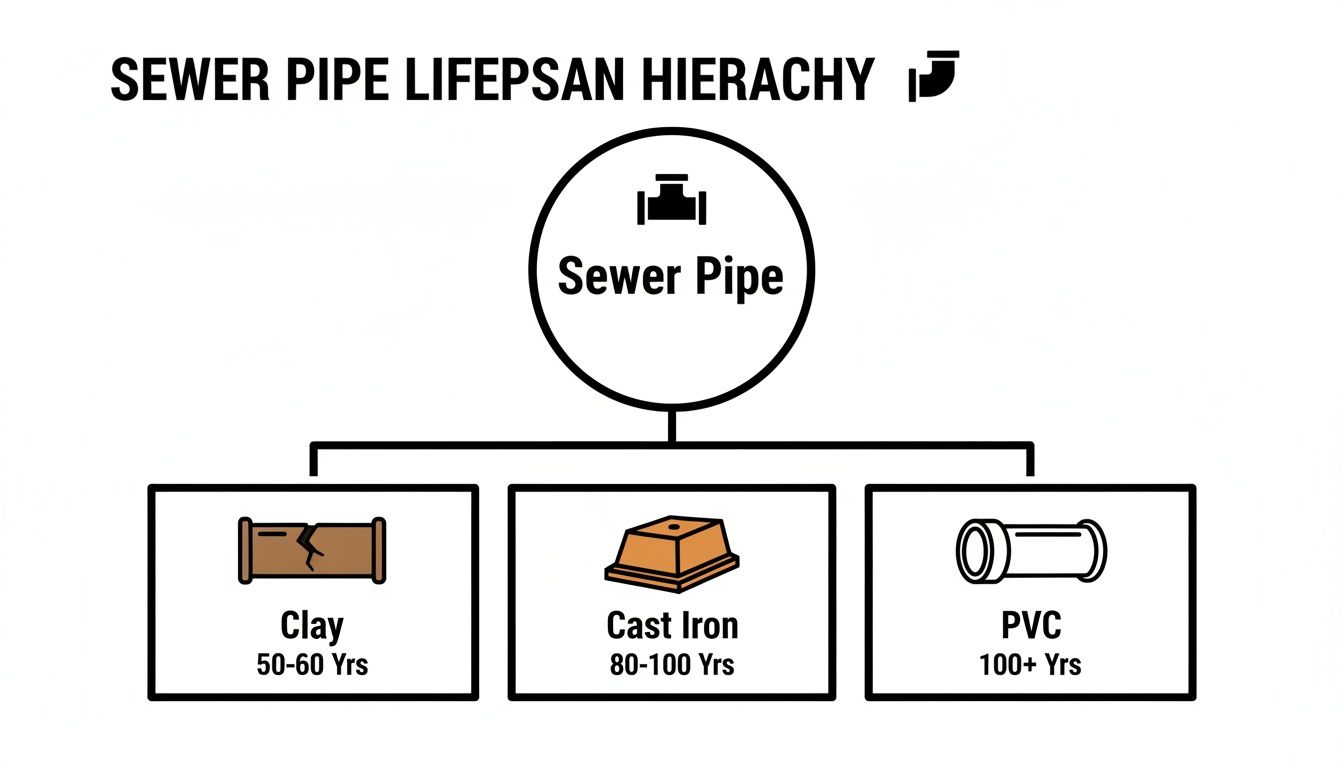
As you can see, the older materials just don't stack up against modern PVC. To give you a better idea of what to look for, here's a more detailed comparison of the pipes you might have.
Sewer Line Lifespan by Pipe Material
| Pipe Material | Typical Lifespan | Common Failure Points | Signs of Trouble |
|---|---|---|---|
| Vitrified Clay | 50-60 years | Brittle, prone to cracks, highly susceptible to root intrusion at joints. | Frequent clogs, gurgling drains, water in yard. |
| Cast Iron | 80-100 years | Corrosion and rust from the inside out (channeling), scaling that snags waste. | Persistent sewage smell, slow drains throughout the house. |
| PVC | 100+ years | Extremely durable, but can be damaged by improper installation or major ground shifts. | Rarely fails on its own; issues usually stem from external factors. |
The bottom line is that modern PVC pipes are built to outlast us all, while older materials like clay and cast iron are prone to cracking and corrosion as they age. If you’re already dealing with slow drains or think you have a leak repair need, the age and material of your pipe are the first things a plumber will investigate.
It helps to think about your home's major systems in a similar way. For example, knowing how long do gutters last can help you budget for future maintenance, just like understanding your sewer line.
If your home in Cobb County or Cherokee County was built before 1980, your sewer line is almost certainly made of cast iron or clay. That means it’s living on borrowed time and is a prime target for tree roots and eventual collapse. A proactive sewer camera inspection is one of the smartest investments you can make. With these older systems, what starts as a stubborn clogged toilet won't flush can quickly turn into a full-blown main line failure requiring a sewer replacement.
What Shortens Your Sewer Line's Lifespan
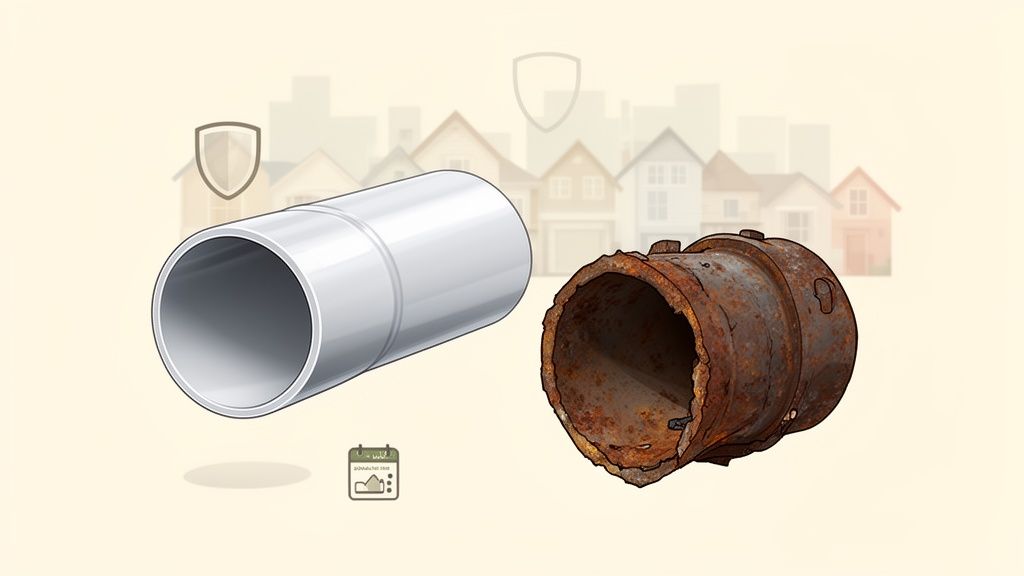
While the material your sewer pipe is made of gives you a ballpark lifespan, it’s rarely the only thing that matters. Think of it this way: a brand-new car might be built to last 200,000 miles, but that number won't mean much if you're constantly driving it down rough, pothole-riddled roads. Your sewer line is no different.
The pipes buried under your North Metro Atlanta yard are up against a lot. Several things can cut that 50-to-100-year timeline short, turning a problem for another day into a messy, expensive emergency right now that demands a 24 hour plumber.
The Problem with Tree Roots
Around here, tree roots are public enemy number one for sewer lines. We've seen it time and time again. Those beautiful, mature oaks and maples that give our neighborhoods in Woodstock, Roswell, and Canton their charm have massive root systems, and they're constantly searching for water and nutrients. Your sewer line is an irresistible source.
All it takes is one tiny crack or a loose joint in an older clay or cast iron pipe. Once a root finds its way in, it will grow, expand, and act like a wedge, causing major headaches:
- Blockages: The roots form a web that catches everything coming down the pipe, leading to slow drains and, eventually, a full-blown sewer backup into your home.
- Cracks and Breaks: As those roots get thicker, they exert incredible pressure, easily cracking or even crushing entire sections of pipe, leading to the need for burst pipe repair.
- Separated Joints: The force of growing roots can literally push pipe sections apart, creating gaps where raw sewage starts leaking into your yard.
A simple drain cleaning might get things flowing again, but it’s just a band-aid. The roots will grow back. For a real fix, you’re usually looking at a sewer repair of the damaged section or a full sewer replacement with modern, root-resistant PVC pipe.
Soil Conditions and Ground Shifting
The ground beneath our feet isn't as stable as we'd like to think, especially in this part of Georgia. The acidic red clay that’s so common across Cobb and Cherokee Counties is particularly tough on older metal pipes.
This acidic soil actively accelerates corrosion on cast iron pipes, essentially eating away at them from the outside. When you combine that with the natural rusting happening on the inside, a pipe's expected 80-year lifespan can get cut down dramatically.
On top of that, the ground itself moves. Soil settling over time, a poorly compacted trench from the original installation, or even just heavy rains can cause the ground to shift. That movement puts immense stress on rigid pipes like clay and cast iron, often causing them to crack or separate at the joints. If you ever notice a new dip in your yard or strange cracks appearing in your foundation, it might be a sign of a failing pipe underground that needs main water line repair or sewer repair in Acworth or your specific city.
Poor Installation and Maintenance Habits
Sometimes, the problem started decades ago. A shoddy installation job can be a ticking time bomb. If a pipe was laid with an improper slope—what we call a "belly"—waste and water will sit in the low spot instead of flowing out to the street. This standing water causes constant blockages and speeds up the decay of the pipe itself, not to mention issues like low water pressure in your home.
And, of course, what you send down the drain matters. A lot. Flushing the wrong things is like asking for trouble.
Common Household Culprits:
- "Flushable" Wipes: Don't believe the marketing. These wipes do not break down like toilet paper and are one of the biggest causes of stubborn clogs that require an emergency plumber.
- Grease and Oil: When you pour cooking grease down the drain, it cools and hardens into a sticky mess that coats the inside of your pipes, narrowing the passage and grabbing onto other debris. This often leads to a search for drain cleaning near me.
- Feminine Hygiene Products: These items are designed to absorb liquid, not dissolve in it. Flushing them is a surefire way to cause a clogged toilet won't flush situation that hints at a much bigger problem in your main line.
When you mix these things together—an aging pipe, an invasive tree root, and a habit of flushing wipes—you have the perfect recipe for disaster. What starts as a gurgling drain in your Alpharetta home can quickly escalate into a sewage backup that has you desperately searching for a 24 hour plumber near me.
Why Modern Pipes Are a Century-Long Solution
After seeing just how easily older pipes can fail, it's no surprise that modern plumbing has taken a completely different approach. Think of an old cast iron or clay sewer line like a part on a vintage car—it has a certain charm, but you know it’s prone to breaking down. Modern PVC, on the other hand, is the high-performance, precision-engineered replacement.
For homeowners in Alpharetta and Johns Creek who are tired of sewer problems, upgrading isn't just a temporary fix. It’s a permanent one. When you invest in a sewer replacement with today's materials, you’re not just patching a problem for a few more years. You're installing a system that's built to last for a century or more, putting an end to chronic issues that plague older homes.
The Superiority of PVC and Polyolefin Pipes
The reason modern plastic pipes, like Polyvinyl Chloride (PVC) and polyolefin, have become the gold standard is simple: they are engineered to be immune to the very things that destroy older pipe materials. They don’t rust. They don’t corrode. And their joints are fused so tightly that tree roots just can't find a way in.
This isn’t just our opinion; the science backs it up. A major research study confirmed that modern polyolefin sewer pipe systems, including polyethylene (PE) and polypropylene (PP), have a service life expectancy of at least 100 years. These materials hold up for a full century without any significant breakdown. You can even read the full research about these long-lasting pipe materials to see the data for yourself.
Think of it like this: an old cast iron pipe is in a constant battle with nature. Water and soil work together to corrode it from the inside out and the outside in. A PVC pipe, however, is completely inert. It's like burying a glass bottle in the ground—the elements simply don't affect it.
This built-in durability makes it the most reliable choice for a main water line repair or full sewer replacement, especially in places like Forsyth County where soil conditions can be tough on plumbing.
Key Advantages of Modern Sewer Pipes
For any homeowner in Cumming or Marietta, the practical benefits of upgrading your sewer line are impossible to ignore. They solve the most common and frustrating causes of plumbing emergencies.
- Complete Root Resistance: Modern pipe sections aren’t just pushed together; they are solvent-welded or use gasketed seals to create a single, seamless tube. This design eliminates the tiny gaps at the joints where tree roots love to sneak in, which means you won't need frequent drain cleaning just to clear out root blockages.
- Corrosion-Proof Performance: PVC and other plastic pipes are non-metallic, making them completely immune to rust and the corrosive effects of the acidic soil we often see here in North Georgia. You’ll never have to worry about the pipe wall thinning out or developing channels from the inside.
- Optimal Flow and Reduced Clogging: The inside of a PVC pipe is incredibly smooth. This slick surface doesn't give waste and debris anything to grab onto, which drastically cuts down the chances of dealing with a clogged toilet won't flush or a slow drain that sends you scrambling for an emergency plumber.
A Long-Term Investment in Your Home
Choosing a full sewer replacement with PVC is much more than a simple repair—it's a fundamental upgrade to your home's core infrastructure. It’s about giving yourself the peace of mind that you won't be dealing with another messy sewer backup in just a few years, or needing a water heater replacement because of sediment from failing pipes.
For homeowners in Canton or Acworth, this means a one-time investment can prevent decades of future headaches and expensive calls to a 24 hour plumber. It protects your property value and ensures your home’s most critical system is reliable for generations to come. When you see our JMJ Plumbing trucks providing sewer repair in Roswell, you know we’re on our way to install a solution designed for the long haul.
Warning Signs Your Sewer Line Is Failing
Most of us live by the "out of sight, out of mind" rule when it comes to our sewer line. As long as everything flushes and drains, we don't give it a second thought. But when things start to go wrong, your home's plumbing will give you subtle—and sometimes not-so-subtle—clues that trouble is brewing.
Learning to spot these warnings is the key to preventing a messy, expensive catastrophe. Paying attention now can save you thousands of dollars and the headache of a full-blown sewer backup. For homeowners here in North Metro Atlanta, recognizing these symptoms early and calling for a professional sewer repair can make all the difference.
Subtle Sounds and Slow Drains
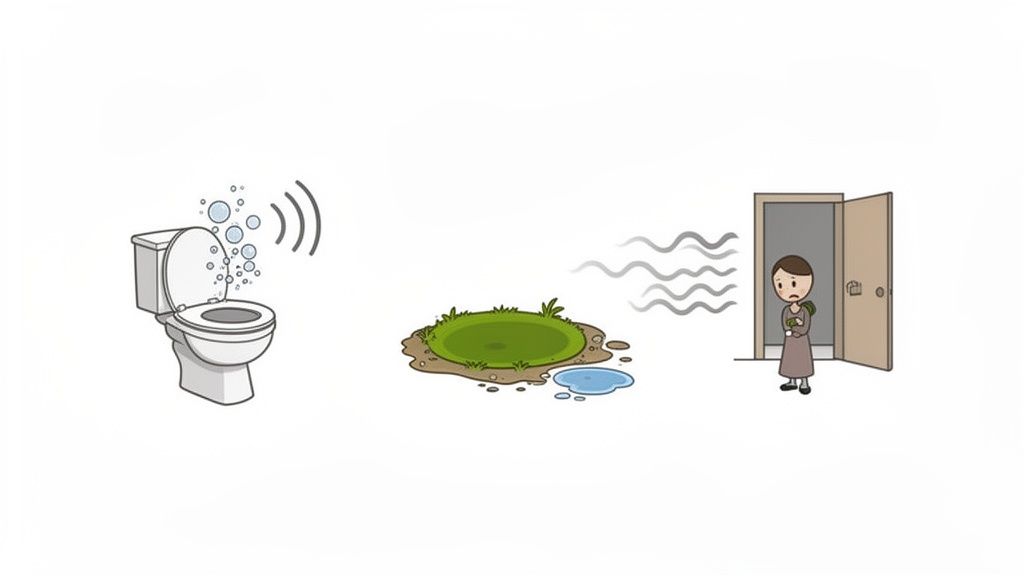
Have you ever flushed a toilet and heard a strange gurgling sound coming from a nearby shower drain? That's not just a weird quirk; it's one of the first signs of a problem. That gurgling is the sound of trapped air being forced back up the pipes because wastewater isn't flowing out freely.
If you're noticing slow drains in multiple fixtures at once—say, the bathtub and the kitchen sink are both sluggish—the issue is almost certainly in your main sewer line, not an individual drain. If a clogged toilet won’t flush and your other drains are slow at the same time, your main line is definitely crying for help.
Don't write these things off as minor annoyances. That gurgle from the toilet or the shower that takes forever to drain is often the first symptom of tree roots creeping into your pipes or major buildup inside. Catching it at this stage is the difference between a simple leak repair and a much more invasive sewer replacement.
Unpleasant Odors Inside or Outside
Here's a simple fact: a healthy sewer system is airtight. You should never, ever smell sewage in or around your home. If you catch a persistent foul odor wafting up from your drains or lingering in your basement, it's a huge red flag. It usually means there's a crack or break in the line under your foundation, allowing sewer gas to escape into your living space.
The same goes for your yard. If you walk outside and are hit with the smell of sewage, particularly along the path where your sewer line runs, you likely have a leak. This isn't a problem that will fix itself. It's time to call a professional who handles sewer repair in Canton or your city for an immediate look. Besides being unpleasant, sewer gas can pose a real health risk to your family.
Strange Changes in Your Yard
Your lawn can be a surprisingly good indicator of your sewer line's health. Raw sewage is full of water and nutrients, and a leaking pipe essentially acts as an underground fertilizer and sprinkler system.
Look for these tell-tale signs out in the yard:
- Unusually Green Patches: Is there one strip of grass that's suddenly looking incredibly lush and green compared to the rest of your lawn? It’s probably getting a steady diet from a leaking sewer pipe right below it.
- Soggy Spots or Puddles: When a crack in the pipe gets bigger, it can saturate the soil. This creates mysterious wet spots or marshy areas in your yard, even when it hasn't rained. This water in yard is a clear sign you need help.
- Sinkholes or Depressions: Over time, a serious leak can wash away the soil that supports the pipe, causing the ground above to collapse. A new dip or indentation in your lawn is a critical warning sign that the pipe has a major failure and might be close to caving in, requiring an emergency plumber.
These outdoor clues are clear evidence that your sewer system needs attention. Whether it's a suspiciously green patch in your Marietta yard or a damp spot in Roswell, it means you need a professional camera inspection before the problem gets worse. When you see these signs, don't wait—search for an expert for sewer repair near me to get a fast, accurate diagnosis.
Sewer Repair vs. Replacement in North Georgia
Once our camera inspection shows what’s really going on with your sewer line, the big question is: what now? Do we just fix the one bad spot, or is it time to replace the whole thing? Honestly, there’s no single right answer. It really comes down to the pipe’s age, what it’s made of, and the extent of the damage.
For homeowners, this can feel like standing at a fork in the road. One path is a surgical fix for a specific problem. The other is a complete upgrade that gives you peace of mind for decades. Let's walk through your options so you can make a smart, confident decision for your home.
Spot Repairs for Localized Damage
Sometimes, the problem really is just in one place. You might have a single crack from a settling rock or one pesky joint where roots have snuck in. In these situations, a targeted sewer repair can be the perfect solution. Think of it like fixing a pothole instead of repaving the entire street.
This approach works best on newer pipes that are in otherwise great shape. For instance, if a PVC pipe we installed 15 years ago got nicked by a shovel during some landscaping, a spot repair is a no-brainer. But trying to patch up a crumbling, 60-year-old cast iron line in an older Marietta home? That’s usually just putting a bandage on a much bigger problem.
Trenchless Sewer Repair: The No-Dig Solution
One of the biggest leaps forward in our industry has been trenchless sewer repair, which you might hear called pipe lining. This amazing technology lets us build a brand-new, super-strong pipe right inside your old one—all without digging a huge trench through your yard. If you live in Roswell or Alpharetta and love your landscaping, this method is a true game-changer.
Here’s the process in a nutshell:
- Cleaning: First, we use a high-powered hydro jetter to scour the inside of the old pipe, clearing out any roots, scale, or gunk. This is the ultimate drain cleaning service.
- Lining: Next, we insert a flexible tube coated in a special epoxy resin into the pipe from a small access point.
- Curing: We inflate the liner, pressing it tight against the walls of the old pipe. The resin then hardens, or "cures," into a seamless and incredibly durable new pipe.
This new "pipe-within-a-pipe" is completely joint-free and corrosion-proof, which means roots can't get in. It's a fantastic middle-ground option, giving you most of the benefits of a full replacement without tearing up your property.
Trenchless repair is a powerful tool, but it can't fix everything. The existing pipe has to be more or less structurally sound. If your line has totally collapsed or has severe "bellies" (low spots where waste and water pool), a traditional dig-up might be the only way to go.
Traditional Excavation: The Full Replacement
When a sewer line is simply too far gone—collapsed, crushed by tree roots, or eaten away by corrosion—a full sewer replacement is the only real answer. This is the old-school method you’re probably picturing: we dig a trench to get to the old pipe, pull it out, and lay a brand-new one.
It’s definitely the most invasive approach, but it's also the most final solution. For a failing cast iron or clay pipe, it’s often the smartest long-term investment you can make. We replace these outdated materials with modern PVC, which is hands-down one of the most durable options out there. In fact, studies on PVC pipes dug up after decades of use show they have a potential service life of 100 to 300 years. You can read more about the durability findings for PVC pipes to see why we trust it for our customers.
Understanding the Cost Factors
The price for a sewer repair or replacement can vary quite a bit, and it helps to know what goes into it. There’s no flat rate because every single job is different. Fixing a line under an open yard in Acworth is a completely different project than one that requires us to cut through a concrete driveway in Johns Creek.
Here are the main things that affect the final price:
- Accessibility: Is the pipe under your lawn, or is it buried beneath a deck, a patio, or even your home's foundation? The harder it is to get to, the more labor is involved.
- Length and Depth: The total length of pipe we need to work on and how deep it's buried directly impact the cost.
- Method: Trenchless repairs and traditional excavation have different price structures. While trenchless might look more expensive upfront, you have to factor in the money you'll save by not having to rebuild your deck or driveway.
- Permits and Inspections: All sewer line work in places like Cobb and Forsyth County requires permits to make sure it's done safely and to code. These fees are part of the overall project cost.
When you've got a sewer backup and need an emergency plumber, the last thing you want are financial surprises. At JMJ Plumbing, we come to your home, diagnose the problem, and give you a clear, honest quote. We’ll explain all your options so you can choose the one that works best for your home and your budget.
When You Need an Emergency Plumber for Your Sewer
Look, there’s a big difference between a slow drain that’s just an annoyance and a sewer problem that can cause catastrophic damage to your home. Knowing when to act fast can save you from a world of headaches, expensive repairs, and serious health risks. If you spot any of the following signs, it’s not a drill—it’s time to call a 24 hour plumber.
Sure, a minor, isolated slow drain might just need a simple drain cleaning. But when you're staring down a real sewer emergency, the problem is much bigger and demands immediate, professional help.
Critical Signs of a Sewer Emergency
These aren't just warnings; these are red alerts that your sewer line has gone from "failing" to "failed." Especially in areas like Woodstock or Canton with beautiful, established trees and older homes, these symptoms mean you need to find an emergency plumber near me right away.
-
Sewage Backing Up Into Your Home: This is the absolute worst-case scenario and the #1 sign of an emergency. If raw sewage is coming up through basement floor drains, toilets, or even your shower, you have a complete blockage. That water is filled with harmful bacteria and is a direct health threat to your family.
-
Multiple Drains Completely Blocked: It's one thing if a single sink is clogged. But if all the drains on the lower level of your house stop working at once, the clog isn't in a small pipe. The main sewer line is obstructed, and every time you run water, you're just adding to the backup. A clogged toilet won’t flush at the same time your shower is backing up is a classic sign of a main line disaster.
-
Strong Sewage Odor Indoors: A faint, musty smell is one thing, but a powerful and persistent sewer gas odor inside your home is a major red flag. It almost always means there’s a significant crack or break in the sewer line right under your house. Sewer gas isn't just unpleasant—it can be hazardous to breathe.
When raw sewage shows up in your living space, it's not just a mess—it's a biohazard. You need a professional to contain it immediately to prevent it from spreading and causing massive property loss. A fast response from a 24 hour plumber is the only way to protect your home and your health.
Why a Fast Response Is Crucial
In a sewer emergency, every minute counts. What starts as a small puddle of wastewater can quickly spread, soaking into drywall, ruining flooring, and destroying furniture and personal items. The longer you wait, the more devastating—and expensive—the cleanup and repairs will be.
An emergency plumber in Alpharetta or Roswell can get there quickly and use a sewer camera to pinpoint the exact location of the break or blockage. From there, we can take immediate action to stop the damage. That might mean using powerful hydro jetting to blast through a massive clog or starting an emergency sewer repair on the spot. Don't wait and hope it gets better. A quick call to JMJ Plumbing can stop a disaster in its tracks.
Frequently Asked Questions About Sewer Lines
When you're a homeowner, few problems are as dreaded as a sewer line issue. It's one of those "out of sight, out of mind" things until it's suddenly a major headache. We get it. Over our decades of service here in Metro Atlanta, we’ve heard just about every question there is.
Here are a few of the most common ones we answer for homeowners just like you.
How Often Should I Have My Sewer Line Inspected?
This really depends on the age of your house. If you're in an older home, say in Marietta or Roswell, that was built before 1980, you likely have old cast iron pipes. For those, getting a video camera inspection every 3-5 years is a smart, preventative move. It lets us spot problems like root intrusion or cracking before they flood your basement.
For newer homes in areas like Cumming or Woodstock, you're probably working with modern PVC pipes. In that case, you generally don't need an inspection unless you notice trouble. Things like gurgling toilets, drains that are slow all over the house, or a faint but persistent sewage smell are all red flags. An inspection is the only way to get eyes underground and see what's really going on.
Does Homeowners Insurance Cover Sewer Line Replacement?
This is a big one, and unfortunately, the answer is usually no. Most standard homeowner's policies do not cover sewer line failures that are caused by simple aging, corrosion, or tree roots. They classify it as a maintenance issue, which falls on you.
Now, some policies might have add-ons or specific clauses for damage that is “sudden and accidental,” like a burst pipe repair from a sudden ground shift. The key is to check your policy documents or, even better, call your agent before you have a problem. Don't just assume you're covered for a full sewer replacement—it can be a very expensive surprise.
Can I Prevent Tree Roots from Damaging My Pipes?
You can’t stop a tree from looking for water, but you can definitely manage the risk. If you know you have older, vulnerable pipes, regular drain cleaning with a root-cutting auger can clear out invading roots. But think of this as a temporary fix; those roots will always come back.
For a permanent solution, the only real answer is a full sewer replacement with modern, jointless PVC pipe. This creates a solid, seamless line that roots can't break into. It truly ends the cycle of clogs and costly cleanouts for good, giving you peace of mind.
If you’re staring down a sewer backup or just have a bad feeling about your old pipes, don't put it off. One call now can save you from a huge mess and an even bigger bill later.
Whether you need an emergency sewer repair in Acworth, a quote for a water line replacement in Alpharetta, or just a quick diagnosis for a clog that won't quit, the team at JMJ Plumbing is here for you 24/7. Contact us online or call us today to get an honest assessment from a certified Master Plumber.