Pros and Cons of Tankless Water Heaters: A 2026 Guide for Metro Atlanta Homeowners
So, you’re staring at a puddle spreading from the bottom of your water heater, and the big question pops into your head: “Is it finally time to go tankless?” It’s a question we hear all the time from homeowners in Woodstock, Roswell, and all over North Metro Atlanta, especially when they suddenly have no hot water.
Let's cut right to it. A traditional water heater is like a giant thermos, constantly using energy to keep 40-50 gallons of water hot, waiting for you to need it. A tankless unit, on the other hand, is more like a high-end coffee maker that brews a perfect, fresh cup on demand. It heats water instantly, right when you turn on the faucet.
For a busy family, the thought of endless hot water is a game-changer. No more spacing out showers or running out mid-laundry. But what about the stories you've heard? The high upfront cost of a water heater replacement, the tricky installation, and how they handle Georgia’s notoriously hard water are all valid concerns.
This guide is here to give you the straight talk on the pros and cons, so you can decide if a tankless system is the right move for your home and your wallet.
Should You Switch to a Tankless Water Heater?
The decision often gets forced on you by a failing unit, but it doesn't have to be a panic-driven choice. Whether your old tank is on its last legs or you're just tired of paying to heat water you aren't using, understanding your options is key.
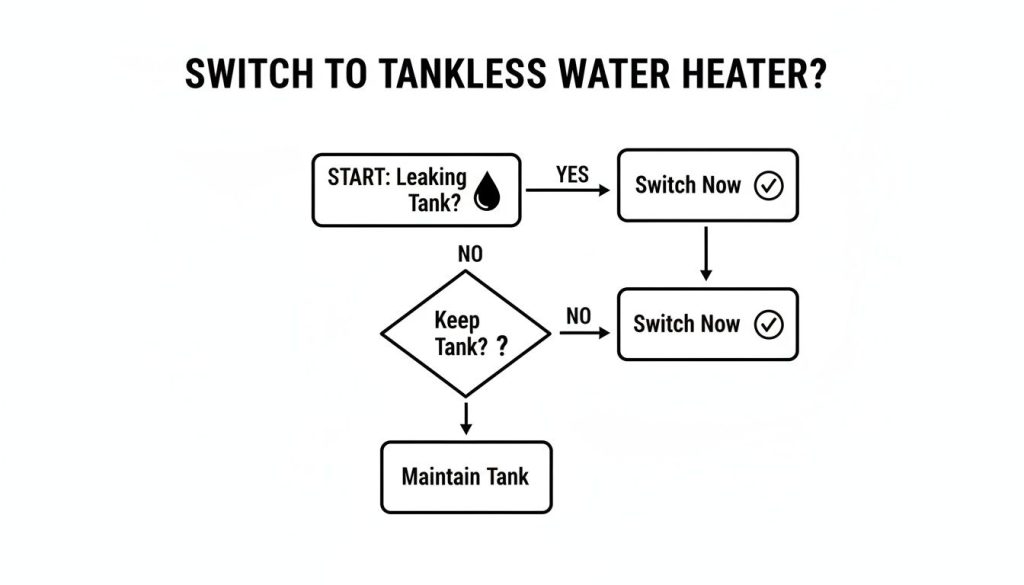
This flowchart lays out the basic thought process.
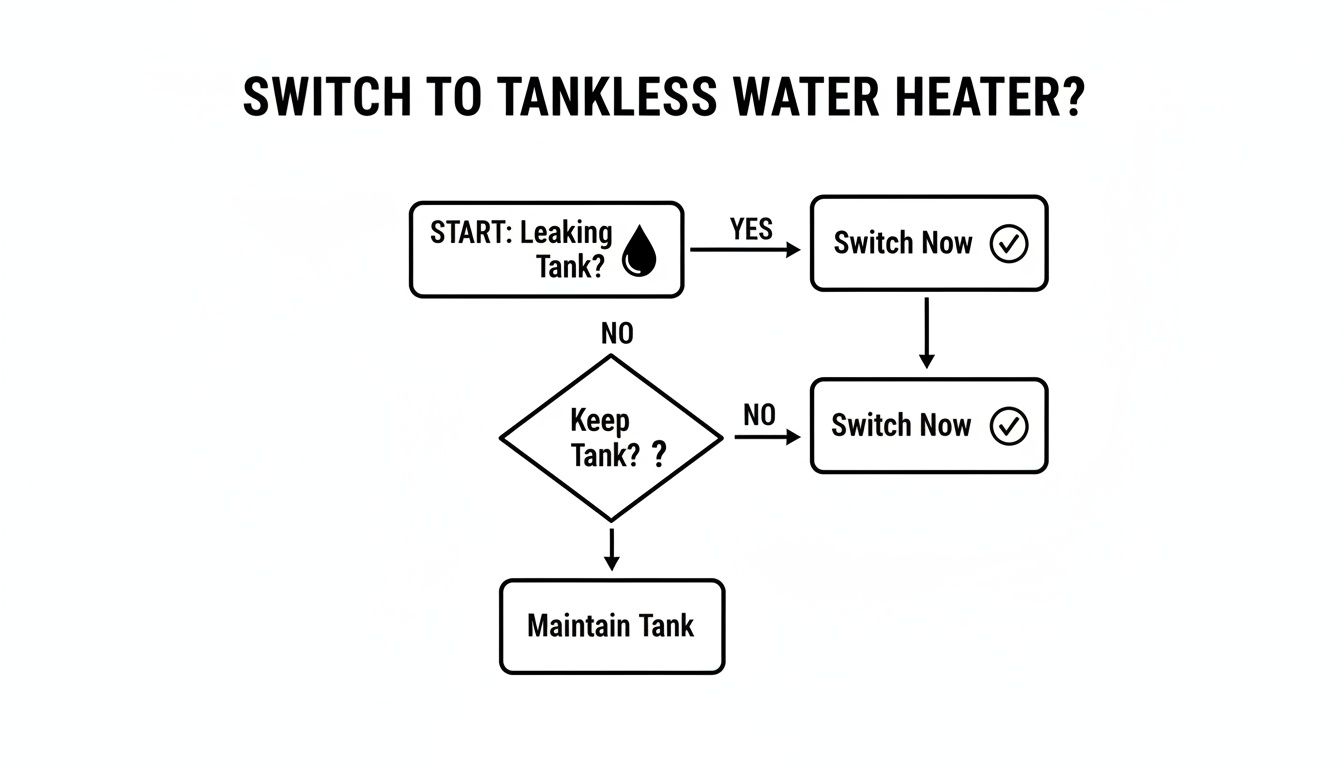
As you can see, a major leak usually makes the decision for you. When you're facing an emergency plumber call for a burst pipe repair, a quick replacement is the top priority. But even if your tank isn't actively failing, it's smart to weigh the long-term picture.
We're talking to you, homeowners in Canton, Cumming, and the surrounding areas. Thinking through this now can save you a lot of headaches (and costs from a sudden main water line repair) later.
JMJ Plumbing Insight: Here's something a lot of folks in Cherokee County and Forsyth County don't realize: your existing gas lines or electrical panel might not be sufficient for a tankless heater. This is exactly why getting a professional to look at your specific setup is a must before you commit. It's the only way to avoid surprise costs and make sure the unit you buy can actually do its job.
Making a smart choice here isn't just about hot water; it's about protecting your home and your budget. The rest of this guide will dig deep into the specific pros and cons to help you figure out if going tankless makes sense for you.
The Real Benefits of Going Tankless
So, why are so many of your neighbors in Cherokee County and Cobb County making the switch to tankless water heaters? It really boils down to a few powerful advantages that change how you think about hot water.
The most obvious win is energy efficiency. Your old, traditional tank heater is a classic energy hog. It’s constantly burning gas or using electricity to keep 40 or 50 gallons of water hot, 24/7. We call this "standby heat loss," but you can just think of it as paying to heat water you aren't even using. It’s like leaving the oven on all day just in case you decide to bake something later.
Tankless systems completely sidestep this problem. They only fire up the moment you turn on a hot water tap. This on-demand approach can make a serious dent in your monthly utility bills, putting real money back into your pocket. If you're a homeowner in Woodstock suddenly searching for "water heater replacement near me," those long-term savings are a compelling reason to upgrade.
Never Run Out of Hot Water Again
Here’s the benefit everyone loves: endless hot water. We’ve all been there—you’re the last one in line for a shower, and the water turns icy halfway through. With a tankless heater, that's a problem of the past.
You can run the dishwasher, start a load of laundry, and still count on a steaming hot shower for as long as you want. For a busy family in Alpharetta or a household in Johns Creek with chaotic mornings, this is more than just a luxury. It turns your hot water from a limited, rationed resource into a reliable, on-demand convenience.
More Space and a Much Longer Lifespan
Tankless heaters don't just work better; they last longer and take up way less room. A well-maintained tankless unit can keep running for 20 years or more. That's often double the 10-15 year lifespan you'd expect from a conventional tank heater, meaning you won’t have to think about another big water heater replacement for a very, very long time.
Plus, these sleek units mount right on the wall. When we take out that giant, clunky tank, you instantly get back a huge chunk of your utility closet, garage, or basement. It's found storage space you probably never thought you'd have.
Getting more usable square footage and not having to replace your heater as often are two very real, tangible benefits that add a lot of value to your home.
The Financial and Efficiency Upside
Let's talk numbers. The energy efficiency of a tankless water heater is impressive. Because they eliminate standby heat loss, they are 24-34% more efficient than their tank-style counterparts. For the average family in Marietta or Acworth, that can translate into hundreds of dollars in savings every single year.
This efficiency is why the market is shifting so dramatically. The global electric tankless market is expected to grow from USD 3.45 billion to over USD 6.12 billion by 2034. You can explore the full electric tankless water heater analysis here to see just how fast homeowners are embracing this technology.
Beyond the big, obvious wins, a few other key advantages make tankless a smart investment:
- Lower Risk of Major Leaks: That old tank is a ticking time bomb. It’s a huge metal container full of water that’s constantly expanding, contracting, and corroding. Without that tank, the risk of a catastrophic flood and the expensive water damage that comes with it is practically eliminated. If you've ever had to call for an emergency plumber in Alpharetta for a burst pipe repair, you understand the value of that peace of mind.
- Pinpoint Temperature Control: Most tankless models come with a digital controller. This lets you set the hot water temperature to the exact degree you prefer—perfect for keeping kids safe from scalding and getting your shower just right.
When you add it all up, a tankless water heater is more than just an appliance upgrade; it's a strategic improvement for your home. To make sure you get the full benefit of these advantages, a proper installation by a Master Plumber is key. At JMJ Plumbing, we have the experience to handle everything from tankless installs to urgent jobs like sewer repair in Woodstock, ensuring your new system is sized, installed, and configured to deliver years of efficient, reliable performance.
The Not-So-Great Side: Hidden Costs and Downsides of Going Tankless
It’s easy to get excited about the benefits of a tankless water heater, but we need to have an honest conversation about the downsides. For many homeowners here in North Fulton County, from Woodstock to Alpharetta, the biggest shock isn't the technology—it's the bill.
The sticker price for a tankless unit is just the beginning. You'll often find the unit itself costs two to three times more than a standard tank heater. But the real story is in the installation, especially if you're switching from a traditional tank in an older home. It’s rarely a simple swap-out.
The Headache of Upgrades and Retrofitting
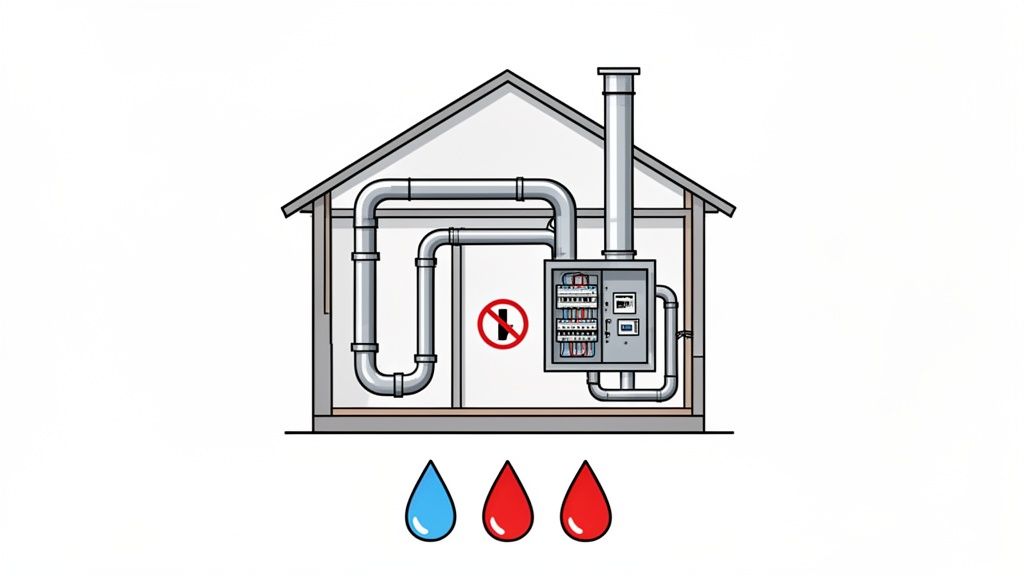
Getting a tankless heater up and running often means making some serious upgrades to your home's utility lines. These aren't just "nice-to-haves"; they're essential for the heater to work safely and correctly. Skipping this step can lead to a project that goes way over budget, turning a planned upgrade into an expensive leak repair down the road.
- Gas Line Upgrades: A gas tankless heater needs a lot of fuel, and it needs it fast. Most homes in Marietta or Roswell simply don't have a large enough gas line to feed the beast. This means a plumber has to run a new, bigger line all the way from your gas meter to the unit, a job that can get complicated and costly in a hurry.
- Electrical System Demands: Thinking of going electric? Those models are incredibly power-hungry. They can require a 200-amp electrical panel and sometimes multiple dedicated circuits. If your panel is already full, you’re looking at a separate, expensive panel upgrade from a licensed electrician.
- Specialized Venting: Your old tank heater probably vented through a simple pipe or chimney. Tankless units can't do that. They need their own sealed, specialized venting, usually made from stainless steel or PVC. This might involve drilling through your home's exterior wall or running a brand-new vent pipe up through the roof, adding more labor and material costs to the bottom line.
This is where folks in places like Canton and Cumming can get into trouble. Your old tank fails, you do a quick search for an "emergency plumber near me," and you're not prepared for these extra costs. An on-site evaluation is the only real way to know what your specific home will need to go tankless.
Performance Quirks You Should Know About
Beyond the sticker shock of installation, there are a couple of performance oddities to be aware of. "Endless hot water" is the big promise, but the day-to-day reality can be a bit different if the system isn't sized and installed perfectly, sometimes resulting in low water pressure.
Have you ever heard of the "cold water sandwich"? It’s a common complaint. It happens when you shut the hot water off for a few seconds (like when you're soaping up in the shower) and then turn it back on. You get a little hot water left in the pipe, then a slug of cold water while the heater fires back up, and then the hot water returns. It's a small thing, but it can be annoying.
Then there's the issue of flow rate. Picture GA-400 during rush hour. If you try to run the shower, the dishwasher, and the washing machine all at once, you're going to overwhelm an undersized tankless unit. The water pressure drops, the temperature becomes lukewarm, and nobody is happy. This happens all the time when people try to save a few bucks on a smaller unit. That's why getting a professional plumber—the kind you'd call for a complex sewer replacement—to do a proper sizing calculation isn't just a suggestion—it's absolutely necessary.
How To Choose The Right Unit For Your Atlanta Home
Choosing a tankless water heater for your home in Metro Atlanta isn't as simple as picking one off the shelf at a big-box store. Get it wrong, and you're in for a world of frustration—lukewarm showers, sputtering faucets, and buyer's remorse.
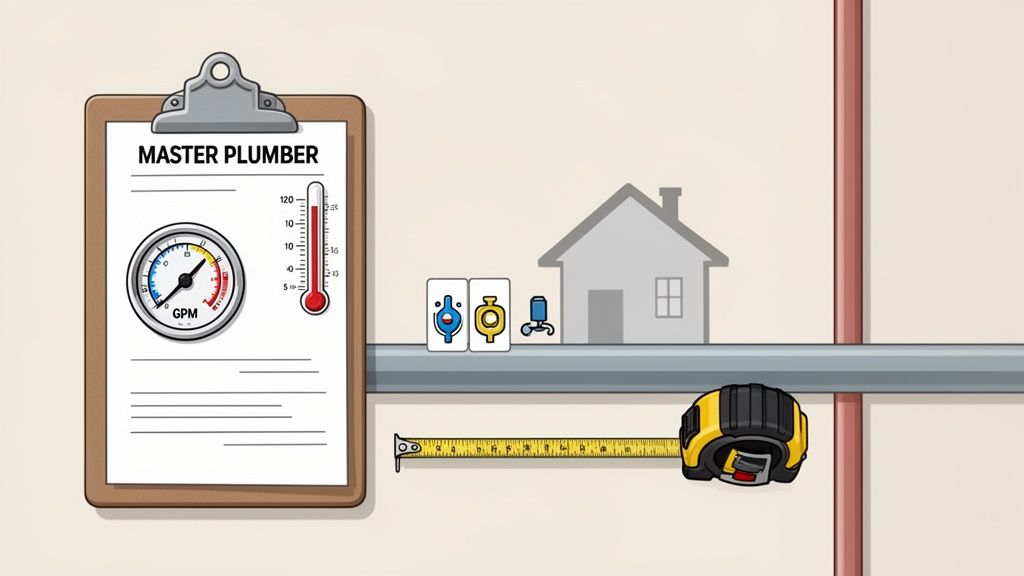
That's why a professional on-site assessment is so important. We don't guess; we measure. For homeowners in Cumming, Johns Creek, or Canton, getting the right size and type of unit is the first, and most critical, step to a successful installation.
Calculating Your Home's Hot Water Demand
First things first, we need to figure out your home's peak hot water usage. This is all about flow rate, measured in gallons per minute (GPM). It’s not just about how many people live in your house, but how many showers, faucets, and appliances might be running at the exact same time.
Picture a typical chaotic morning in your Roswell or Marietta home. Is it possible to have two showers going while the dishwasher is running? Each fixture has its own GPM demand:
- Standard Shower Head: 2.0 – 2.5 GPM
- Kitchen Faucet: 1.5 – 2.2 GPM
- Dishwasher: 1.0 – 2.0 GPM
- Washing Machine: 1.5 – 3.0 GPM
We add up the GPM for all the fixtures you might use at once to find the peak demand your new heater must meet. An undersized unit simply can't keep up, and you'll immediately notice the disappointing drop in water pressure.
Factoring In North Georgia's Temperature Rise
But flow rate is only half the equation. The other critical piece of the puzzle is the temperature rise. This is how many degrees the heater must raise the water temperature, from the moment it enters your home to the 120°F you expect at the tap.
Here in North Georgia, our groundwater gets pretty cold in the winter, sometimes dipping into the 40s. This means your tankless unit has to work hard, raising the water temperature by 70-80 degrees on demand.
A unit that works perfectly fine in Florida might completely fail to keep up here in Cherokee County or Forsyth County during a cold snap. This is a huge reason why you can't just buy a heater based on online reviews—it has to be sized for our specific climate.
A JMJ Plumbing professional will calculate your needs based on both GPM and the maximum temperature rise for our area. This detailed approach, also used for big jobs like water line replacement, ensures you have reliable hot water all year long.
Gas vs. Electric Models: The Cost Breakdown
Once we know the performance specs you need, the next decision is the fuel type: gas or electric. Each has very different costs, especially when it comes to the installation itself, a key factor when looking up "water heater replacement cost Acworth".
To help you see the trade-offs clearly, here's a quick comparison:
Tankless vs. Traditional Water Heater At a Glance
| Feature | Tankless Water Heater | Traditional Tank Water Heater |
|---|---|---|
| Water Supply | On-demand, unlimited hot water | Limited to tank capacity (typically 40-50 gallons) |
| Energy Use | Heats water only when needed, highly efficient | Constantly reheats stored water, leading to standby heat loss |
| Lifespan | 20+ years | 10-15 years |
| Upfront Cost | High ($3,000 – $6,000+) | Low ($900 – $2,500) |
| Size | Compact, wall-mounted | Bulky, requires significant floor space |
| Installation | Often complex, may need gas or electrical upgrades | Relatively simple, direct replacement |
As you can see, the higher upfront cost of a tankless unit is balanced by a longer lifespan and lower energy bills over time. The real decision often comes down to the installation requirements for your home.
Gas Tankless Heaters:
- The Good: These units usually have a higher GPM, making them perfect for larger families with high water demand. They also have lower monthly running costs.
- The Catch: The unit price is higher, and they often need expensive gas line upgrades to handle their high BTU requirements. They also require specialized, and sometimes costly, venting to the outside.
Electric Tankless Heaters:
- The Good: The units themselves are cheaper, and installation seems simpler since there's no gas line or venting to worry about. They're a great fit for small homes or as point-of-use heaters for a specific sink.
- The Catch: They have higher operational costs and are absolute power hogs. An electric tankless model almost always requires a major, and expensive, electrical panel upgrade to function safely.
One huge pro for both types is how much space they save. A tankless unit can free up 60% less physical space than a giant, clunky tank heater. This trend is a major reason the global tankless market is projected to reach USD 9.41 billion by 2033, with single-family homes making up 72.8% of that demand. For our customers in Cumming or Alpharetta, that means finally reclaiming a corner of the garage or a closet. You can find out more about the global tankless heater market trends to see why so many homeowners are making the switch.
Ultimately, the only way to know for sure is with a professional on-site quote. A licensed Master Plumber can inspect your existing systems in Alpharetta or Woodstock and give you a clear, all-in cost for each option, ensuring your water heater replacement is done right and built to last.
Repair or Replace Your Failing Water Heater?
There's nothing quite like that sinking feeling when you realize the shower is ice-cold or you spot a growing puddle in the basement. It’s a moment every homeowner dreads, and it forces a tough question, fast: should you repair your water heater or is it time for a new one?
For homeowners here in Marietta and Roswell, making the right call under pressure isn't just about getting the hot water back on. It's about avoiding a much bigger, more expensive problem, like a sewer backup, just around the corner.
When you have no hot water, the immediate urge is to search for a "24 hour plumber near me" and hope for a quick fix. And sometimes, that’s all it takes. But often, a simple repair is just putting a small bandage on a very big wound.
Reading the Warning Signs of a Failing Tank
Most homes in North Metro Atlanta have a traditional tank-style water heater. If you have one, there are a few tell-tale signs that your unit is on its last legs.
-
Rusty or Discolored Water: If you only see brown, murky water when you turn on the hot tap, that's not your pipes—it's your water heater. The inside of the tank is rusting away, and a catastrophic leak is often the next step.
-
Strange Noises: Hear that rumbling, popping, or banging coming from the basement? That's the sound of sediment that has built up for years, baked into a hard layer at the bottom. This scale forces the unit to work overtime to heat the water, stressing the tank itself. This same buildup causes slow drains and other issues.
-
Leaks and Moisture: Any water pooling around your heater (water in yard is another sign for outdoor units) is a major red flag. A leak from a connection or valve might be a simple leak repair, but if the tank itself is weeping water, it's failing. It's only a matter of time before that small drip becomes a major flood, and you're looking at a burst pipe repair situation.
JMJ Plumbing Pro Tip: The single most important factor is age. Your typical tank heater has a lifespan of about 10-12 years. If your unit is older than that, sinking money into a repair is almost always a bad investment. You're just paying to delay the inevitable, and a full replacement is the smarter, safer choice.
When to Repair vs. Replace a Tankless Unit
Tankless water heaters are a different breed. You won’t see rusty water or a big, leaking tank. Instead, their problems are a bit more subtle.
Hard water, which is common in areas like Canton and Acworth, can cause mineral buildup inside the unit. This scaling can reduce performance or cause the unit to show an error code. In many cases, a professional descaling service can get it running like new again, making repair the clear winner.
However, if the heat exchanger—the heart of the unit—fails, the repair cost can be staggering. If you're facing a major component failure on an older tankless model, or if you find yourself calling for repairs frequently, it's time to talk about a full water heater replacement.
Making the Smart Move Under Pressure
A failed water heater feels like a crisis. The temptation is to get the problem solved as quickly and cheaply as possible, which usually means installing another basic tank heater. But hold on. A breakdown is actually the perfect opportunity to make a smart upgrade for your home.
If your old tank heater gave up the ghost after 10+ years, replacing it with a high-efficiency tankless model is one of the best investments you can make. Yes, you solve your immediate "no hot water" problem. But you also get a system that cuts your energy bills and provides endless hot water for the next 20+ years.
Whether you need an emergency plumber in Alpharetta right now or you’re planning ahead for a water heater replacement in Woodstock, don't just react to the problem. Call JMJ Plumbing's 24/7 team. We’ll get there fast, diagnose the real issue, and give you a clear, honest look at your options so you can make the best long-term decision for your home and your budget.
Why Local Expertise Matters for Your Installation
Let’s be honest: installing a tankless water heater isn't a simple weekend project. It’s a technical job where a small mistake can lead to big problems—think poor performance, serious safety hazards, or even a voided warranty. This is where our 25+ years of hands-on experience in North Metro Atlanta really makes a difference for our customers.
You're not just hiring a plumber; you're hiring a local expert who understands the unique quirks of our area. We’ve seen firsthand how the hard water in places like Canton and Acworth can wreck a brand-new unit if it's not protected. We also know the right way to retrofit an older, historic home in Roswell without damaging its character or structure.
Getting the right person for the job is critical. It's like in the UK, where you wouldn't let just anyone work on your gas lines—you'd look for certified heating engineers who are properly registered for safety and compliance. The same principle applies right here in Georgia.
Your Local Plumbing Partner in North Metro Atlanta
Because we live and work in communities from Alpharetta to Marietta, we see ourselves as your neighbors, not just another contractor. We believe in total transparency, which is why we provide clear, on-site quotes so you know exactly what the job entails before we ever pick up a tool. Our promise is simple: we will never try to sell you a system that’s too big for your needs or one your home’s plumbing and electrical can't handle.
When you call us, you get a diagnostic expert. Whether you're dealing with a nasty sewer backup in Johns Creek or planning a water heater replacement in Woodstock, we'll figure out the root cause and recommend a solid, code-compliant solution that actually fits your home and your budget.
We also know that plumbing disasters don't keep a 9-to-5 schedule. That’s why we offer 24 hour plumber services across Cobb County, Cherokee County, and North Fulton. If you have no hot water, a strange sewage smell, or a major crisis like a burst pipe repair, our team is on standby, ready to get things back to normal.
For a tankless system that will last for years and run efficiently, local expertise is the one thing you can't skip. We often recommend adding a HALO water filtration system right from the start to protect your investment from mineral buildup. When you’re ready, trust JMJ Plumbing to get the job done right—giving you the peace of mind you deserve.
Your Top Questions About Tankless Water Heaters, Answered
Okay, so you've done some research, but a few questions are probably still bouncing around in your head. That’s completely normal. Here are the answers to the questions we get asked most often by homeowners here in Woodstock, Canton, and all over North Metro Atlanta.
How Long Does a Tankless Water Heater Really Last?
This is one of the biggest selling points. With proper care, you can expect a tankless unit to last 20 years or even longer. Think about that—it's nearly double the life of a typical tank heater, which you're often replacing every 10-12 years.
The secret to that longevity, especially with the hard water we have in this area, is simple, regular maintenance. A yearly descaling flush prevents mineral buildup and keeps the unit running efficiently, helping you avoid a premature water heater replacement. This service is much simpler than a full drain cleaning and protects your investment.
Will I Get Hot Water Instantly with a Tankless Model?
That's a common misconception. "On-demand" means it heats the water instantly, not that it arrives instantly. The hot water still has to travel through your pipes to get to the faucet, so you'll still have that short wait, just like with a tank.
Now, if you have a bathroom at the far end of a large house, that wait can be frustrating. In those cases, we can install a small point-of-use unit under the sink or a recirculation system that keeps hot water ready in the pipes, solving those slow delivery issues for good.
Are Electric or Gas Tankless Heaters Better?
There's no single "best" answer—it really comes down to your home and your hot water usage.
- Gas Heaters: These are the powerhouses. They generally provide a much higher flow rate, which is perfect for larger families in places like Alpharetta or Johns Creek who might have multiple showers running at once.
- Electric Heaters: These are often simpler and less expensive to install, particularly if you don't already have a gas line nearby. Just be aware that they can draw a lot of power and might require a dedicated circuit or even an electrical panel upgrade.
The right choice isn't always obvious. A quick look at your home’s plumbing and electrical setup by a pro is the best way to determine the right fit for you.
Can I Install a Tankless Water Heater Myself?
Please, don't. We get calls to fix DIY installations all the time, and it's one of the costliest pitfalls you can fall into. This isn't like changing a faucet. You're dealing with complex plumbing, high-voltage electrical work or gas lines, and specialized venting that has to meet strict local codes in Cobb County and Cherokee County.
Getting it wrong isn't just inefficient—it's dangerous. A bad installation can wreck the unit, cause water damage, or lead to a gas leak or electrical fire. This is a job for a licensed, insured Master Plumber, not a weekend project. We make sure it's done right, so it's safe for your family and works perfectly for years to come.
Experiencing a plumbing crisis like a sewer backup or a clogged toilet won’t flush? Or are you ready for an expert opinion on a new tankless water heater? Don't wait for the problem to get worse. Contact JMJ Plumbing for fast, reliable service across North Metro Atlanta. Schedule your on-site assessment at https://www.jmjplumbing.com today.