A Guide to Perfect Shower Temperature Control in 2026
We’ve all been there. You’re enjoying a perfectly warm shower when, out of nowhere, you're hit with a blast of ice-cold water. Or worse, a scalding surge that sends you jumping back. It’s more than just a rude awakening; it’s a classic sign that something’s not right with your plumbing. For homeowners around North Metro Atlanta, this shower shock is a daily gamble that often points to a problem behind the wall.
Why Does My Shower Temperature Keep Changing?
That sudden temperature swing isn't in your head. It’s usually caused by a fight for water pressure, a battle that happens every time a toilet is flushed or the washing machine kicks on.
Think of it this way: when another appliance suddenly calls for a large amount of cold water, it essentially "steals" that pressure from your shower. If your shower valve can't adjust, the hot water suddenly overpowers the mix, and you get a dangerous spike in temperature. When hot water is pulled away for a dishwasher, the opposite happens—an icy surprise. This isn't just uncomfortable; it's a real safety risk, especially for kids and elderly family members who are more vulnerable to burns.
Common Symptoms And What They Mean
In many older homes I see in Woodstock, Marietta, and Roswell, the culprit is often an outdated shower valve. If you have separate handles for hot and cold, you likely have a system with no protection against these pressure changes. You’re not just dealing with an annoyance; you’re living with a system that doesn't meet modern safety standards.
But the issue isn't always another appliance. Sometimes, the problem is inside the shower itself.
- A worn-out valve cartridge: This is the heart of your shower faucet, the part that actually mixes the hot and cold water. Over time, seals and O-rings wear out, or mineral deposits from our local water in Cherokee County can cause it to fail. A failing cartridge can sometimes lead to a small, hidden leak needing leak repair.
- Sediment in your water lines: Hard water buildup can restrict flow, leading to those frustratingly unpredictable temperatures. Over time, this can lead to low water pressure across the house, sometimes indicating a bigger issue needing a main water line repair.
- A failing water heater: If you’re getting lukewarm showers, there's no hot water, or it runs out way too fast, the problem might be your water heater. We get a lot of calls for water heater replacement in Canton and Acworth for exactly this reason.
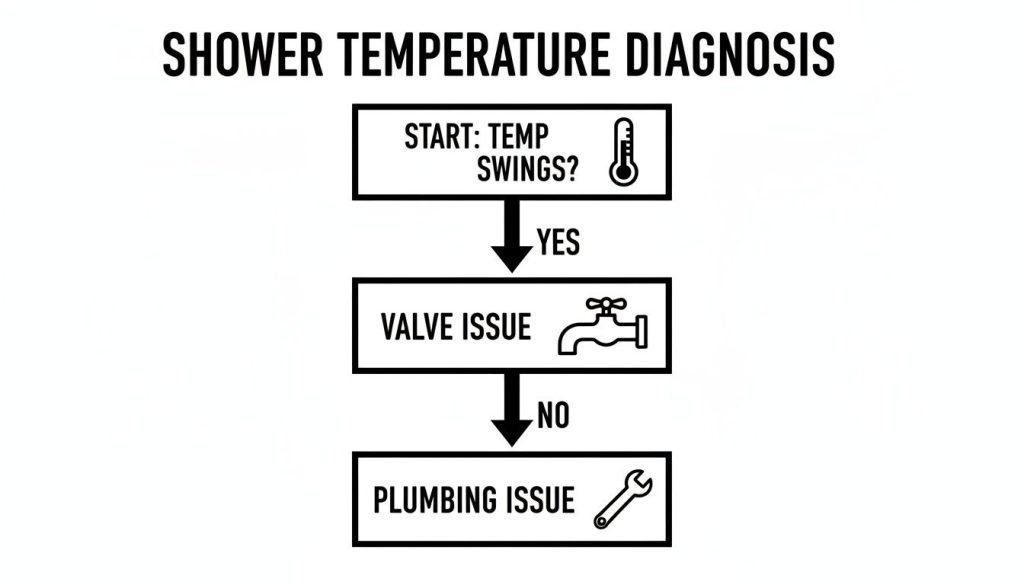
To get a better idea of what might be going on, here’s a simple way to trace the source of your shower troubles.
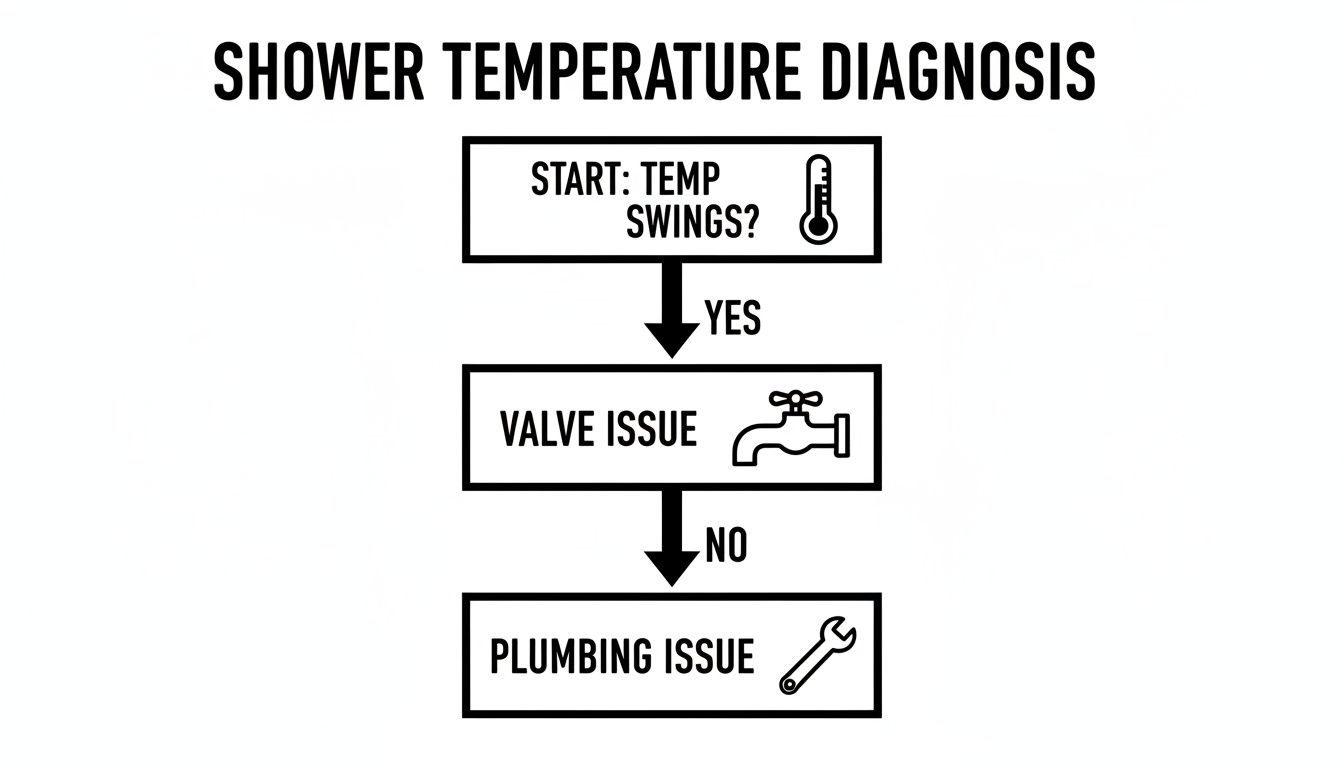
This chart helps narrow it down: if the temperature swings wildly, your valve is the prime suspect. If you're having other issues, it could be a different part of your plumbing system, like your water heater or main line.
DIY Fix Or Time To Call A Pro?
Some plumbing jobs are great for a Saturday afternoon, but tackling a shower valve usually isn't one of them. A botched installation can easily lead to a slow leak behind the wall, causing serious water damage you won't discover until it's too late and you need an emergency plumber in Alpharetta.
To make things clearer, here’s a quick-glance guide to help you figure out what you’re up against.
Quick Guide to Shower Temperature Problems
| Symptom | Likely Cause | DIY or Pro? |
|---|---|---|
| Temperature swings when toilet flushes | Outdated shower valve (no pressure-balancing) | Pro |
| Water is only lukewarm, never hot | Water heater issue or crossed connection | Pro (often requires water heater replacement) |
| Shower head has weak or sputtering flow | Mineral buildup in shower head or valve; potential main water line repair issue | DIY (clean head) or Pro (valve/line) |
| Water temperature slowly drifts | Worn-out valve cartridge | Pro (to avoid damaging valve body) |
| No water at all from the shower | Clogged valve, frozen pipe, or shut-off valve is closed; possible burst pipe repair needed | Pro |
Ultimately, while this table is a good starting point, nothing beats a professional diagnosis to pinpoint the real issue and ensure the fix is done right the first time.
The Heart of Your Shower: Understanding the Temperature Control Valve
Hidden behind your shower handle is the single most important part for a comfortable shower: the valve. This little device is the brain of the operation, mixing hot and cold water to give you that perfect temperature. If you've ever been enjoying a warm shower and suddenly gotten blasted with icy cold or scalding hot water, you’ve felt a shower valve fail at its job.
For homeowners from Woodstock to Alpharetta, getting a handle on this component is the first real step toward fixing those frustrating temperature swings for good.
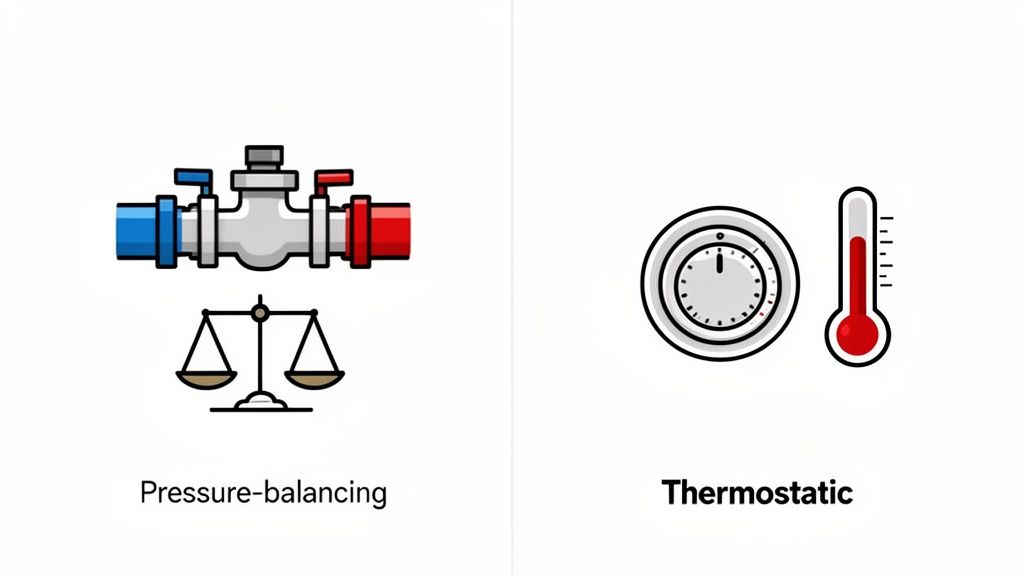
Most modern homes use one of two main types of valves. Figuring out which one you have—or which one would be best for your home—is crucial for consistent comfort and, more importantly, for keeping your family safe from burns.
The Diligent Traffic Cop: Pressure-Balancing Valves
The most common type of anti-scald valve you'll find in homes today is a pressure-balancing valve. Its one and only job is to keep the pressure between the hot and cold water lines perfectly balanced.
Think of it like a traffic cop at a busy intersection. When someone flushes a toilet elsewhere in the house, the cold water pressure suddenly drops. Your valve’s "traffic cop" immediately senses this imbalance and cuts back the hot water flow to match. This prevents you from getting a sudden, dangerous blast of pure hot water. It all happens in an instant, so the only thing you might notice is the water flow weakening for a moment.
This simple but brilliant device has been a pillar of plumbing safety for decades. Before its invention, "shower shock" was a terrifyingly common problem. You could be showering one minute and get hit with scalding water the next, all because a toilet was flushed. That nightmare ended in 1939 when Paul Symmons invented the first pressure-balancing valve. You can read more about how this invention forever changed shower safety and made our daily routines much safer.
The Smart Thermostat: Thermostatic Valves
If a pressure-balancing valve is a traffic cop, then a thermostatic valve is a smart thermostat for your shower. Instead of just reacting to pressure changes, it senses and controls the actual water temperature, giving you a far more precise and luxurious shower.
With a thermostatic valve, you set the exact temperature you want—let's say a perfect 102°F. A special wax element inside the valve expands and contracts to precisely mix the hot and cold water, holding it steady at your setting. It keeps that temperature locked in, no matter what happens with the water pressure elsewhere.
Key Takeaway: A pressure-balancing valve reacts to pressure to prevent scalding, while a thermostatic valve controls the actual temperature for total consistency. That makes thermostatic valves the superior choice for ultimate comfort, especially in homes with young kids or elderly family members.
Trying to decide between the two? This side-by-side comparison should make it clear which option is the right fit for your home, whether you're in Marietta, Cumming, or Johns Creek.
Pressure-Balancing vs. Thermostatic Shower Valves
The right valve can mean the difference between an annoying shower and a perfectly safe, comfortable one. Here’s a quick breakdown of how they stack up.
| Feature | Pressure-Balancing Valve | Thermostatic Valve |
|---|---|---|
| Primary Function | Balances water pressure to prevent scalding. | Maintains a precise, pre-set water temperature. |
| User Experience | Prevents sudden temperature spikes, but flow may decrease. | Delivers a consistent temperature and flow. |
| Control Type | Typically a single handle that controls both volume and temperature mix. | Often has two handles—one for temperature, one for volume. |
| Cost | More affordable and common in standard homes. | Higher initial cost, often found in high-end remodels. |
| Ideal For | Budget-conscious upgrades and meeting basic safety codes. | Homes with children/elderly, or those seeking a premium shower experience. |
At the end of the day, if you're dealing with a shower that can't hold its temperature, a failing valve is almost always the culprit. For homeowners in Roswell or Canton, upgrading to a modern valve is the most reliable fix. Whether you choose a dependable pressure-balancing model or a high-precision thermostatic system, you're making an investment in your home's safety and your daily comfort.
Common Causes of Shower Temperature Issues in Atlanta Homes
Ever been enjoying a warm shower when it suddenly goes ice-cold? Or worse, scalding hot? It’s a classic homeownership headache. While it’s easy to curse the shower handle, the real problem often lies deeper within your plumbing system. Here in North Metro Atlanta, we see a few common culprits over and over, from our hard water to our mix of new and aging homes.
Figuring out the why is the key to getting a permanent fix. For homeowners from Marietta to Alpharetta, a correct diagnosis saves you from chasing the wrong solution, which means saving both time and money on everything from drain cleaning to major replacements.
A Failing Water Heater: The Source of Your Hot Water Woes
If you're getting no hot water at all—or it disappears after just a few minutes—your water heater is almost certainly the problem. This is the most straightforward issue to diagnose. Think of it like a coffee pot that isn't plugged in. You can fiddle with the brew settings all you want, but you're not getting hot coffee.
This is a top reason we get calls for water heater replacement in Canton and the surrounding towns. Here's what we usually find:
- Sediment Buildup: North Georgia's water is notoriously hard, which means it’s full of minerals. Over time, these minerals settle at the bottom of your tank, creating a thick layer of gunk. This sediment forces your heater to work overtime, reduces how much hot water the tank can hold, and can eventually cause the whole unit to give out.
- A Burned-Out Heating Element: If you have an electric water heater, it relies on heating elements to do the job. When one burns out, you might get lukewarm water, but you’ll never get it truly hot.
- Pilot Light or Gas Supply Issues: For those with gas heaters, a pilot light that just won't stay lit is a dead giveaway. While you can try relighting it, if it keeps going out, there's an underlying problem that needs a professional to safely diagnose.
A hot water supply that runs out fast isn't just annoying; it's a clear cry for help from your water heater. Getting it inspected early can help you avoid a total failure and a frantic call for an emergency plumber in Acworth.
Worn-Out Valve Cartridges and Pressure Imbalances
Now, what if the temperature swings wildly when someone flushes a toilet or turns on the dishwasher? That’s a classic sign of a problem inside your shower valve. The cartridge—a small, but vital, part that mixes hot and cold water—wears down over the years. Seals get brittle, O-rings crack, and mineral deposits can make it stick.
When that happens, your shower can’t properly balance the water pressure anymore. This is what leads to those sudden, dangerous blasts of hot or cold water. In many cases, a simple cartridge replacement is all it takes. But if the valve body itself is corroded or damaged, a more involved leak repair and full valve replacement might be on the cards.
Clogged Pipes or Low Water Pressure
Sometimes a temperature problem is really a flow problem in disguise. If you've noticed your shower pressure getting weaker over time, it might be more than just a clogged showerhead.
- Mineral Buildup: That same hard water we mentioned? It doesn't just settle in your water heater; it builds up inside your pipes, slowly choking off water flow. This "hardening of the arteries" for your plumbing can mess with the hot/cold mix and feel like a valve issue. Professional drain cleaning services in Forsyth County can often resolve slow drains.
- Main Water Line Issues: If you notice a sudden low water pressure all over the house, the problem could be your main water line. Look for water in your yard or a meter that’s spinning even when all taps are off. It's crucial to call for a main water line repair in Cumming or your local area right away, as this can lead to serious foundation damage.
- Hidden Leaks: Even a small, hidden leak from a previous burst pipe repair that wasn't done correctly can drop your system's pressure and throw your shower's temperature out of whack.
Low water pressure can be a simple fix or a symptom of a massive problem, like a failing main line that will require a full water line replacement. It takes a professional eye to tell the difference.
How to Prevent Dangerous Scalds in Your Shower
A shower that suddenly goes from pleasant to scorching isn't just a shock—it's a real danger hiding in your plumbing. A sudden blast of scalding water can cause serious burns in seconds. This risk is especially high for children and elderly family members, whose thinner skin makes them much more vulnerable.
This is exactly why modern Georgia plumbing codes have gotten so much stricter. Today, any new construction or significant bathroom remodel requires an anti-scald valve. It’s not just a nice-to-have feature; it’s a required safety device to protect families in our communities, from Kennesaw to Roswell.
Your First Line of Defense Is Your Water Heater
While upgrading your shower valve is the best long-term fix, there’s one thing you can do right now to make your home safer. Go take a look at your water heater's temperature dial. Many older units, especially in homes built before the 1990s, are cranked up to a blistering 140°F or even higher.
The risk here is no joke. Water at 140°F can cause a third-degree burn on a child in just three seconds and on an adult in five. These terrifying stats are what pushed plumbing codes to change, though it took until the early '90s for residential homes to get the same anti-scald valve requirements that commercial buildings already had. You can read more about how safe temperature standards evolved to protect families.
The Consumer Product Safety Commission (CPSC) recommends setting your water heater to a maximum of 120°F. Making this one small adjustment gives you a much bigger safety margin, buying precious time for someone to move out of the way of dangerously hot water. It’s the single most effective DIY step you can take for shower safety.
Why a Code-Compliant Valve Is Non-Negotiable
Turning down your water heater is a fantastic first step, but it doesn’t solve the whole problem. It won't stop temperature swings caused by pressure changes. If you have an older two- or three-handle faucet, a toilet flushing somewhere else in the house can still send scalding water to your shower. A professionally installed pressure-balancing or thermostatic valve is the only way to get reliable shower temperature control.
Important Safety Note: Setting your water heater too low (below 120°F) can be a problem, too. It can create an environment for harmful bacteria like Legionella to grow. Sticking to the 120°F recommendation is the sweet spot that balances scald protection and hygiene.
If you’re not sure what kind of plumbing is behind your shower wall, it’s best to call in a professional. An experienced plumber can inspect your system and tell you if your fixtures are up to current safety codes.
- Inspection: We can spot outdated and dangerous two- or three-handle faucets that need to be replaced.
- Recommendation: Our licensed plumbers will walk you through your options, from a standard pressure-balancing valve to a top-of-the-line thermostatic model.
- Installation: We’ll make sure the new valve is installed perfectly, so you don't have to worry about a hidden leak repair in the future.
For homeowners in Woodstock, Marietta, or Alpharetta, this simple upgrade is about more than just comfort—it’s about peace of mind. Making sure your shower is safe for everyone in your family is a small project that makes a huge difference.
When to Call an Emergency Plumber for Shower Problems
It’s one thing when your shower temperature flickers for a second. It's another thing entirely when a shower problem is actually a sign of a looming plumbing disaster. Being able to spot the difference between a small annoyance and a true emergency can save you from a world of headaches, water damage, and costly repairs.
So, how do you know if your shower is just being finicky or sending out a serious S.O.S.? If you're suddenly left without any hot water at all—not just in the shower, but everywhere in the house—the culprit is almost always your water heater. That could mean a dead heating element, a problem with the gas line, or worse, a leaking tank. A failing water heater isn't a "wait and see" problem; it's an emergency that needs a 24-hour plumber in Woodstock or your local area right away.
Red Flags That Mean You Need a 24-Hour Plumber, Fast
Some symptoms are more than just inconvenient; they're giant, waving red flags that signal a serious issue happening right now. If you notice any of these, it's time to stop what you're doing and find an emergency plumber near me. Hesitating for even an hour can lead to saturated drywall, warped floors, and dangerous mold growth.
Don't wait until morning if you see these signs:
- Sudden, Major Drop in Water Pressure: If your shower suddenly turns into a weak trickle—and the rest of your home's faucets are the same—you could be looking at a burst pipe repair situation. It might even be a break in your main water line, which is a full-blown plumbing crisis.
- Visible Water Stains: See new, damp patches on the ceiling right below your bathroom? Or on the wall behind the showerhead? That’s the classic calling card of an active leak hiding behind your walls, and it requires immediate leak repair.
- A Complete Loss of Hot Water: As we mentioned, if no faucet in your home can produce hot water, your water heater has likely given up. If it's also leaking, you're on the clock before it floods the area. This is a common emergency call for us, often leading to an urgent water heater replacement in Acworth.
- Sewerage Smell or Backups: Does turning on your shower make your toilet gurgle ominously? Or worse, does a foul sewage smell start to fill the bathroom? This points to a main sewer line clog. A sewer backup is a significant health hazard and demands an immediate professional response, potentially a sewer repair.
Why a Fast Response Is So Crucial
Think of a hidden leak or a burst pipe as a running timer. Every minute that passes allows gallons of water to pour into your home's structure—soaking insulation, wood beams, and your foundation. What starts as a simple pipe fix can quickly spiral into a massive restoration project.
If you suspect a main line break or burst pipe, your very first move should be to shut off your home’s main water supply. Once the water is off, call a professional. A quick call to a 24-hour plumber in Marietta or Cumming can be the difference between a simple repair and a gut renovation.
For homeowners here in North Fulton and Cobb County, connecting the dots is crucial. Things like a clogged toilet that won’t flush at the same time your shower is acting up aren't separate problems. They're clues pointing to a bigger, system-wide issue, like a collapsed sewer line that might need a full sewer replacement.
When these serious signs pop up, don't second-guess yourself. Calling a licensed plumber right away ensures the problem is found and fixed before it gets out of control. At JMJ Plumbing, we're on call 24/7 because we know emergencies don't wait for business hours.
Ready to Upgrade Your Shower for Good?
If you’re tired of dodging icy blasts or scalding surprises in the shower, it’s time to think beyond temporary fixes. Investing in an upgrade is the only way to get lasting comfort and peace of mind, and it even adds real value to your home.
The secret to finally getting perfect shower temperature control is replacing that old, worn-out shower valve. Swapping it for a modern pressure-balancing or thermostatic model solves the problem right at the source, ensuring your morning routine in Milton or Sandy Springs is always safe and comfortable.
Thinking Beyond the Valve: Whole-Home Solutions
For the absolute best shower experience, we can look at the bigger picture. A tankless water heater, for instance, provides an endless supply of hot water. That means you’ll never have to worry about running out halfway through a shower again—a total game-changer for busy families and a common request we get for water heater replacement in Alpharetta.
We should also talk about your water quality. A whole-home water filtration system is your best defense against the mineral buildup that causes valves and cartridges to seize up and fail. By getting rid of hard water, you’re not just protecting your new shower valve; you’re extending the life of every faucet, fixture, and appliance in your house. And if you're already planning a major bathroom remodel, something like a tub-to-shower conversion is the perfect time to build in these top-tier upgrades from the start.
Why Precision and Efficiency Matter
Upgrading isn’t just about comfort—it's about getting rid of daily frustration. Sure, a 10-minute shower uses less water than a bath, but that efficiency goes out the window if you spend the first few minutes just trying to find a usable temperature.
Think about it: one study revealed that most of us only use a tiny sliver of the temperature dial's full range, typically sticking to a comfortable window of just 18°F. That shows just how much of a standard control is dedicated to water that’s too cold to use, forcing you to fiddle with the handle every single day. You can learn more about how modern shower habits blend comfort with efficiency.
A high-performance shower system isn't a luxury—it's a smart investment in your home’s reliability and your family’s daily comfort. By upgrading your valve and considering whole-home solutions, you’re choosing a permanent fix over a temporary patch. For expert installation and advice on the best system for your home in Cobb County or North Fulton, our licensed plumbers are ready to help.
Your Top Questions About Shower Temperature, Answered
Got a question about your shower's temperature swings? You're not alone. Here are some quick, straightforward answers to the questions we hear most often from homeowners.
How Much Does It Cost To Replace a Shower Valve?
That's a tough one to answer without seeing the job, as the cost can swing quite a bit right here in the Metro Atlanta area. The biggest factor is the valve itself—a standard pressure-balancing valve is much easier on the wallet than a high-end thermostatic one.
The other major piece of the puzzle is access. If we can get to the valve easily, it’s a straightforward job. But if we have to carefully cut into your beautiful tile or a fiberglass shower wall to reach it, that adds time and labor to the project. That's why we always provide a clear, on-site quote before we start, so you know exactly what to expect.
Can I Replace a Shower Valve Cartridge Myself?
You might be able to, especially if you’re handy. But I’ll be honest, it’s one of those jobs that can go sideways fast. If you use the wrong tool or a bit too much muscle, it's surprisingly easy to crack the main valve body hidden in the wall. A simple cartridge swap can suddenly become a major plumbing overhaul that requires an emergency plumber.
Here in North Georgia, we see a lot of old cartridges completely seized up with mineral deposits. Getting them out without causing damage takes experience. If you're not 100% confident, it's always safer to have a pro handle it.
For many families, especially if you have young kids or older parents at home, upgrading to a thermostatic valve is a fantastic investment. It’s the best way to prevent dangerous scalding and get that perfectly consistent temperature every single time. It costs more upfront, but the peace of mind and daily comfort are worth every penny.
Why Does My Hot Water Run Out So Quickly?
If your once-long, hot showers are getting cut short, your water heater is almost always the culprit. Over the years, sediment can build up inside the tank, effectively shrinking the amount of hot water it can hold. Other common issues are a burnt-out heating element or a unit that’s just too small for your family’s growing needs.
A licensed plumber can quickly figure out if you need a simple part repaired, a tank flush to clear out sediment, or a full water heater replacement in Roswell. While you're thinking about functional upgrades, it's also a great time to find some inspiring shower ideas for your bathroom remodel to tie everything together.
Tired of dodging icy blasts or scalding streams in your own shower? The team at JMJ Plumbing has you covered. We can diagnose and fix any shower temperature issue, from a quick cartridge replacement to a brand-new valve installation. We offer fast, reliable service across North Metro Atlanta, including emergency calls for sewer backup and burst pipe repair. Visit us online to schedule your service and get back to enjoying a safe, comfortable shower.