Can You Use Liquid Plumber On A Toilet? Expert Advice

Your toilet backs up. The water starts climbing. You grab the bottle under the sink and ask the question a lot of homeowners in Canton, Roswell, Woodstock, and Marietta ask in that exact moment.
Can you use Liquid Plumber on a toilet?
No. Don't do it.
That answer needs to be clear because a toilet clog is usually a small plumbing problem right up until a chemical drain cleaner turns it into a bigger one. A bottle of Liquid Plumber may look like a fast fix, but toilets aren't built for that kind of chemical treatment. The risk isn't just to the toilet bowl. It's to the trap, the seals, the pipe below, and anyone standing nearby when things go wrong.
A clogged toilet that won't flush is frustrating. I get it. You want it gone fast. But this is one of those moments where the wrong shortcut can turn a routine drain cleaning issue into an emergency plumber call, a sewer backup, or a repair bill that should have been avoided.
That Stubborn Clog and the Bottle Under the Sink
A lot of toilet emergencies start the same way.
Someone flushes. The bowl fills too high. It swirls once, then stops. Maybe it drops slowly. Maybe it doesn't move at all. The first reaction is panic, especially if you've got guests over, kids in the house, or only one working bathroom.
Then you open the cabinet and see the bottle. Liquid Plumber. Drano. Something labeled for clogs. It feels like the easy answer.
It usually isn't.
In homes around North Metro Atlanta, the ugly version of this call happens all the time. The clog is still there, but now the toilet also has chemicals sitting in it. That changes everything. It makes the bathroom less safe, makes the clog harder to handle, and raises the chance that a basic toilet problem becomes pipe damage, a floor leak, or a bigger sewer repair.
Why homeowners reach for it
Many homeowners don't pour chemical cleaner into a toilet because they're careless. They do it because they're trying to avoid a mess and save time.
Usually they think one of these things:
- It's a drain, so a drain cleaner should work
- The label sounds strong enough to clear anything
- It's cheaper than calling a plumber
- The clog seems simple
That logic makes sense on the surface. The problem is that toilets don't behave like sink or tub drains.
Practical rule: If a toilet is clogged, treat it like a mechanical blockage first, not a chemical one.
The short answer
If you're searching can you use liquid plumber on a toilet, the answer is still no. It's a bad match for how toilets are built and for the kinds of clogs toilets usually get.
What works in a sink can go very wrong in a toilet.
How Chemical Cleaners Work and Why Toilets Are Different
Liquid Plumber works by using a highly caustic chemical reaction to break down certain organic material. Many products use sodium hydroxide, also called lye. That reaction creates serious heat while it works through buildup.

According to Chas Roberts on why you shouldn't use liquid drain cleaners, Liquid Plumber containing sodium hydroxide can generate localized heat exceeding 200°F, which is well above the ~140°F rating for standard PVC drain pipes, creating a risk of warping, joint failure, or burst pipes.
What the cleaner is trying to do
Think of a chemical drain cleaner like a harsh spot treatment. It doesn't grab the clog and remove it. It sits on the blockage and reacts with it.
That can sometimes help with:
- Hair buildup in a sink
- Soap residue in a tub line
- Greasy sludge in certain drains
A toilet clog often isn't any of those things.
It may be too much toilet paper. It may be wipes. It may be a hygiene product. It may be a small toy. It may be something lodged in the trap that no chemical is going to dissolve.
Why the toilet itself is the problem
A sink drain is relatively simple. The cleaner moves through a smaller trap and continues down the line. A toilet has a built-in S-trap designed to hold water. That design is useful for blocking sewer gas, but it's terrible for holding harsh chemicals.
Instead of moving through quickly, the cleaner can sit in the trap and stay in contact with:
- Porcelain surfaces
- The toilet's internal passage
- Seals and joints
- The pipe directly below the fixture
That means the heat and caustic action are concentrated in one place.
Why this mismatch matters
The cleaner isn't just fighting a clog. It's soaking the toilet's own components.
That creates two big problems:
- The cleaner may not remove the actual blockage
- It may damage the toilet and nearby piping while it fails
A toilet wants physical clearing. A plunger or auger moves or removes the obstruction. A chemical cleaner just sits there and hopes the clog is something it can melt.
That's why chemical drain cleaner and toilet design don't belong together.
The Top Dangers of Using Drain Cleaner in a Toilet
If you pour drain cleaner into a toilet, you're taking on risks that don't show up on a simple sink clog.

One of the clearest warnings comes from A-1 American's explanation of why you should not put Liquid Plumber and Drano down your toilet, which states that frequent or improper use of chemical drain cleaners in toilets is a leading cause of 25-35% of annual drain repair calls in markets like Atlanta. The same source says affected metal pipes can corrode 3-5 times faster, and plumbers trace about 50% of sewer backups they service to chemical overuse, turning a small issue into a possible $1,500-$5,000 replacement.
Porcelain and fixture damage
Toilets look tough because they are. But they aren't built to sit with aggressive chemicals and heat trapped inside them.
The bowl and internal trap can develop surface damage. Seals can weaken. Hidden leaks can start at the base or below the floor before you notice them.
If the damage reaches the toilet base area, a simple clogged toilet won't flush problem can turn into floor damage and fixture replacement.
Pipe corrosion below the toilet
Chemical drain cleaners don't stop at the bowl. If they move down the line at all, they can keep attacking the piping.
This matters even more in older homes around Acworth, Marietta, Roswell, and nearby areas where you may have aging materials or mixed piping. If the line already has weak spots, chemical stress makes a bad situation worse.
Pipes at higher risk
- Copper lines can corrode faster under chemical exposure
- Galvanized piping already tends to have age-related issues
- Older plastic systems can be more vulnerable to heat and chemical stress
Wax ring and seal failure
The wax ring under the toilet doesn't get much attention until it fails.
When harsh cleaner sits in the fixture and works its way down, it can contribute to seal breakdown. Once that seal is compromised, you may see water around the toilet base, staining on the ceiling below, soft flooring, or sewer odor.
That is no longer a drain cleaning problem. That's a toilet repair, flooring, and cleanup problem.
Chemical splash and injury risk
This is the part homeowners underestimate.
If a toilet contains chemical cleaner and you plunge it, you can force that liquid right back up. Splashback can hit your hands, arms, face, or eyes. If the bowl is near overflow, the mess can spread onto the floor where kids or pets can get into it.
This isn't just messy. It's dangerous.
If chemicals are already in the bowl, don't plunge. Don't lean over it and force air into the trap.
It often doesn't clear the clog anyway
Toilet clogs are often solid obstructions. Chemical cleaner can't pull out a toy, unwind a wad of wipes, or physically move a blockage around a bend.
So the product may fail, while still leaving you with a toilet full of caustic liquid.
That's a terrible trade.
Safer and More Effective Ways to Clear a Clogged Toilet
A clogged toilet should be handled with tools, not chemicals. That's how plumbers approach it because the goal is simple. Remove or move the blockage without damaging the toilet or the drain line.

Start with the right plunger
Use a flange plunger, not the flat-bottom cup plunger people use on sinks. The flange fits into the toilet drain opening and makes a better seal.
A few controlled plunges work better than frantic jabbing.
Basic plunger technique
- Set the plunger correctly so the flange sits in the drain opening.
- Push gently first to release trapped air.
- Then use steady force to create pressure and suction.
- Stop if the water rises too high.
If the clog doesn't move after several good attempts, don't keep hammering at it forever.
Try hot water and dish soap for a mild clog
This works only when the toilet isn't near overflow and no chemical cleaner has been added.
Dish soap can help lubricate the trap. Hot water can help soften a wad of paper. The water should be hot, not boiling. You don't want to shock the porcelain.
This isn't a fix for wipes, toys, or dense obstructions. It's for a minor clog.
Use a toilet auger for deeper blockages
A toilet auger, also called a closet auger, is the next step when plunging doesn't work. It lets you physically reach into the trap and break up or retrieve the blockage.
That's why it's far more useful than a chemical product. You're doing something to the clog.
For tougher drain issues beyond the toilet itself, professional methods like hydro jetting are built to clean lines mechanically and thoroughly instead of relying on caustic cleaners.
Toilet Clog Solutions Compared
| Method | Risk Level | Effectiveness | Best For |
|---|---|---|---|
| Flange plunger | Low | Good for common toilet paper clogs | Minor to moderate toilet clogs |
| Hot water and dish soap | Low when used carefully | Limited | Soft paper buildup |
| Toilet auger | Low | Strong for trap obstructions | Recurring or stubborn toilet clogs |
| Chemical drain cleaner | High | Unreliable in toilets | Not recommended for toilets |
Best homeowner move: Keep a flange plunger and a toilet auger in the house. Those two tools solve far more toilet clogs than a bottle of chemical cleaner ever will.
I Already Used It What Do I Do Now
If you've already poured Liquid Plumber into the toilet, stop improvising. This is the point where people make the situation worse by flushing again or grabbing the plunger.
A major gap in online advice is what to do after the chemical is already in the bowl. Liquid Plumr's toilet unclog page reflects that gap, and the verified data tied to it notes panicked homeowner situations, risks like blowback splashes and wax ring erosion, and a significant rise in chemical misuse calls. In older homes in Acworth and Marietta with legacy piping, that mistake can raise the risk of a $1,000+ pipe replacement.
What to do right now
Follow these steps in order.
-
Open windows and turn on the bathroom fan
Get air moving. You don't want to work in a closed bathroom with chemical residue present. -
Put on gloves and eye protection
Protect your skin and eyes before you get close to the bowl. -
Don't flush again
Another flush can raise the bowl level and spread contaminated water. -
Don't use the plunger
That can launch chemical water back toward your face and arms. -
Keep everyone out of the bathroom
Don't let kids, pets, or guests use that toilet. -
If the bowl has room, add a small amount of cool water slowly
Do it only to dilute the chemical without causing overflow. Don't dump in a bucket all at once. -
Call a plumber and tell them exactly what you used
Say the product name and roughly how much went into the toilet.
If the toilet itself is damaged, leaking, or needs replacement after the clog is handled, this toilet repair and replacement service covers the kinds of fixture issues that often show up after a bad DIY attempt.
Don't try to neutralize the cleaner with some other household product. Mixing chemicals is how a bad bathroom problem turns into a health hazard.
When to Call a Professional Plumber in North Metro Atlanta
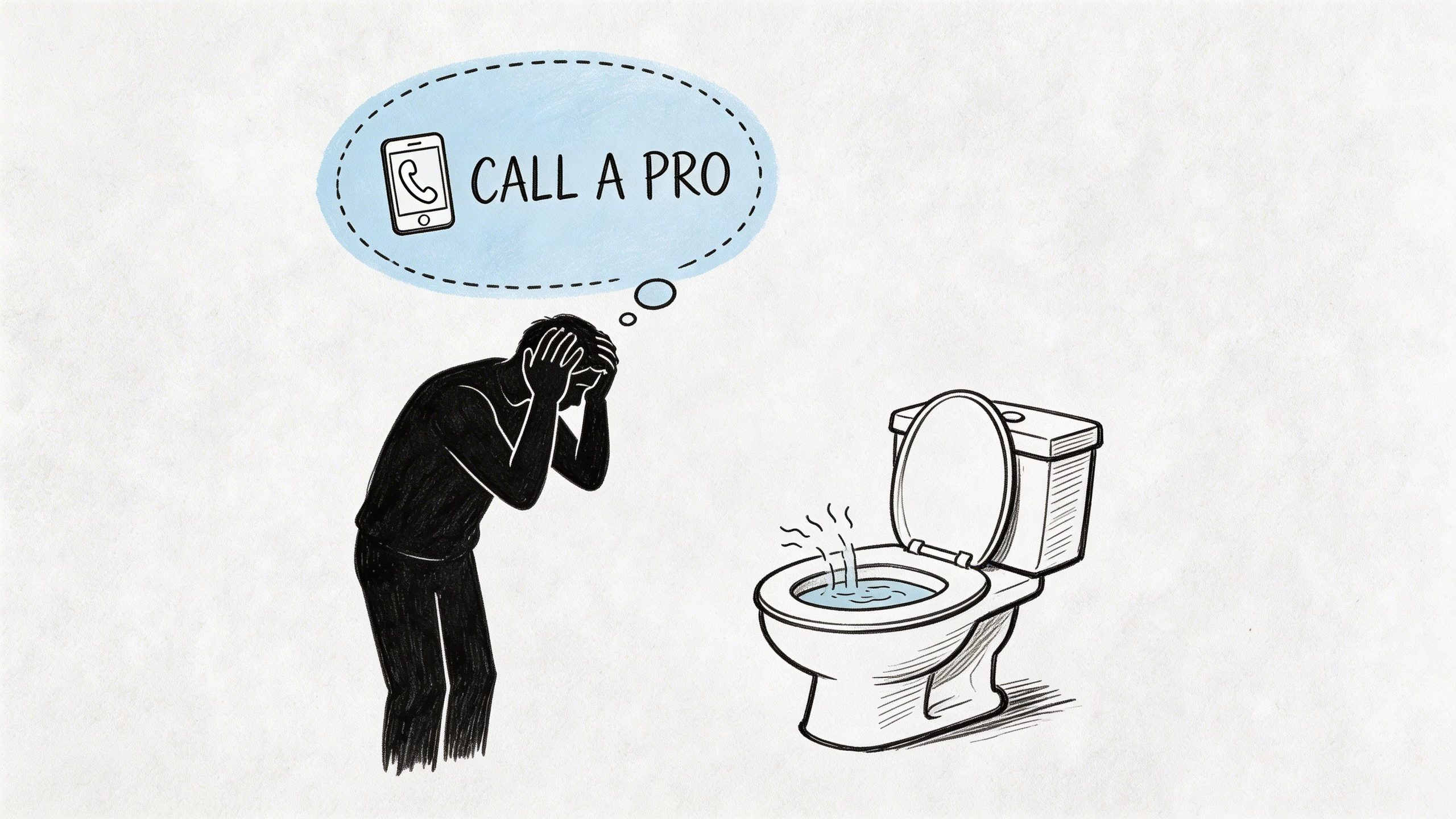
A toilet clog isn't always just a toilet clog.
If one bathroom fixture acts up once and then clears, fine. If the toilet keeps backing up, flushes weakly, gurgles, or causes water movement in other drains, you're likely dealing with something farther down the line.
Signs it's not just a simple toilet clog
Watch for clusters of symptoms, not just one problem.
- Recurring clogs mean the blockage may be deeper than the toilet trap
- Gurgling in nearby fixtures can point to drainage or venting trouble
- Water backing into a tub or shower suggests a larger line issue
- Sewage smell indoors or in the yard can mean sewer trouble
- Multiple slow drains usually point away from the toilet and toward the main line
These are the calls that move from routine drain cleaning into sewer backup, sewer repair, or even sewer replacement territory.
Why waiting costs more
North Metro Atlanta plumbers report a lot of damage that got worse after a homeowner tried to solve it with chemicals first. According to PW Group NJ's discussion of whether Liquid Plumber is safe for pipes, 40% of emergency calls in North Metro Atlanta involve problems made worse by DIY chemical misuse. The same verified data says 20-30% of DIY toilet treatments with chemicals lead to professional intervention costing $250-$500 on average, and using mechanical methods first or calling a pro can reduce costly follow-up repairs by an estimated 70%.
That matters if you're trying to avoid turning a basic clog into a bigger sewer line problem.
Homes with older plumbing need faster action
In places like Canton, Roswell, Acworth, Alpharetta, and Marietta, older homes can hide aging drain materials, previous repairs, and patched-together plumbing systems. Chemical misuse hits those systems harder.
If you own a rental, routine inspections matter too. A practical resource like an ultimate rental property maintenance checklist can help property owners catch plumbing red flags before a clogged toilet turns into a weekend emergency.
For recurring backups or a clogged toilet that won't flush after the usual safe methods, professional drain cleaning for clogs and toilet clogs is the smarter next step.
A single clogged toilet can be a fixture problem. A clogged toilet plus gurgling, odors, or backup in another drain usually means you need a real diagnosis, not another DIY attempt.
Frequently Asked Questions About Clogged Toilets
Can you use Liquid Plumber on a toilet if the clog is only toilet paper
Still no. Toilet paper clogs usually respond to a flange plunger, hot water with dish soap, or a toilet auger. A chemical cleaner adds risk without giving you a better tool for the job.
Is Drano any safer than Liquid Plumber for toilets
No. The issue isn't just the brand name. It's the fact that chemical drain cleaners and toilet design don't mix well.
What if the toilet drains slowly after the clog seems gone
That usually means the blockage isn't fully cleared or there's a deeper issue in the line. A toilet that keeps clogging, drains slowly, or bubbles when other fixtures run needs more than a quick DIY fix.
Can a clogged toilet be a sewer line problem
Yes. If your shower backs up when you flush, if more than one drain is slow, or if you smell sewage around the house or yard, the main sewer line may be the underlying problem.
Should I use a regular sink plunger on a toilet
You can try, but it's the wrong tool. A flange plunger is made for toilets and seals much better.
What's the safest first step for a toilet that won't flush
Stop flushing. Check the water level. Use a flange plunger if no chemicals are in the bowl. If the clog won't move or the bathroom shows bigger warning signs, call a plumber before it spreads into a sewer backup or water damage problem.
When should I stop trying to fix it myself
Stop when the clog doesn't respond to proper plunging, when you've already used chemicals, when the toilet overflows, or when you notice other plumbing symptoms. That's the point where DIY can start causing damage instead of saving money.
If your toilet won't flush, your drains are backing up, or you're dealing with a possible sewer issue in Canton, Roswell, Woodstock, Acworth, Marietta, Alpharetta, Cumming, or Johns Creek, contact JMJ Plumbing. JMJ Plumbing provides 24/7 service across North Metro Atlanta for clogged toilets, drain cleaning, sewer repair, leak repair, burst pipe repair, water line replacement, and emergency plumbing problems that can't wait.