Why Does My Water Taste Metallic? Find Solutions
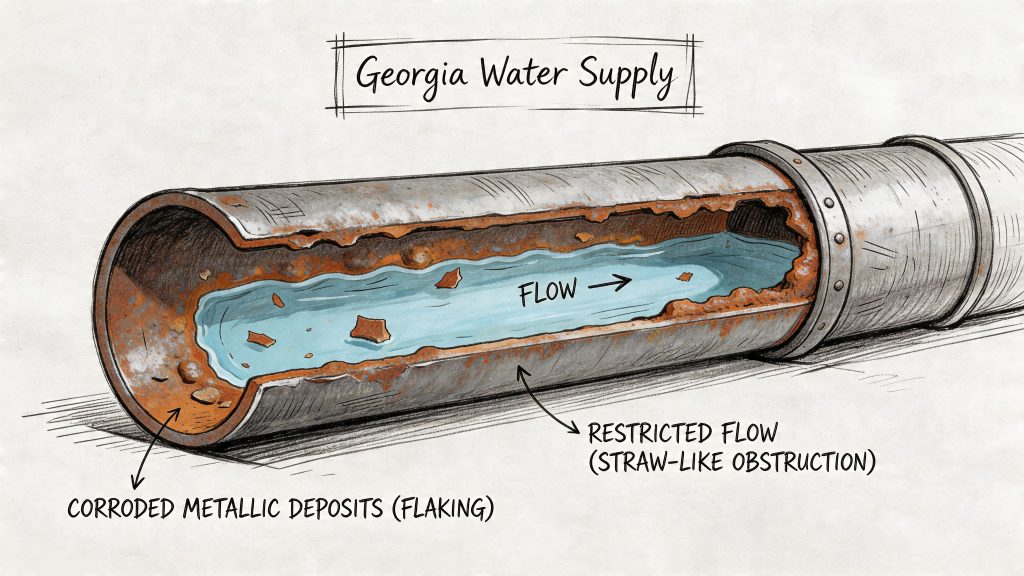
You fill a glass from the kitchen tap in Acworth or Roswell, take a sip, and get that sharp coppery or rusty taste right away. It’s unsettling because water is supposed to taste clean, not like a handful of coins. Most homeowners don’t just wonder why it tastes bad. They wonder if something is wrong with the house.
That reaction is reasonable. A metallic taste usually means your water is picking up iron, copper, manganese, or other metals somewhere between the source and the faucet. In many homes across North Metro Atlanta, the cause is manageable once you identify whether it’s coming from the water supply, the plumbing inside the house, or a specific fixture or appliance.
This is one of the more common complaints plumbers hear because it sits at the intersection of water quality and plumbing condition. Sometimes the fix is simple, like flushing stagnant water or addressing a water heater issue. Sometimes it points to a larger problem, such as pipe corrosion, a failing water line, or the need for whole-home treatment.
That Unmistakable Metallic Taste in Your Water
A metallic taste has a distinct profile. Some homeowners describe it as rusty, others say it tastes bitter, sharp, or like old pennies. That difference matters because the exact flavor can hint at the metal involved.
In practice, most metallic-tasting water problems trace back to one of two places. Either the water already contains metals before it enters the home, or the water is pulling metals out of aging plumbing as it moves through your system. In older neighborhoods around Marietta, Roswell, and parts of Cobb and Cherokee County, both can happen at the same time.
What usually worries homeowners first
The first question is almost always safety. The second is whether they’re looking at a repair or a bigger replacement job.
For many homes, the issue is more aesthetic than dangerous, but you should never ignore a new taste change. Metallic taste can be the early sign of corrosion, sediment buildup, or a water quality shift that starts small and gets more expensive later. A home that begins with bad-tasting water can later show low water pressure, fixture staining, water heater problems, or even the need for main water line repair or water line replacement.
A taste problem is often the first symptom homeowners notice. The pipe problem usually starts earlier.
What a good troubleshooting path looks like
The right approach is simple and methodical:
- Identify where the taste appears: One faucet, every tap, only hot water, or only after the water sits.
- Look for clues around the house: Stains, discoloration, pressure changes, or sediment.
- Separate water quality from plumbing failure: That tells you whether you need treatment, repair, or replacement.
- Act before corrosion spreads: Waiting rarely improves pipe condition on its own.
If you’ve searched why does my water taste metallic, the good news is that this problem is usually diagnosable without guesswork. What matters is knowing which cause fits your home.
Common Culprits Behind Metallic-Tasting Water in Georgia
Most metallic water complaints come from a short list of causes. The trick is not naming metals in general. The trick is pinpointing where they entered the water.
Iron in well water and older piping
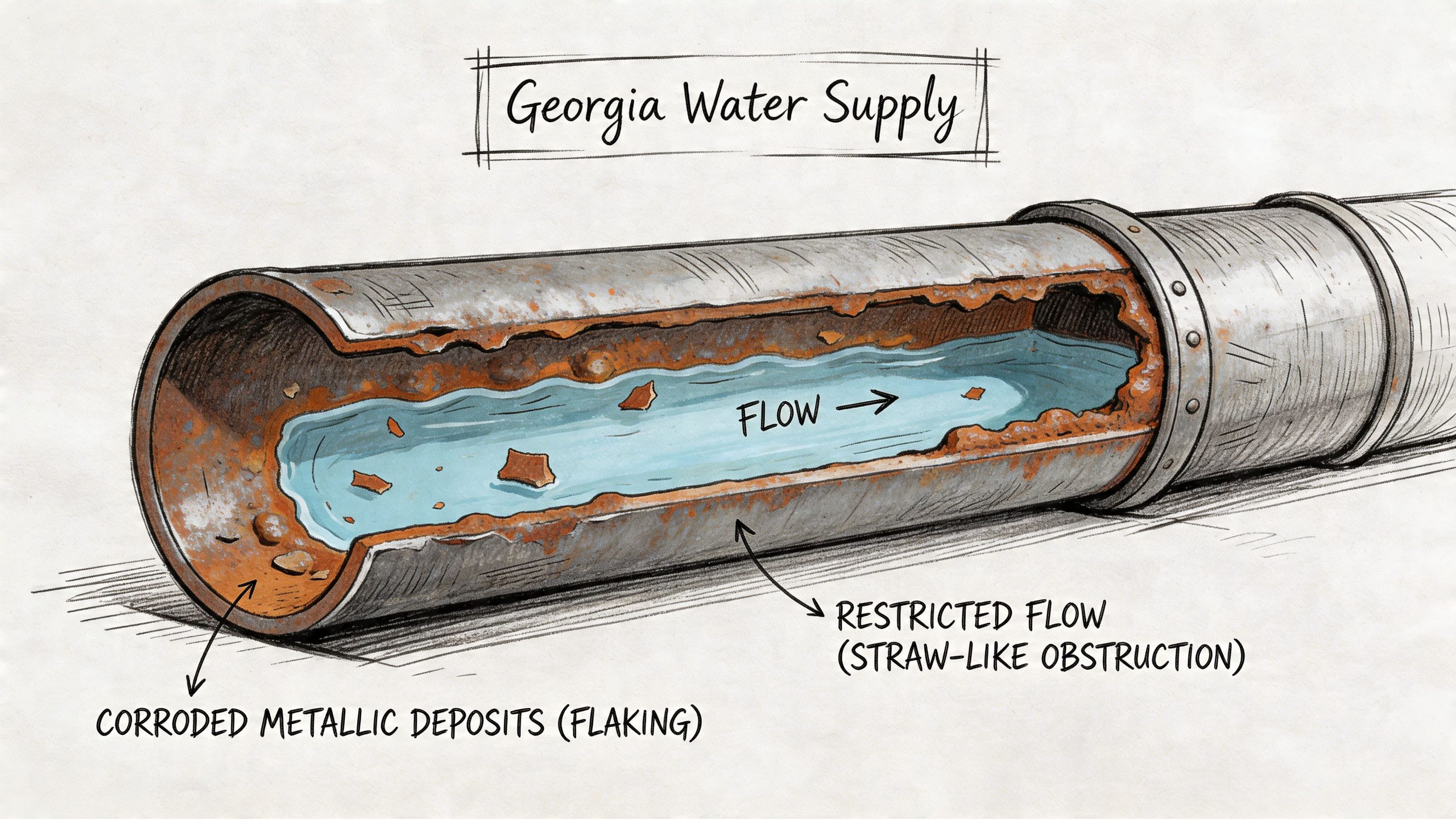
Iron is the most common metallic taste culprit, especially for private well owners. High concentrations of iron in drinking water are the most common cause of a metallic taste, particularly in homes relying on private wells. According to the U.S. Geological Survey, about 15% of private wells exceed the EPA's secondary standard for iron, impacting roughly 13 million Americans, as noted in this discussion of metallic taste causes in tap water.
That fits what many Georgia homeowners deal with. In homes on wells around Canton, Cumming, and more rural edges of Cherokee and Forsyth County, naturally occurring iron often enters the house before the plumbing system even gets involved. Once that water moves through fixtures and appliances, you may notice reddish-brown stains, rusty taste, and buildup inside valves and aerators.
Older galvanized piping can make the problem worse. Think of a galvanized pipe as a straw with a rough, rusting interior. Water moving through it doesn’t stay neutral. It picks up material from the pipe wall.
Copper leaching from acidic water
Copper creates a different taste. It’s usually more bitter and astringent than rusty.
Low pH water is a common reason copper starts leaching from plumbing. If the water is acidic, it slowly dissolves copper from pipe walls, especially after water sits overnight. That’s why some homeowners notice the morning glass tastes the worst, then improves after the tap runs.
Homes in Roswell, Marietta, Alpharetta, and older pockets of Woodstock often have copper plumbing or mixed-material plumbing systems. If the water chemistry is aggressive, copper can show up as both taste and visible staining.
A good plain-language primer on how pH balanced water affects taste can help homeowners understand why “clean-looking water” can still taste wrong. Balance matters because pH doesn’t just affect flavor. It affects how your plumbing ages.
Manganese and mixed mineral issues
Manganese often rides along with iron, especially in groundwater. It can add an earthy aftertaste and deepen staining issues. When homeowners say the water tastes metallic but also “off” in a muddy or mineral way, manganese is worth checking.
This is one reason a quick visual inspection isn’t enough. Iron, manganese, and copper can overlap in the same home, especially if the property has older plumbing and a private well.
Water heater contribution
Sometimes the cold water tastes fine, but the hot water tastes metallic. That points attention away from the main water line and toward the water heater.
Inside a tank-type heater, the anode rod is designed to corrode first so the tank doesn’t. That’s normal. But as components age, sediment collects, metal reactions change, and the taste from hot-side fixtures can get noticeably worse. Homeowners often assume they need whole-home repiping when the first step is a water heater inspection, repair, or replacement.
Municipal disturbances and neighborhood changes
City water can develop a temporary metallic taste too. Water main work, hydrant flushing, supply changes, or sediment disturbance can alter taste for a period of time. If several neighbors notice the same issue at the same time, the cause may be outside the house.
If the whole street notices the same taste change overnight, start by asking what changed in the neighborhood before assuming every pipe in your home failed.
That said, municipal issues can still expose weakness inside the home. A temporary shift in water chemistry sometimes reveals pipe corrosion that had been building gradually for years.
Simple At-Home Checks Before You Call a Plumber
You don’t need a full tool bag to narrow this down. A few simple checks can tell you whether the problem is likely tied to your water heater, your house plumbing, or the incoming supply.
Start with hot water versus cold water
Pour a glass from the cold kitchen tap. Then test hot water once it runs warm. If only the hot water has the metallic taste, the water heater moves to the top of the suspect list.
That doesn’t always mean immediate replacement, but it does mean the issue may be isolated to the heater tank or hot-side plumbing. If you’ve also noticed inconsistent hot water, rumbling sounds, or rusty water from hot taps, inspection should move up your list.
Check whether the whole house is affected
Walk the house and compare:
- Kitchen faucet: Often the first place homeowners notice taste.
- Bathroom sink: Helps confirm whether it’s a single-fixture issue.
- Tub spout: Useful because there’s usually no aerator to trap debris.
- Outside spigot: Can help compare incoming water to indoor fixture water.
If one faucet tastes metallic and the others don’t, focus on that fixture, its supply lines, or the branch serving that area. If every faucet has the same taste, you’re likely dealing with a system-wide issue.
Ask the neighbors
This step is underrated. If nearby homes in Acworth, Roswell, or Johns Creek are noticing the same taste, the problem may be tied to municipal supply conditions or local line work.
If your neighbors’ water tastes normal and yours doesn’t, the issue is more likely inside your home. That can save time when deciding whether to call the city or a plumber first.
Look for visible clues
The house often tells you more than the water glass does.
- Blue-green stains: Often suggest copper corrosion.
- Reddish-brown stains: More consistent with iron.
- Black or dark buildup: Can point to mineral and metal accumulation.
- Reduced flow at one faucet: May mean debris is collecting in the aerator.
Run the tap and taste again
Let the affected faucet run for a few minutes, then test the taste again. If it improves after flushing, the water may be picking up metal while it sits in the pipes.
That pattern is common in homes with aging copper or galvanized lines. It’s also one of the clearest signs that the plumbing itself needs closer evaluation.
Water that tastes worst after sitting overnight usually points to contact time inside the home, not just the source water.
When a Metallic Taste Signals a Plumbing Emergency
Most metallic taste issues are not middle-of-the-night emergencies by themselves. Some are. The key is watching for metallic taste paired with other warning signs that suggest active pipe failure or a larger system problem.
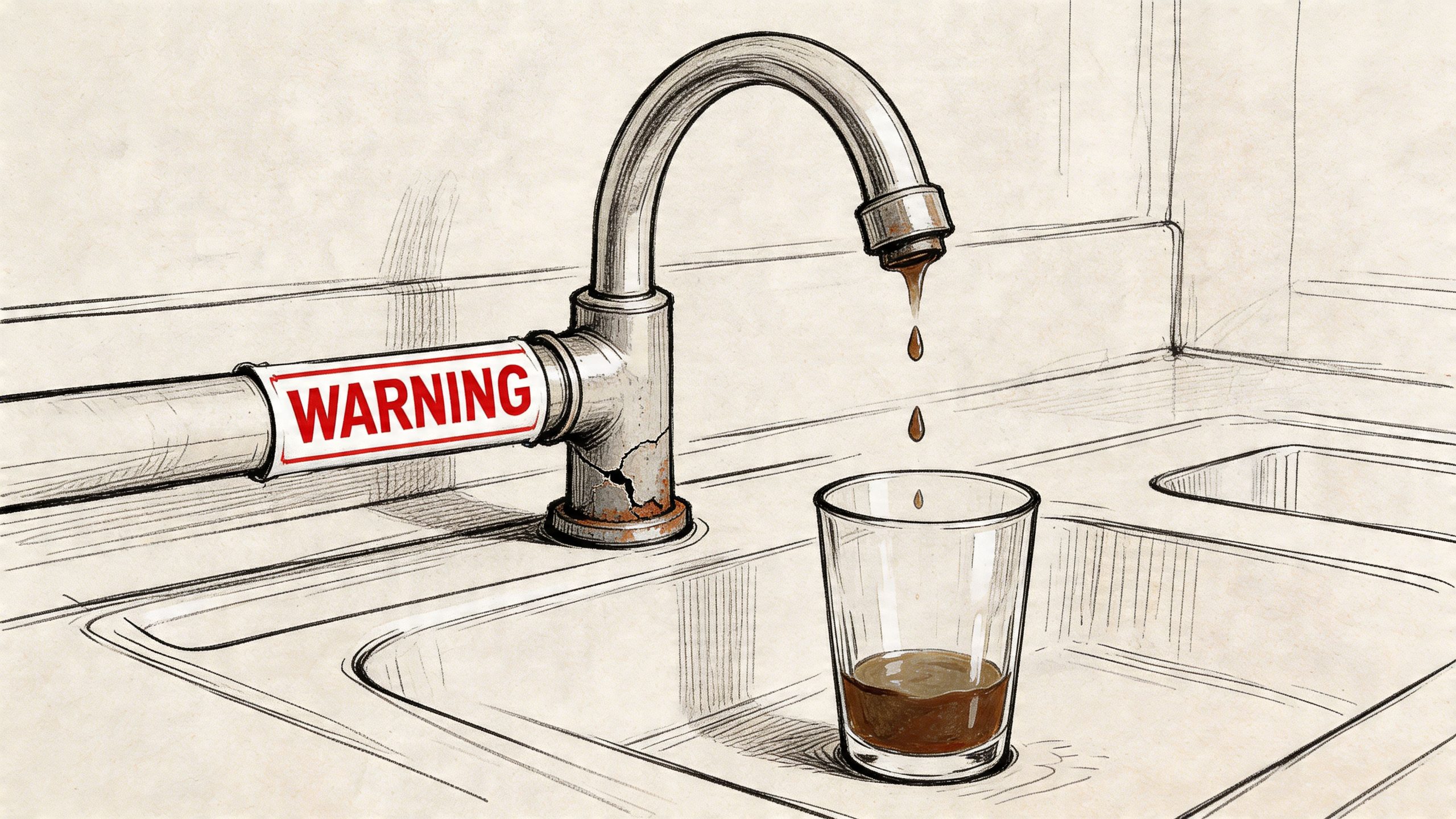
Call fast if taste changes come with pressure loss or leaks
If the water suddenly tastes metallic and you also notice low water pressure, water in the yard, or the sound of running water when nothing is on, don’t treat that as a cosmetic issue. Those are classic signs of a possible main water line leak, burst pipe, or underground line failure.
For homeowners searching emergency plumber Acworth, 24 hour plumber Roswell, or main water line repair near me, this is the point where speed matters. Water line failures can damage foundations, wash out soil, and turn a manageable repair into a major project.
Watch for signs of severe pipe corrosion
Copper leaching from aging pipes due to acidic water is a major cause of a bitter metallic taste. In the U.S., copper contamination has triggered 27 illness outbreaks since 1971, causing gastrointestinal issues, and the EPA sets an action level of 1.3 mg/L to help prevent those effects, according to this overview of metallic taste and copper contamination in tap water.
You don’t need a lab report to know when the house is throwing red flags. If the taste change comes with blue-green staining, recurring pinhole leaks, or sudden fixture failures, the corrosion may be advanced enough that spot repair won’t hold for long.
Don’t ignore sewer-side symptoms
A metallic taste usually belongs on the supply side of the plumbing system. But if it shows up along with a sewage smell, slow drains, multiple fixtures backing up, or a clogged toilet that won’t flush, you may have more than one plumbing issue happening at once.
That combination deserves urgent attention because sewer and drain problems spread fast. A homeowner who waits through warning signs can move from “slow drain” to full sewer backup with contaminated water inside the home.
Situations that should move to same-day service
Use same-day or emergency service if you notice any of these:
- Metallic taste plus water in yard: Possible exterior leak or main line break.
- Metallic taste plus no hot water: Water heater failure may be developing.
- Metallic taste plus brown or discolored water from multiple taps: Supply disturbance or internal corrosion needs immediate review.
- Metallic taste plus repeated leak repair history: The system may be past patching.
If you’re trying to decide between waiting and calling a 24 hour plumber in Woodstock, Alpharetta, or Marietta, use the other symptoms to guide the call. Taste alone can wait a day. Taste with leaks, pressure loss, or backup symptoms should not.
A Plumber's Diagnostic Process for Your Water Lines
A proper diagnosis isn’t guesswork and it isn’t based on one sip at the kitchen sink. A plumber should work through the system in a way that separates source-water issues from plumbing failures.
What gets checked first
The first step is pattern recognition. A plumber asks where the taste appears, when it started, whether it’s worse in the morning, whether hot and cold behave differently, and whether you’ve seen stains, leaks, or pressure changes.
That conversation matters because metallic taste from a single upstairs bath points in a different direction than metallic taste from every fixture on the property. It also helps identify whether the next step should focus on the water heater, interior supply lines, or the incoming service line.
On-site testing and physical inspection
Water quality testing helps confirm what the house is already suggesting. pH matters because acidic water can accelerate corrosion. Metal-specific testing matters because iron, copper, manganese, and zinc don’t all point to the same remedy.
High iron concentrations in groundwater or from corroding pipes can cause a rusty, blood-like taste at levels as low as 0.3 mg/L, and iron can feed iron bacteria that create red slime and reduce flow in untreated wells by 50% in as little as six months, as explained in this article on iron-related metallic taste and well flow problems.
That’s why a plumber shouldn’t stop at “your water tastes bad.” The key question is whether the metal is merely affecting taste or already affecting pipe performance.
Diagnosing Metallic Taste in Water
| Symptom | Likely Cause | Recommended Solution |
|---|---|---|
| Metallic taste only in hot water | Water heater issue, anode rod breakdown, sediment in tank | Inspect water heater and determine whether repair or replacement makes sense |
| Metallic taste at every fixture | Source-water issue or whole-home pipe corrosion | Test water and inspect main supply piping |
| Rusty taste with reddish-brown stains | Iron in water or galvanized pipe corrosion | Confirm iron source and choose filtration or piping correction |
| Bitter metallic taste with blue-green stains | Copper leaching from acidic water | Test pH and inspect copper plumbing for corrosion |
| Taste strongest after water sits overnight | Metal leaching from interior plumbing | Flush lines, inspect affected piping, evaluate repair versus repipe |
Looking beyond the obvious
A visual inspection of accessible pipes often reveals a lot. Corrosion at shutoff valves, discoloration on supply lines, mineral crust around joints, or repeated patch repairs all help build the picture.
When the cause isn’t visible, plumbers may use leak detection tools or camera-based inspection methods to assess condition without opening walls or digging blindly. If the system shows widespread age-related deterioration, a targeted repair can become an expensive delay rather than a real fix.
That’s where the decision often shifts from “repair this section” to “replace the aging material before the next failure.” For homeowners considering a repipe, this guide to residential repiping solutions shows what that type of long-term correction involves.
Good diagnostics save money because they prevent the wrong repair.
Long-Term Solutions Pipe Replacement and Whole-Home Filtration
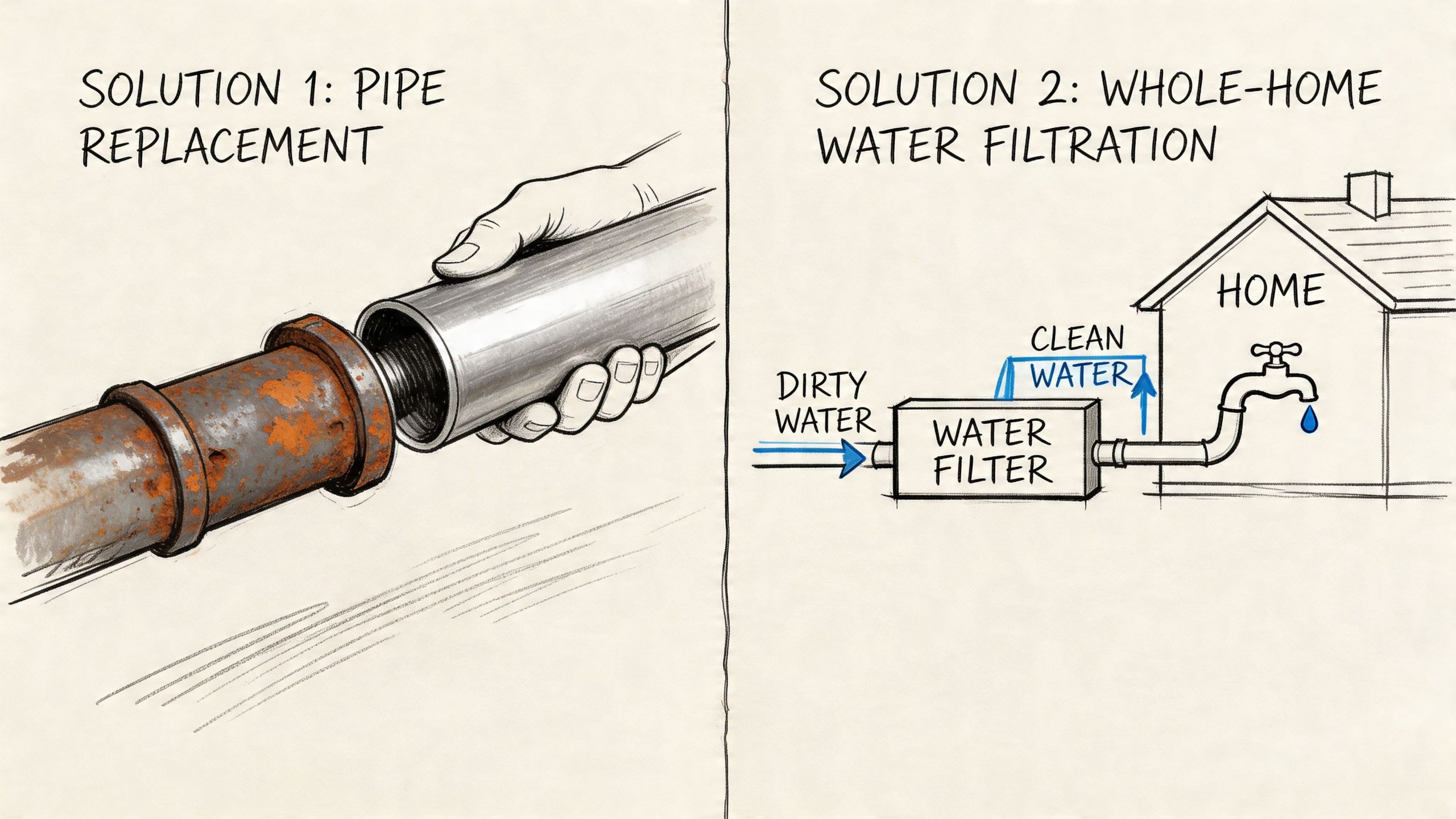
Once the cause is clear, the best solution depends on whether the metal is coming from the pipes, the incoming water, or both. Homeowners often want a single answer, but there are really two categories of long-term fixes. One removes the source of corrosion. The other treats the water before it spreads the problem through the house.
When pipe repair is enough
Pipe repair makes sense when the problem is isolated. That usually means one damaged branch line, one leaking section, one failing fitting, or one fixture connection with visible corrosion.
This is the right move when the rest of the system is still in good shape. A local fix is less invasive and can restore normal water quality if the problem hasn’t spread.
Repair is usually the wrong move when the home has repeated leaks, mixed pipe materials, or taste issues from multiple fixtures over time. In those homes, small repairs can turn into a cycle of callbacks.
When replacement is the better investment
A full or partial water line replacement is often the strongest answer for older homes with widespread corrosion. If galvanized pipe interiors are breaking down or copper lines are failing in multiple places, replacement removes the material causing the metallic taste instead of filtering around it.
Modern materials such as PEX or new copper give a cleaner baseline. They also reduce the chance that one repair today turns into another leak next month. Homeowners thinking about resale should also understand that aging supply lines can become inspection issues during a sale.
A replacement decision usually makes sense when you’re seeing several of these at once:
- Recurring leak repair calls: Especially if leaks appear in different parts of the house.
- Low water pressure throughout the home: Often tied to internal narrowing from buildup or corrosion.
- Visible age on supply piping: Corroded shutoffs, flaking galvanized pipe, or repeated patchwork.
- Taste plus performance issues: Metallic water, stained fixtures, and poor flow together.
When whole-home filtration solves the actual problem
If the water source itself carries iron, manganese, or other metals, pipe replacement alone won’t fully solve the taste issue. You can install beautiful new piping and still send problem water through it.
That’s where a whole-home filtration system earns its place. A treatment system installed where the main line enters the house treats the water before it reaches faucets, fixtures, appliances, and the water heater. For homes on well water, this can make a major difference in both taste and plumbing protection.
For homeowners comparing treatment options, broad overviews of Plumbing Services can be useful for understanding how water treatment fits into the larger plumbing system, but the key is matching the filter media and setup to the metals present in your water.
The filtration versus replacement trade-off
This is the practical version of the decision:
- Choose replacement when your pipes are the source of the contamination.
- Choose filtration when the incoming water is the source.
- Choose both when source water is harsh and the plumbing is already deteriorating.
A lot of frustration comes from solving only half the problem. Filtering aggressive well water helps, but it won’t reverse a house full of failing lines. Repiping helps, but it won’t stop naturally occurring iron from entering the home if the source is a private well.
For homeowners interested in whole-home treatment, this page on HALO water filtration systems is a useful reference point for what that setup looks like at the house level.
The best fix is the one that removes the cause, not the one that only masks the symptom.
What doesn’t work well
Short-term workarounds have limits.
Pitcher filters may improve drinking water at one faucet, but they won’t protect the water heater, shower valves, washing machine, or ice maker. Flushing the lines can temporarily reduce taste if the water has been sitting, but it doesn’t stop corrosion. Replacing a faucet won’t solve a metallic taste if the branch line feeding it is the underlying issue.
That’s why a lasting solution starts with diagnosis, then moves to the right combination of repair, replacement, and treatment.
Your Next Step for Clean Water in Woodstock and Acworth
If your tap water tastes metallic, don’t assume you have to live with it. You also shouldn’t assume every bad taste means a full repipe. In North Metro Atlanta, the right answer depends on the age of the home, the pipe materials, whether you’re on city or well water, and whether other symptoms are showing up.
A homeowner in Woodstock with metallic taste only on the hot side may be looking at a water heater issue. A homeowner in Acworth with bad taste, low pressure, and water in the yard may need fast main line diagnostics. A homeowner in Roswell with recurring leaks and blue-green staining may be getting clear signs that the piping itself is the problem.
The common mistake is waiting until taste turns into damage. Corrosion doesn’t stay politely limited to flavor. It can lead to fixture wear, restricted flow, appliance stress, repeated leak repair, and eventually emergency calls for burst pipe repair or water line replacement.
What to do today
Take these steps in order:
- Check whether the problem is hot only or hot and cold
- Compare multiple fixtures
- Look for stains, pressure changes, or leaks
- Schedule a professional diagnosis if the issue persists or worsens
If you’re local, it helps to work with a plumber who knows the housing stock and plumbing patterns in the area. Homes in this market vary a lot, from older pipe materials in established neighborhoods to well-water issues farther out in Cherokee and Forsyth County. That local context makes diagnosis faster and recommendations more accurate.
Homeowners in Woodstock can also review the local service area details here for Woodstock plumbing support.
If your water tastes metallic, smells off, or comes with low pressure, leaks, or staining, contact JMJ Plumbing for a professional diagnosis. Their licensed Master Plumbers serve Acworth, Roswell, Woodstock, Alpharetta, Canton, Marietta, Cumming, Johns Creek, and surrounding North Metro Atlanta communities with 24/7 plumbing service, leak detection, water line repair, repiping, water heater work, drain cleaning, sewer repair, and whole-home filtration solutions.