Chemical to Unclog Toilet: A Plumber’s Guide (2026)
A clogged toilet has a way of turning a normal day into a small emergency. The bowl fills, the water hesitates, and your first thought is usually the same one I hear all over North Metro Atlanta. Pour something strong in it and hope it disappears.
That instinct causes a lot of expensive damage.
When homeowners search for a chemical to unclog toilet problems, they usually picture the same kind of drain cleaner used for sinks or tubs. Toilets are different. The shape of the trap, the amount of standing water in the bowl, and the kind of clogs toilets get all change the answer. In older homes around Marietta, Roswell, and Canton, the wrong product can be even harder on aging lines. In newer homes in Alpharetta, Woodstock, and Cumming, it can still damage fixtures and leave a tougher job behind for the next person who touches it.
A toilet clog can be simple. It can also be the first visible sign of a bigger drain cleaning or sewer repair issue. The smart move is knowing which one you’re dealing with before you make it worse.
That Sinking Feeling a Clogged Toilet That Won't Flush
It usually starts with a second flush that should never happen. The bowl rises, the water sits high, and now the bathroom nobody can spare is out of commission. In a one-bath home, that gets stressful fast. In a house with kids or company on the way, people panic and reach for the strongest bottle they can find.
That reaction creates a lot of the hard jobs plumbers get called in to fix.
Homeowners usually assume the clog needs something stronger. In practice, toilet stoppages are often simple blockages in or near the fixture, or a foreign object lodged where liquid cleaners will not solve anything. Wipes, too much paper, hygiene products, and kids' toys do not dissolve on schedule just because a label says "drain cleaner."
What homeowners usually get wrong
The first mistake is treating a toilet like every other drain in the house. It isn't one. A toilet clog has its own pattern, and the safest fix is often mechanical, not chemical.
The second mistake is chasing speed instead of control. A harsh cleaner can leave caustic water sitting in the bowl while the clog stays put. Then the next step, whether that's plunging, pulling the toilet, or running an auger, becomes messier and more dangerous for whoever has to handle it.
Toilets punish guesswork. One bad decision can leave you with a blocked fixture, damaged internal parts, and chemical water nobody wants to touch.
I've seen this plenty in North Atlanta. A homeowner tries a cleaner, waits, flushes again, and turns a minor stoppage into an overflow on the floor. By the time I get there, the clog is still there, but now the wax seal, flooring, or ceiling below may also be part of the problem.
Why this matters more in North Metro Atlanta homes
North Metro Atlanta homes are a mixed bag. One street has newer PVC lines. The next has older cast iron, partial remodels, and original plumbing that has already seen decades of use. In those older Marietta, Woodstock, and Alpharetta homes, the wrong approach can do more than fail. It can expose weak spots, stir up a deeper blockage, or leave a hidden sewer line problem untreated.
A toilet that will not flush is sometimes just a toilet clog. It is also one of the first signs of a larger drain or sewer issue, especially if other fixtures are slow, gurgling, or backing up.
The goal is not just to make the water disappear. The goal is to clear the stoppage without cracking the bowl, damaging the trapway, or making the piping behind the toilet harder to repair. That is why reaching for a chemical is often the wrong first move, and why knowing when to stop saves money.
Why Most Drain Cleaners Are Wrong for Your Toilet
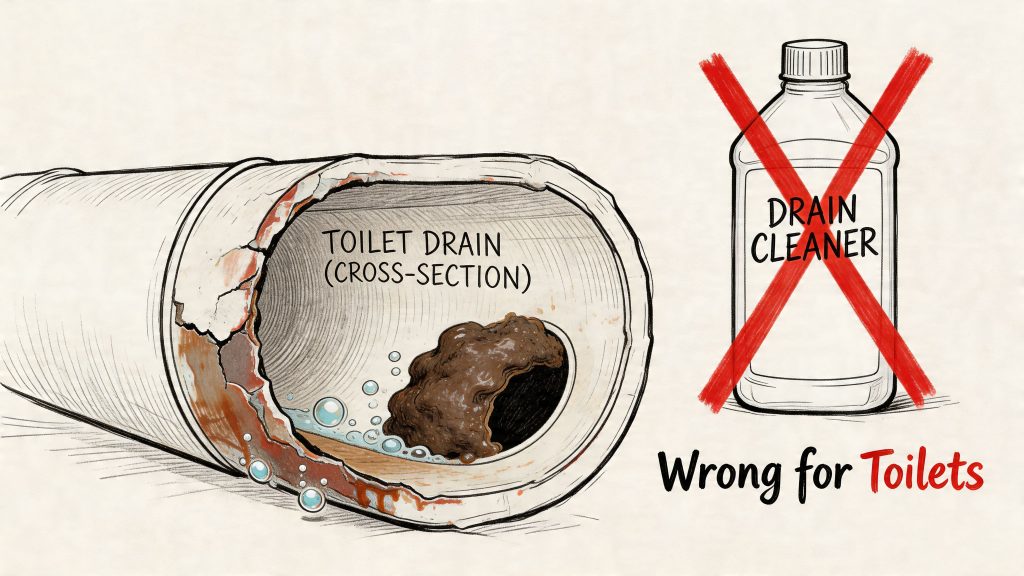
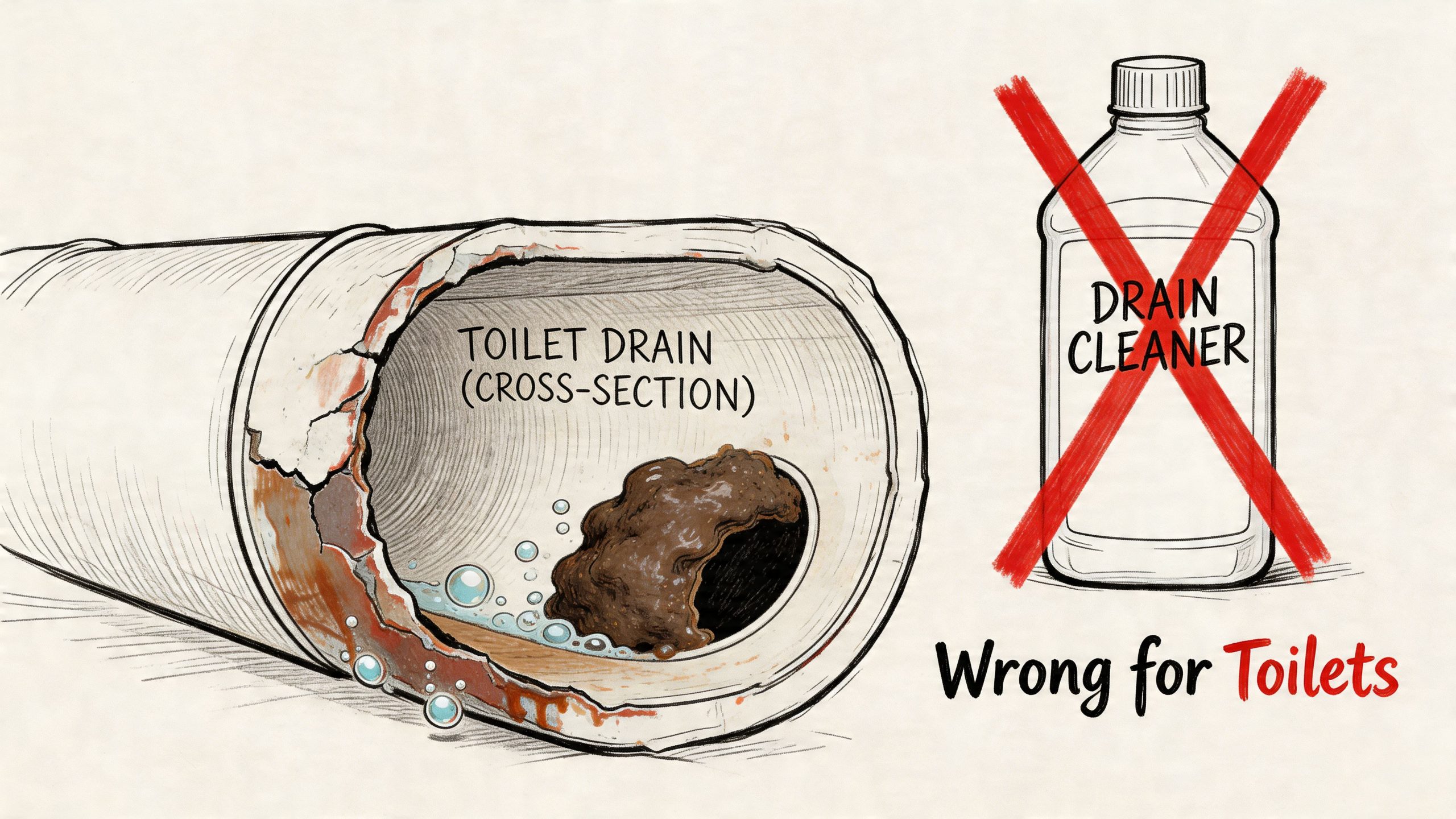
A toilet clog is a different animal than a slow sink or shower drain. The bowl and built in trap hold water by design, so any chemical you pour in gets watered down before it has a real shot at the stoppage.
The toilet trap changes everything
In a sink, a cleaner can travel down a narrower line with less standing water in the way. In a toilet, it usually lands in the bowl, mixes with several inches of water, then stalls at the trap or sits above the clog. That is why products marketed for drain lines often disappoint in toilets.
ACE Hardware gives the same warning plumbers do. Chemical drain cleaners are a poor fit for toilet clogs because they often do not reach the blockage effectively and can damage the bowl or internal parts. Even brands homeowners recognize have made similar warnings for toilet use in consumer guidance from ACE Hardware.
The failure point is usually simple. Toilet clogs are often caused by packed paper, wipes, hygiene products, toys, or an obstruction farther down the line. A chemical has to make direct contact with the blockage to do much good. If it cannot reach it, it just sits there.
Harsh cleaners create more risk than benefit
Strong drain cleaners are built for grease, hair, and soap buildup in other fixtures. Toilets usually clog for different reasons, so the chemistry and the fixture do not match.
In older North Metro Atlanta homes, that mismatch matters more. I see older cast iron, patched drain lines, and toilets that have already been replaced once or twice while the branch line behind them has not. A harsh product can sit in the porcelain trapway, attack rubber components, and leave caustic water in the bowl for the next person who tries to plunge or auger it. The clog is still there, but now the job is more hazardous.
Heat is another problem. Some cleaners react as they work, and that extra heat does not help a toilet bowl, its seals, or aging piping. It also does nothing for a lodged object.
What plumbers run into after the chemical attempt
The worst calls are not the original clogs. They are the clogs after somebody has poured in a cleaner, waited, and flushed again.
Common results include:
- Chemical water still sitting in the bowl
- A softened paper clog that smears and packs tighter
- Splash risk for anyone using a plunger or closet auger
- Damage concerns for older piping and toilet components
- A deeper blockage that was never within reach of the product
That is why I tell homeowners to treat toilet chemicals as a last resort, not a first move. A plunger, a proper closet auger, or a targeted professional toilet clog and drain cleaning service usually makes more sense than pouring something harsh into standing water.
If you do not have a plunger on hand, start with safer mechanical or low risk options like the methods in this guide on how to unclog a toilet without a plunger. Stop if the bowl level is rising, if other fixtures are backing up, or if you suspect something solid is lodged in the trap. At that point, chemicals are usually the wrong tool, and calling a plumber is the cheaper decision compared with replacing flooring, repairing a ceiling below, or dealing with a damaged line.
Safer Alternatives Plumbers Recommend First
Start with methods that clear or loosen the clog without cooking your pipes or leaving caustic water in the bowl. In North Atlanta, that matters even more in older homes around Marietta, Woodstock, and Alpharetta, where aging drains and toilet seals do not handle harsh products well.
These options work best on waste, toilet paper, and soft organic buildup. If a child flushed a toy, someone forced wipes down the line, or the bowl is filling high with every flush, skip the bowl remedies and move to a tool or a plumber.
Enzyme cleaners for slow organic buildup
If a homeowner insists on using a product, enzyme cleaners are the least risky place to start. They are slower than any chemical drain opener, but they are far easier on older piping and toilet parts.
Consumer Reports notes that enzyme products need a long dwell time, often about a day, to break down organic material effectively in toilet clogs, according to Consumer Reports' guidance on unclogging toilets. That makes them a maintenance product more than an emergency fix.
Use enzymes for:
- A toilet that drains slowly but still goes down
- Recurring soft buildup
- Homes with older drain lines
- Preventive care between service visits
Do not expect enzymes to solve a hard stoppage in the trap. They will not dissolve plastic, wipes, or a lodged object.
Baking soda and vinegar for light buildup
This method gets overstated online. It can help with mild paper buildup or soft waste near the trap, but it is not a plumber's first choice for a real blockage. The main benefit is safety. It is less likely to damage components than caustic cleaners.
Use it carefully:
- Remove some bowl water if the level is high.
- Add baking soda first.
- Pour vinegar in slowly.
- Let it sit long enough to work.
- Add hot, not boiling, water only if the bowl level is safely low.
The mistake I see is rushing the process and flushing too soon. The fizz looks active, but that reaction does not mean the clog is gone. If the toilet was already close to overflowing, this method can waste time you do not have.
Hot water and dish soap for paper-heavy clogs
For too much toilet paper, dish soap and hot water can still help. Soap adds lubrication. Hot water helps soften the mass so it can break apart and pass through the trap.
Keep the water hot, not boiling. Boiling water can crack porcelain, especially if the toilet bowl is cold. Pour slowly, then wait before testing with a cautious flush.
Use this method only when the bowl level is stable. If water is already creeping toward the rim, do not keep adding liquid.
If you want a few more low-risk DIY ideas before buying tools, this guide on how to unclog a toilet without a plunger is a useful companion read.
Comparing safe first-step options
| Method | Best For | Time Required | Pipe and Fixture Risk |
|---|---|---|---|
| Enzyme cleaner | Slow drains, soft organic buildup, maintenance | About 24 hours | Low risk, but too slow for urgent backups |
| Baking soda and vinegar | Minor paper or soft waste buildup | Short soak time, sometimes longer | Low risk if no other cleaner is present |
| Hot water and dish soap | Excess toilet paper and soft blockages | Usually a waiting period before flushing | Low risk if water is hot, not boiling |
Recurring stoppages change the equation. If the same toilet keeps clogging, or another drain in the house is acting up too, the problem may be farther down the line. At that point, repeated bowl treatments usually cost more time than they save. A targeted drain cleaning for clogs and toilet clogs gets to the actual blockage instead of guessing from the bowl.
A Pro's Safety Checklist for Handling Any Cleaner
A bathroom is a tight space. That's part of what makes toilet cleaners more dangerous than people expect. You’re working over a bowl, usually kneeling close, often in poor ventilation, and sometimes dealing with splashback.
Safety statistics show over 7,000 annual emergency room visits in the US are linked to caustic drain cleaners, and these products can create reactions reaching 250 to 300°F, according to drain cleaner injury and heat risk data. That kind of heat can melt plastic traps and release toxic fumes.
Non-negotiable rules before you touch any product
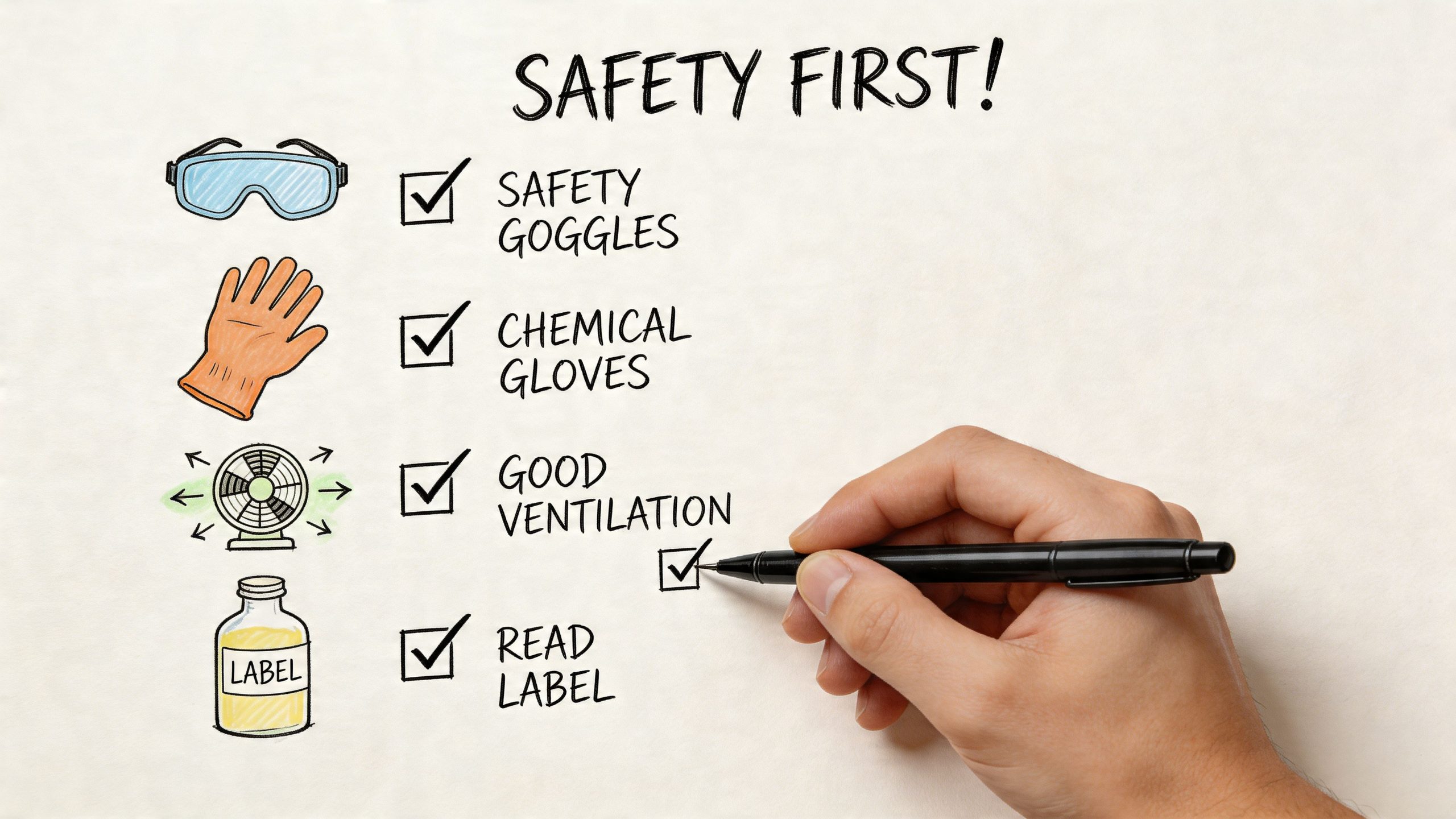
Use this checklist every time:
- Wear chemical-resistant gloves. Basic thin gloves aren't enough if a product splashes.
- Protect your eyes. A toilet bowl sits low, and splashback happens fast.
- Ventilate the bathroom. Open windows and run the fan before opening the bottle.
- Read the label first. Don't assume sink, shower, and toilet instructions are the same.
- Keep children and pets out. Bathrooms are small, and accidental exposure happens quickly.
The mixing mistake that causes injuries
The most dangerous DIY pattern I see is sequence stacking. Someone tries soap first, then vinegar, then gets frustrated and reaches for a commercial cleaner. Or they use a chemical cleaner and then decide to "boost" it with another method.
Never mix baking soda and vinegar with chemical drain cleaners. Doing so can create dangerous gases that produce heat and pressure. In an enclosed container like a toilet bowl, the reaction can cause caustic chemicals to splatter out of the bowl or even result in a small explosion.
That warning comes from Roto-Rooter's eco-friendly toilet unclogging article, and it deserves more attention than it gets.
When the safest move is to stop
Stop immediately if:
- You smell harsh fumes
- The bowl gets hot
- You can't remember what was already poured in
- The water level rises after treatment
- Anyone gets cleaner on skin or in eyes
At that point, the issue is no longer just a clog. It’s a hazard.
Troubleshooting Clogs That Won't Budge
A toilet that stays full after a careful plunge usually has one of two problems. The clog is lodged in the trap where pressure alone cannot move it, or the stoppage is farther down the line and the toilet is just the first place it shows up. Either way, pouring in more chemical cleaner usually wastes time and can leave the next person handling the toilet with a bowl full of caustic water.
Mechanical tools solve more toilet clogs because they make direct contact with the blockage. That matters in older North Metro Atlanta homes, where I often find low-flow toilets tied into aging drain lines with scale buildup, offsets, or roots farther downstream.
Use the right plunger
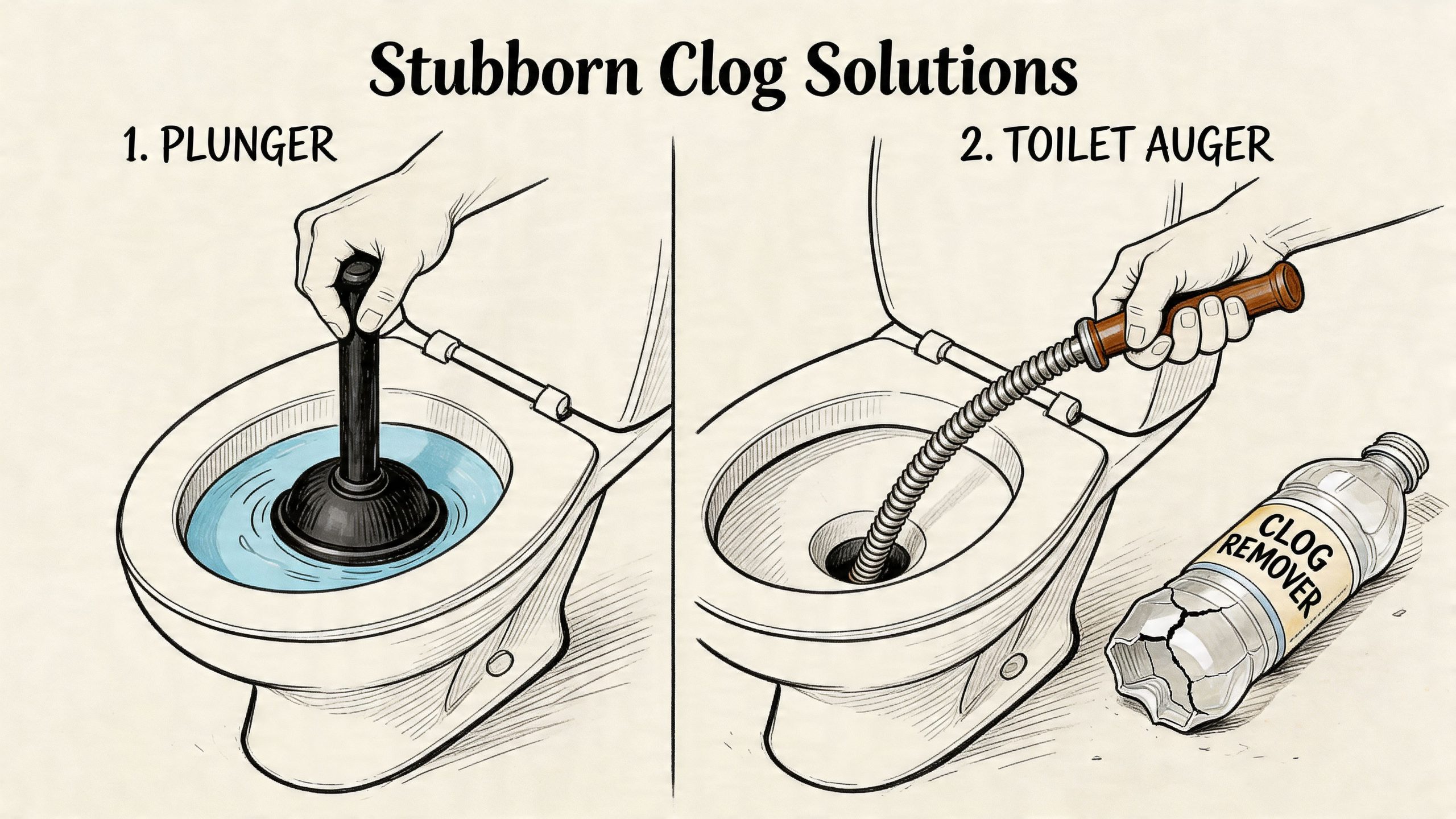
Use a flange plunger made for toilets. A flat sink plunger rarely seals well against the outlet, so you lose pressure before it reaches the clog.
Good technique matters more than brute force:
- Keep enough water in the bowl to cover the plunger cup
- Set the flange fully into the outlet before the first stroke
- Use controlled pushes and pulls
- Hold the seal for several strokes instead of popping it loose
I see the same mistake all the time. Homeowners hammer away with short, violent jabs, then assume the clog is impossible. Usually the seal was poor, so the pressure never reached the blockage.
Step up to a toilet auger
If plunging fails, use a toilet auger. It is built for the tight bend in a toilet trap and has a sleeve to protect the porcelain. A standard drain snake can chip the bowl or get hung up where a toilet auger passes cleanly.
Feed the cable in slowly. When you meet resistance, turn the handle with steady pressure and let the head do the work. If you force it, you can scratch the trapway, wedge an object tighter, or damage the toilet.
A hard stop often points to a foreign object. Kids' toys, air freshener clips, wipes, and too much paper are common. Chemical cleaners do almost nothing against that kind of blockage.
Signs the problem is deeper than the toilet
Some repeat clogs are not toilet clogs at all. They are branch drain or sewer line problems showing up at the lowest, most obvious fixture.
Watch for these clues:
- The toilet clears, then clogs again within a day or two
- You hear gurgling from nearby drains
- Water rises in the shower or tub when the toilet is flushed
- More than one bathroom fixture is slow
- You notice sewage odor inside the house
That is the point where guessing gets expensive. A proper sewer camera inspection shows whether the line has roots, grease buildup, a belly, a break, or an offset joint. In older homes around Marietta, Woodstock, and Alpharetta, that inspection often saves a lot of wasted digging and repeat service calls.
If you are still comparing options and searching for trusted plumbers near me, look for a company that will explain what the tool is doing, what they suspect the blockage is, and when the problem has moved beyond the toilet itself. That is the significant difference between a quick guess and a proper repair.
When to Call an Emergency Plumber in North Atlanta
There’s a point where DIY stops being practical and starts risking a bigger mess. If the toilet is overflowing, backing up repeatedly, or connected to signs of a wider drainage problem, you need help now, not another bottle.
Stop trying and call when you see these signs
Call an emergency plumber if any of the following are happening:
- The toilet overflows or nearly overflows every time
- A plunger and auger both fail
- Multiple fixtures are backing up
- You notice sewage smell indoors
- Water shows up in the tub, shower, or floor drain
- Someone already poured chemical cleaner into the bowl and it didn't work
Those aren't "wait until tomorrow" symptoms. They can point to a branch drain blockage, a sewer backup, or a main line issue.
The searches people use when it’s urgent
When homeowners in Woodstock, Acworth, Alpharetta, Canton, Roswell, Marietta, Cumming, or Johns Creek hit this point, they usually search by the symptom. It might be clogged toilet won't flush, emergency plumber near me, 24 hour plumber, sewer backup in Johns Creek, or drain cleaning in Marietta.
Sometimes the issue turns out to be bigger than drainage. A home with repeated plumbing trouble may also need sewer repair, sewer replacement, water line replacement, main water line repair, leak repair, or even burst pipe repair if the backup has contributed to pressure and drainage problems elsewhere.
If you're comparing providers and want a general homeowner perspective on choosing a reliable company, this article on trusted plumbers near me offers a sensible checklist.
Why emergency service matters
A clogged toilet can look isolated and still be the first sign of a system problem. Fast diagnosis matters more than guesswork. The right team can identify whether the fix is basic drain cleaning or whether you’re dealing with a damaged line, a sewer blockage, or another hidden issue.
For immediate help with a severe clog, overflow, or sewer-related problem, use a local emergency plumbing service that handles after-hours calls in North Metro Atlanta.
Frequently Asked Questions About Toilet Clogs
Can I use a chemical to unclog toilet problems if the clog is severe
Usually no. A severe toilet clog is often a wad of paper, a flushed wipe, a toy, or a stoppage farther down the branch line. Toilet drain cleaners do a poor job in that situation because the product sits in standing water, thins out, and may never touch the blockage with enough strength to matter. What you do get is a bowl full of contaminated chemical water that can splash back when you plunge or snake it.
Are enzyme cleaners safer for older pipes
They are usually the safer choice if you are comparing them to caustic or acidic cleaners. Enzyme products are slower and less aggressive, so they are less likely to attack older drain lines, aging seals, or a toilet's internal parts. The trade-off is simple. They are better for mild organic buildup and maintenance, not for a toilet that is already backed up and needs to flush now.
That matters in a lot of older North Metro Atlanta homes, where cast iron, older repairs, and partial line scale can turn a simple clog into a fragile pipe situation fast.
Is baking soda and vinegar safe for septic systems
It is generally less harsh than commercial chemical drain cleaners, which is why homeowners ask about it. But "safer" does not mean "effective." If the toilet is blocked by a solid object, packed paper, or a line problem outside the bathroom, that fizzing reaction will not clear the stoppage.
What's the correct baking soda and vinegar method
If you try it, use baking soda first, then add vinegar slowly and give it time to react before flushing. The point is to loosen light organic residue, not to blast through a hard blockage. Skip this method if the bowl is close to overflowing or if someone already poured in a chemical cleaner. Mixing products is where homeowners get hurt.
Can I just use more cleaner if the first attempt didn't work
No. A second dose usually increases the hazard, not the odds of success.
Once the first round fails, the problem is often mechanical, not chemical. More cleaner can sit in the trap, throw off stronger fumes, and raise the chance of damaging older piping or splashing your skin and eyes when you try the next step.
Why does the toilet clog again after I get it to flush once
Because the line is not really clear. A partial blockage can let one flush through, then catch paper again on the next use. I see this all the time with soft obstructions in the toilet trap and with larger drain issues that show up first in the lowest bathroom.
Watch for a pattern. If the toilet clogs repeatedly, another fixture drains slowly, or you hear gurgling, stop treating it like a one-toilet problem.
Can a toilet clog mean a sewer line problem
Yes. If more than one fixture is acting up, or the toilet backs up after using a shower, tub, or washing machine, the issue may be in the main drain or sewer line. At that point, chemical cleaners are the wrong tool. They will not remove roots, heavy scale, a broken pipe section, or a main line blockage.
When should I stop trying DIY fixes and call a plumber
Stop after a careful plunger attempt or after one safe, mild option fails. Call sooner if the bowl is rising, wastewater is coming back, a child may have flushed an object, or you have already added a chemical product. In Woodstock, Marietta, and Alpharetta, that call often saves the toilet, the floor, and a lot of cleanup.
If your toilet won't flush, keeps backing up, or you've already tried the wrong chemical to unclog toilet issues, get help before the problem spreads. JMJ Plumbing provides 24/7 plumbing service across North Metro Atlanta, including Woodstock, Acworth, Alpharetta, Canton, Roswell, Marietta, Cumming, and Johns Creek. From clogged toilets and drain cleaning to sewer repair, sewer replacement, leak repair, water line replacement, and emergency plumber calls, the team brings licensed Master Plumber experience and fast local response when you need it most.