Toilet Not Unclogging With Plunger: DIY & Pros
A toilet that won’t clear after repeated plunging usually happens at the worst time. The bowl is full, the water is slow to drop, and every extra flush feels like a gamble.
If you’re dealing with toilet not unclogging with plunger problems in Woodstock, Marietta, Roswell, or anywhere around North Metro Atlanta, the failed plunger itself tells you something useful. It often means the issue isn’t just “a stubborn clog.” It may be the wrong tool, the wrong seal, a clog that sits too deep, or a bigger drain problem starting to show up.
Why Your Plunger Isn't Working and What It Means
The bowl is full, you’ve given it several solid plunges, and nothing useful is happening. That failure matters. In day-to-day plumbing work, a plunger that stops helping is often the first sign that the problem is deeper than a simple wad of paper.
A plunger works best on soft clogs and on blockages sitting close enough to the toilet trap to move with pressure and suction, according to Horow’s toilet plunging guide. If repeated plunging changes nothing, stop treating it like a strength contest. Start reading the toilet.
Check the tool and setup first
I see this all the time. The clog gets blamed when the actual problem is poor force at the drain opening.
A flat sink plunger does not seal well in a toilet. A flanged toilet plunger does. If the rubber cup is not fully covered with water, you are pushing air instead of water. If the seal breaks on each stroke, pressure escapes before it reaches the clog.
Check these basics before you assume the blockage is deep:
- Wrong plunger type. Toilets need a flanged plunger, not a flat sink plunger.
- Low bowl water. The cup needs to stay submerged.
- Weak seal. Even a small gap around the rim cuts the force.
- Fast, sloppy strokes. Steady pressure works better than splashing.
A good plunging cycle uses firm, controlled strokes while keeping the seal intact. If all you hear is splashing, the clog may not be the main issue yet.
Then watch how the toilet responds
This is the part many DIY guides skip. The toilet’s behavior after plunging tells you what kind of blockage you are dealing with.
If the water drops a little, then creeps back up or stalls, the clog is usually partial. Something is still letting water through, but not enough. That often points to heavy paper buildup or a blockage sitting farther into the trapway.
If nothing changes at all, the problem is usually one of three things. The seal was poor, the clog is packed tightly, or the obstruction sits too deep for a plunger to affect much. Wipes, hygiene products, and small objects often act this way.
If you hear gurgling and the bowl drains slowly, pay attention. A single toilet can gurgle because air is squeezing past a restricted clog. If nearby drains are also noisy or slow, that points away from the toilet alone and more toward a branch line or main sewer problem. Homeowners in Roswell and Johns Creek often miss that distinction, and it matters because the next step is completely different.
Use the symptoms to narrow it down
| Result after plunging | What it usually means |
|---|---|
| Water drops a little, then stalls | Partial blockage. Often still movable, but not cleared |
| No change at all | Poor seal, wrong plunger, or a hard or deep clog |
| Gurgling with slow drain | Restricted flow. Could be a toilet clog or early drain line issue |
| Bowl rises fast and threatens overflow | Tight blockage. Stop flushing immediately |
A toilet that stays isolated to one bathroom fixture usually points to a local clog. A toilet that acts up along with a tub, shower, or another drain raises concern for a larger drain issue. If you want a good homeowner-level overview of how buildup behaves in drain lines, Calibre Cleaning's guide to drain maintenance gives useful context, even though a toilet blockage needs a different tool set.
What this means for your next move
Do not keep repeating the same failed approach. That is how bathrooms get flooded.
If the toilet shows signs of a partial clog, you can usually try one safe DIY method next. If the bowl rises quickly, gurgles with other fixtures, or backs up after seeming to improve, stop there. That is usually the point where calling for professional toilet clog and drain cleaning service is the smarter choice, especially if you are in Woodstock or Marietta and want to avoid turning a toilet problem into a sewer cleanup.
Safe DIY Alternatives for a Stubborn Toilet Clog
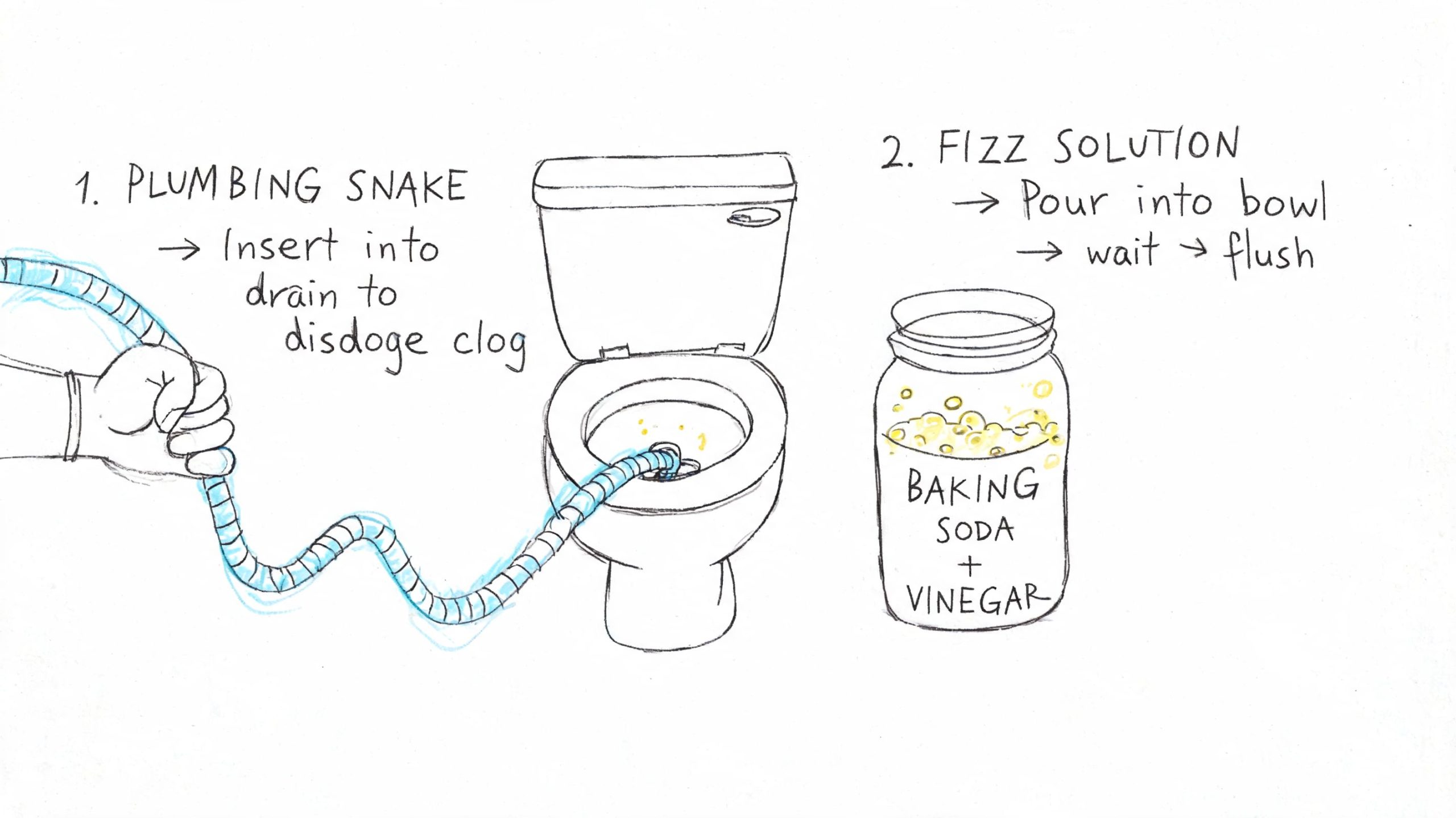
When a plunger stops helping, two DIY methods make the most sense for most homeowners. One is gentle and works best on soft organic blockages. The other is mechanical and better for clogs sitting deeper in the toilet trap.
The goal isn’t to throw every trick at the toilet. It’s to choose the method that matches what the toilet just told you.
Try hot water and dish soap first for soft clogs
This method is best when the toilet is draining slowly, not fully dead-stopped. It can help soften paper-heavy buildup and reduce friction inside the trapway.
You don’t need specialty products. You need patience and the right temperature.
How to do it safely
-
Add dish soap
Pour a generous amount of liquid dish soap into the bowl. -
Wait
Give it a few minutes to work around the blockage. -
Use hot water, not boiling
Fill a container with hot tap water. Avoid boiling water because extreme heat can damage porcelain or other toilet components. -
Pour carefully
Pour the hot water steadily into the bowl. Don’t dump it so fast that you risk overflow. -
Let it sit
Give the bowl time. If the water level starts dropping on its own, that’s a good sign. -
Test gently
If the level lowers, try one careful flush or a fresh plunging attempt.
If the bowl is already close to the rim, remove some water first. Don’t add more liquid to a toilet that’s one inch away from overflowing.
This method won’t solve every clog. It won’t pull out a toy, wipe bundle, or hard obstruction. But for paper and waste buildup, it’s a reasonable low-risk next move.
Use a toilet auger when the clog is deeper
If the plunger did little or nothing, a toilet auger is the better tool. This is also called a closet auger. It’s designed specifically for toilets, which matters because a generic drain snake can scratch the bowl or fight the bends in the trap.
A toilet auger has a curved protective tube that helps guide the cable through the toilet’s shape. That protective bend is what makes it much safer than improvising with random wire or a hardware-store snake made for sinks.
For homeowners trying to avoid repeat clogs, general drain habits matter too. Calibre Cleaning's guide to drain maintenance gives a useful housekeeping perspective on buildup and prevention, even though a toilet clog needs different tools than a shower drain.
How to use a toilet auger without damaging the bowl
- Set the rubber end in place. Keep the auger’s guide tube seated at the drain opening.
- Feed the cable slowly. Turn the handle while applying light forward pressure.
- Stop when you feel resistance. That usually means you’ve hit the clog or a bend.
- Crank steadily. Let the cable work through the blockage. Don’t force it.
- Pull back with control. If the auger hooks material, retrieve it slowly.
- Test the toilet. Run water carefully and watch how it drains.
What works and what doesn’t with an auger
A toilet auger is a good DIY tool when the blockage sits in the toilet trap or just beyond it. It’s often the best step after a failed plunger because it doesn’t rely on water pressure alone.
It’s less helpful when:
- The problem is farther down the branch drain
- Multiple fixtures are acting up
- A larger sewer restriction is involved
- The toilet is blocked by a solid object that can’t be broken apart safely
If you want a professional overview of options for toilet and household drain problems, this page on drain cleaning and toilet clog service gives a useful picture of when routine clearing turns into a more involved drain diagnosis.
A quick decision guide
| DIY method | Best for | Not ideal for |
|---|---|---|
| Hot water and dish soap | Slow paper-heavy clogs | Hard objects, wipes, complete blockage |
| Toilet auger | Deeper toilet trap clogs | Whole-house drain problems |
| More random plunging | Only if the first setup was wrong | Repeated failed attempts with no change |
A good rule in the field is simple. If a method changes the toilet’s behavior, even slightly, you may still be on the right track. If the toilet behaves exactly the same after each attempt, stop repeating the same fix.
Plumbing Mistakes That Make a Clogged Toilet Worse
A stubborn toilet makes people impatient. That’s when expensive mistakes happen.
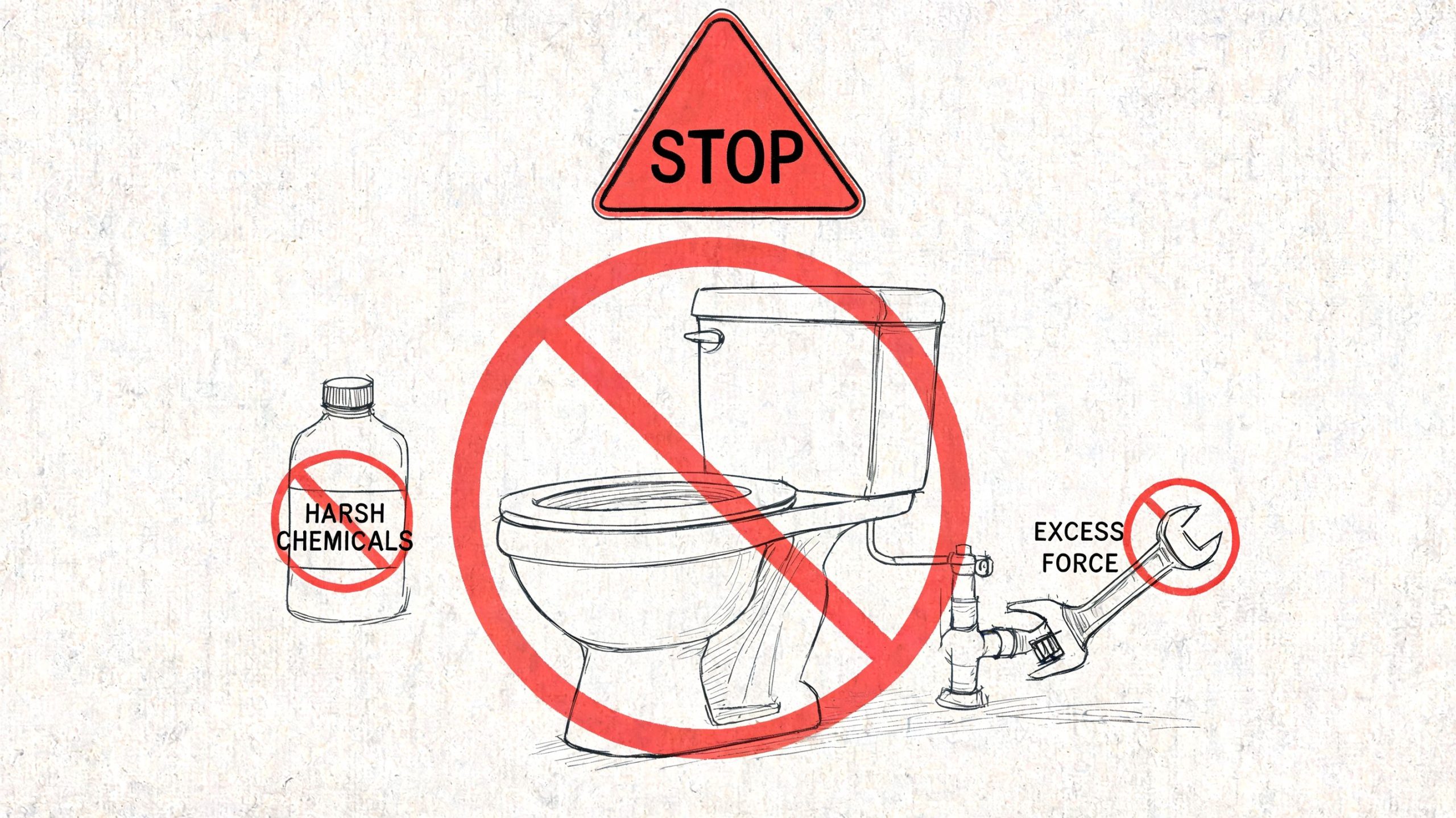
The biggest problems usually come from two impulses. One is pouring in something harsh and hoping it dissolves the clog. The other is taking apart more plumbing than you’re ready to put back together correctly.
Skip chemical drain cleaners
Chemical drain cleaners are a bad match for toilet clogs. They often sit in the bowl or trap without clearing the blockage, especially when the problem is paper packed tight, wipes, or a foreign object.
That creates several risks:
- Pipe exposure. Harsh chemicals can sit against older piping longer than intended.
- Splash hazard. If you plunge after adding chemicals, that liquid can come back toward you.
- Fume exposure. Bathrooms hold fumes in a small space.
- Harder service call. The next person handling the clog now has to work around caustic material.
Don’t pour something dangerous into a toilet just because the label says “drain.” Toilets clog differently than sinks.
Don’t force tools that don’t belong there
A coat hanger, rigid rod, or bargain cable without bowl protection can scratch porcelain fast. Once a toilet surface is damaged, it’s easier for stains and buildup to cling to that rough area.
Even worse, aggressive force can wedge the clog tighter. A soft blockage that might have moved with the right auger can become a compacted mass.
Here are the warning signs you’re using too much force:
- The tool stops abruptly and won’t turn
- The bowl rocks from the pressure
- You hear ceramic contact
- The handle becomes hard to crank but nothing changes in drainage
Removing the toilet is not a casual DIY step
Some homeowners jump to pulling the toilet because they assume the clog must be trapped inside. Sometimes it is. But removing a toilet opens up a different set of problems.
You can damage the wax seal, create leaks at the base, misalign the toilet on reinstallation, or crack the fixture. If the toilet was never the actual problem and the blockage sits farther down the line, you’ve done a lot of work and added a repair that didn’t need to happen.
That’s why the smarter approach is controlled escalation. Use the right toilet plunger. Try the safest next method. Use a toilet auger correctly. If those fail, stop before DIY turns a clog into a leak repair.
Is It a Clogged Toilet or a Main Sewer Line Backup
A toilet clog affects one fixture. A sewer backup affects the way the whole house drains.
That distinction matters because the next step is completely different. If you treat a sewer problem like a single toilet clog, you can lose time and increase the chance of messy backup in tubs, showers, or floor drains.
Start with the toilet itself
Some toilets are harder to plunge even when you’re doing everything right. Modern toilet designs, especially low-flow models mandated since 1992, can reduce available water volume and make it harder to generate suction pressure. Skirted, elongated, and dual-flush designs can also make a good seal harder to achieve, as noted in Mr. Plumber Atlanta’s discussion of toilet design and unclogging problems.
That means a plunger failure doesn’t always prove the clog is severe. Sometimes the fixture design itself limits what a plunger can do.
But once other drains start reacting, the issue may be beyond the toilet.
Compare the symptoms side by side
Use the signs below to separate a local clog from a possible sewer line issue.
| Symptom | Simple Toilet Clog | Potential Sewer Line Backup |
|---|---|---|
| Only one toilet is slow or full | Common | Possible, but less likely by itself |
| Sink and shower drain normally | Common | Less likely |
| Gurgling from other drains when toilet is flushed | Uncommon | Strong warning sign |
| Water backs up into tub or shower | Uncommon | Strong warning sign |
| Several drains are slow at once | Uncommon | Common warning sign |
| Sewage smell in bathroom or near drains | Possible but limited | More concerning for line issue |
If your Marietta shower bubbles when the toilet is flushed, or the downstairs tub in Woodstock starts backing up after someone uses the bathroom, stop treating it as just a toilet problem.
A single clogged toilet is inconvenient. Multiple plumbing fixtures reacting together usually means the drain system is asking for a different diagnosis.
What gurgling usually means
Gurgling happens when air struggles to move through restricted piping. Inside one toilet, that can mean a blockage in or near the fixture. In multiple fixtures, it suggests pressure changes in the larger drainage system.
That’s why the pattern matters more than the sound alone. One gurgling toilet is one clue. A gurgling toilet plus a noisy shower drain is a different level of concern.
When a deeper inspection makes sense
If the toilet remains blocked and the house shows broader symptoms, the cleanest next step is inspection rather than guessing. A camera inspection helps identify whether the problem is a deep clog, buildup in the line, root intrusion, or some other obstruction that basic toilet tools can’t confirm.
For homeowners trying to understand what a professional line diagnosis involves, sewer camera inspection service details show how plumbers verify the location and nature of a blockage before recommending sewer repair or drain cleaning.
Property owners also worry about what happens after water escapes the fixture area or backup reaches finished parts of the home. While it isn’t toilet-specific, this UAE property asset protection guide offers a useful framework for thinking about cause versus consequence when water damage and insurance questions come up.
A practical cutoff point
Stop DIY work and think bigger if any of these are happening:
- More than one drain is acting slow
- A tub or shower takes on water when the toilet is used
- You smell sewage
- The toilet clears briefly, then backs up again quickly
- The same bathroom keeps having the same problem
At that point, the question isn’t “why is my plunger failing?” It’s “what is the drainage system doing as a whole?”
Preventing Future Clogs and When to Call for Emergency Service
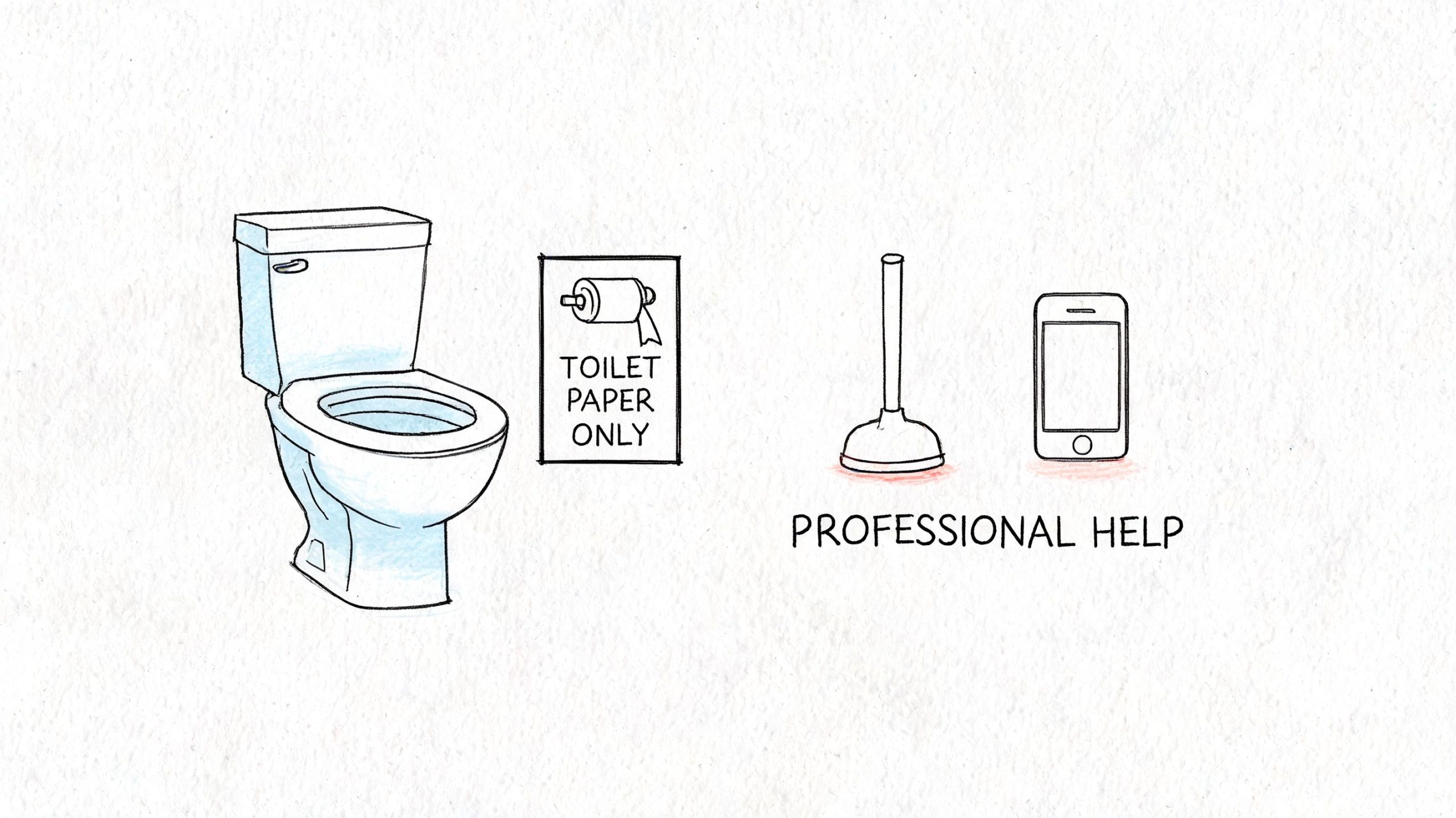
Most bad toilet clogs don’t come out of nowhere. The plumbing usually gives smaller warnings first.
Slow drainage, frequent gurgling sounds, and partial blockages that need multiple flushes are early warning signs of a developing clog, according to PV Heating, Cooling and Plumbing’s explanation of toilet clog warning signs. When you notice those signs early, you have a better chance of solving the problem with planned drain cleaning instead of an urgent sewer repair call.
Prevention habits that actually help
Prevention is less about special products and more about consistent habits.
- Flush only waste and toilet paper. “Flushable” wipes are a common source of repeat trouble.
- Pay attention to changes. If one toilet starts draining slower than usual, don’t wait for a full backup.
- Teach the whole house. Kids and guests often don’t know what should stay out of a toilet.
- Watch for repeats. A clog that comes back often isn’t really fixed.
- Respond to warning sounds. Repeated gurgling isn’t normal plumbing behavior.
What homeowners often miss
A lot of people judge the problem by whether the toilet eventually goes down. That can be misleading. A toilet that drains after enough time may still have a partial restriction farther along.
That’s where people lose the chance to handle the issue calmly. They wait until a weekend, a holiday, or a house full of guests turns a slow drain into a bathroom outage.
Small symptoms are the best time to act. Emergency plumbing usually starts as ignored plumbing.
When it’s time to stop DIY
Safe DIY steps have a place. They’re fine for a simple clog that responds to proper technique or a basic auger pass.
Call for professional help when the situation moves beyond that point:
- The toilet is still clogged after sensible DIY attempts
- Water is rising and you can’t control the level
- Other fixtures are involved
- You notice sewage odor
- The clog keeps returning
- You suspect a sewer issue, not just a toilet issue
That applies whether you’re searching for a Woodstock plumber, a Marietta plumber, sewer repair in Roswell, drain cleaning in Johns Creek, or an emergency plumber near me in North Metro Atlanta. The right call at the right time protects floors, subfloors, drywall, and the rest of the plumbing system.
Emergency situations need a faster response
Some symptoms move the problem into emergency territory. If wastewater is backing up into a shower, if the toilet won’t stop threatening overflow, or if a commercial property has multiple affected restrooms, waiting it out usually makes cleanup worse.
For homeowners and property managers who need immediate help, emergency plumbing service is the kind of response path to use when the issue goes past routine drain clearing.
A good plumbing decision is not just about whether you can keep trying. It’s about whether the next DIY attempt has a reasonable chance of success. Once that answer becomes no, the practical move is a real diagnosis.
If your toilet still isn’t clearing, or the symptoms point to a deeper drain or sewer problem, contact JMJ Plumbing. The team serves North Metro Atlanta with 24/7 plumbing help, including clogged toilet problems, drain cleaning, sewer backup diagnosis, sewer repair, and emergency service in Woodstock, Marietta, Acworth, Roswell, Johns Creek, Alpharetta, Canton, and nearby communities.