How To Fix Garbage Disposal Humming: Simple Steps
Dinner’s over, the plates are stacked, and you hit the wall switch expecting the usual grind. Instead, the disposal gives you that low, stubborn hum and does nothing else. That sound gets a lot of North Metro Atlanta homeowners under the sink fast, usually with a flashlight in one hand and a bad feeling in the other.
A humming disposal usually means the unit is getting power, but something is keeping it from turning. Sometimes that’s a simple jam you can clear yourself. Sometimes it’s a motor problem that means the unit is done. Knowing which one you’re dealing with matters, because the right fix is quick and safe, and the wrong move can turn a small kitchen problem into a bigger plumbing or electrical repair.
The Hum No Homeowner Wants to Hear
In Canton, Marietta, Woodstock, and Johns Creek, this problem usually starts the same way. Someone rinses dishes, flips the switch, hears the hum, and tries it again. Then again. The sink starts holding water, cleanup stops, and the question changes from “Why isn’t it working?” to “Am I about to break this thing for good?”
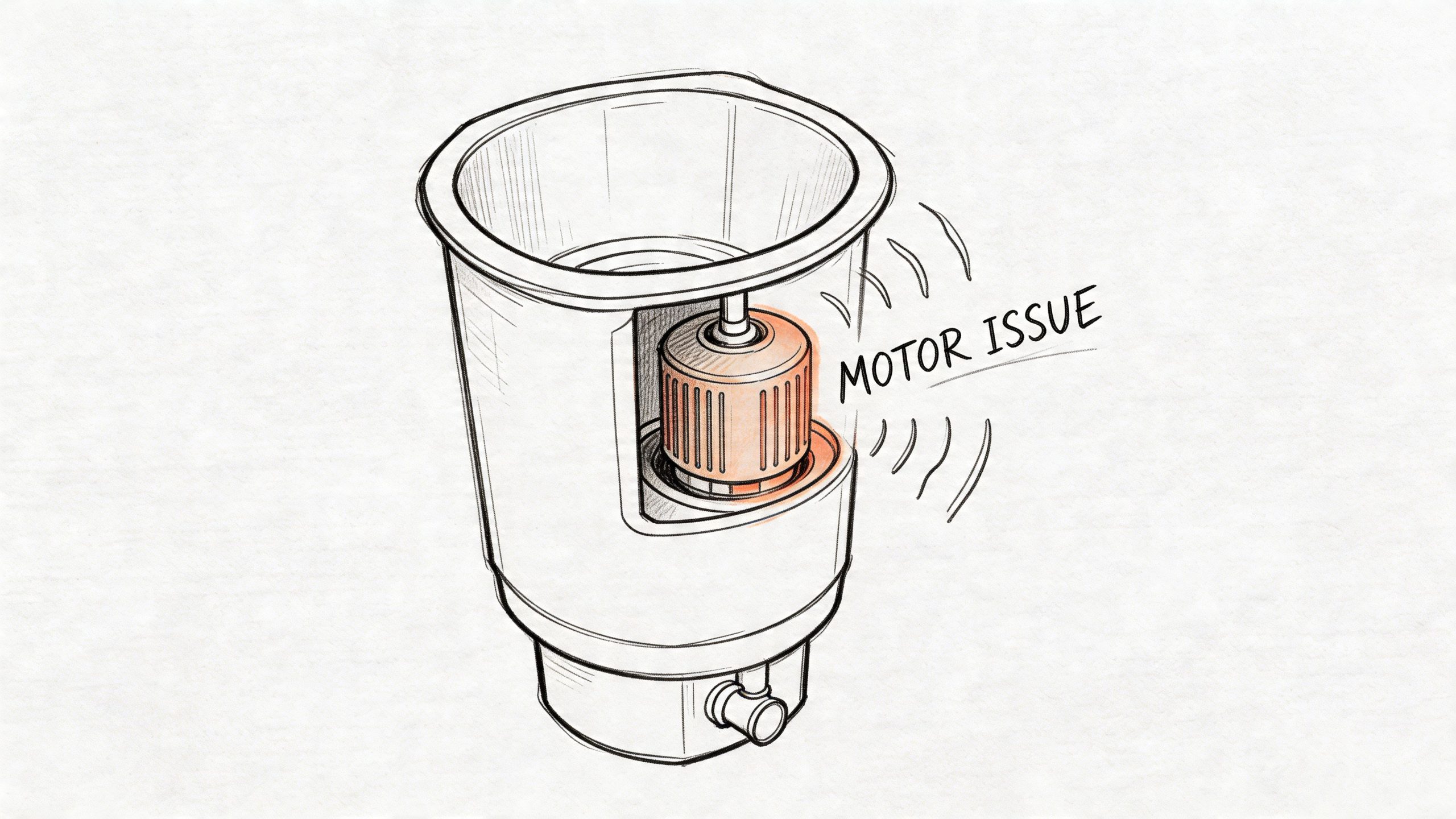
Most of the time, the disposal is humming because the grinding assembly is stuck. In plain terms, the motor wants to spin, but something is blocking the flywheel or impeller area. In other cases, the hum points to a motor that’s failing internally and can’t turn even when nothing is lodged inside.
What the hum usually tells you: power is reaching the disposal, but the unit can’t rotate the way it should.
That distinction matters. A jammed disposal is often a practical DIY repair. A failing motor is not. Homeowners often lose time by treating every hum like a clog, when some units are already past the point where a wrench and reset button will help.
The good news is that this is a very common kitchen problem, and the first round of troubleshooting is straightforward if you handle it safely. The steps below are the same kind of advice a seasoned plumber would give a homeowner before scheduling a service call.
Safety First Your Pre-Repair Checklist
A humming disposal can tempt you to keep flipping the switch, especially when dinner cleanup is backed up and the sink is filling in a Canton or Marietta kitchen. That is how a simple jam turns into a burned-out unit. Before you try to free anything, make the disposal safe to work on.
Shut off power completely
Start under the sink. If the disposal has a cord, unplug it. If it is hardwired, turn off the correct breaker and test the wall switch after. You want silence, not a hum.
Do both if you can. I recommend that extra step in older North Metro Atlanta homes where labeling at the panel is not always accurate.
Use this checklist before touching the unit:
- Unplug the disposal if it has a cord under the sink.
- Turn off the breaker if the unit is hardwired, or if you want full isolation.
- Test the wall switch to confirm the disposal will not start.
- Keep the area clear so nobody else turns the switch on while you are working.
Never put your hand into the disposal opening, even with the power off.
Gather a few tools first
This job goes better when everything is within reach. Running back and forth for tools usually leads to rushed decisions.
Keep these nearby:
- Flashlight: Needed to inspect the drain opening clearly.
- Needle-nose pliers or tongs: Use them to remove visible debris.
- 1/4-inch Allen wrench: Many disposals have a bottom hex socket for manual turning.
- Wooden spoon handle or broom handle: Useful on some models if you need to apply gentle force from above.
- Towel or small bucket: Handy if water spills from the trap area while you work.
Skip gloves with loose fingertips. They can catch on sharp edges under the sink and make it harder to grip small tools.
Let the motor cool down
If the disposal was just humming and not spinning, the motor may be hot. Give it several minutes before you try to rotate anything manually or press the reset button. Repeated switch flips build heat fast, and heat is what turns a fixable jam into a motor problem.
That distinction matters. A jammed flywheel often frees up with basic hand tools. A seized bearing or failing motor usually will not, and forcing it wastes time and can finish off a unit that was already near the end of its life. In our area, older disposals also deal with mineral buildup from Georgia hard water, which can make parts bind up more than homeowners expect.
One more check before you start. If you smell burning, see damaged wiring, or notice water dripping onto the disposal body or electrical connection, stop there and call a licensed plumber or electrician. That is no longer a basic DIY jam check.
Troubleshooting and Fixing a Jammed Disposal
A humming disposal that will not spin usually points to a jammed flywheel or an object caught in the grinding chamber. That is the homeowner-friendly version of this problem, and it is often fixable with a careful manual reset.
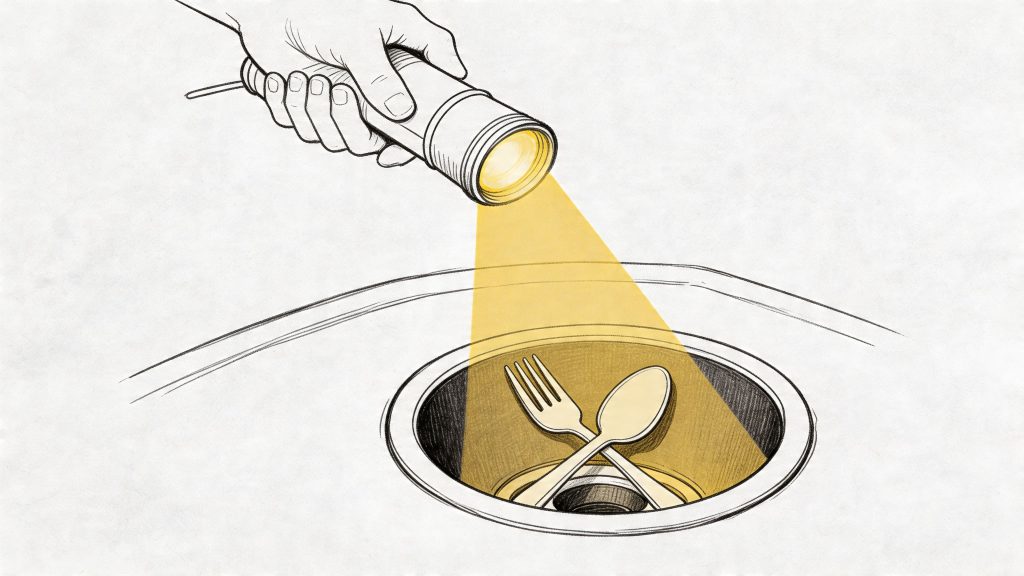
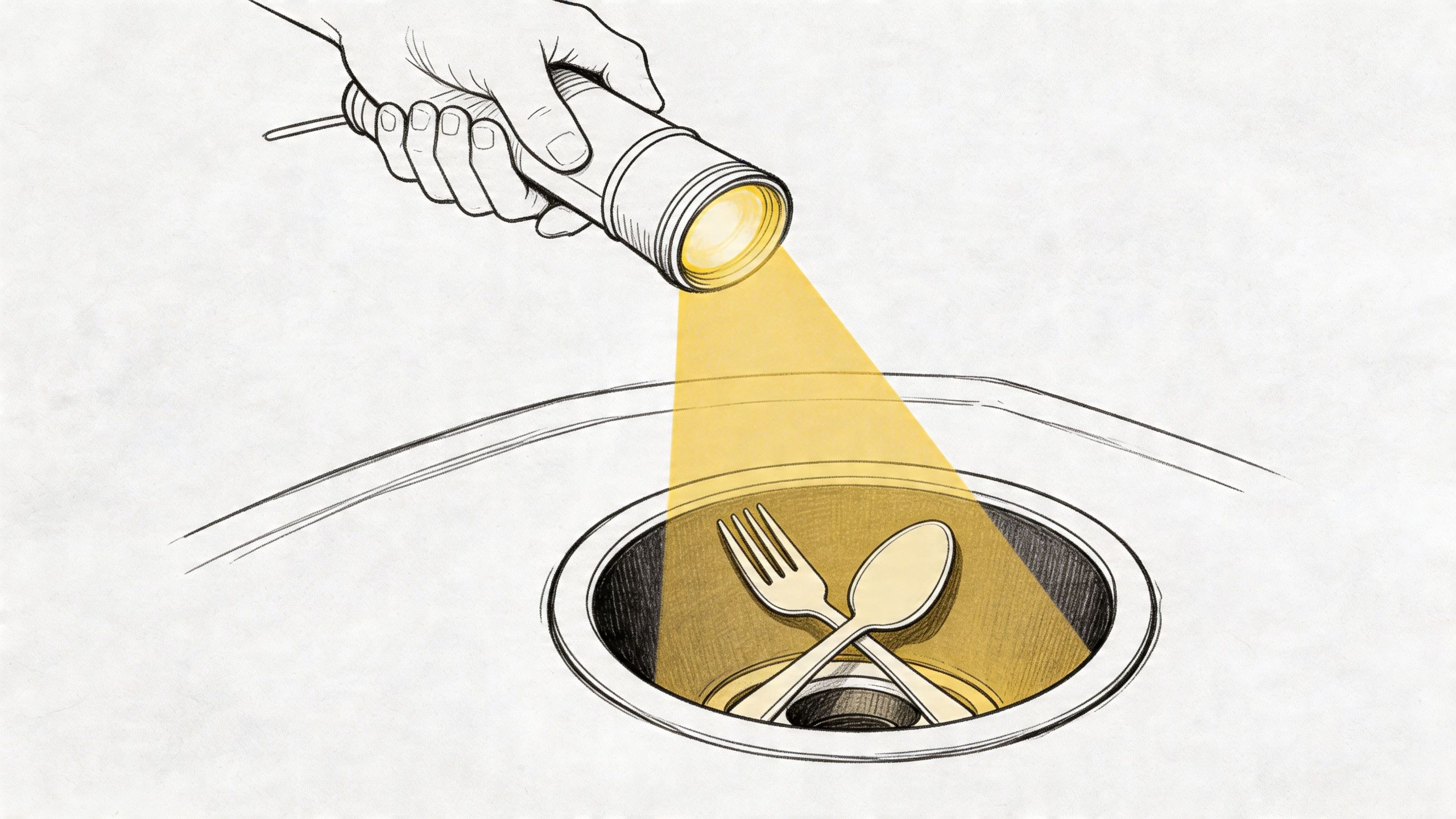
Start at the sink opening. Use a flashlight and look straight down into the disposal. Fruit pits, fibrous food, small bones, and dropped utensils are the usual troublemakers. If you see something lodged inside, pull it out with pliers or tongs and take your time. A spoon handle can help shift debris from above on some models, but metal tools inside the chamber can nick components if you get aggressive.
If nothing obvious is visible, move underneath the sink and find the hex socket on the bottom center of the unit.
Insert the 1/4-inch Allen wrench fully, then work it back and forth with steady pressure. Short strokes work better than trying to muscle through a full turn. You are feeling for the flywheel to break free, not forcing the motor to do something it cannot.
A few details matter here:
- Seat the wrench all the way in: A partial fit can round out the socket.
- Reverse direction when it stops: That rocking motion often frees a stuck impeller plate faster.
- Notice the resistance: If it suddenly loosens, you likely cleared a jam. If it stays stiff and gritty, there may be more debris below the visible opening, or the problem may be inside the motor.
Some disposals do not have a bottom hex socket. In that case, use a wooden spoon handle from above to nudge the internal plate. Use firm pressure, not brute force. If the mechanism will not budge, stop there. Forcing it can turn a simple jam into a replacement job.
Once the flywheel turns freely, press the reset button on the bottom of the unit. It is usually a small red or black button near the base. Then restore power, run cold water, and test the switch for a brief burst.
If the disposal runs normally, let cold water flush the chamber for several seconds. If you want a side-by-side look at repair versus replacement, JMJ Plumbing’s garbage disposal repair and replacement services lay out what makes sense for each situation.
In Canton and Marietta homes, I also see mineral scale from Georgia hard water add drag inside older units. A disposal can feel half-jammed even after the obvious obstruction is gone. If it still hums after you have cleared debris, manually turned the flywheel, and reset the unit, the issue may be more than a simple blockage.
Humming Persists What to Know About Motor Failure
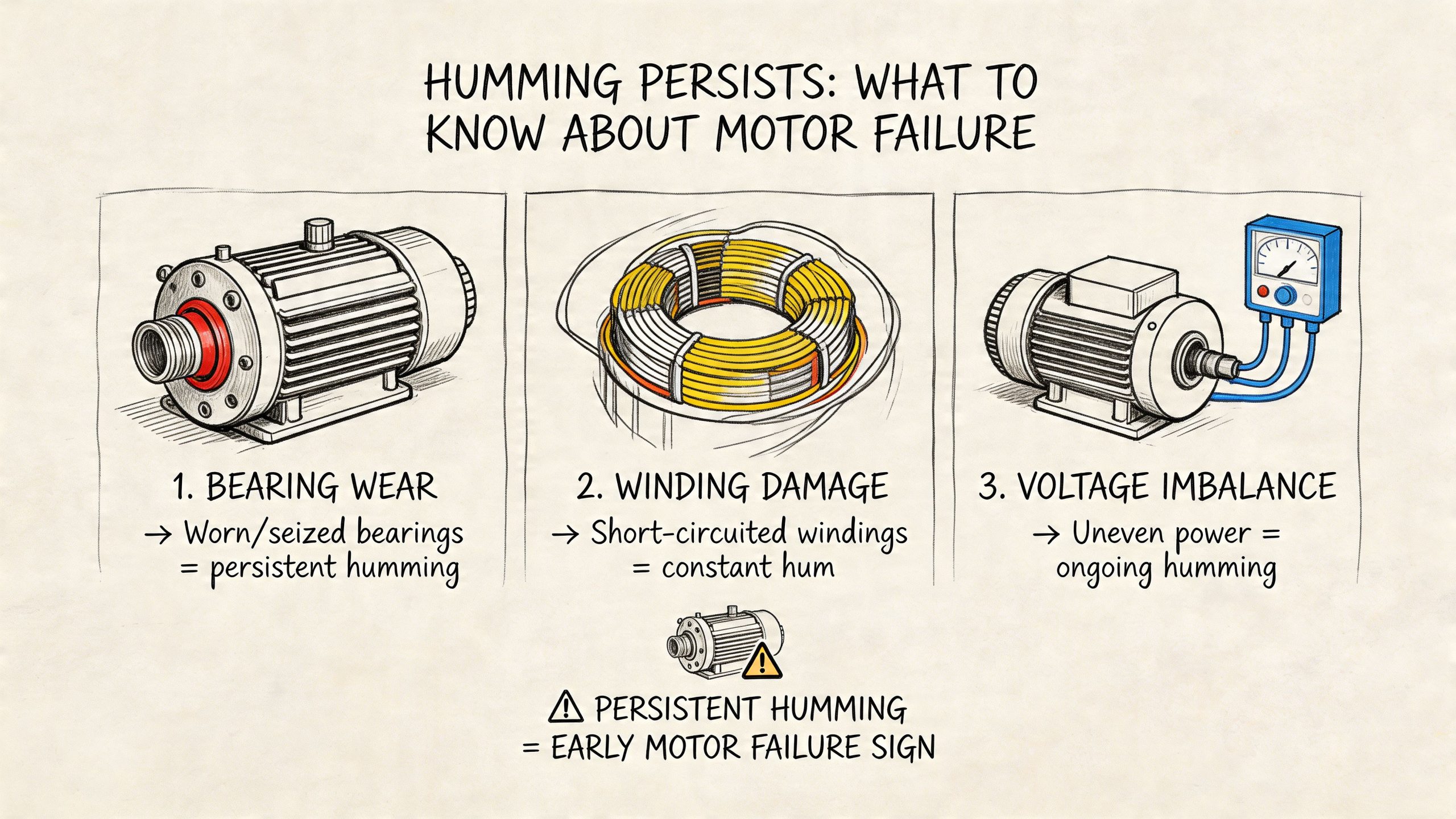
When the jam-clearing steps don’t solve it, you’re no longer dealing with the easy version of this problem. At that point, the important question is whether the disposal has a stuck flywheel or a seized motor bearing.
That’s the line many online guides skip, and it’s the line that saves homeowners from wasting time.
Stuck flywheel versus seized motor
A stuck flywheel is a mechanical obstruction issue. That’s the DIY-friendly scenario. A seized bearing is internal motor failure. That means replacement is usually the right path.
In North Georgia, hard water can speed up bearing seizure through mineral buildup, and a professional can test motor integrity with a multimeter to confirm whether the unit needs replacement, as noted in this garbage disposal service explanation. If you want to compare repair and replacement help for the unit itself, this page on garbage disposal service options is a useful reference.
What failure sounds and feels like
A jammed disposal usually has a blocked, straining hum. A failing motor often gives you a different kind of warning. You may hear a rougher grinding tone, notice the reset button keeps tripping, or catch a hot electrical smell after short run attempts.
Those clues matter because forcing a failing motor rarely helps. It usually overheats the unit and moves you closer to full failure.
Look for these signs:
- Repeated reset trips: The unit overheats again even after clearing debris.
- Burning odor: Stop immediately if you smell insulation or hot wiring.
- Rough internal grinding: That points more toward worn internal parts than a simple obstruction.
- No visible jam and no free movement: The motor may be locked internally.
A disposal that still hums after a proper unjam and reset is often telling you the problem is inside the motor, not inside the chamber.
When to Call a Licensed Plumber in North Metro Atlanta
There’s a point where more DIY stops being helpful. If the disposal still hums after safe troubleshooting, if the unit leaks from the body, or if the motor shows signs of failure, a licensed plumber is the better call.
That matters in real homes across Acworth, Alpharetta, Canton, Roswell, Cumming, Johns Creek, Marietta, and Woodstock. A disposal problem can stay isolated under one sink, or it can reveal a larger issue such as a bad drain connection, recurring kitchen clogs, or a branch drain that needs professional drain cleaning.
What a pro checks that a homeowner usually can’t
A plumber isn’t just there to hit the reset button again. The value lies in diagnosis.
A service call can sort out whether the problem is:
- A disposal-only failure: The unit itself needs repair or replacement.
- A drain issue: Food waste is backing up because the line downstream is restricted.
- A leak problem: Water at the base may point to failed internal seals.
- An electrical concern: The unit may be receiving power improperly or overheating under load.
That kind of distinction matters because homeowners often search for “emergency plumber near me” when the true symptom is “sink won’t drain after disposal hums.” The disposal may be the trigger, but not the whole problem.
If the problem is urgent, this page for 24-hour emergency plumbing help is the right place to start.
DIY Fix vs. Professional Service Call
| Factor | DIY Approach | JMJ Plumbing Professional |
|---|---|---|
| Best use case | Visible jam or stuck flywheel | Persistent humming, leaks, motor failure, repeated trips |
| Tools involved | Flashlight, tongs, 1/4-inch Allen wrench | Diagnostic tools, replacement parts, code-compliant install methods |
| Main risk | Motor damage or injury if power isn’t fully cut | Minimal homeowner risk once the call is made |
| What it can solve | Basic obstruction and reset issues | Disposal replacement, leak diagnosis, drain issues, related plumbing faults |
| When it stops making sense | You’ve tried the safe steps and the hum remains | The problem requires confirmed diagnosis and durable repair |
Call sooner if other plumbing symptoms show up
A humming disposal by itself is one thing. A humming disposal plus water backup, foul odor, or slow drainage points to a wider kitchen drain problem.
That’s where homeowners also start noticing related issues elsewhere in the house. A kitchen backup might happen at the same time you’ve been dealing with a clogged toilet that won’t flush, a sewage smell, or recurring slow drains. In older homes around Cobb County, Cherokee County, North Fulton, and Forsyth County, one symptom can lead to another quickly.
Licensed plumbing service is the smart move when you need:
- Drain cleaning in Cumming or Marietta
- Leak repair in Roswell or Alpharetta
- Water line replacement or main water line repair
- Sewer repair, sewer replacement, or sewer backup response
- Burst pipe repair or a true emergency plumber in Metro Atlanta
If the disposal has crossed the line from nuisance to failed equipment, replacement usually beats repeated guesswork.
Preventing Future Jams and Extending Disposal Life
A disposal lasts longer when you use it regularly and feed it the right things. Preventive data referenced in the verified material notes that running the unit 1-2 minutes weekly cuts jam recurrence by 50%, and regular household use keeps internal parts from sitting idle and sticking.
Use it the right way
Your disposal works best with a steady stream of cold water and small amounts of food waste. Feed scraps gradually instead of packing everything in after a big cleanup.
A few habits make a real difference:
- Run cold water before and during use: It helps carry debris through the drain line.
- Keep portions small: Big loads are harder on the grinding assembly.
- Let water run briefly after grinding: That helps wash leftover particles out of the line.
- Use the disposal regularly: Idle units are more likely to seize or stick.
Know what belongs in the trash instead
Some items don’t belong in a disposal. Hard scraps can jam it. Fibrous foods can wrap and bind. Starchy waste can turn into paste in the drain.
Skip the disposal for things like bones, fruit pits, fibrous vegetable scraps, grease-heavy leftovers, and bulky peels. If your kitchen generates a lot of food scraps, a small kitchen compost bin is a practical way to keep problem waste out of the sink altogether.
For homes already dealing with recurring slow drainage, professional drain cleaning for kitchen and toilet clogs may be the better fix than focusing on the disposal alone.
A disposal is for manageable food residue, not for everything left on the plate.
JMJ Plumbing FAQ for North Atlanta Homeowners
In Canton, Marietta, Roswell, Alpharetta, and Acworth, we hear the same questions after that low hum starts under the sink. The answers matter because a simple jam and a failing motor do not get the same fix.
Should I press the reset button right away
Check for a jam first, and give the motor time to cool before you reset it. In the field, I tell homeowners to treat the reset button as the last step after the disposal is unplugged or switched off, the jam is cleared, and the unit has had a chance to sit. If the button clicks back in and the disposal runs normally, you were likely dealing with an overload condition, not a failed unit.
If it hums, does that always mean replacement
A humming disposal often has a jammed grinding plate, and that can be a manageable DIY repair. If you can rotate the unit manually after shutting off power and it frees up, that points to a jam.
If it still hums, trips the reset again, or locks up even after the chamber is clear, the problem may be deeper in the motor. Worn bearings, a seized shaft, or repeated overheating usually mean repair is no longer the practical option. That distinction gets missed in a lot of generic advice, but it matters. A jam can often be cleared safely at home. A seized motor usually means replacement.
That same maintenance mindset applies to other equipment around the house. This article on extending the life of your appliances is a useful reminder that cleaning, inspection, and early attention usually save money.
Can a disposal problem mean I really have a drain problem
Yes. We see that in North Metro Atlanta kitchens all the time.
If the disposal hums and the sink also drains slowly, backs up into the other bowl, or keeps smelling bad after the unit is running again, look past the disposal itself. A partial blockage in the branch drain or a grease-heavy buildup in the line can create symptoms that feel like disposal failure. In older homes around this part of Georgia, hard water can add scale inside drain piping over time, which gives food residue more places to catch and build up.
What if I’m not comfortable working around it
Stop there and call for help. Under-sink work puts your hands near sharp metal, standing water, wiring, and tight connections. If you are unsure whether you have a simple jam, a drain issue, or a seized motor, a licensed plumber can sort that out quickly and keep a small problem from turning into a kitchen backup or after-hours emergency.
If your garbage disposal is humming and you want a clear answer fast, JMJ Plumbing serves North Metro Atlanta with licensed plumbing repair, drain diagnostics, disposal replacement, and 24/7 emergency service. Whether you’re in Canton, Marietta, Acworth, Roswell, or Alpharetta, the team can inspect the problem, tell you if it’s a simple fix or a failed unit, and handle the repair safely.