Why Is My Water Bill So High: High Water Bill Causes: Find
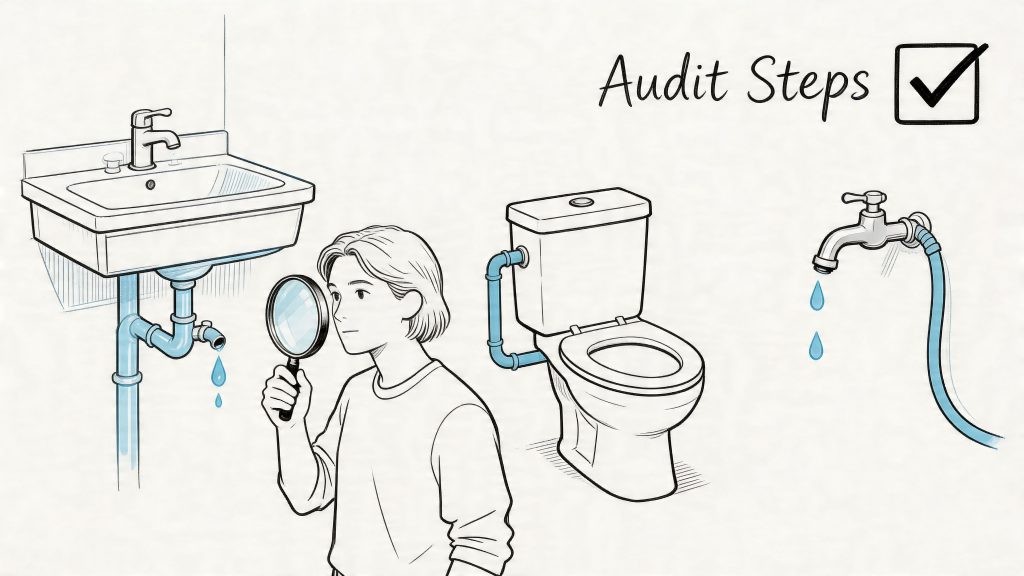
You open the bill, glance at the total, and think, why is my water bill so high if nothing in the house seems wrong? That’s one of the most common calls plumbers get from homeowners in Woodstock, Acworth, Marietta, Alpharetta, and the rest of North Metro Atlanta.
Most of the time, the answer isn’t dramatic. It’s not always a burst pipe spraying water into your yard. More often, it’s a quiet plumbing problem doing steady damage in the background. A toilet that never fully stops running. A water line leak under clay soil. A water heater issue you don’t notice until the bill arrives.
The good news is that a high water bill usually leaves clues. If you know where to look, you can narrow the problem down fast and figure out whether you’re dealing with a simple fix, a hidden leak, or a true plumbing emergency.
The 7 Most Common Culprits Behind a High Water Bill
Start with three buckets. Almost every unusually high bill falls into one of these: hidden leaks, changed water use, or billing and rate issues. That simple framework keeps you from guessing.
The biggest bucket is hidden leaks. The EPA estimate cited by PODS says the average American family can waste 180 gallons of water per week, or nearly 9,500 gallons annually, from household leaks alone, which is enough water to wash more than 300 loads of laundry and can add 10% or more to a home’s water bill, according to this summary of EPA leak data. That’s why a bill can spike even when your daily routine feels unchanged.
A running toilet is a good example. Homeowners often think of it as a small problem because they only hear a faint refill now and then. In reality, it acts like a tiny faucet that never fully shuts off.
Hidden leaks inside and outside the house
Some leaks announce themselves with stains, puddles, or warped flooring. Others stay out of sight.
Common hidden trouble spots include:
- Toilets that run subtly: Water slips from the tank into the bowl and forces the fill valve to keep topping off.
- Dripping faucets: One drip doesn’t look serious, but a constant drip adds up over time.
- Water heater leaks: A failing tank or connection can waste water while also creating hot water problems.
- Main water line leaks: If the pipe between the meter and your house leaks underground, the utility still counts that water.
- Irrigation leaks: Broken sprinkler heads and damaged underground lines can waste a surprising amount of water without soaking one obvious area.
Changes in daily water use
Sometimes the plumbing is fine. The house is using more water.
That often happens during North Metro Atlanta summers when lawn watering increases. Guests staying over, kids home from school, extra laundry, filling a pool, or more frequent showers can all raise usage. Older fixtures can make the jump worse because they use water less efficiently.
Meter and rate surprises
Then there’s the third bucket. Your bill can climb because of how the utility charges for water, not just because of how much water you used. In some areas, usage that crosses a threshold gets charged at a higher rate. A leak that seems minor can push a household into a more expensive tier.
Practical rule: If your habits didn’t change but the bill did, assume water is moving somewhere it shouldn’t until you prove otherwise.
Here’s a simple way to think about the usual suspects.
| Leak Source | Typical Water Waste (Per Day) | Potential Monthly Waste (Gallons) |
|---|---|---|
| Dripping faucet | Qualitatively low but steady | Over time, enough to show up on a bill |
| Running toilet with faulty flapper | Up to 200 gallons daily | Could become a major monthly increase |
| Hidden water line leak | Varies | Can be significant before you see surface signs |
| Water heater leak | Varies | Often continues until repair or replacement |
| Irrigation leak | Varies | Can rise quickly during watering season |
If you’re trying to solve this calmly, don’t start by tearing into walls or assuming you need full sewer replacement or water line replacement. Start with the fixtures and tests that catch the most common causes first.
Your Step-by-Step Home Water Audit to Find Hidden Leaks
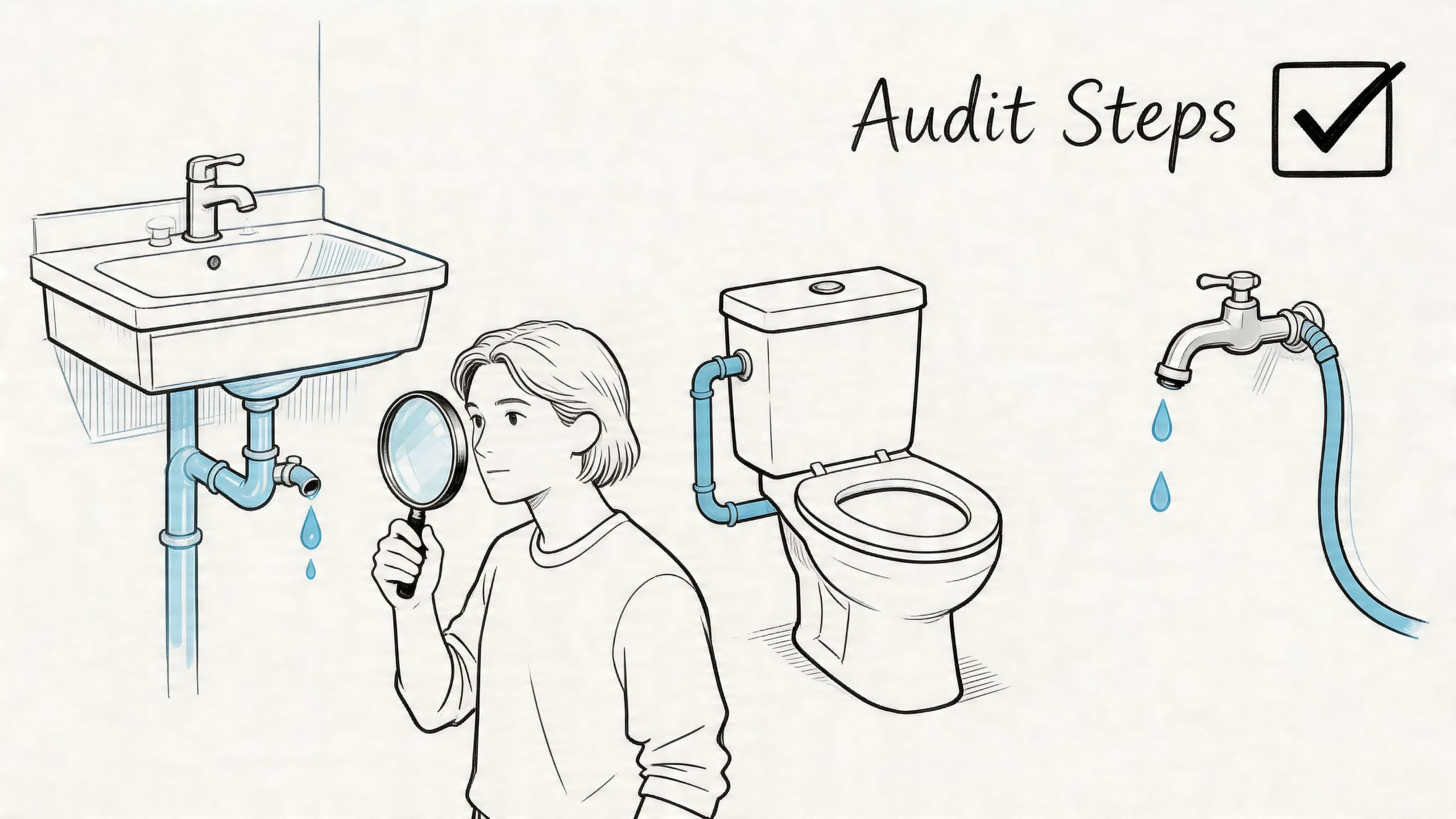
A basic home water audit doesn’t need special training. You need patience, food coloring, a flashlight, and a few quiet minutes when nobody is using water.
Start with the simplest checks first. They catch a lot of problems without tools or guesswork.
Check the water meter when the house is quiet
Pick a time when no one is showering, flushing, running the dishwasher, or using the washing machine. Turn off every water-using fixture and appliance you can.
Then do this:
- Find your meter: It’s usually near the street or sidewalk in a covered box.
- Read the meter: Take a photo so you don’t have to rely on memory.
- Wait without using water: Keep the house completely still for a while.
- Read it again: If the meter changed, water moved somewhere.
If the meter keeps moving, that points to a hidden leak. It could be a toilet, a supply line, a water heater connection, a slab leak, or a main water line issue in the yard.
Test every toilet with food coloring
This is the check I recommend first when a homeowner says the bill jumped but nothing looks wet. Toilets often develop issues imperceptibly.
A standard toilet with a faulty leaking flapper can waste up to 200 gallons of water daily, and you can test it by adding a few drops of food coloring to the tank. If color appears in the bowl within 10 to 15 minutes without flushing, the toilet has a flapper leak, according to this toilet leak guide.
Do the dye test on every toilet in the house, even the one nobody uses much. Guest bathrooms are frequent offenders because leaks can go unnoticed for weeks.
If you confirm a toilet leak and want a professional fix instead of trial-and-error parts swapping, toilet repair and replacement is often the fastest path.
If the bowl changes color without a flush, that toilet is using water all day, even when the bathroom door stays shut.
Look at the places homeowners forget
After toilets and the meter, walk the house slowly. Don’t rush it.
Check these spots:
- Under sinks: Feel around the shutoff valves and supply lines.
- Behind the washing machine: Look for dampness where hoses connect.
- At the dishwasher and refrigerator line: Small connection leaks can be easy to miss.
- Around the water heater: Look for moisture, rust marks, or water at the base.
- Outdoor spigots and hoses: A slow outdoor drip may not be obvious from indoors.
- Sprinkler zones: Watch for areas that stay muddy or greener than the rest.
Listen for clues, not just puddles
Plumbing leaks often make noise before they make damage visible. Stand still near toilets, walls, and the water heater. If you hear a faint hiss or refill sound when nothing should be running, don’t ignore it.
Also pay attention to small behavior changes around the house. A clogged toilet won’t flush properly. Low hot water can hint at a water heater problem. Slow drains may not raise the water bill directly, but they can point to broader plumbing trouble that deserves inspection.
If your meter shows movement but you can’t identify the source, that’s usually where DIY should stop. Hidden leaks behind walls, under slabs, and in underground lines need better equipment than a flashlight and food coloring.
Signs of a Major Plumbing Problem Needing Emergency Repair
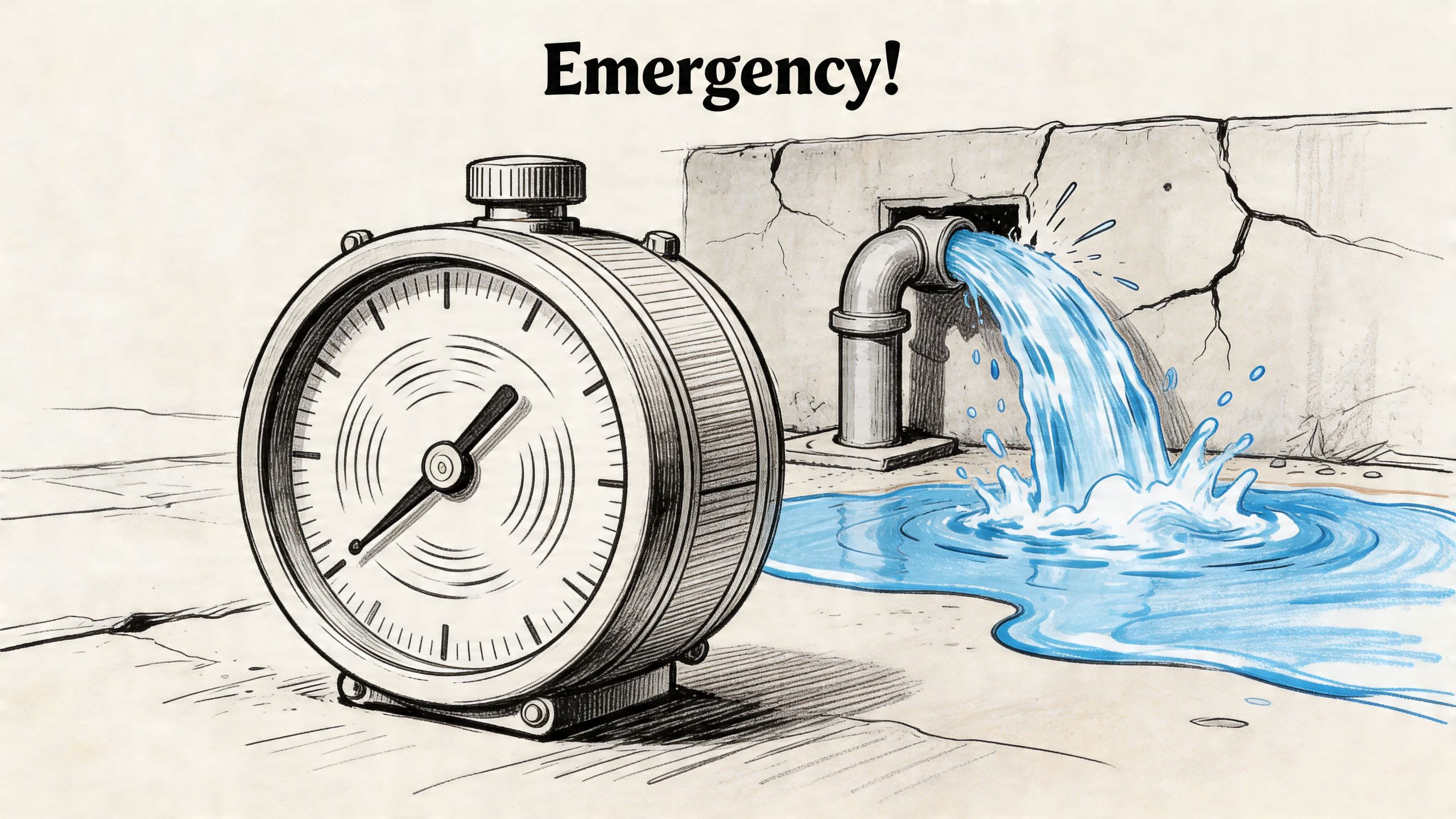
A high bill sometimes comes with a bigger warning. The water cost is only one symptom. The underlying problem is the pipe that’s failing under your yard, slab, or foundation.
Homeowners in Marietta, Canton, Alpharetta, and Roswell often lose time. They hope it’s a billing mistake, but the property is already showing signs of a serious leak or sewer issue.
The yard stays soggy and the pressure drops
A homeowner in Marietta might notice one patch of lawn that never dries out, even after a stretch without rain. Another in Woodstock may hear water running when the house is quiet. Someone in Alpharetta may turn on a faucet and wonder why the pressure suddenly feels weaker.
Those are classic signs of a possible main water line repair situation. If the underground line leaks, water escapes before it even reaches the fixtures inside the home. In Georgia clay soil, shifting ground can put stress on buried lines, and the surface clues may appear slowly.
Watch for signs like these:
- Wet or sunken spots in the yard: Especially near the path from meter to house.
- Lower water pressure indoors: Faucets and showers feel weaker than normal.
- Unexpected sounds: You hear running water with no fixture in use.
- Water near the foundation: This can point to a slab leak or line break.
If you suspect a slab leak, slab leak diagnostics and repair is the type of service to seek before the moisture spreads.
Sewer warnings look different
Sewer problems don’t usually raise the water bill the same way supply leaks do, but they often show up at the same time as broader plumbing trouble. A damaged sewer line can create backups, foul smells, and drainage problems that no homeowner should wait on.
A Canton homeowner searching for sewer backup help may notice gurgling drains first. A Roswell family may smell sewage in the yard. In older neighborhoods, repeated drain problems can point toward sewer repair or sewer replacement rather than a simple clog.
Look for this pattern:
- Sewage smell indoors or outside
- Multiple drains gurgling together
- Slow drains across the house
- Water backing up at the lowest fixture
- A toilet that won’t flush and nearby drains acting strangely
One clogged sink is a nuisance. Several fixtures acting up together usually means the issue is farther down the system.
Warning sign: When a toilet, tub, and floor drain all start misbehaving together, think beyond drain cleaning. That can point to a larger sewer line problem.
Burst pipes and active leaks need fast action
Some emergencies are obvious. Water is coming through drywall. A pipe froze or split. The ceiling starts staining. You don’t need more diagnostics at that point. You need a 24 hour plumber.
If a pipe has already burst, it also helps to understand what can happen after the leak stops. This overview of water damage from a burst pipe gives homeowners a useful look at the property side of the problem, including why quick documentation matters.
For emergency plumbing, the practical line is simple. If the problem is actively releasing water, affecting multiple fixtures, causing sewage backup, or threatening floors, walls, or the foundation, treat it as urgent. That applies whether you’re searching for burst pipe repair in Alpharetta, sewer repair in Canton, or main water line repair in Marietta.
Hidden Factors Driving Up Your North Atlanta Water Bill
Some high bills don’t come from an obvious leak at all. The plumbing system is still the issue, but the cause hides inside the pipes, the water heater, or the way your city calculates charges.
That’s where many generic articles fall short. They tell you to check for drips and stop there. In North Metro Atlanta, local water conditions and local billing structure can make the picture more complicated.
Hard water can quietly stress your plumbing
Hard water, common in many regions, causes mineral scale to build up inside water heaters, forcing them to work harder and use more energy and water. It can also contribute to internal corrosion and hidden pinhole leaks, according to this discussion of hard water and plumbing wear.
The problem may not look like a leak at first. You might notice reduced hot water performance, mineral crust around fixtures, lower flow at faucets, or a water heater that seems to be working harder than it should. Inside the system, scale can narrow passages and make parts fail sooner.
In homes dealing with persistent scale, a whole-home filtration approach is one option. JMJ Plumbing installs HALO whole-home water filtration systems, which are designed to reduce contaminants and help protect plumbing infrastructure from buildup.
Hard water is like plaque inside an artery. The pipe still works for a while, but flow and efficiency get worse as buildup narrows the path.
Tiered rates can magnify a small usage increase
Another source of confusion is the bill itself. In many municipalities, including some in Metro Atlanta, water is billed with tiered rate structures. Once usage crosses a threshold, the price per gallon can jump.
That means the bill doesn’t always rise in a smooth, predictable line. A hidden leak, a sprinkler problem, or a month of heavier summer use can push a household into a higher tier. The result feels out of proportion to the extra water used.
A homeowner may look at the total and assume a huge plumbing failure happened overnight. Sometimes the leak is real, but the bigger surprise comes from rate math. That’s why it helps to compare the current bill with past bills, look at total usage, and ask whether irrigation, guests, or a quiet fixture leak pushed the home across a threshold.
When to Call a 24 Hour Plumber in Woodstock or Roswell
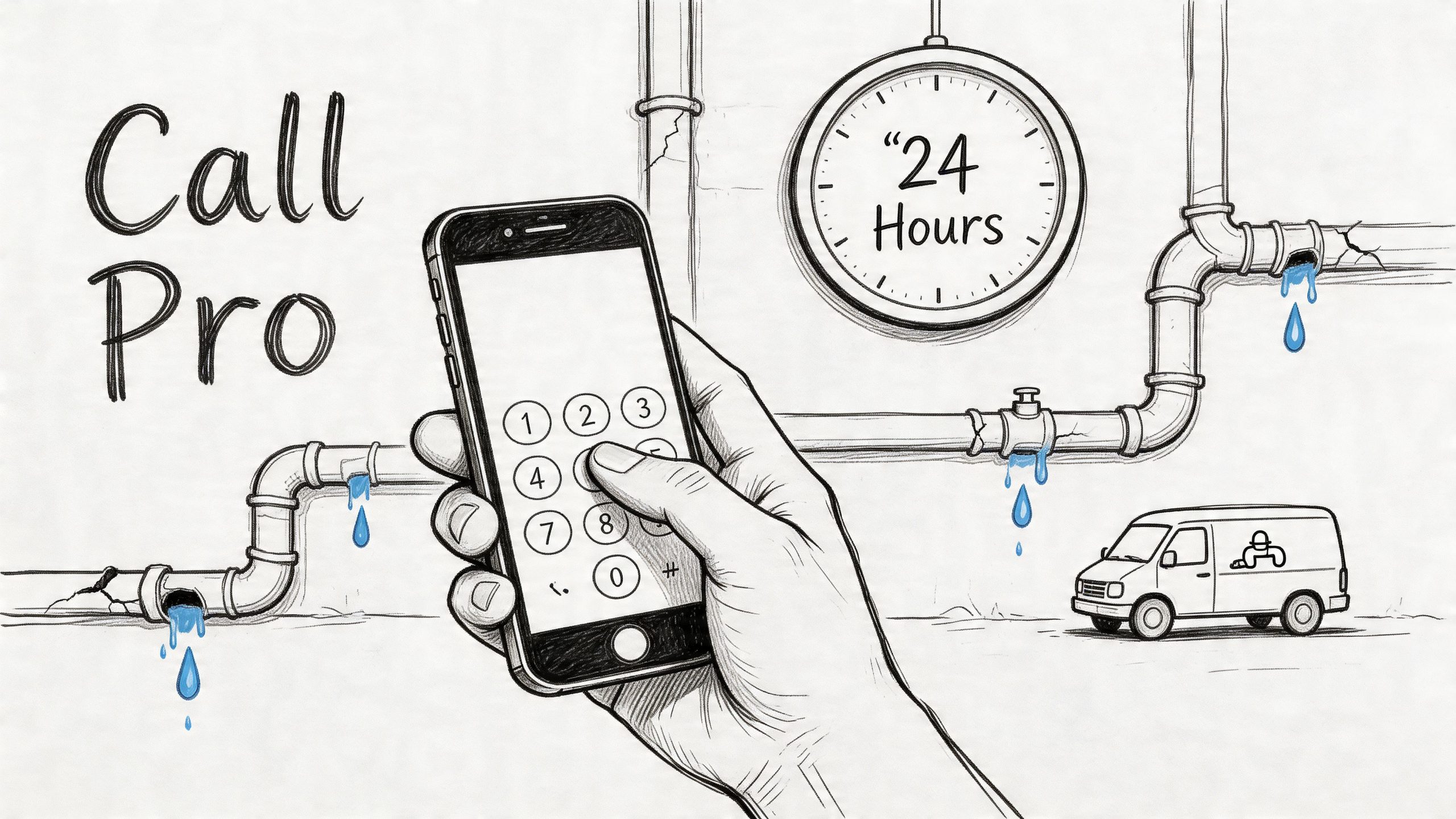
There’s a point where saving money means calling sooner, not later. If you’ve done the basic checks and the clues still don’t add up, a licensed plumber can usually find the source faster and with less property damage than continued guessing.
That matters when you’re dealing with an active leak, no hot water, a sewer smell, or low pressure that showed up suddenly. Waiting often turns a repair into a larger repair.
Call when the evidence points underground or behind walls
If your meter test shows water movement but you can’t find a leak inside, that’s a strong sign the problem may be hidden. The source could be under a slab, inside a wall, or in the main line outside.
That’s not the time to keep opening drywall at random or digging in the yard based on guesswork. It’s time to call a plumber who handles leak repair, main water line repair, and water line replacement with the right diagnostic equipment.
Good examples include:
- You hear water running but can’t locate it
- You have wet flooring, wall stains, or warm spots on the floor
- The yard is muddy with no weather reason
- Water pressure dropped across multiple fixtures
Call when the problem affects health, sanitation, or safety
Some problems move straight past DIY. If sewage is backing up, if a clogged toilet won’t flush and other drains are involved, or if foul odors are coming from the yard or drains, you may be dealing with a sewer line problem.
The same goes for no hot water when the water heater is leaking, or any situation where a pipe has burst and water is entering the home. Those are emergency plumber calls, not weekend projects.
Use this rule of thumb:
- Call today for sewer backup: Backups can spread contamination fast.
- Call today for burst pipe repair: Active water damage gets worse by the hour.
- Call today for no hot water with leaking tank signs: Water heater replacement may be necessary.
- Call today for repeated drain issues across the house: That can indicate sewer repair or sewer replacement, not just routine drain cleaning.
Local help matters when time matters
When homeowners search for help, they often type exactly what they’re facing: emergency plumber near me, 24 hour plumber Roswell, burst pipe repair Alpharetta, sewer repair Cumming, or water heater replacement Johns Creek. That search style makes sense because plumbing emergencies are local by nature.
If you’re in Cherokee County or nearby and need service in that area, Woodstock plumbing service is one example of a local coverage page that helps confirm availability. The main point is simpler: choose a licensed plumber who can respond quickly, diagnose accurately, and tell you clearly whether you need repair, replacement, or a short-term stopgap.
Call immediately: If you have active leaking, sewage backup, or sudden loss of water pressure, don’t wait for the next bill to confirm the problem.
Take Control of Your Water Bill with JMJ Plumbing
A high water bill is stressful, but it usually isn’t random. The cause is often hiding in one of a few places: a running toilet, a hidden leak, a failing water heater, an irrigation issue, or a larger water or sewer line problem.
Start with the simple checks. Read the meter. Test the toilets. Look under sinks, around the water heater, and outside near hose bibs and sprinkler zones. If the clues point to a hidden leak or an urgent plumbing issue, stop guessing and move to professional diagnostics.
That’s especially important in Cobb County, Cherokee County, North Fulton, and Forsyth County, where homes can deal with shifting clay soil, aging lines, and water quality issues that generic national advice doesn’t fully address.
JMJ Plumbing serves North Metro Atlanta with licensed plumbing diagnostics and repair, including leak repair, water heater replacement, drain cleaning, sewer repair, sewer replacement, main water line repair, and emergency response. If your bill jumped and you want a clear answer instead of another month of uncertainty, a professional inspection can turn the problem from confusing to fixable.
Frequently Asked Questions About High Water Bills
Can a bad water heater make my water bill go up
Yes. A water heater can raise your bill if it leaks from the tank, connections, or nearby valves. Sometimes the leak is obvious around the base. Other times it’s small enough that homeowners only notice rust marks, dampness, or reduced hot water before the bill climbs.
Hard water can also make the heater work less efficiently by creating mineral scale inside the tank and connected plumbing, as noted earlier. If you have no hot water, moisture around the unit, or signs of age, a plumber can tell you whether repair makes sense or whether water heater replacement is the more practical move.
Why is my water bill so high when I don’t see any leak
Because many leaks stay hidden. The most common examples are toilets that run unnoticed, water lines leaking underground, slab leaks, and small fixture leaks behind cabinets or walls.
That’s why the meter test matters. If no one is using water and the meter still changes, the system is telling you water is moving somewhere. You may not see the leak because it’s under flooring, behind drywall, or out in the yard near the main line.
What counts as a normal water bill in Metro Atlanta
There isn’t one universal “normal” bill because household size, irrigation, fixture age, and the local utility’s rate structure all matter. The same home can have very different bills in different months just from outdoor watering or crossing into a higher usage tier.
What matters more is comparison. If your bill is suddenly much higher than your usual pattern and your routine didn’t change much, investigate it. In many municipalities, including some in Metro Atlanta, tiered water rate structures mean crossing a threshold such as 5,000 or 8,000 gallons per month can increase the price per gallon significantly, and an undetected leak can push you into that higher tier, according to this report on tiered water billing and spikes.
Could the city ever be responsible for the leak
Sometimes, but it depends on where the leak is. In many cases, the homeowner is responsible for the line from the meter to the house, while the utility handles the public side of the system. The exact line of responsibility depends on the local provider and where the damage occurred.
If you suspect a line issue, call the water utility and a licensed plumber. The utility can help determine whether the problem appears to be on their side or yours, and the plumber can confirm whether you need main water line repair, water line replacement, or another type of fix.
Can a sewer problem raise my bill too
It can affect the overall bill picture, especially since many sewer charges are tied to water use. A direct water leak usually drives the usage increase, but sewer trouble often appears alongside it through backups, slow drains, gurgling fixtures, or sewage smell.
If several drains are acting up together, don’t assume it’s just a simple clog. You may need sewer repair, sewer replacement, or immediate help for a sewer backup rather than basic drain cleaning alone.
If you’re dealing with a sudden spike and want a clear answer, contact JMJ Plumbing. They serve North Metro Atlanta with help for leak repair, water heater replacement, sewer repair, drain cleaning, main water line repair, and 24/7 plumbing emergencies, so you can find the cause and fix it before the next bill gets worse.