Why Your Toilet Flushes on Its Own and How to Fix It

You hear it when the house is quiet. A quick refill sound from the bathroom, even though nobody touched the handle. It's unsettling the first time, but in plumbing terms it's usually not mysterious at all. It's phantom flushing, and it means water is slipping out of the tank when it shouldn't.
In North Metro Atlanta homes, this problem shows up all the time. Older toilets in Marietta, Roswell, Woodstock, and Acworth often have worn rubber parts, mineral buildup, or tank components that are just out of adjustment. The good news is that many phantom flush problems are straightforward to diagnose. The bigger issue is waiting too long and letting a small internal leak turn into a bigger repair.
Why Your Toilet Randomly Refills and What It's Costing You
Most homeowners describe the same thing. The toilet flushes on its own, or more accurately, it refills on its own. You'll hear a short hiss or a brief tank refill every so often, usually after the toilet has been sitting unused.
That sound means water left the tank. The toilet then tries to restore the correct tank level, so the fill valve turns on. The leak may be slow, but the waste adds up fast.
Why this small sound matters
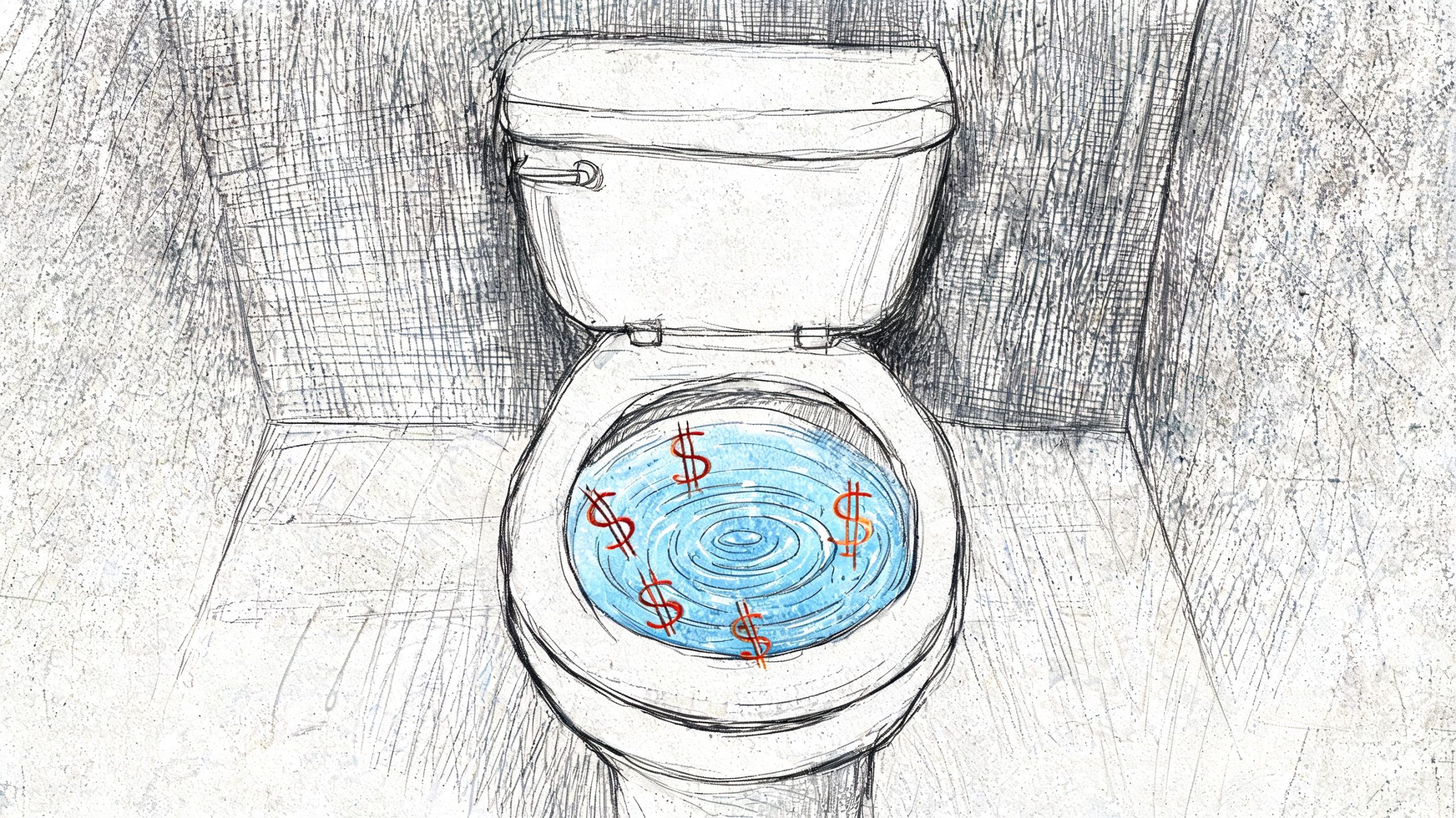
The scale surprises people. The Environmental Protection Agency warning on ghost flushing notes that a single ghost-flushing toilet can waste up to 200 gallons per day, and that kind of leak can add hundreds of dollars to annual water bills for homeowners in North Metro Atlanta.
If you've got a home in Alpharetta, Canton, or Johns Creek and your utility bill has crept up for no obvious reason, a running toilet is one of the first things worth checking. It doesn't leave a puddle on the floor, so people often miss it.
Practical rule: If your toilet makes refill noise when nobody has used it, assume it needs attention until proven otherwise.
The most common cause
In most cases, the toilet isn't actually “auto flushing.” The tank is leaking into the bowl because one internal part isn't sealing. That's often the flapper, but not always. Fill valves, floats, refill tube placement, and older tank hardware can also cause intermittent refills.
A lot of homeowners put this off because the toilet still seems to work. It flushes. It refills. Nothing appears broken. But that's exactly why phantom flushing sticks around. It feels minor until the water bill arrives, or until a simple part swap turns into a frustrating Saturday trip back to the hardware store.
What usually works first
Start with the easiest diagnosis before buying parts. In my experience, that saves more time than guessing. Before replacing anything, confirm whether water is leaking from the tank into the bowl.
That test takes only a few minutes to set up, and it's the best first step if your toilet flushes on its own.
The 10-Minute Dye Test to Pinpoint the Problem
Before you pull parts out of the tank, do one clean test. The food coloring dye test is the fastest way to find out whether water is leaking past the flapper or another sealing surface inside the tank.

The food coloring dye test instructions and benchmark state that this method has a 95% success rate in confirming internal leaks caused by a compromised flapper. The same guidance says to add 10 to 15 drops of dye to the tank, wait 10 to 30 minutes without flushing, and then check the bowl for color.
How to do it correctly
Take the tank lid off carefully and set it somewhere safe. Add the dye to the water in the tank, not the bowl. Then leave the toilet alone.
Don't jiggle the handle. Don't flush “just to check.” Let the toilet sit long enough for the leak to show itself.
If the bowl water changes color, the tank is leaking into the bowl. That points you toward the flapper first, and sometimes the flush valve seat if the flapper is new but still not sealing.
If the bowl water stays clear, the problem may be elsewhere in the tank. That usually means shifting your attention to the fill valve, float setting, or refill tube.
Mistakes that ruin the test
This is simple, but a few small mistakes can send you in the wrong direction.
- Using too little dye: A faint color change can be easy to miss. Give yourself enough contrast to see it clearly.
- Checking too soon: If you peek after just a few minutes, you may miss a slow leak.
- Forgetting which water you're watching: The tank should be colored. The bowl should stay clear unless water is leaking through.
- Flushing during the wait: That resets the whole test.
If the bowl turns blue or red without anyone flushing, the toilet has already told you where to start.
What the result means
A positive test means the tank seal isn't holding. That's often a worn flapper, mineral buildup on the seat, or a chain that doesn't let the flapper settle fully.
A negative test doesn't mean the toilet is fine. It means the leak likely isn't traveling from the tank to the bowl through the usual path. At that point, look at how the tank fills and shuts off.
If your toilet flushes on its own and the dye test is positive, you've got a useful answer. The next step is deciding whether the fix is a simple adjustment, a basic part replacement, or something better left to a plumber.
How to Adjust or Replace Common Toilet Parts
Once you know the issue is inside the tank, the fix usually comes down to a handful of parts. Some repairs are beginner-friendly. Others look simple until the wrong part size, old hardware, or mineral buildup turns it into a mess.
Start with the easiest adjustments
If the dye test was negative, check the tank water level. The fill valve troubleshooting guidance notes that 20 to 30% of ghost flushes are caused by a fill valve, and the water level should sit 1/2 to 1 inch below the overflow tube. The same guidance says minor float adjustments resolve up to 80% of these cases without full replacement.
On a cup-style float, you'll usually see an adjustment screw on top of the fill valve. Small turns are better than big ones. On an older ball-style float, the adjustment point is different, but the goal is the same. Keep the water level below the top of the overflow tube.
Also check the refill tube. It should feed water into the overflow opening correctly, not hang too deep or spray loosely inside the tank.
Shop-bench advice: Make one adjustment at a time, then test. If you change three things at once, you won't know what actually fixed it.
Common Phantom Flush Causes & Fixes
| Problem Part | Symptom | DIY Difficulty | Estimated Fix Time |
|---|---|---|---|
| Flapper | Colored water appears in bowl after dye test | Easy | Short |
| Chain | Flapper won't settle fully or gets hung up | Easy | Very short |
| Float | Tank water level sits too high | Easy | Short |
| Refill tube | Water behavior looks erratic after refill | Easy to moderate | Short |
| Fill valve | Toilet refills unexpectedly even after adjustment | Moderate | Moderate |
| Flush valve seat | New flapper still doesn't seal well | Moderate | Moderate |
What works and what usually doesn't
A flapper replacement is often the first repair homeowners try, and sometimes that's all it takes. Bring the old part with you if possible. Toilets don't all use the same setup, and matching the part matters.
Cleaning helps if mineral film is preventing a good seal. Wipe the seat and inspect the rubber. If the flapper looks stiff, warped, or rough around the edges, replace it instead of trying to stretch a little more life out of it.
For homeowners who want a second walkthrough before opening the tank, this guide on how to stop your toilet from running is a useful companion because it covers the basic moving parts in plain language.
If your tank parts are older, mismatched, or you're tired of guessing, it may make more sense to schedule a proper toilet repair or replacement service instead of buying two or three “universal” kits and hoping one fits.
A simple DIY line to respect
DIY makes sense when the issue is clearly inside the tank and the fix is limited to an adjustment or a direct part swap. It makes less sense when bolts are corroded, porcelain looks stressed, or the toilet has a history of repeat problems.
That's especially true in older North Atlanta homes where mineral content and aging fixtures can make a basic toilet repair much less basic once you start taking hardware apart.
When to Call an Emergency Plumber in North Metro Atlanta
Some phantom flushing problems are worth handling yourself. Some aren't. The hard part for homeowners is knowing where that line is before a simple repair turns into a leak at the base, a cracked tank, or a toilet that's now out of service.
Signs the problem is bigger than a flapper
If the dye test is negative but the toilet still refills on its own, that usually means the diagnosis needs to go deeper. The same goes for toilets with visible corrosion in the tank, wobble at the base, water on the floor, or recurring problems after a recent repair.
Older homes in areas like Marietta, Roswell, and Woodstock can hide a lot inside what looks like a routine toilet problem. I've seen toilets where the underlying issue wasn't the flapper at all. It was a failing gasket, damaged tank hardware, or a crack that only showed up once the tank was emptied and handled.
When DIY starts costing more
The guidance on ghost flushing repair risks warns that improper DIY flapper replacement, especially on older toilets common in Atlanta, can lead to cross-threaded bolts or mismatched parts such as 2-inch versus 3-inch, causing leaks and potentially tripling the final repair cost compared to a professional diagnosis.
That's the point where saving money on a small part can backfire. Homeowners often assume they bought the wrong flapper and keep changing parts, when the problem is really fit, hardware condition, or damage around the sealing surface.
Stop DIY work if you need to force a part, overtighten hardware, or guess at compatibility. Toilets punish that kind of guesswork fast.
Call now if you notice any of these
- Water at the base: This can mean a seal problem, loose mounting, or hidden damage under the toilet.
- A cracked tank or stressed porcelain: Don't try to nurse that along.
- A toilet that won't stop refilling after multiple attempts: The issue may involve several parts, not one.
- Shutoff valve problems: If the local shutoff doesn't work properly, a basic tank repair gets riskier.
- Other urgent plumbing symptoms: A running toilet plus low water pressure, a sewage smell, water in the yard, or backup signs can point to a larger plumbing issue.
If you're comparing providers, it's reasonable to browse plumbing service professionals and check credentials before booking. For urgent problems in Cobb County, Cherokee County, North Fulton, or Forsyth County, though, speed matters too. A toilet issue that starts inside the tank can overlap with leak repair, clogged toilet won't flush calls, or even broader emergency plumbing concerns.
If the bathroom floor is wet, the toilet is unstable, or the shutoff won't isolate the fixture, treat it like an urgent call. That's when a dedicated emergency plumbing service is the safer move.
Beyond the Flush Your Top Atlanta Plumbing Questions Answered
A toilet that flushes on its own is often a fixture problem. Sometimes it's also the symptom that makes homeowners notice a bigger plumbing issue elsewhere in the house.
Can phantom flushing be related to low water pressure
Usually, no. A ghost-flushing toilet is most often a toilet tank issue, not a whole-house pressure problem. But if you're also noticing weak shower flow or inconsistent sink pressure, it's worth checking for a separate supply-side issue.
That can include leak repair needs, valve problems, or main water line repair if pressure changes are affecting multiple fixtures.
Could this mean I need sewer repair
Not by itself. Phantom flushing normally happens inside the toilet tank, while sewer repair issues show up differently. Look for slow drains, gurgling fixtures, sewage smell, or a sewer backup in tubs, showers, or floor drains.
If your toilet also clogs often or drains slowly, that's when drain cleaning, toilet augering, or even sewer replacement enters the conversation.
Why do older Atlanta toilets keep having repeat issues
Aging parts are one reason. Local water quality can also be rough on rubber seals and internal components. Mineral buildup changes how flappers seal, how fill valves shut off, and how smoothly moving parts operate.
That's why one repair may solve the immediate noise but not the underlying wear pattern in the fixture.
Is a running toilet ever an emergency
Sometimes, yes. If the shutoff valve fails, the toilet leaks onto the floor, or the bathroom is part of a larger active plumbing event, call a 24 hour plumber or emergency plumber right away.
The same applies if the toilet problem appears alongside a burst pipe repair situation, water coming through ceilings, or unexplained water in the yard that may point toward a water line replacement issue.
What if my toilet also won't flush well
That's a different branch of diagnosis. If the clogged toilet won't flush, don't assume phantom flushing is the only issue. You may have a bowl obstruction, a trapway blockage, or a branch line clog.
For that kind of problem, a dedicated drain cleaning and toilet clog service makes more sense than continuing to work inside the tank.
If your toilet flushes on its own, keeps running, or you're dealing with a bigger plumbing problem anywhere in North Metro Atlanta, JMJ Plumbing is available 24/7 for fast, licensed help. From toilet repairs and leak detection to drain cleaning, sewer repair, water line replacement, and water heater replacement, the team serves homeowners across Woodstock, Acworth, Alpharetta, Canton, Roswell, Marietta, Cumming, Johns Creek, and surrounding areas with clear diagnostics and dependable repairs.