Sewer Line Replacement Insurance: A Homeowner’s Guide
Standard homeowners insurance usually does not pay for sewer line replacement when the problem comes from wear and tear, corrosion, or tree roots. In most cases, you need a separate add-on, often called service line coverage, if you want insurance help with the pipe itself.
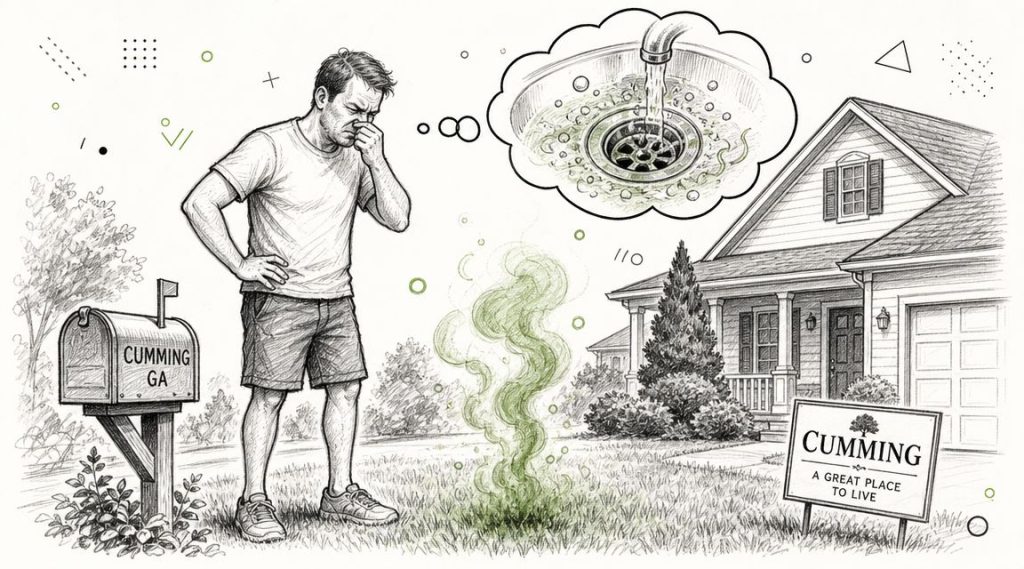
If you're reading this in Woodstock, Marietta, Roswell, Cumming, or anywhere else in North Metro Atlanta, there's a good chance you're already seeing the warning signs. Maybe the toilet won't flush right. Maybe every drain in the house is slow. Maybe there's a sewage smell in the yard, or a wet patch near the walkway that doesn't make sense.
That kind of problem gets expensive fast, and the worst part is that many homeowners assume their policy will step in. Usually, it won't.
I've seen homeowners focus on the wrong question first. They ask, "Will insurance cover this?" before they ask, "What exactly failed?" That's backwards. First you need to know whether you're dealing with a drain cleaning issue, a sewer backup, a broken main line, root intrusion, or full sewer replacement. Then you can figure out whether insurance, a warranty, or your own pocket is the likely payer.
This guide is for homeowners in Acworth, Alpharetta, Canton, Johns Creek, and the rest of Metro Atlanta who want a straight answer. No policy fluff. No vague internet advice. Just what usually gets covered, what doesn't, and what to do next.
Is a Sewer Line Problem Brewing in Your Yard
A lot of sewer problems don't start with a dramatic backup. They start small.
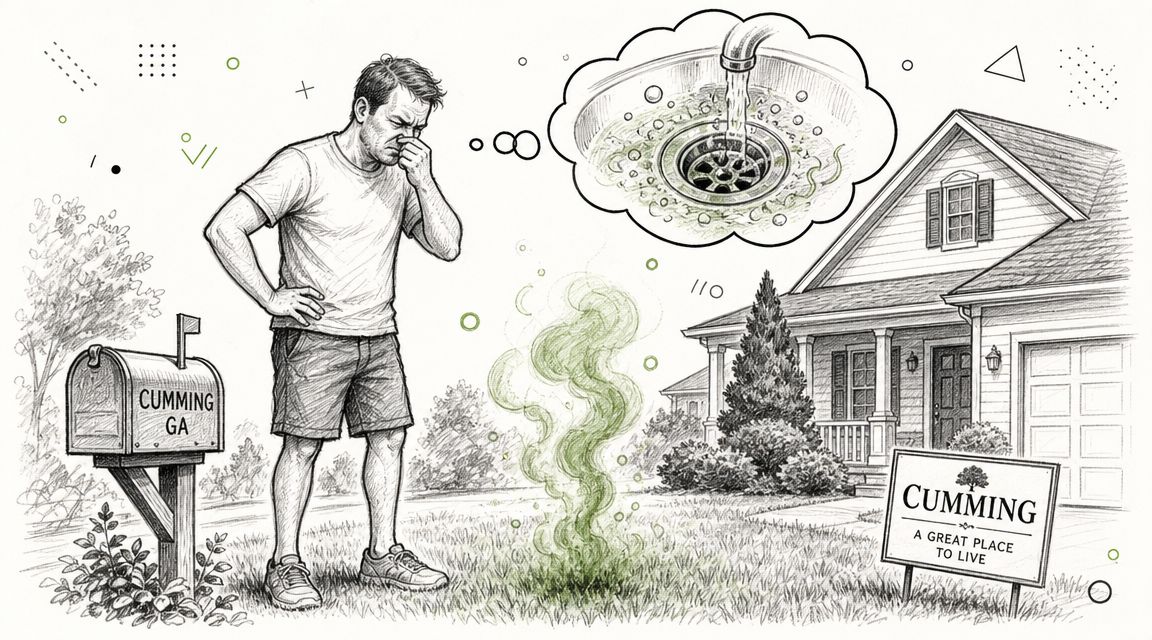
In Cumming, it might be a sour smell near the front flower bed. In Marietta, you might hear a gurgling sound after running the washing machine. In Woodstock, the clue is often a clogged toilet that keeps coming back even after you plunge it. Homeowners often hope it's just a simple drain cleaning call. Sometimes it is. Sometimes it's the main sewer line telling you it's failing.
Signs you shouldn't ignore
When the main line starts having trouble, the symptoms usually show up in more than one place. That matters. A single slow sink can be a local clog. A whole house acting strange points to a bigger problem.
- Multiple drains are slow: If the tub, toilet, and sink all struggle at the same time, think beyond a simple clog.
- Sewage smell outside: A persistent odor in the yard can mean the line is cracked, leaking, or blocked.
- Water pooling in the yard: Soggy ground near the sewer path is a bad sign, especially if it isn't tied to rain.
- Recurring backups: If you clear one fixture and another starts acting up, the blockage may be in the main sewer line.
Practical rule: If more than one plumbing fixture is involved, stop assuming it's a minor issue.
North Metro Atlanta homes have a mix of ages, lot sizes, and tree coverage. That matters. Older homes in places like Roswell and Marietta often have aging underground piping. Larger wooded lots in Canton, Woodstock, and Johns Creek can mean aggressive root activity near the sewer line. Add shifting soil, old repairs, and years of buildup, and you've got a problem that can move from nuisance to emergency quickly.
The money question hits fast
Once sewage smell, slow drains, or a backup shows up, homeowners jump straight to cost. That's understandable. Sewer repair and sewer replacement aren't small-ticket plumbing jobs.
The hard truth is this. Standard homeowners insurance usually isn't designed for the most common sewer line failures. If the pipe deteriorated over time, roots got in, or the material reached the end of its life, you're often looking at an uncovered repair unless you bought extra protection ahead of time.
That's why this issue rattles people. It isn't just a plumbing problem. It's a coverage gap.
What Standard Homeowners Insurance Actually Covers
Most homeowners policies work on a simple idea. They cover sudden and accidental damage from specific causes. They are not maintenance plans for underground pipes.
That's the piece many homeowners miss.
Covered peril versus excluded cause
If a vehicle damages the line, or a fire, lightning, explosion, or vandalism creates a direct sudden loss, sewer line replacement may be covered under a standard homeowners policy, depending on the policy details. If the line fails because of root intrusion, corrosion, wear and tear, or poor maintenance, it's usually excluded, as explained in GEICO's overview of sewer line replacement coverage.
Think of it this way. Insurance responds better to an event than to aging. A pipe crushed in a sudden incident fits the first category. A pipe that slowly rotted underground doesn't.
Insurance isn't saying the damage isn't real. It's saying the cause usually falls outside the policy.
Why homeowners get tripped up
Part of the confusion comes from how broad "homeowners insurance" sounds. People hear that phrase and assume everything tied to the house is included. It isn't.
Underground service lines sit in a gray area for many people because they're easy to forget until they fail. You don't see them every day. You don't maintain them the way you maintain a water heater or a faucet. Then one day your yard smells like sewage and the whole issue becomes urgent.
A smart move is to review your exact policy language before you have a problem. If you're comparing carriers or trying to understand how a higher-end policy might handle exclusions and endorsements, it's worth taking a few minutes to learn to quote AIG home insurance and compare what different policy structures offer.
What to ask your insurance agent
Don't ask, "Am I covered for sewer issues?" That's too broad and you'll get a broad answer.
Ask these instead:
- Does my policy cover the sewer line itself? Not water damage inside. The actual buried pipe.
- Is service line coverage included or optional? Many homeowners assume it's automatic when it isn't.
- What causes are excluded? Root intrusion, corrosion, wear and tear, and maintenance-related denials matter most.
- What section of the policy would apply? You want the exact policy part, not a verbal summary.
- What documentation would a claim require? Camera inspection findings, photos, and plumber reports often matter.
If your agent can't answer those clearly, keep asking until you get a plain-English answer. This isn't a small technicality. It's a major financial exposure.
Specialized Insurance Add-Ons That Protect Your Pipes
A lot of North Metro Atlanta homeowners learn this too late. The policy they've paid for years will help with some water damage inside the house, but it may do nothing for the failed sewer pipe buried across the yard in Roswell clay or under mature trees in Marietta.
That is why you need to separate two coverages that sound similar but solve different problems.
Service line coverage versus backup coverage
Service line coverage pays for the exterior buried line itself, subject to the endorsement's limit, exclusions, and deductible. Backup coverage usually pays for cleanup and damage inside the home when sewage or water backs up through a drain, toilet, or floor drain.
Those are two different losses. Many homeowners in Woodstock and surrounding areas assume one endorsement handles both. It usually does not.
Here's the practical way to read it. If the pipe in your yard collapses, cracks, or needs excavation, you are looking at service line coverage. If sewage comes up into the basement, lower bath, or finished area and ruins flooring or drywall, you are looking at backup coverage. If you own an older home with big trees, you should strongly consider carrying both.
Sewer line protection options compared
| Protection Type | What It Covers | Typical Exclusions | Best For |
|---|---|---|---|
| Service line coverage | The buried exterior sewer or water line, often including excavation, repair, and replacement if the endorsement allows it | Wear-related exclusions, uncovered causes, claim caps, and policy-specific limitations | Homeowners worried about the actual pipe between the house and the utility connection |
| Sewer or water backup coverage | Interior damage caused by a backup event, such as wet flooring, drywall, cabinetry, or cleanup costs | Exterior pipe repair, low limits, and exclusions tied to cause or maintenance issues | Homeowners worried about mess and damage inside the house |
| Standard homeowners policy only | Limited losses tied to a covered peril, if the policy language supports it | Root intrusion, corrosion, age, deferred maintenance, and many gradual failures | Homeowners willing to keep more of the risk themselves |
This distinction matters more in North Metro Atlanta than many people realize. Older neighborhoods in Marietta and Roswell often have mature root systems and aging lines. Even in newer areas, shifting soil, poor past repairs, and builder-grade materials can turn a small drainage issue into a full excavation job.
What these endorsements usually look like
The Insurance Information Institute notes that service line endorsements are commonly sold as optional add-ons to homeowners policies and can help pay to repair or replace underground utility lines on your property, including sewer lines, depending on the insurer and endorsement terms, as explained in the Insurance Information Institute's overview of service line coverage. The key phrase is “depending on the endorsement terms.” That is where expensive mistakes happen.
Do not buy based on the endorsement name alone. Read the limit. Read the deductible. Check whether the policy pays for excavation, access, and restoration, or just the pipe itself. Ask whether root intrusion, corrosion, ground movement, or repeated backups are excluded. In North Metro Atlanta, those details decide whether the endorsement helps when the line fails.
If your home was built decades ago, if you have large trees near the sewer path, or if you have already had slow drains, a sewer odor in the yard, or recurring stoppages, adding this coverage is usually a smart move. If you want a plain-English breakdown before you call your carrier, this guide on comprehensive sewer line insurance is a useful starting point.
My recommendation is simple. Match the endorsement to the failure you are most likely to face, not the one with the nicest marketing label. If you are not sure what condition your line is in, get a camera inspection from a local plumber before you trust your policy to save you.
Insurance vs Home Warranties vs Municipal Responsibility
Homeowners need to be practical, not hopeful.
You have three broad ways to deal with sewer line risk. Buy insurance coverage for it. Buy some form of warranty protection. Or keep the risk and self-fund the repair if it happens. On top of that, you need to know where your responsibility ends and the city's begins.
Insurance and self-funding
Service line endorsements often cost roughly $30 to $250 per year for about $10,000 to $20,000 in coverage, and guides note they make the most sense for older homes and homes with mature trees, according to Repipe Solutions' discussion of sewer line replacement coverage.
That's the clean version. The actual version is messier.
If your home is newer, you have little tree pressure, and your sewer line has already been replaced with a modern material, self-funding may be reasonable. If your house is older, your lot is wooded, and you've already had slow drains or root issues, paying for coverage can be the smarter move. The key is not to buy it blindly. Deductibles, limits, and exclusions still matter.
Home warranties and city responsibility
Home warranties attract homeowners because they sound simple. Sometimes they do help. Sometimes they also come with tighter claim rules, lower caps, pre-existing condition arguments, or restrictions on which contractor can do the work. Read those agreements carefully before treating them like true sewer line replacement insurance.
Then there's municipal responsibility. Many homeowners assume the city owns the whole sewer line because it ultimately connects to the public system. Usually, that's wrong. In many cases, the homeowner is responsible for the private line from the house to the connection point, while the municipality handles the public side.
Before you argue with your insurer, call the city or county utility department and ask one question: where does my responsibility stop? For a homeowner in Roswell, Canton, or Cobb County, that answer can change the entire financial picture.
My recommendation
Use this short decision filter:
- Older home with big trees: Lean toward coverage.
- Recent sewer replacement and low risk lot: Self-funding may be fine.
- You hate claim ambiguity: Don't rely on a warranty alone.
- You don't know where the public line begins: Find out now, before there's sewage in the house.
Most bad outcomes start with assumptions. Fix the assumptions first.
The Real Cost of Sewer Replacement in North Metro Atlanta
A homeowner in Woodstock flushes a toilet, hears gurgling in the shower, and notices a wet strip in the yard by the driveway. At that point, cost stops being an abstract number. It becomes a question of how far the line runs, what sits above it, and how much digging it will take to reach the failure.
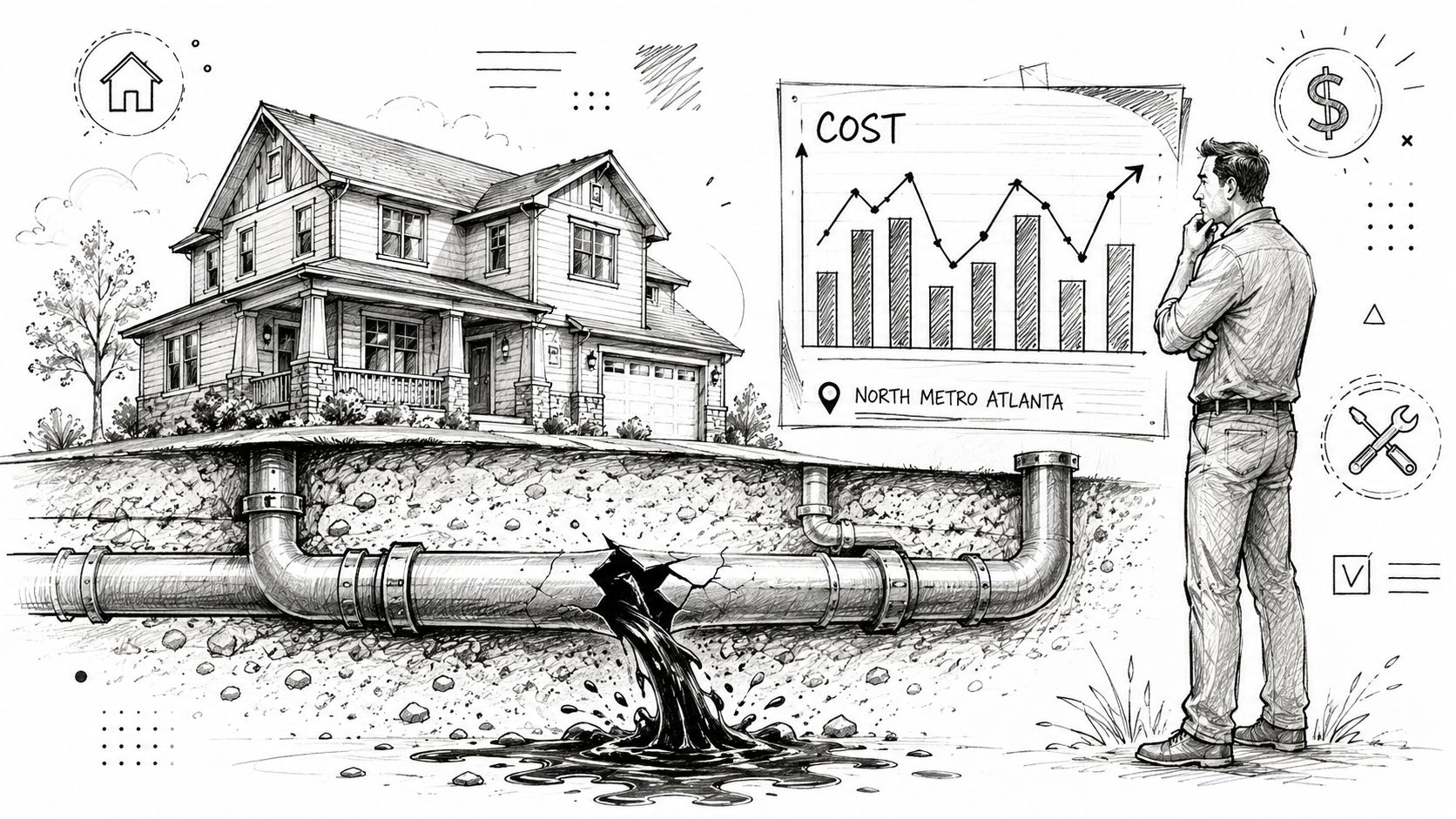
Sewer work gets expensive because access drives the bill as much as the pipe itself. A damaged line might sit under grass, concrete, pavers, a retaining wall, or mature landscaping. The scope can include inspection, excavation, pipe replacement, testing, backfill, and surface restoration. That is why two homeowners in Marietta with "the same sewer problem" can get very different estimates.
Why prices vary so much
National averages are useful for one thing. They remind you that sewer replacement is a major expense, while a minor repair is a different category entirely.
What matters more in North Metro Atlanta is the job in front of you. A short, shallow line in open soil is one price. A deeper line running under a driveway or patio is another. Add roots, old clay or cast iron, or a long run to the street, and the quote climbs fast.
What usually drives the price in North Metro Atlanta
A serious estimate should account for these factors:
- Where the pipe sits: Open yard is simpler than concrete, stone, or hardscape.
- How deep it is: Deeper excavation means more labor, more equipment, and more time.
- How much pipe failed: A small repair costs less than replacing the full run.
- What caused the problem: Roots, a belly, offset joints, or a collapse do not require the same fix.
- What must be rebuilt afterward: Sod, shrubs, sidewalks, and driveways add cost after the plumbing work is done.
- Which repair method fits the site: Traditional trenching and trenchless options change both disruption and price.
If a contractor throws out a number before discussing depth, access, and restoration, you do not have a dependable sewer replacement quote yet.
Why local conditions matter
North Metro Atlanta homes are not cookie-cutter. Roswell has older neighborhoods with mature trees and root-heavy lots. Parts of Marietta and East Cobb have long private sewer runs. Woodstock and Canton properties can have layouts that make equipment access harder than homeowners expect. Those details affect both repair method and final cost.
Local diagnosis matters for another reason. Some homes need a spot repair. Others have a line that has failed in multiple places and should be replaced once instead of patched repeatedly. I would rather see a homeowner pay for one good inspection than pay twice for guesswork and emergency visits.
Before scheduling work, confirm the plumber covers your area. You can check JMJ Plumbing's North Metro Atlanta service area if you are in Woodstock, Roswell, Marietta, or nearby communities.
A useful estimate follows a camera inspection and site review. That is how you get a number you can budget around, compare, and use for an insurance claim if coverage applies.
Your Step-by-Step Guide When You Suspect a Problem
When you think the main sewer line is failing, don't keep using water to "test it." That's how a manageable issue turns into a house cleanup problem.
Do these steps in order.
First protect the house
- Stop using fixtures. Don't run the dishwasher, washing machine, showers, or sinks if multiple drains are backing up.
- Keep people away from contaminated areas. If wastewater has surfaced, treat it like a health issue, not just a plumbing nuisance.
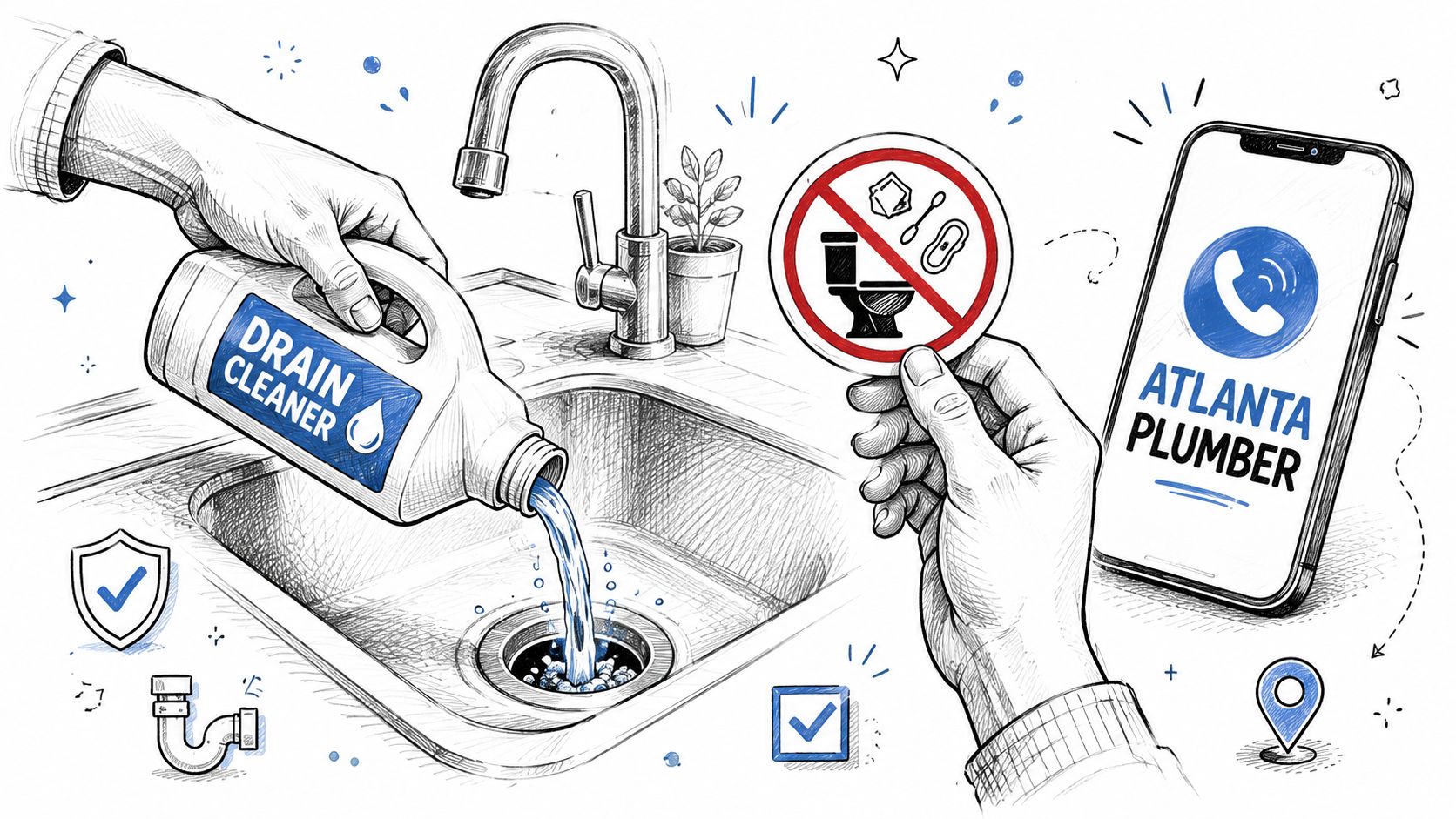
- Skip the repeated chemical drain cleaner attempts. They rarely fix a collapsed or root-filled main line, and they can create hazards for the plumber who has to open the system.
Then get a real diagnosis
The most useful first call is to a plumber who can inspect the line instead of guessing. A proper sewer camera inspection shows whether you're dealing with roots, a belly, a break, grease buildup, offset joints, or a collapse. If you need that diagnostic step, schedule a residential sewer camera inspection before making insurance assumptions.
This is the point where you want facts on paper. "It smells bad" isn't enough for a claim, a warranty request, or a replacement decision. Video evidence and a written finding carry more weight.
Document everything
Take your phone and create a clean record.
- Photograph visible symptoms: Yard pooling, sewage on floors, stained baseboards, or overflowing fixtures.
- Record short videos: Gurgling drains, bubbling toilets, or standing wastewater can help show the problem clearly.
- Save dates and timing: Write down when you first noticed symptoms and what happened next.
- Keep every invoice and report: Diagnosis notes, camera findings, and emergency mitigation receipts matter.
Start a single folder on your phone for this problem. Claims get messy when photos, emails, and invoices are scattered.
Pull your policy before you call the carrier
This step saves time. Find the declarations page and any endorsements. Look for terms like service line, backup, buried utility lines, or exclusions related to wear and tear and roots.
Then call the insurer and ask narrow questions. Tell them the diagnosed cause if you have it. Don't summarize with vague language like "sewer problem." Cause matters.
Decide repair or replacement based on the line condition
Not every sewer issue means full replacement. A blockage may call for drain cleaning. Root intrusion might allow a repair in one section. A collapsed, deteriorated, or badly offset line may push you toward replacement.
The wrong move is approving a major job before you've confirmed what's underground. A camera inspection is what turns panic into a repair plan.
Preventing Sewer Disasters and Who to Call in Atlanta
Most sewer emergencies give warnings first. Homeowners just don't always recognize them.
A recurring clog, a bubbling toilet, low-flow drains, sewage smell outside, or water in the yard aren't normal annoyances. They're early signs that deserve attention before you end up needing emergency sewer repair in Woodstock, a sewer backup cleanup in Marietta, or full sewer replacement in Roswell.
Prevention that actually helps
You don't need a complicated plan. You need better habits and faster response.
- Watch what gets flushed: Wipes, grease, hygiene products, and heavy paper products create avoidable blockages.
- Don't ignore repeat symptoms: A clogged toilet that won't flush properly over and over is often a system warning, not a toilet problem.
- Pay attention to trees: Large root systems and old sewer lines are a bad combination.
- Schedule inspection when patterns show up: One isolated clog is one thing. A pattern needs a closer look.
My direct advice for North Metro Atlanta homeowners
If your house is older, your lot has mature trees, or you've had more than one drain issue in the past year, review your policy now. Don't wait for a sewer smell in the yard to find out you never had the right endorsement.
And when symptoms move beyond a simple plunger fix, call a plumber who handles emergency diagnostics, sewer repair, water line replacement, leak repair, and backup problems in the North Metro area. For urgent help, homeowners can use JMJ Plumbing emergency plumbing service for after-hours issues and fast response on serious plumbing failures.
A sewer line problem rarely gets cheaper by waiting. It usually gets wetter, dirtier, and harder to manage.
If you're in Acworth, Alpharetta, Canton, Cumming, Johns Creek, Marietta, Roswell, or nearby, the smartest move is simple. Get the line diagnosed early. Confirm whether the issue is a clog, repair, or replacement situation. Then make the insurance call with real evidence in hand.
If you're dealing with slow drains, sewage smell in the yard, a sewer backup, or you need a clear answer on sewer repair versus replacement, contact JMJ Plumbing. They serve North Metro Atlanta with licensed plumbing diagnostics, sewer line repair and replacement, drain cleaning, leak repair, water line work, and 24-hour emergency plumbing support.