Pipe Metal Detector: A Homeowner’s Guide to Finding Pipes
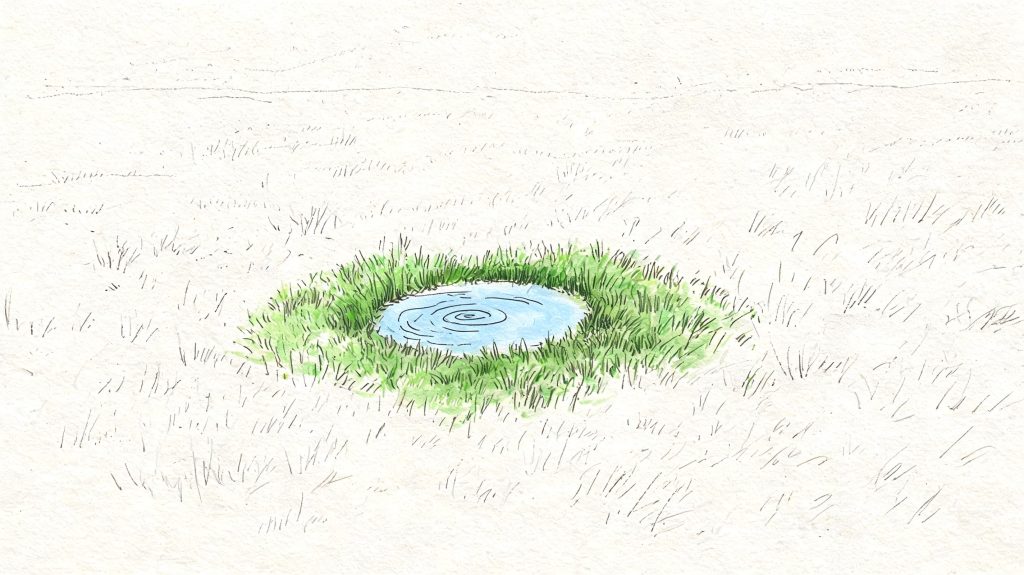
A wet spot in the yard gets your attention fast. In Roswell, Marietta, Woodstock, and the rest of North Metro Atlanta, that mystery usually starts the same way. The grass stays soggy in one area, the water bill looks off, the pressure inside drops, or you catch a sewage smell that wasn't there last week.
A lot of homeowners do the same thing next. They search for a pipe metal detector, head to the hardware store, and hope one tool will tell them exactly where the problem is. That sounds reasonable until you remember one hard truth from the plumbing side of the job: finding a buried pipe is not the same as finding the leak, and finding metal is not the same as diagnosing a water line or sewer problem safely.
That Puddle in the Yard a Sign of a Bigger Problem
A homeowner in Woodstock sees standing water near the side yard after two dry days. Another in Cumming notices one patch of lawn staying bright green while the rest starts to fade. In Alpharetta, someone turns on a shower and feels the pressure drop for no clear reason. Different symptoms, same question. Where is the pipe, and what is going wrong underground?
The trouble is that water in the yard doesn't always mean bad drainage, and bad drainage doesn't always mean a broken water line. Sometimes the issue is surface runoff, grading, or pooled rainwater. If your yard floods after storms but your plumbing symptoms don't point to a leak, guides like Modern Yard Landscapes drainage services can help you understand the drainage side of the problem.
When the puddle shows up with low pressure, a spinning meter, or a soft warm area near the home, the plumbing side moves to the front of the line. In those cases, underground detection matters because random digging can make a small issue much worse. A hidden leak under concrete can also mimic outdoor moisture, which is why homeowners dealing with unexplained moisture near the home often end up needing a closer look at slab leak warning signs and repair options.
What homeowners usually hope a detector will do
Many professionals search for one simple answer:
- Find the pipe path: Show where the water or sewer line runs.
- Find the damage: Tell them the exact break location.
- Avoid digging up the yard: Keep the repair small and targeted.
- Give certainty fast: Confirm whether the issue is plumbing or drainage.
A detector can be part of the answer. It is not the whole diagnosis.
A pipe locator is a real tool used every day in plumbing and utility work. But the hardware store version often gives homeowners confidence before it gives them useful information. That's where jobs start to go sideways.
How Professional Pipe Locators Work
A professional pipe locator doesn't work like a coin-hunting beach detector. A hobby detector is built to alert you that some metal is in the ground. A plumbing locator is built to help trace a line, separate useful signal from background noise, and guide the next diagnostic step.
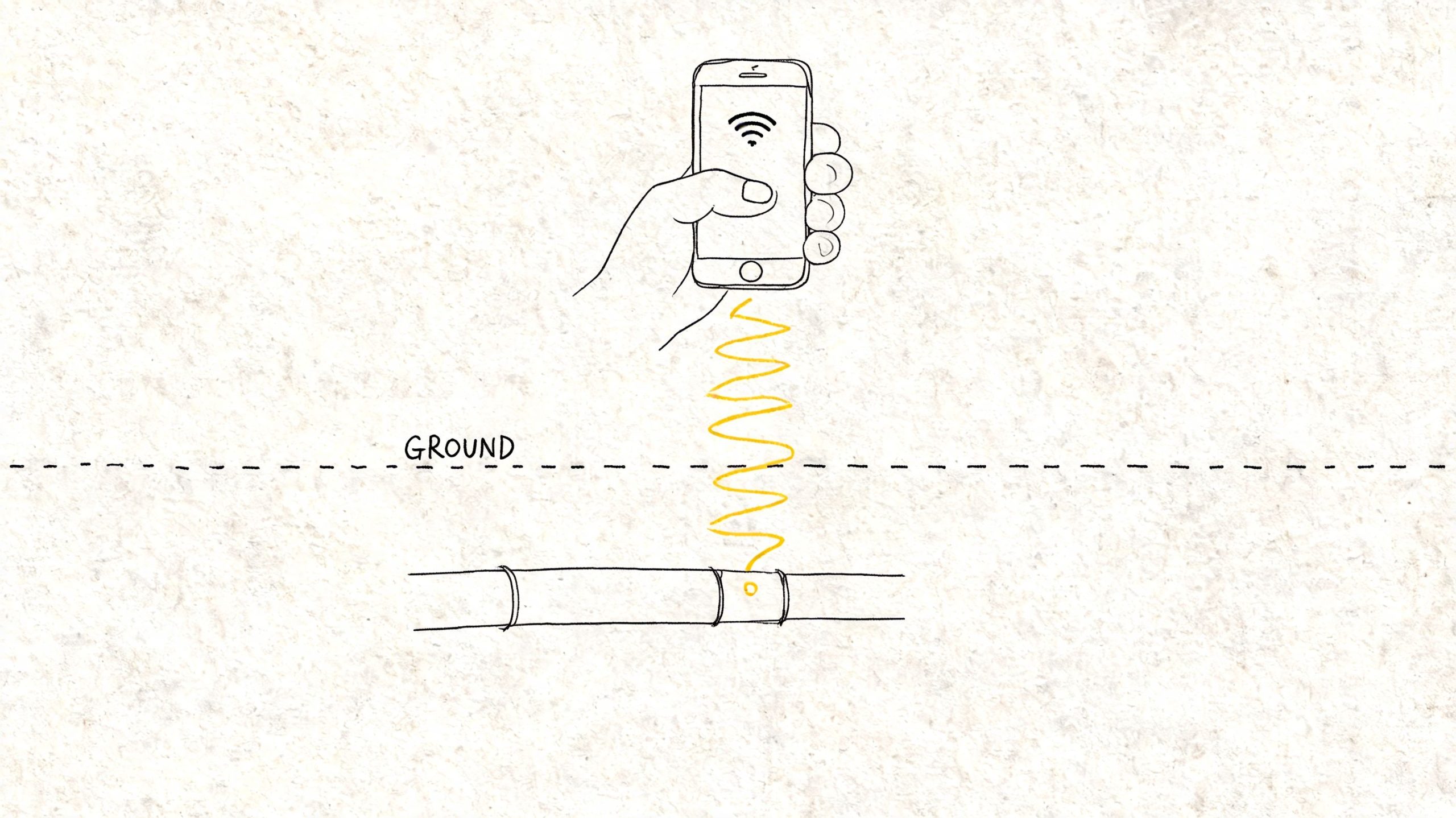
The core idea is electromagnetic detection. This process functions by focusing on one specific signal rather than receiving interference from every direction. The locator sends or reads a signal tied to the buried metallic line, then the technician follows that path across the yard, driveway, or crawlspace route.
The technology behind the tool
The underlying design has been around a long time. The balanced coil system, the foundational technology in most modern pipe metal detectors, was patented in the 19th century but saw its first industrial application in 1948. This three-coil design is critical for locating buried service lines made of copper, brass, steel, and lead according to this metal detector technology guide.
That matters because a pro isn't just listening for a beep. The technician is reading the pattern of the signal, watching how it behaves across the ground, and checking whether the response matches a buried line or a random metal object.
What a plumber actually uses it for
On a real plumbing call, location usually works as part of a chain:
- Establish the likely route from the meter, cleanout, foundation exit, or known service point.
- Trace the metallic line with a locator or compatible signal method.
- Verify with another diagnostic tool such as acoustic leak detection, pressure testing, or a sewer camera inspection for underground drain lines.
- Mark the dig area tightly so the repair crew opens the smallest practical section.
Practical rule: The best pipe metal detector work narrows the search. It doesn't replace verification.
A sewer line problem is a good example. If a yard line has cast iron sections, metal components, or a traceable path, locating helps map where the line runs before a camera goes in. If the line is blocked, bellied, cracked, or root-bound, the camera confirms the condition. That combination is what turns guesswork into a repair plan.
Solving Plumbing Mysteries in North Metro Atlanta
The value of a pipe metal detector shows up in the jobs that make homeowners nervous. The yard is wet. The driveway might need to be opened. The sewer backs up on a weekend. Everyone wants the same thing. Find the problem fast, and don't tear up more property than necessary.
Main water line repair in Marietta
A homeowner in Marietta sees a wet strip running from the meter toward the house. The pressure indoors feels weaker than normal, but there isn't water coming through a wall or ceiling. Locating the buried service line first saves time in these situations.
If the line is metallic, a trained tech can trace its route, mark the likely path, and narrow where acoustic leak tools need to focus. Instead of trenching the whole yard, the crew works from a much tighter target area. That matters whether the final fix is a spot repair or a larger main water line repair.
Sewer replacement in Roswell
Roswell has plenty of homes where old materials and newer repairs meet each other underground. One section may be older metal. Another may have been replaced years later. If a sewer line needs replacement, knowing the route before excavation changes the whole plan.
In older Atlanta suburbs like Kennesaw and Roswell, metal detectors are important for identifying buried lead pipes. A Water Research Foundation study confirmed their strength for nonferrous metals like lead, which supports the EPA effort to map 9.2 million lead lines nationwide, as described by the EPA overview of electromagnetic methods and metal detectors.
That isn't an abstract regulatory issue. On the ground, pipe identification affects safety, planning, material decisions, and how carefully a crew approaches a dig.
Leak detection before sewer repair or water line replacement
A detector doesn't hear water escaping. It helps the technician find the line that might be leaking. That distinction matters.
After the line path is marked, other equipment takes over. Depending on the symptoms, that might mean:
- Acoustic listening tools for pressure-side leaks
- Pressure testing to confirm line loss
- Camera equipment for a sewer backup, recurring drain blockage, or sewage smell
- Surface inspection around the meter box, foundation wall, or cleanout area
Why this matters for common homeowner searches
The homeowner rarely searches for "electromagnetic utility locating." They search for the symptom:
- Water in yard in Roswell
- Sewer repair in Marietta
- Water line replacement in Acworth
- Emergency plumber near me
- 24 hour plumber for sewer backup
- Leak repair in Johns Creek
- Burst pipe repair in Woodstock
Those calls all start with one practical question. Where is the line, and where is the failure? The answer only comes from combining tools with field judgment. A detector helps. Experience makes the reading useful.
If the diagnosis is wrong, the repair starts in the wrong place. That's the costliest mistake on underground plumbing work.
Why a Metal Detector Might Not Find Your Pipe
This is the part most homeowners don't hear until after they've wasted an afternoon scanning the yard. A pipe metal detector only detects metal. If the buried line is plastic, the detector can pass right over it and tell you nothing helpful.
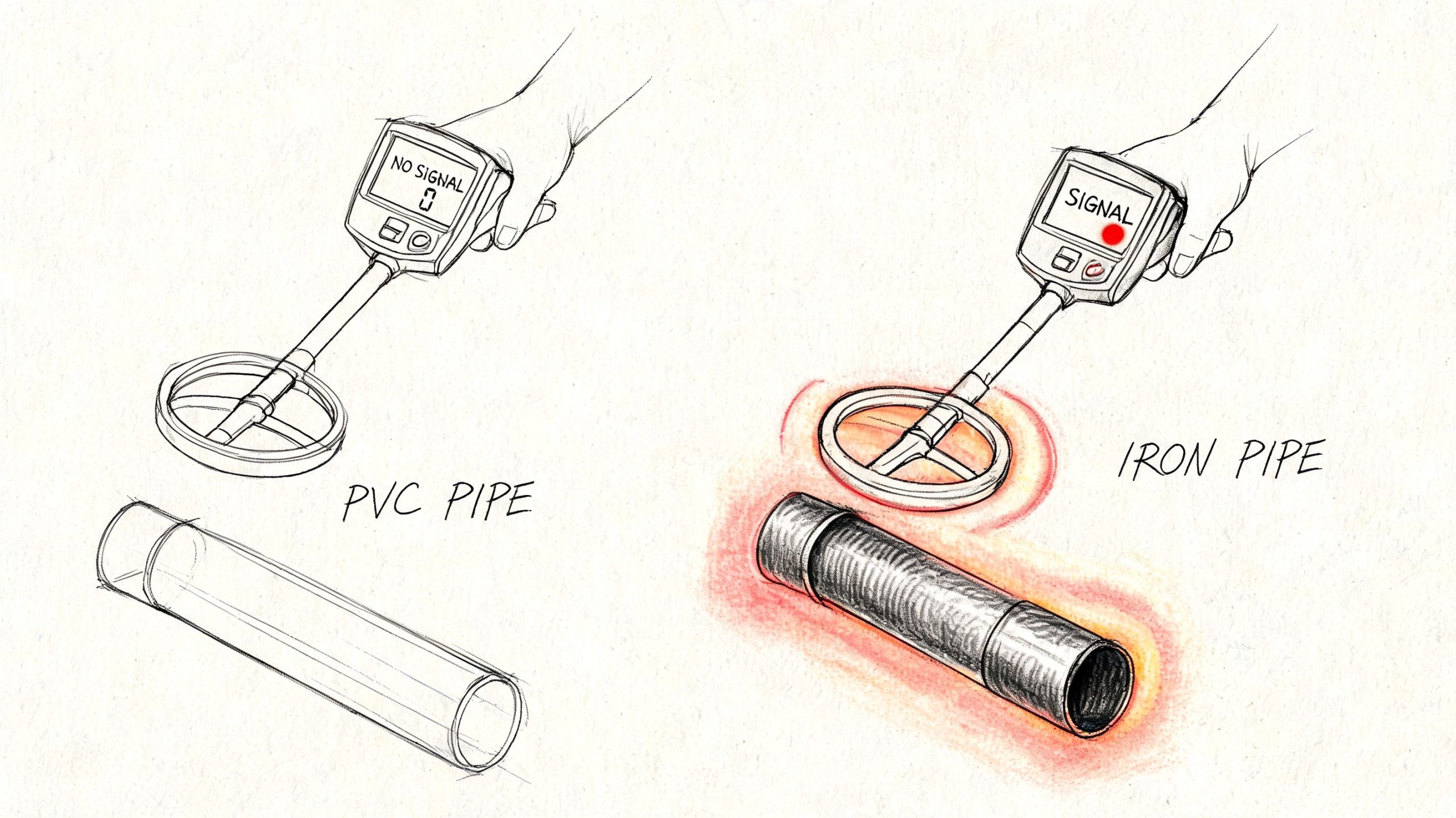
That matters a lot in modern plumbing. Standard metal detectors cannot locate non-conductive plastic PVC and PE pipes, which account for 60-70% of new water and sewer lines. Professionals work around that with tracer wires or sonde-equipped cameras, achieving up to 95% accuracy on non-metals, as noted by Ohio Power Tool's utility locator guidance.
The biggest blind spot in DIY locating
Many homeowners assume "underground pipe" and "metal detector" naturally go together. In older homes with copper, steel, or lead components, that can be partly true. In a newer home with PVC, PEX, or plastic sewer materials, the detector may be working perfectly and still fail to find the line.
That's why a no-signal result doesn't prove there's no pipe there. It may only prove the pipe isn't metallic.
What else throws off the reading
Even when the pipe is metal, a yard can create bad data. Common problems include:
- Nearby metal clutter: Fences, buried debris, old fasteners, irrigation parts, and garden edging can all trigger responses.
- Crowded utility corridors: Water, power, telecom, and gas often run close together near the street or side yard.
- Depth and access issues: The deeper the target, the weaker and less useful the signal tends to be.
- Surface obstacles: Concrete, retaining walls, heavy roots, and dense planting beds can make clean tracing difficult.
A sewer line with a cleanout and camera access may be better located with a sonde attached to the inspection equipment. A nonmetallic water service may need a different locating method entirely if there is no trace wire present.
What professionals do instead
The fix isn't "buy a stronger detector." The fix is using the right locating approach for the actual pipe material and symptom.
A pro may use:
- Tracer wire locating when the plastic line was installed with a traceable conductor
- Sonde-equipped sewer cameras to track the camera head from above ground
- Ground-penetrating radar or other specialty methods when standard locating won't answer the question
- Cross-checking with records and visible plumbing layout to narrow likely routes before any test starts
A missed pipe wastes time. A falsely located pipe is worse, because it sends the shovel to the wrong place.
That's why "simple hardware store detector" and "serious plumbing diagnosis" usually don't belong in the same sentence.
DIY vs Professional Pipe Location Costs and Risks
The appeal of DIY is obvious. You'd rather spend a little time in the yard than schedule a plumbing visit, especially if you're hoping the problem turns out minor. But underground pipe location is one of those jobs where the cheap first step often becomes the expensive mistake.
Homeowner-grade detectors fail over 50% of the time in clay-heavy Georgia soils. Professional plumbers using multi-tool kits cut diagnostic time by 70% and help homeowners avoid the average $5,000+ repair bill that can follow a botched DIY excavation, according to this utility detection article from SuperEye USA.
Why Georgia soil changes the equation
North Metro Atlanta soil isn't always forgiving. Heavy clay can hold moisture, distort expectations, and make every signal interpretation harder for an inexperienced user. Add in buried scrap metal, old repairs, and crowded utility zones, and a consumer detector becomes more of a suggestion than a diagnosis.
That doesn't mean homeowners should never investigate. It means the investigation has to stop before it becomes excavation based on weak information.
DIY Pipe Location vs. Calling JMJ Plumbing
| Factor | DIY Approach (Consumer Detector) | Professional Service (JMJ Plumbing) |
|---|---|---|
| Primary goal | Find metal somewhere underground | Diagnose the plumbing problem and map the line accurately |
| Tool type | Single-purpose detector | Multi-tool approach with locator, leak detection, camera, and field verification |
| Performance in Georgia clay | Fails over 50% of the time based on the cited source | Better field performance because the technician can cross-check with other tools |
| Time to diagnosis | Trial and error, repeated passes, guesswork | Diagnostic time cut by 70% with a professional multi-tool kit per the cited source |
| Risk of false positives | High when debris or nearby utilities are present | Lower because the signal is interpreted in context |
| Digging risk | Homeowner may dig in the wrong area | Dig area is narrowed before excavation starts |
| Cost exposure if wrong | Can lead to the average $5,000+ repair bill tied to botched DIY excavation in the cited source | Professional diagnosis helps prevent avoidable damage |
| Best use case | Very limited preliminary checking | Water line repair, sewer repair, sewer replacement, leak detection, and emergency diagnostics |
What a homeowner can safely do first
There are smart first moves before you call:
- Watch the symptoms: Track whether the puddle grows, whether pressure drops, or whether drains are backing up.
- Check the pattern: A wet area after rain points one direction. A wet area during dry weather points another.
- Look for indoor clues: Low pressure, discolored water, sewer smell, or recurring drain backups all matter.
- Avoid blind digging: If you don't know exactly what you're opening, stop there.
When DIY turns into liability
Underground plumbing isn't isolated from the rest of the property. A mistaken dig can damage irrigation, cable, electric, gas-adjacent areas, driveways, roots, and exterior features. Even if you don't strike another utility, opening the wrong section means you still haven't fixed the leak or sewer issue.
You don't save money by digging twice. You just pay for two holes and one repair.
For sewer replacement, main water line repair, leak repair, or a burst pipe in the yard, the cheapest path is usually the one that gets the diagnosis right first.
When to Call a 24 Hour Plumber for Expert Pipe Locating
Some symptoms can wait a day. Others shouldn't. If you're dealing with active water in the yard, a sewer backup, a strong sewage smell, sudden low pressure throughout the house, or signs that a buried line is failing fast, this is when accurate locating stops being a convenience and becomes the first step in protecting the property.
Signs the problem is beyond a simple detector
Call for professional diagnosis when you have:
- Water pooling during dry weather: That often points to a water service leak or another buried plumbing issue.
- Repeated drain backups: A sewer line problem needs more than surface scanning.
- A clogged toilet that won't flush with other drain symptoms: That can point to a deeper blockage in the main line.
- No hot water plus odd moisture patterns: Sometimes more than one issue is happening, and guessing wastes time.
- A suspected burst pipe or spinning meter: Fast action matters.
For homeowners searching for an emergency plumber, 24 hour plumber, main water line repair, sewer repair, water line replacement, or leak repair near me in Roswell, Canton, Woodstock, Acworth, Alpharetta, Johns Creek, Cumming, or Marietta, the important step isn't buying a gadget. It's getting a qualified diagnosis from someone who can locate, verify, and repair.
What expert locating changes
Professional locating helps narrow the repair before anyone cuts concrete, opens a yard, or starts a sewer replacement. It also tells the technician which next tool belongs on the job. That may mean leak detection, line tracing, pressure testing, or a camera inspection. For urgent problems that can't wait, this is the kind of work handled through 24 hour emergency plumbing service.
A hardware store detector can sometimes confirm that metal is underground. That's not the same as knowing which pipe it is, how deep it runs, whether it's the damaged line, or whether the actual problem is sewer, drainage, or a slab leak. On serious plumbing work, accuracy comes first.
If you've got water in the yard, a sewer smell, low pressure, recurring backups, or you need help with sewer repair, water line replacement, drain cleaning, leak repair, or emergency plumbing in North Metro Atlanta, contact JMJ Plumbing. A licensed Master Plumber with the right locating and diagnostic equipment can identify the problem safely and help you avoid unnecessary digging, property damage, and costly guesswork.