Correct Slope for Drain Pipes: 2026 Guide to IPC Codes
A lot of homeowners start with the same complaint. The shower keeps a little water around your feet. The toilet gurgles after the washer drains. There's a sewage smell that comes and goes, especially after heavy use. It feels like a clog problem, so you reach for a plunger, a bottle, or a drain snake.
Sometimes that works for a while. Sometimes it doesn't.
When a drain keeps acting up, the issue may be deeper than buildup inside the pipe. The hidden problem can be the slope for drain lines, meaning the pitch that lets wastewater move by gravity from the house to the sewer or septic connection. If that pitch is wrong, the system may never drain the way it should, no matter how many times the line gets cleaned.
That matters in North Metro Atlanta, where homes in Woodstock, Acworth, Marietta, Roswell, Canton, Cumming, Alpharetta, and Johns Creek often deal with shifting soil, long exterior runs, and yard drainage that affects foundations as much as plumbing. A recurring slow drain can be an annoyance. It can also be the first warning before a sewer backup or water damage problem.
Is a Slow Drain a Sign of a Bigger Problem?
A single slow sink usually means exactly what you think it means. Hair, soap, grease, paper, or scale has narrowed the line. But when the symptoms spread, the story changes.
A homeowner might notice the upstairs tub draining slowly, then hear the downstairs toilet bubble, then catch a sewer odor near the laundry room. That pattern often points to a drainage system problem, not just a fixture clog. If the pipe pitch is off, waste doesn't travel the way it should. It stalls, separates, or settles in the line.
According to Envirosight's explanation of sewer slope standards, the minimum slope is 1/4 inch per foot for pipes 2 1/2 inches or smaller and 1/8 inch per foot for 3-inch to 6-inch pipes, and incorrect slopes are a leading cause of sewer backups.
What the warning signs often look like
- One drain is slow: Usually a local clog.
- Several fixtures act up together: More likely a branch line or main sewer problem.
- Gurgling after another fixture runs: Air is getting pushed around because drainage flow isn't clean and steady.
- Bad odor that keeps returning: Wastewater may be lingering in the system longer than it should.
- Water in the yard: An exterior sewer line may be holding, leaking, or backing up.
If you're trying to identify major sewer issues, those symptom patterns are worth paying attention to. Homeowners often wait because each sign seems small on its own. Together, they usually mean something more serious is developing.
A cleaning can still be the right first move. If you're dealing with active stoppages, professional drain cleaning for clogs and toilet backups can clear the line and help confirm whether buildup was the only problem. But if the clog comes back, the pitch of the pipe needs a closer look.
Slow drainage that keeps returning usually means the pipe system isn't just dirty. It may be working against gravity instead of with it.
Why Drain Slope Is Critical for Your Home
A drain system only works when wastewater and solids move together at a steady pace. That depends on gravity and on a pipe that keeps the right pitch from one end of the run to the other.
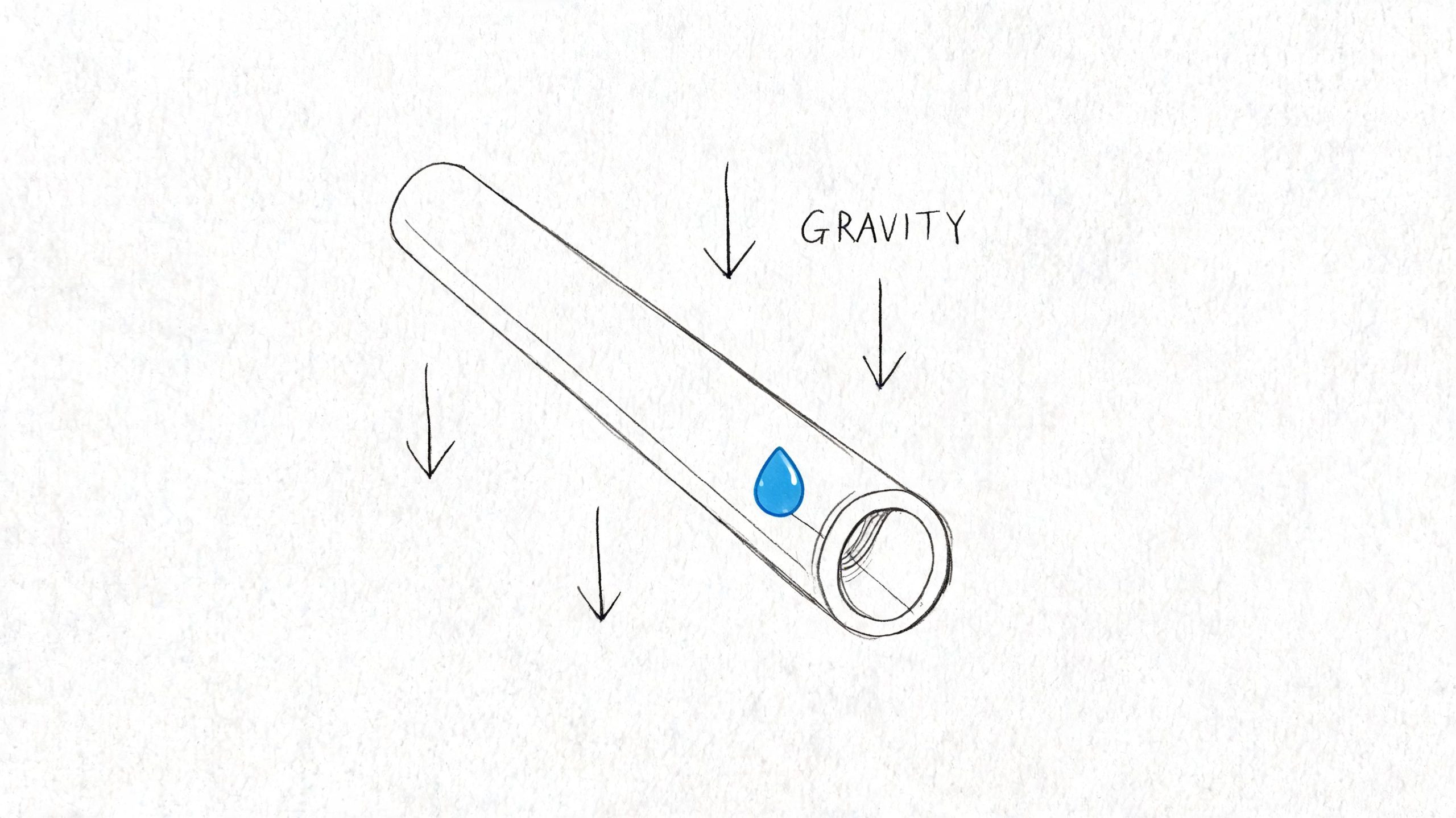
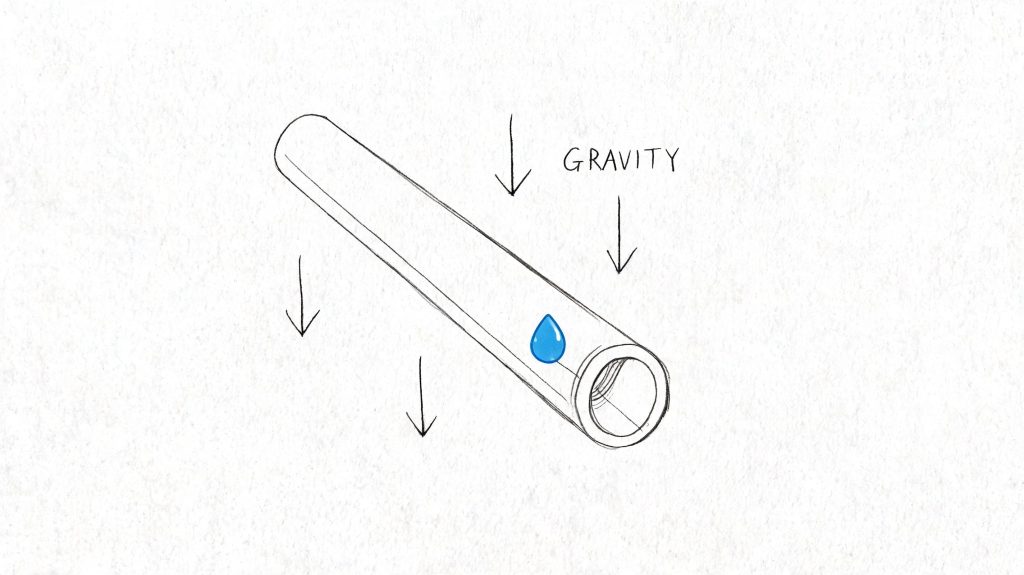
A drain pipe works like a long, covered slide
If that path is too flat, wastewater slows down and solids start settling in the line. Toilet paper, waste, grease, and soap residue stop traveling as one stream. They begin to collect on the bottom of the pipe, and that buildup turns into repeat clogs.
If the pitch is consistent, the flow stays organized. Water carries solids down the line instead of leaving them behind. That is what keeps a drain usable between cleanings and helps prevent the kind of backup that shows up first at a basement toilet, first-floor shower, or floor drain.
Why plumbers care about flow
Plumbers look for enough flow to keep the inside of the pipe washed out during normal use. The primary concern is not whether water moves at all. Water will usually find a way downhill. The concern is whether it moves well enough to carry waste with it every time someone flushes, showers, or runs the washing machine.
That distinction matters in older homes around Marietta, Woodstock, and the rest of North Metro Atlanta. I see lines that technically drain, but not cleanly. Homeowners live with slow fixtures, occasional gurgling, or a sewer smell near a bathroom because the pipe is holding waste longer than it should. Those are the jobs that turn into emergency calls on a weekend when one more load of laundry or one more flush pushes the line past its limit.
What proper slope protects you from
- Recurring clogs that return soon after snaking or drain cleaning
- Sewer odors from waste and wastewater lingering in the pipe
- Backups at the lowest fixture, especially after heavy water use
- Joint stress and leaks caused by standing wastewater in low spots
- Foundation and yard trouble if an exterior line leaks into soil near the house
One more practical point. Good slope is not just about having enough drop on paper. The pipe also needs consistent support. In North Metro Atlanta, shifting clay soil can pull an underground sewer line out of alignment, and a sagging crawlspace line can develop a belly even if it was installed correctly years ago.
That is why a home can have new fixtures and still drain like an old one. New toilets, a fresh sewer cleaning, or a stronger garbage disposal will not correct a pipe that has settled, sagged, or lost its pitch.
The Official Rules for Drain Slope
Drain slope follows code because waste lines have to do one job well. They need to move water and solids together, over the full run, without leaving material behind in the pipe.
For most homes, the minimum pitch is tied to pipe diameter. Smaller drains need more fall. Larger drains can run with less because the wider pipe changes how the flow behaves.
Minimum drain slope by pipe size per IPC
| Pipe Diameter | Minimum Slope (per foot) | Approximate Percentage |
|---|---|---|
| 2.5 inches or smaller | 1/4 inch per foot | 2.08% |
| 3 inches to 6 inches | 1/8 inch per foot | 1.04% |
| 8 inches or larger | 1/16 inch per foot | 0.52% |
Those fractions sound minor until you put them across a real house. A 20-foot run at 1/4 inch per foot needs 5 inches of total fall. In a crawlspace, basement, or slab transition, that affects where the line can pass, where cleanouts belong, and how the pipe ties into the building drain or sewer leaving the house.
Uniform slope matters as much as the math. A line can have the right total drop and still fail if it dips between hangers, bellies in soft soil, or gets pushed out of line during settlement. I see that in North Metro Atlanta more than homeowners expect, especially where expansive clay soil has shifted an older exterior sewer.
Why code uses these numbers
The goal is steady scouring flow. If the pipe is too flat, solids settle. If it is too steep, water can outrun the waste and leave heavier material behind. Good drainage comes from the right pitch held consistently from one end of the run to the other.
That is why a drain line should never be judged by eye alone.
Where homeowners and even handymen get this wrong
- They measure from the wrong reference point. The top of the pipe, the bottom of the pipe, and the fitting hub can all give different impressions if the check is sloppy.
- They miss a belly in the middle. The ends may look fine while one low section holds water and waste.
- They treat every line the same. A short branch serving a sink is not judged the same way as a 3-inch building drain.
- They assume more fall is safer. In drain work, extra slope can create its own stoppage pattern.
- They ignore support and soil movement. A properly installed line can lose pitch over time if hangers loosen or trench fill settles.
In Woodstock, Marietta, and nearby areas, that last point matters. Exterior sewer lines run through clay-heavy soil that expands when wet and shrinks in dry spells. Crawlspace piping can also sag if the structure settles or if the line was not supported well to begin with.
What this means for a real repair
A recurring backup is not always a cleaning problem. Sometimes it is an installation problem, or a line that has changed shape over time. If inspections show bad pitch, bellies, or settlement, the lasting fix may involve sewer line repair or replacement rather than another drain cleaning visit.
That is the difference between a temporary opening and a line that works the way it should during heavy use.
Common Problems from Incorrect Drain Slope
Bad drain slope usually fails in one of two ways. The line is too flat, or it's too steep. Homeowners usually know about the first one. The second gets missed all the time.
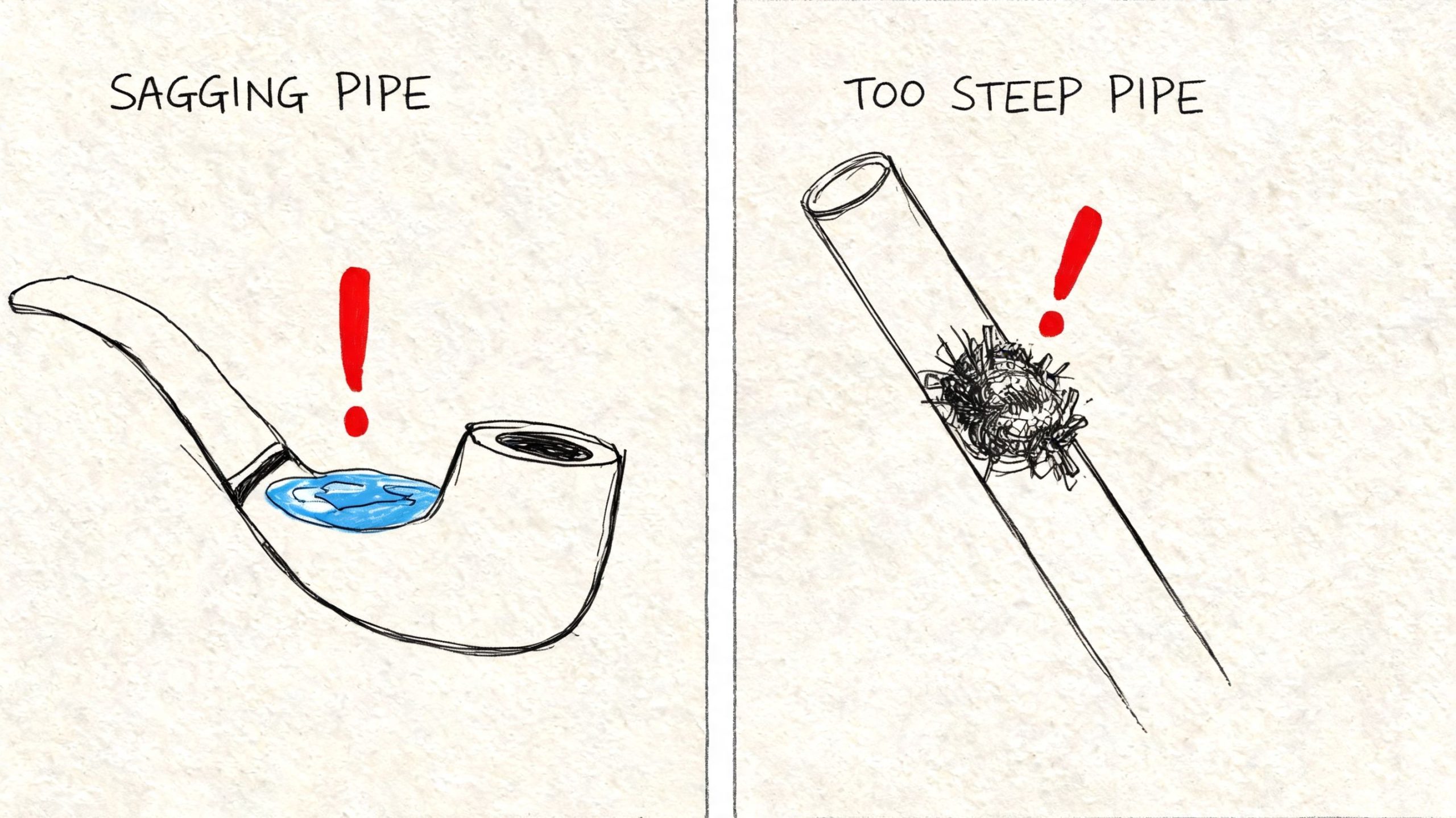
When the pipe is too flat
A flat line lets water slow down. Once that happens, solids begin to settle. Toilet paper, waste, grease, and sludge collect in low areas and gradually shrink the open path inside the pipe.
The homeowner usually sees the same cycle:
- A drain slows.
- It gets cleaned.
- It works for a while.
- The problem returns.
Homeowners often waste significant time and money addressing what they perceive as “bad luck” through frequent drain cleanings when the actual issue lies with the line. A pipe belly, reverse pitch, or undersloped run can keep producing the same stoppage pattern.
Common signs include:
- Toilets that bubble or flush weakly
- Shower or tub drains that back up first
- Sewage odor in bathrooms or crawlspaces
- Water surfacing in the yard over the sewer route
When the pipe is too steep
Many homeowners assume steeper is always better because gravity is doing more work. In drain piping, that can backfire.
The plumbing codes typically define minimums, but not strict practical maximums for every situation. According to field discussion summarized by InterNACHI members, optimal flow velocity is under 10 feet per second, and for a standard 4-inch residential drain, a slope greater than 1/2 inch per foot can cause “liquid washout,” where water outruns solids. That same source notes field reports linking this condition to an estimated 20 to 30% increase in service calls for clogs.
That means the pipe can sound active and still be building a blockage. Liquids rush ahead. Solids lag behind and start collecting farther down the run.
A drain line can be “too good” at moving water and still be bad at moving waste.
What this means in practice
Too little slope creates a holding area. Too much slope can create a separation problem. Both end with a clog.
That's why pipe pitch has to be judged as a system, not by one visual impression under a sink or in a crawlspace. A line may have the right material, the right diameter, and a clean interior, yet still fail because the waste stream isn't traveling together from start to finish.
If recurring stoppages keep coming back, sewer line repair or replacement becomes less about cleaning and more about correcting the geometry of the line.
How to Measure and Inspect Your Drain Slope
Homeowners can do a basic check on accessible piping. You won't diagnose every hidden issue that way, but you can often spot an obvious problem before it turns into a larger repair.
The simplest way to think about slope is this: drop over run. If a pipe is supposed to drop 1/4 inch per foot, then over 4 feet it should drop 1 inch total.
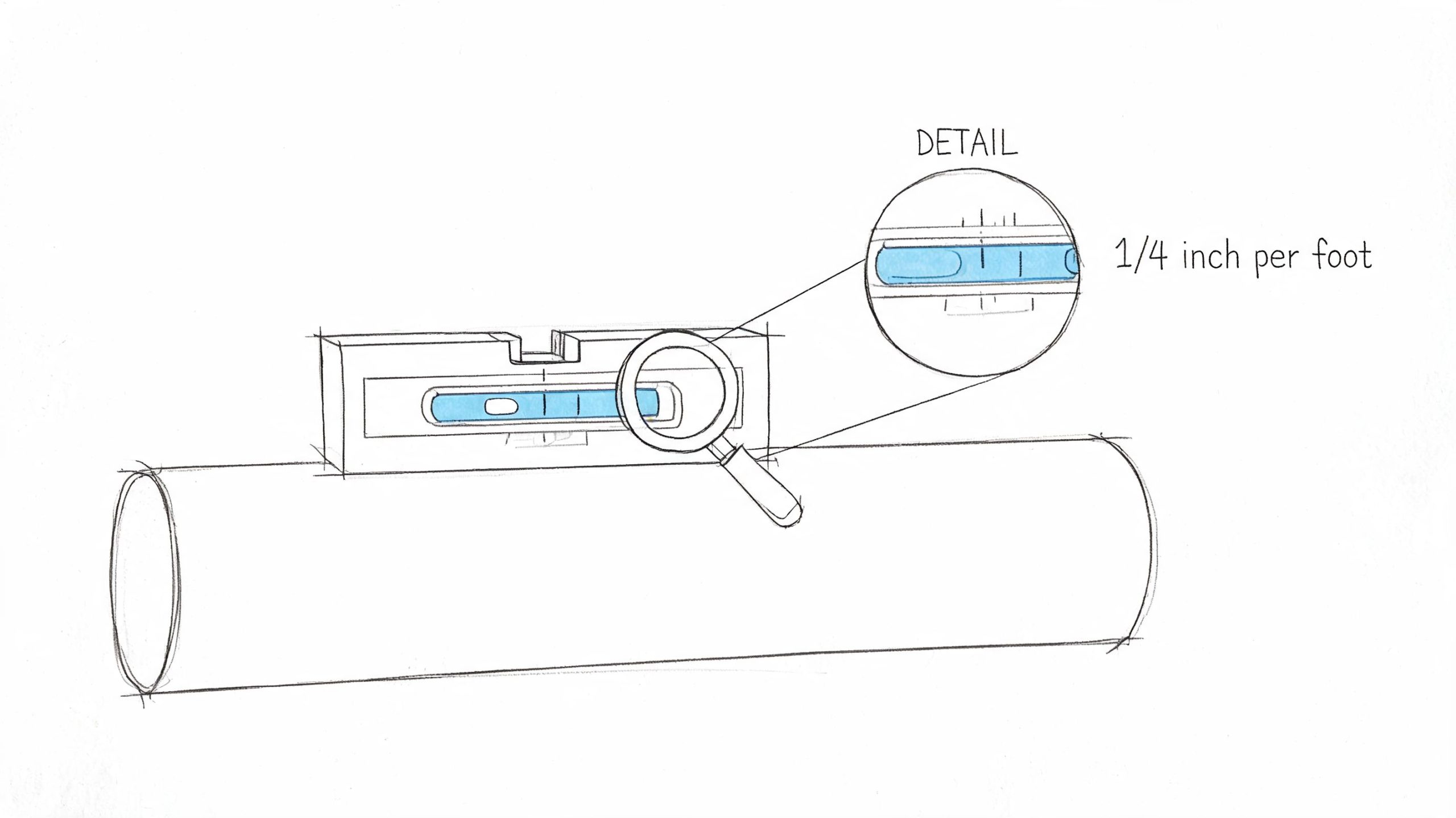
A basic homeowner check
If you can see the pipe in a basement, crawlspace, or unfinished area, use this process:
-
Pick a straight section
Avoid fittings, hubs, and bends. You want a clean stretch of pipe. -
Measure the run
Check the horizontal distance in feet. -
Check the drop
Measure how much lower the pipe is at the downstream end. -
Compare to the expected pitch
A small branch line may need 1/4 inch per foot. A larger building drain may need 1/8 inch per foot. -
Look for bellies or dips
A line can start and end at the right elevations but still sag in the middle.
Tools that help
A bubble level is still useful for quick checks, but it has limits. This video reference on slope verification tools notes that plumbers increasingly use smartphone inclinometer apps or digital laser levels for accuracy to 0.1% slope.
That extra precision matters because the problems are often subtle. A line doesn't need to be wildly wrong to perform badly. It only needs enough of a dip, flat spot, or over-pitched section to interrupt proper flow.
What a basic inspection won't tell you
A visible pipe can look fine and still hide trouble underground. Exterior sewer lines often fail where the homeowner can't see anything at all. Soil movement, root intrusion, old joints, and trench settling can alter the pitch long after the original installation.
That's why camera inspection matters. A proper sewer camera inspection shows whether the problem is buildup, standing water, offset joints, root entry, or a section of pipe that has lost grade.
Field advice: If you're buying a home or evaluating a property with drainage concerns, inspection beats guesswork every time.
For buyers and sellers, this guide on pre-purchase drainage gives a good overview of what a drainage review can uncover before a closing turns into a repair dispute.
North Metro Atlanta's Unique Drainage Challenges
Generic plumbing advice doesn't always hold up well in North Metro Atlanta. Local conditions change what works, what lasts, and what fails early.
The biggest factor is often soil. Much of this area has heavy clay, and clay changes the rules for both plumbing trenches and surface drainage. It holds water longer, shifts with moisture changes, and puts more stress on buried lines than looser, better-draining soil.
Why clay soil matters
For exterior drainage around patios, walkways, and similar hardscapes, the standard slope is 2%, which is roughly a 2-inch drop over about 8 feet, according to ROMEX Hardscapes' drainage slope guidance. That pitch helps move water away from the home so it doesn't pool near the foundation.
In practical terms, that matters a lot in places like Marietta, Kennesaw, Woodstock, and Acworth, where clay-heavy yards can hold water close to the structure. Pooling near the house can contribute to erosion and structural trouble if the water doesn't have a clean path away.
The sewer line problem homeowners don't see
A buried sewer line may have been installed correctly and still develop pitch problems later. Clay soils can shift enough to create a low spot or put stress on a joint. Once that happens, wastewater begins slowing in the wrong place, and the first symptom may be a recurring backup inside the house.
Hilly lots add another layer. In Canton, Cumming, Roswell, and parts of Alpharetta and Johns Creek, elevation changes can complicate both yard drainage and sewer routing. The installer has to maintain the right fall over changing terrain while avoiding abrupt transitions that create weak points in the system.
What works better locally
- Consistent grading away from the house for patios, walks, and drainage paths
- Careful trench prep and bedding so sewer lines stay supported
- Verification during installation instead of trusting the eye
- Follow-up inspection when symptoms appear, especially after wet periods or visible settling
A lot of plumbing calls that sound unrelated are tied to these conditions. Water in the yard, sewage smell outside, repeated drain cleaning, or moisture near the foundation may all trace back to drainage that no longer has the right slope.
When to Call a Plumber for Drain Slope Issues
There's a point where a slow drain stops being a nuisance and becomes a system warning. That's when it's time to stop trying random fixes.
Call a plumber if you have:
- Multiple slow drains at the same time
- A toilet that gurgles when another fixture drains
- A sewage smell that keeps returning
- Water showing up in the yard above the sewer route
- Recurring backups after previous cleanings
- A clogged toilet that won't flush and nearby fixtures are acting up too
Those symptoms often point beyond a simple blockage. They may mean the building drain or sewer line has a belly, separation, root intrusion, or a pitch problem that cleaning alone won't solve.
This is especially important if you're searching for an emergency plumber in Woodstock, a 24 hour plumber in Johns Creek, sewer repair near me in Roswell, or expert drain cleaning in Cumming because the problem has already moved past inconvenience. Active sewage backup, repeated toilet overflow, or wastewater surfacing outside needs prompt diagnosis.
Drain slope correction is not a casual DIY project. It can involve trenching, excavation, line replacement, proper bedding, and code-compliant reinstallation. The fix has to address the reason the pipe lost grade, not just the symptom at the fixture.
If the house also has signs like low water pressure, leak damage, burst pipe concerns, no hot water, or water in the yard, don't assume those are separate issues. Homes often have more than one plumbing problem at once, especially after years of deferred repairs or soil movement.
If you're dealing with slow drains, sewer odor, a backup, or water pooling near your home, JMJ Plumbing can help diagnose the cause and recommend the right repair. The team serves North Metro Atlanta with 24/7 plumbing support, sewer repair and replacement, drain cleaning, leak repair, water line work, and other code-compliant solutions for homeowners who need a fix that lasts.