Bathtub Backing Up? A Guide for Atlanta Homeowners

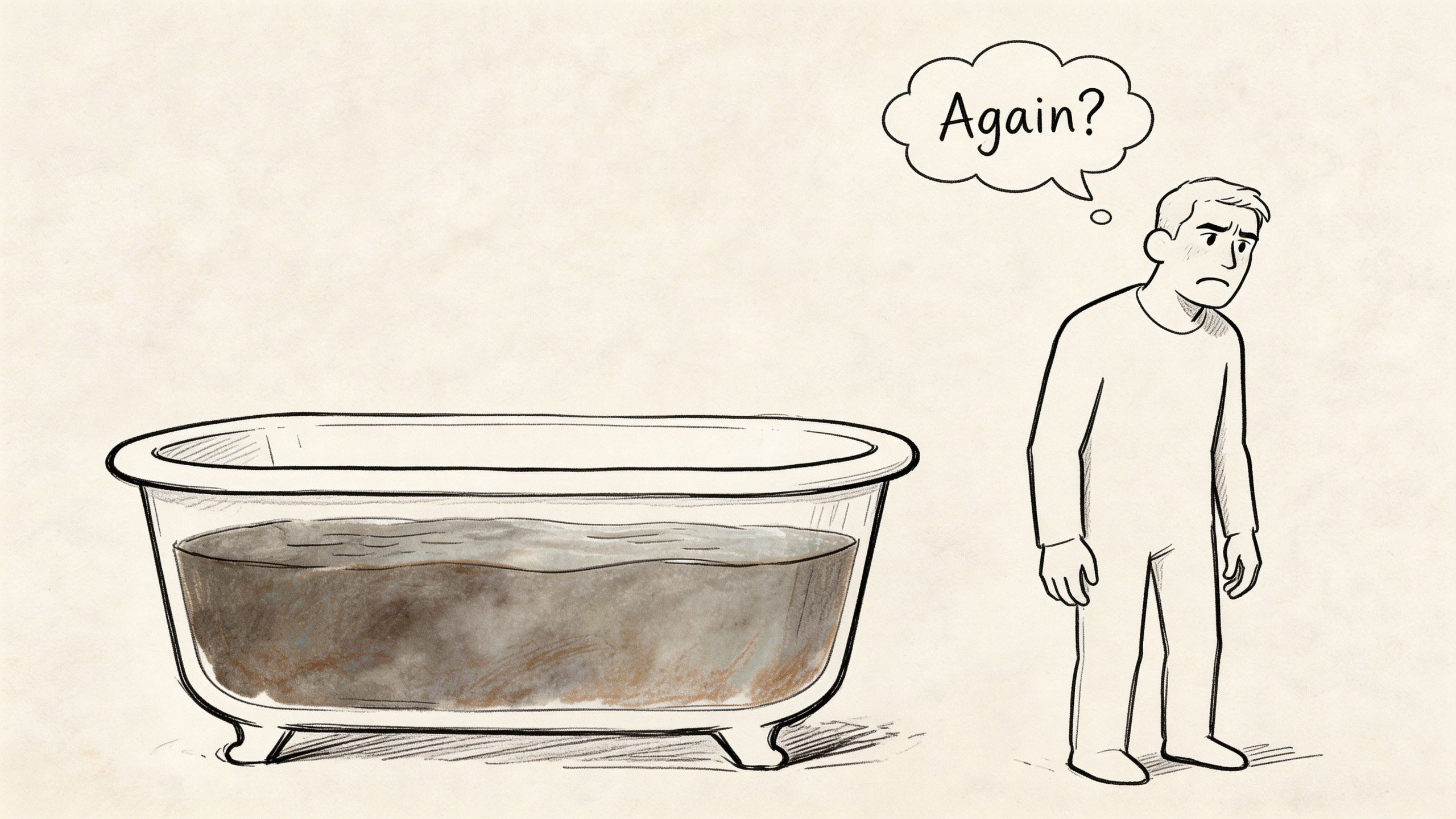
You step out of the shower, come back a few minutes later, and the tub is still holding murky water. Sometimes it drains slowly. Sometimes it burps up dirty water after someone flushes a toilet. That is the moment most homeowners start asking the right question: is this just a clogged tub, or is something bigger going on?
In North Metro Atlanta, I’ve seen both. A simple hair clog near the drain cover is common. So is the more serious version, where the bathtub backing up is the first visible sign of a blocked bathroom branch line or a main sewer line problem. If you know how to read the symptoms, you can avoid wasting time on the wrong fix and get help before the problem spreads to the rest of the house.
Why Your Bathtub Is Backing Up and What It Means
A bathtub usually shows drain trouble before other fixtures because it sits low. When water cannot move out through the drain system, it often rises in the tub first.
The common version
The ordinary cause is a local tub clog. Hair wraps around the stopper. Soap scum sticks to pipe walls. Thick residue narrows the trap and the short section of drain line just beyond it.
That type of backup usually starts small. The tub drains slower after a shower. You may hear a little gurgling at the drain. In many homes, the sink and toilet still seem normal.
The serious version
The warning sign homeowners miss is this: water shows up in the tub when no one used the tub.
If someone flushes a toilet and the bathtub backing up gets worse, the problem may not be in the tub at all. That points to a blockage in a shared drain line or the main sewer line. Tree roots, grease buildup, and damaged underground piping can all force wastewater back toward the lowest opening in the bathroom.
Practical rule: If the tub fills when another fixture drains, stop treating it like a simple clog.
Older plumbing history helps explain why drainage still deserves respect. In 1940, nearly 50% of U.S. homes lacked complete plumbing facilities, according to the fact cited at Plumbing Plus. That number dropped over time as residential plumbing improved, but modern homes still deal with the same basic reality. Wastewater needs a clear path out, and when that path narrows or fails, the tub often shows it first.
What this means for your next step
If the backup is limited to one tub, you may be able to clear it safely. If you notice multiple fixtures acting up, sewage odor, or bubbling in nearby drains, shift your thinking from drain cleaning to possible sewer repair.
That difference matters in homes across Woodstock, Acworth, Alpharetta, Canton, Roswell, Marietta, Cumming, and Johns Creek. A small clog is inconvenient. A sewer line issue can turn into water damage, contamination, and an after-hours emergency fast.
Your Diagnostic Checklist Is It a Clog or a Sewer Backup
A lot of homeowners guess wrong because the first symptom appears in the tub. The better approach is to check the whole bathroom, then the house.
Start with these quick observations
Before you grab a plunger, answer a few simple questions:
- Did the tub slow down gradually? A gradual slowdown often points to hair and soap buildup near the tub drain.
- Did the problem appear suddenly after flushing a toilet or running a sink? That can indicate a shared drain line blockage.
- Are other fixtures involved? A slow sink, a clogged toilet that won’t flush, or gurgling in more than one drain raises concern for a sewer backup.
- Do you smell sewage? That is not typical for a minor tub clog.
- Is there water outside near the sewer path? Wet ground or water in the yard can suggest an underground sewer problem.
Bathtub backup diagnostic checklist
| Symptom | Likely a Simple Tub Clog | Potential Sewer Line Issue |
|---|---|---|
| Water drains slowly after a shower | Yes | Possible, but less likely if isolated |
| Hair or soap residue visible around stopper | Yes | Unlikely by itself |
| Tub backs up when toilet flushes | No | Yes |
| Bathroom sink also drains slowly | Possible | Yes |
| Toilet gurgles when tub drains | No | Yes |
| Sewage smell in bathroom | No | Yes |
| Water rises in tub even when tub was not used | No | Yes |
| More than one bathroom fixture acts up | No | Yes |
| Yard looks wet near buried sewer route | No | Yes |
What each pattern usually means
One-fixture trouble usually stays close to that fixture. In practical terms, that means the stopper assembly, trap, or the first stretch of branch drain is the likely trouble spot.
A house-wide pattern tells a different story. If the toilet, sink, and tub all react to one another, the blockage is farther downstream. That is when a camera inspection becomes more useful than guesswork. If you want to see how that process works, a sewer camera inspection helps identify whether the line is blocked by roots, grease, settled waste, or structural damage.
Tip: The more fixtures involved, the less likely a tub plunger will solve the underlying problem.
Homeowners who are unsure can also compare what they’re seeing against these critical signs of a sewer backup. It’s a useful checklist because it focuses on the symptom patterns that separate a nuisance clog from a main line issue.
When to stop testing
Stop running water if any of these are happening:
- The tub level rises after each toilet flush
- Dirty water returns quickly after draining
- You hear strong gurgling from several drains
- A basement, lower bathroom, or slab-level fixture is backing up
At that point, continued testing can add more wastewater to an already blocked system.
Safe DIY Methods to Clear a Simple Bathtub Clog
If your checklist points to a local tub clog, you can try a few safe methods before calling for professional drain cleaning. Stay with approaches that remove or loosen the blockage without damaging the pipe.

First remove what you can see
Take off the stopper if the design allows it. Needle-nose pliers, a screwdriver, or a stopper removal tool may help depending on the tub hardware.
Put on gloves. Pull out visible hair and sludge. It is unpleasant, but this simple step solves a surprising number of slow tubs.
Try a plunger the right way
A tub plunger works best when homeowners create a proper seal.
- Cover the overflow opening with a wet rag or duct tape.
- Add enough water to cover the rubber cup.
- Center the plunger over the drain.
- Use short, controlled strokes at first, then plunge harder.
- Test the drain after several rounds.
The overflow matters. If it stays open, the plunger loses pressure and you waste effort.
Use baking soda and vinegar for mild buildup
For soap scum and light organic residue, a non-chemical foaming reaction can help loosen material.
- Pour baking soda first
- Add white vinegar
- Cover the drain briefly
- Wait, then flush with hot water
This method is better for maintenance or mild obstructions than for a dense hair clog. If the tub is fully backed up and holding water, move to physical removal instead.
Use a hand snake or small auger
A small drain snake is one of the most effective DIY tools for bathtub backing up problems that sit just beyond reach.
Feed the cable slowly. Rotate as you go. When you feel resistance, work the cable back and forth instead of forcing it. Then pull it out and clean the cable before another pass.
Be gentle around older metal piping and around tight turns near the trap. Force bends cables, scratches fixtures, and can jam the snake in the line.
Avoid liquid drain cleaners. They often sit in the clog instead of clearing it, and the residue can make later plumbing work messier and less safe. The hydro jetting reference later in this guide notes that professional cleaning methods outperform over-the-counter drain cleaners for stubborn blockages.
A hot water flush can finish the job
After you remove material mechanically, flush the line with hot water. That helps move leftover soap and residue downstream.
Do not use boiling water on every setup. Some tub assemblies and older piping do better with very hot tap water rather than aggressively boiled water.
What works and what usually does not
The safest homeowner methods are the ones that physically remove blockage or gently loosen residue. If you want another practical walkthrough, Voyager Plumbing has a useful guide on how to fix a blocked drain that aligns with the same basic principle: start simple, use the right tool, and stop before you damage the system.
Methods that often disappoint include repeated chemical treatments, random homemade mixtures, and shoving a coat hanger down the drain. Those can damage the stopper, scratch the tub shoe, or push debris deeper.
If the tub improves for a day and then clogs again, that usually means you opened a small channel through the blockage instead of removing it. That is when a more complete drain cleaning service makes sense.
Red Flags That Demand an Emergency Plumber in Atlanta
Some backups can wait a day. Others should not.
When the tub is filling with dirty water from another fixture, or the house smells like sewage, the problem has moved past basic DIY territory.

Signs the problem is no longer just the tub
Call for an emergency plumber if you notice any of the following:
- The tub backs up after a toilet flush: That strongly suggests a blockage in a shared drain or main sewer line.
- Several drains gurgle or drain slowly: One fixture can be local. Multiple fixtures point downstream.
- There is a sewage smell inside the home: That raises both plumbing and sanitation concerns.
- Water is pooling in the yard: Underground sewer trouble can show up outside before the pipe fully fails.
- Wastewater is dirty or dark: That is different from a clean slow drain after a shower.
- A plunger makes other fixtures react: Pressure transfer between fixtures often means the line is restricted farther out.
Why waiting gets expensive
A blocked main line does not stay neatly contained. Continued use of toilets, sinks, dishwashers, and washing machines can send more water into a system that has nowhere to go.
That can lead to soaked flooring, damaged baseboards, foul residue in tubs and showers, and contamination cleanup. In some situations, standing pressure and shifting soil around damaged piping also expose weaknesses that later require more involved repair work.
What a professional uses instead of chemicals
For severe drain and sewer stoppages, hydro jetting is one of the most effective clearing methods. The fact cited at BC Plumbing SWFL explains that hydro jetting uses high-pressure water streams to clear clogs and debris from pipes and significantly outperforms over-the-counter drain cleaners. It is especially useful when the primary issue is heavy buildup deeper in the line rather than a small clog near the drain opening.
This matters for persistent bathtub backing up problems because the goal is not just to poke a hole through the blockage. The goal is to clear the pipe wall thoroughly enough that the line can carry wastewater again.
Key takeaway: If your fix depends on repeating the same temporary drain treatment, you likely have the wrong fix.
Emergency symptoms in North Metro Atlanta homes
In Woodstock, Cumming, Johns Creek, and other North Metro Atlanta areas, I pay extra attention when a homeowner reports tree-heavy lots, older sewer lines, repeated clogs, or backups after rain. Those clues often point to a bigger line condition rather than bad luck at one tub.
This is also the one place in this article where I’ll mention a specific provider. JMJ Plumbing offers 24/7 plumbing response for sewer backups and related drain emergencies in North Metro Atlanta, which is the kind of service homeowners need when wastewater is actively coming back into the house.
What to Expect from Professional Sewer Line Repair
The first step in professional sewer work is not digging. It is identifying exactly what failed and where.
The inspection comes first
A plumber typically starts with a camera inspection of the sewer line. That shows whether the problem is grease, wipes, roots, scale buildup, a sag in the line, or a break.
This part matters because different causes need different repairs. A line blocked by buildup may respond to cleaning. A line crushed by soil movement or invaded by roots may need section repair or full replacement.
Repair and replacement are different decisions
A good plumbing company should explain the trade-offs clearly.
- Cleaning makes sense when the pipe is structurally sound and the issue is blockage.
- Spot repair fits when one section has failed but the rest of the line is in workable condition.
- Replacement is worth discussing when the pipe has multiple weak points, repeated failures, or major structural damage.
If you are comparing options, this page on sewer line repair and replacement gives a clear view of the service categories involved.
What affects scope and cost
Homeowners often search for sewer replacement cost, main water line repair, or leak repair because they want a number fast. In real plumbing work, the final quote depends on the layout and the cause.
Common cost factors include:
- Access to the line: A line under landscaping, concrete, or tight crawlspace access changes labor.
- Severity of damage: A soft blockage is different from a collapsed section.
- Pipe material and connection points: Repair methods depend on what is already in the ground.
- Whether multiple issues exist: A backup can uncover additional weak spots in the same system.
Practical advice: Ask the plumber what they found, where they found it, and whether the pipe itself is damaged or only blocked.
A clear explanation should come before repair starts. That is how homeowners make a sound repair-versus-replacement decision.
How to Prevent Future Drain Clogs and Sewer Backups
Once a tub has backed up once, prevention matters more than clever home remedies.
Habits that protect the tub drain
- Use a drain screen: A simple mesh catcher stops hair before it reaches the trap.
- Clean the stopper regularly: Soap and hair build up faster than most homeowners expect.
- Flush with hot water after heavy use: This helps move light residue before it hardens.
- Keep thick products out of the drain: Bath salts, heavy scrubs, and oily products can leave stubborn residue.
Habits that protect the whole sewer system
- Do not flush wipes: Even products sold as flushable create trouble in real drain systems.
- Watch grease and food waste: Kitchen habits affect shared drain lines too.
- Pay attention to recurring symptoms: A slow shower, a gurgling toilet, and a sewage smell rarely stay minor for long.
- Be mindful of large trees: Root growth can interfere with buried sewer lines over time.
When maintenance is worth scheduling
Older homes, homes with mature trees, and homes with a history of repeat backups benefit from periodic professional drain cleaning. Preventive service makes more sense than waiting until a tub, toilet, or floor drain starts returning wastewater into the house.
For homeowners in older parts of Marietta or neighborhoods with aging underground lines across Cobb County, Cherokee County, North Fulton, and Forsyth County, that kind of maintenance can catch line trouble before it becomes an emergency.
Plumbing Emergency FAQs for North Metro Atlanta
Why does my bathtub fill up when I flush the toilet
That usually points to a shared drain blockage or a main sewer line issue, not a simple tub clog. The toilet discharge is trying to move past a restriction and the tub, as a low fixture, becomes the place where water shows up.
Is a sewage smell from the tub dangerous
It can be. The fact cited at Allen’s Tri-State states that the CDC reports pathogens like E. coli in gray water backups can double infection risk within 48 hours in high-humidity environments over 60% RH, which is common in Georgia summers, and EPA studies show gastrointestinal illnesses in 20-30% of exposed households. If the tub water looks dirty or smells like sewage, keep people away from it and call for immediate help.
Can I use a chemical drain opener if the tub is backing up
I would not. Chemical products may sit in standing water, fail to clear the blockage, and complicate later repair work. They also do nothing for a sewer line problem outside the bathroom.
When should I call a 24 hour plumber
Call right away if wastewater is backing up into the tub, if more than one fixture is involved, if a clogged toilet won’t flush and the tub reacts, or if you see water in the yard near the sewer route. Those are emergency symptoms, not weekend chores.
Will I need sewer repair or full sewer replacement
Not always. Some lines need cleaning. Some need a section repaired. Some older or damaged lines need full replacement. The right answer comes after the line is inspected and the cause is confirmed.
Do emergency plumbers serve cities like Acworth, Woodstock, Alpharetta, and Roswell
Yes. Homeowners searching for an emergency plumber near me, sewer repair in Woodstock, drain cleaning in Acworth, or a 24 hour plumber in Alpharetta are usually dealing with the same core issue: they need fast diagnosis, not guesswork.
If your bathtub backing up looks like more than a simple clog, contact JMJ Plumbing for prompt diagnosis and clear repair options in North Metro Atlanta. We handle emergency drain and sewer problems, camera inspections, sewer repair and replacement, leak repair, water line issues, and other urgent plumbing calls in communities including Acworth, Woodstock, Alpharetta, Canton, Roswell, Marietta, Cumming, and Johns Creek.